Condition Report
Contact Information
Lot 2057
Sale 6316 - Arms, Armor and Militaria
Oct 22, 2025
10:00AM ET
Live / Cincinnati
Own a similar item?
Estimate
$50,000 -
80,000
Lot Description
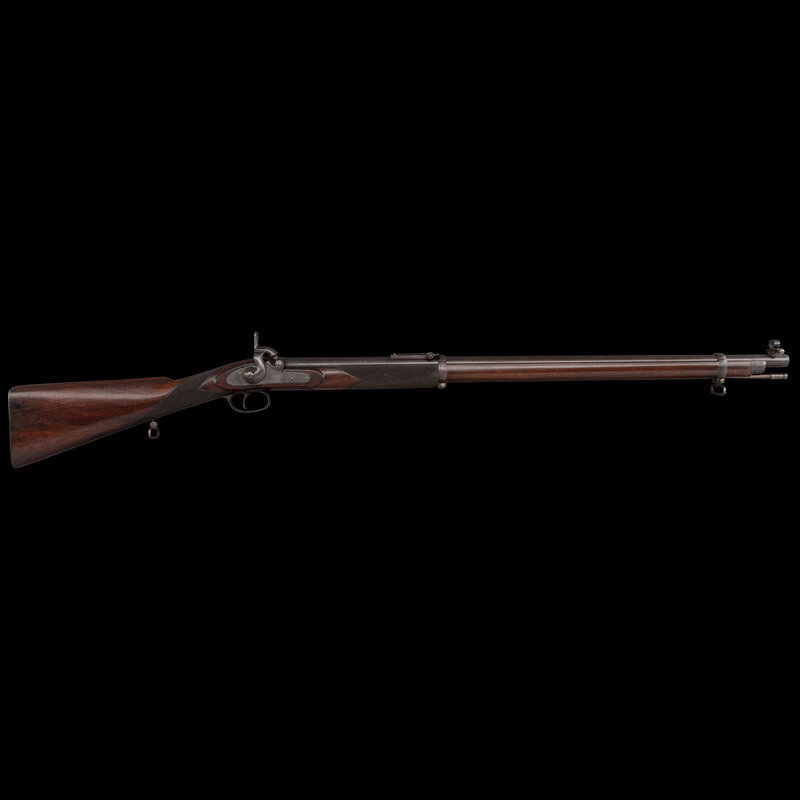
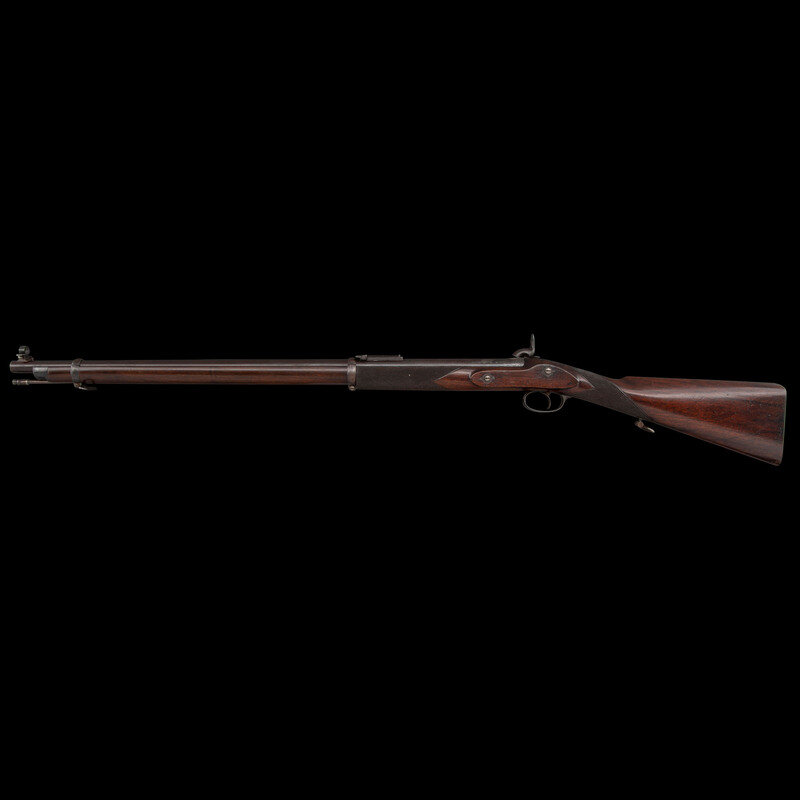
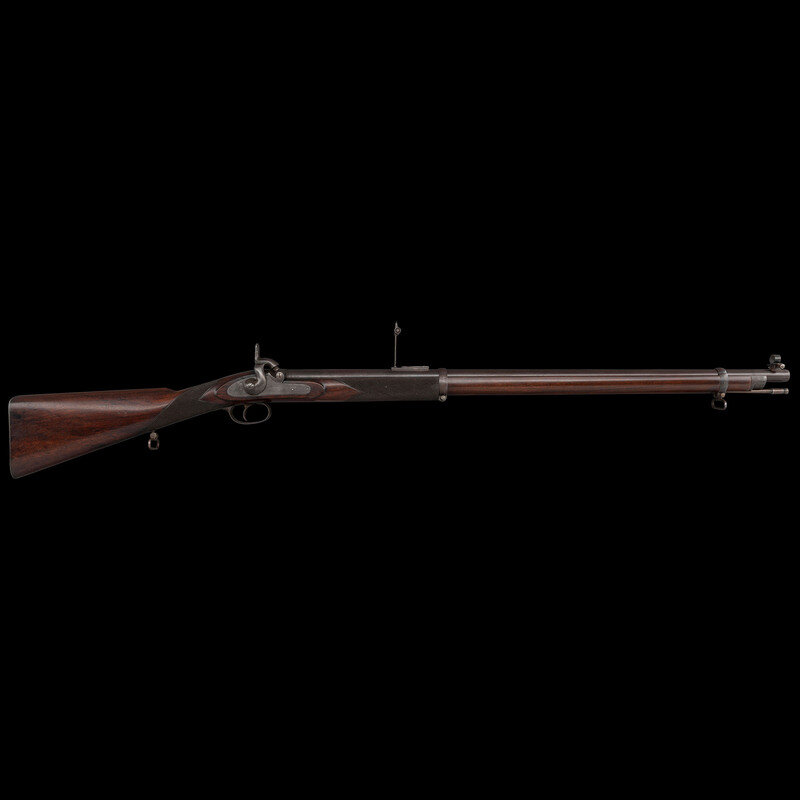
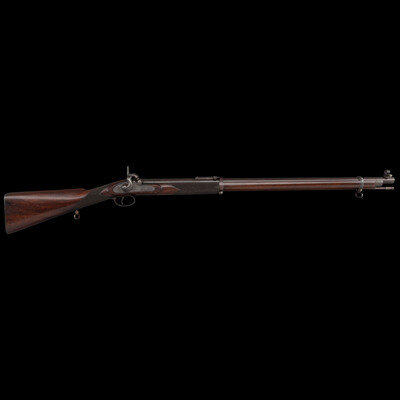
A 2nd Quality Marked Confederate Whitworth Rifle #B922
American Civil War
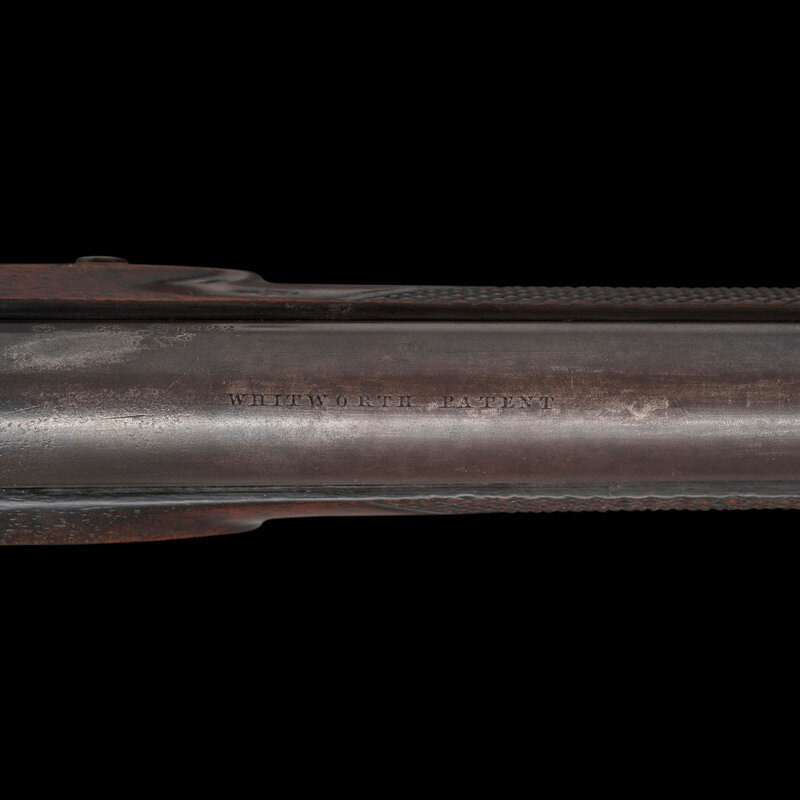
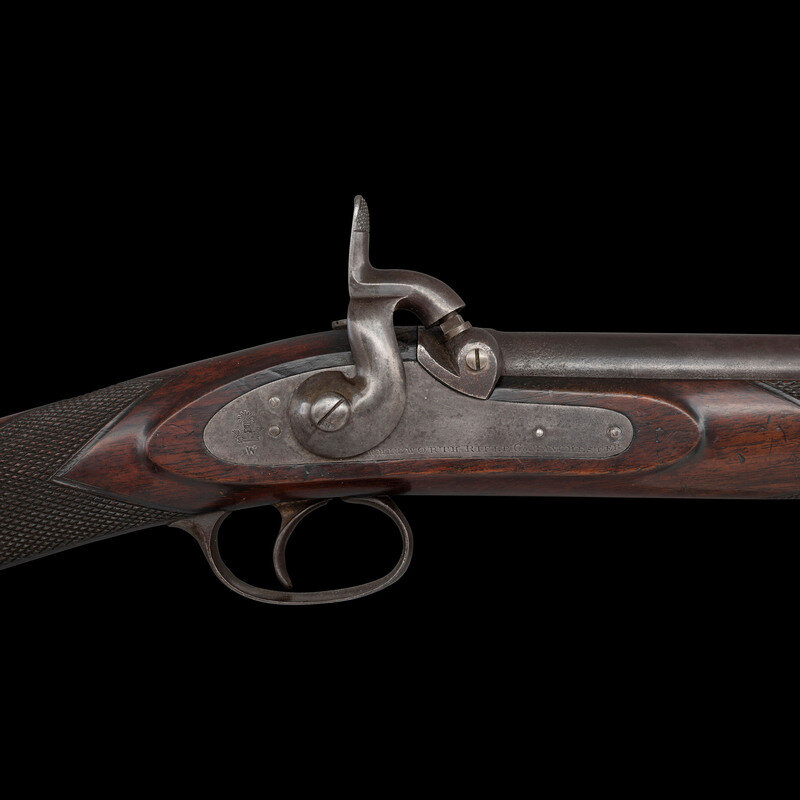
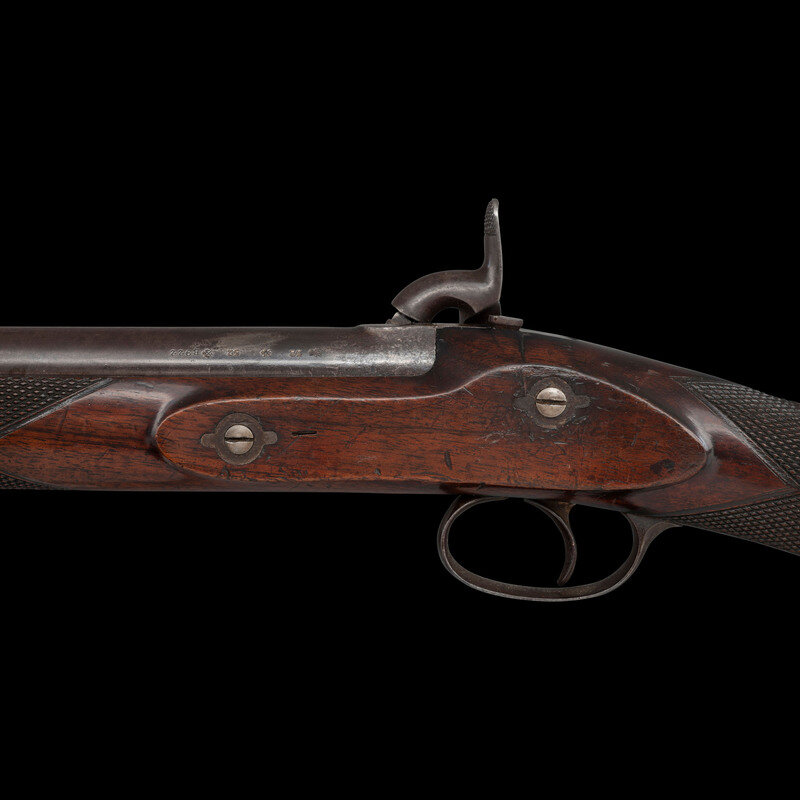
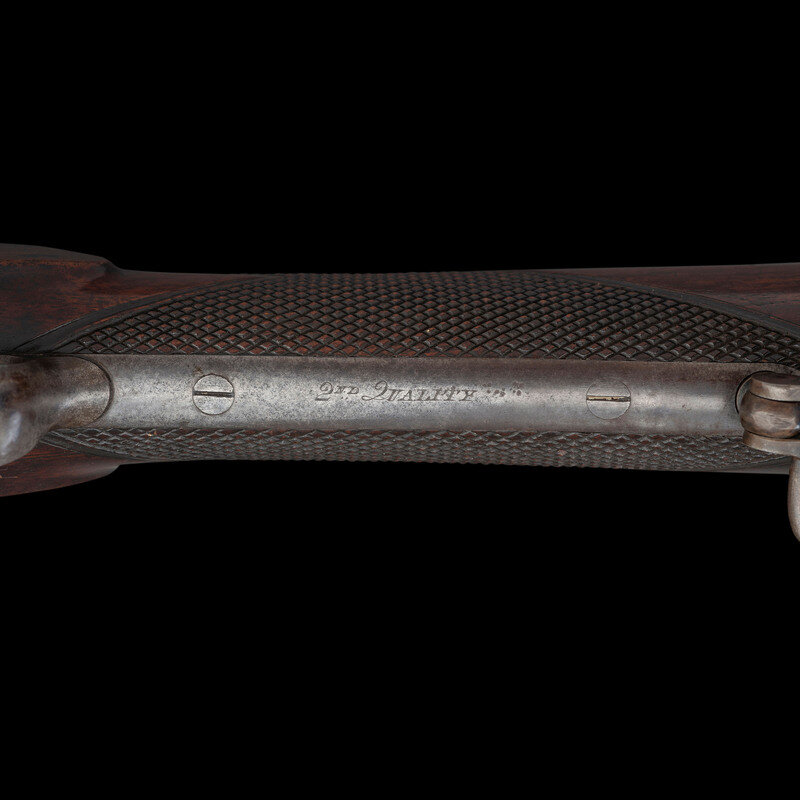
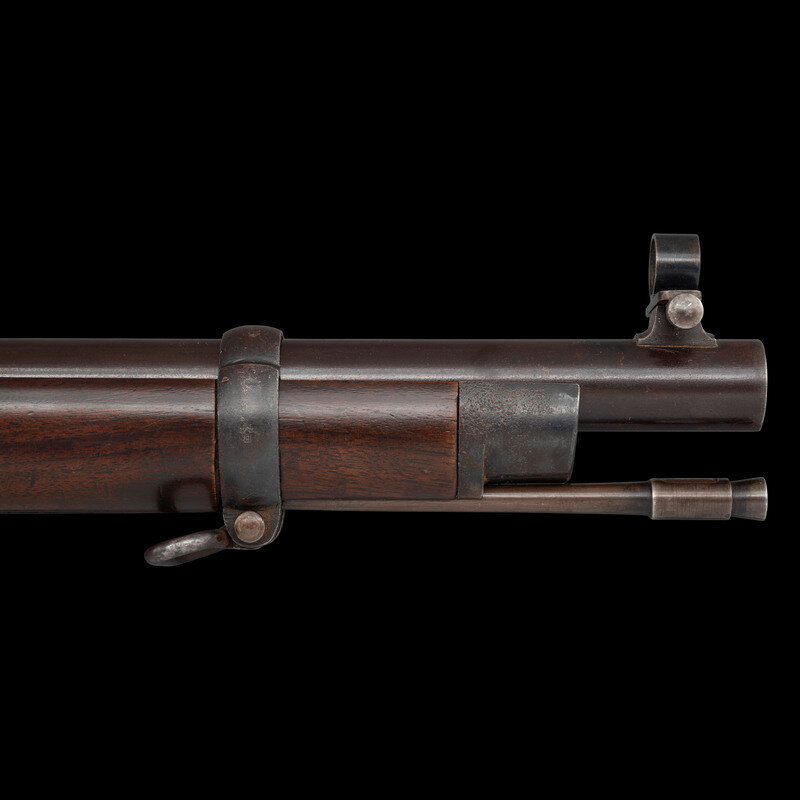
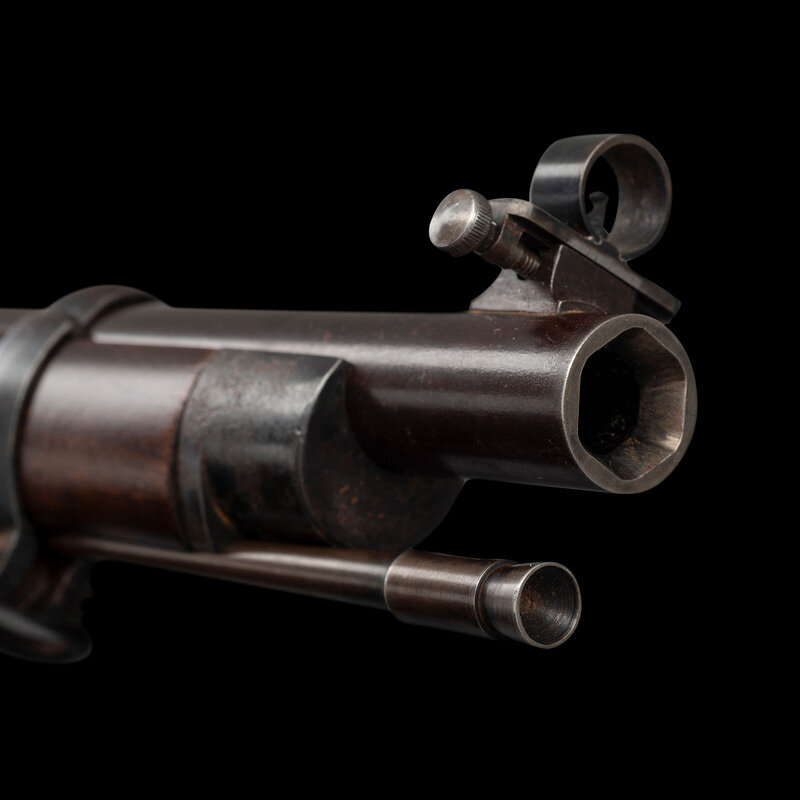
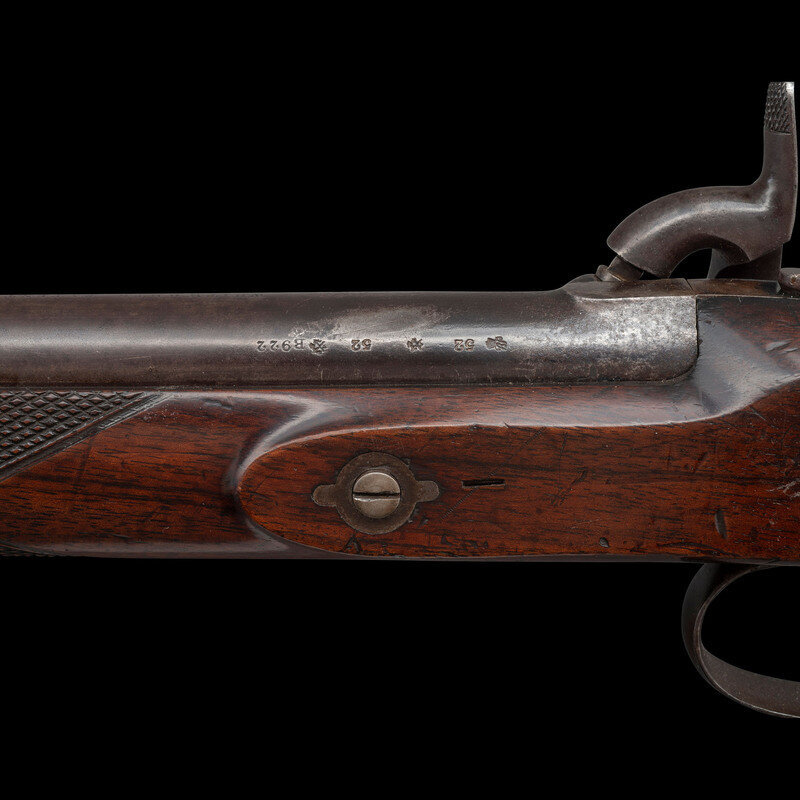
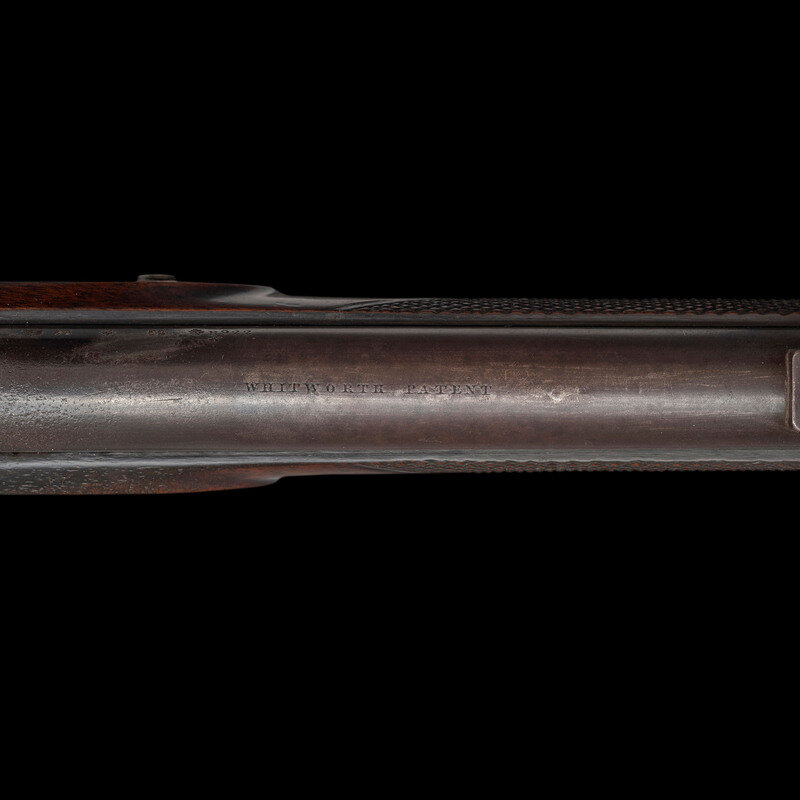
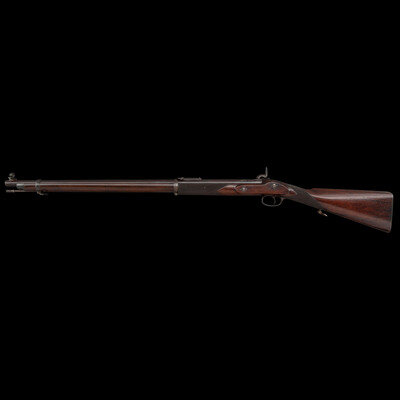
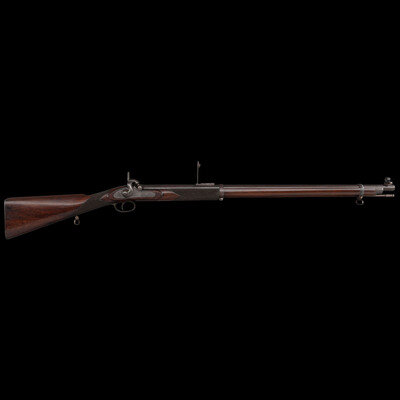
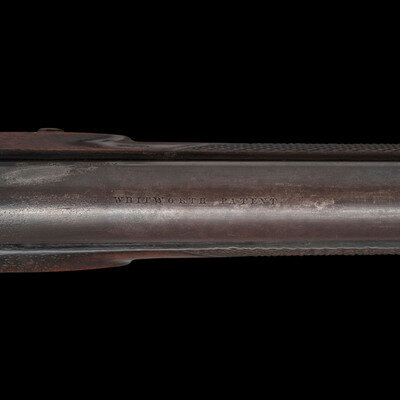
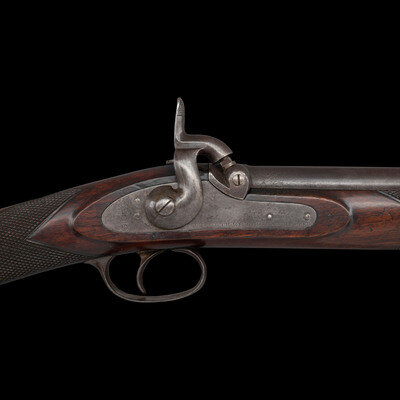
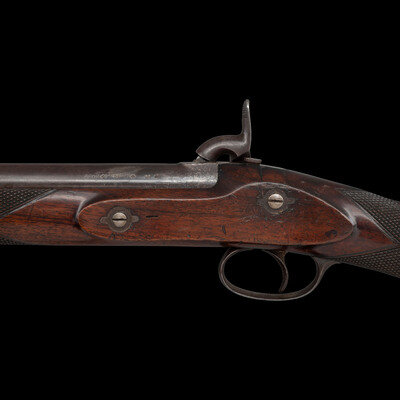
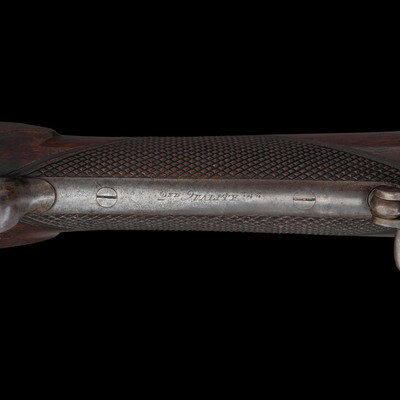
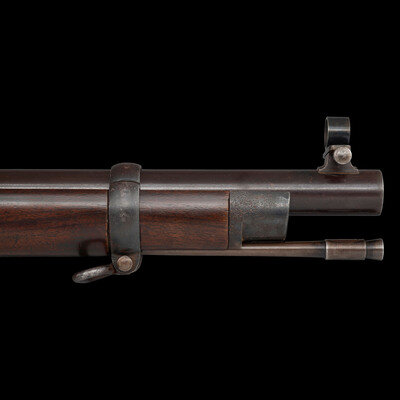
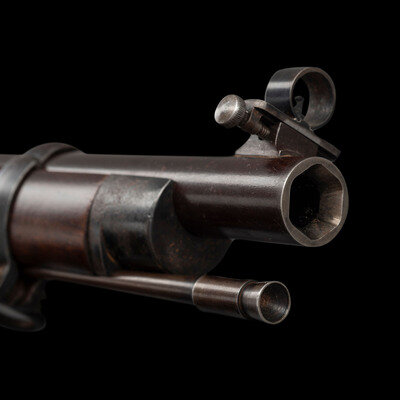
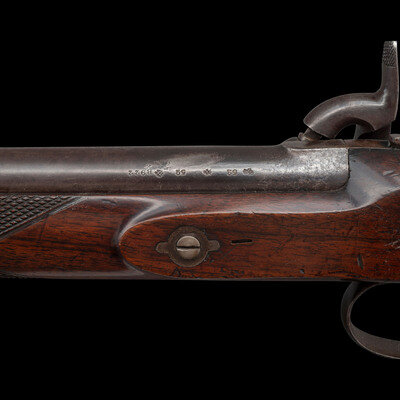
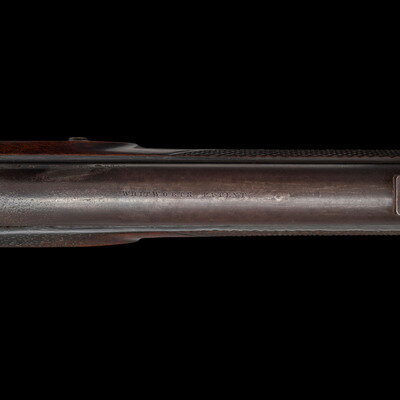
52-Bore (.451 caliber). 33" round barrel secured by two rounded clamping barrel bands. SN: B922. Blued and color casehardened finish, iron furniture, full-length walnut stock with checkered wrist and forend. Single shot muzzleloading percussion rifle with Whitworth's patent hexagonal bore mechanical rifling. Lock engraved WHITWORTH RIFLE Co MANCHESTER in a single horizontal line forward of the hammer and marked with Whitworth's {Crowned-W} trademark at the tail of the lock. Top of barrel engraved WHITWORTH'S PATENT, breech stamped with the serial number B922, post-1813 Birmingham view, proof and definitive proof marks as well as with a pair of 52 gauge marks, indicating .451 caliber. Triggerguard tang is correctly engraved 2nd Quality as found on legitimate Confederate-used Whitworths. As with all Whitworth Rifles the parts are assembly numbered throughout without the use of a prefix letter, in this case with the number 922 on the numbered parts. Matching serial numbers are found on triggerguard tang, inside lock, on rear sight ladder, rear of barrel, both lock screws, rear barrel band. This was one of the "Globe Sight" guns that was imported by the south and it does not have receptacles for the Davidson telescopic sight mounts. The rear sight is in place and intact. This gun was restored by the late Ned Hipp, a noted restoration artist and gunsmith from North Carolina. Mr. Hipp did the highest quality of museum grade restoration work for such noted clients as MEDSA (Museum of Early Southern Decorative Arts), among others. When this rifle was discovered more than fifty years ago it had been half stocked and smoothbored with the barrel cut back a few inches. The exceptional restoration work includes stretching the barrel back to full length with about 22.5" of the current barrel being new, and lining the bore with the correct form of Whitworth hexagonal rifling. The globe front sight was replaced with a period one at that time and the upper barrel band is a period British military barrel band that does not fit quite right. The forend is replaced from the rear barrel band forward and well matched to the stock and expertly checkered. The gun was refinished to return the rifle to its original period appearance. The ramrod is a replacement as well, that is close to correct and displays well.
Sir Joseph Whitworth was an incredibly talented engineer who was responsible, among his many innovations and inventions, for the establishment of the first standardized thread system for screws. This is something we tend to take for granted today, but the standardization of thread count, thread pitch and screw diameter was a revolutionary idea during the mid-19th century when screws were handmade and hand cut. To this day, Whitworth Threads are still used on many products, particularly English ones. Whitworth's reputation for being able to produce machines with tight tolerances led the Board of Ordnance to approach him in 1854 to help with the design and manufacture of the machinery that would be necessary for the Royal Small Arms Factory at Enfield Lock to produce the new Pattern 1853 Enfield pattern rifle musket to very tight tolerances. Subsequently, the Board of Ordnance asked Whitworth to provide input to potential improvements that might be obtained in the rifling small arms barrels. To this end, Whitworth consulted prominent gunmaking engineers like Charles Lancaster, who had developed the “oval bore” mechanical rifling system, and Westley Richards, who was working with an octagonal bore mechanical rifling system. Whitworth’s interest in precision machining and in the potential for improved accuracy of firearms led to his adoption of a polygonal, 6-sided, mechanical rifling system that proved to be extremely accurate. While he cannot be directly credited with the invention of the hexagonal mechanical rifling system, he can be accurately considered to have substantially improved it in such a way as to make it extremely successful. Much of his design accuracy was due to his work with the projectile, which he designed to be longer and smaller in diameter than the typical caliber of the day, but still retaining the weight of a military service type bullet. His 530-grain, .451-caliber hexagonal bullet did not depend upon the unreliable expansion of a hollow base in order to engage the rifling of the bore, but instead relied upon the tight mechanical fit of his bullet to the .451 polygonal bore. The end results were simply stunning accuracy for a muzzle-loading firearm, with one test resulting in a 12' group at 1,800 yards; a an 8-minutes of angle group shot at just over 1 mile with a black powder muzzle-loading rifle! Whitworth began manufacturing his revolutionary rifles in 1857 and in 1860 formed the Whitworth Rifle Company in Manchester, England. Initially, the majority of his customers were serious target shooters, who were interested in obtaining the most accurate rifle of the period. He produced the rifles in a variety of styles from cased multi-barrel sets to military style match rifles, and everything in between. In 1862 Whitworth's company was reorganized as the Manchester Ordnance & Rifle Company. Whitworth Rifles were serial numbered in groups of 1,000 with the first 1,000 found without a prefix letter, and each subsequent group of 1,000 serial numbers preceded by the a prefix letter from A to F. Roughly 8,000 commercial Whitworth Rifles were produced with another 5,400 produced for the British Military at RSAF Enfield.
There is probably no more famous, or more desirable, variant of the Whitworth Rifle than the handful that were purchased by the Confederacy during the American Civil War and put to such devastating use against the Union Army during the latter part of the American Civil War. These guns were all 2nd Quality Military Match Rifles, and at least some of the later deliveries were equipped with 4-power Davidson telescopic sights, while earlier deliveries used Whitworth's conventional long-range ladder rear sights and globe front sights. Although it is unlikely that more than fifty or sixty of these iconic rifles were imported to the South during the war, the legendary stories of their use and great accuracy have made them an iconic piece of American arms collecting history. While the Confederacy was actively attempting to acquire the extremely accurate and expensive rifles during 1861 and 1862, Major Anderson of the Confederacy noted they were to have cost as much as "about $1,000, in the equivalent of gold, for each rifle and one thousand rounds of ammunition". The $1,000 in 1861 would be equivalent to roughly $38,000 today. Surviving examples of these guns are exceedingly scarce with only about twenty legitimate examples known. Authentic surviving specimens appear in the rather limited serial number range of the mid-B prefix range of roughly B-5XX to the mid-C prefix range of about C6XX. Of these, the best known examples are #B509, donated to the Tennessee State Historical Society (now at the TN State Museum) by Confederate General A.P. Stewart, #B547 from the George Wray Collection, now in the collection of the Atlanta History Center, #C321 in a private collection, pictured on page 183 of The English Connection - Arms, Material and Support Furnished to the Confederate States of America by Great Britain by Pritchard, Huey, Prince, Nichols & Thomas and #C619 formerly in the collection of Richard D. Steuart and in the collection of the Virginia Historical Society. Another "out of the woodwork" example, #B902 with impeccable provenance (only 20 numbers from this gun) was sold in this sale room in October of 2022. As it can be seen, unimpeachable examples tend to be in institutional collections where they will never be available for private ownership.
One of the earliest references to the issuance of these highly prized rifles comes from a letter written by the Confederate Chief of Ordnance Colonel Joshua Gorgas to General Braxton Bragg commanding the Army of Tennessee on 29 May 1863. Gorgas notes that he had ordered Captain J.T. Trezenvant at the Charleston Arsenal to send "...for the use of sharpshooters 20 Whitworth (telescopic) Rifles recently imported from England. These arms are reported to be effective at 1200 yards." Other correspondence includes orders to transport 6 Whitworth Rifles with their scopes and accessories from the Mobile Arsenal to Brigadier General James Cantey on 12 June 1864 and various Ordnance Reports, primarily from the Army of Tennessee that indicate at least 32 Whitworth Rifles can be documented in the hands of the Army of Tennessee and Army of Mississippi in late June of 1864. Taking some other correspondence into account, at least 38 Whitworth Rifles can be accounted for in Confederate hands during late June of 1864, suggesting the total number imported may have reached 50 or so rifles.
As noted, this rifle is correctly marked with the engraved 2nd Quality mark on the triggerguard tang and the mark is of the correct style. The B-series 2nd Quality mark used a "Q" that looks much more like a "2" than a "Q", while the C-series guns are engraved with a much more conventional "Q". Rarely do these rare and iconic Confederate imported Whitworth Rifles appear on the market for sale and the majority of those that have been offered publicly over the last few decades were either not correct or were outright fakes. This is an outstanding restoration of an original Confederate Whitworth rifle that displays wonderfully, and whose restoration is not immediately detectable without intense examination. Unrestored correct examples of these rifles typically sell in the $100,000 to $150,000 range when they are found and made available on the market. This museum grade restoration provides the advanced collector of Civil War and Confederate arms the opportunity to own a rifle that is practically never found for sale at a price point below 6-figures. Rarely does the opportunity to acquire such a scarce and desirable piece of Civil War history occur, particularly at an attractive price point. {ANTIQUE}
From the Flem Rogers Collection