Condition Report
Contact Information
Lot 2023
Sale 6316 - Arms, Armor and Militaria
Oct 22, 2025
10:00AM ET
Live / Cincinnati
Own a similar item?
Estimate
$6,000 -
9,000
Price Realized
$5,400
Sold prices are inclusive of Buyer’s Premium
Lot Description
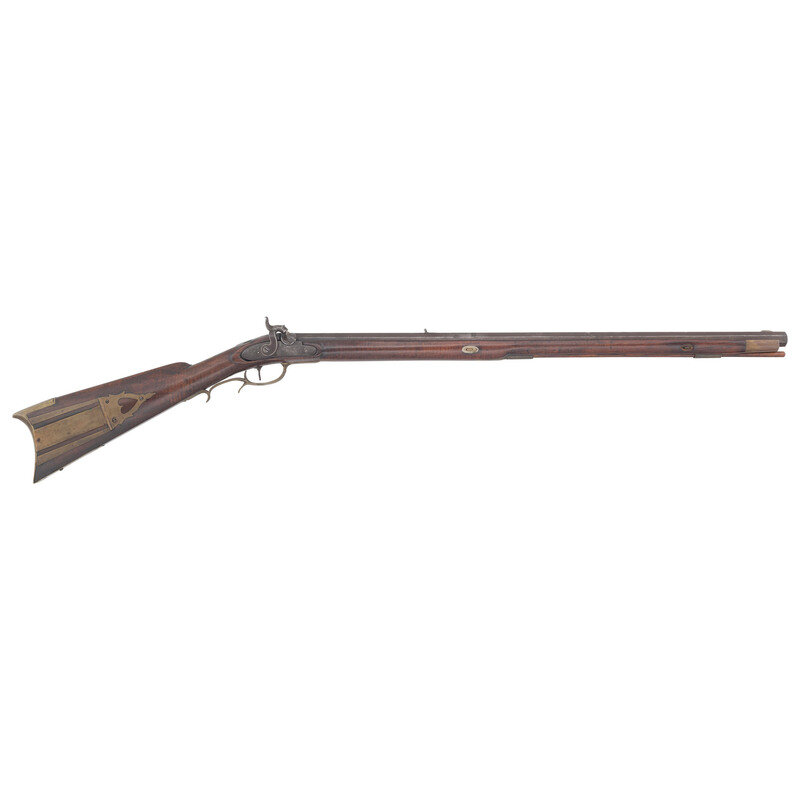
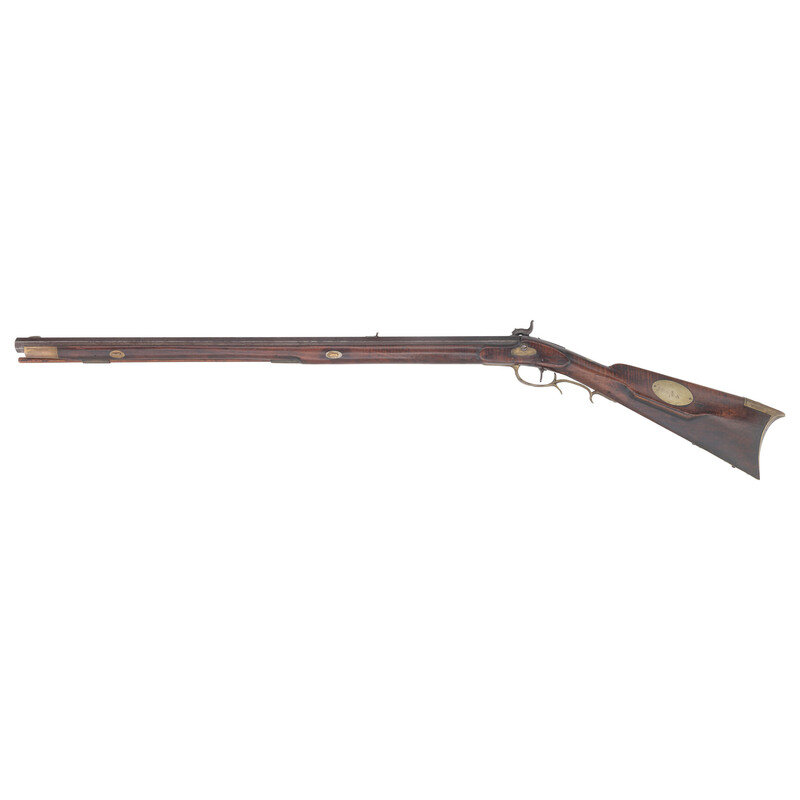
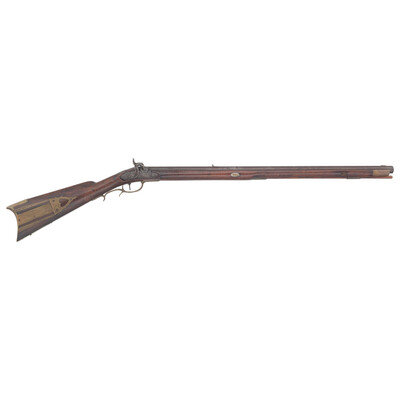
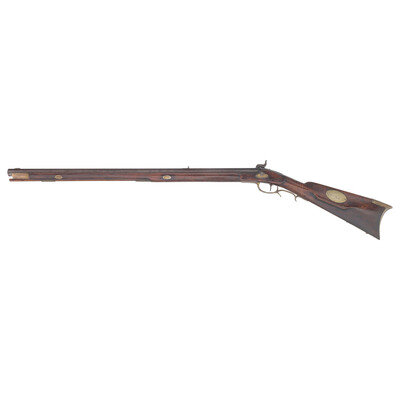
J&S Hawken Marked Percussion Sporting Rifle
Western Expansion
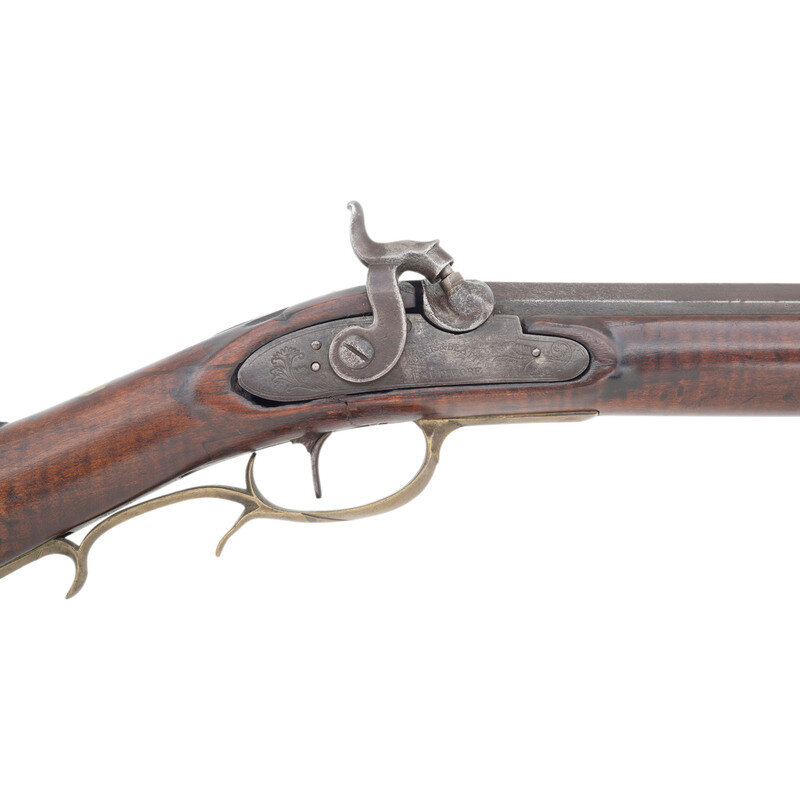
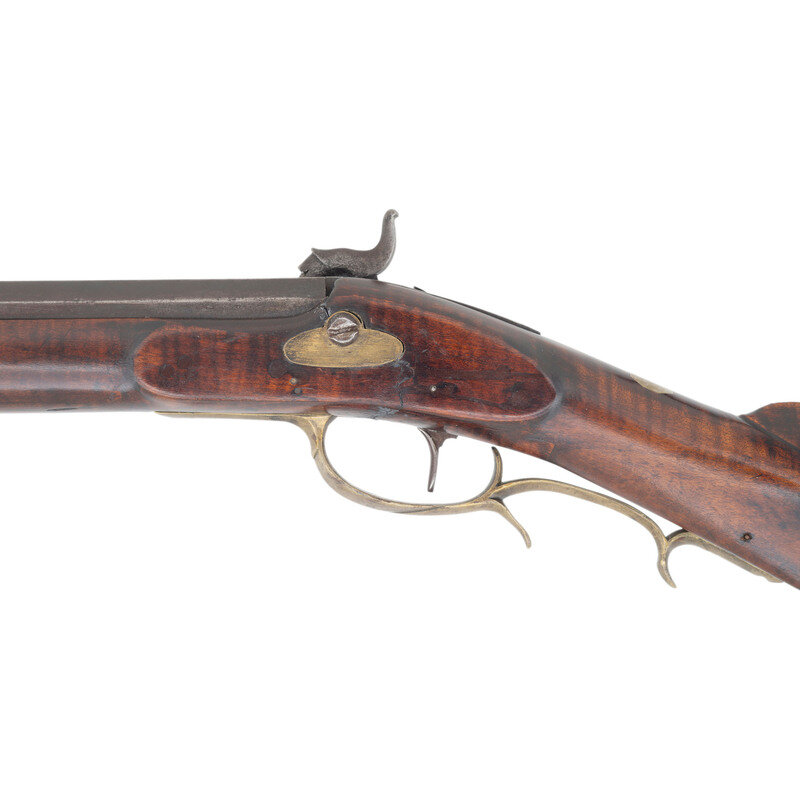
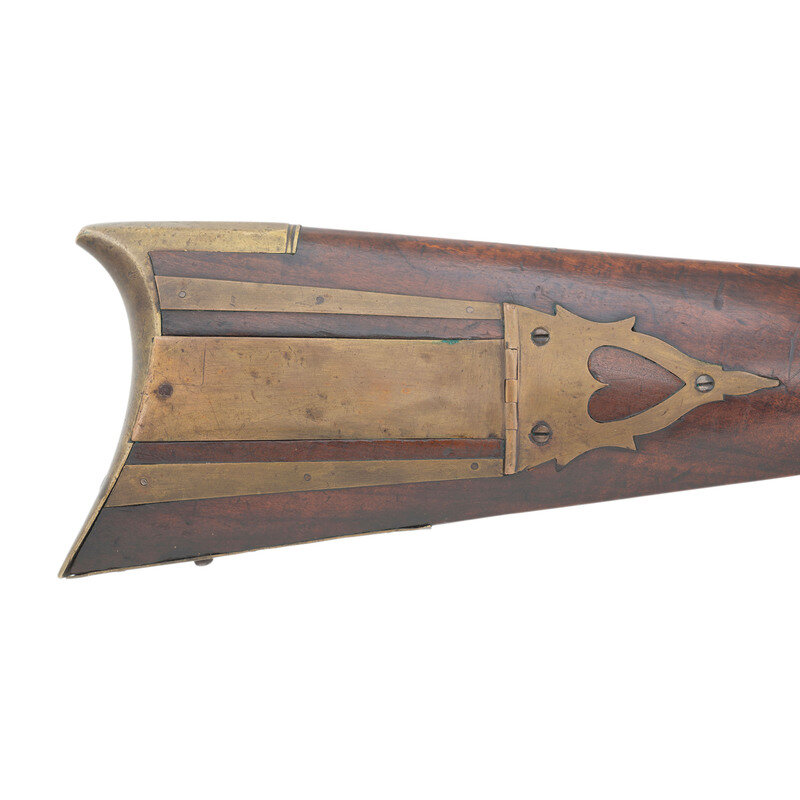
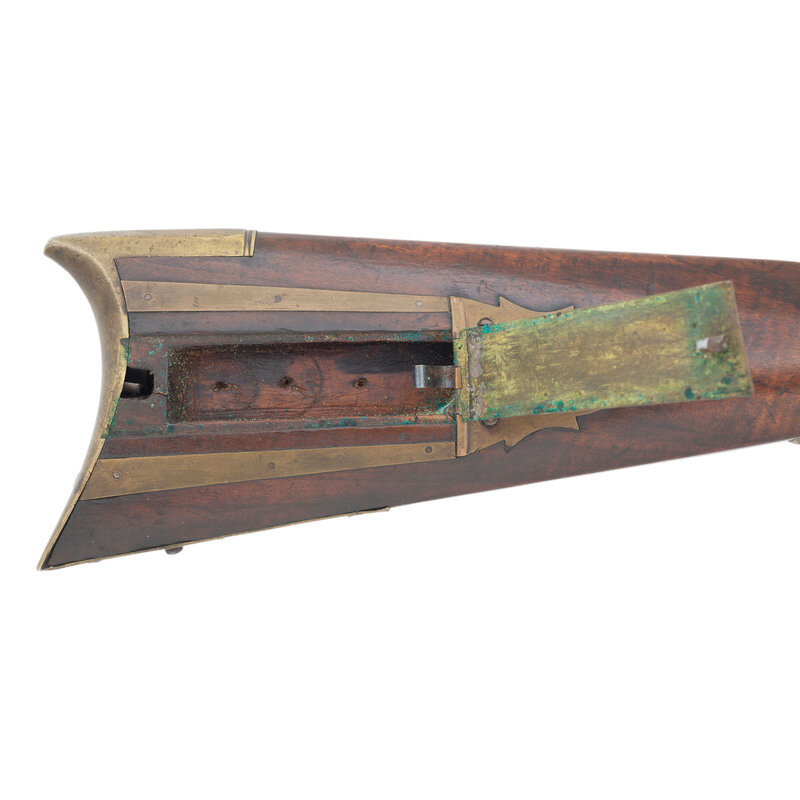
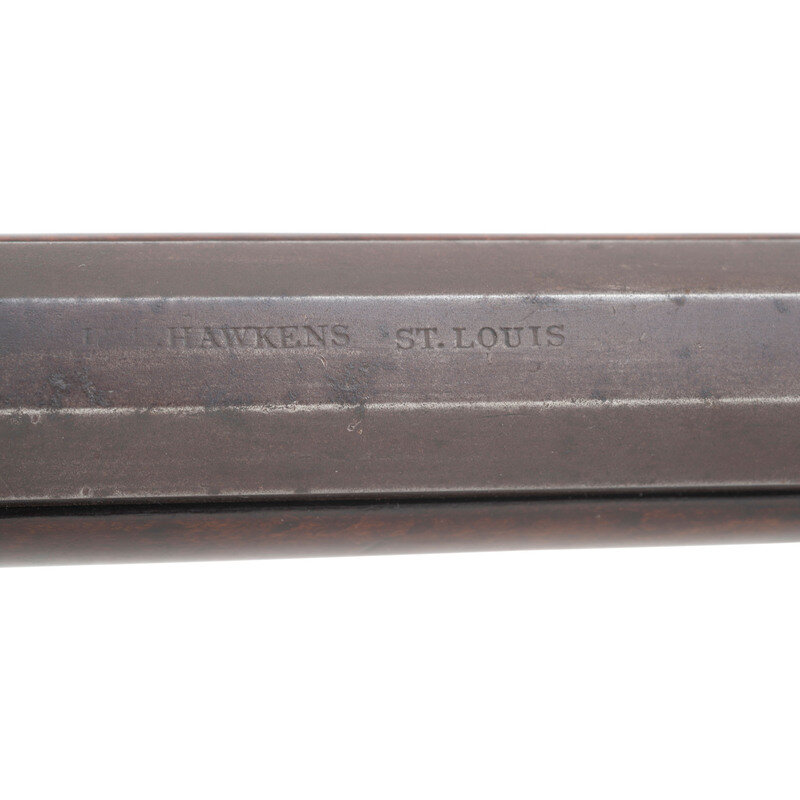
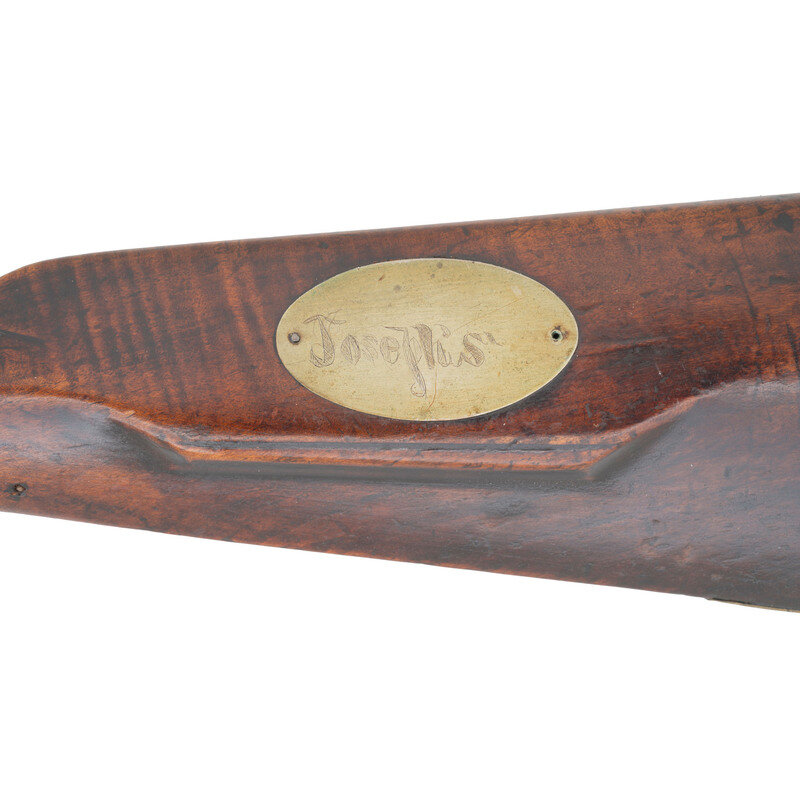
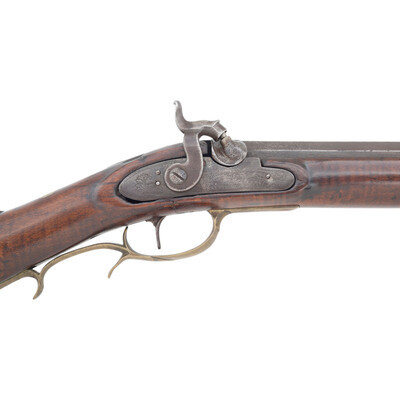
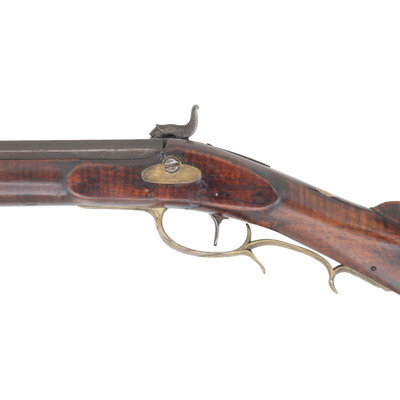
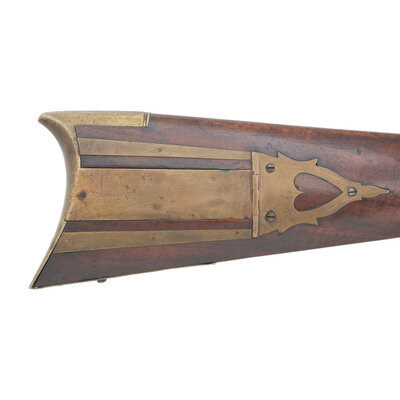
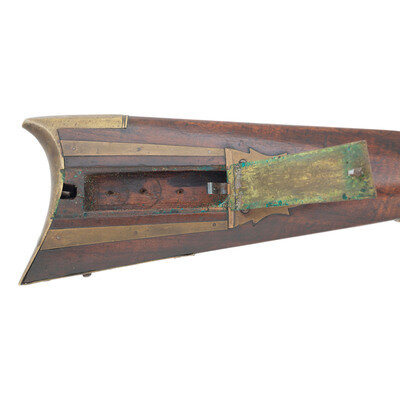
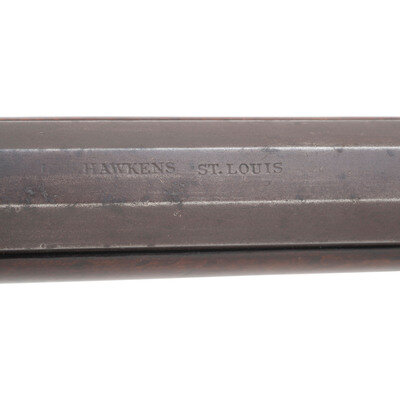
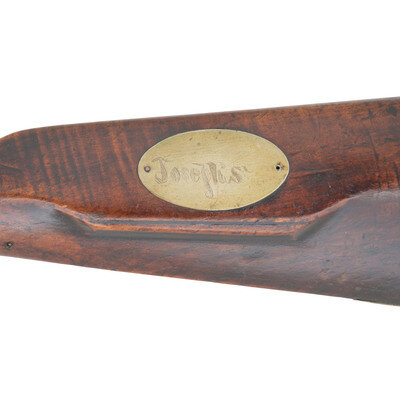
.56 caliber. 31" wedge retained octagonal barrel with single screw tang. NSN. Browned barrel, brass furniture, German silver decorations, full-length walnut stock with crescent butt. Single shot percussion muzzleloading rifle with fixed dovetailed rear sight, dovetailed German silver Rocky Mountain blade front sight. Commercial percussion lock retained by a single screw may be a replacement and is marked NORRIS & BEATTY in an arc over BALTIMORE. Top barrel flat correctly stamped J&S HAWKENS ST. LOUIS with the "J&S" mark weak and the "HAWKENS" and "ST. LOUIS" marks clear. Barrel and stock likely shortened at some point in time, with the 2" sheet brass forend cap being a replacement. Decorations include an oval German silver plate on the raised cheek rest that is engraved "Joseph's". A lozenge shaped German silver thumb plate and German silver wedge escutcheon are present as well. Single trigger, brass triggerguard with finger spur and grip extension, brass wedges. Four-piece brass patch box with cut out heart shaped mounting plate. While this may be a very early production J&S Hawken sporting rifle, It seems more likely that this gun was rebuilt in the period of use, reusing the J&S Hawken marked barrel and restocked as a shorter, handier rifle for handling and use on horseback. {ANTIQUE}
No name is more synonymous with the rifles of the great plains and pre-Civil War western expansion than that of Hawken. Jacob Hawken moved to St. Louis from Hagerstown Maryland in 1818 and was followed by his younger brother Samuel in 1822. Jacob had learned the trade of gun making from his father Christian and also spent time working at the US Arsenal at Harpers Ferry. Initially the Hawken brothers appear to have focused more on traditional gunsmithing and repairs in St. Louis than firearms manufacturing. The earliest guns they produced would have certainly been flintlocks with percussion guns not becoming typical until the early 1830s. Early St. Louis Hawken-marked percussion rifles were brass mounted full-stock guns that followed the general form of the Pennsylvania style rifles they would have produced in Hagerstown.
Subsequently, the brothers introduced the prototypical "Plains Rifle", also referred to at times as the "Rocky Mountain" rifle. These were typically very sturdy iron mounted large bore percussion rifles with double-set triggers that ranged from .52 to .60 caliber. They utilized heavy octagonal barrels that were typically 30" to 40" in length, normally measured at least 1.125" across the barrel flats, were usually rifled with seven grooves and were typically retained by two iron keys. The guns regularly utilized commercial locks marked by their makers or retailers. Fixed sights of the buckhorn rear and Rocky Mountain blade front were typical as well. These rifles were so perfectly adapted to the life of the mid-19th century plains hunter and mountain man that their popularity inspired a number of local gunmakers to offer guns of the same general pattern. Variations of the Hawken theme were produced by such famous St. Louis makers as Albright, Beauvais, Dimick and Gemmer.