Condition Report
Contact Information
Lot 260
Sale 2070 - American Historical Ephemera & Photography, including African Americana
Lots Open
Feb 14, 2025
Lots Close
Feb 27, 2025
Timed Online / Cincinnati
Own a similar item?
Estimate
$300 -
500
Price Realized
$600
Sold prices are inclusive of Buyer’s Premium
Lot Description
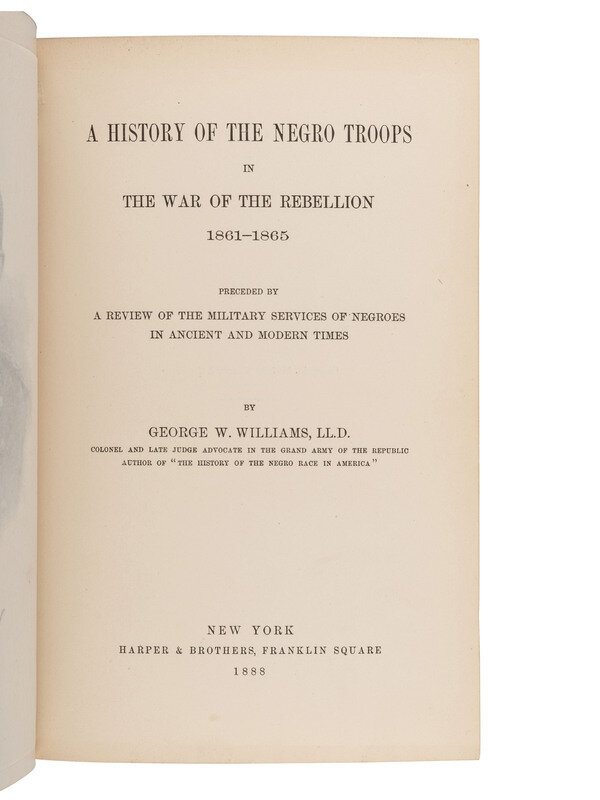
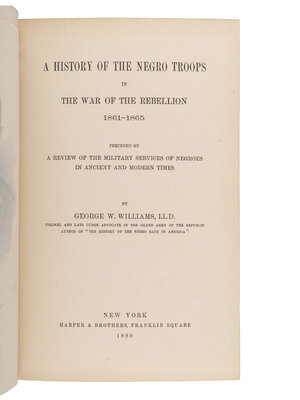
[CIVIL WAR] WILLIAMS, George W. A History of the Negro Troops in the War of the Rebellion,1888.
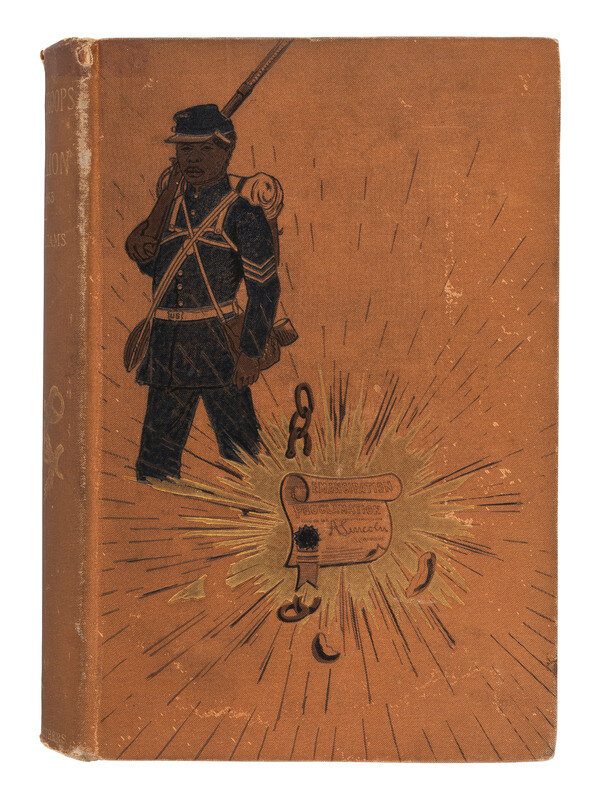
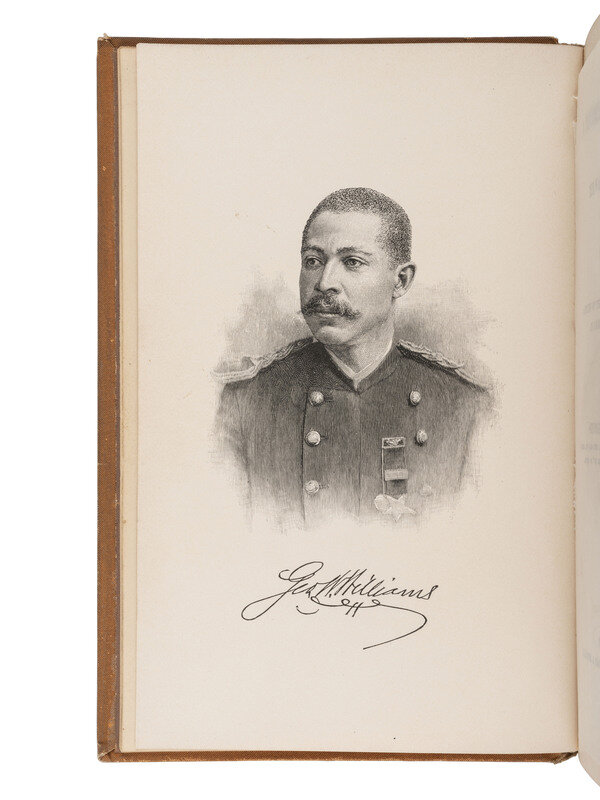
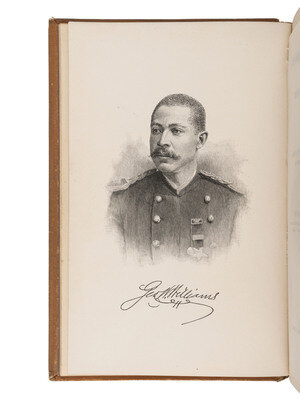
A History of the Negro Troops in the War of the Rebellion, 1861-1865 Preceded by a Review of the Military Services of Negroes in Ancient and Modern Times. New York: Harper & Brothers, 1888. [4], [ix]-xvi, 353 + 12 ad pp. Engraved frontispiece portrait of the author; 1 plate depicting medals. 8 x 5 in. Original pictorial tan cloth stamped in black and gilt. Inscribed "C.W. Doering. / May 12 1888." First Edition of this important work on African American soldiers in the American Civil War. Not only was A History of the Negro Troops one of the first military histories of USCT compiled by a Black author, Williams's use of newspaper reports, records, newspaper advertisements, and oral histories mark this volume as a pioneering historiographic account.
George Washington Williams (1849-1891) was a soldier, Baptist minister, politician, lawyer, and pioneering African American historian. Born free in Pennsylvania, Williams enlisted at the age of 14 in the Union Army. After the war he was among Americans who fought in Mexico to overthrow Emperor Maximilian, then returned to the US in 1867 and reenlisted with the 10th Cavalry "Buffalo Soldiers." In later years Williams would study law under Alphonso Taft and pass the Ohio bar, before becoming the first African American elected to the Ohio state legislature. Williams is perhaps best known for his 1882 landmark study in African American history, History of the Negro Race in America from 1619 to 1880. Considered the first comprehensive history of African Americans in the United States, Williams used the term "crime against humanity" when discussing the immorality of slavery, marking one of the earliest uses of the phrase in its modern context.