Condition Report
Contact Information
Auction Specialist
Lot 94
Sale 2025 - Asian Works of Art
Sep 20, 2024
10:00AM ET
Live / New York
Own a similar item?
Estimate
$3,000 -
5,000
Price Realized
$6,985
Sold prices are inclusive of Buyer’s Premium
Lot Description
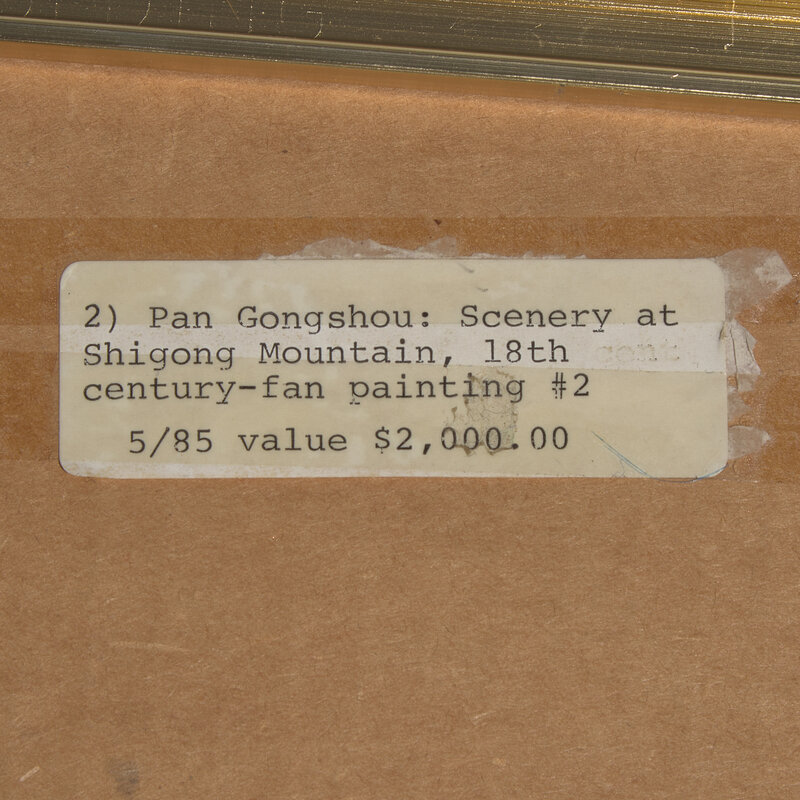
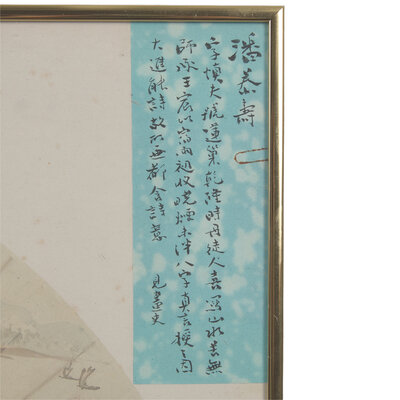
Wang Wenzhi (1730-1802), Pan Gongshou (1741-1794)
王文治(1730-1802),潘恭壽(1741-1794)
王文治(1730-1802),潘恭壽(1741-1794)
18th Century
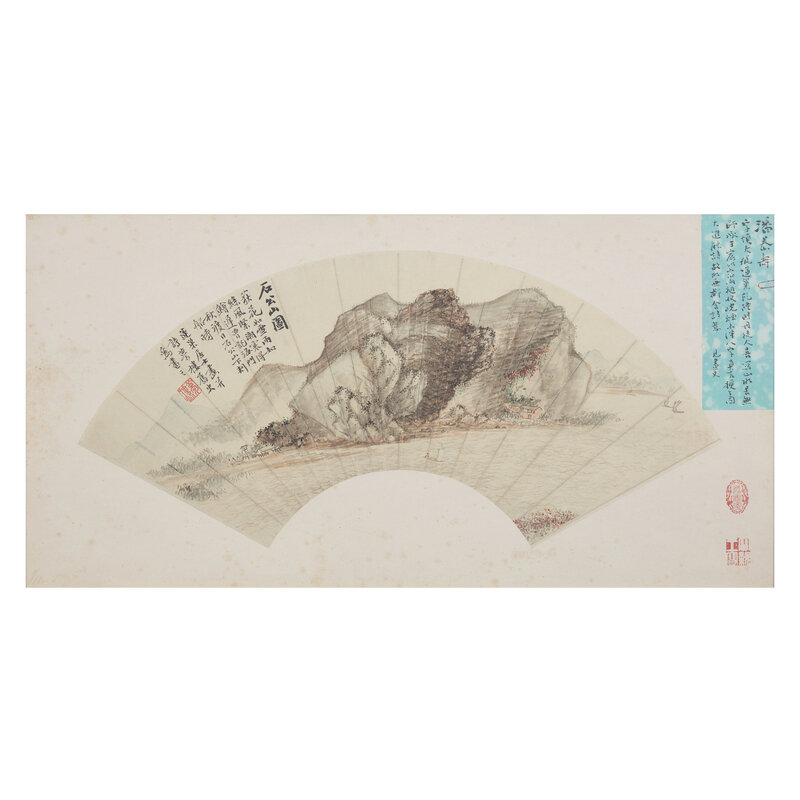
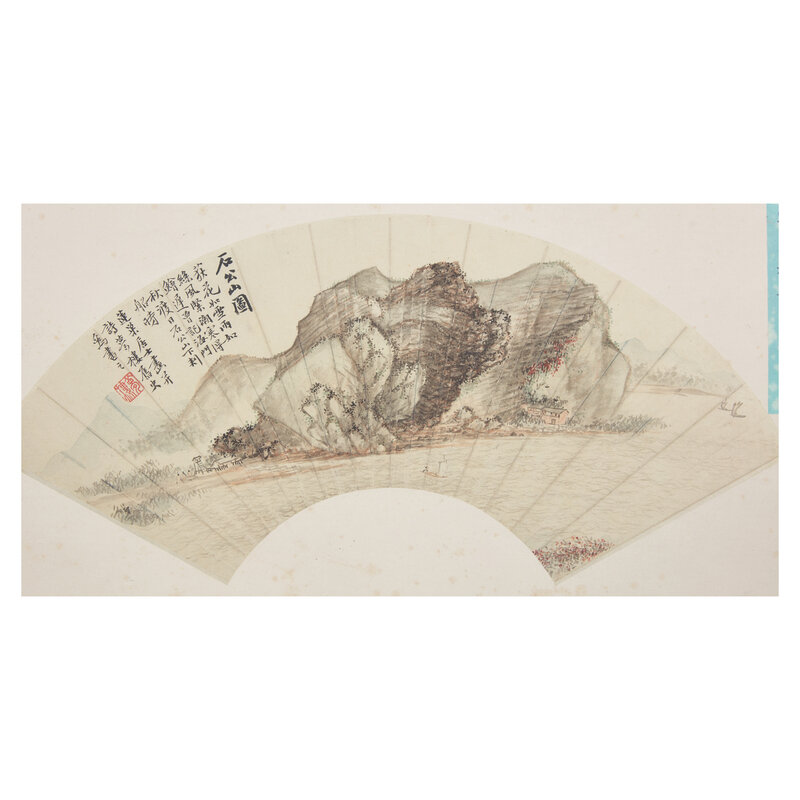
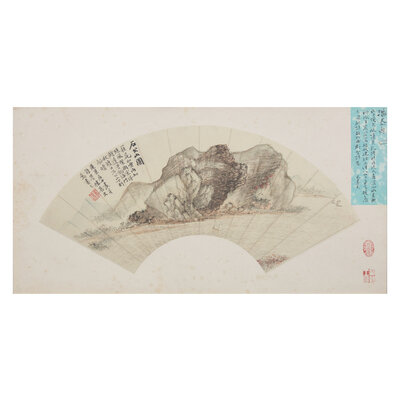
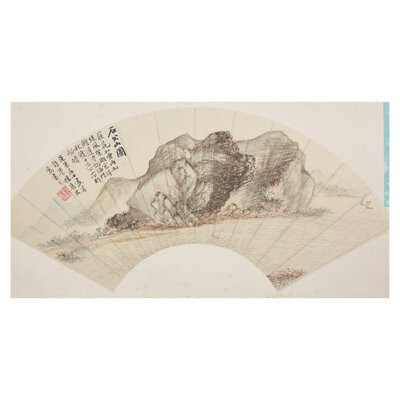
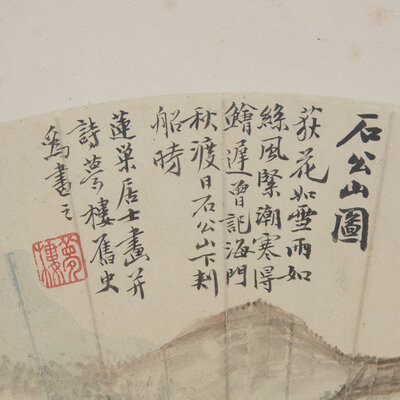
Scenery at the Shigong Hill
ink and color on paper, framed folding fan leaf
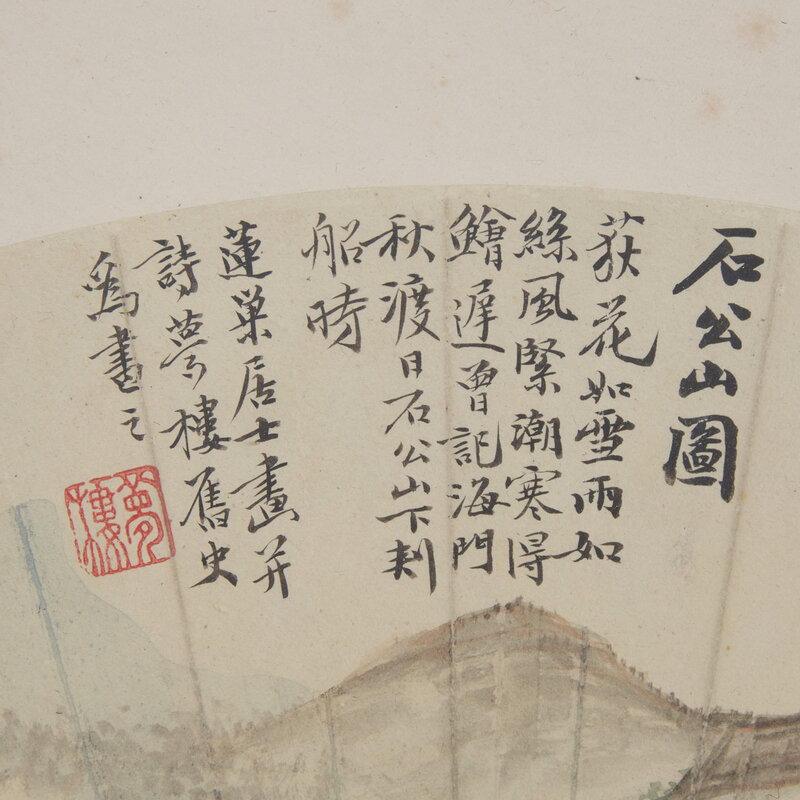
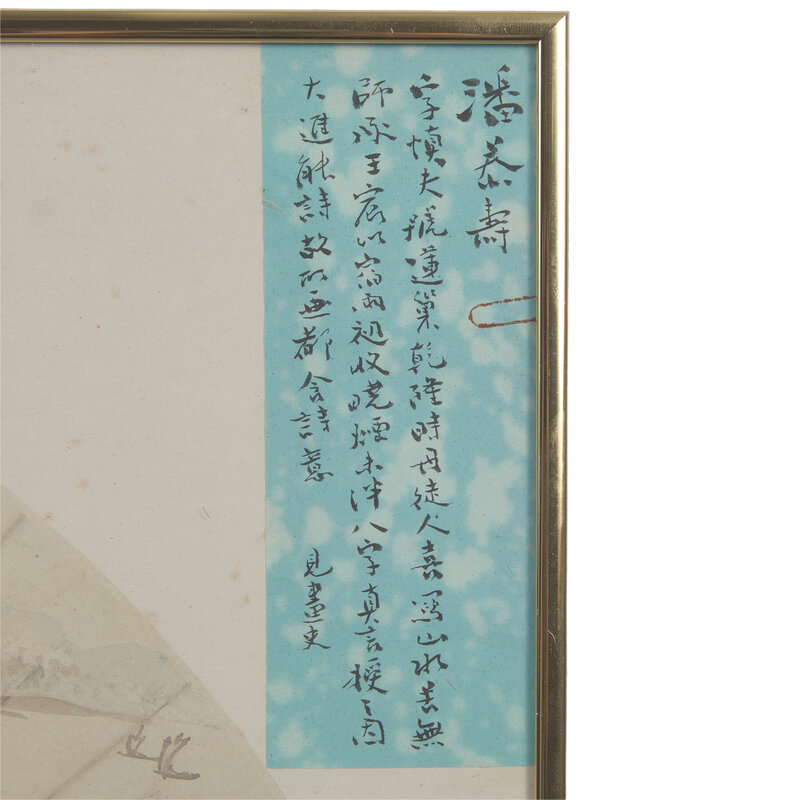
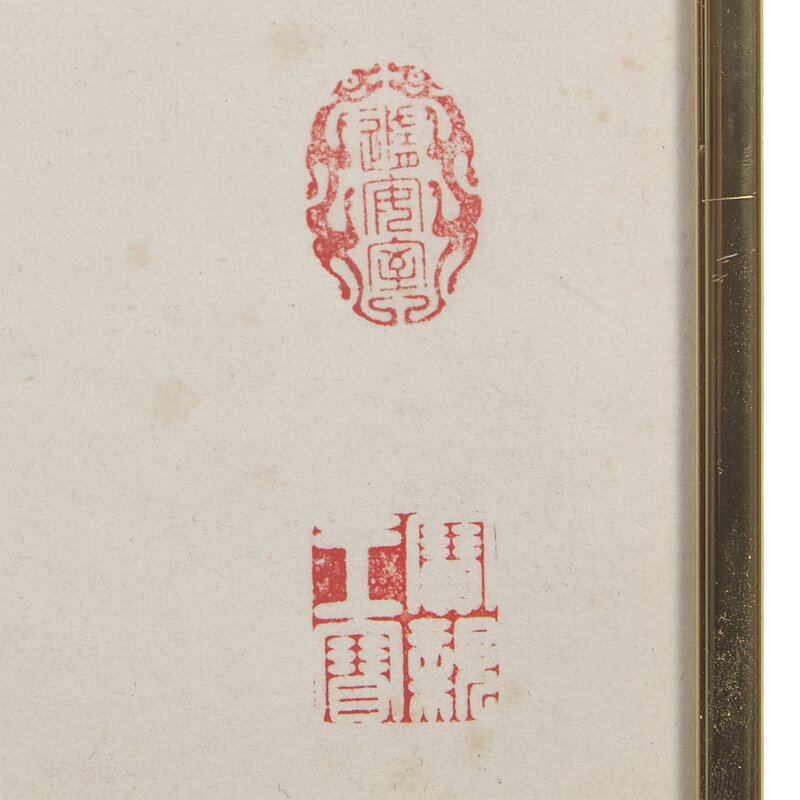
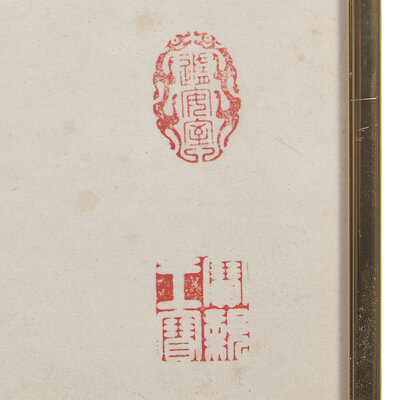
painted by Pan Gongshou, inscribed by Wang Wenzhi, and signed with an artist's seal, Menglou, two collector's seals, Baoqinwang bao, sui an shi.
王文治(1730-1802),潘恭壽(1741-1794)
清中期
石公山圖扇面
紙本設色,鏡框
款識:石公山圖。荻花如雪雨如絲,風緊潮寒得鱠遲。曾记海门秋渡日,石公山下刺船時。蓮巢居士畫並詩,夢樓舊史為書之。
鈐印:夢樓、
鋻藏印:寶親王寳、隨安室
Note:
Jiangnan, the region below the lower Yangtze River's south bank, embodies a profound tradition of Chinese scholarship that has developed over the past thousand years. This tradition was especially enriched after the establishment of the Southern Song Dynasty in Lin'an (now Hangzhou) around 1127 AD, a period during which the economy and culture flourished. As a result, this cultural environment nurtured generations of scholars, including some of the most prominent figures in Chinese literati history.
Among them were Pan Gongshou (1741-1794) and Wang Wenzhi (1730-1802), both born in Dantu (now Zhenjiang). Their relationships encompassed fellowship, friendship, and apprenticeship. Wang was known as "Dan Mo Tan Hua" (Third Place Examiner Excelling at Subtle Ink) and was one of the most renowned calligraphers of his time. His cursive script calligraphy was highly acclaimed and compared to that of the legendary scholar Dong Qichang (1555-1636). After retiring as a governor in 1760, Wang Wenzhi enjoyed a scholarly life with various artists and intellectuals, including Pan Gongshou.
Early in his career as a self-taught painter, Pan Gongshou adopted Wang’s calligraphic spirit in his landscape paintings. Building on this foundation, he studied extensively the works of old masters such as Mi Youren (1074-1151). Pan was influenced by the "Mi Jia Yan Yun" (Mi School Fog and Smoke) style and perfected the "boneless" landscape painting technique. He also developed his poetry skills, which added a lyrical dimension to his work.
Collaborative artworks between these two scholars, such as the one offered in this sale, are highly sought after. They represent not just pieces of art but manifestations of their friendship and the enduring essence of Jiangnan.
江南,地處長江中下游南畔。然其深意昭昭,實為千年華夏文脈之正統。西元1127年,宋室南遷臨安(今杭州)。澤沐於衣冠南渡,江南重鎮百花齊放。如斯沃土,自有百代文人大儒鞠躬盡瘁於江山。
生於丹徒(今鎮江),潘恭壽(1741-1794)與王文治(1730-1802)當屬江南文人俊傑,二子同鄉,亦師亦友。王文治書法冠絕乾隆一朝,時人譽之“淡墨探花”。其行草猶然,深得先賢董其昌(1555-1636)神韻。其人於1760年絕意仕途,而後與眾文人墨客交遊山水之間,潘恭壽為其一。
潘恭壽初無師承,而後王文治以書家筆道授之,遂以筆意舞墨山水。又復取古蹟證仿,畫日進。研習大家米友仁(1074-1151)之便,其山水又得“米家煙雲”之墨韻。其畫清腴妍冷,實為“沒骨法”之大成者。後能詩,至其畫多富詩意。
“潘畫王題” 之珍者,如是次拍品,為世人所趨。當非唯其神乎技矣,而二子伯牙子琪之美,江南文人超然物外者,宜商彝夏鼎永寶之。
Image 21 x 6 1/2 in., 53.3 x 16.5 cm.
Property from the collection of Dr. Merrill Grayson, M.D.
This lot is located in New York.