Condition Report
Contact Information
Lot 52
Lot Description
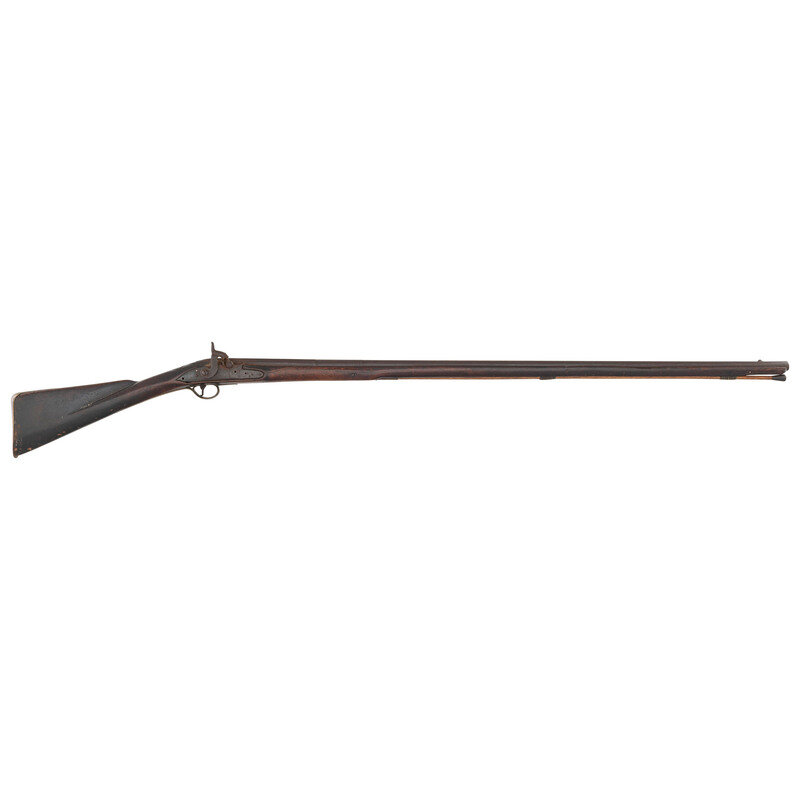
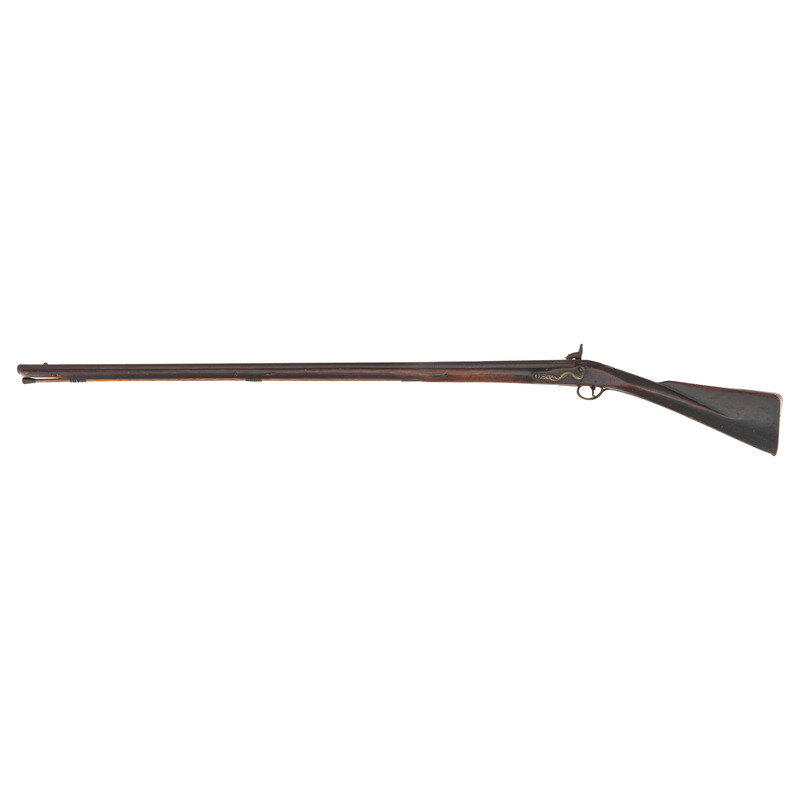
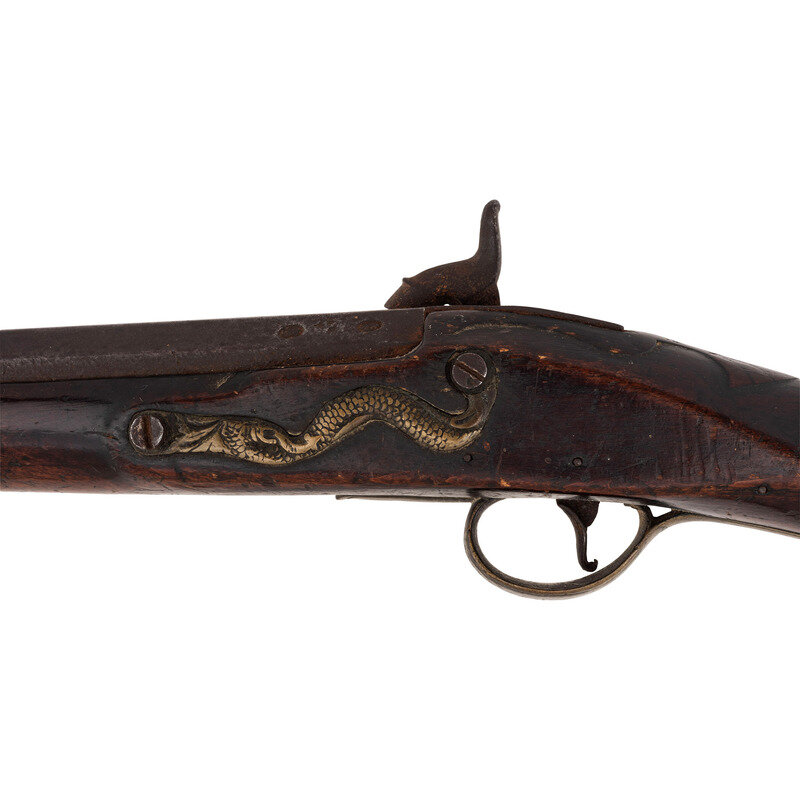
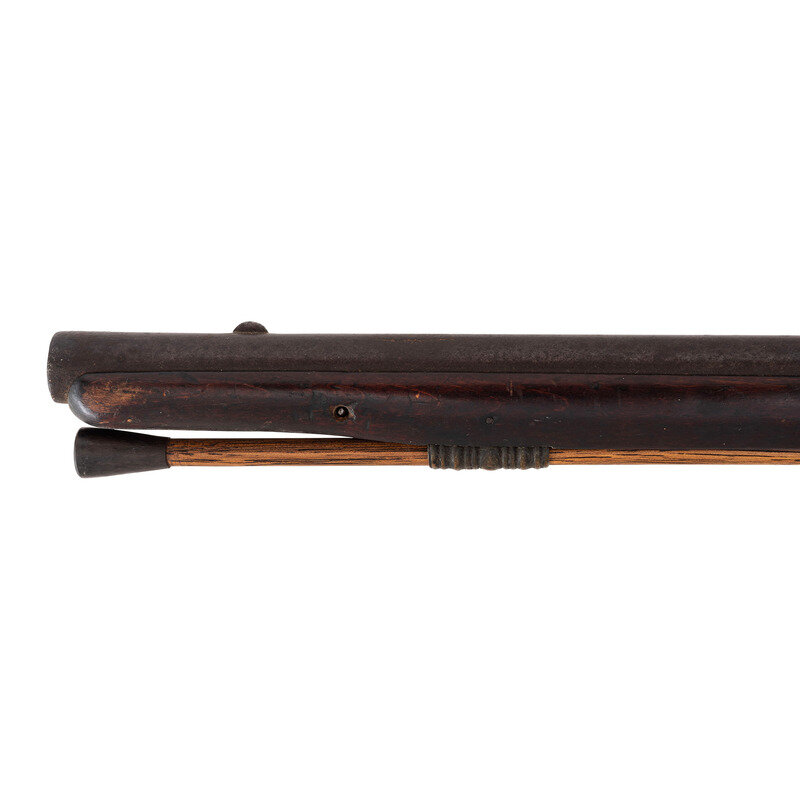
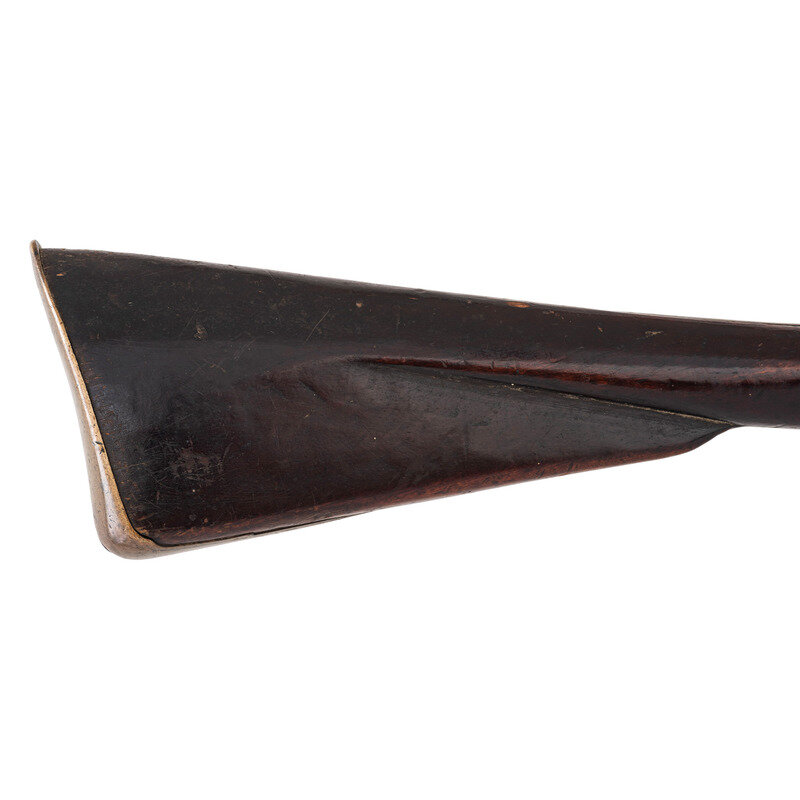
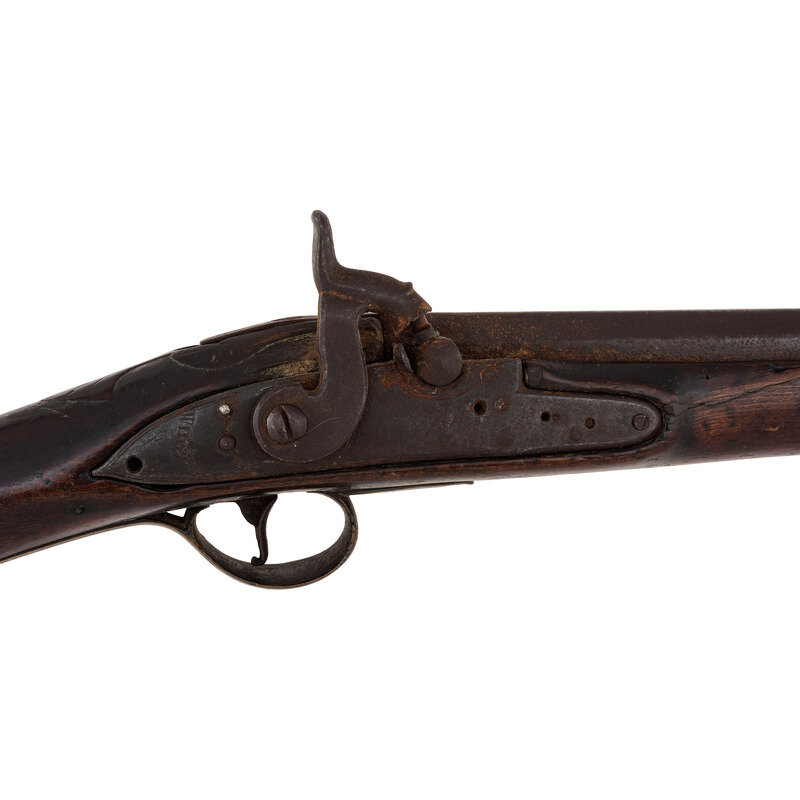
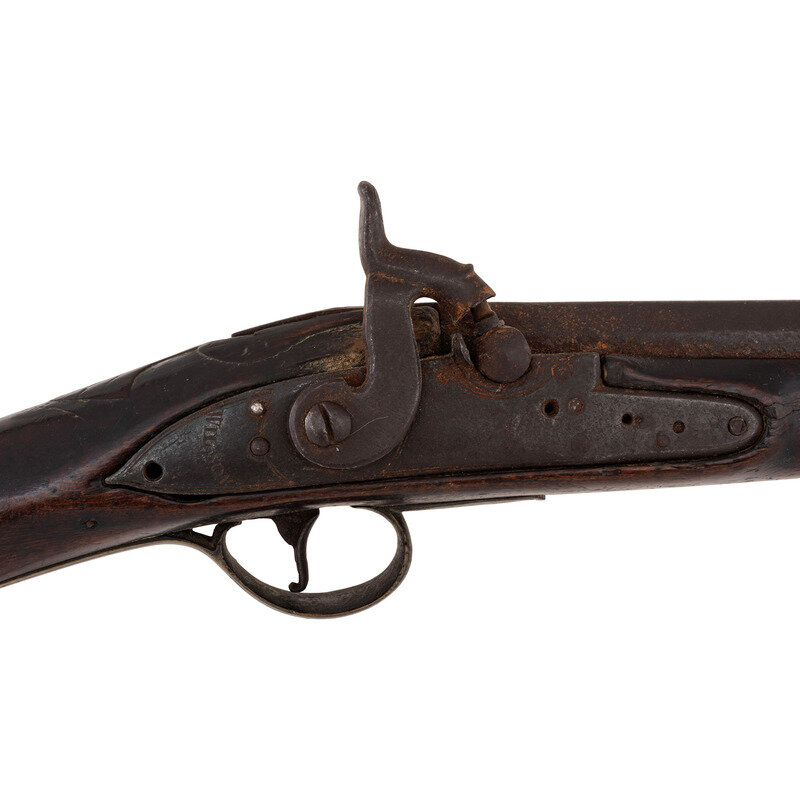
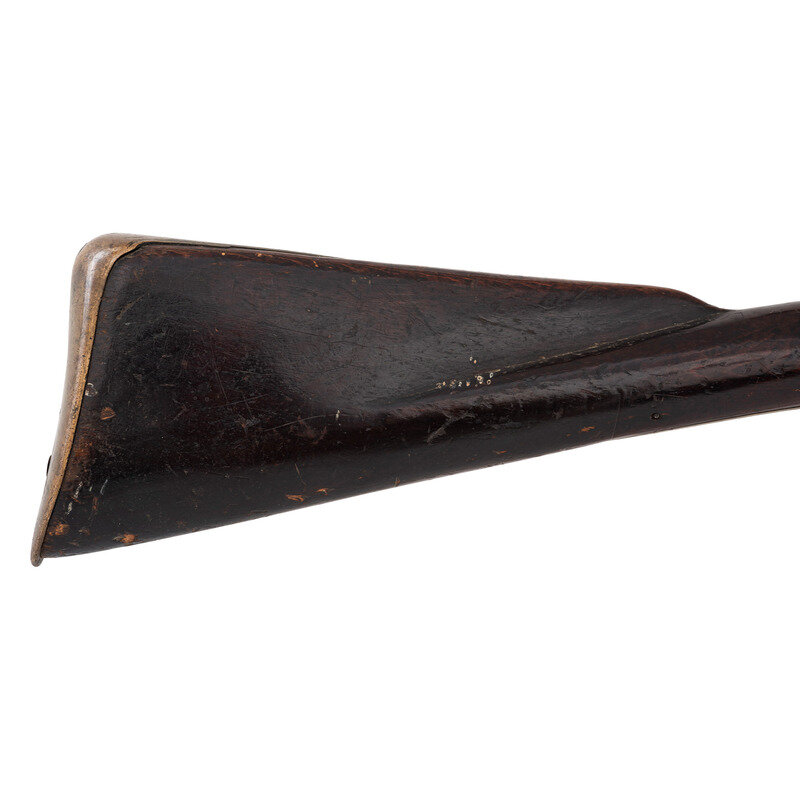
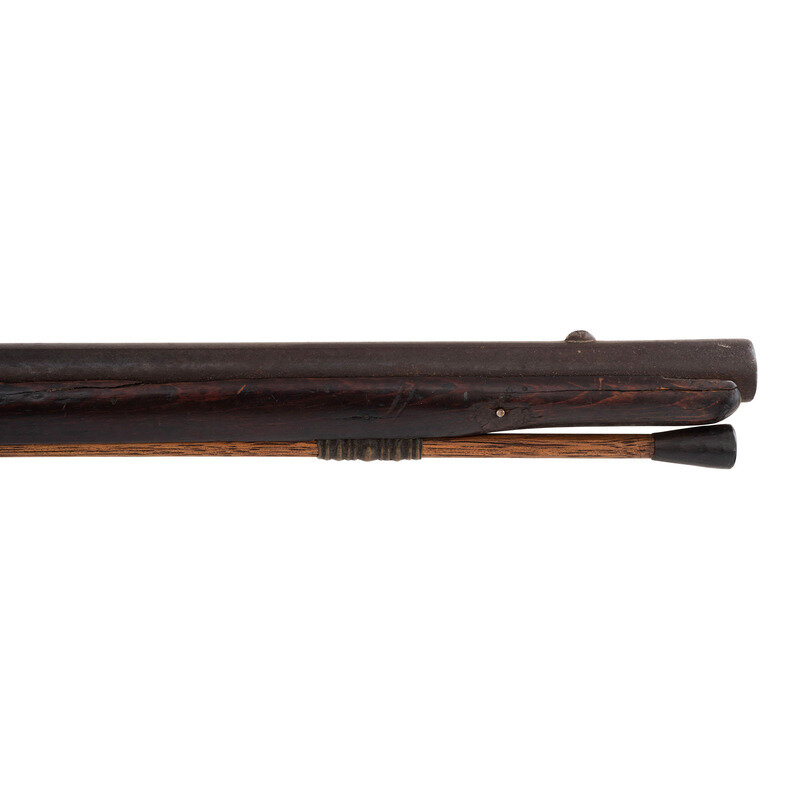
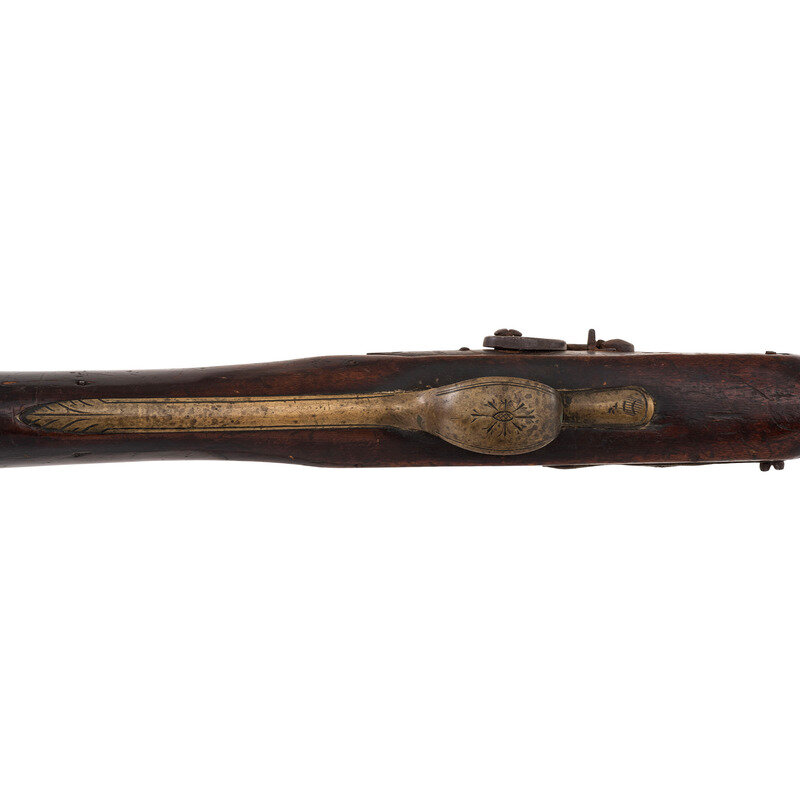
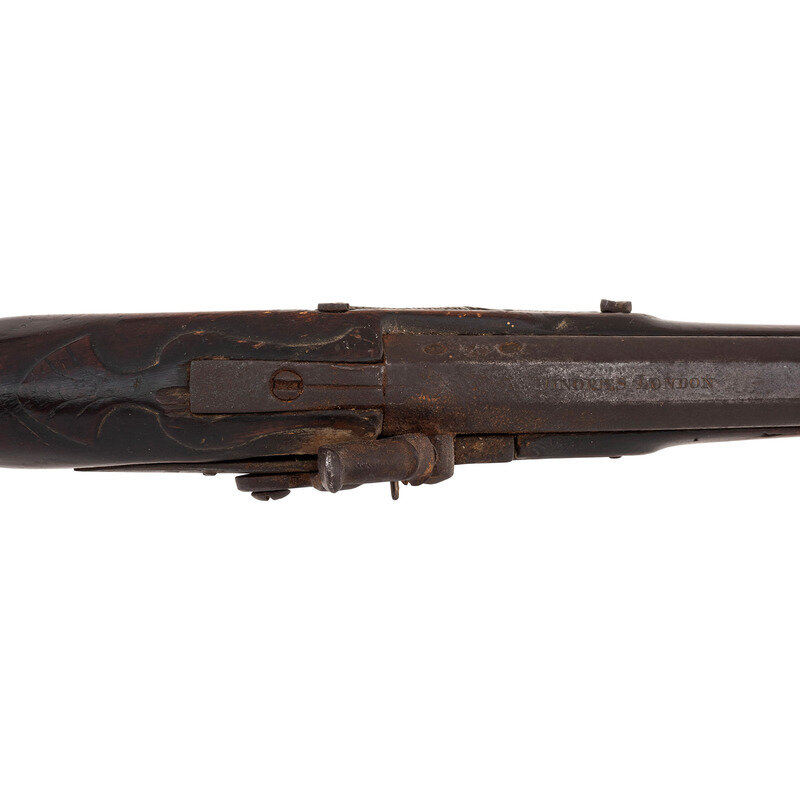
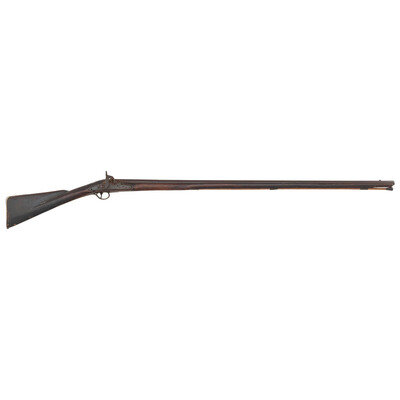
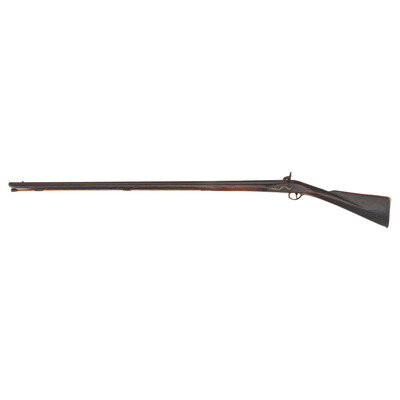
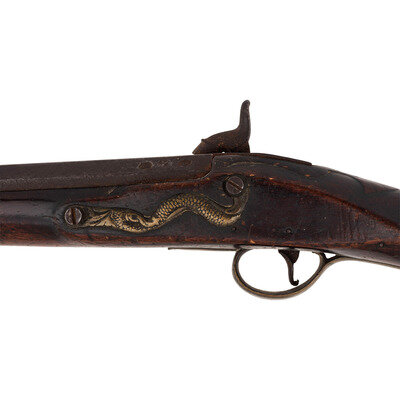
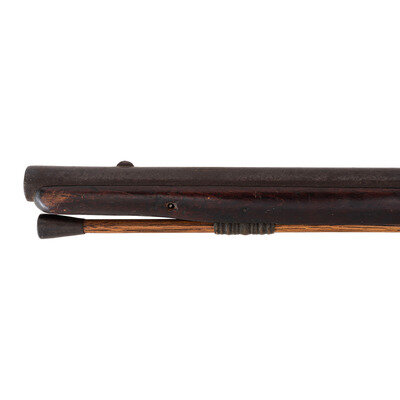
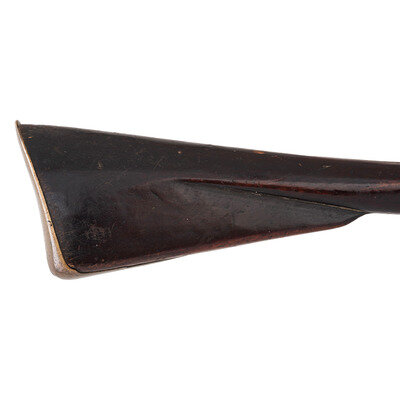
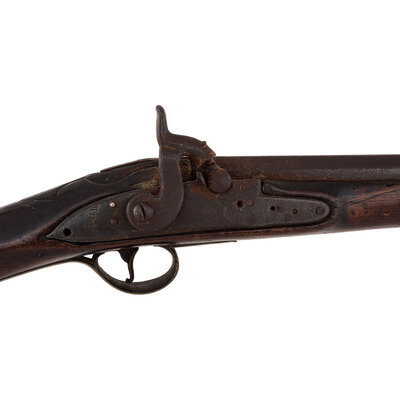
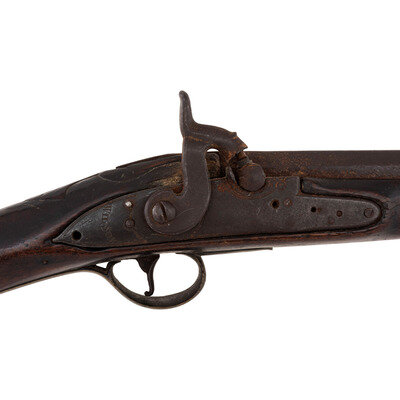
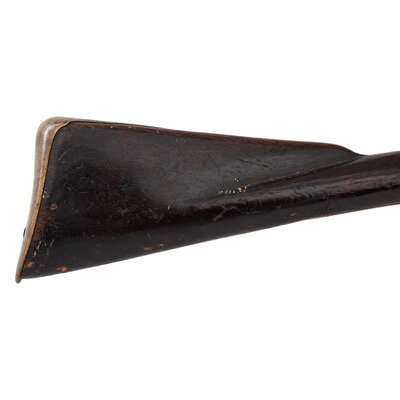
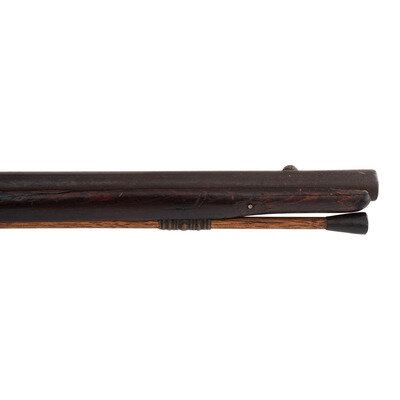
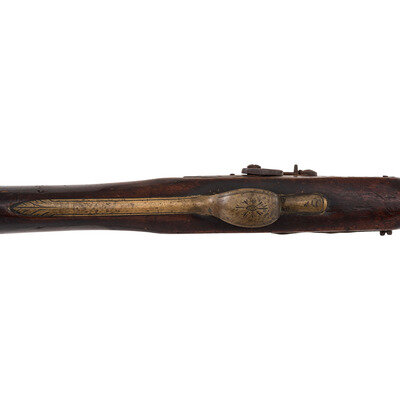
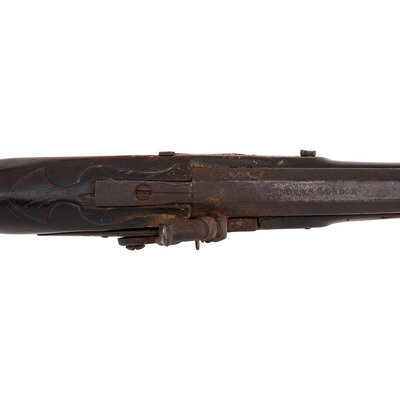
.62 caliber. 42" three stage pinned octagon to round barrel. SN: NSN. Browned finish, brass furniture, full-length hardwood stock. Percussion altered flint lock marked "WILSON" in a vertical arc at the tail. Top flat of percussion altered barrel with drum conversion is marked "MINORIES LONDON" and upper left flat marked with pre-1813 London commercial proof marks and the "*/RW" maker's mark of Richard Wilson. Mid-18th century production, circa 1760 with early trade gun features including a lightly engraved brass buttplate tang, engraved small bow triggerguard and of the course the ubiquitous dragon motif "serpant" side plate. The brass furniture of later Northwest Trade Guns would be simpler with the large bow triggerguard and engraved higher grade fittings like those found on this gun would be relegated to "Chief's Grade" guns. The form of the stock is slender with an attractive and graceful French butt with pronounced rail at the wrist in imitation of the French Fusil de Chasse. The tang has a raised carved apron and the side plate has been shortened from the three-screw to two-screw length, with no indication of a third screw ever being used in the gun. It is not clear if the shortened side plate was Wilson's original intent or if the strongly French influenced stock form is a period of use re-stocking of English parts. In either case, this is an elegant and untouched early trade gun that saw use from the mid-1700s well into the percussion era. Two corrugated brass ramrod thimbles and a cast entry pipe secure an old horn tipped wood ramrod.
Richard Wilson (1703-1766) was one of the most prolific London based gunmakers during the mid-18th century. He was apprenticed to Thomas Green in 1718 and made free of the Gunmakers Company in 1725. His proof piece and mark were approved in 1730 and he was elected Master in 1734. He took over the business of Agnes Green located in Fowler, Minories in 1730. By 1730 he was a contractor to the Hudson's Bay Company and in 1733 became a contractor to the East India Company as well. He produced arms for the Hudson Bay company from 1730-1756, East India Company from 1733-1736 and in 1746 became a Board of Ordnance contractor as well. The firm also became a contractor to the Royal African Company in 1739. The firm operated as Richard & William Wilson & Co in 1757 with the addition of Richard's son William and in 1759 became Richard Wilson & Co which it operated as until Richard's death in 1766.