Condition Report
Contact Information
Lot 211
Lot Description
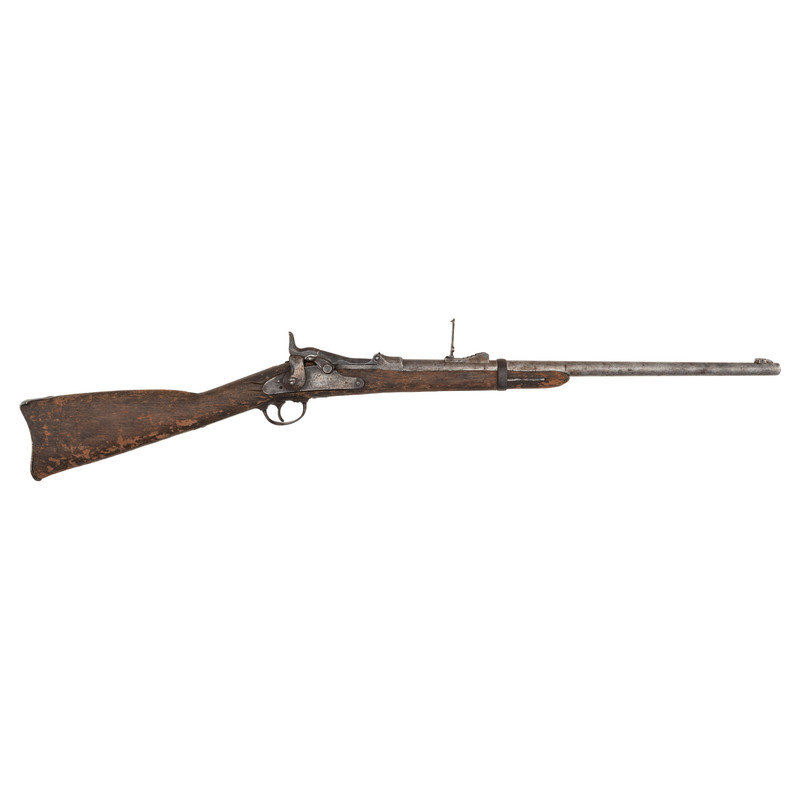
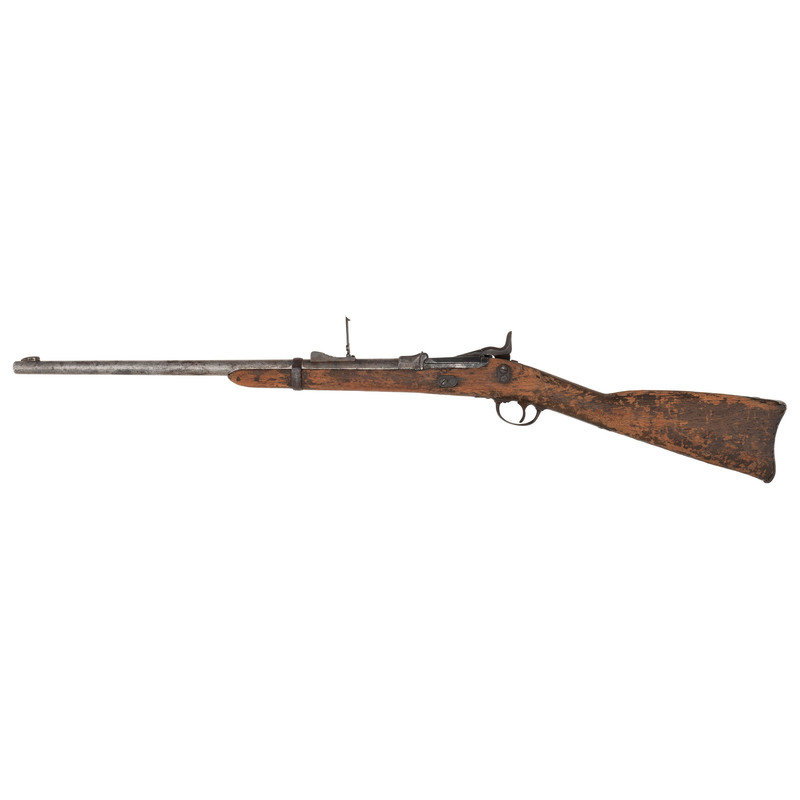
.45-70. 22" barrel length. SN: 15509. Blued and color casehardened finish, smooth walnut short-comb, long-wrist stock. Lock marked weakly with the "{US SPREAD-WINGED EAGLE}" and in three lines "US/SPRINGFIELD/1873". Trapdoor marked "MODEL/1873/{EAGLE HEAD}/{CROSSED ARROWS}/US". Serial number at rear of receiver. No barrel proofs as is correct. No visible inspection marks in wood due to wear. Narrow receiver, two-click tumbler, high-arch breech, spring-loaded steel firing pin, coarse checkered hammer without lip, smooth trigger, two-piece triggerguard, barrel band without stacking swivel. 1873 pattern rear sight numbered 1 to 5 on the side walls and 6 to 12 on the ladder, sight blade in original steel base is an old, period of use replacement. Correct solid buttplate marked "US" without implement hole in stock. Carbine has none of the 1877 upgrades and remains in its original “Custer Era” configuration. Sling bar cut from mounts, typical of Native used guns.
While the Springfield Research Service Serial number books are a far from complete record of US military arms serial numbers, they can provide some helpful insight into where a gun may have been issued. This carbine is not listed specifically but several carbines close to this number are. The closest, #15506, only 3 numbers away, was issued to the 6th Infantry and was turned in damaged on February 14, 1877. Another gun tuned in damaged on that day from that regiment was #15238. The next closest gun is #15501 which is only 8 numbers away was in the possession of F troop of the 2nd US Cavalry on October 12, 1878. Other F troop, 2nd Cavalry carbines close to this one are #15552 (which was stolen on October 1, 1875) and #15620. Carbine #15537 was in the arms inventory at Fort Laramie on June 13, 1875 and #15590 was in use by F troop of the 5th Cavalry in April of 1879. Realistically it seems more likely that this gun was a 2nd cavalry gun than a 7th cavalry gun, but it falls in the coveted "Custer Range" and has none of the 1877 upgrades. The relic condition, missing sling bar and lack of modifications strongly suggest the gun was no longer in government service by sometime in 1877 and had either been lost or stolen, from which point it likely spent time in the hands of Native Americans.