Condition Report
Contact Information
Lot 197
Lot Description
Alpini, Prospero, and Johann Vesling
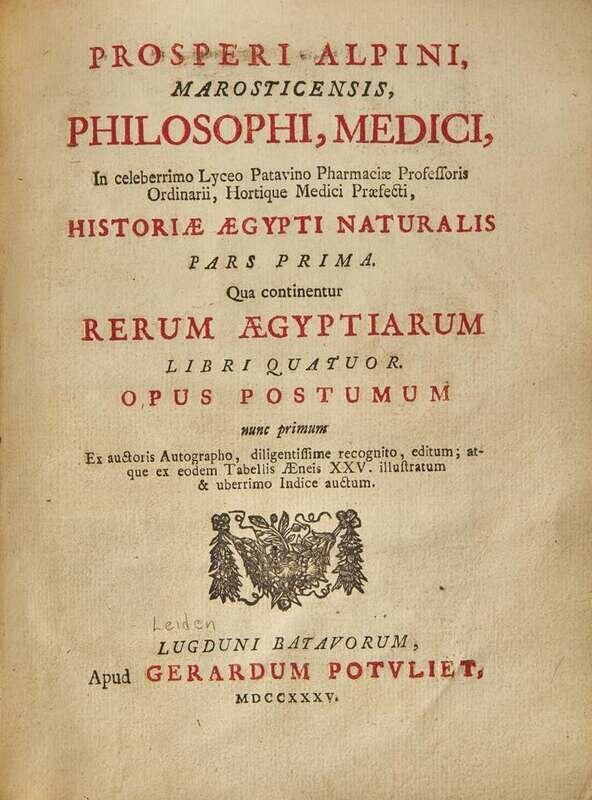
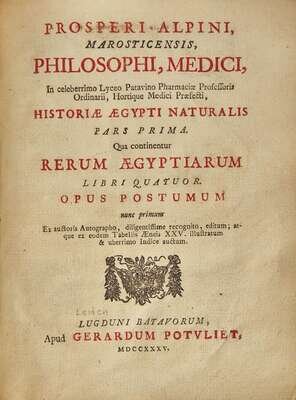
Historiae Aegypti Naturalis...
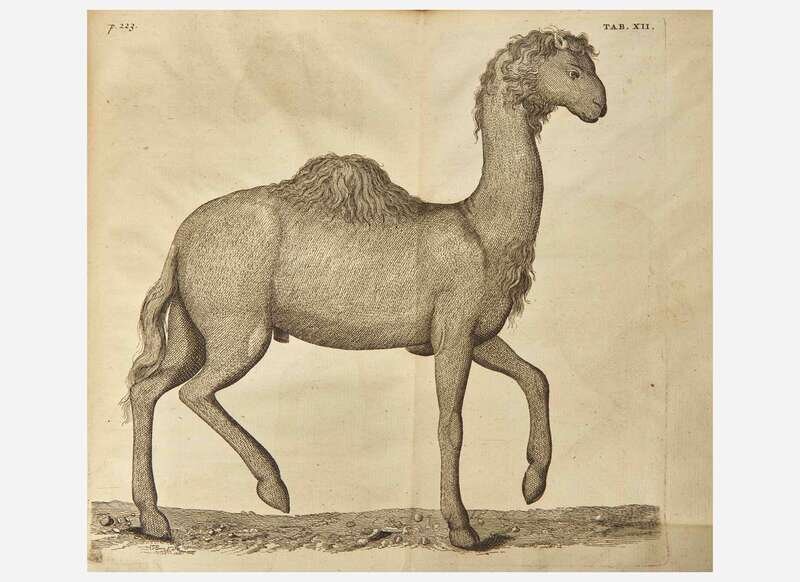
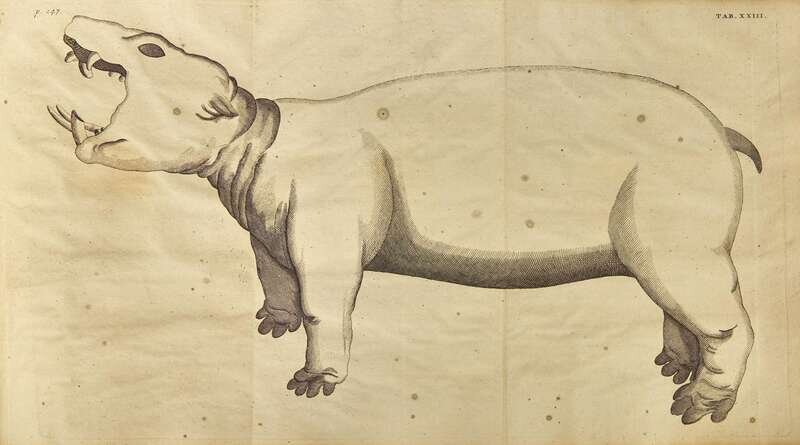
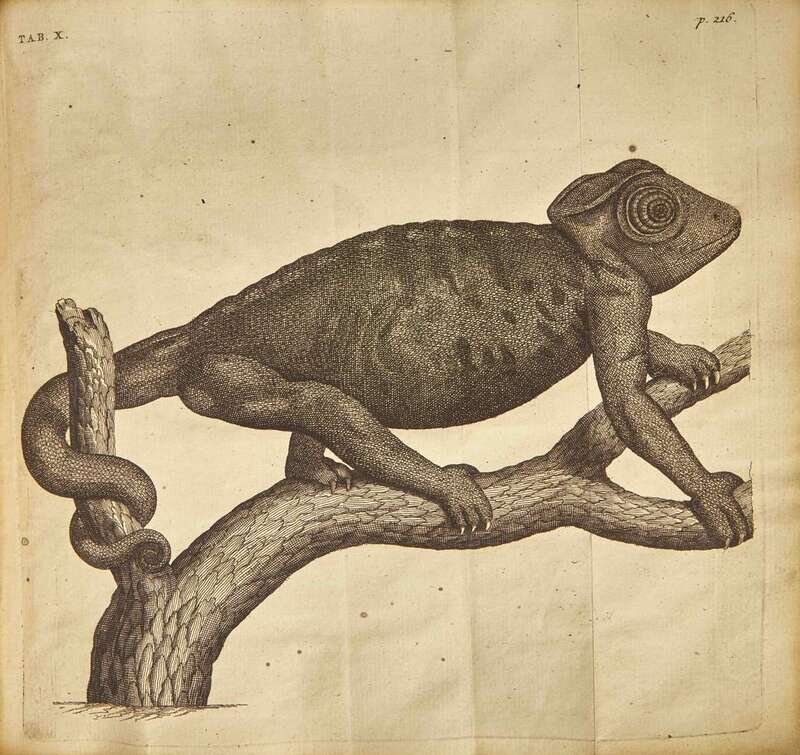
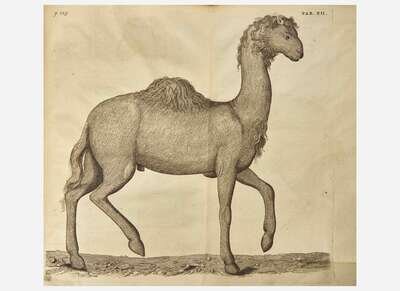
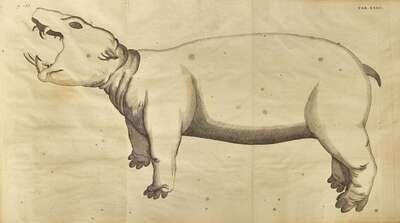
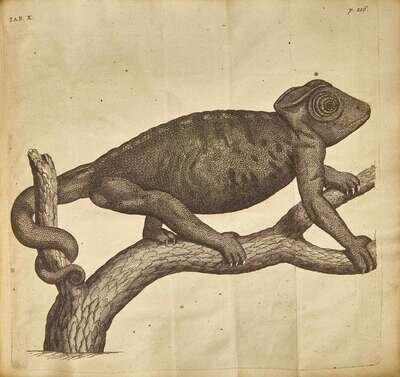
Leiden: Gerard Potvliet, 1735. Two parts in one volume (with: Plantis Aegypti…). First collected edition. 4to. (xx), 248, (12); (viii), 146, (2), 151-306, 26 pp. Title-pages printed in red and in black. Illustrated with 102 engraved plates (eight folding and 94 single-page plates); plates III and IV in first volume bound between pp. 172-173 in second volume. Full contemporary vellum, titled in ink on spine, slightly shaken, minor splitting along front joint, old soiling to rear board; all edges trimmed; light scattered soiling in rear leaves; top edge of plate 52 in second volume repaired.
First collected edition of Venetian botanist Alpini Prospero's major work on Egyptian plant and animal life. The first part of this work, often referred to as Rerum Aegyptiarum, is published here for the first time, while the second work, Plantis Aegypti, was first published in 1592, and is here supplemented with notes and observations by Johann Vesling. Alipini was trained in medicine in Padua and appointed physician to the Venetian Consul in Egypt in 1580. During this time he made extensive studies of Egyptian and Mediterranean flora, and is reputed to be the first to artificially fertilize date trees. Upon his return to Venice in 1586, he became personal physician to Andre Doria, Prince of Melfi. He returned to Padua in 1593 and became a professor of botany and director of the botanical garden at the University of Padua, where he cultivated many of the plants referred to in Plantis Aegypti. With this work he is credited as introducing coffee and bananas to Europe. Vesling took over the botanical gardens at Padua University upon Alpini's death, in 1617.