Condition Report
Contact Information
Lot 114
Lot Description
Elizabeth Barrett Browning's Copy
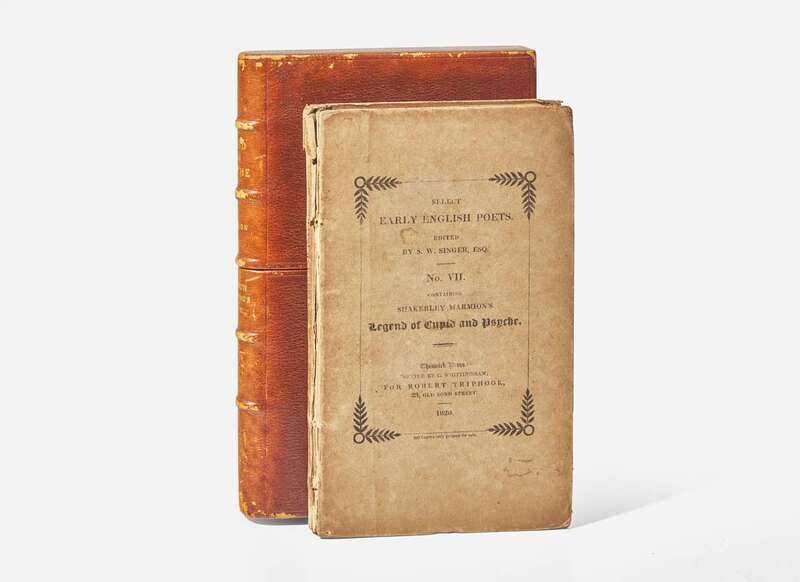
[Browning, Elizabeth Barrett] Marmion, Shakerley
Cupid and Psyche. A Legend
Chiswick: From the Press of C. Whittingham (for Robert Triphook), 1820. First edition thus (one of only 230 copies printed). 12mo. xl, 105, (1) pp. From the library of Elizabeth Barrett Browning and signed and dated with her maiden name at top of title-page ("Elizabeth Barrett Barrett 1842"). Original drab paper-covered boards, printed in black, front board detached, spine worn and chipped; all edges trimmed; modern gift inscription on title-page below Browning's signature; in brown morocco lift off case and cloth chemise. Kelley, The Browning Collections A1544
From the library of celebrated poet Elizabeth Barrett Browning (1806-1861). The 1840s were a period of energetic literary output coupled with prolonged illness and recovery for Browning. In a period of a few short years following her return from Torquay in 1841, where Browning convalesced from a severe illness, she composed and published numerous poems and essays, including some of her most acclaimed work, such as her second book of poetry, "Poems" (1844), and her enduring "Sonnets from the Portuguese" (1845-46, published in 1850). In the process she gained critical acclaim, that in turn led to her courtship and marriage to Robert Browning, in 1845.
Apuleius's Cupid and Psyche was a source of inspiration for Browning throughout her career. In the summer of 1845, three years after she signed this book, she composed a series of ten narrative poems retelling Apuleius's story of the lovers. The poems were intended to be included in a collection of verse published by a friend, but remained unpublished until after Browning's death. They first appeared in print in her Last Poems, in 1862. Earlier, in 1841 she worked with Richard Hengist Horne on translations of Apuleius's Metamorphoses, that were published by Horne following Browning's death, under the title Psyche Apocalypte. She made further allusions to the two figures in her epic verse Aurora Leigh, published in 1856.