Condition Report
Contact Information
Lot 24
Sale 2600 - Books and Manuscripts
Sep 27, 2023
11:00AM ET
Live / Philadelphia
Own a similar item?
Estimate
$700 -
1,000
Price Realized
$2,016
Sold prices are inclusive of Buyer’s Premium
Lot Description
[Americana]
The Trial of John Peter Zenger, Of New-York, Printer: Who was charged with having printed and published a Libel against the Government; and acquitted. With a Narrative of his Case. To which is now added, being never printed before, The Trial of Mr. William Owen, Bookseller…
1765
The Trial of John Peter Zenger, Of New-York, Printer: Who was charged with having printed and published a Libel against the Government; and acquitted. With a Narrative of his Case. To which is now added, being never printed before, The Trial of Mr. William Owen, Bookseller…
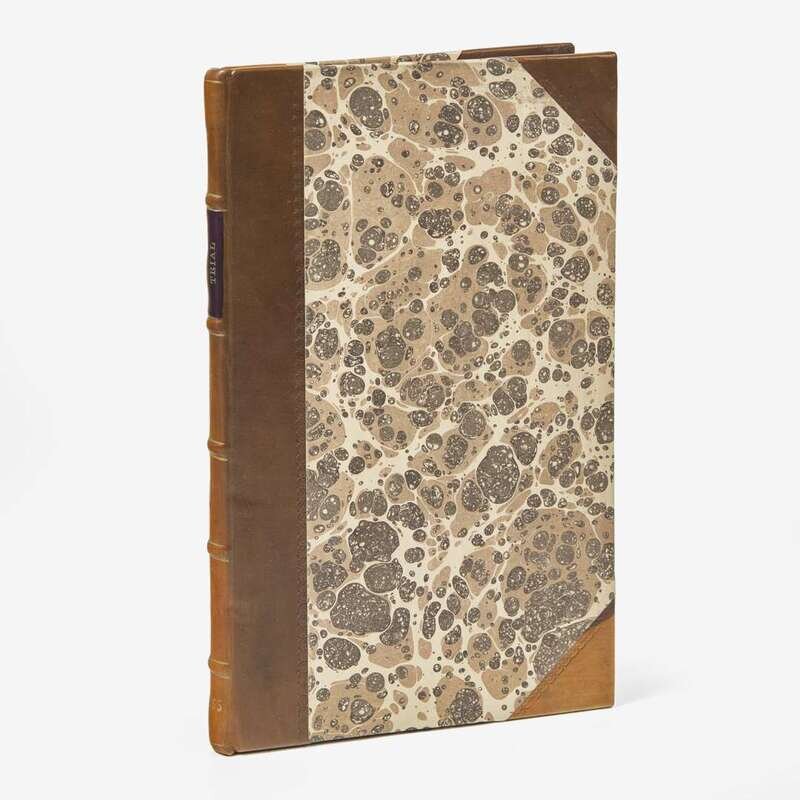
London: Printed for J. Almon, 1765. First edition thus. 8vo. 59, (1) pp. Three-quarter brown calf, red morocco spine label, stamped in blind and in gilt, over marbled paper-covered boards; all edges trimmed. Howes Z-6; Sabin 106311; ESTC T51691 First edition thus on the landmark trial of Crown v. Zenger, the first case in America involving freedom of the press. “One of the famous decisions in legal history, establishing the epochal doctrine of the freedom of the press; probably written by James Alexander, one of Zenger’s attorneys.” (Howes). In 1733 Zenger published an article in his New York Weekly Journal that criticized British Colonial Governor William Cosby for removing the Colony’s Chief Justice, Lewis Morris. A year later Zenger was arrested for seditious libel, and was represented by Philadelphia attorney Andrew Hamilton. At the time, under British law, truth could not be used as a defense in libel cases, but Hamilton urged the jury to strike down this unjust law in favor of his client. The jury concurred and ignored their instructions from the judge and ruled Zenger not guilty. The case galvanized the colonies, and later influenced how people thought about these topics, leading decades later to their enmeshment in the United States Constitution and Bill of Rights. The account of Zenger’s trial was first published in 1736, and this later edition includes for the first time the details of a similar trial against William Owen. Owen, a bookseller in London, had published a pamphlet in defense of Alexander Murray, who was tried for misconduct during an election and refused sentencing. Owen was arrested for libel but, as in Zenger’s trial, the jury ruled in his favor after ignoring instructions from the judge. Provenance
Private Collection, Gwynedd Valley, Pennsylvania