Condition Report
Contact Information
Lot 28
Lot Description
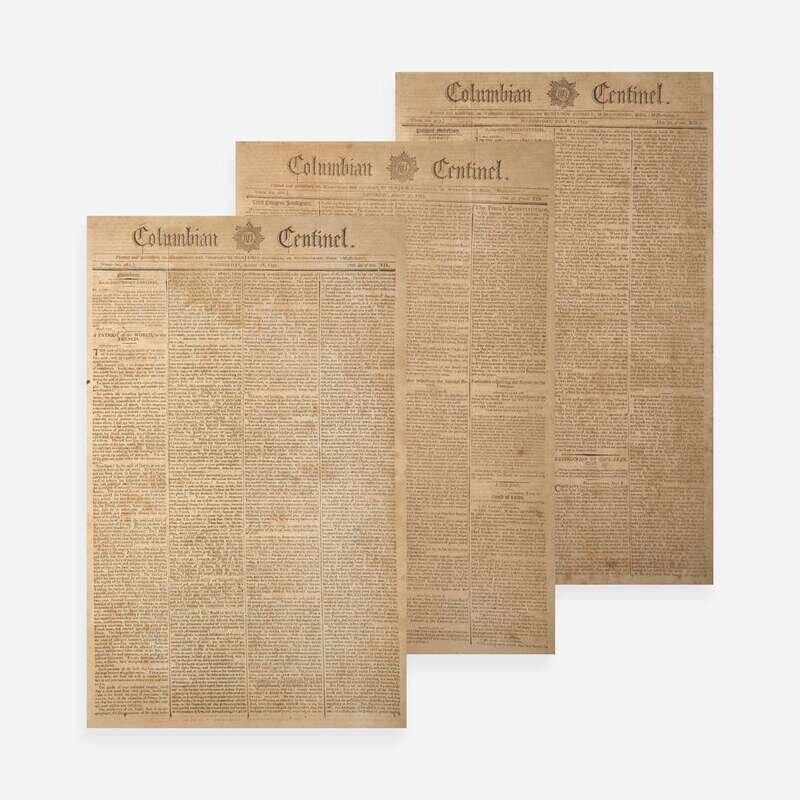
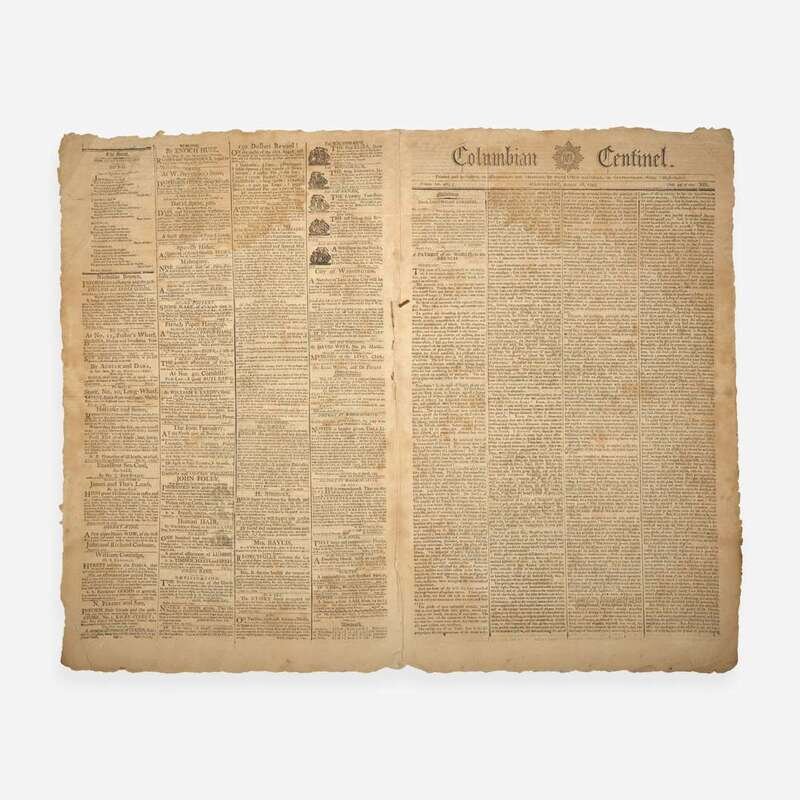
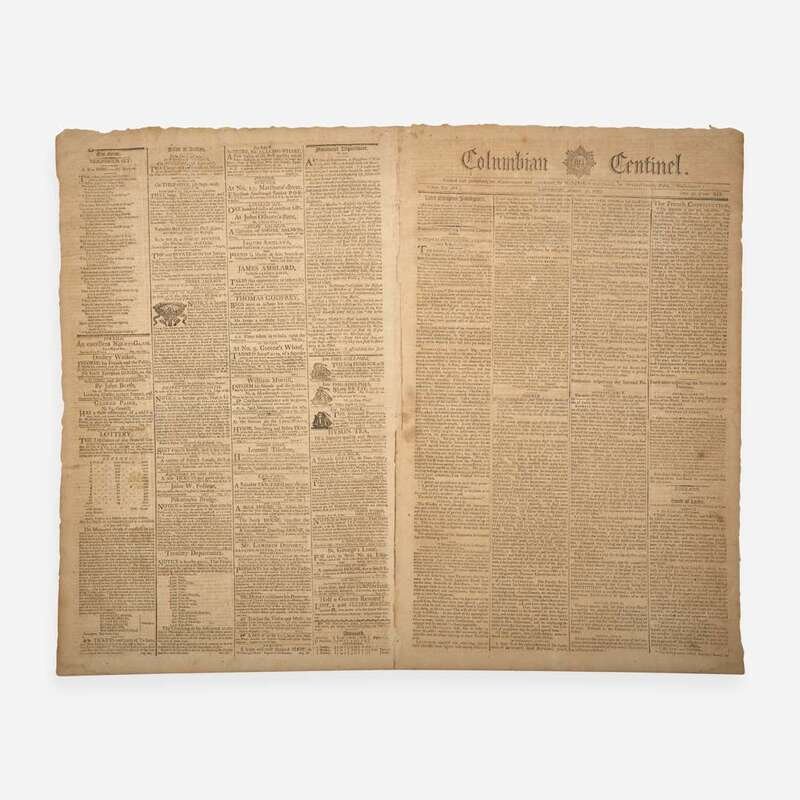
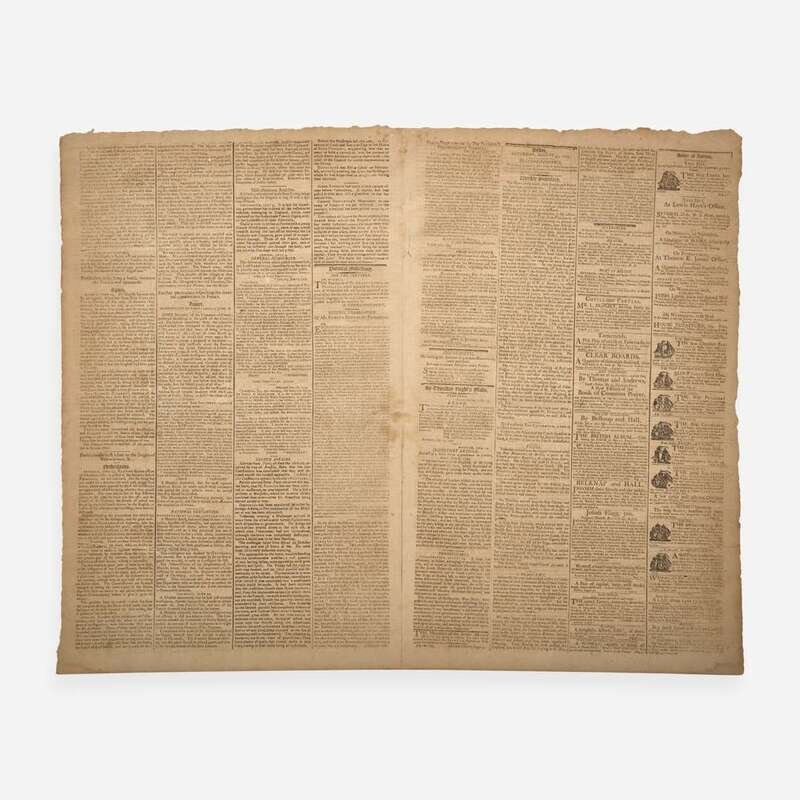
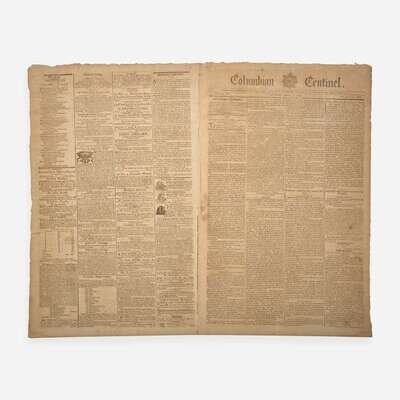
A Group of Three Massachusetts Newspapers Related to French Ambassador Edmond-Charles Genet's Controversial Visit to America
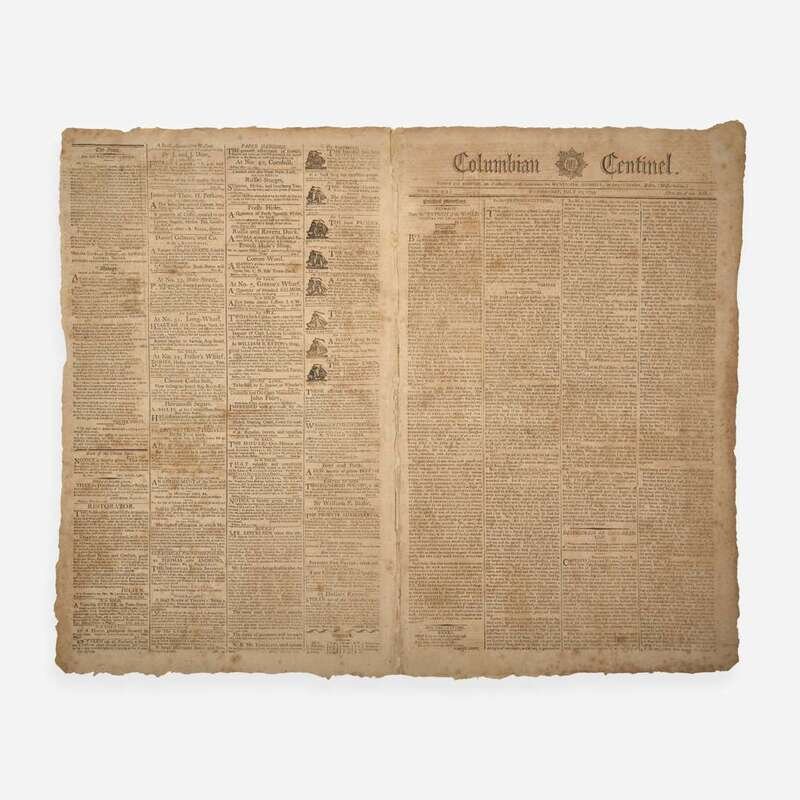
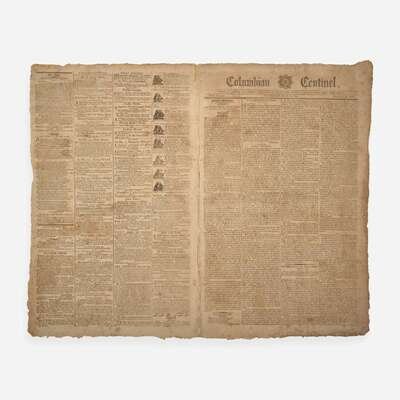
Boston: Printed by Benjamin Russell, Wednesday July 17, 1793. No. 37, Vol. XIX. Bifolium leaf, 9 1/2 x 11 3/4 in. (241 x 299 mm). Printed newspaper in four columns. Untrimmed; scattered soiling.
This issue's postscript features a letter from Philadelphia describing an American ship that joined with France, "Monday there was a very numerous meeting...to take into consideration certain measures...tending to a breach of the neutrality of this country, and contravening the Proclamation of the President of the United States. In discussing this subject, such evidence was adduced, as amounted to proof, that the brig, lately called the Little Sarah, had been armed in this port, and was probably bound on a cruize against some power now at war with France..." The Little Sarah was a British merchant ship taken as a prize by French forces and then brought to Philadelphia in June of 1793. Upon its arrival, it was outfitted with 14 cannon and armed as a privateer by order of French Ambassador Edmond-Charles Genet, then sent to prey on enemy ships in the Atlantic. News of this action brought the tensions between Genet, George Washington, and his cabinet to a head, and culminated with America's demand that France recall its Genet.
Together with:
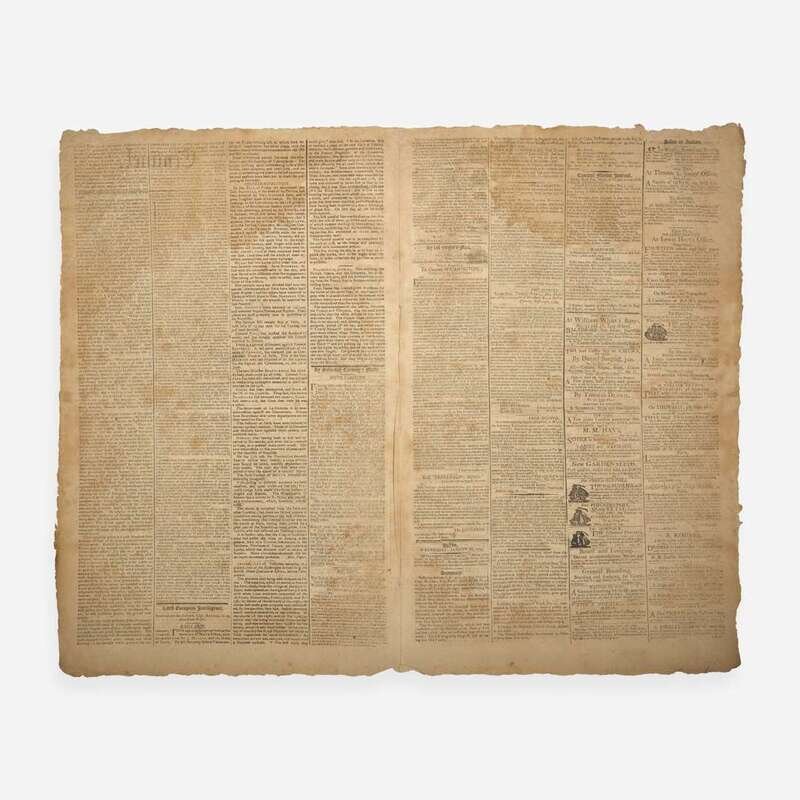
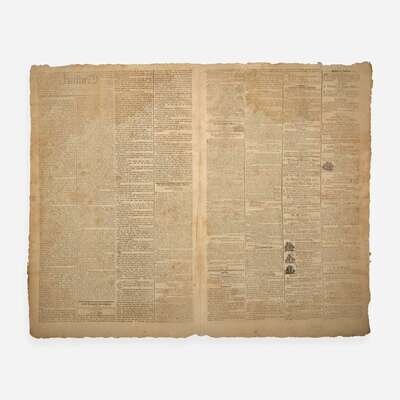
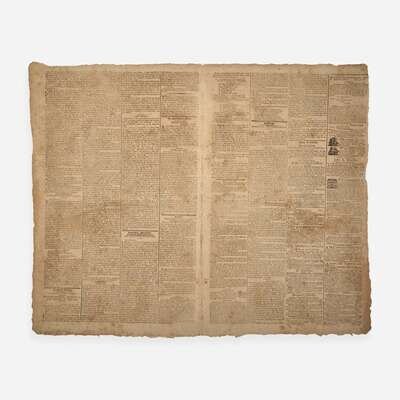
Boston: Printed by Benjamin Russell, Wednesday August 28, 1793. No. 49, Vol. XIX. Bifolium leaf, 9.1/2 x 11 3/4 in. (241 x 299 mm). Printed newspaper in four columns. Untrimmed; scattered soiling; large dampstain, top right.
Contains the English translation of Genet's response to George Washington's 8,000-word complaint regarding the Ambassador's actions since arriving in America. Genet claims that his, "...conduct has accordingly been marked with all the energy and frankness which ever characterize a true Republican," and that "...Certain persons...despairing to attack my principles, have descended to personal abuse--In hopes of withdrawing from me that esteem which the public feel an avow for the Representative of the French Republic...They publish with great warmth, that I have insulted you..." He further charges, "It is become necessary, Sir, to dissipate these dark calumnies by truth, and publicity..." Printed below, is Secretary of State Thomas Jefferson's response to Genet on behalf of Washington. He informs Genet that his letter, "...is not the established course for the diplomatic characters residing here, to have any direct correspondence with him (Washington)...he therefore declines interfering in the case..."
Together with:
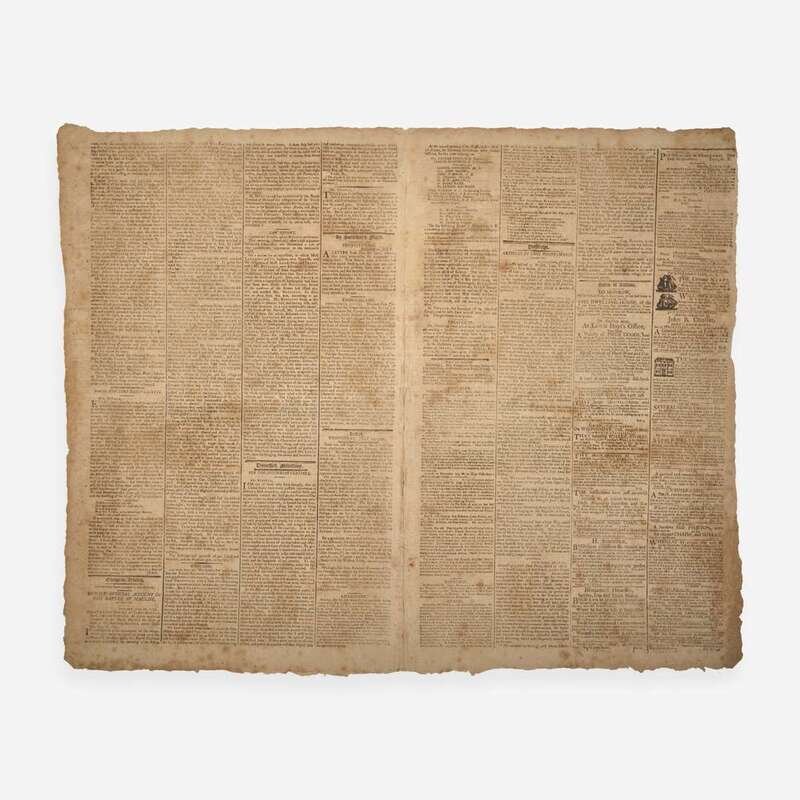
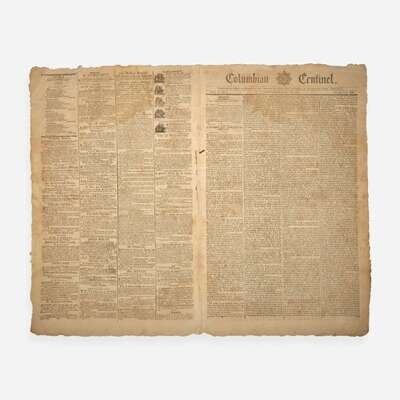
Boston: Printed by Benjamin Russell, Saturday August 31, 1793. No. 50 of XIX. Bifolium leaf, 9 1/2 x 11 1/2 in. (241 x 292 mm). Printed newspaper in four columns. Scattered soiling.
This issue reprints Genet's above letter to Washington but with a more direct translation, made for non-French-speaking Americans to be able to understand its content more clearly.
In 1793, French Ambassador Edmond-Charles Genet made a controversial visit to the United States that both threatened to embroil the country in foreign wars, captured the nation's attention, and has since been referred to as the Citizen Genet Affair. Genet was named French Ambassador to the United States by the National Convention and sent to America to exploit pro-French sentiment and secure support for France's wars with Spain and Britain. He arrived in Charleston, South Carolina on April 8, and was greeted with great enthusiasm. Rather than traveling to Philadelphia (then the nation’s capital) to meet with President Washington as was customary for diplomatic entities, he stayed in South Carolina to raise militias and arm privateers for the French cause in Spanish Florida. Viewing Genet as a threat to American interests, George Washington announced his Proclamation of Neutrality on April 22, 1793, which forbade citizens "...to take part in any hostilities in the seas, on behalf of or against any of the belligerent powers..." Despite the strong language of the proclamation, Genet continued to seek support for France, and defied the wishes of the American government. By the end of 1793, Washington demanded that France recall Genet as its ambassador, and the French Revolutionary government issued a warrant for his arrest. Aware that the guillotine likely awaited him upon return to Europe, Genet sought asylum in the United States, which the President eventually granted due to the urging of Alexander Hamilton, and Genet lived out his life in New York.