Condition Report
Contact Information
Lot 20
Lot Description
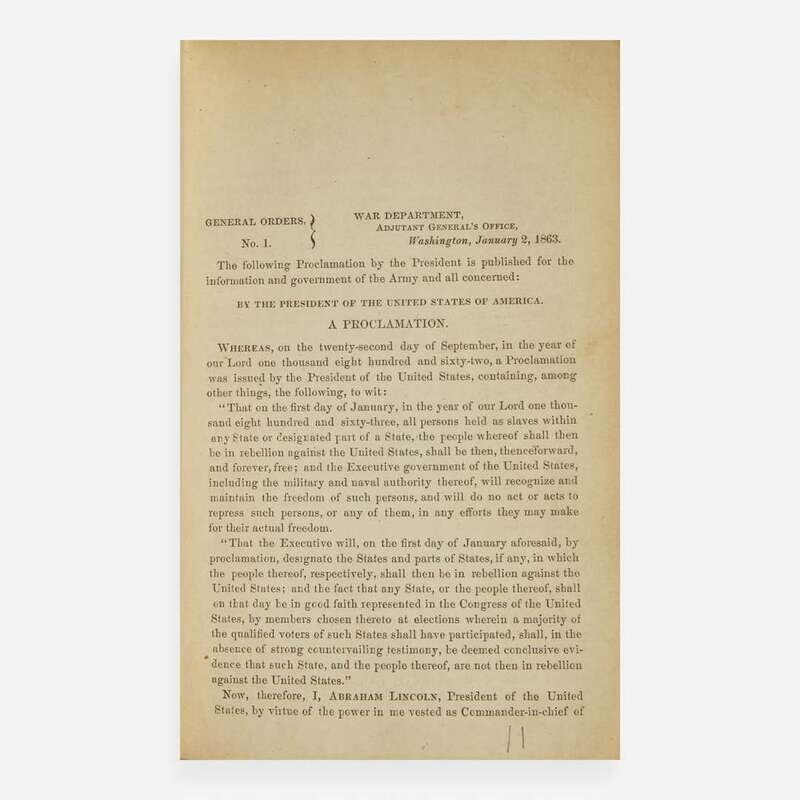
A Fine Association Copy of Over 200 War Department General Orders, Including Abraham Lincoln's Emancipation Proclamation
"That on the first day of January, in the year of our Lord one thousand eight hundred and sixty-three, all persons held as slaves within any State or designated part of a State, the people whereof shall then be in rebellion against the United States, shall be then, thenceforward, and forever, free; and the Executive government of the United States, including the military and naval authority thereof, will recognize and maintain the freedom of such persons, and will do no act or acts to repress such persons, or any of them, in any efforts they may make for their actual freedom."
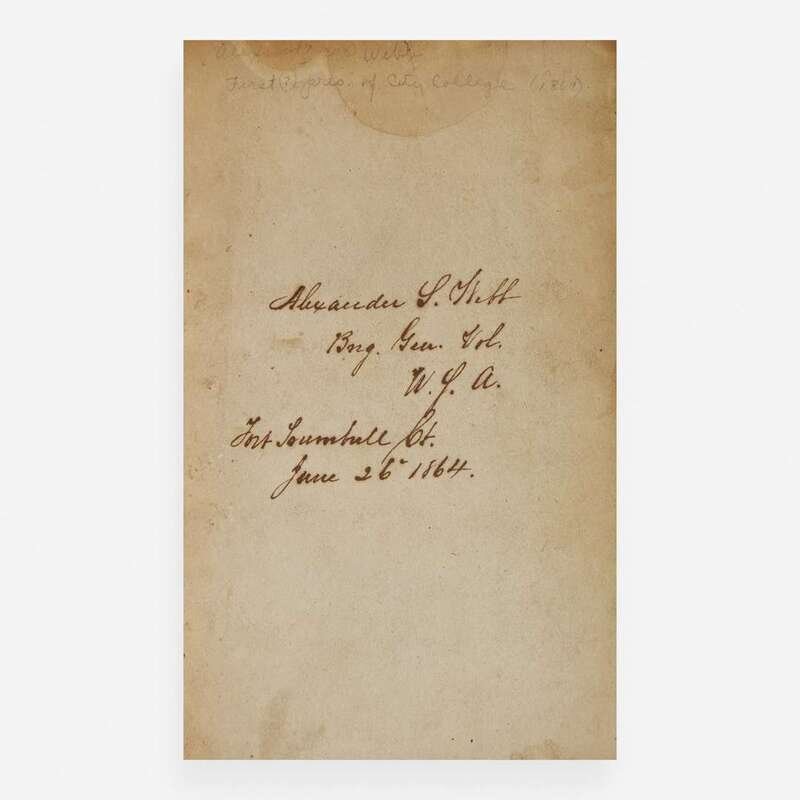
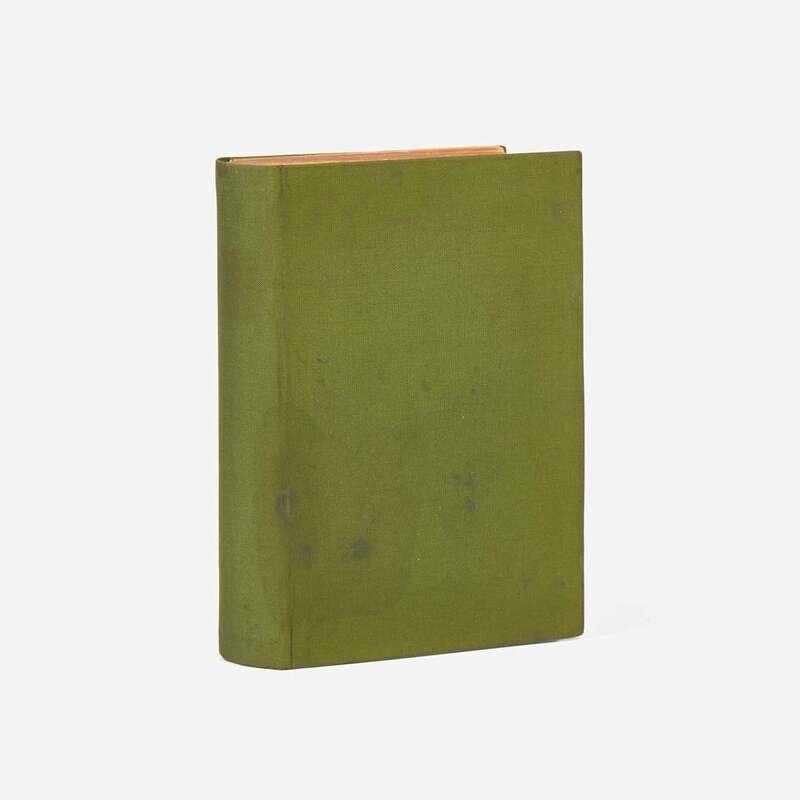
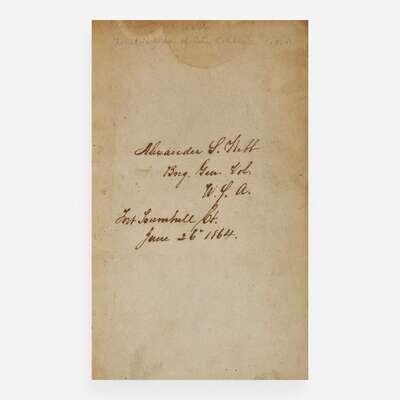
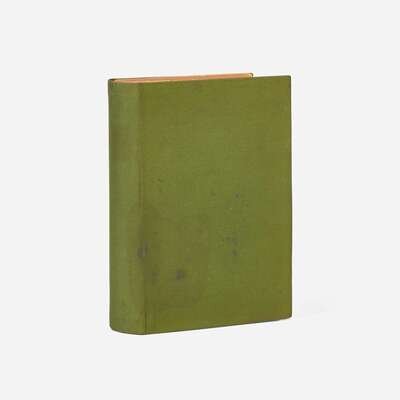
Washington, (D.C.): (Government Printing Office), January-July, 1863. Comprising 236 General Orders, Nos. 1-235, issued by the War Department, Adjutant General's Office, dated January 1-July 27, 1863 (Order No. 126 printed in duplicate); signed in type by Adjutant General L. Thomas and/or Assistant Adjutant General E.D. Townsend, and others. 12mo. Orders separately paginated. Presumably from the library of Brigadier General and Medal of Honor recipient, Alexander S. Webb, and inscribed on front blank, "Alexander S. Webb / Brig. Gen. Vol. / U.S.A. / Fort Trumbull Ct. / June 26th 1864", likely in another hand. Sometime bound in full green cloth-covered boards; all edges stained red; scattered small chipping along some text edges; old repair exposed in gutter, between pp. 8/9 of Order No. 100; split between pp. 6/7 of final Order No. 235, exposing spine.
A massive compilation of 235 War Department General Orders issued by the Adjutant General's Office during the Civil War to Union Army commanders in the field. Significantly, the first General Order in this volume is Abraham Lincoln's Emancipation Proclamation, declaring "that all persons held as slaves" within the rebellious areas "are and henceforward shall be free." (Fifth edition, Eberstadt 12). Other important Orders include No. 100, April 24, Francis Leiber's Code, the rules of conduct for Union soldiers, considered the first modern codification of the laws of war; No. 105, April 23, the establishment of the Invalid Corps; No. 143, May 22, the establishment of the United States Colored Troops; No. 194, June 27, the appointment of Major General George Meade as commander of the Army of the Potomac, who would defeat General Robert E. Lee at Gettysburg only days later. Many of the other General Orders concern prisoners of war, court martials, enlistments, soldiers absent without leave, acts of Congress, and other matters relating to the management of the Union Army.
Alexander S. Webb (1835-1911) was awarded the Medal of Honor for his heroism at the Battle of Gettysburg, where he bravely helped defend against Pickett's Charge on July 3 ,1863. Webb was appointed Brigadier General by President Lincoln on July 1, only two days before his heroic actions. On July 3, the third and final day of the battle of Gettysburg, he and his troops found themselves at the center of the Union line when Confederate General George Pickett made his frontal assault at Cemetery Ridge. Commanding the Philadelphia Brigade--many of Webb's men were unfamiliar with him due to his recent promotion--he set an example for them during the onslaught by conspicuously standing at the front of his line, where he was reportedly seen leaning on his sword and puffing on a cigar as the Confederate bombardment of cannonballs whisked by, refusing to take shelter. As the Confederate line advanced, two of Webb's companies fell back, and he unsuccessfully summoned another to advance. Fearing recriminations for failure to stop the advancing troops, he strode across the front line, being wounded in the process, to connect with his 69th Pennsylvania regiment, just as the Confederates were breaching a low stone wall known as "The Angle." With the help of Col. Norman J. Hall's New York regiments, and Brig. Gen. William Harrow's men, they successfully stalled the advance, helping secure victory for the Union. For his bravery, he was cited for "distinguished personal gallantry in leading his men forward at a critical period in the contest," when awarded the Medal of Honor on September 28, 1891. Following the war he served as President of the City College of New York.