Condition Report
Contact Information
Lot 161
Lot Description
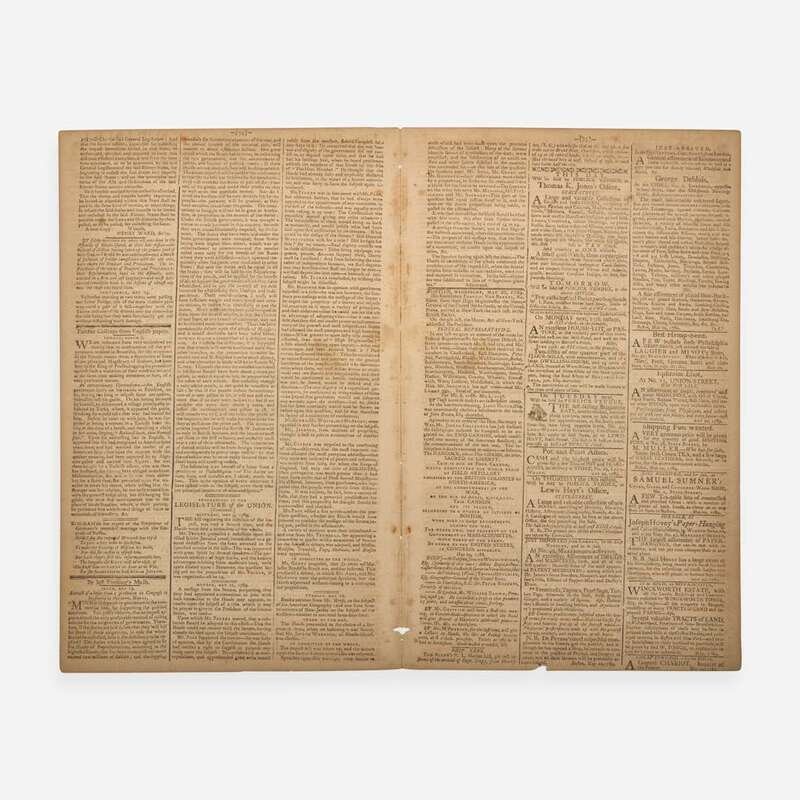
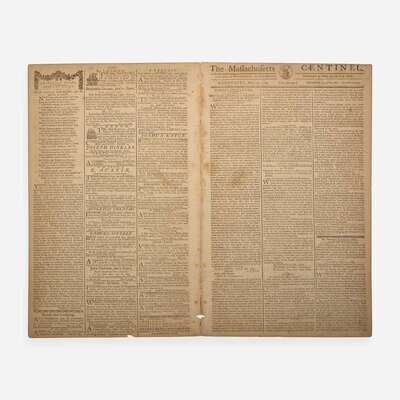
"A message from the Senate, purporting that they had appointed a commitee...to confer upon the subject of a title which it may be proper to give to the President of the United States..."
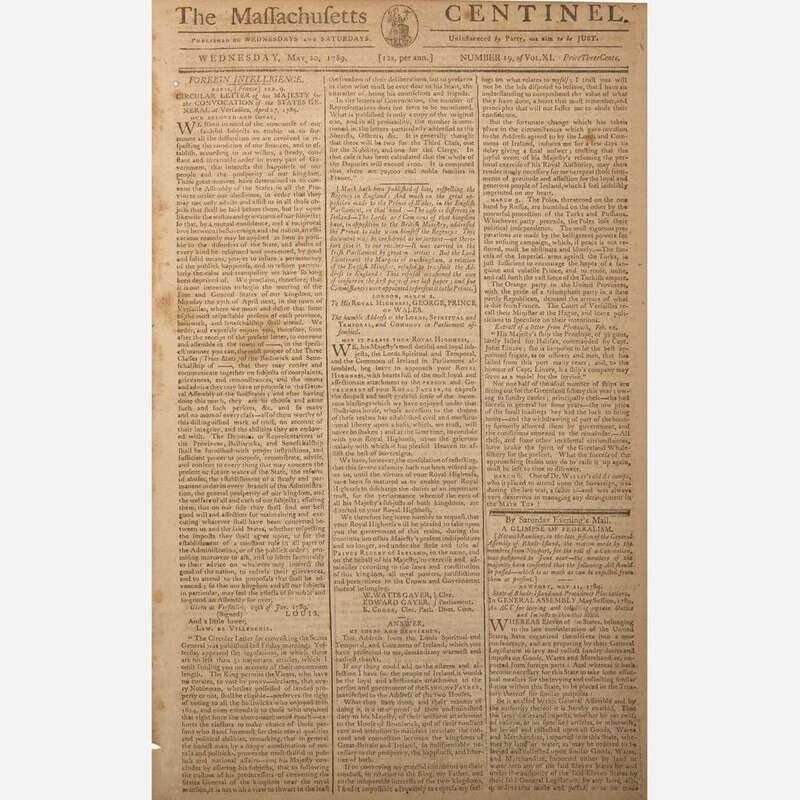
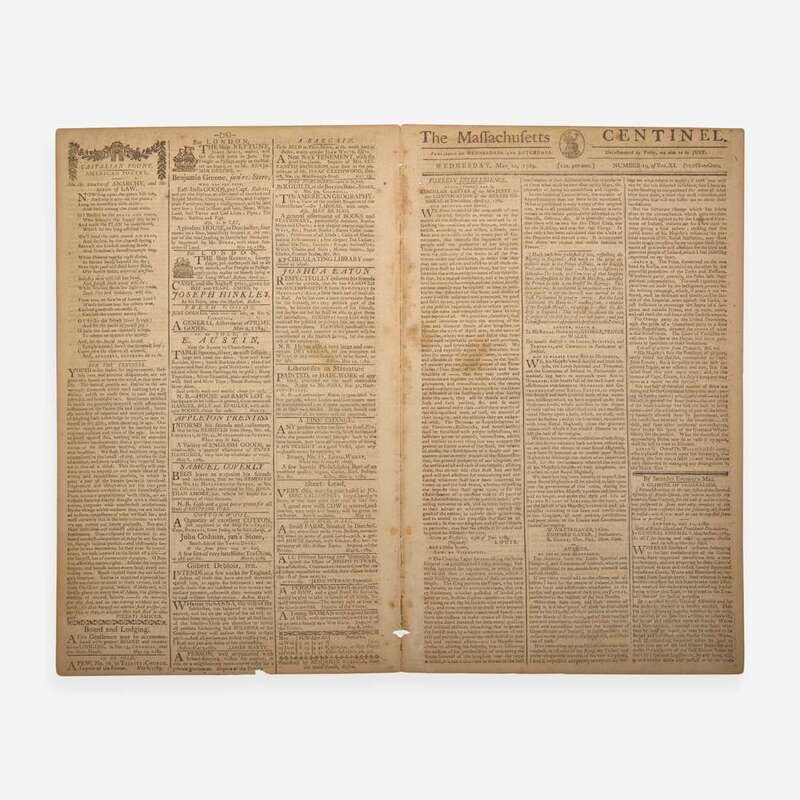
Boston: Published by Benjamin Russell, Wednesday, May 20, 1789. No. 19, Vol. XI. Bifolium leaf, 14 3/4 x 18 1/2 in . (375 x 470 mm). Printed newspaper in three columns. Disbound; edges trimmed; separations along center fold; scattered stains.
Included are the proceedings of the House of Representatives from May 11, 1789 regarding a debate in the newly established American Congress on the proper address for the newly established role of the President of the United States. Although Article II, Section I, of the United States Constitution designates the title of the Chief of the Executive branch as President, it does not specify how one should personally address them. The article opens with a message from the Senate stating that a joint committee of both houses should be formed to settle the issue, and continues with details of events during the proceedings. John Page of Virginia voiced the opinion that "...the real honour and dignity of the government did not consist in, or depend upon titles, and that he had his feelings hurt, when he heard gentlemen address the members of that House by the title of 'The Hon. Member:'" Fellow Virginian James Madison also "...was in opinion with gentlemen opposed to a title...Titles he considered as unconstitutional and contrary to the general sentiment of the people..."
Four weeks earlier, on April 23, 1789, Virginia delegate Richard Henry Lee introduced a motion asking the First Congress to consider what titles, if any, should be used to refer to the President and Vice-President. At the time the heads of several individual states were also referred to as President, and some Founding Fathers feared this would take away from the superiority of the Chief of the Executive branch. Lee, alongside Vice-President John Adams favored the adoption of Highness or Protector of Their Rights, others suggested the variations of Excellency or Majesty, while a growing number of individuals (including Thomas Jefferson and Benjamin Franklin) considered the debate itself frivolous. After weeks of debate, and the formation of multiple Congressional Committees, President George Washington sided with Madison and those against an elaborate title. By common consent, "Mr. President" was adopted, and is still used to this day.