Condition Report
Contact Information
Lot 16
Lot Description
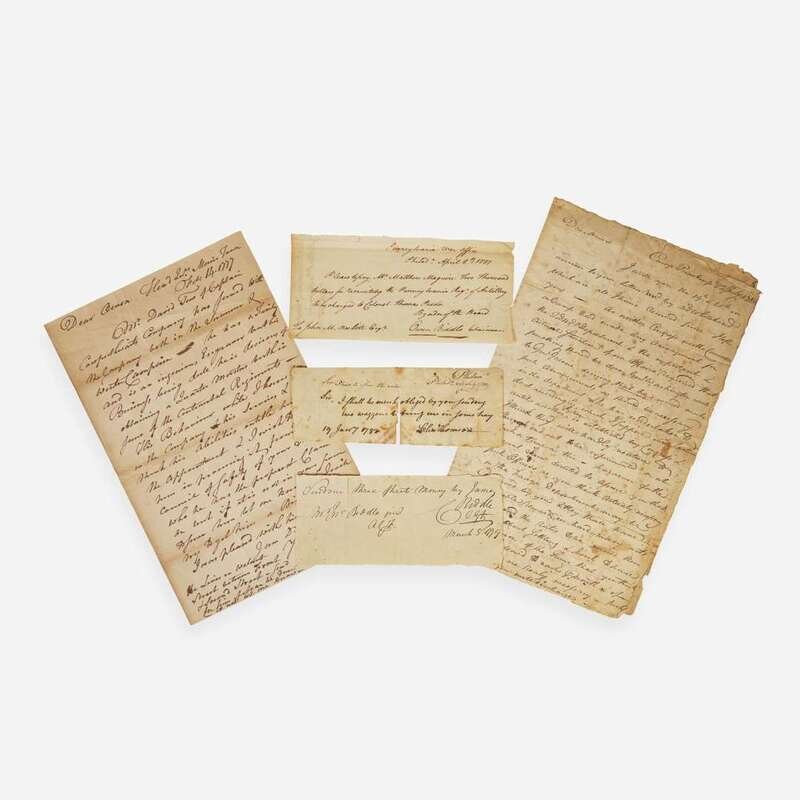
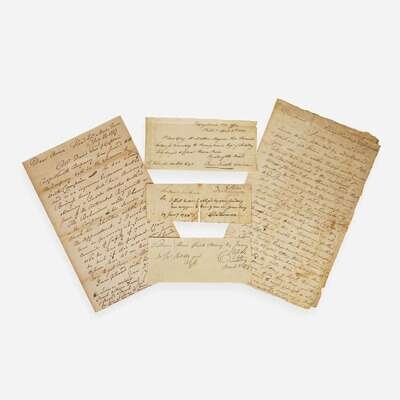
A Group of Five Revolutionary War Documents From Philadelphia Patriots Clement and Owen Biddle
1. Biddle, Clement
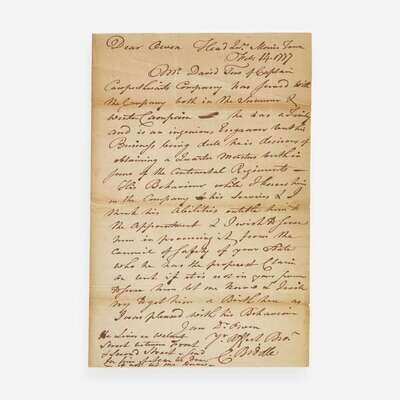
Autograph Letter, signed
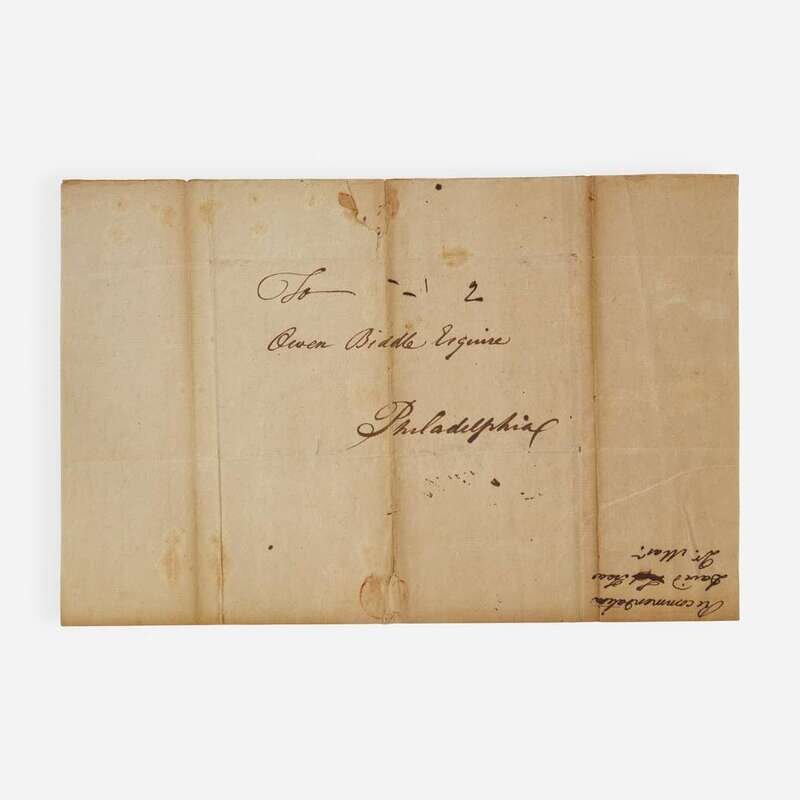
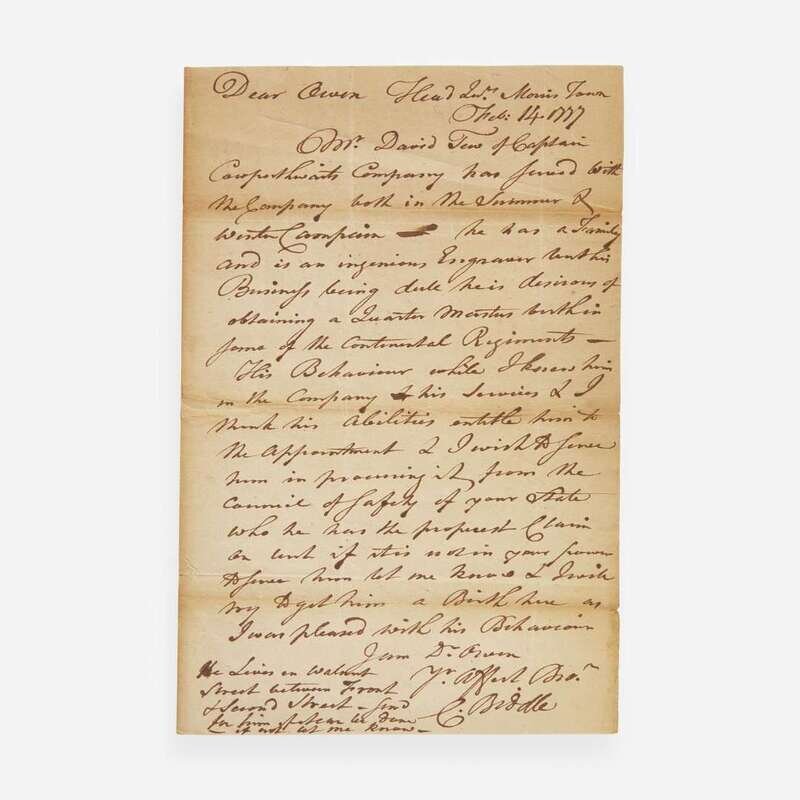
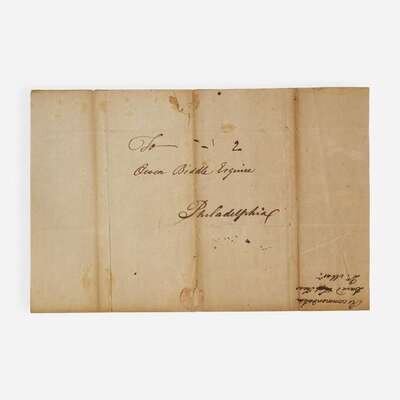
Morris Town: Head Quarters, Feb(ruary): 14, 1777. One sheet folded to make four pages, 11 7/8 x 8 in. (301 x 203 mm). One-page autograph letter, signed by Clement Biddle, as a soldier in the Continental Army, to his older brother, Owen Biddle, as a member of the Pennsylvania Committee of Safety, recommending the appointment of Philadelphia engraver David Tew for the position of Quarter Master in the Continental Army; addressed on integral leaf by Clement, docketing to same in another hand. Creasing from contemporary folds; loss on fore-edge of integral address leave from wax seal; scattered small separations along folds.
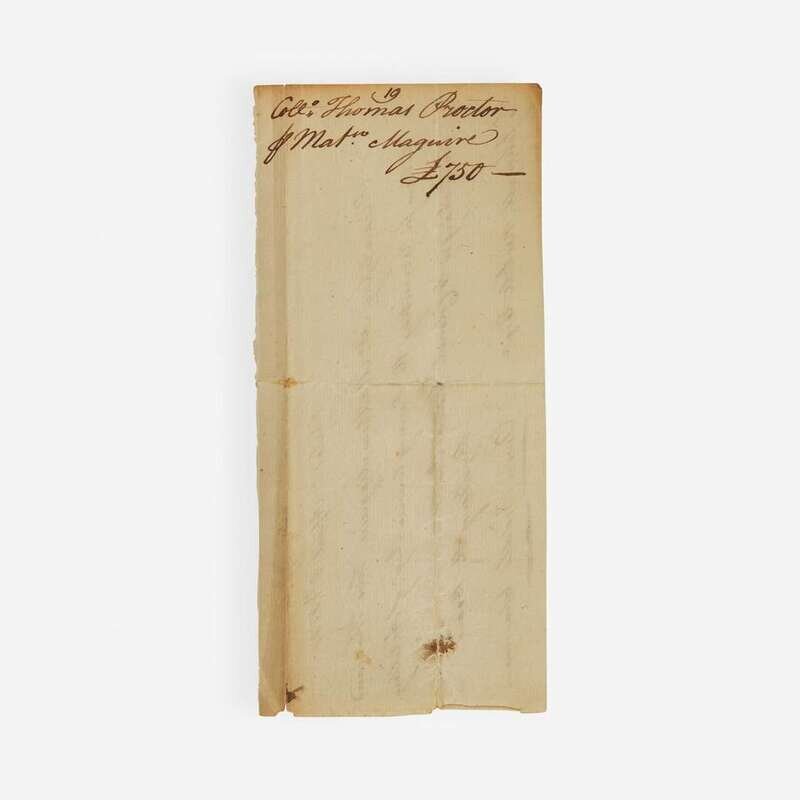
2. Biddle, Owen
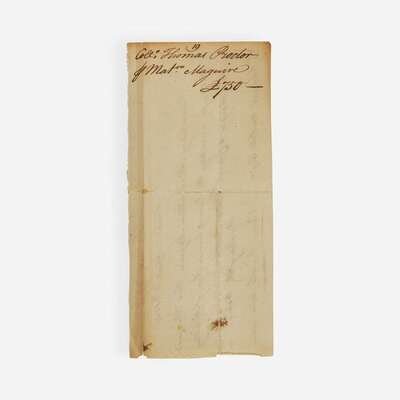
Autograph Document, signed
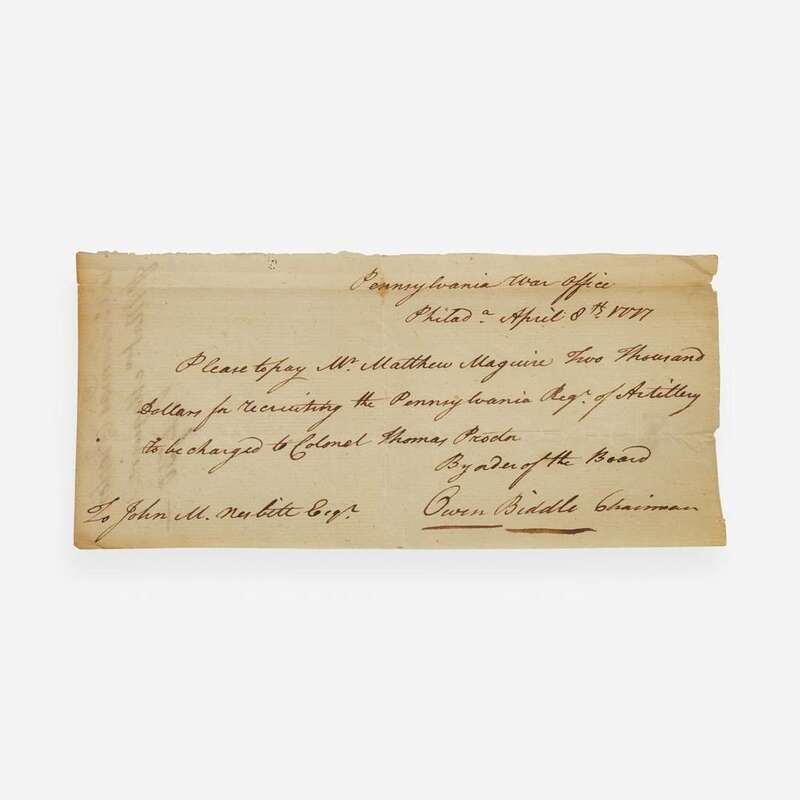
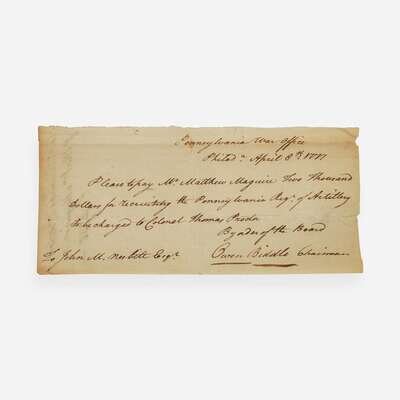
Philad(elphi)a: Pennsylvania War Office, April 8th, 1777. One oblong sheet, 3 5/8 x 7 7/8 in. (92 x 200 mm). Autograph document, signed by Owen Biddle as Chairman of the Pennsylvania Board of War, ordering the pay of Matthew Maguire "Two Thousand Dollars for recruiting the Pennsylvania Regt. of Artillery to be charged to Colonel Thomas Proctor."; docketed on verso. Creasing from old folds.
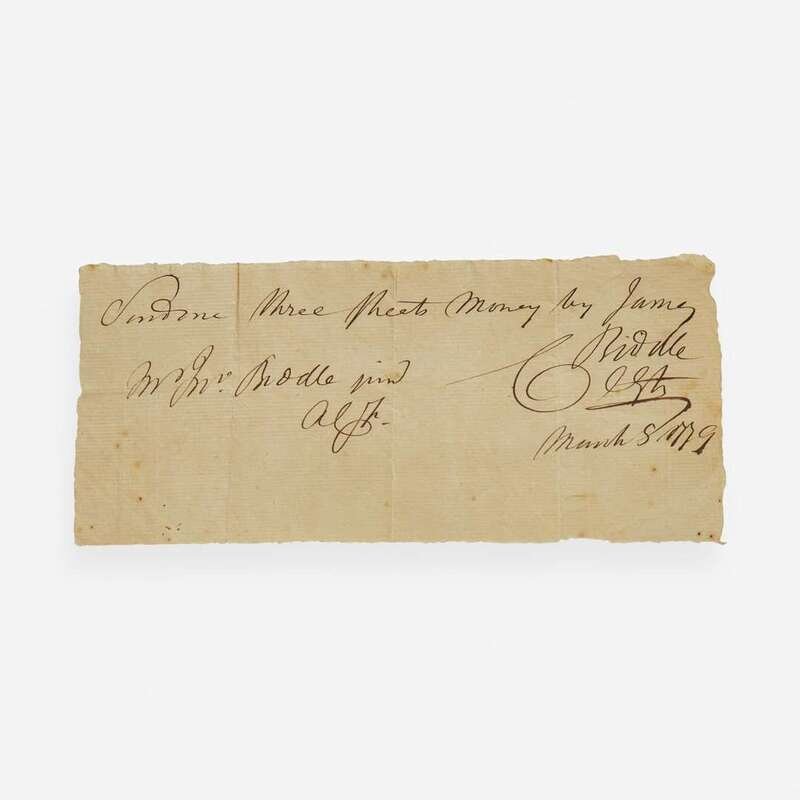
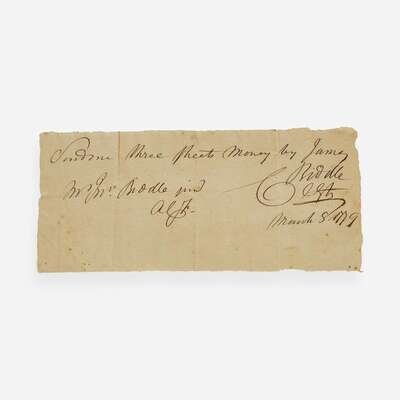
3. Biddle, Clement
Autograph Document, signed
No place, March 8, 1779. One oblong sheet, 3 3/8 x 7 1/2 in. (86 x 190 mm). Autograph document, signed by Clement Biddle as Commissary General of Forage, ordering Assistant Commissary of Forage John Brodle Jr. to send him three sheets of money by June. Creasing from old folds.
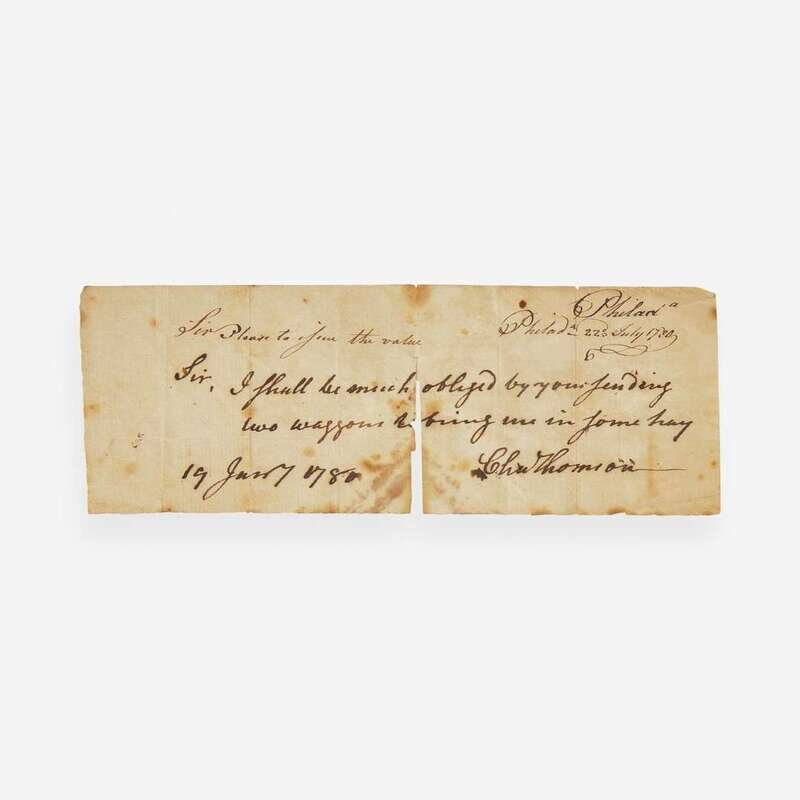
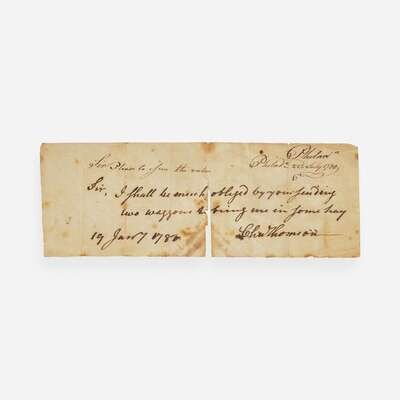
4. Thomson, Charles
Autograph Document, signed
Philad(elphi)a, Jan(uar)y 19, 1780. One oblong sheet, 2 3/4 x 7 1/2 in. (70 x 190 mm). Autograph document, signed by Charles Thomson, as Secretary of the Continental Congress, requesting two waggons (sic) and hay, likely addressed to Owen Biddle, then Assistant Commissary General of Forage for Philadelphia; manuscript in another hand at top, "Sir Please to issue the value Philada 22d: July 1780". Creasing from old folds; loss along center fold; scattered foxing.
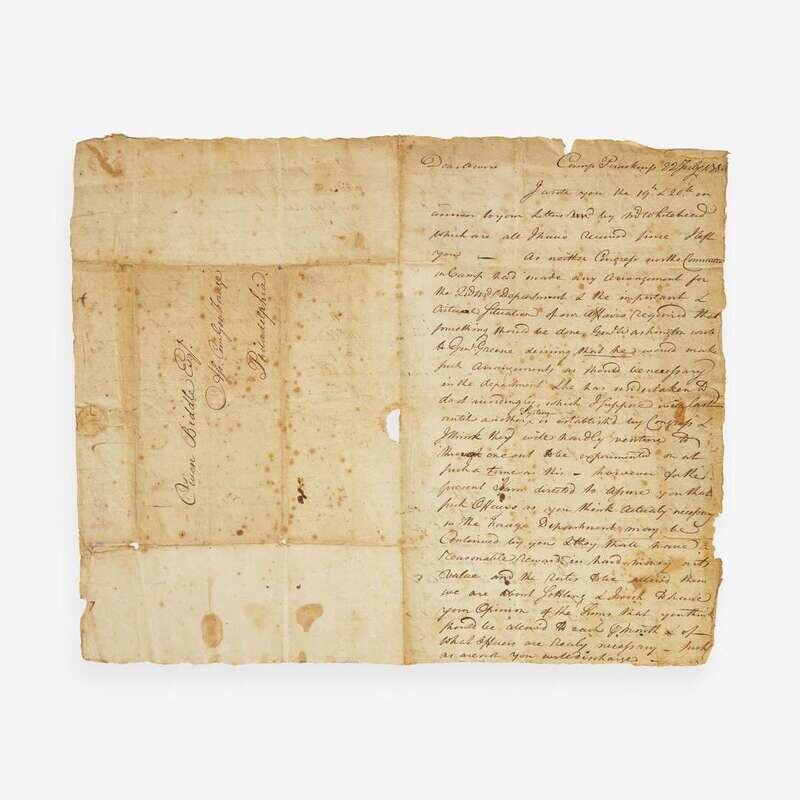
5. Biddle, Clement
Autograph Letter, signed
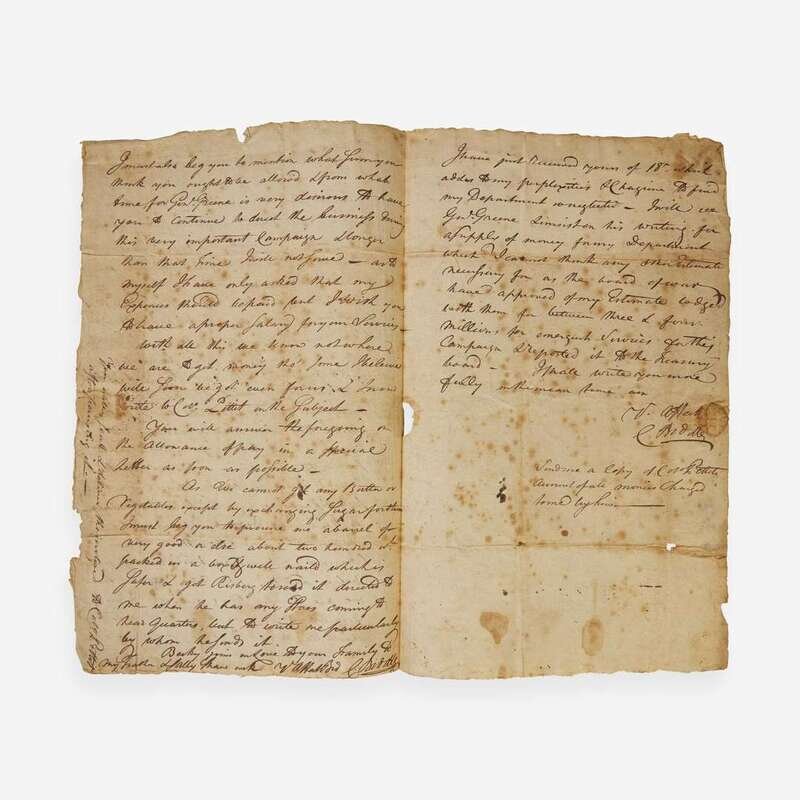
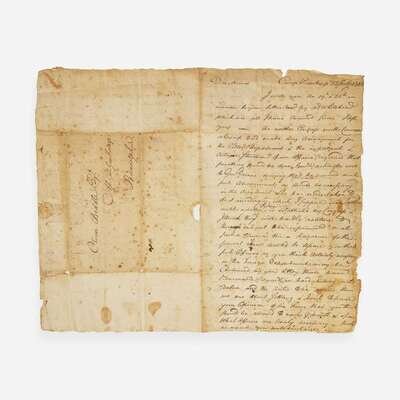
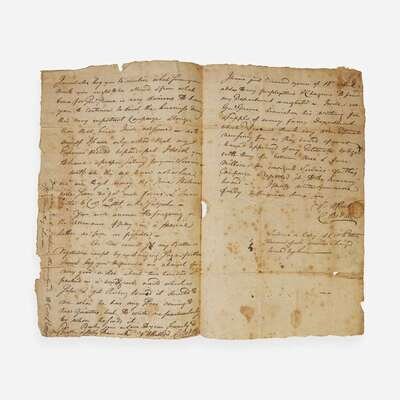
(New Jersey): Camp Preakness, July 22, 1780. One sheet folded to make four pages, 13 1/4 x 8 3/8 in. (336 x 213 mm). Lengthy three-page autograph letter, signed twice by Clement Biddle as Commissary General of Forage, to his brother, Owen Biddle, as Assistant Commissary General of Forage in Philadelphia. Clement refers to both Generals George Washington and Nathanael Greene; directs Owen to choose officers to continue with him in the Forage Department in Philadelphia, and requests that he send him the terms of their pay. Finally, he directs him to forward an enclosed letter (not present) to Colonel Charles Pettit; addressed by Clement on integral leaf. Creasing from contemporary folds; scattered foxing; scattered wear along edges.
Quaker brothers Owen (1737-99) and Clement (1740-1814) Biddle were members of colonial Philadelphia society and played important roles in furthering the cause of independence during the American Revolution. Born to John Biddle and Sarah Owen, they were of the fifth generation of the prominent Biddle family in America, whose great-grandfather, William Biddle established upon his emigration to New Jersey in 1681 (see lot 34). Prior to the war, Clement followed his father into the merchant trade while Owen, who worked briefly in shipping, pursued the sciences. A member of the American Philosophical Society, Owen served as its curator from 1769-72, secretary from 1773-82, and then one its councilors until his death. In 1769 he was appointed, along with other leading Philadelphia scientists, to a committee to observe the transit of Venus, which he recorded at Cape Henlopen at the southern tip of Delaware Bay. Although much of Clement's early life is unknown, in the 1760s he raised one of the earliest Quaker fighting units, the "Quaker Blues," to aid Native Americans from "The Paxton Boys." In 1765, along with Owen, he signed the Non-Importation Agreement, in Philadelphia in response to the Stamp Act.
At the onset of the American Revolution they both became caught up in Revolutionary zeal, with Owen staying in Philadelphia for public duties, while Clement joined the army. Early on, Clement raised another unit of Quaker soldiers and was appointed to the position of Quartermaster of the 10,000-man "flying camp", a mobile and strategic reserve of troops, and the first volunteer unit in the American army. In November, 1776 he became aide-de-camp to General Nathanael Greene, and fought in the battles of Trenton, Brandywine, Germantown, and Monmouth. In 1777 he was appointed by George Washington as Commissary General of Forage for the Continental Army and with Greene helped institute a series of reforms to overhaul the Forage Department, critical to ensuring supplies for the Continental Army. He resigned as Commissary General in June, 1780 and then from the Continental Army that October. In November, 1780 he was appointed Marshal of the Court of Admiralty by the Supreme Executive Council of Pennsylvania, and in 1781 was appointed Quartermaster and Colonel in the Pennsylvania militia, a position he held until the end of the war. Back in Philadelphia, Owen served short stints as de facto governor of Pennsylvania before the institution of the Executive Council, and also served on the Committee of Safety, the Board of War, and was a member of Pennsylvania's 1776 Constitutional Convention. In 1779 he became Assistant Commissary General of Forage under Clement and directed the Department's Philadelphia office (see lot 7).
Following the war Clement resumed his role as a merchant in Philadelphia, and served as George Washington's business agent in the north (see lot 160). In 1789 he was appointed the first United States Marshal for Pennsylvania, and oversaw the state's execution of the first Federal census from 1790-91. He retired from public life in 1793 and resumed his business affairs until his death in 1814. Owen meanwhile became more actively involved in the Society of Friends until his death in 1799.
Passed down within the Biddle family and never before offered for sale.