Condition Report
Contact Information
Lot 109
Lot Description
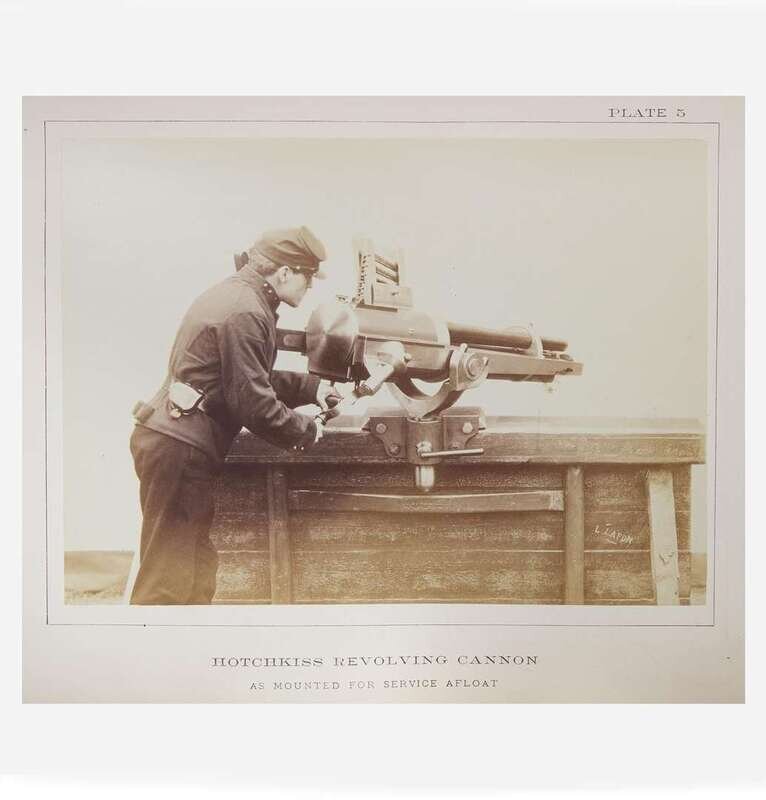
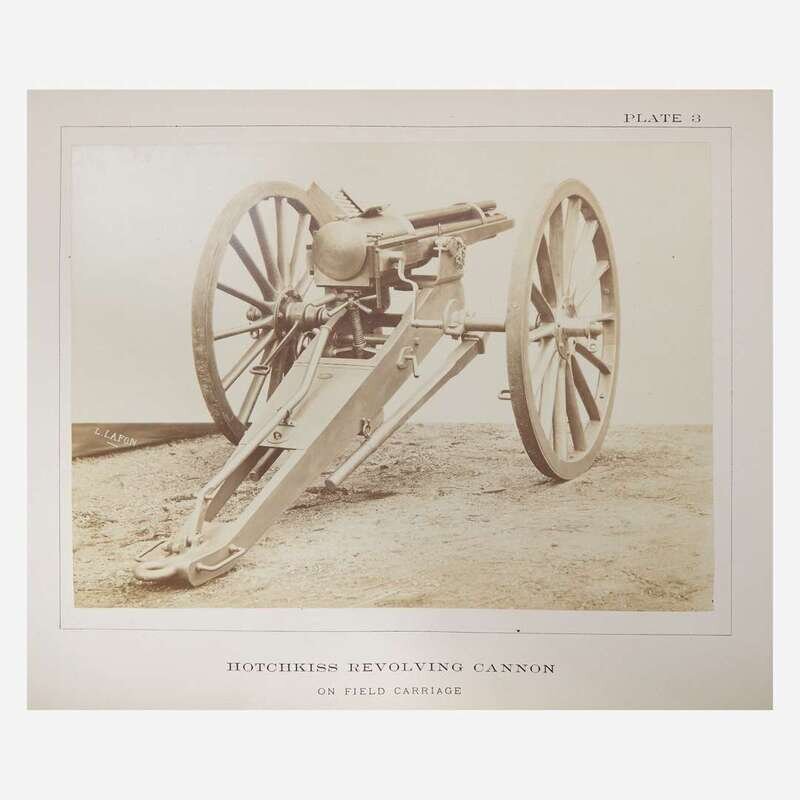
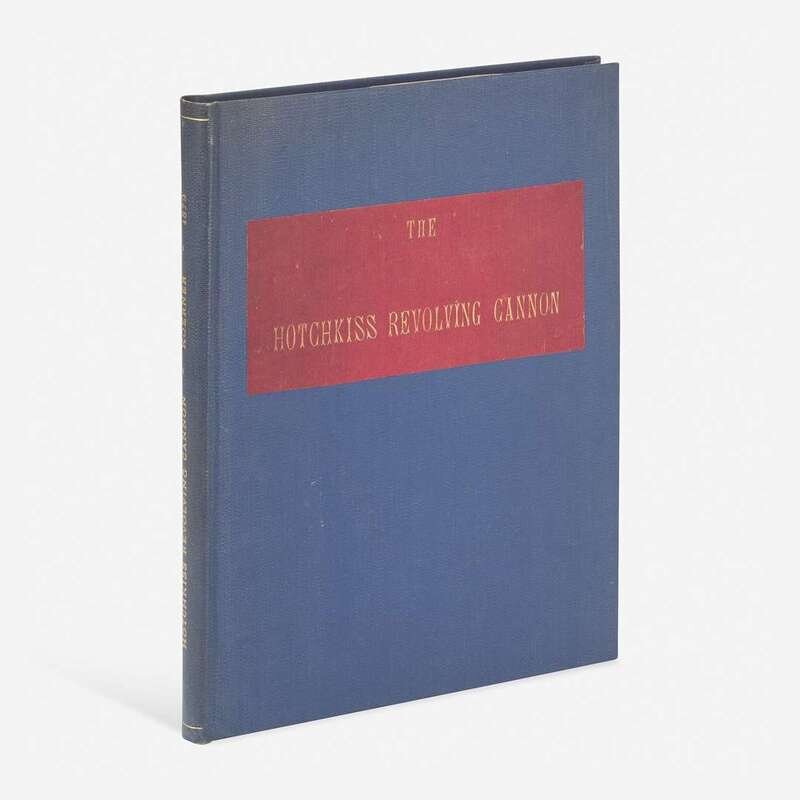
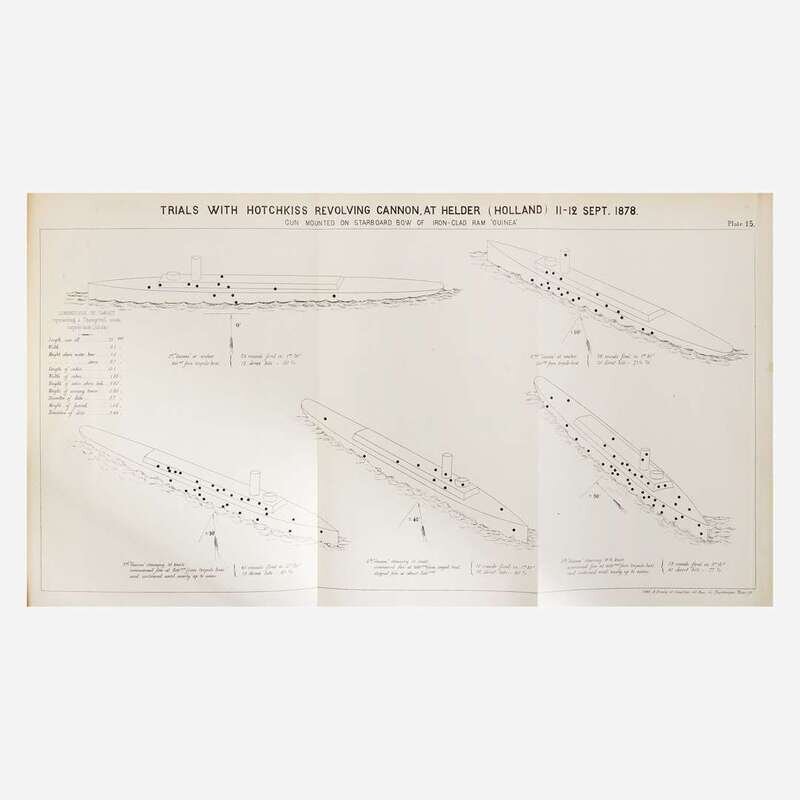
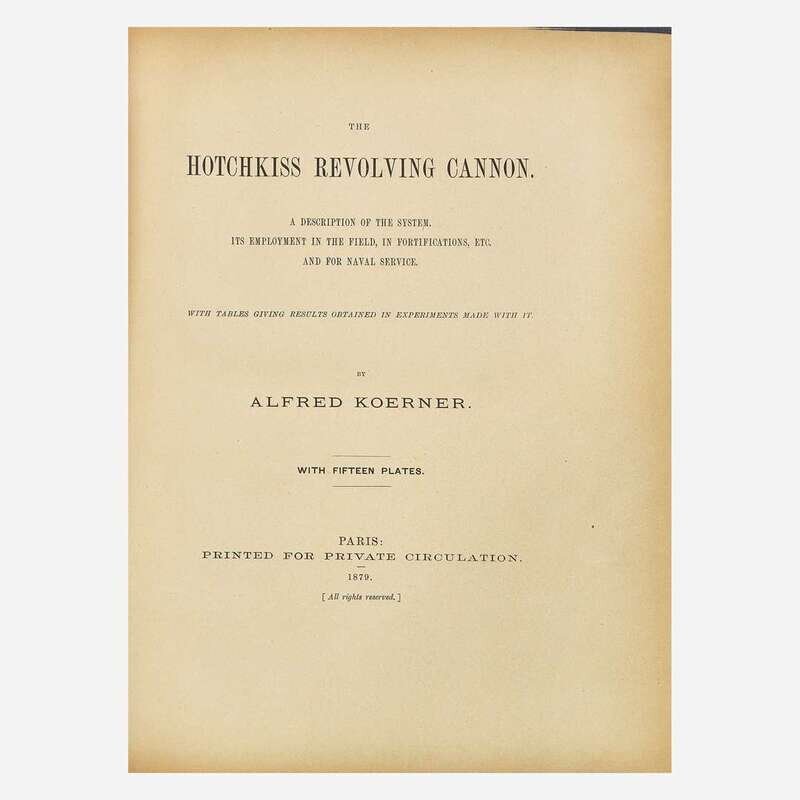
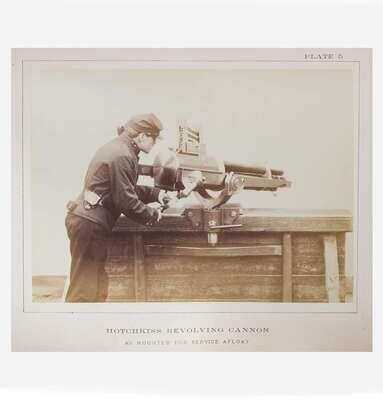
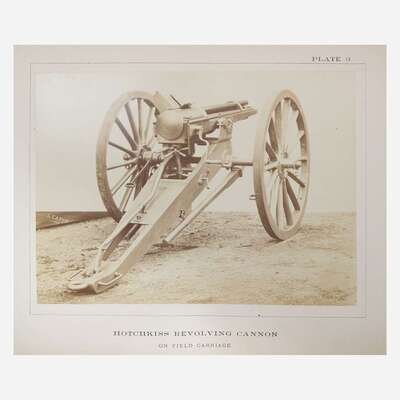
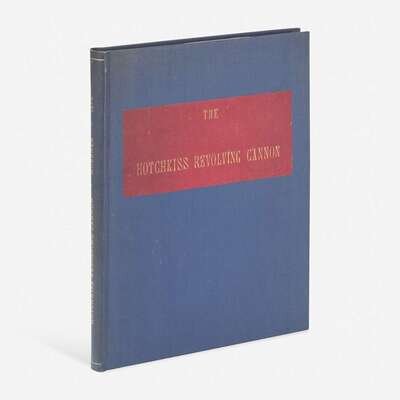
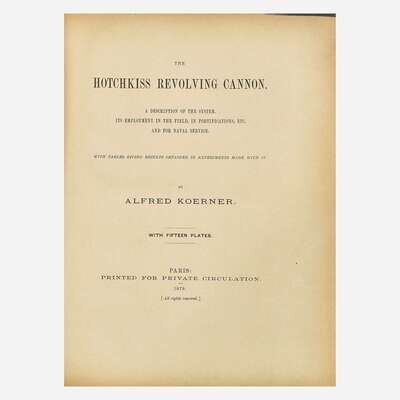
Paris: Printed for Private Circulation, 1879. First edition. 4to. 59, (1) pp. Publisher's presentation copy with "Compliments of Hotchkiss & Co. Paris" label on front paste-down. Illustrated with eight large folding lithographic plates and 7 mounted albumen prints by L. Lafon. Rebound in full blue buckram, portion of original red cloth with title in gilt mounted to front board, spine stamped in gilt; all edges trimmed. Riling 964
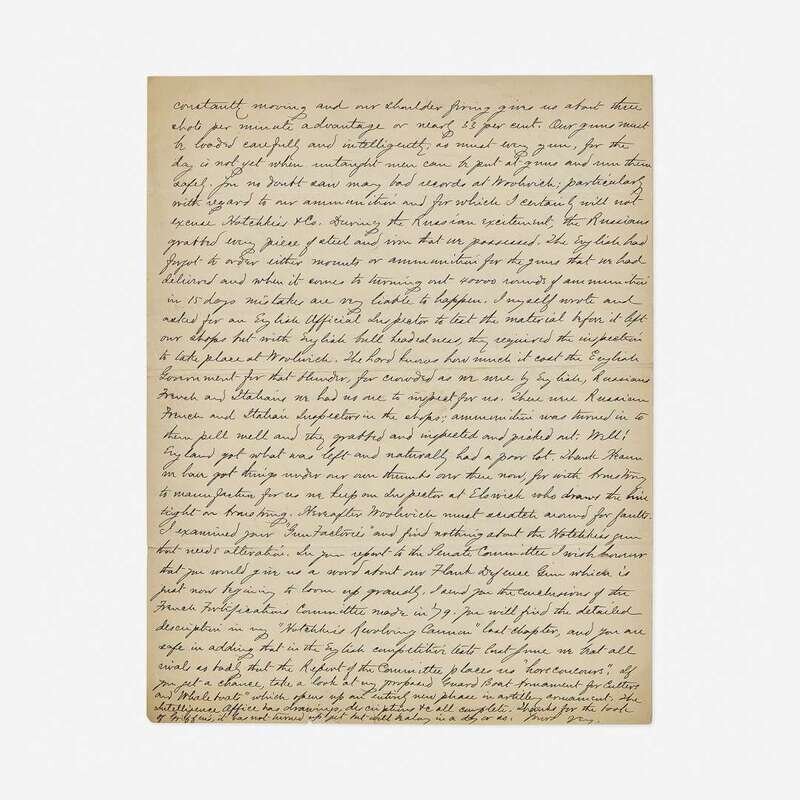
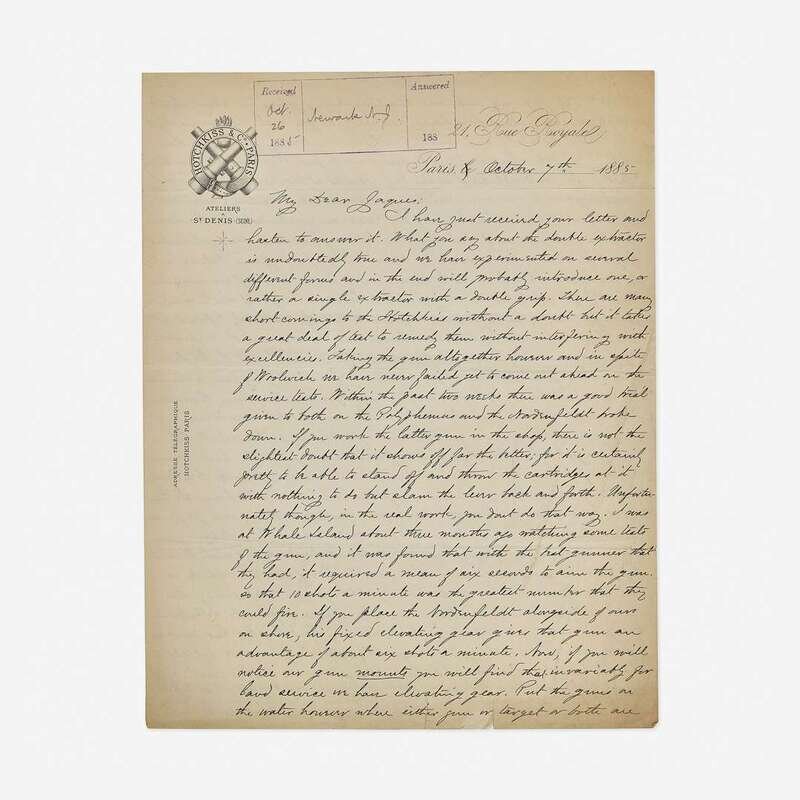
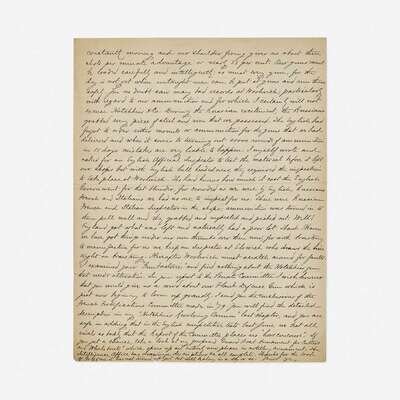
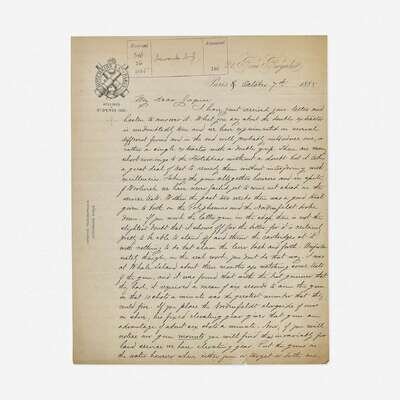
Includes an autograph letter, signed by American Lieutenant Edward Wilson Very (1847-1910), while serving as a representative for the French arms company, Hotchkiss & Co., to an unidentified Jaques of Newark, New Jersey, describing various testing done on the Hotchkiss Revolving Cannon, and presenting him with this book, dated October 7, 1885; on Hotchkiss & Co. stationery. Lieutenant Very served in the United States Navy, and held various positions during and after the Civil War, including a stint on the U.S.S. Constitution. He served on the U.S. Navy Advisory Board from 1881-83, and following his retirement in 1885, he served in various positions at Hotchkiss and later the American Ordnance Company.
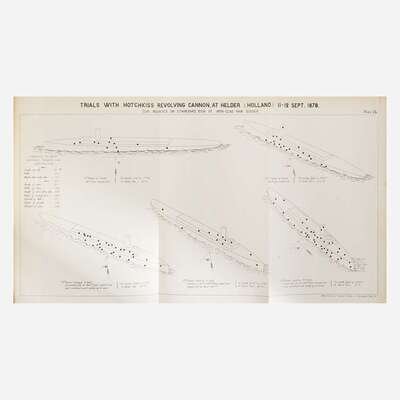
A rare trade catalogue for the Hotchkiss Revolving Cannon, an early type of machine gun, invented by Hotchkiss & Co. founder, Benjamin B. Hotchkiss in 1872. This catalogue details the Cannon's various components and construction, its six different calibers and ballistic capabilities, as well as its on-the-field tactical uses. The various calibers of the gun (37-53 mm) allowed it to be used in a variety of military settings, such as a light mobile version to use on the field to serve as auxiliary to cavalry and troop units, and more powerful mounted versions to serve on naval ships to pierce ironclad vessels. The photographs in the rear of this volume depict the cannon's various uses, showing unmounted and mounted versions and their different ammunition, while the numerous lithographic charts show its accuracy and power, measured in tests performed at the Coast Guard base at Sandy Hook, New Jersey.
From the library of bibliographer, bookseller, and arms collector, Raymond L.J. Riling (1896-1974).