Condition Report
Contact Information
Lot 361
Lot Description
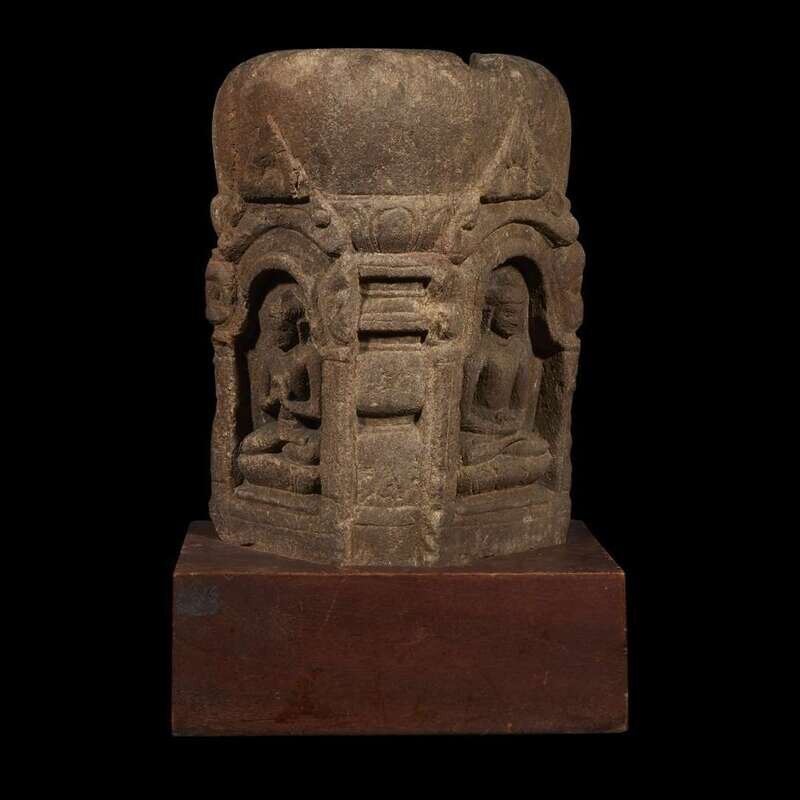
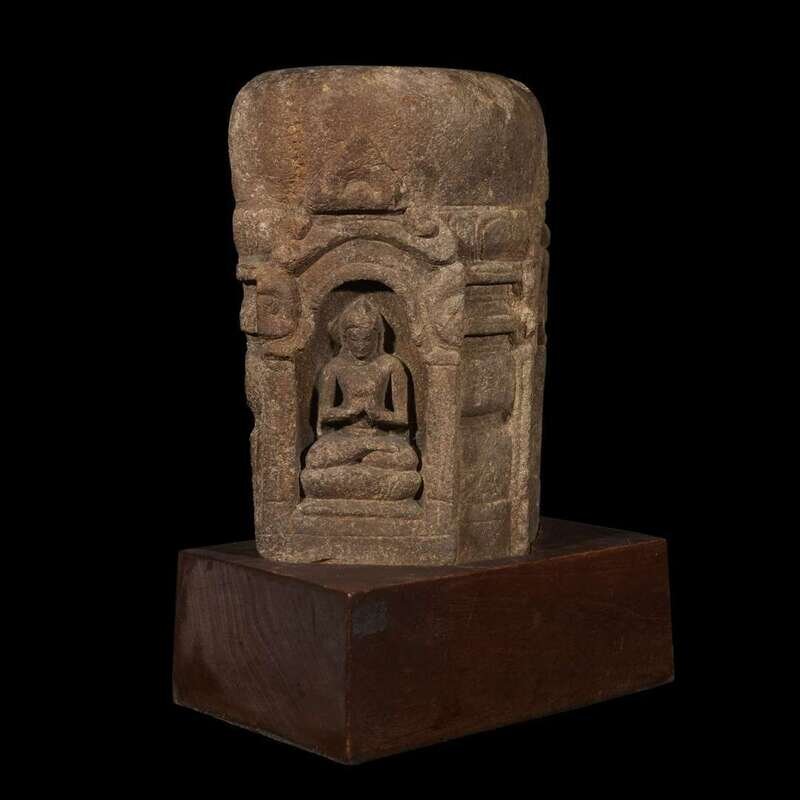
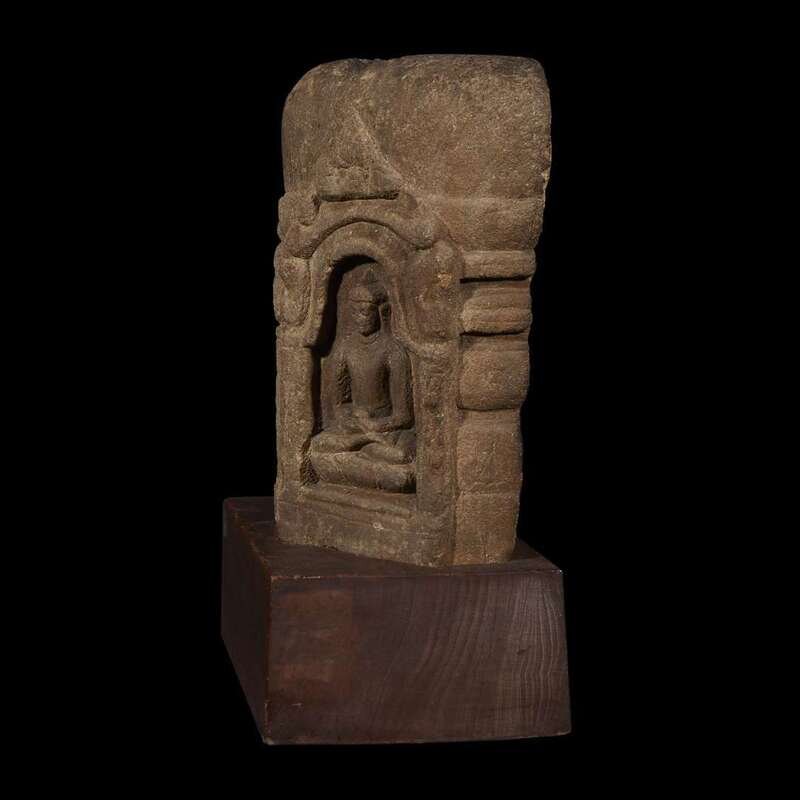
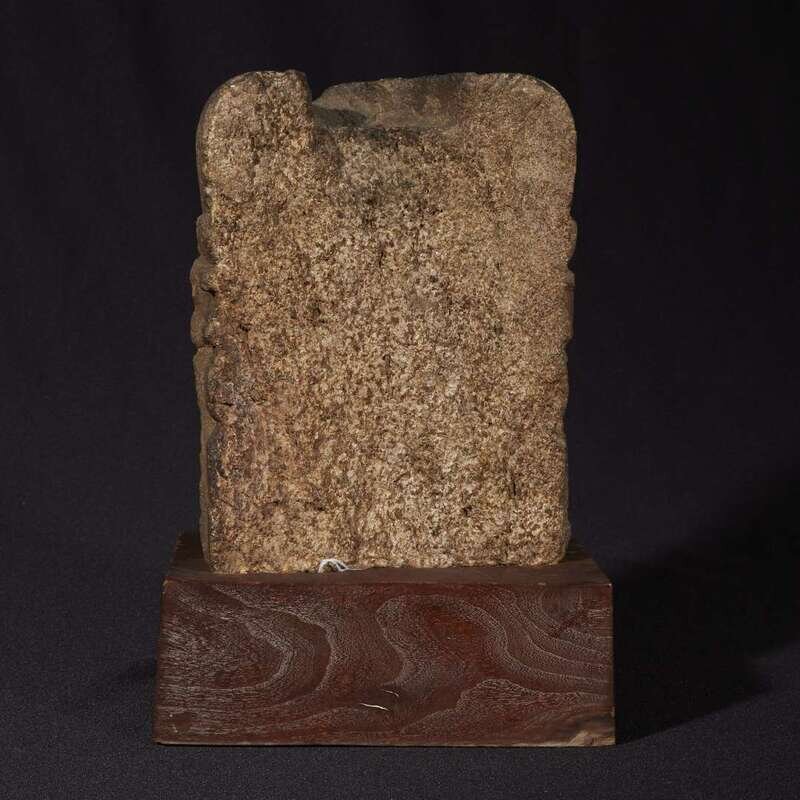
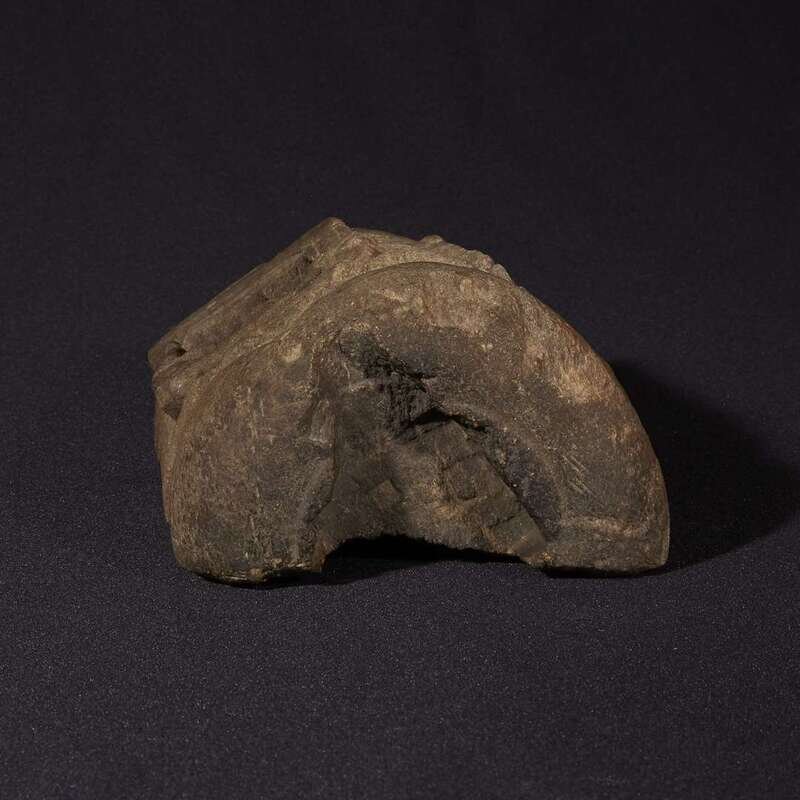
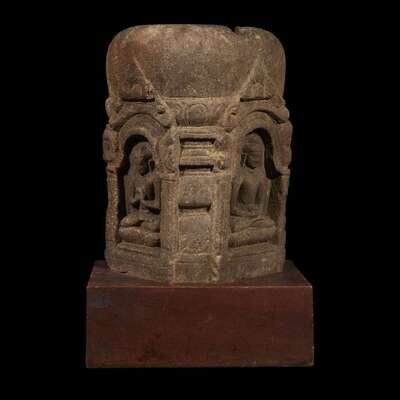
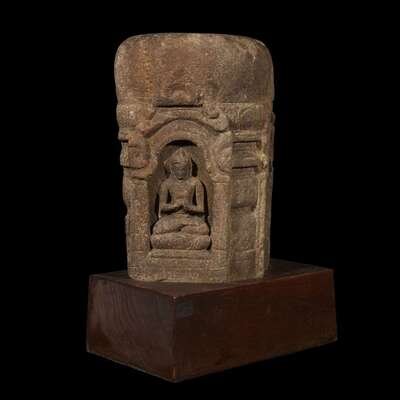
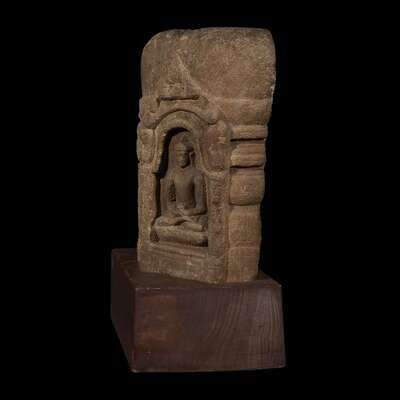
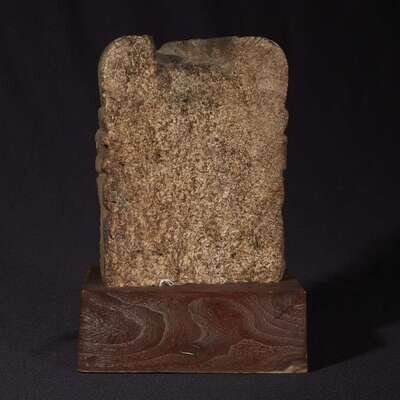
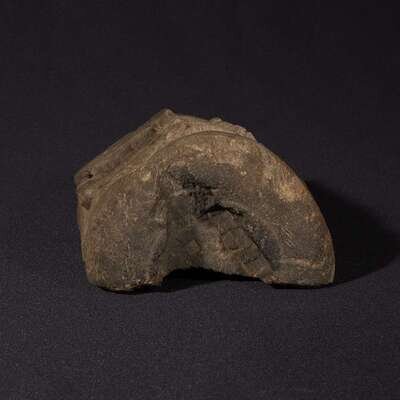
Comprising two sides of a four-sided stupa, with two arched alcoves, each with a Buddha seated in padmasana, one with hands in dhyana mudra, bearing an alms bowl, the other with hands in dharmachakra mudra, seated on a lotus base, below a rounded superstructure, of a granular buff and grey stone, later wood plinth. NOTE: The treatment of the niches and lotus bases of the Buddhas suggest a connection with the sculptural style emanating from the Mahabodhi temple complex in Bodhgaya, Bihar, India. Compare the votive model of the Mahabodhi temple from Bodhgaya, dated to the 9th-10th century, in the collection of the Philadelphia Museum of Art, illustrated in Adriana Proser, et al, "Pilgrimage and Buddhist Art", New Haven, 2010, pp. 152-153, no. 73. See also the more elaborate bronze stupa, attributed to Eastern India, Bangladesh or Himalayan region, 12th century, illustrated in Denise Patry Leidy and Robert A.F. Thurman, "Mandala, The Architecture of Enlightenment", Singapore 1997, p. 55 no. 5.
H. stone: 8 3/4 in., 22.3cm