Condition Report
Contact Information
Auction Specialists
Lot 74
Lot Description
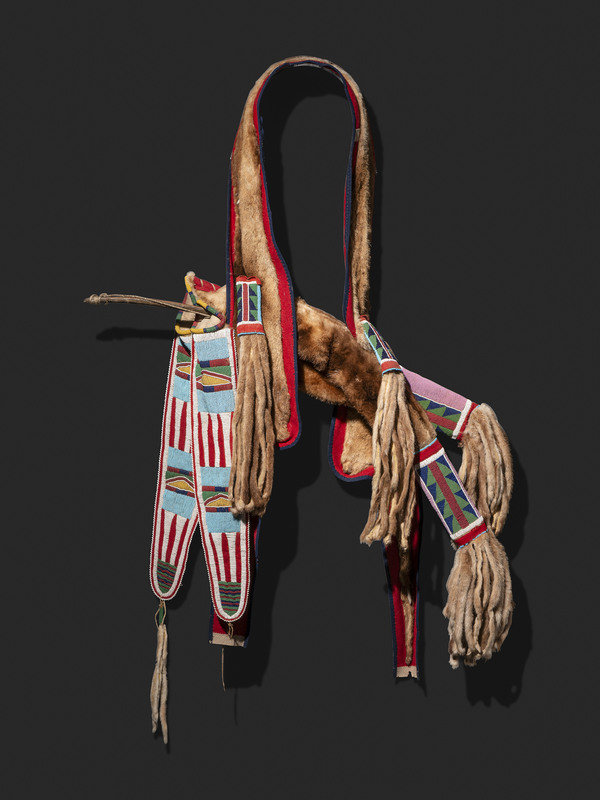
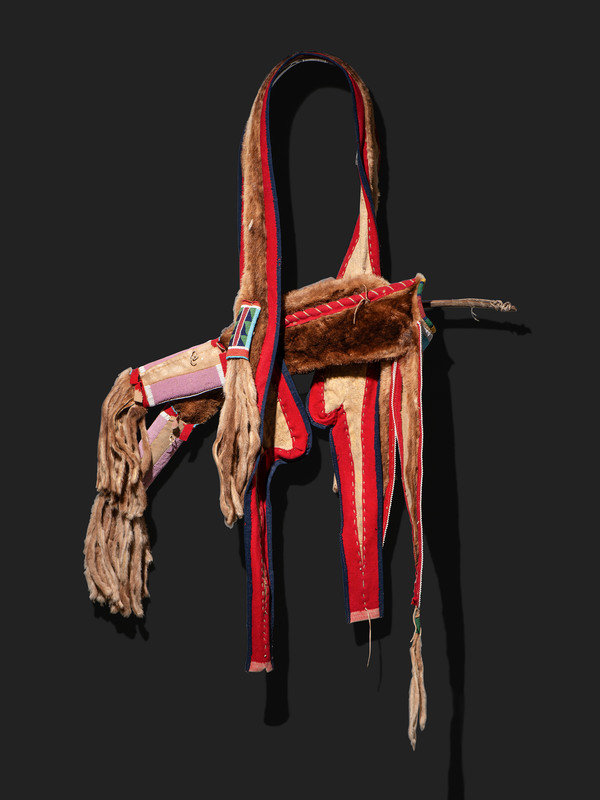
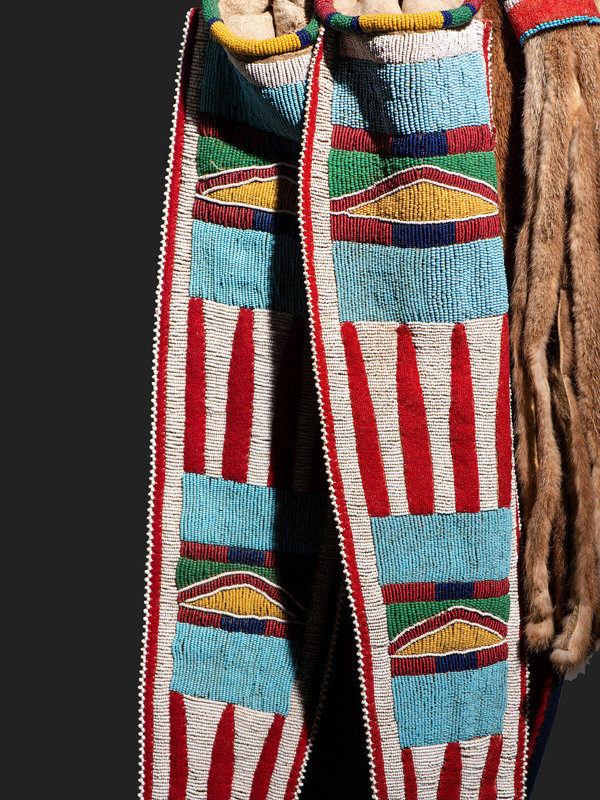
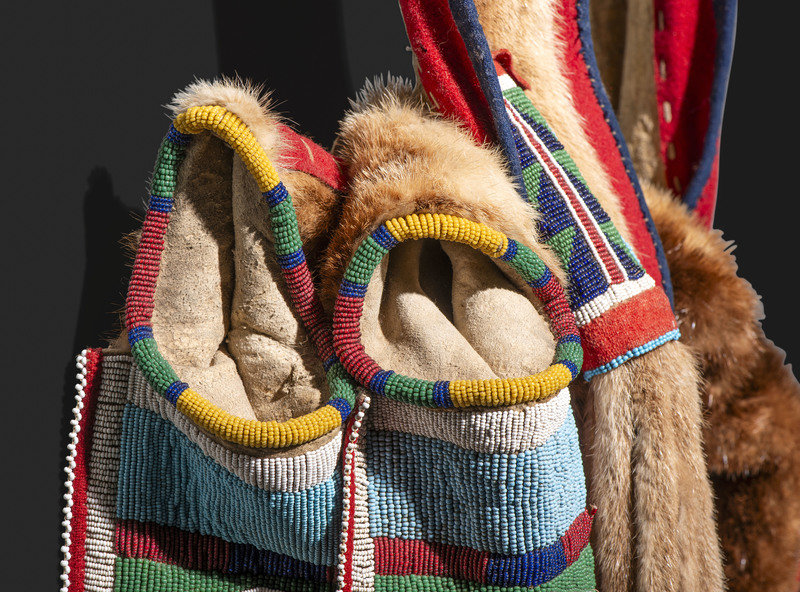
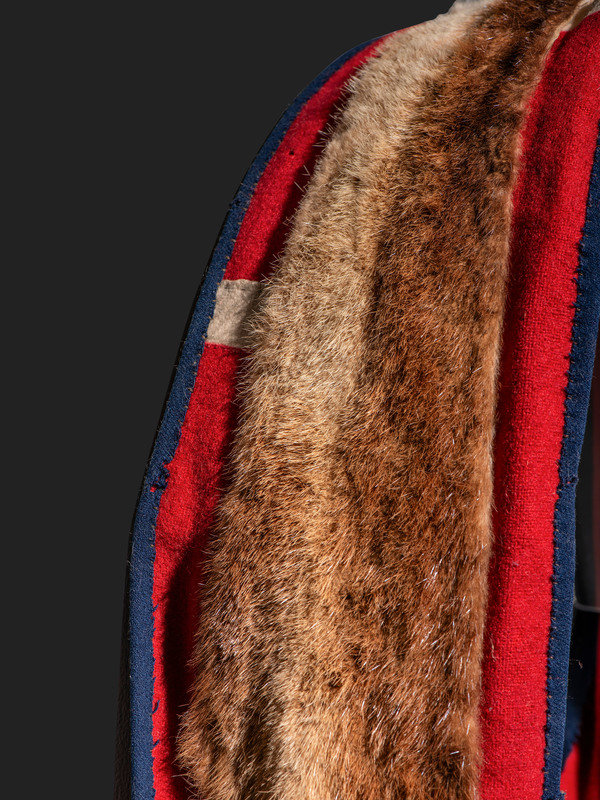
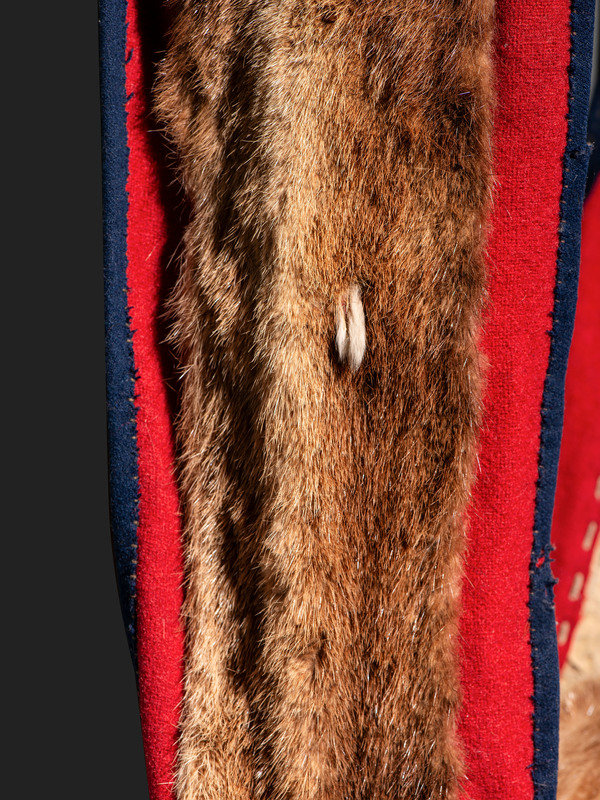
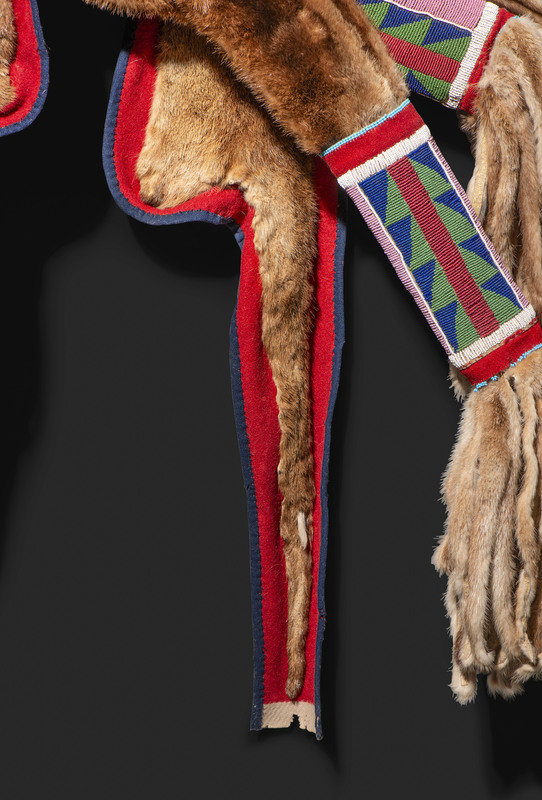
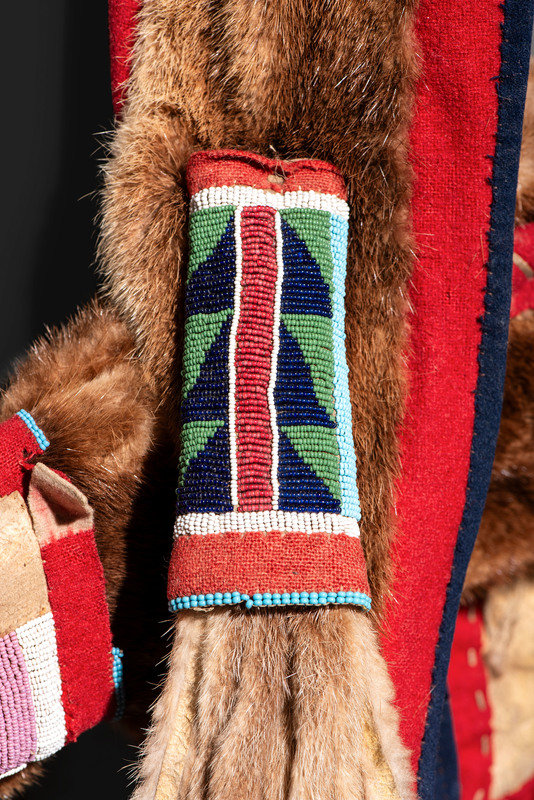
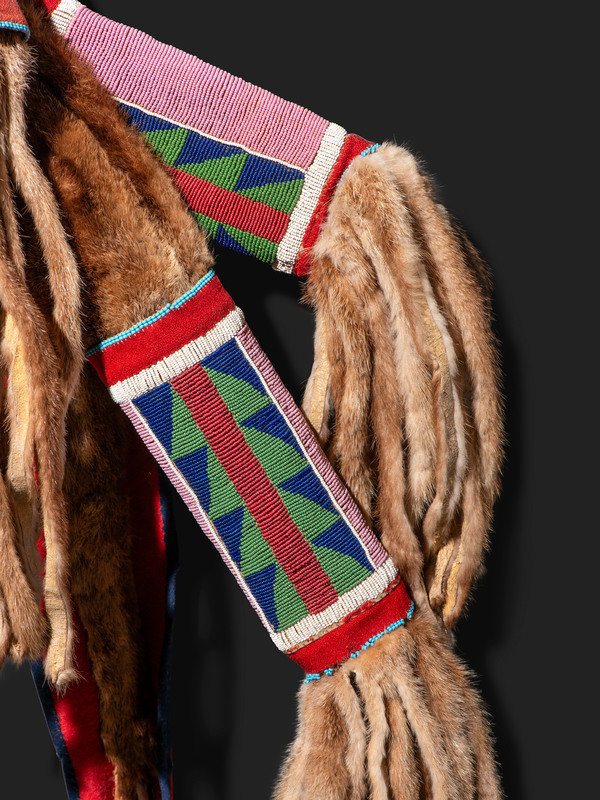
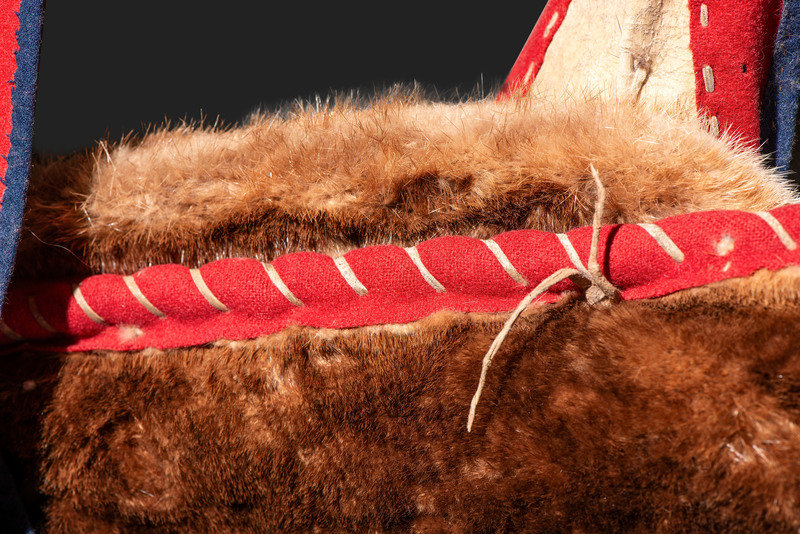
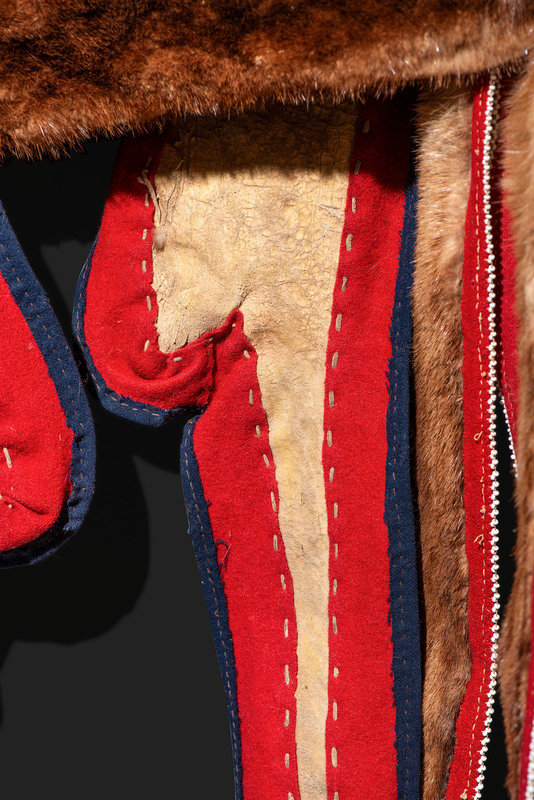
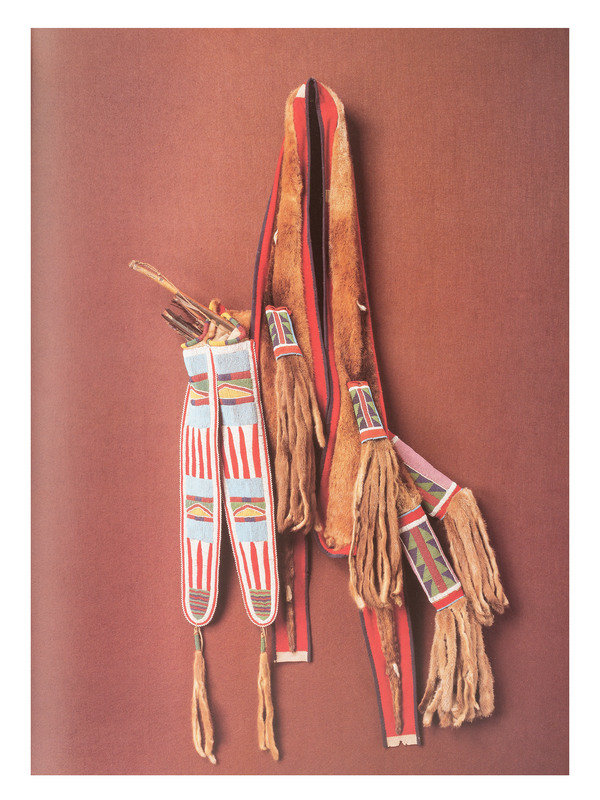
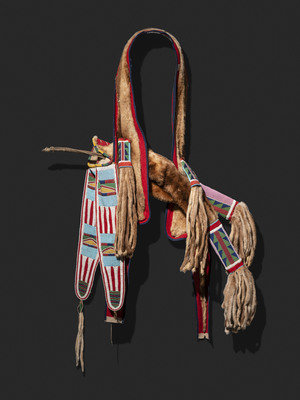
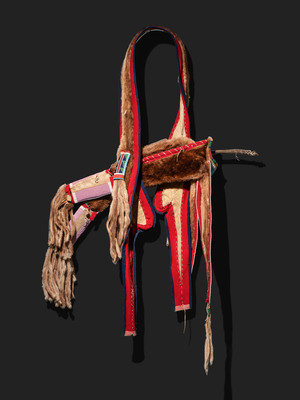
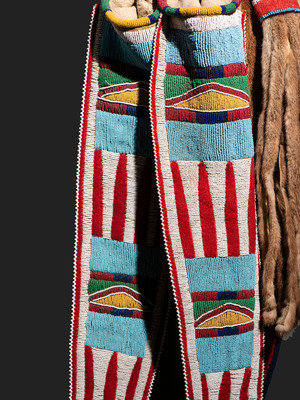
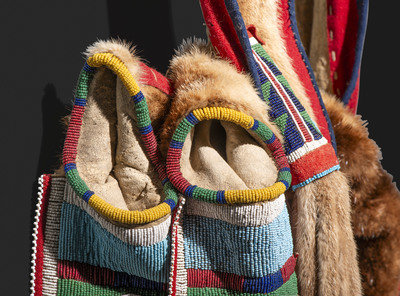
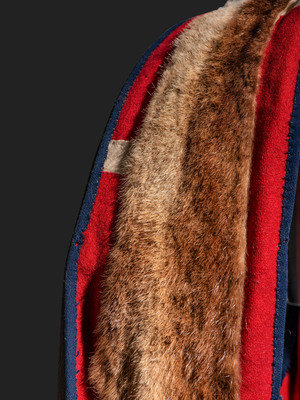
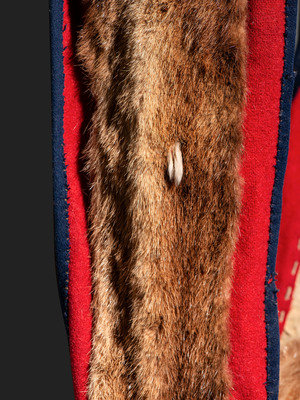
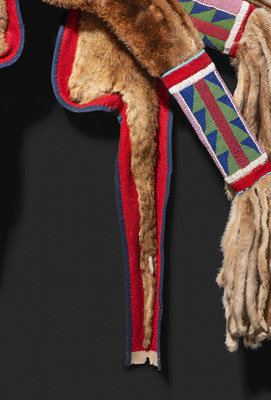
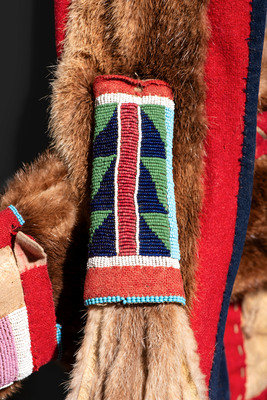
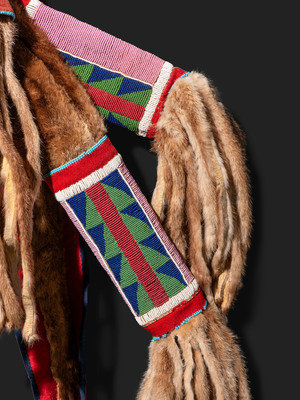
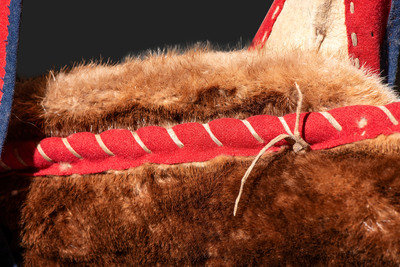
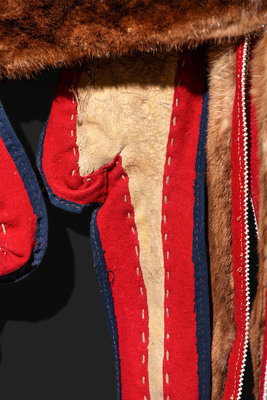
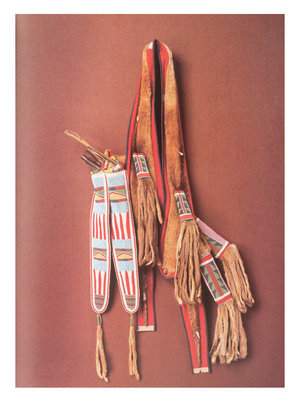
thread and sinew-sewn; red trade wool strap is inset with otter fur and edged with navy wool; triangular tab drops and cuffs are beaded using colors of light blue, greasy yellow, pink, red white-heart, pea green, dark blue, and white; thin strips of otter fur fringe elegantly hang from each side of the strap and the endcaps of the bowcase and quiver
overall length 43-1/2 inches
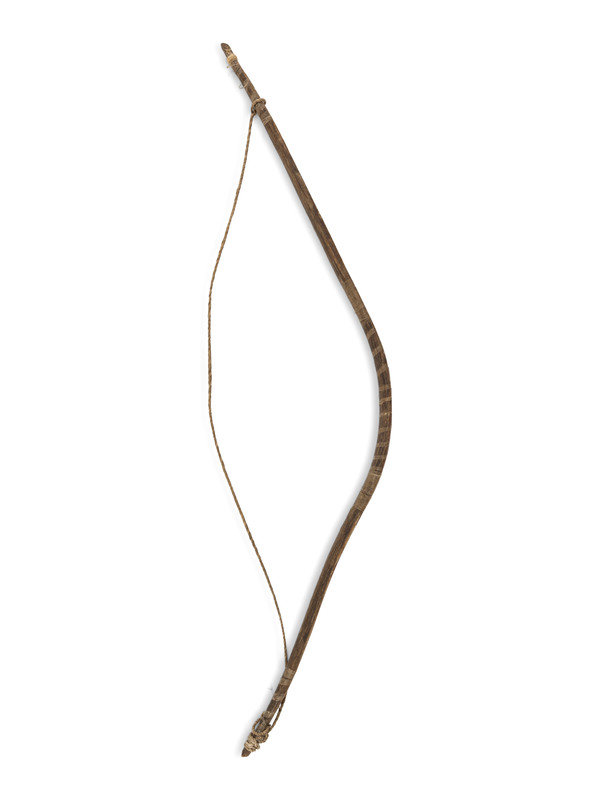
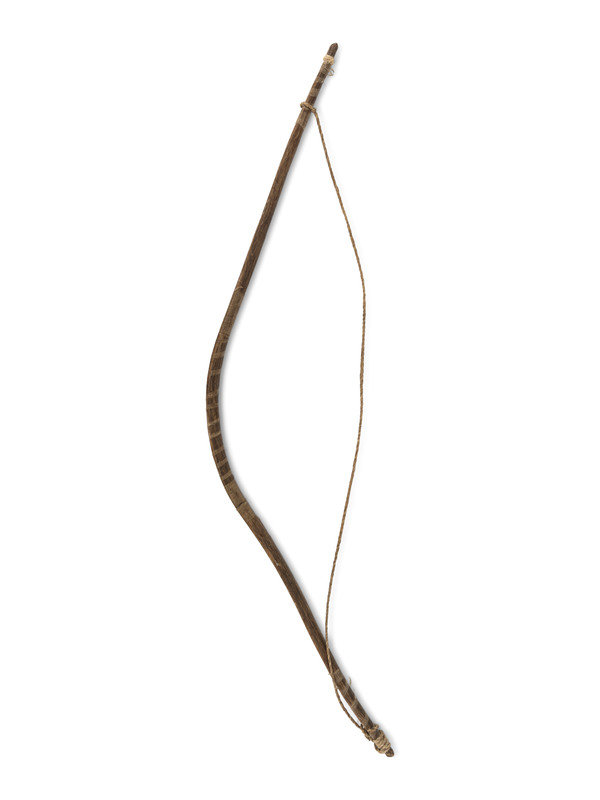
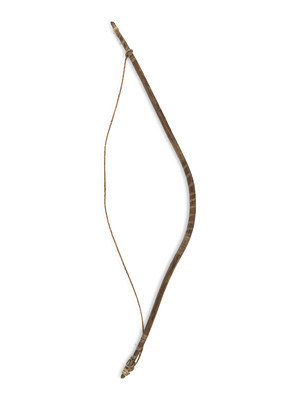
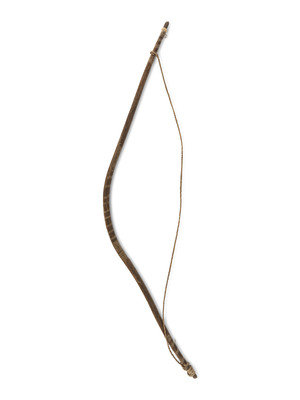
sinew-backed recurve bow; length 38 inches
Published:
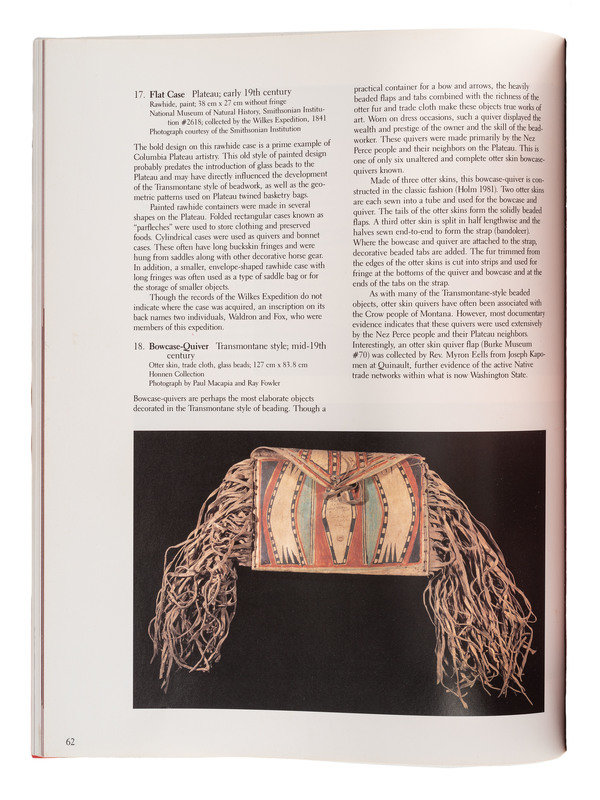
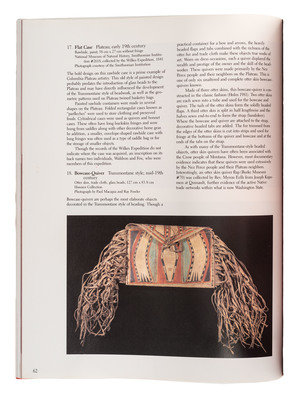
Wright, Robin. A Time of Gathering: Native Heritage in Washington State (1991: 62-63).
Bowcase-quivers are perhaps the most elaborate objects decorated in the Transmontane style of beading. Though a practical container for a bow and arrows, the heavily beaded flaps and tabs combined with the richness of the otter fur and trade cloth make these objects true works of art. Worn on dress occasions, such a quiver displayed the wealth and prestige of the owner and the skill of the beadworker. These quivers were made primarily by the Nez Perce people and their neighbors on the Plateau. This is only one of six unaltered and complete otter skin bowcase-quivers known.
Made of three otterskins, this bowcase-quiver is constructed in the classic fashion (Holm 1981). Two otter skins are each sewn into a tube and used for the bowcase and quiver. The tails of the otter skins form the solidly beaded flaps. A third otter skin is split in half lengthwise and the halves are sewn end-to-end to form the strap (bandoleer). Where the bowcase and quiver are attached to the strap, decorative beaded tabs are added. The fur trimmed from the edges of the otter skins is cut into strips and used for the fringe at the bottoms of the quiver and bowcase and at the ends of the tabs on the straps.
As with many of the Transmontane-style beaded objects, otter skin quivers have often been associated with the Crow people of Montana. However, most documentary evidence indicates that these quivers were used extensively by the Nez Perce people and their Plateau neighbors. Interestingly, an otter skin quiver flap (Burke Museum #70) was collected by Rev. Myron Eells from Joseph Kapomen at Quinault, further evidence of the active Native trade networks within what is now Washington State (Wright 1991: 62).
This lot is located in Cincinnati.