Condition Report
Contact Information
Auction Specialist
Lot 308
Sale 1095 - American Historical Ephemera & Photography, Featuring Property from the James Milgram, M.D., Collection of Broadsides, Ephemeral Americana & Historical Documents
Day 1 Lots 1-403
Nov 3, 2022
10:00AM ET
Day 2 Lots 404-634
Nov 4, 2022
10:00AM ET
Live / Cincinnati
Own a similar item?
Estimate
$300 -
400
Price Realized
$1,250
Sold prices are inclusive of Buyer’s Premium
Lot Description
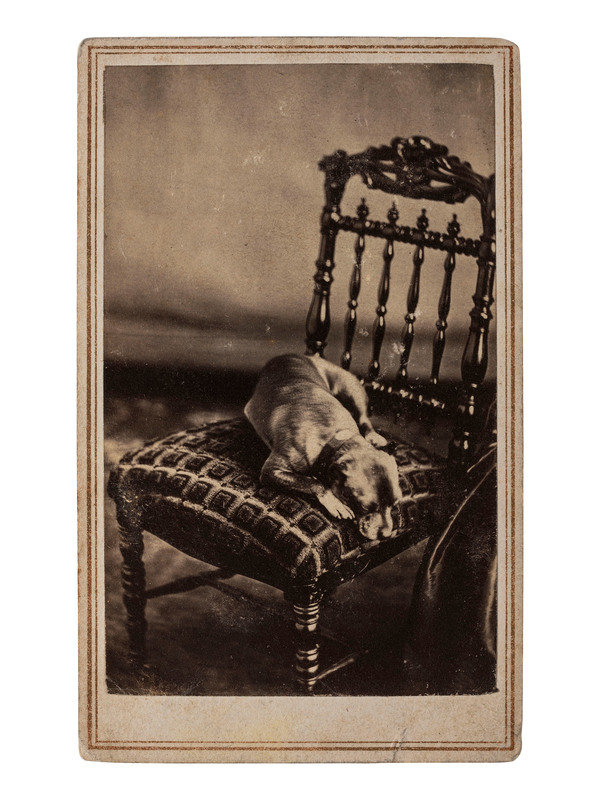
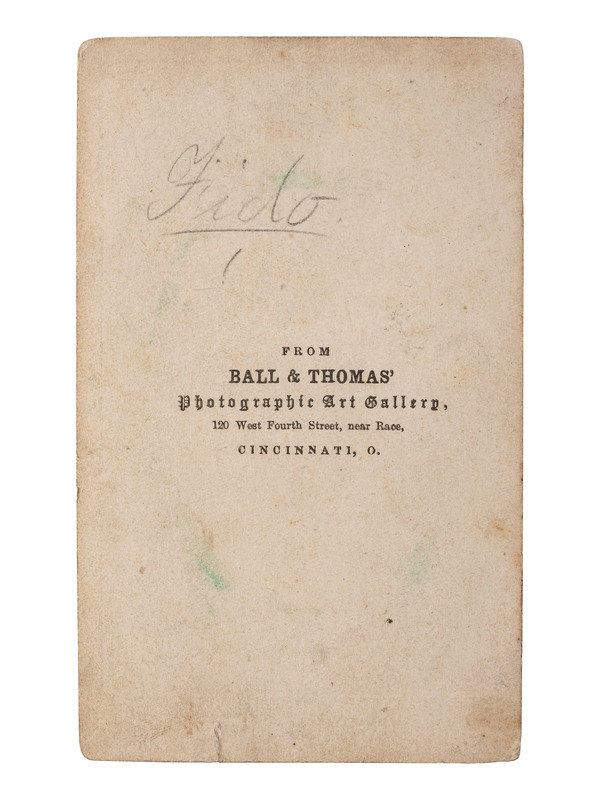
[AFRICAN AMERICANA]. BALL, James Presley, and THOMAS, Alexander, photographers. CDV of dog identified as "Fido." Cincinnati, OH.
2 1/8 x 3 1/2 in. CDV on cardstock mount (rich tonality, soiling and wear to mount including a small ri8p to bottom edge). Verso bears Ball & Thomas' imprint along with pencil inscription, "Fido." It has been suggested that this could be the same "Fido" that belonged to Abraham Lincoln based on the dog's appearance, but this cannot be confirmed.
James Presley Ball (1825-1904) is one of the most renowned African American photographers at one point owning the largest photographic gallery west of the Appalachians. When visiting White Sulphur Springs, Virginia in 1845 he met John B. Bailey, an African American Daguerreotypist from Boston where he acquired the passion and skill of photography. He opened a studio in Cincinnati later that year, and though it was unsuccessful, he continued his art with studios in Pittsburgh and Richmond and traveled as an itinerant Daguerreotypist. In 1849, he reopened a studio in Cincinnati. He hired his younger brother Thomas Ball to work as an operator, and in 1852 hired his future brother-in-law Alexander Thomas to work with him. By 1857, their gallery was one of the grandest in the United States attracting notables including Frederick Douglass. In 1887 Ball was chosen as the official photographer of a celebration of the 25th anniversary of the Emancipation Proclamation held in Minneapolis-St. Paul. In 1888, he moved to Helena, Montana with his son where he operated a studio for several years before moving again in 1892 to Seattle.