(American, b. 1938)
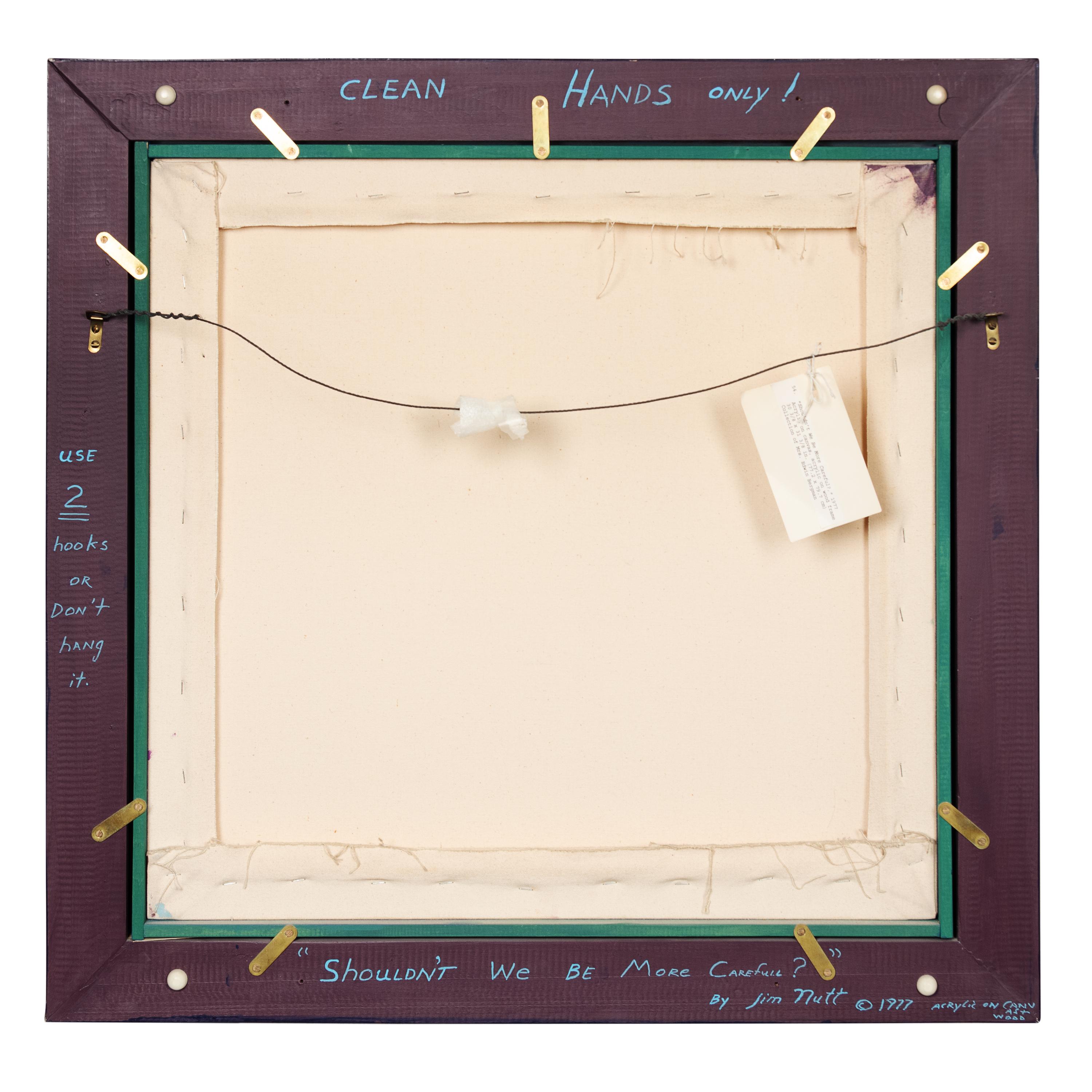
30 3/8 x 31 3/8 inches.
Provenance:
Phyllis Kind Gallery, Chicago
Edwin and Lindy Bergman, Chicago, Illinois
Thence by decent to the present owner
Exhibited:
Milwaukee, Wisconsin, Milwaukee Art Museum, Jim Nutt, June 17-August 28, 1994; Seattle, Washington, Henry Art Gallery, University of Washington, September 14-November 20, 1994; Washington, D.C., National Museum of American Art, Smithsonian Institution, February, 10-May 21, 1995; Cincinnati, Ohio, Contemporary Arts Center, July 8-September 6, 1995
Amsterdam, Netherlands, The Stedelijk Museum Amsterdam, Eye Infection: Work by Robert Crumb, Mike Kelley, Jim Nutt, Peter Saul and H.C. Westermann, November 3, 2001-January 2, 2002
Literature:
Andrea, Margaret & Bowman, Russell, Jim Nutt, Milwaukee Art Museum, Milwaukee, 1994, no. 54, pp. 32, 108 (illustrated)
Fuchs, Rudi & Storr, Robert, Eye Infection: Work by Robert Crumb, Mike Kelley, Jim Nutt, Peter Saul and H.C. Westermann, Richter Verlag, Düsseldorf, Germany, 2002, p. 96 (illustrated)
Lot Essay:
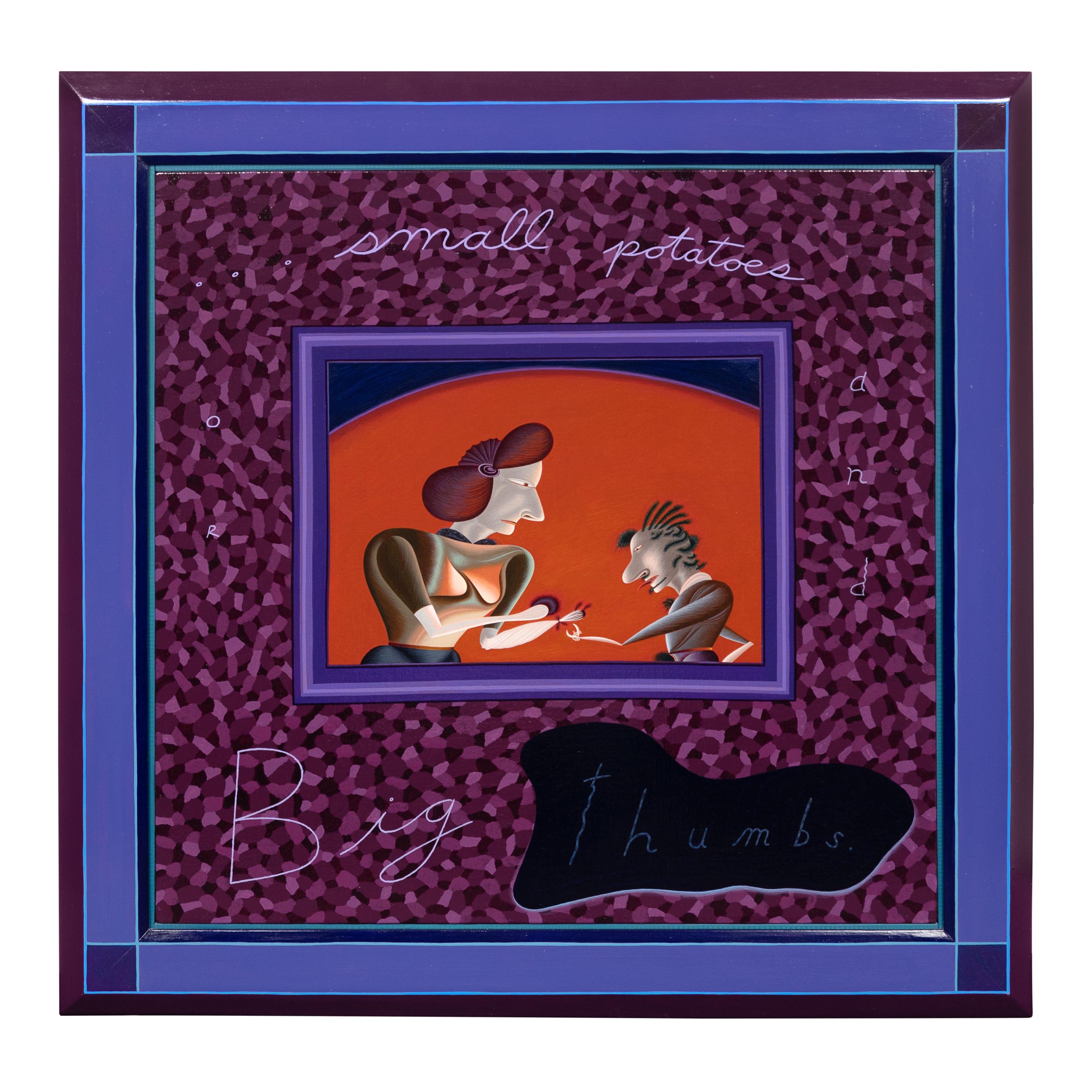
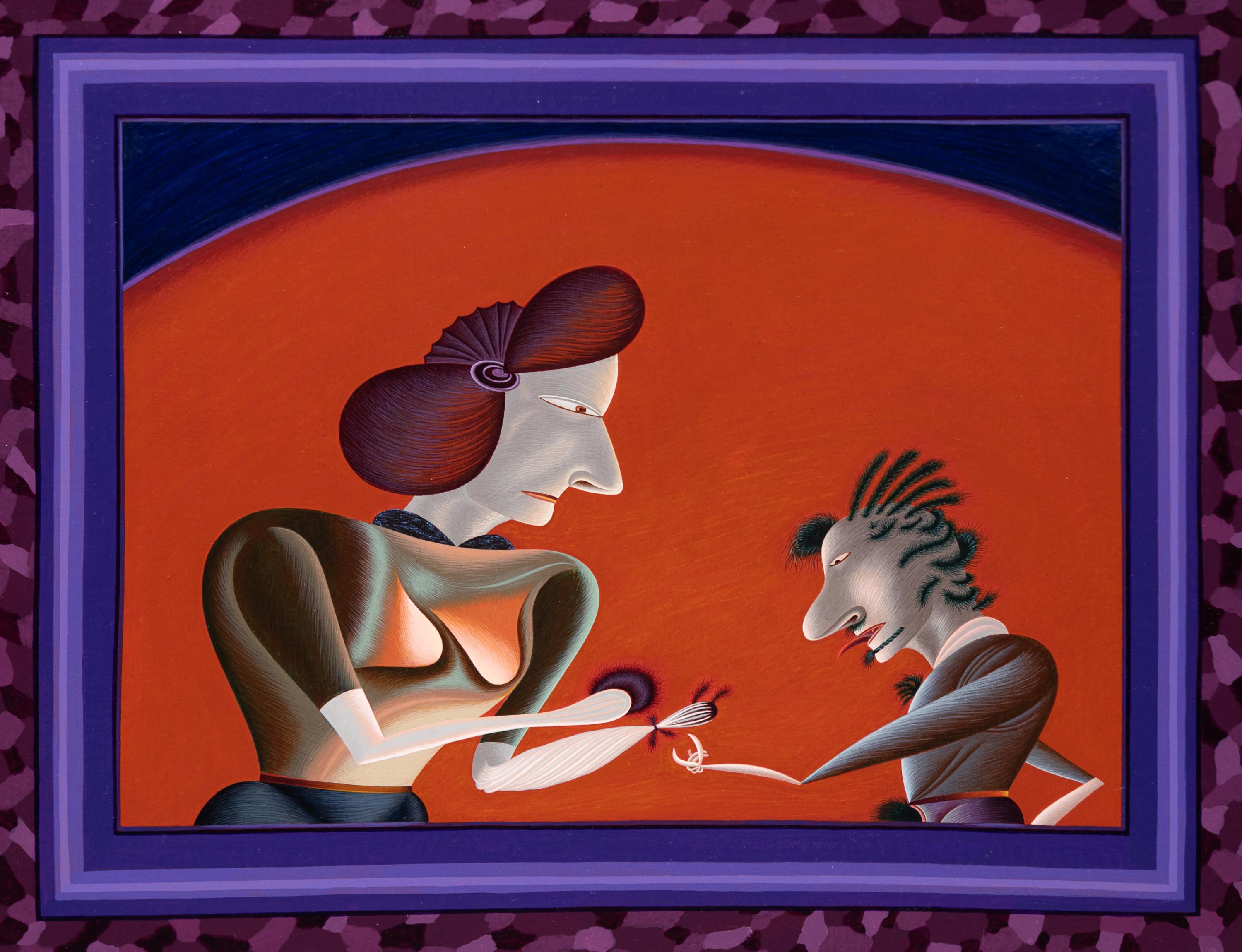
In the early 1970s, Chicago Imagist Jim Nutt began incorporating theatrical elements into his compositions, with greater textural and tonal variations than previously in his career. In contrast to the flatness of his early works, these paintings arrange figural groups in deeper architectural spaces, framed by prosceniums and stage curtains. The primary focus in these narrow stage settings are confrontations between male and female characters, who act out inscrutable scenes of mysterious plays. The stage is typically surrounded by a painted frame that is an integral aspect of the composition, which emphasizes the passage into a self-contained, alternate reality of the artist’s invention. The addition of obscure captions serves to further confuse, rather than enlighten, the viewer.
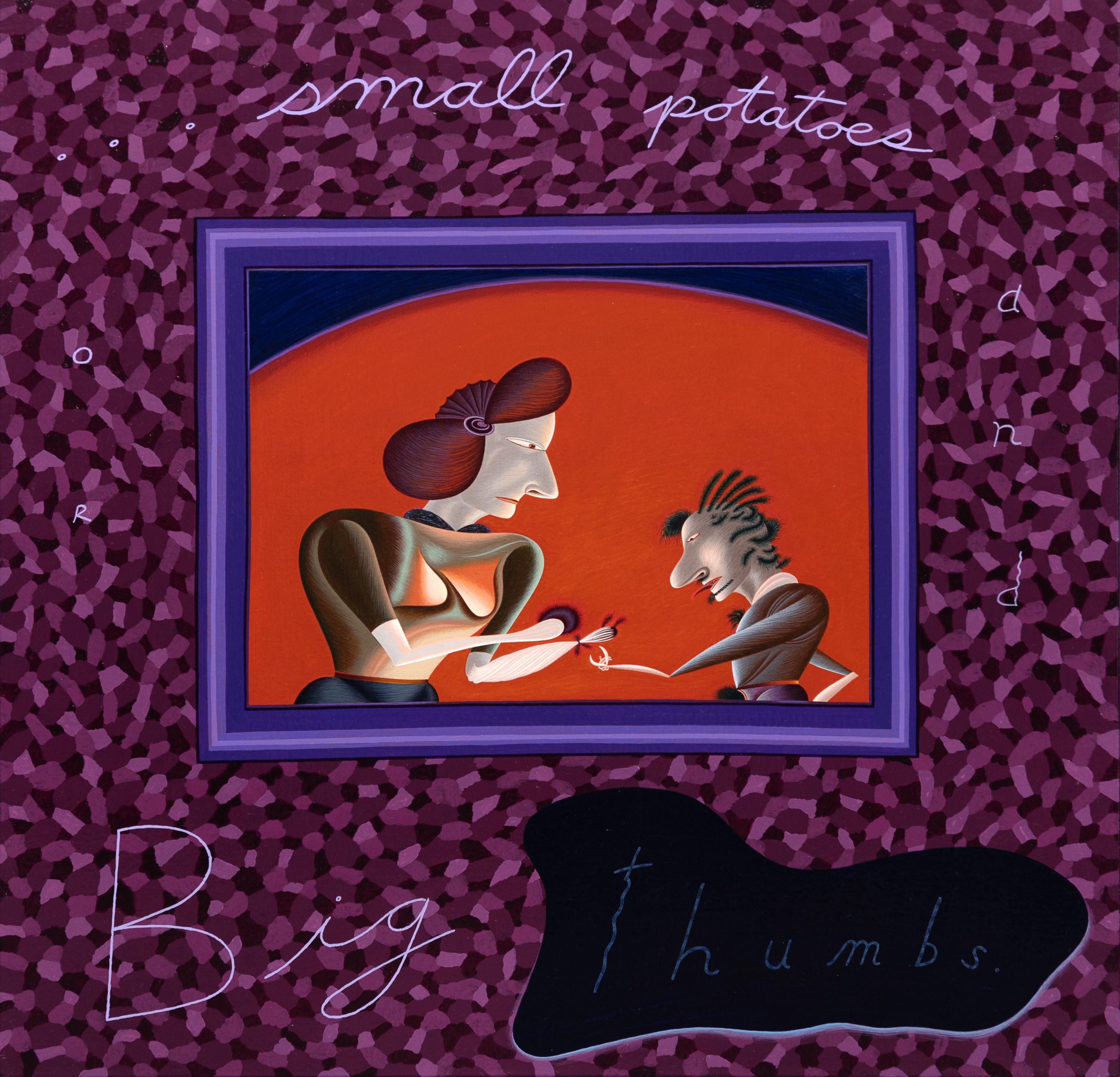
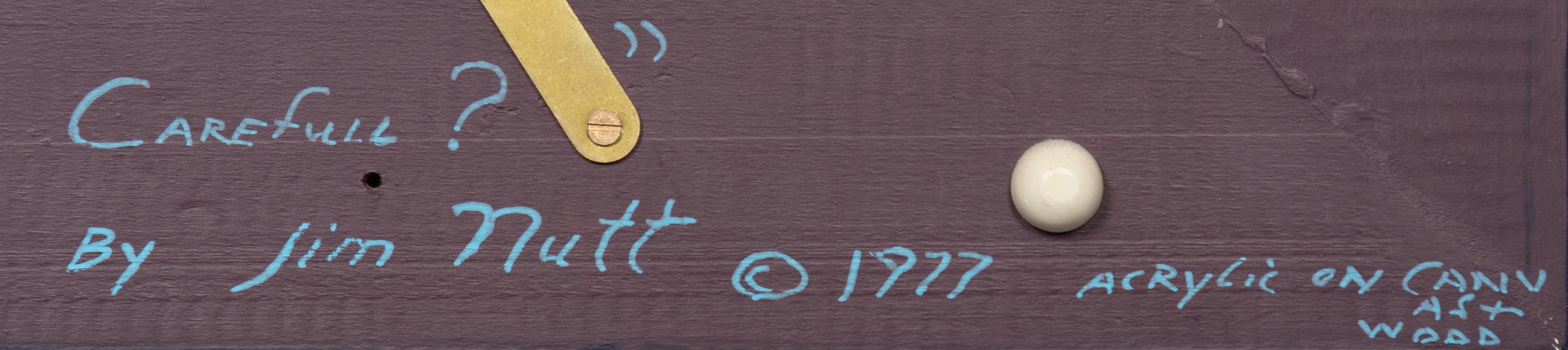
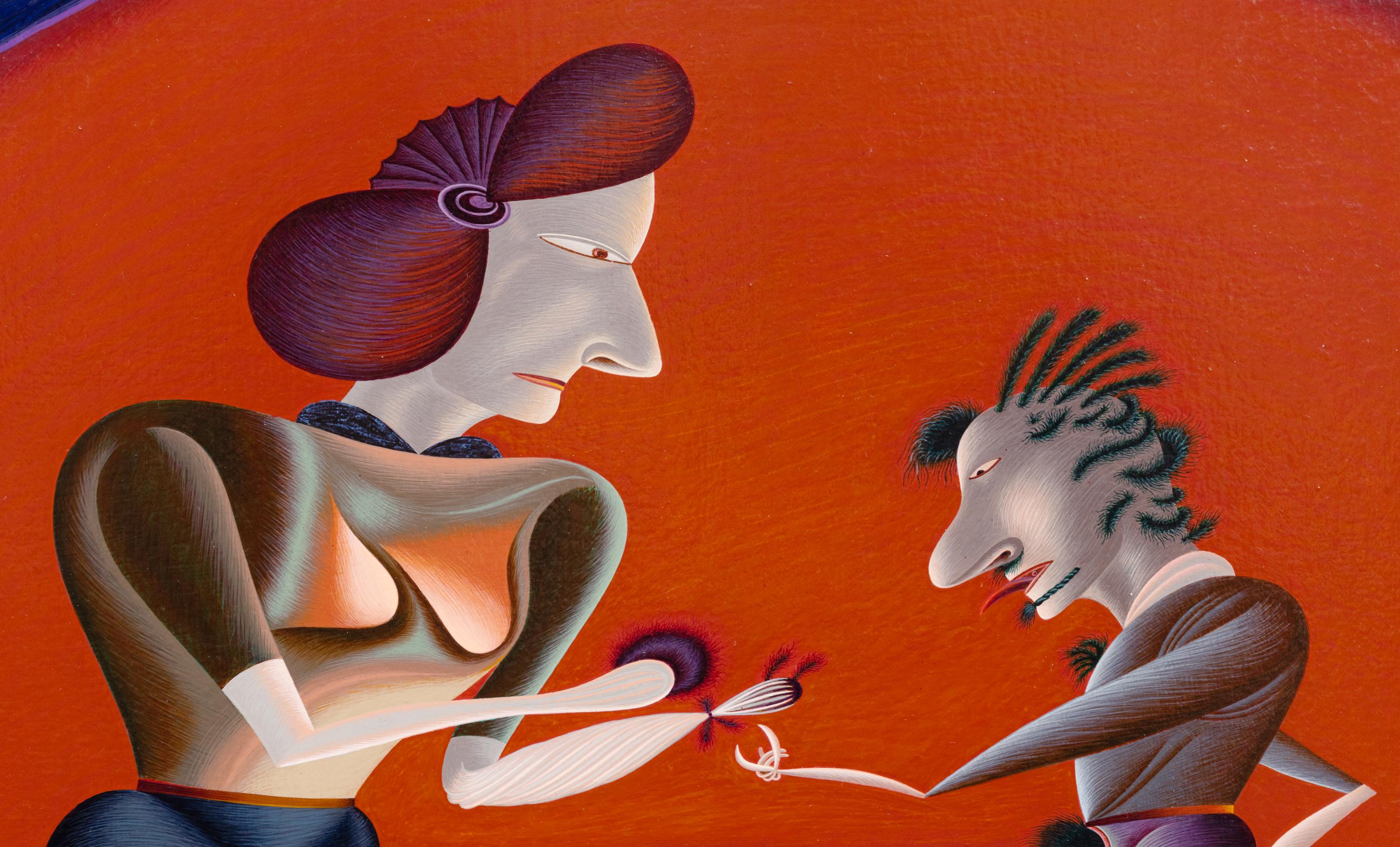
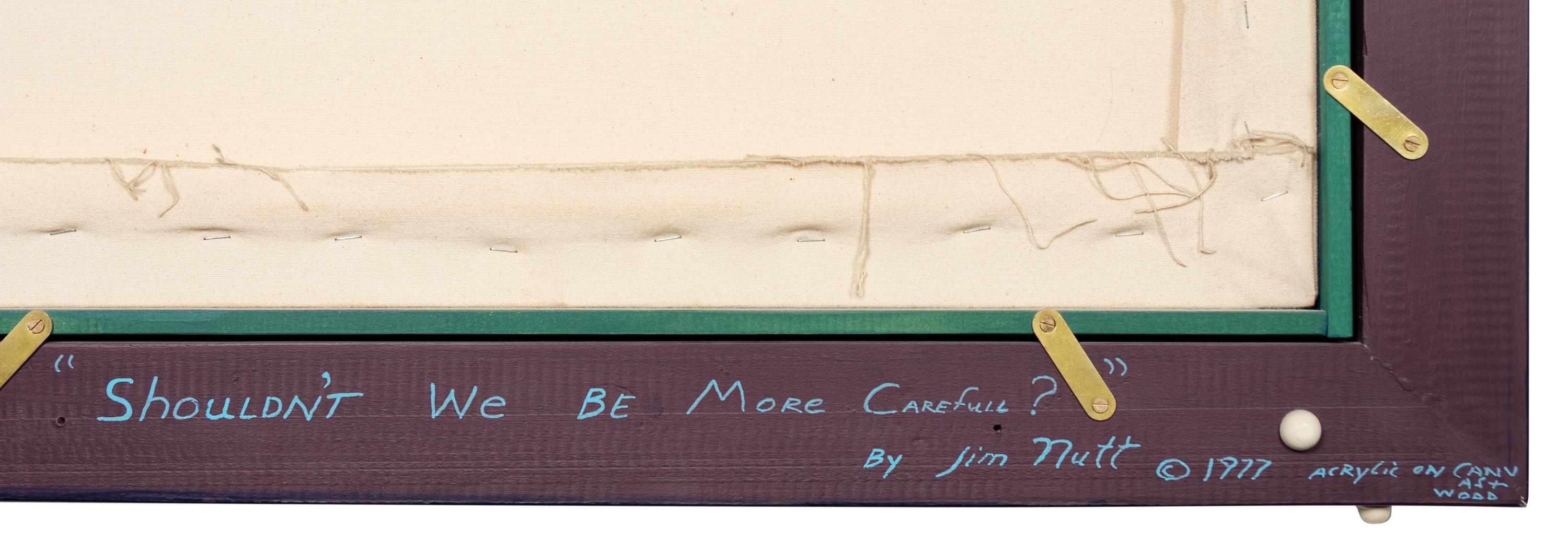
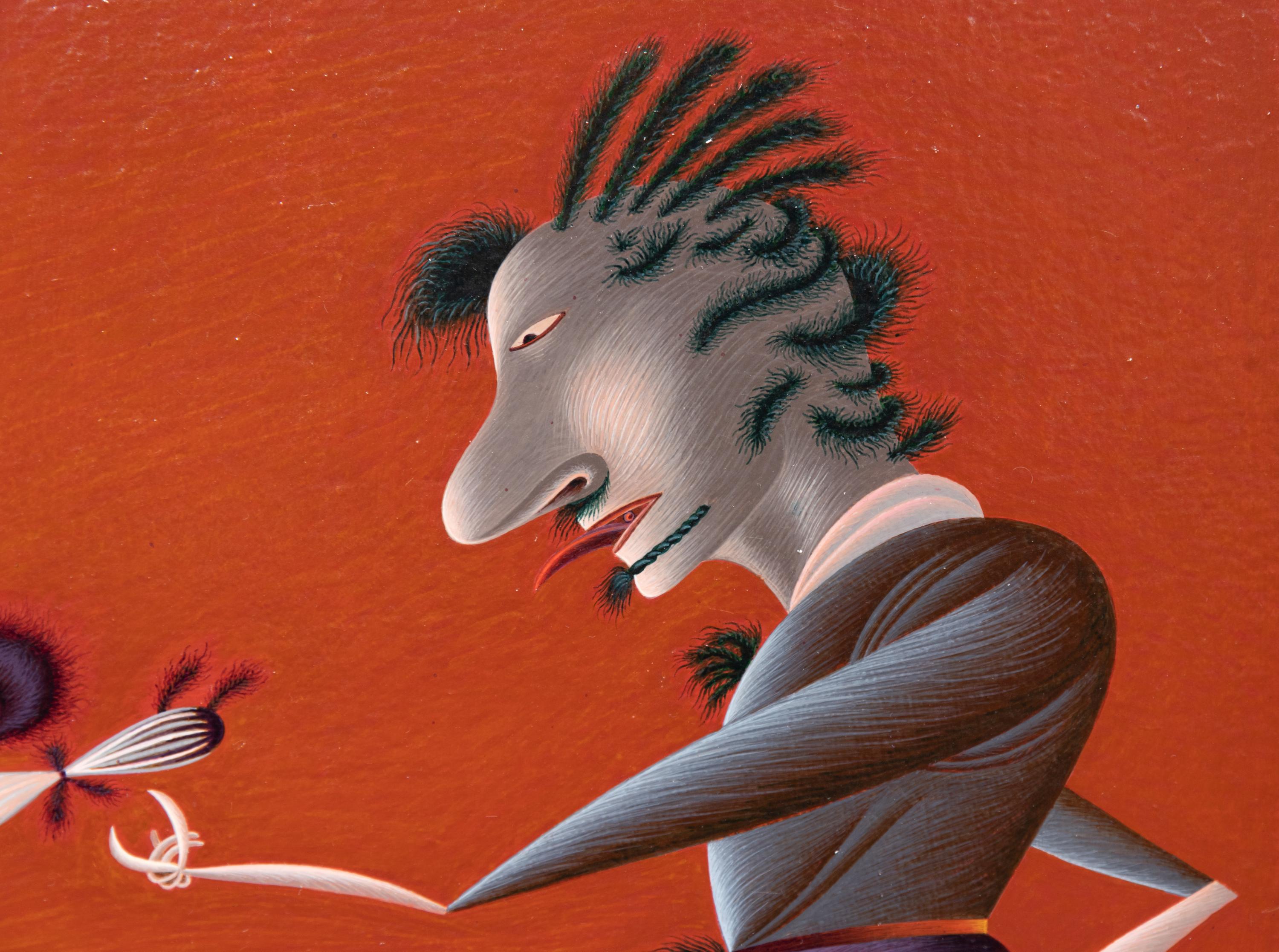
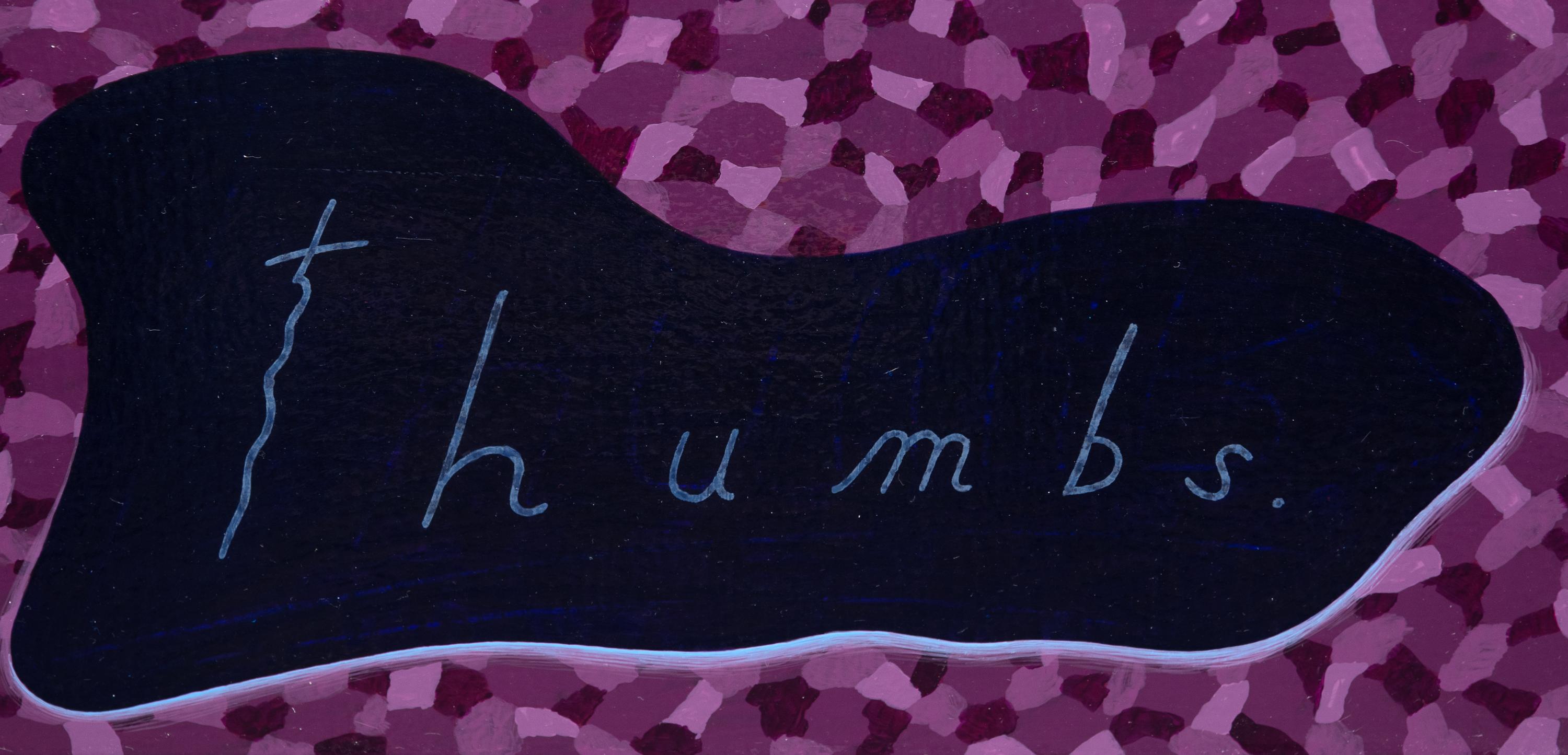
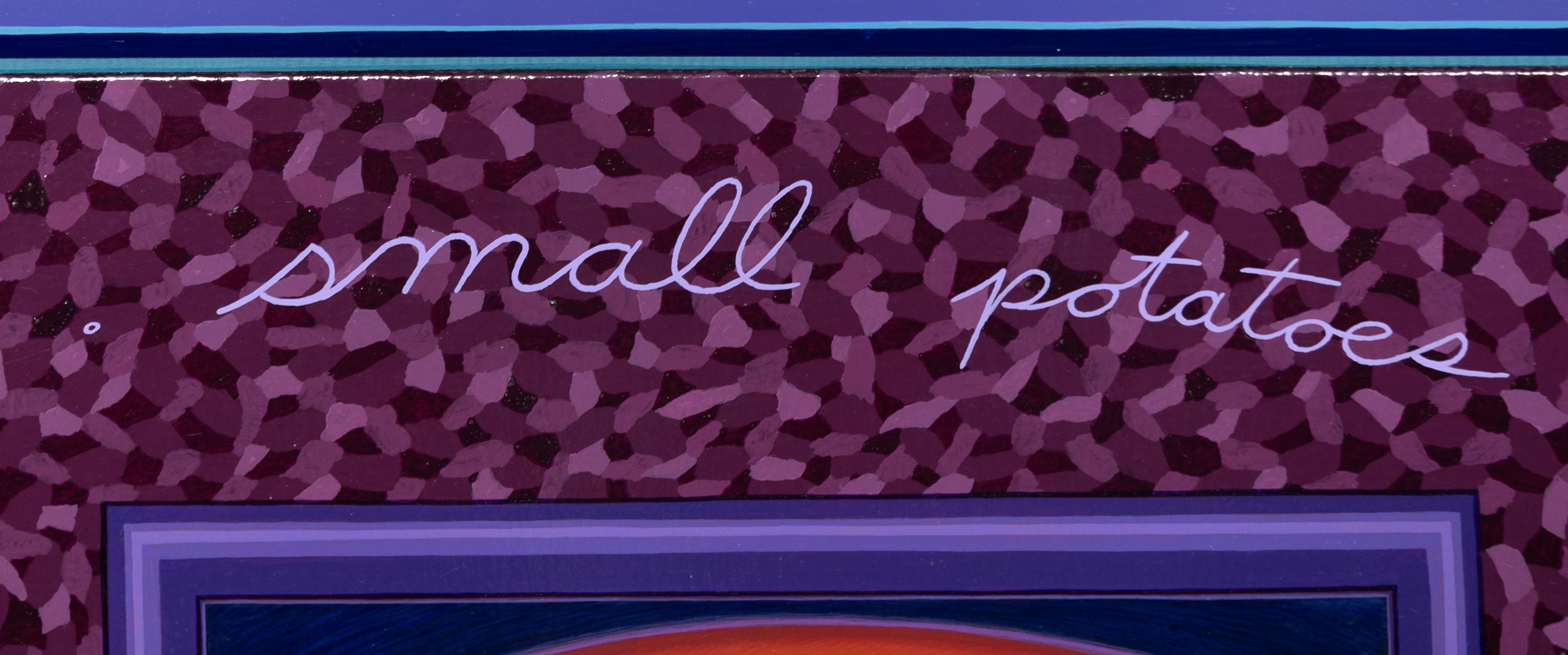
Shouldn’t We Be More Carefull?, 1977, was executed as part of this group of theater paintings. A richly purple and patterned border opens onto an interior space beyond, which itself is framed by a proscenium arch. A large woman appears to assist a smaller male, who holds out his hand to her. With her precisely rendered visage countered by Cubist breasts, the woman presages Nutt’s later elegant and restrained ladies. The diminutive man, with his crawling, caterpillar lines of hair, harkens back to Nutt’s earlier fantastical, cartoonish characters. Both figure’s faces are lit underneath by unseen footlights and this glow imparts an eerie, Carvaggio-esque sensibility. The scene at first glance appears almost maternal, until the furry protuberance that juts out of the male’s pants is noticed. The surrounding text, which can be deciphered in several ways, reads “...or Big potatoes and small thumbs” and only deepens the enigmatic encounter. The critical reception of Nutt’s art was confirmed in 1977, the year of execution of Shouldn’t We Be More Carefull?, with the inclusion of four of the artist’s works in the Whitney Biennial.
The present painting was once owned by Edwin and Lindy Bergman, renowned Chicago patrons and philanthropists of the arts. The couple were college sweethearts who married in 1940 and began to collect in the mid-1950s. It was in a MoMA publication that they were introduced to the assemblage artist Joseph Cornell. Cornell’s works became a center of their collection, many of which they donated to the Art Institute of Chicago. The Bergmans were also stalwarts of the Chicago art scene and actively promoted the Hairy Who collective and the wider Chicago Imagists. The inclusion of Shouldn’t We Be More Carefull? in the collection of the Bergmans is confirmation not only of its importance, but also of the couple’s discerning eye and commitment to Surrealism in all its iterations.