To request further details about this lot, please email adamveil@freemansauction.com

Adam Veil
VP, Head of Department, American Art and Pennsylvania Impressionists
Sale 6582
| Philadelphia
| Philadelphia
To request further details about this lot, please email adamveil@freemansauction.com
Adam Veil
VP, Head of Department, American Art and Pennsylvania Impressionists
Estimate$200,000 – $300,000
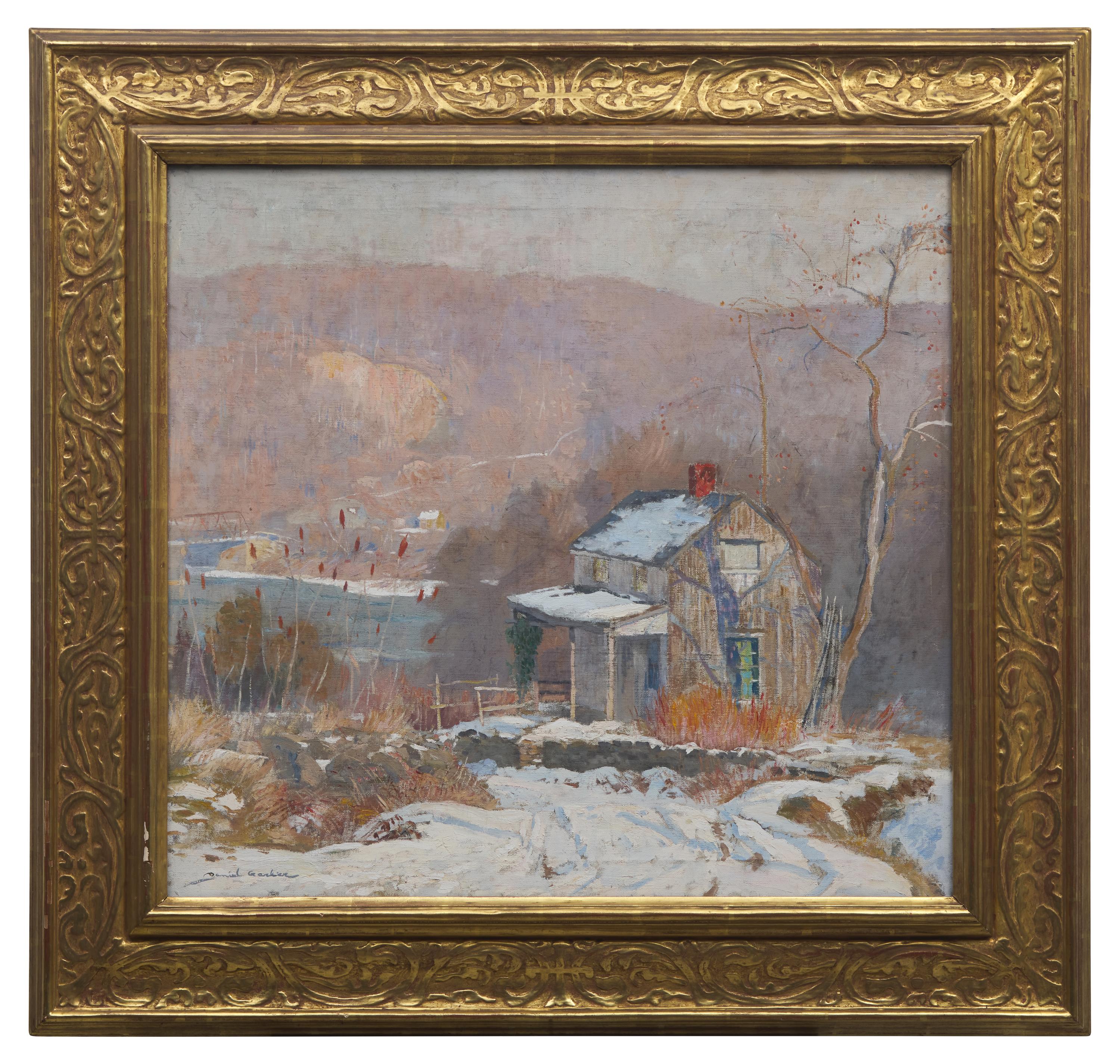
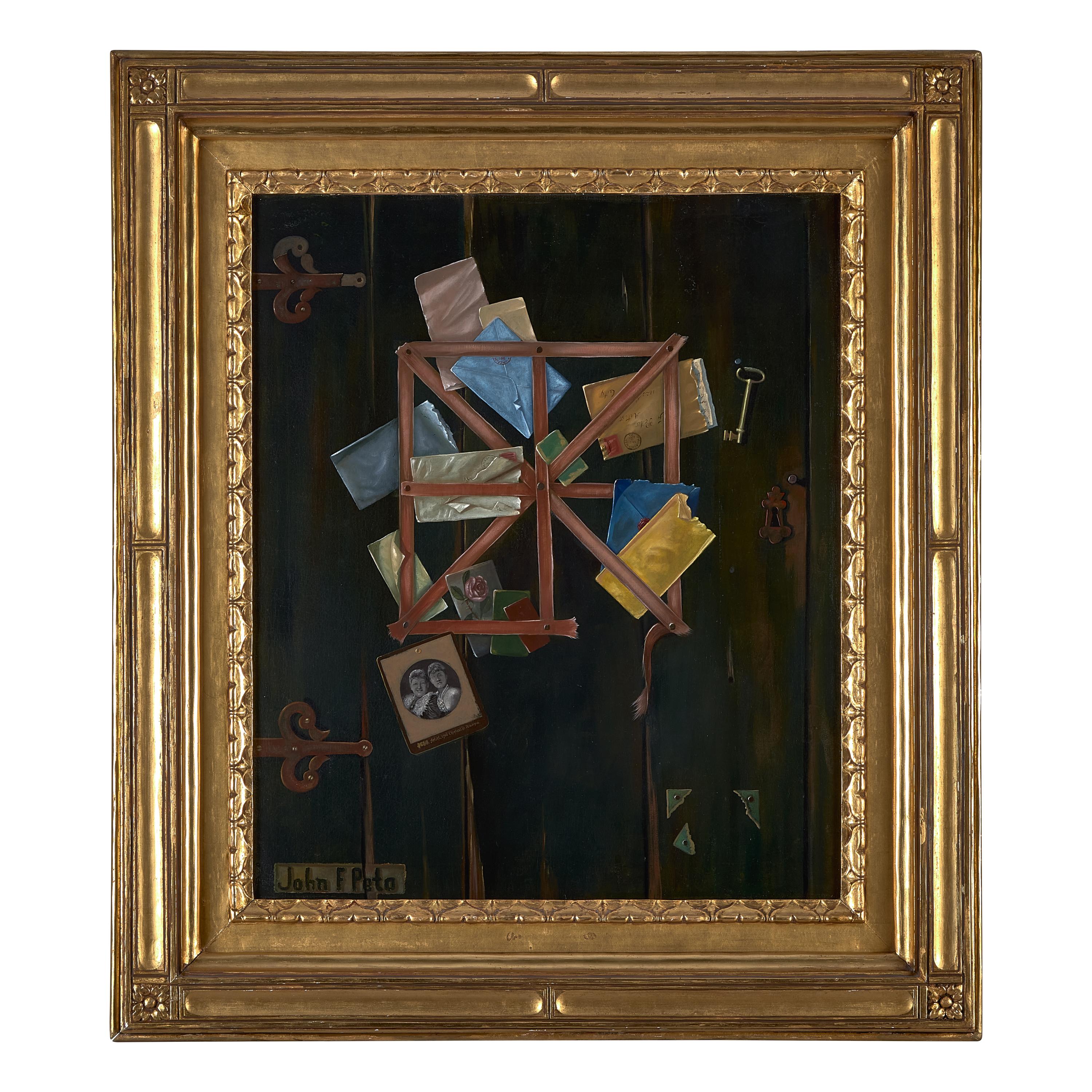
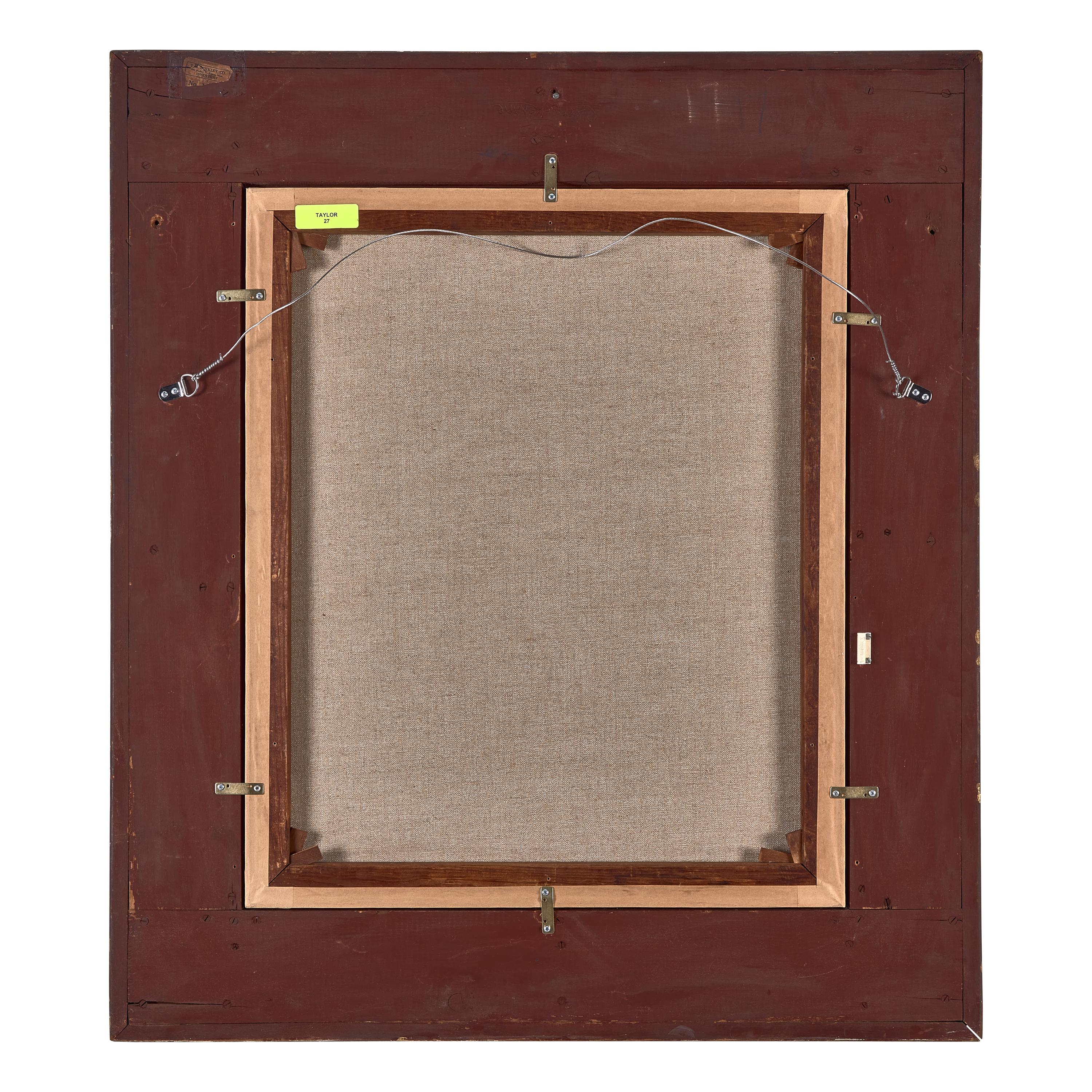
Housed in a Carrig-Rohane frame.
Provenance:
Private Collection, New York.
Lot Note:
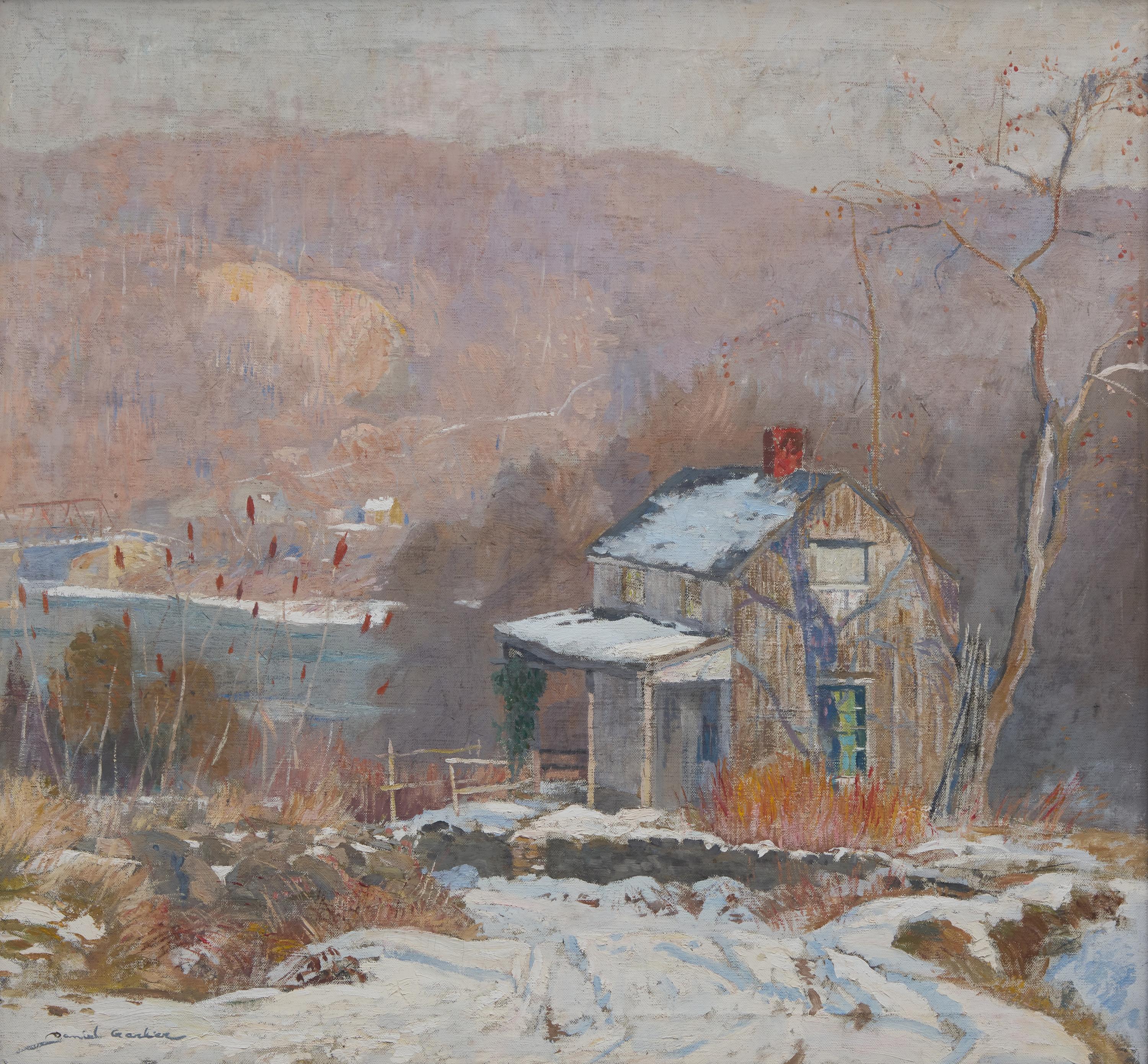
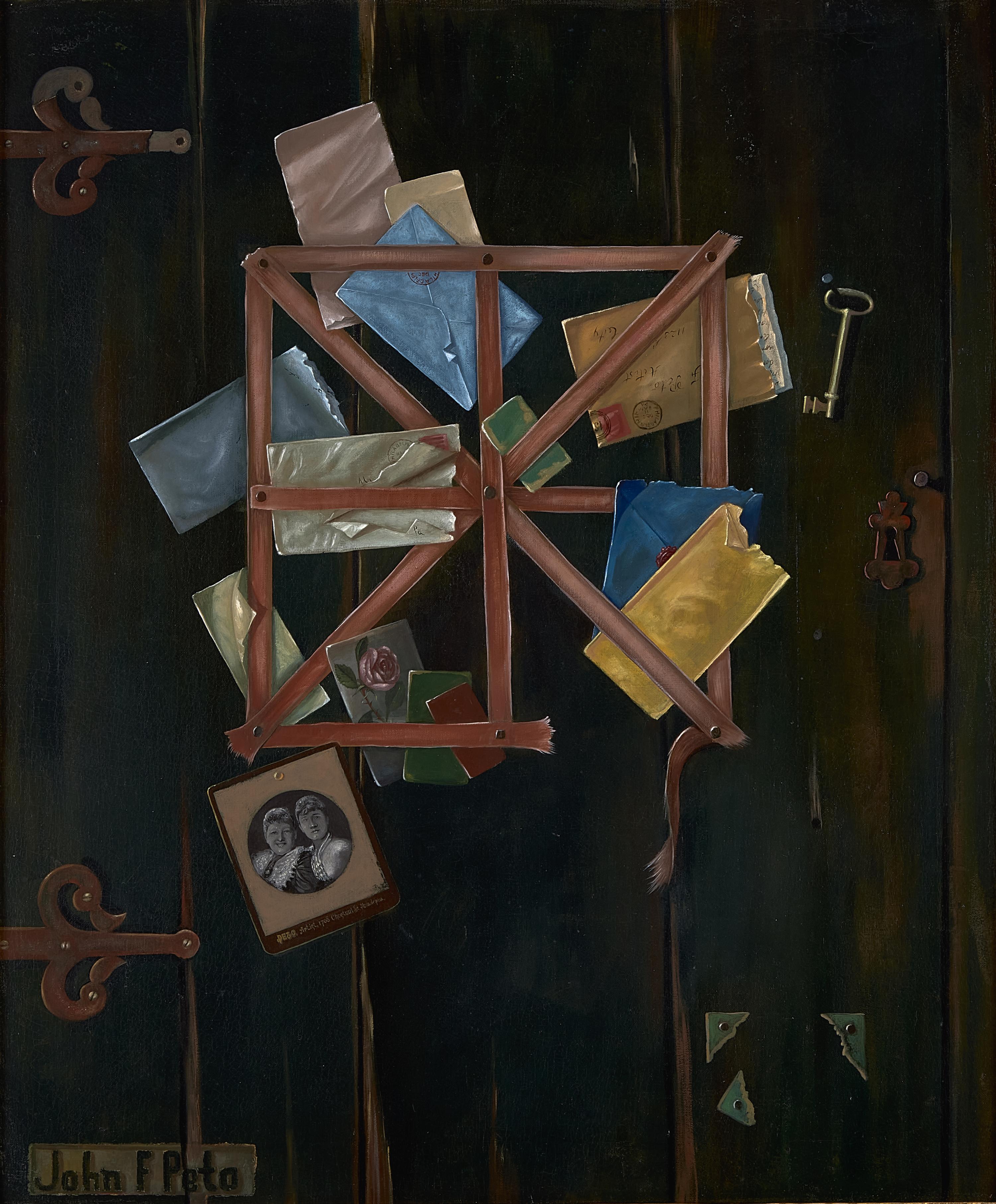
Among the painters who made trompe l’oeil the most intellectually ambitious branch of American still life in the Gilded Age, few have enjoyed as dramatic a posthumous recovery as John Frederick Peto. Born in Philadelphia in 1854, the son of a gilder and picture-frame dealer, Peto absorbed the material culture of picture-making from childhood. He studied briefly at the Pennsylvania Academy of the Fine Arts and fell into the orbit of William Michael Harnett, the leading figure of the Philadelphia school, whose example set the terms of the genre: unidealized objects, a shallow shelf or flat ground, and an illusionism so complete that the picture plane seems to dissolve. Peto never merely imitated that model. Letter Rack with Envelopes, Key, and Carte de Visite shows the younger painter pursuing a quieter, more elegiac, and more personal idea of what the genre could do, one that anticipates the work of his Island Heights years and gives this canvas particular importance within his oeuvre.
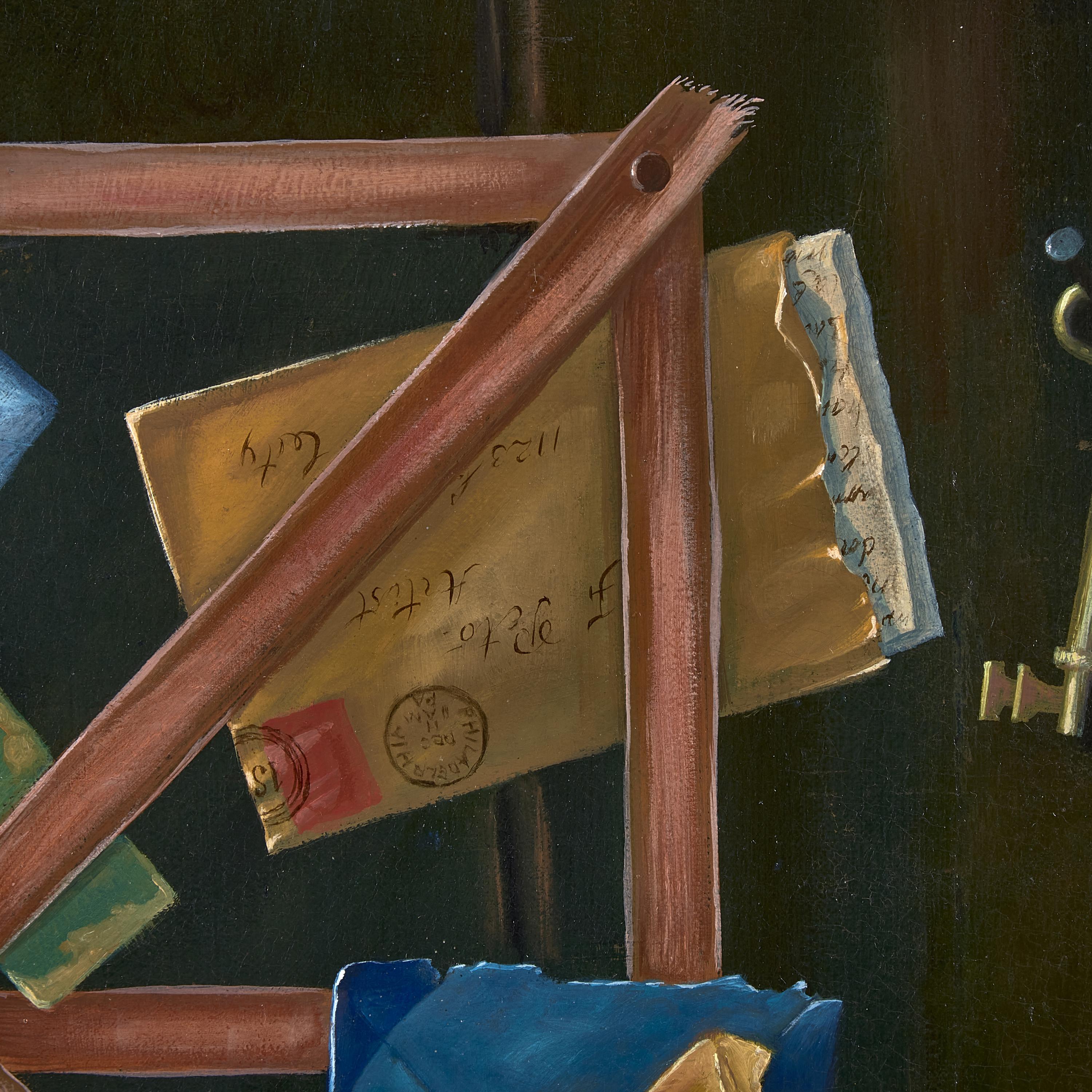
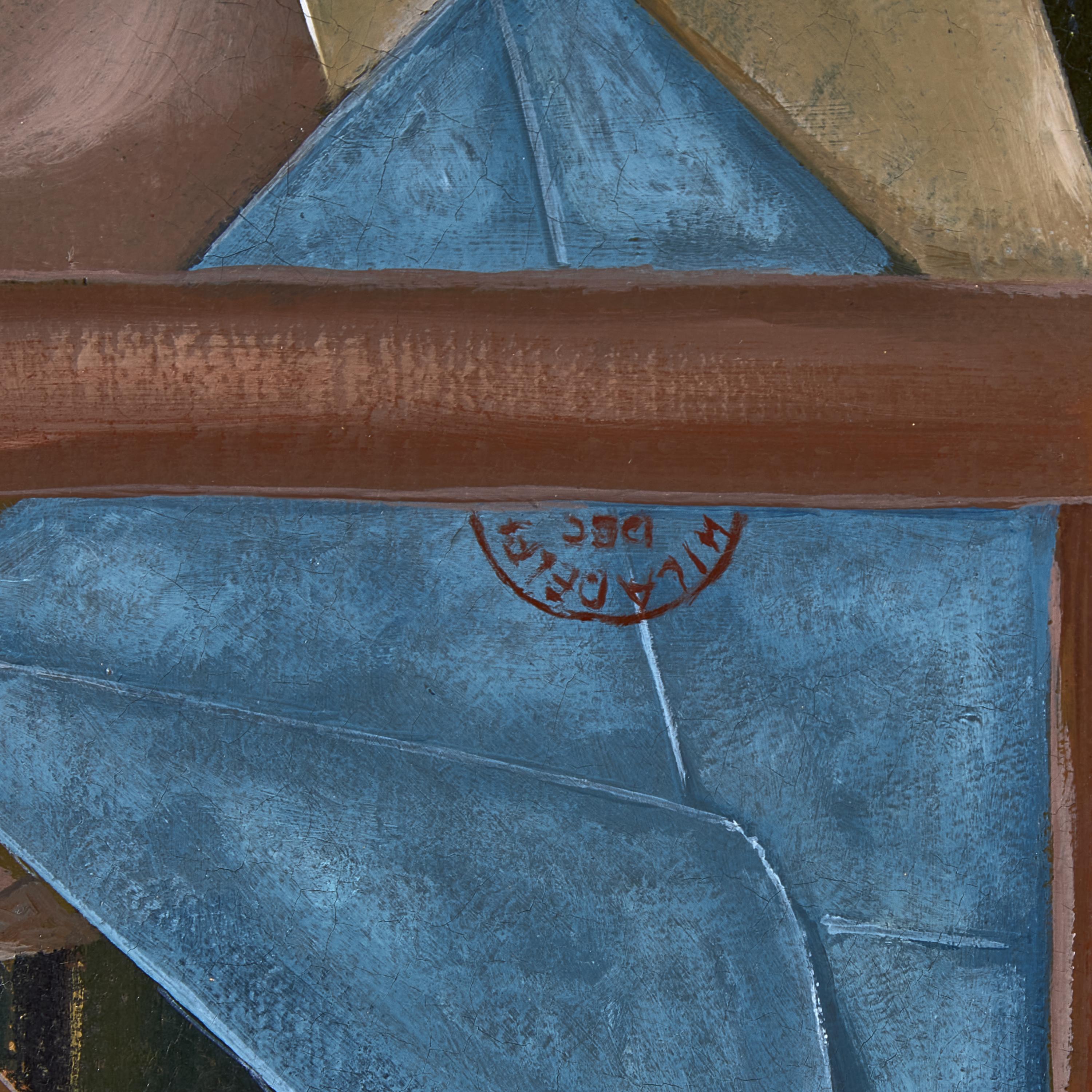
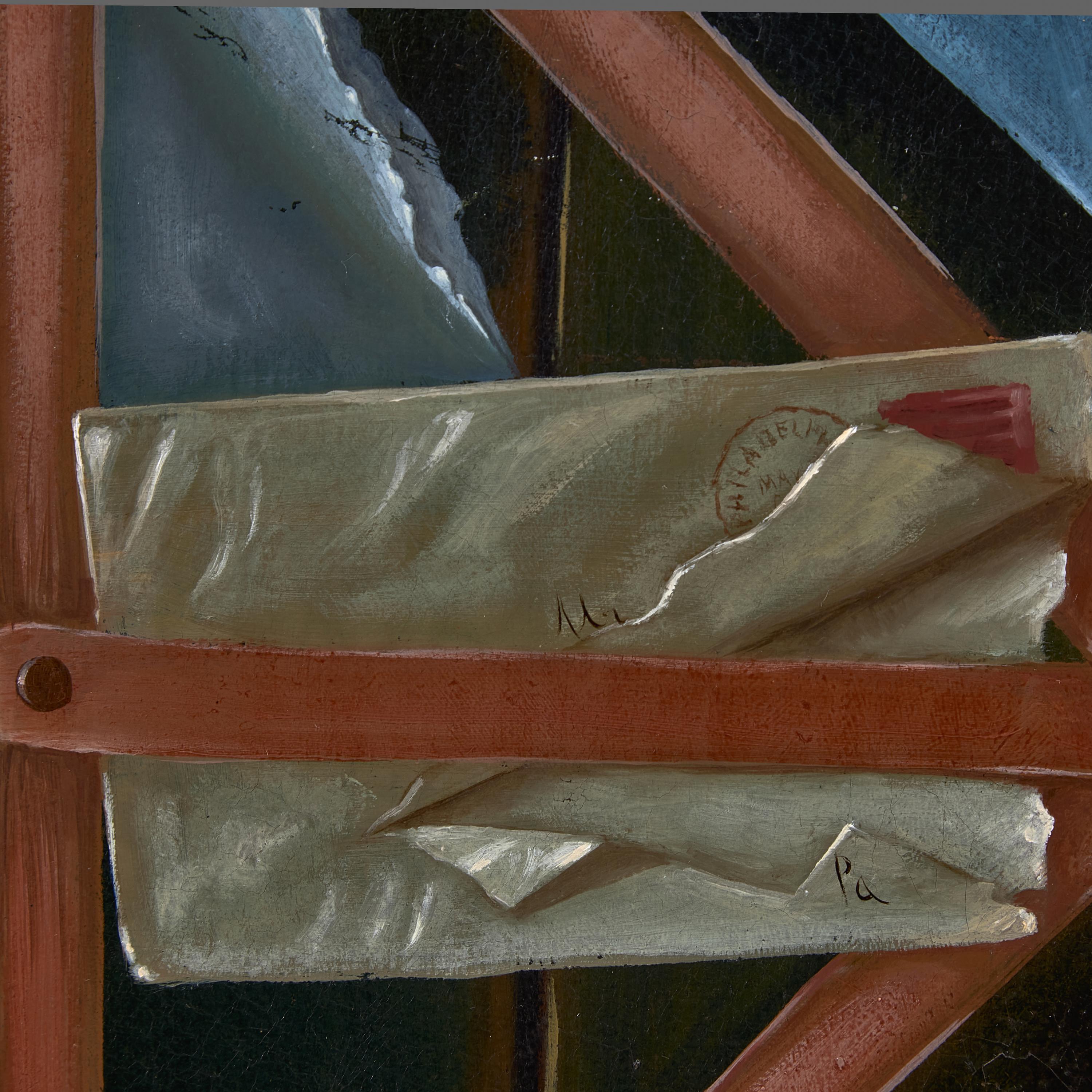
The letter rack was among the most venerable conceits in the trompe l’oeil tradition. It descends from the seventeenth-century “letter-board” pictures of Samuel van Hoogstraten, Edwaert Collier, and Cornelius Gijsbrechts, and was revived in the 1870s and 1880s by Harnett, Peto, and their Philadelphia contemporaries. Here the rack is rendered in a lean, slightly tattered geometry of crossed leather straps, pinned to a dark, vertically planked door, with the frayed strap-end dangling toward the lower right. Torn envelope flaps, curling corners, the glint of a brass key, the worn escutcheon of a lock, and strap hinges whose scrolled terminals catch the light attest to Peto’s command of the genre’s conceits. Yet the picture is conspicuously unlike Harnett’s crisper and more cheerfully tactile compositions. The planks recede into a deep, nearly black green, and the objects float against them in a tonal atmosphere that borders on the tenebrous. Peto’s handling is looser and more painterly than that of his model, with softly modulated surfaces on the blue and ochre envelopes that read less as inventory than as relics. It is this melancholy, this sense of mail that has been read, saved, and left behind, that scholars have come to recognize as Peto’s own register, and one that makes him, to a modern eye, the more affecting artist.
The work is also unusually autobiographical. The envelope in the upper right is addressed to Peto himself, with a “City” address and postmarks, and the cabinet-card photograph at lower left, showing two young women in a roundel, bears a photographer’s imprint naming a Chestnut Street address in Philadelphia. The device is witty, and it is also a signature of a more profound kind. Peto sought to embed his identity in his compositions and to turn the genre’s illusionism toward questions of memory, correspondence, and the passage of time. The self-referential address and the image of the sitters, together with the cheap, intimate commodities of nineteenth-century mail (envelopes of varied stock, a rose-decorated card, a key to something unseen), make the picture a kind of portrait by proxy. The signature itself is rendered as a tarnished label set low in the lower left corner, as if affixed to the door and subject to the same wear as everything else. It is a characteristically Peto conceit, and it carries particular resonance given the history of the artist’s reputation: for decades his name was displaced by Harnett’s, a confusion not systematically untangled until Alfred Frankenstein’s After the Hunt (1953). A composition that so insistently names its maker, within the fiction of the picture itself, speaks directly to that history.
Peto spent his later career far from the center of the art world, settling in 1889 in the Methodist camp-meeting community of Island Heights, New Jersey, where he painted for modest sums, played the cornet in the tabernacle, and died in 1907, largely unrecognized. His late masterpieces, among them Lights of Other Days (1906) and the great series of dark racks and cupboard doors, are now counted among the most poetic achievements of American still life, and they find their antecedents in works of exactly this kind. Letter Rack with Envelopes, Key, and Carte de Visite, then, offers a convergence of personal iconography and the full measure of Peto’s talent: the letter rack, stripped of Harnett’s bravura and turned toward memory, absence, and the self. It insists that the things we keep are a form of autobiography, and it is that conviction, more than any feat of illusion, that has secured Peto’s place in the American canon.
Framed: 41 1/2 x 36 1/2 x 3 in.
The physical condition of lots in our auctions can vary due to age, normal wear and tear, previous damage, and restoration/repair. All lots are sold "AS IS," in the condition they are in at the time of the auction, and we and the seller make no representation or warranty and assume no liability of any kind as to a lot's condition. Any reference to condition in a catalogue description or a condition report shall not amount to a full accounting of condition. Condition reports prepared by Freeman's staff are provided as a convenience and may be requested from the Department prior to bidding.
The absence of a posted condition report on the Freeman's website or in our catalogues should not be interpreted as commentary on an item's condition. Prospective buyers are responsible for inspecting a lot or sending their agent or conservator to inspect the lot on their behalf, and for ensuring that they have requested, received and understood any condition report provided by Freeman's.
Please email adamveil@freemansauction.com for any additional information or questions you may have regarding this lot.