To request further details about this lot, please email Antiquities@freemansauction.com
Please email Antiquities@freemansauction.com for any additional information or questions you may have
Sale 6523
| Chicago
| Chicago
To request further details about this lot, please email Antiquities@freemansauction.com
Please email Antiquities@freemansauction.com for any additional information or questions you may have
Estimate$25,000 – $35,000
Provenance:
Private Collection, Germany.
Sotheby's, New York, Antiquities and Islamic Works of Art, 8 December 2000, Lot 107.
Phoenix Ancient Art, Geneva, 2005 (Phoenix Ancient Art, vol. 1, pp. 74-75, no. 55); where acquired by the present owner.
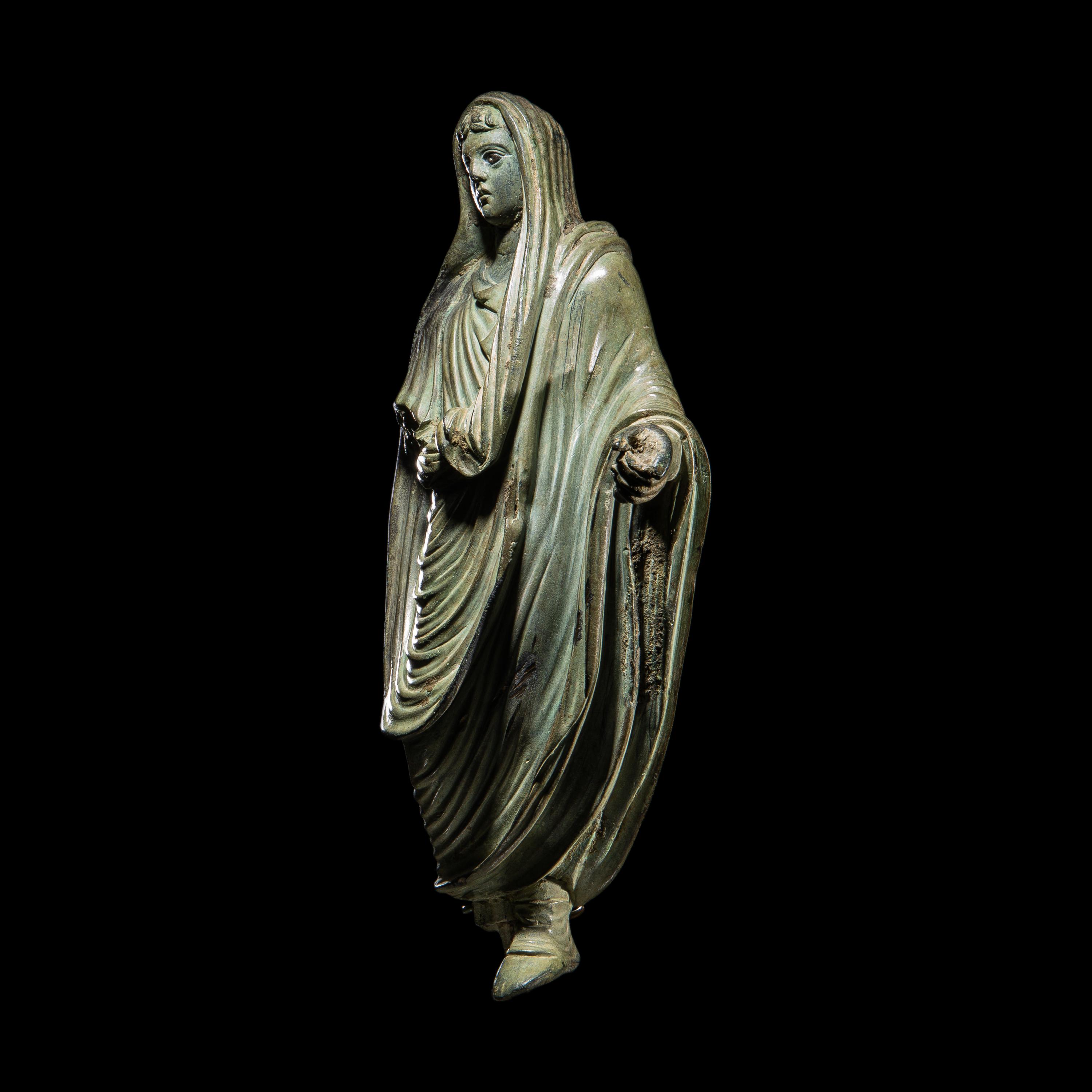
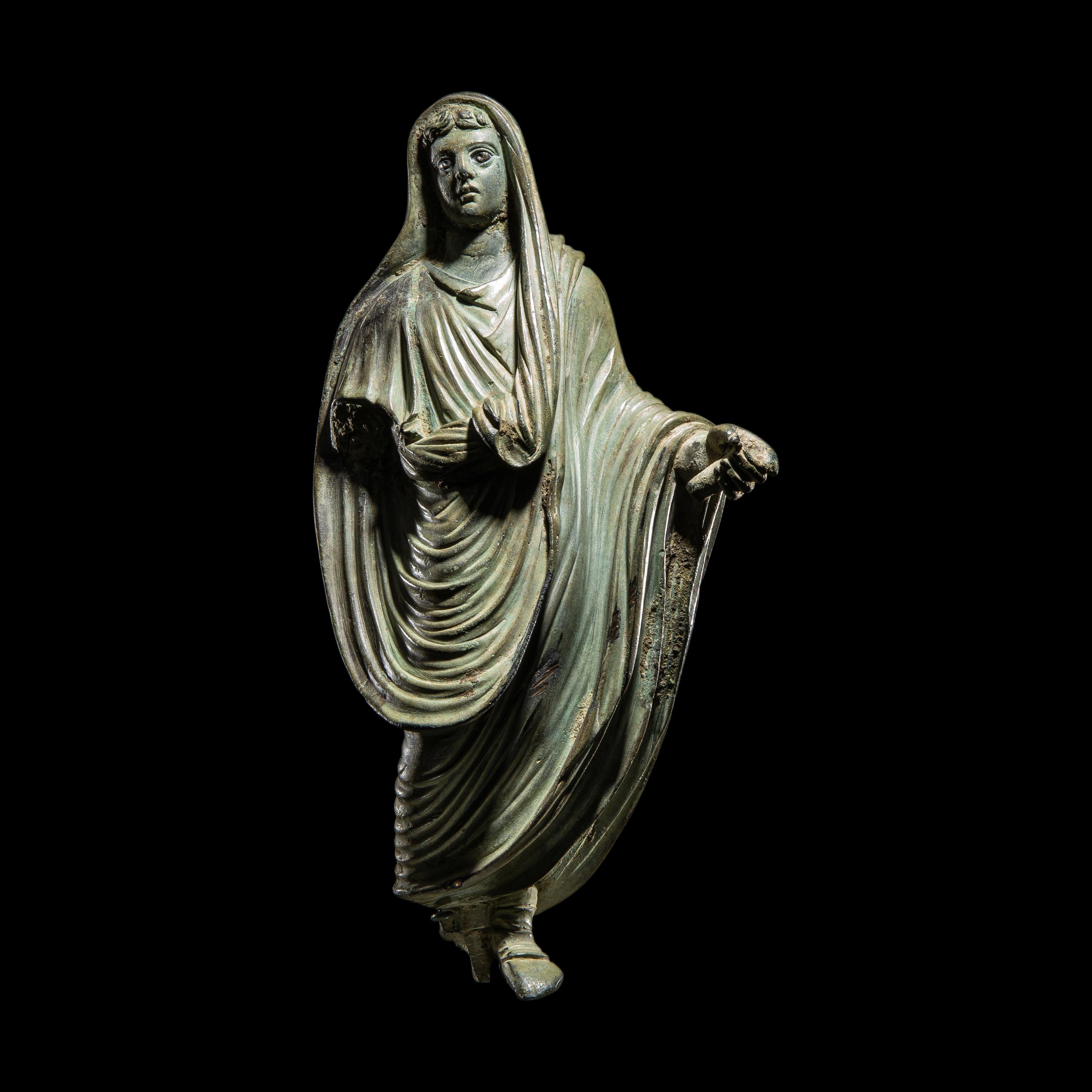
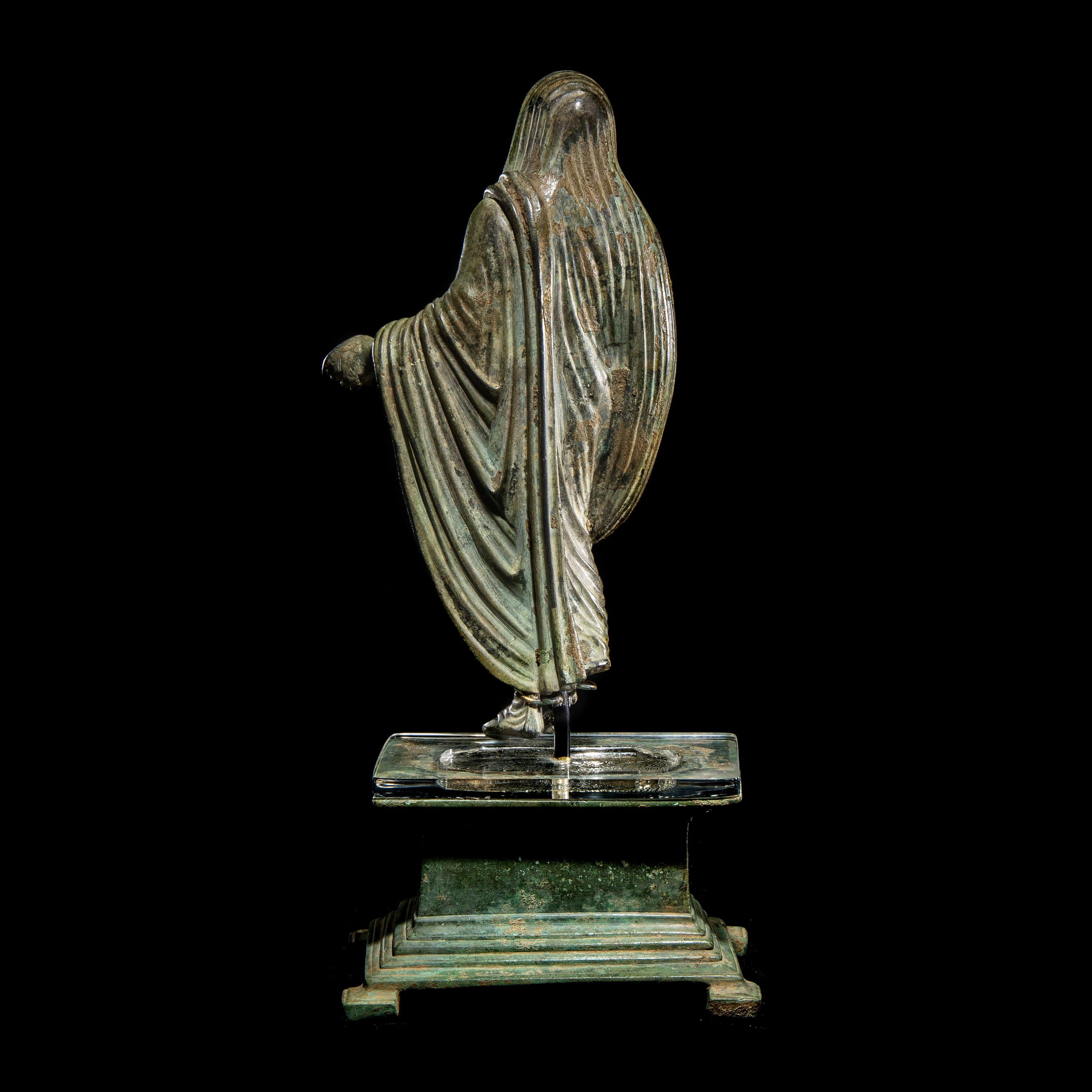
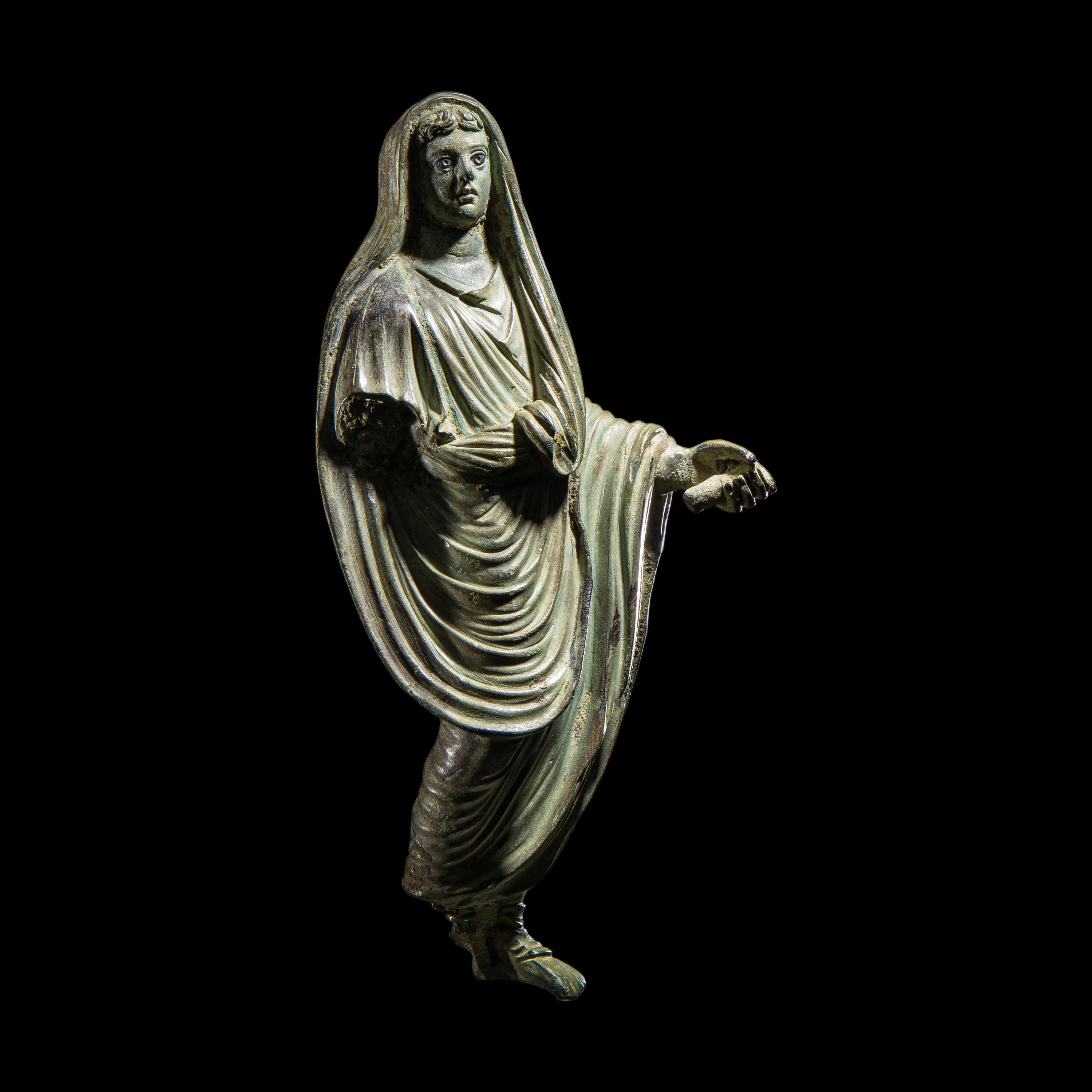
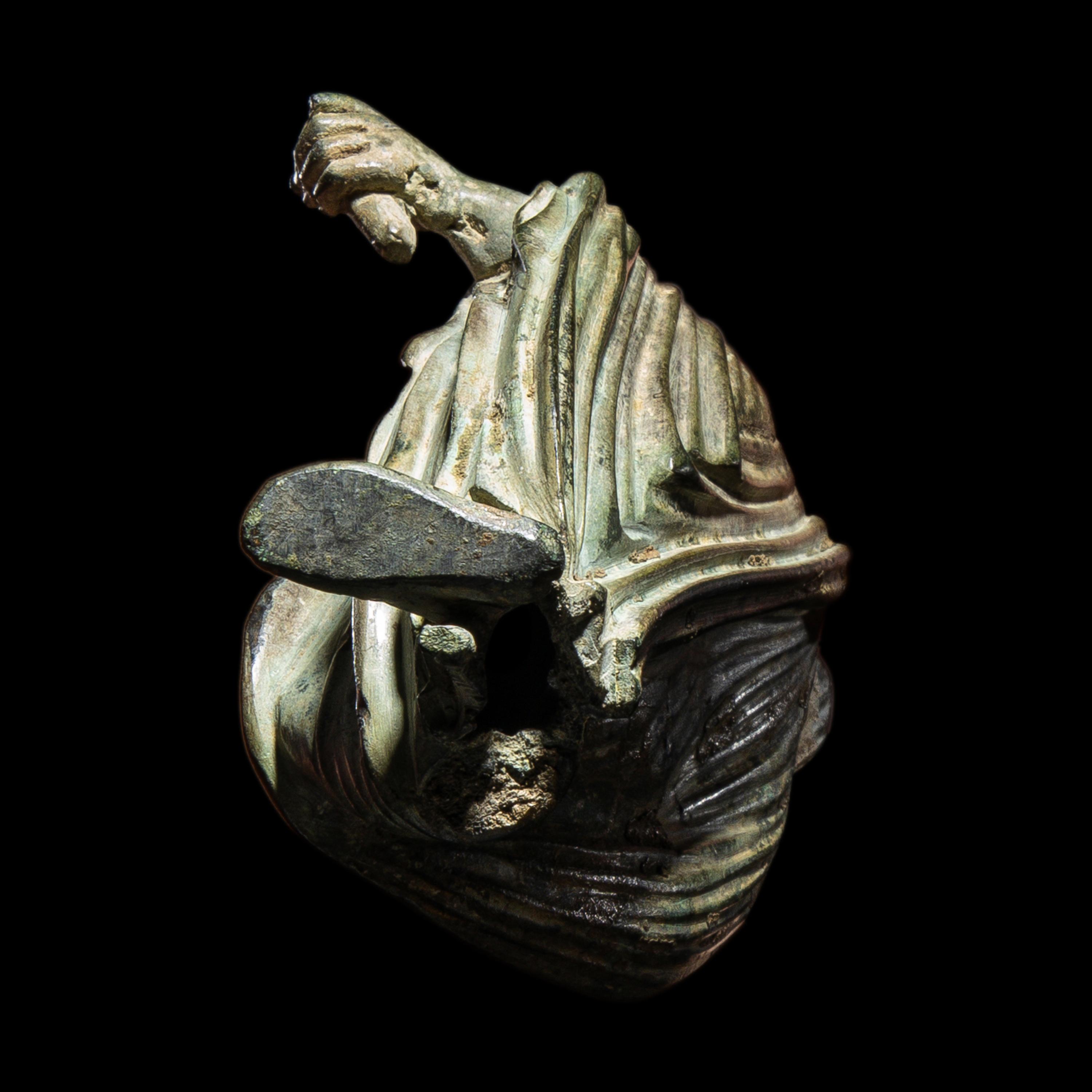
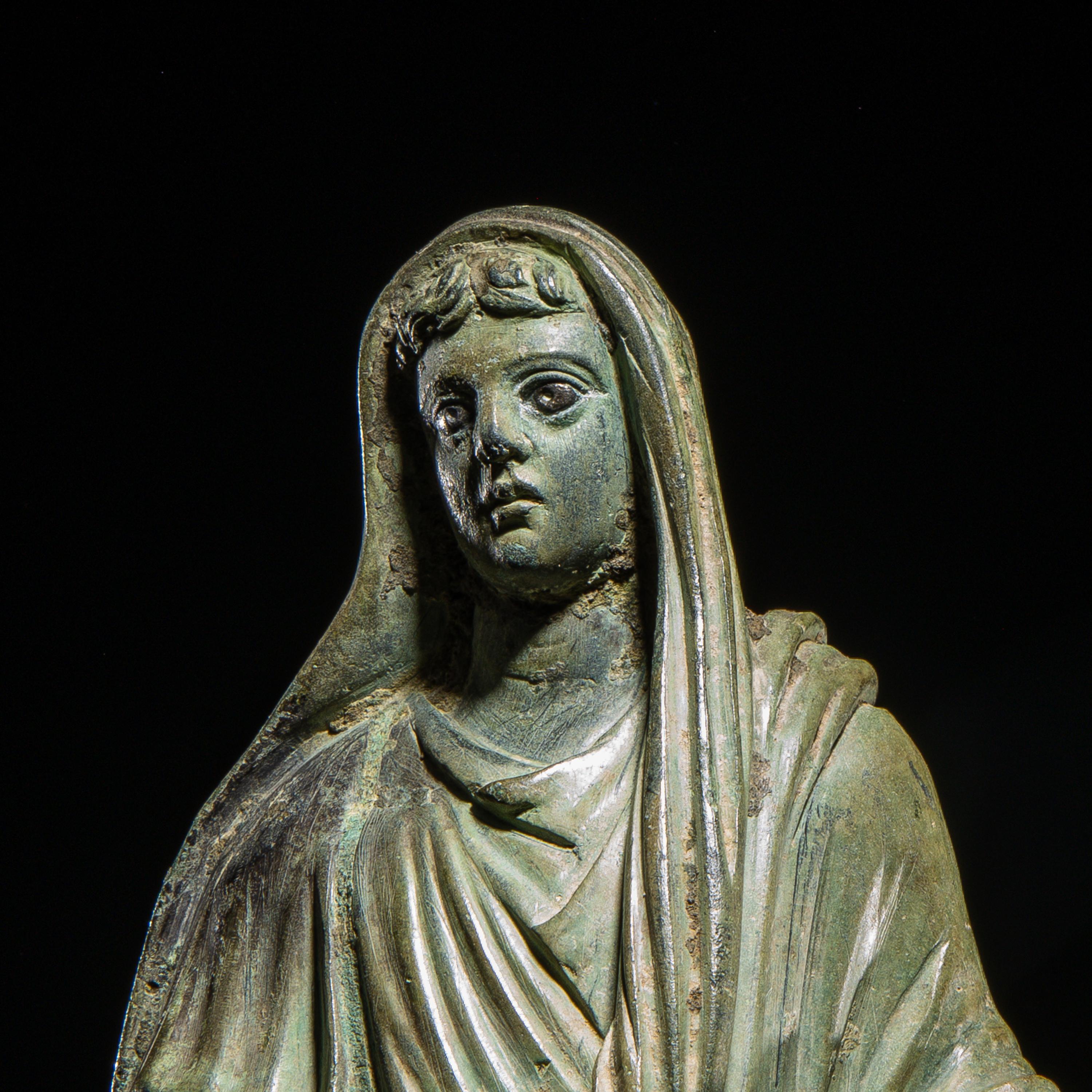
Immaculately cast in bronze, a young man is shown in an elaborately draped toga. A quintessentially Roman and symbolically charged garment, the toga is rendered here with sweeping sinus folds over the right thigh and pendulous umbo tucked in at the waist. Longer pleats run diagonally from the crown of the head at the rear, along the lowered right arm, and are drawn against the calf of the left leg. That foot wears a closed leather boot (calceus), and along with the vertical stripe running along the right side of the garment (once inlaid, perhaps in silver) indicates the wearer was of high rank. The back edge of the garment is pulled up to cover the neck and partially veil the head (capite velato), a pious mode used by officials and priests when performing religious rites. While the right arm is missing beneath the elbow, its positioning indicates that it was once outstretched and proffering a patera, a shallow vessel used to pour libations. The left hand grasps a partially preserved cylindrical object, perhaps a scroll or staff.
The beardless youth has a fleshy oval face dominated by large eyes with deeply drilled pupils and exhibiting traces of silver gilding. The coiffure visible is made up of a thick fringe of comma-shaped locks, reminiscent of a member of the Julio-Claudian family and perhaps even young Nero. The small scale of the statuette indicates that it was a ‘genius’ – a representation of an official or member of the imperial family that would have been worshipped in aristocratic domestic contexts. A remarkably similar example in Baltimore (Walters Art Museum, inv. no. 54.2329) has been plausibly identified as Nero, and the two statuettes surely served the same function in private devotion to the imperial family.
Inspected under UV light and 10x loupe. Some losses including proper right foot and arm. Patches of encrustation throughout. Some minor tears and holes, notably at lower center right back of toga. Scratches and wear commensurate with age. Oxidized with variegated patina. Overall in fine, stable, and attractive condition with excellent preservation of silver inlaid eyes. See additional images. Height with stand 26.4 cm (10 3/8 inches).
The physical condition of lots in our auctions can vary due to age, normal wear and tear, previous damage, and restoration/repair. All lots are sold "AS IS," in the condition they are in at the time of the auction, and we and the seller make no representation or warranty and assume no liability of any kind as to a lot's condition. Any reference to condition in a catalogue description or a condition report shall not amount to a full accounting of condition. Condition reports prepared by Freeman's staff are provided as a convenience and may be requested from the Department prior to bidding.
The absence of a posted condition report on the Freeman's website or in our catalogues should not be interpreted as commentary on an item's condition. Prospective buyers are responsible for inspecting a lot or sending their agent or conservator to inspect the lot on their behalf, and for ensuring that they have requested, received and understood any condition report provided by Freeman's.
Please email Antiquities@freemansauction.com for any additional information or questions you may have regarding this lot.