To request further details about this lot, please email Antiquities@freemansauction.com

Jacob Coley
Senior Vice President, Head of Department, Antiquities and Ancient Art
Sale 6504
| Chicago
| Chicago
To request further details about this lot, please email Antiquities@freemansauction.com
Jacob Coley
Senior Vice President, Head of Department, Antiquities and Ancient Art
Estimate$40,000 – $60,000
Provenance:
Private Collection (C.F.C), England, 1950s-1963; thence by descent (I.C.), England, by 20 February 1963.
Ariadne Galleries, New York, acquired prior to 3 December 2014.
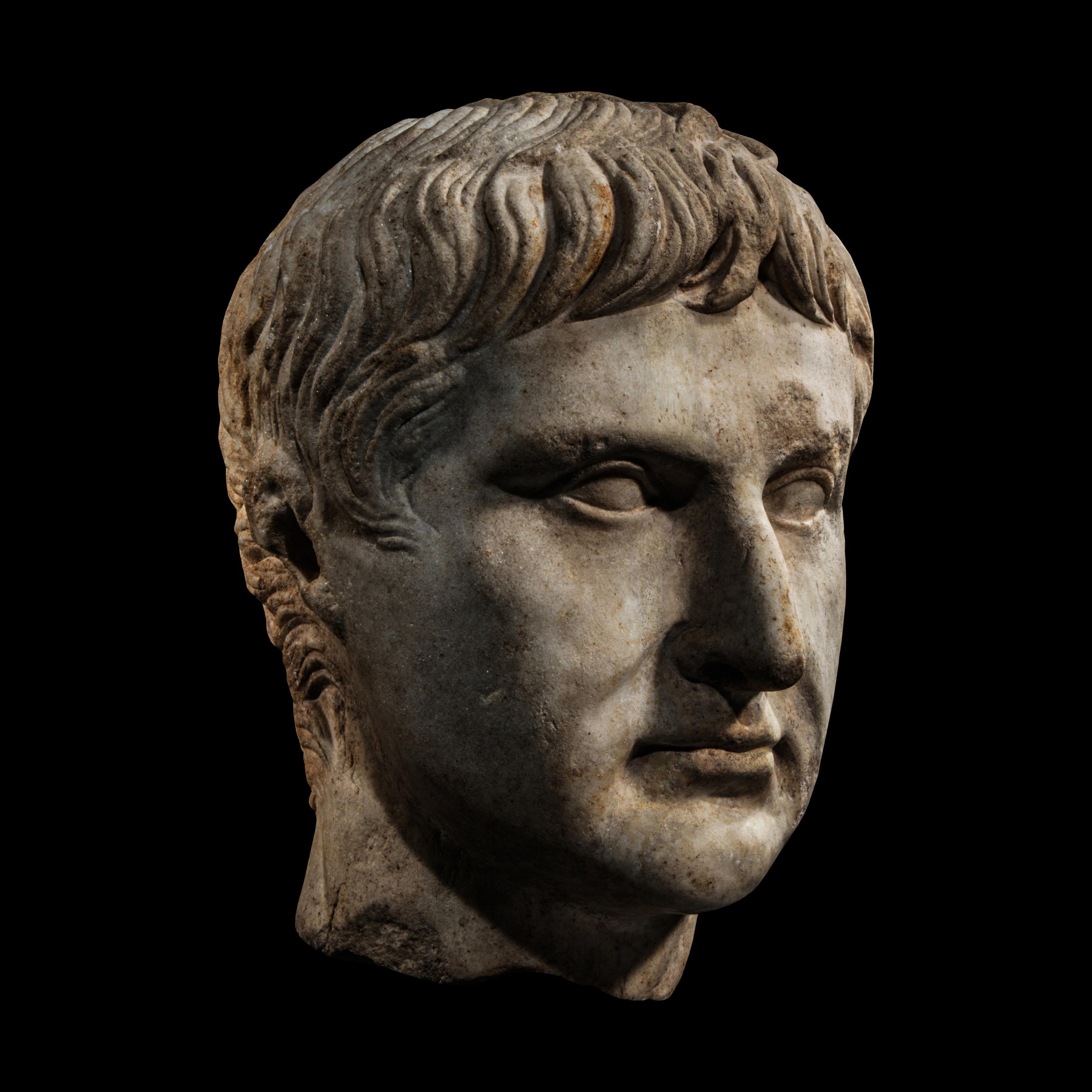
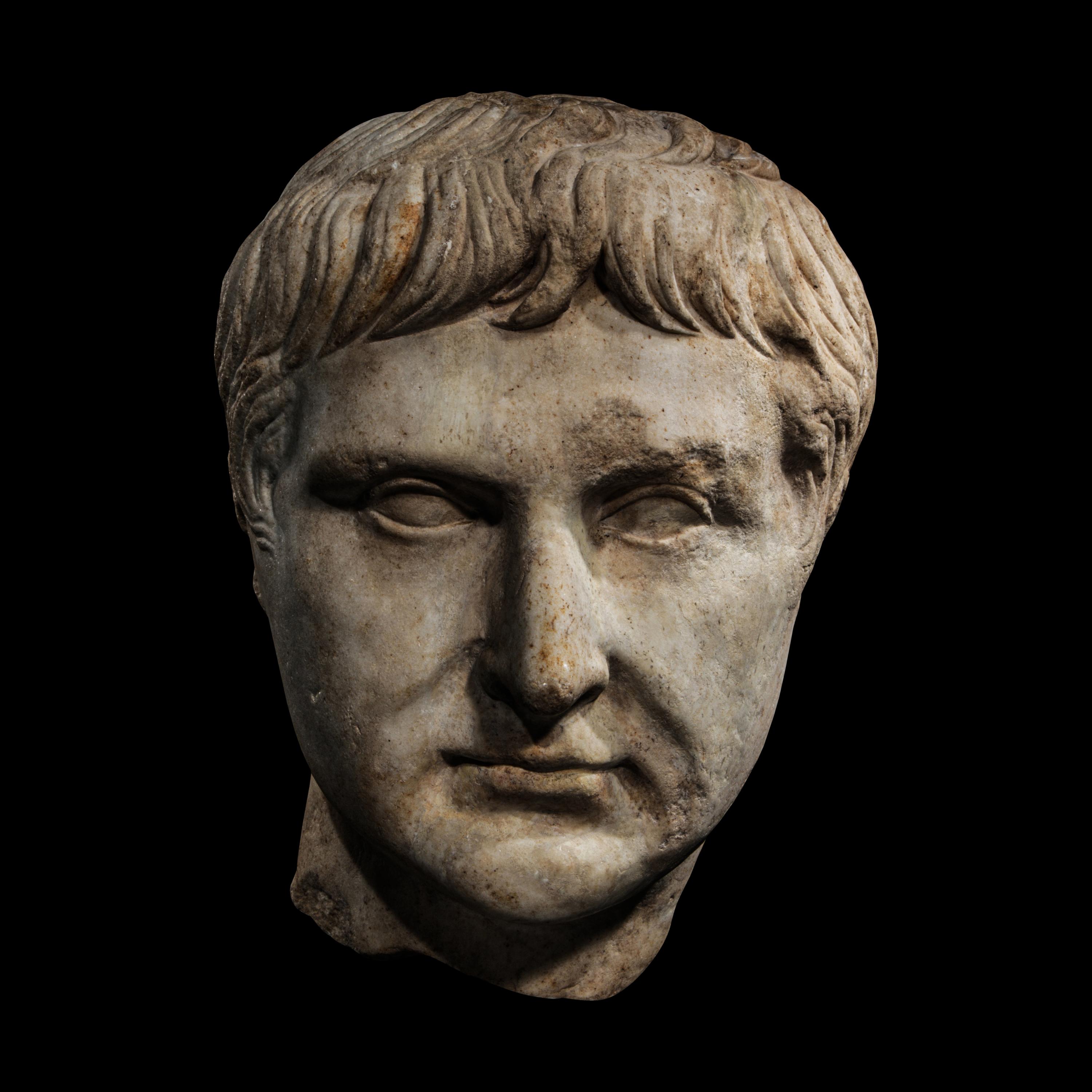
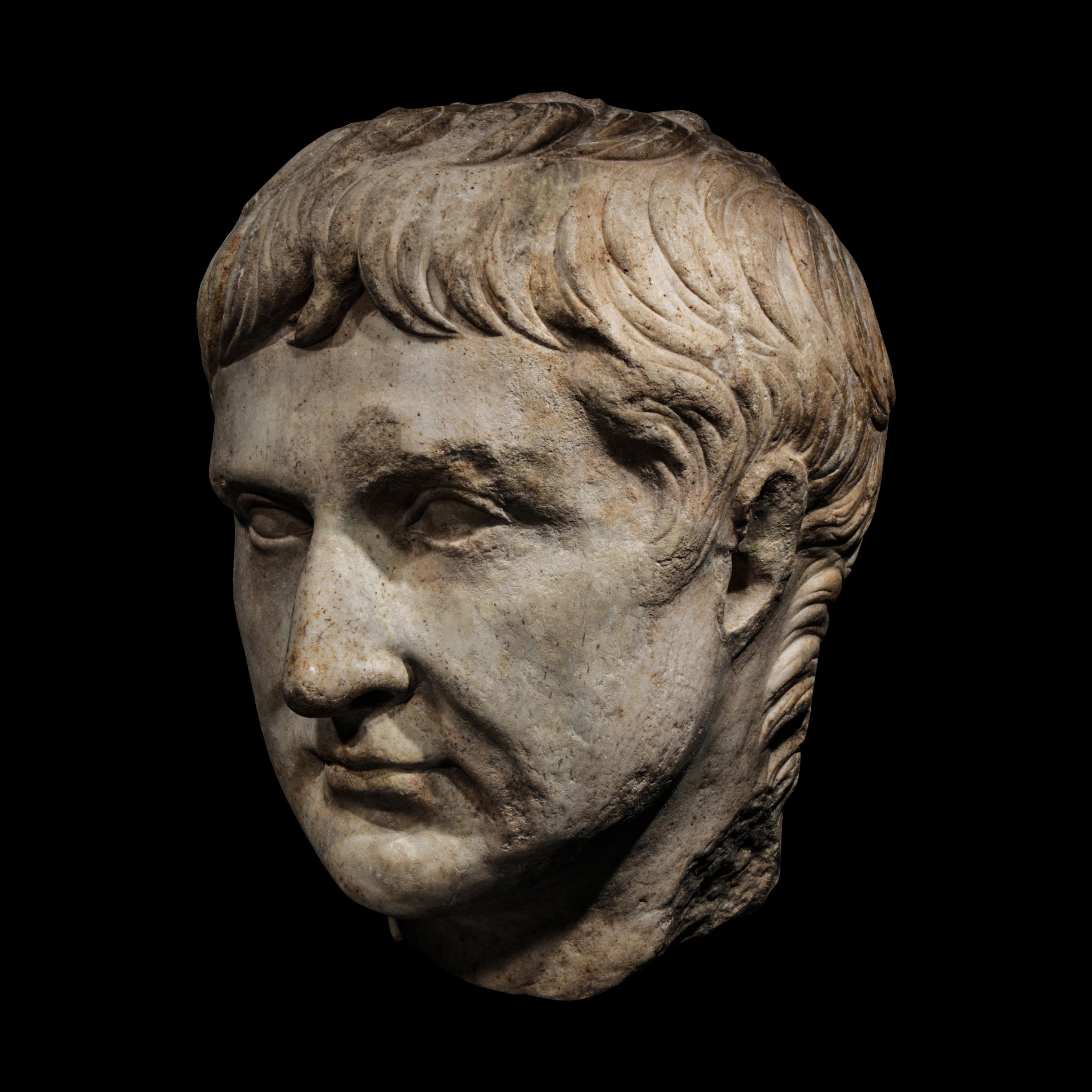
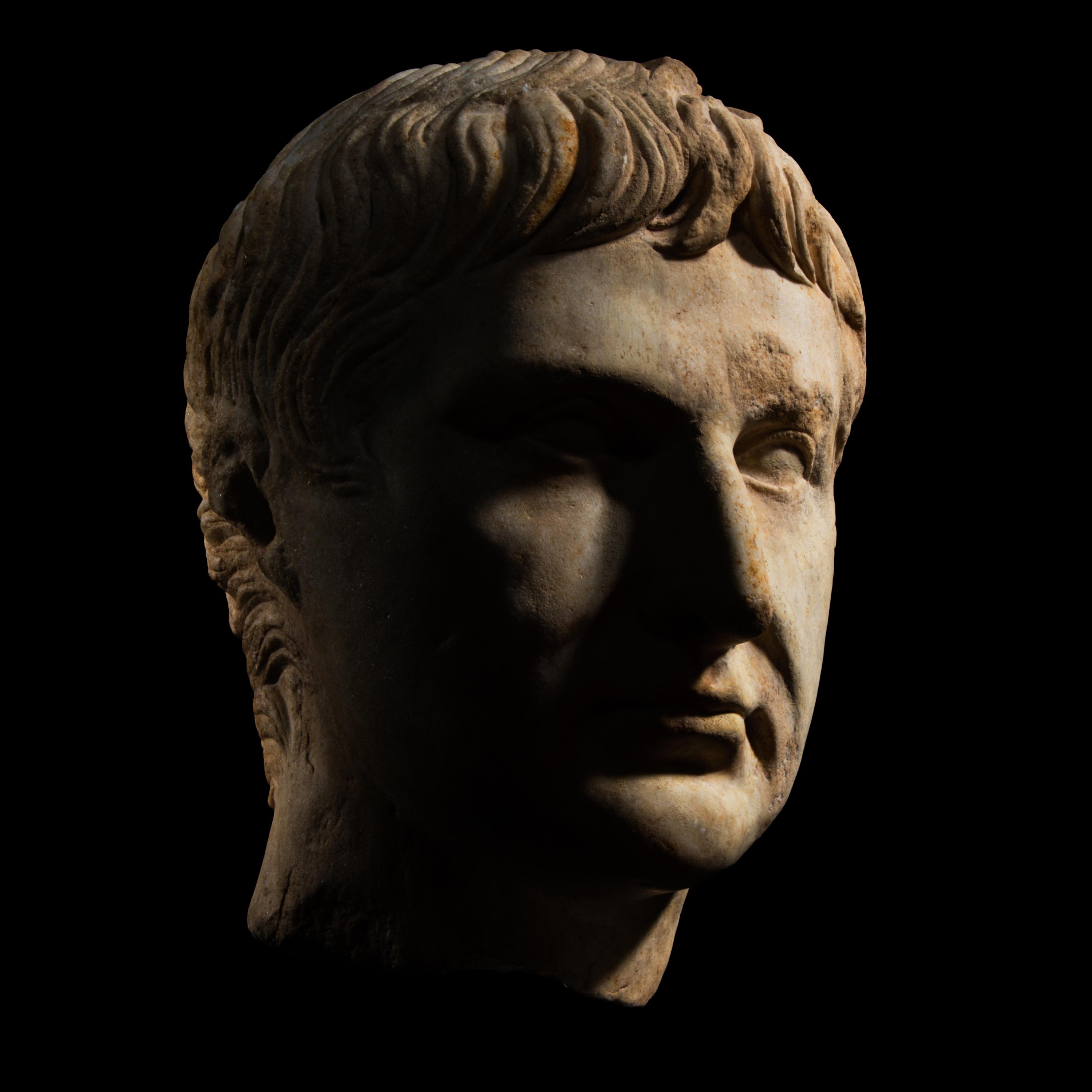
Imposing in scale, this portrait head reflects the enduring influence of Julio-Claudian imperial imagery, drawing in particular upon the portraiture of Augustus (Gaius Octavius, r. 27 B.C.–A.D. 14), whose portraiture established the visual language of the early principate and succeeding dynasties. Augustan imagery was carefully calibrated to project stability and authority, with a carefully measured idealization shaping imperial representation throughout. While maintaining key elements of this tradition, such as the almond-shaped eyes and the characteristic fringe of comma-shaped locks, certain features of the present head depart from canonical imperial portraits produced in Rome, notably the deeply set eyes, defined nasolabial folds, and firmly articulated lips.
The slight central forking of the hair above the forehead recalls the arrangement seen in Augustus’ Prima Porta type, though here rendered with a more pronounced and rhythmic articulation rather than finely differentiated locks. Likewise, the schematic treatment of the cheeks and jaw contrasts with the plastically nuanced surfaces characteristic of court production. Such variations could indicate a provincial context, where local workshops adapted official imperial prototypes with varying degrees of fidelity and interpretive flair. The simplification of facial planes and the more graphic treatment of the coiffure find parallels in Julio-Claudian portraiture from the eastern provinces, particularly at sites such as Ephesus and Pergamon.
Within this framework, the present head may be understood as a provincial rendering of an Augustanizing portrait type (Augustanizing to the extent that it has been identified as Augustus in earlier inventories), derived from an official model but translated into a more structurally simplified idiom, while retaining, and indeed emphasizing, the enduring authority of Julio-Claudian visual traditions.
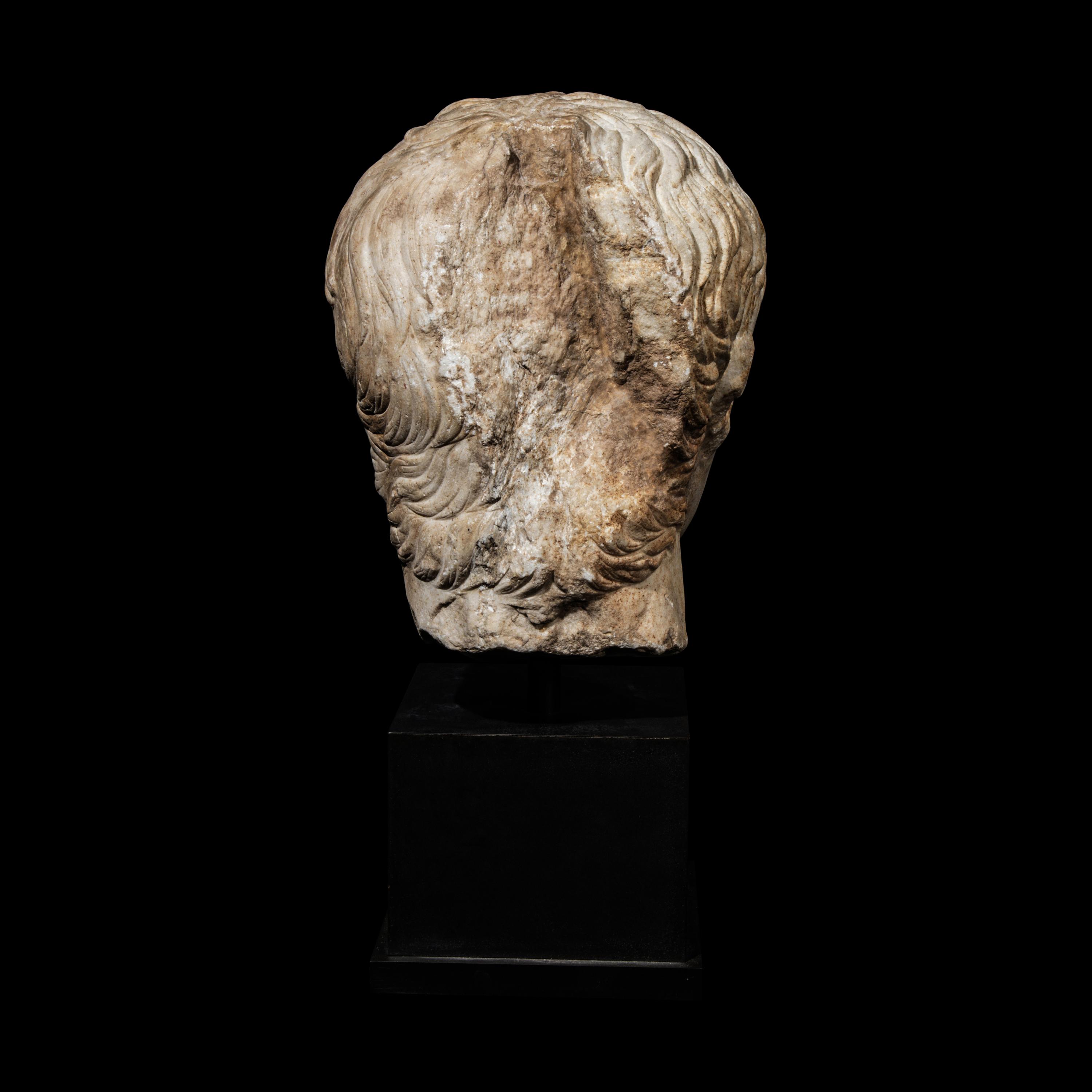
Inspected under UV light and 10x loupe. Root marks and spotted reddish brown encrustation throughout. Areas of infill and restoration to the face. The nose is restored as well as parts of the cheeks, lips, and chin. Losses to the back. Overall in fine condition. See additional images.
This lot is currently located in New York. Collection is available in New York following the sale, or in Chicago in mid-June. Please contact Antiquities@freemansauction.com for further information.
The physical condition of lots in our auctions can vary due to age, normal wear and tear, previous damage, and restoration/repair. All lots are sold "AS IS," in the condition they are in at the time of the auction, and we and the seller make no representation or warranty and assume no liability of any kind as to a lot's condition. Any reference to condition in a catalogue description or a condition report shall not amount to a full accounting of condition. Condition reports prepared by Freeman's staff are provided as a convenience and may be requested from the Department prior to bidding.
The absence of a posted condition report on the Freeman's website or in our catalogues should not be interpreted as commentary on an item's condition. Prospective buyers are responsible for inspecting a lot or sending their agent or conservator to inspect the lot on their behalf, and for ensuring that they have requested, received and understood any condition report provided by Freeman's.
Please email Antiquities@freemansauction.com for any additional information or questions you may have regarding this lot.