To request further details about this lot, please email Antiquities@freemansauction.com

Jacob Coley
Senior Vice President, Head of Department, Antiquities and Ancient Art
Sale 6504
| Chicago
| Chicago
To request further details about this lot, please email Antiquities@freemansauction.com
Jacob Coley
Senior Vice President, Head of Department, Antiquities and Ancient Art
Estimate$80,000 – $120,000
Provenance:
Private Collection (E.W.), United Kingdom, 1960s.
Ariadne Galleries, New York, acquired prior to 17 June 2015.
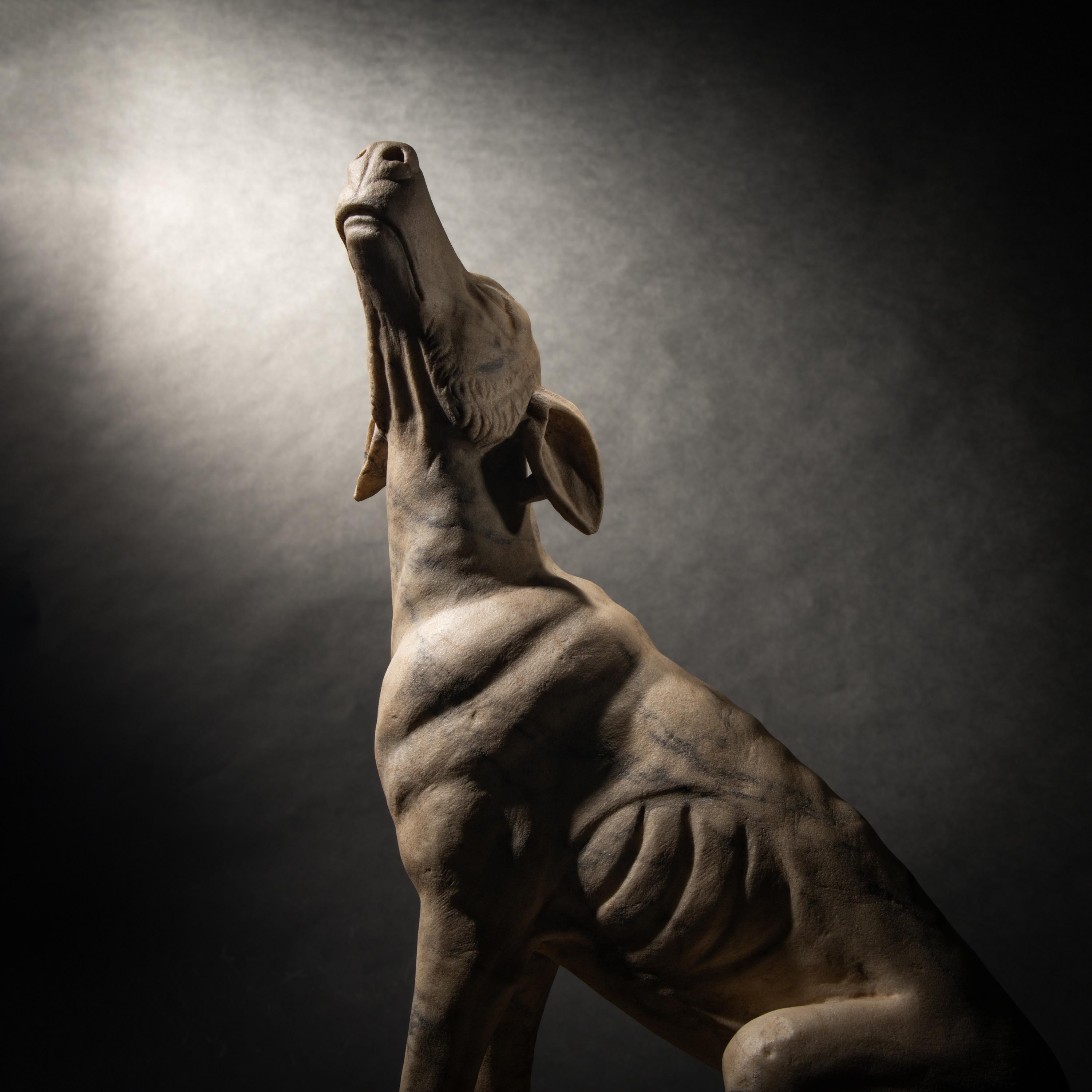
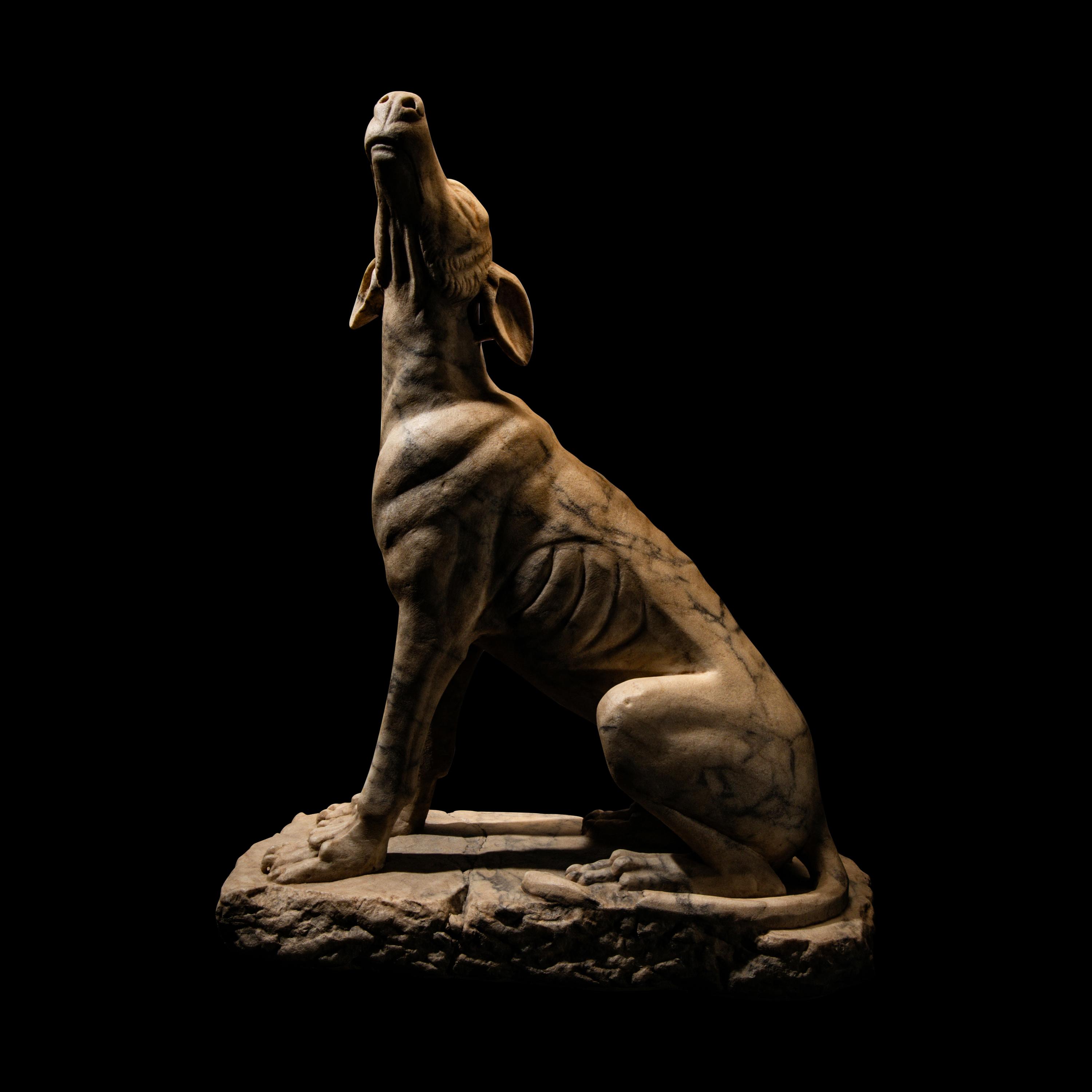
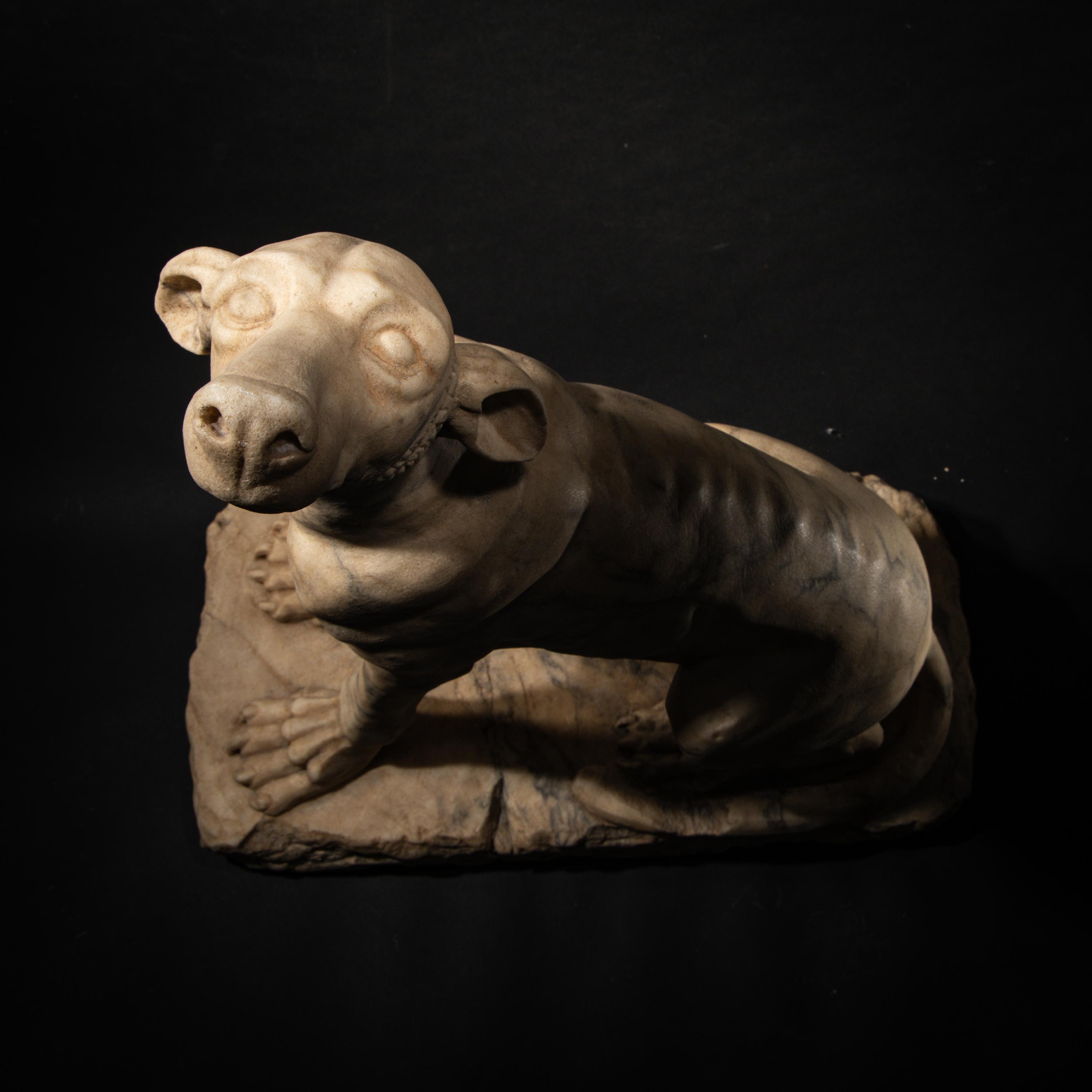
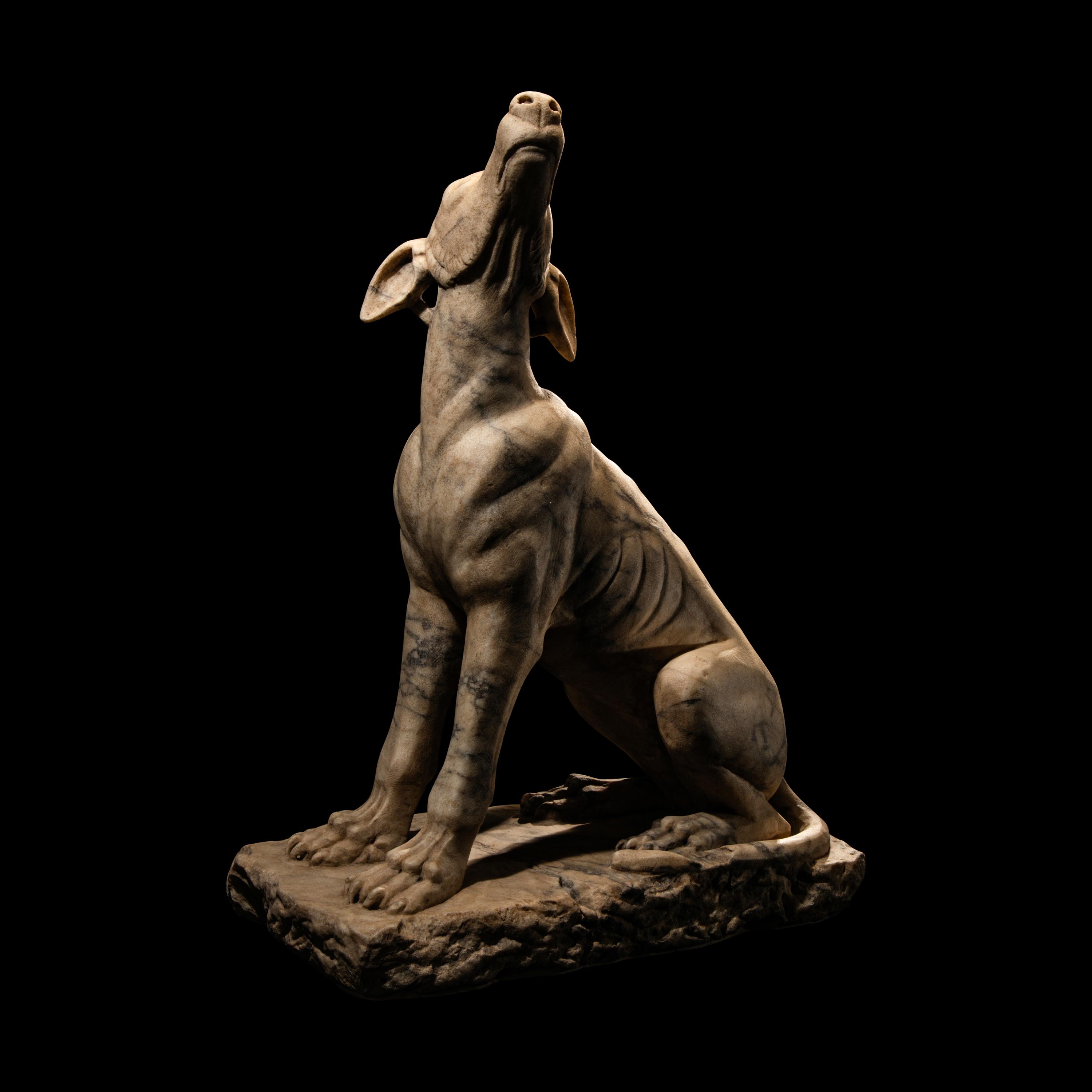
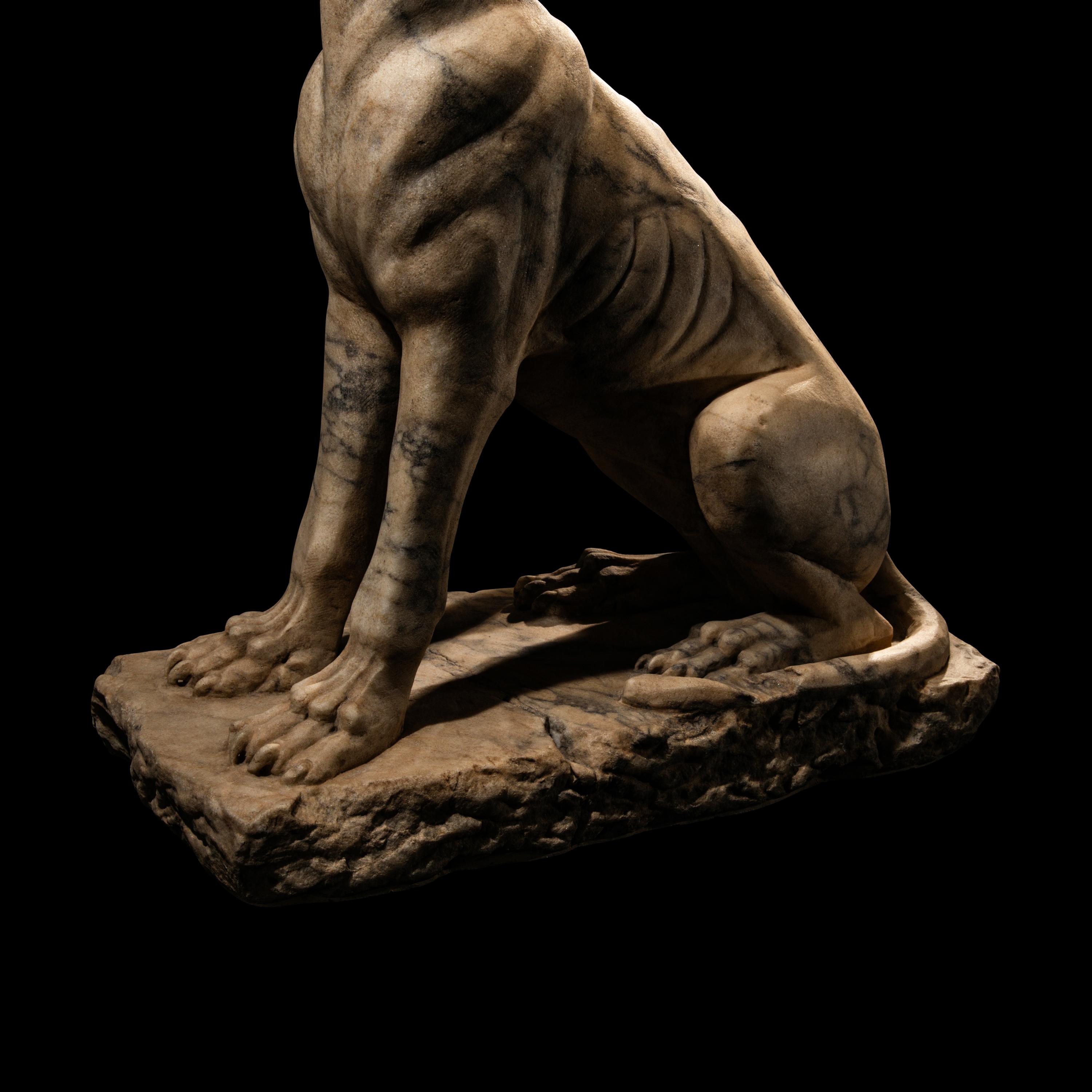
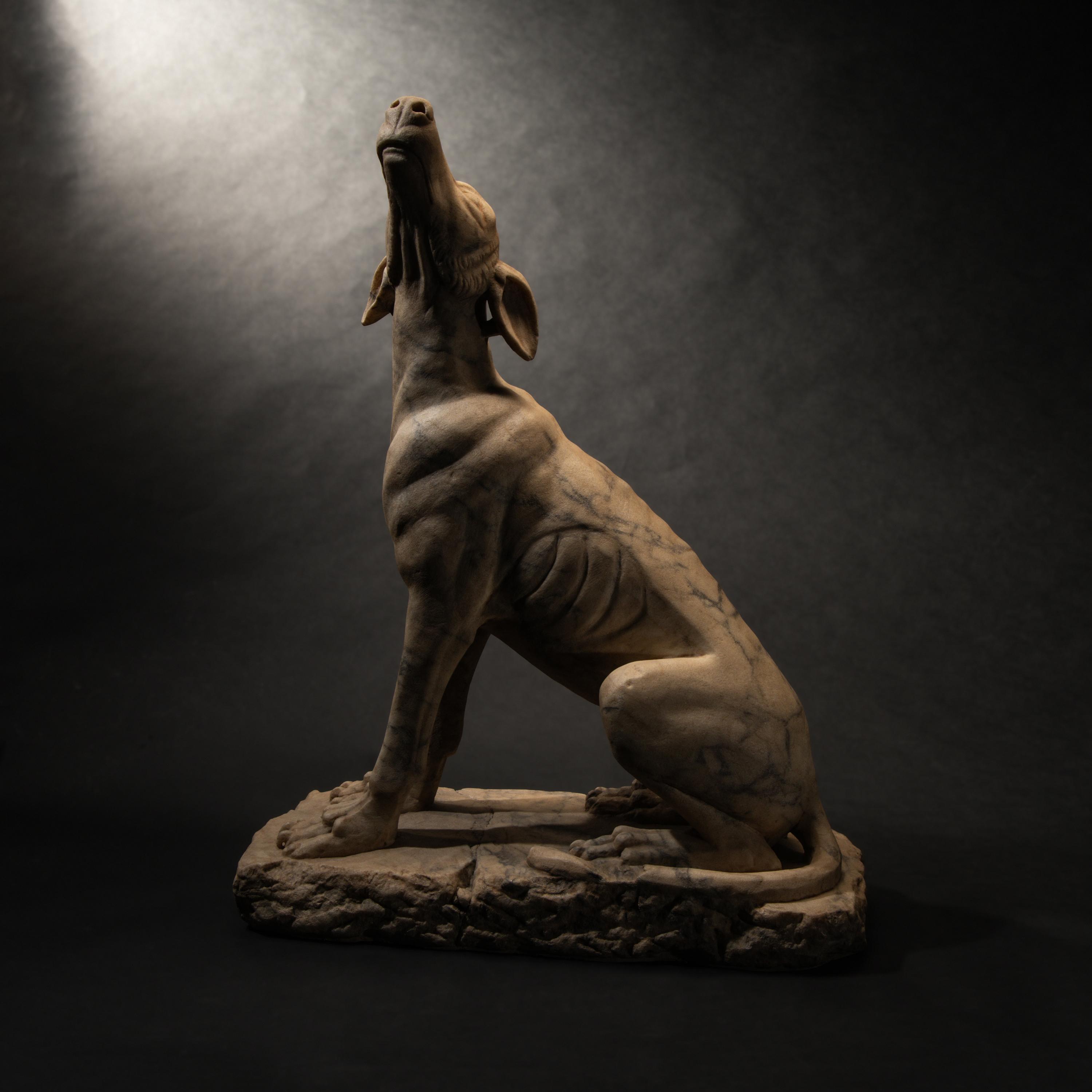
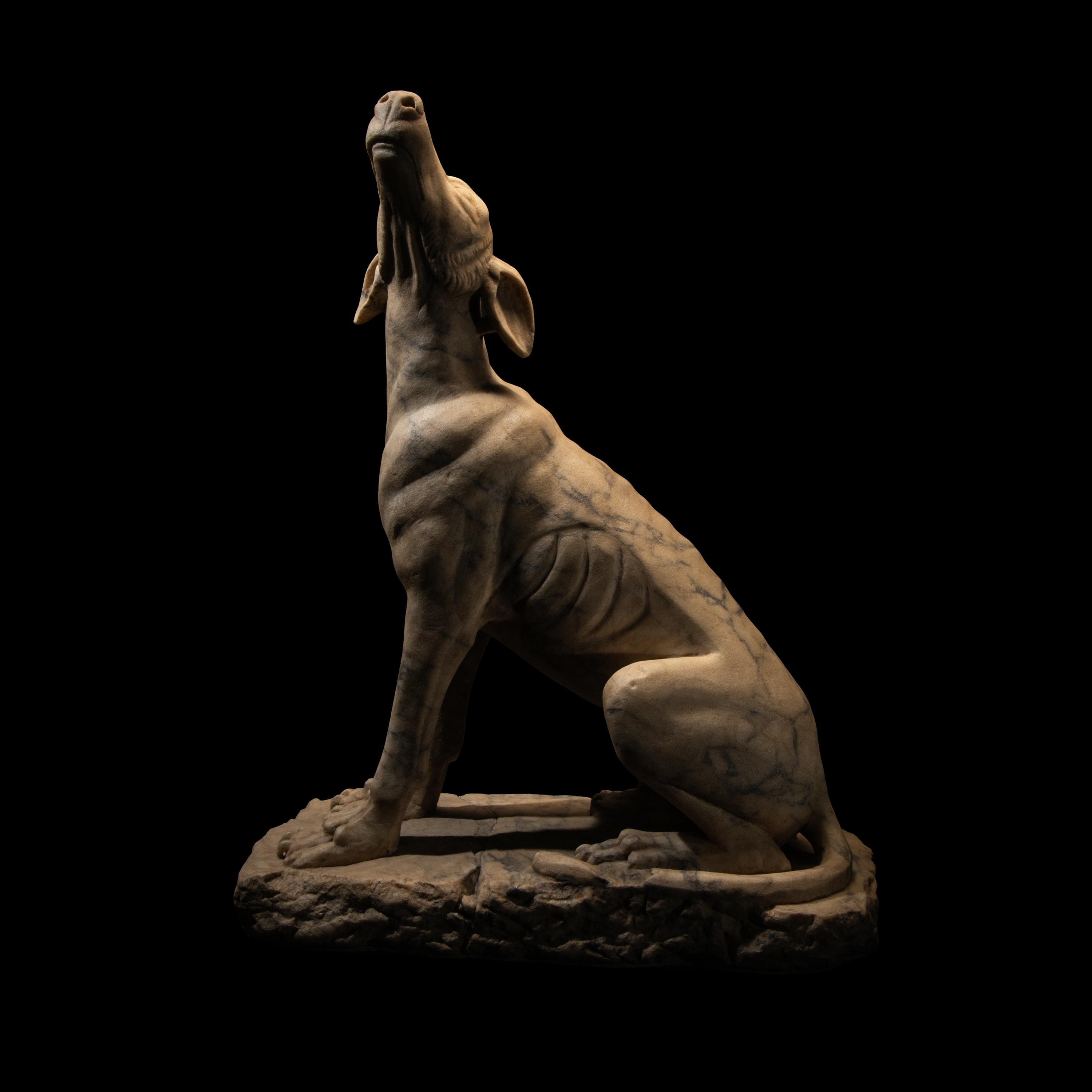
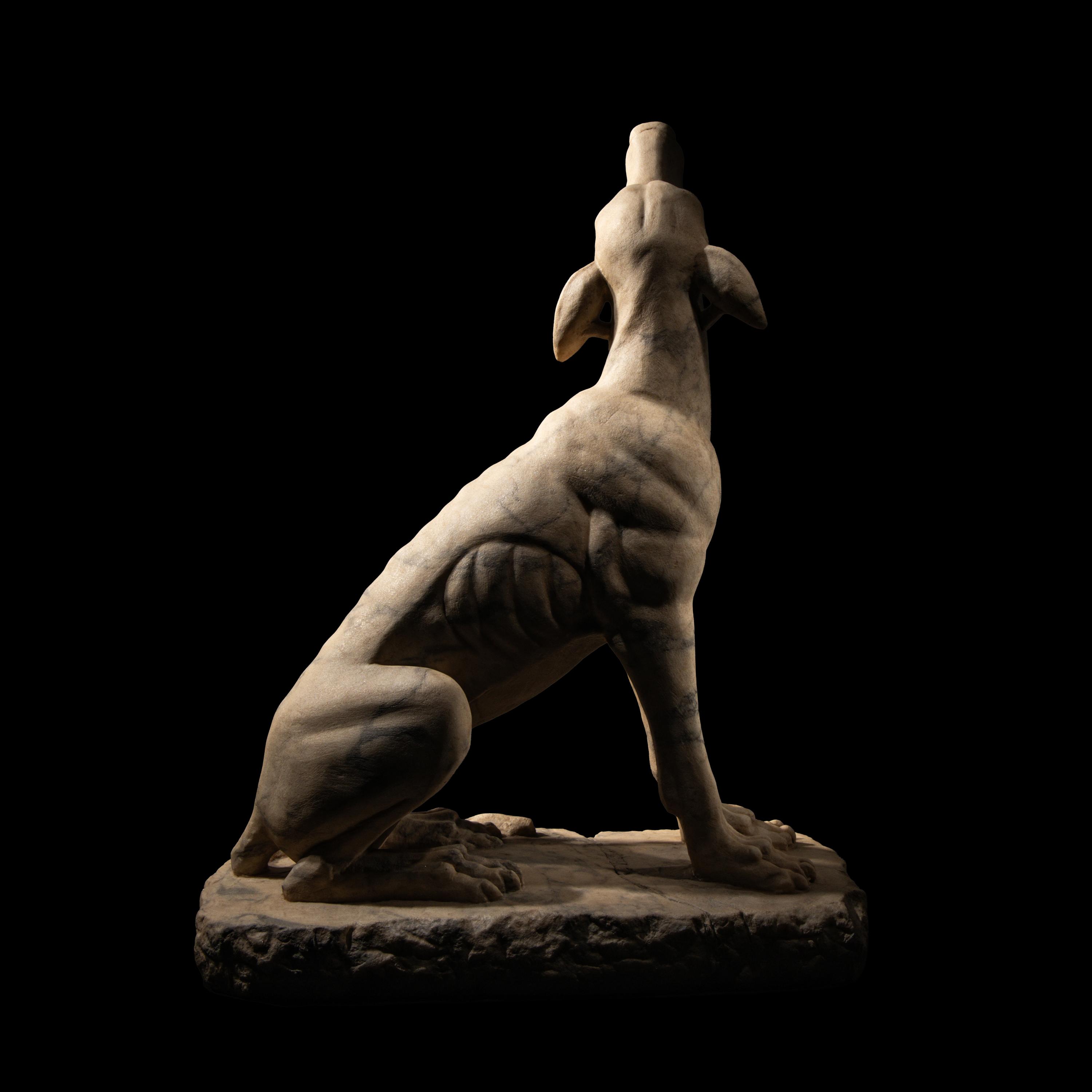
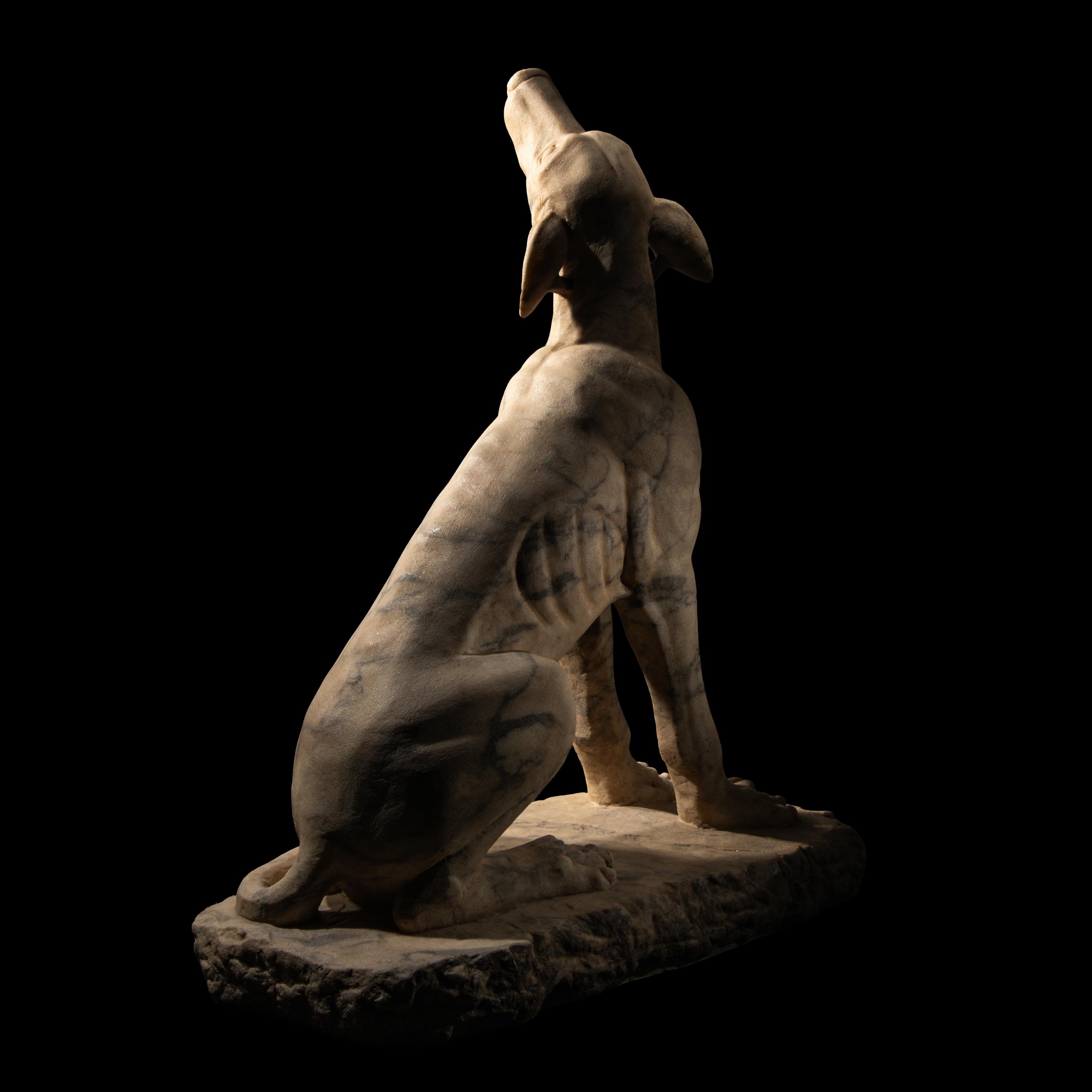
With an inquisitive, upturned head, the seated hound is captured in a moment of heightened alertness as if responding to a distant sound. The planted forelegs and massive paws, along with the alert torsion of the head and body, attractively combine to render the hunting dog in a state of latent, barely contained energy. The head is characterized by a narrow muzzle with a line of plastically rendered scruff along the jaw, with long pendent ears set low on the head and falling close to the neck. These aspects of the head, along with a deep muscled chest and abdominal tuck, are all characteristic of Laconian hunting hounds, immensely popular throughout the ancient Mediterranean. Idiosyncratic treatment of anatomy, such as selective thickening of vulnerable paws and forelegs and schematically conceived ribs, might be explained by vagaries of workshop production. It could also reflect technical challenges posed by the heterogeneous structure and pronounced veining of the pavonazzetto marble chosen, an attractive yet notorious stone for complicating precise carving due to the increased risk of fracture.
Sculpted animals and dogs in particular were ideally suited to display within garden and funerary contexts where their lifelike presence and associations with loyalty and vigilance would have resonated strongly. The tradition was rooted in Greek naturalism and deeply appreciated by Roman sculptors. Colored marbles were frequently chosen for animals, used to enhance vivid, lifelike effects. Hounds in colored marble and stone have been found in metropolitan Rome during the 19th century, notably a strikingly similar seated hound rendered in serpentine excavated on the Esquiline (Musei Capitolini inv. no. MC1110) and a striding pointer carved in pavonazzetto with a verde antico base (Musei Vaticani, inv. no. MV.425.0.0). The enduring appeal of such sculptures was not lost on enthusiasts of later eras: the famed ‘Jennings Dog’ (an imposing Molossian now in the British Museum, inv. no. 2001,1010.1), notably, was one of the earliest and most admired antiquities to enter an English collection.
For dogs in Greek sculpture, see the section in G.M.A. Richter, Animals in Greek Sculpture (London, 1930). Vermeule’s analysis of the function and meaning of such statues remains useful C.C. Vermeule, “Greek Funerary Animals, 450-300 B.C.” AJA 76 (1972): 49-59, as does his earlier article, which takes up aspects of Roman craftsmanship: “The Basel Dog: A Vindication” AJA 72, no. 2 (1968), pp. 95-101. For the “Jennings Dog” and aspects of antiquarian interpretation, see F. Haskell and N. Penny, Taste and the Antique (New Haven, 1981).
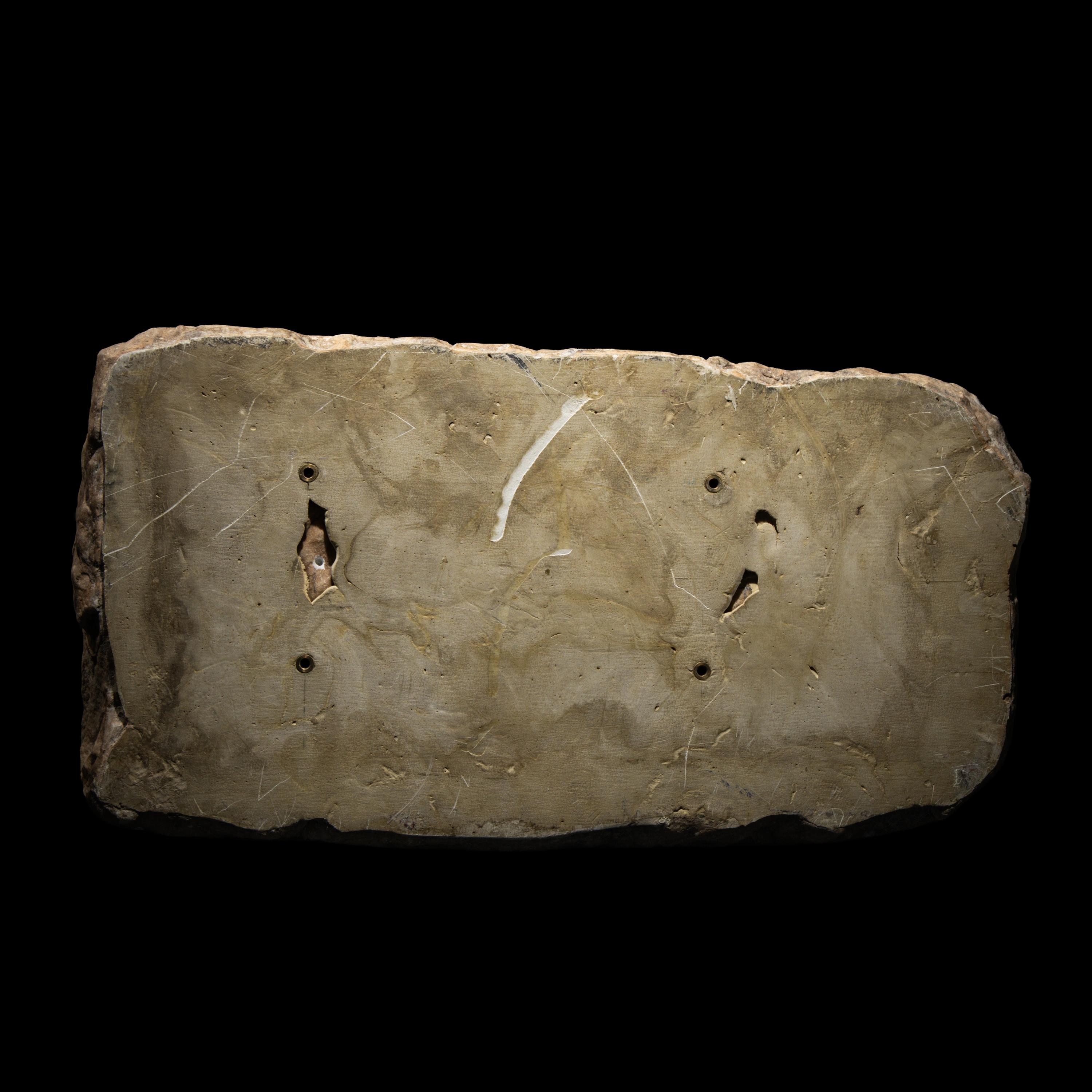
The marble displays pronounced natural veining throughout; an even, warm patina, possibly later. A range of localized smoothing and reworking, with some variation in surface finish; certain details, including the tail and extremities, remain relatively crisp. Minor surface wear and handling marks are present. The sculpture is set on an integral base with natural irregularities and fissures.
The physical condition of lots in our auctions can vary due to age, normal wear and tear, previous damage, and restoration/repair. All lots are sold "AS IS," in the condition they are in at the time of the auction, and we and the seller make no representation or warranty and assume no liability of any kind as to a lot's condition. Any reference to condition in a catalogue description or a condition report shall not amount to a full accounting of condition. Condition reports prepared by Freeman's staff are provided as a convenience and may be requested from the Department prior to bidding.
The absence of a posted condition report on the Freeman's website or in our catalogues should not be interpreted as commentary on an item's condition. Prospective buyers are responsible for inspecting a lot or sending their agent or conservator to inspect the lot on their behalf, and for ensuring that they have requested, received and understood any condition report provided by Freeman's.
Please email Antiquities@freemansauction.com for any additional information or questions you may have regarding this lot.