To request further details about this lot, please email morganmartin@freemansauction.com
Please email morganmartin@freemansauction.com for any additional information or questions you may have
Sale 6495
| Philadelphia
| Philadelphia
To request further details about this lot, please email morganmartin@freemansauction.com
Please email morganmartin@freemansauction.com for any additional information or questions you may have
Estimate$80,000 – $120,000
Provenance:
Kennedy Galleries, Inc., New York.
The Art Institute of Chicago.
Sale, Christie's, New York, May 23, 1990, Lot 89, sold by the above.
Collection of Judson C. and Nancy Sue Ball, Jackson Hole, Wyoming.
Sale, Heritage Auctions, Dallas, May 2, 2015, Lot 77025, sold by the above.
Acquired at the above sale by the present owner.
Literature:
A.T. Gardner, American Sculpture: A Catalogue of the Collection of the Metropolitan Museum of Art, New York, 1965, p. 109, another example referenced.
P.J. Broder, Bronzes of the American West, New York, 1974, pp. 241, 243, fig. 261, another example illustrated.
Graham Gallery, The Animal in Sculpture: American and European, 19th and 20th Century, exhibition catalogue, New York, 1987, pp. 70, 85, another example illustrated.
R. Butler. S.G. Lindsay, European Sculpture of the Nineteenth Century, exhibition catalogue, Washington, D.C., 2000, p. 465.
T. Tolles, ed., American Sculpture in the Metropolitan Museum of Art: Volume II, A Catalogue of Works by Artists Born between 1865 and 1885, New York, 2001, pp. 544-45, no. 243, another example illustrated.
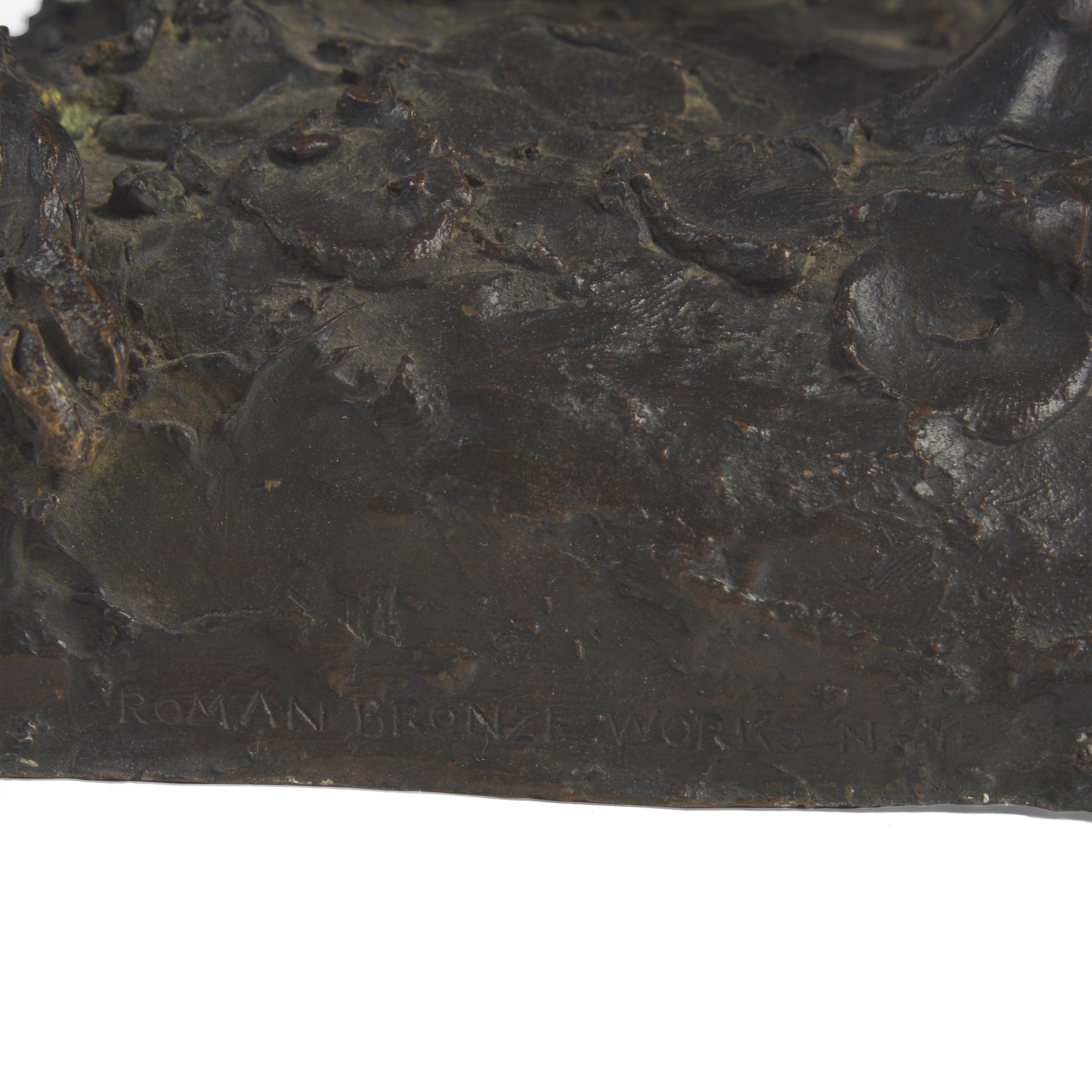
L.D. Rosenfeld, A Century of American Sculpture: The Roman Bronze Works Foundry, Atglen, Pennsylvania, 2002, p. 126, fig. IV-137, another example illustrated.
A.D. Harris, Wildlife in American Art: Masterworks from the National Museum of Wildlife Art, Norman, Oklahoma, 2009, pp. 105-06, fig. 3.10, another example illustrated.
T. Tolles, T.B. Smith, The American West in Bronze, exhibition catalogue, New York, 2013, pp. 71-72, fig. 90, another example illustrated.
Lot Essay:
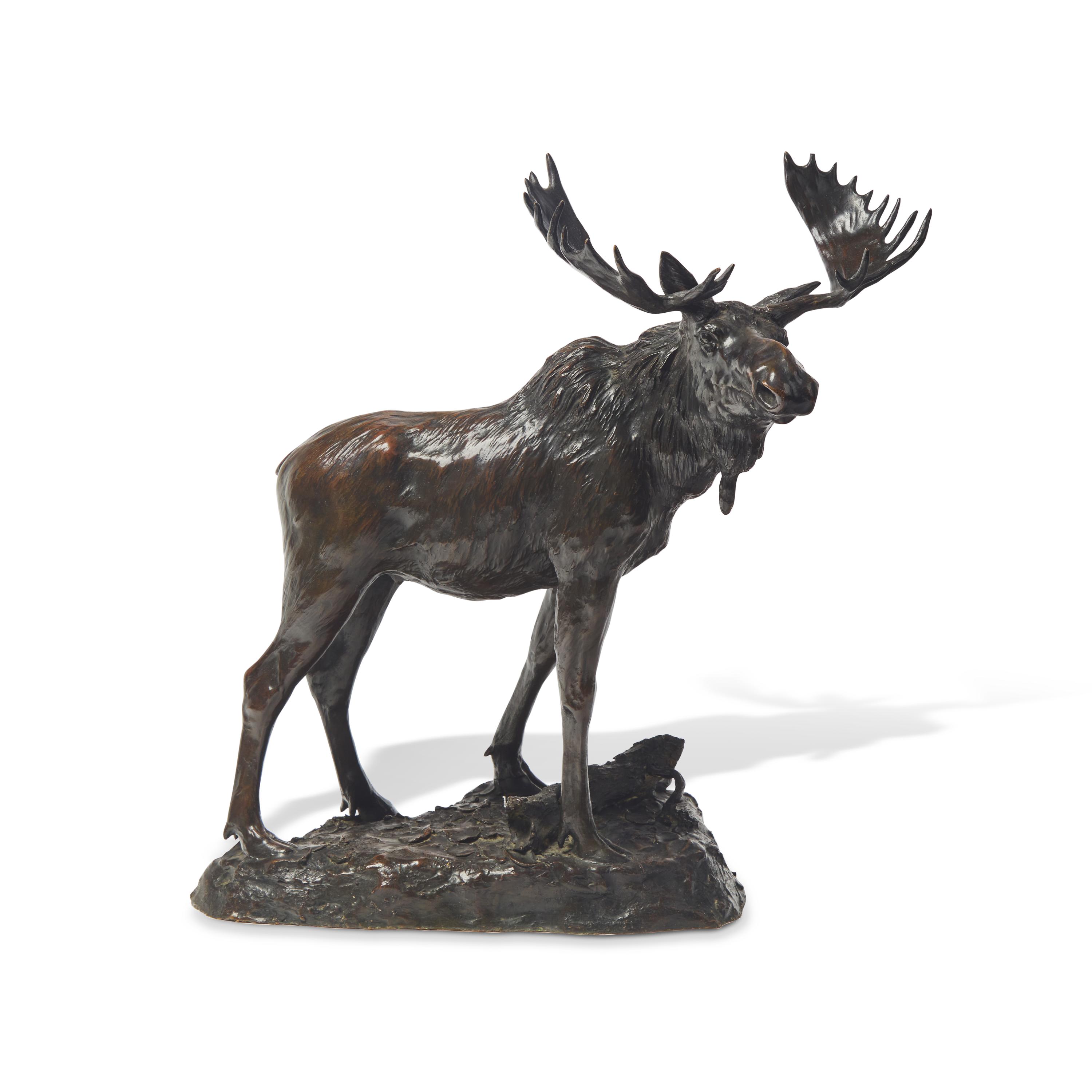
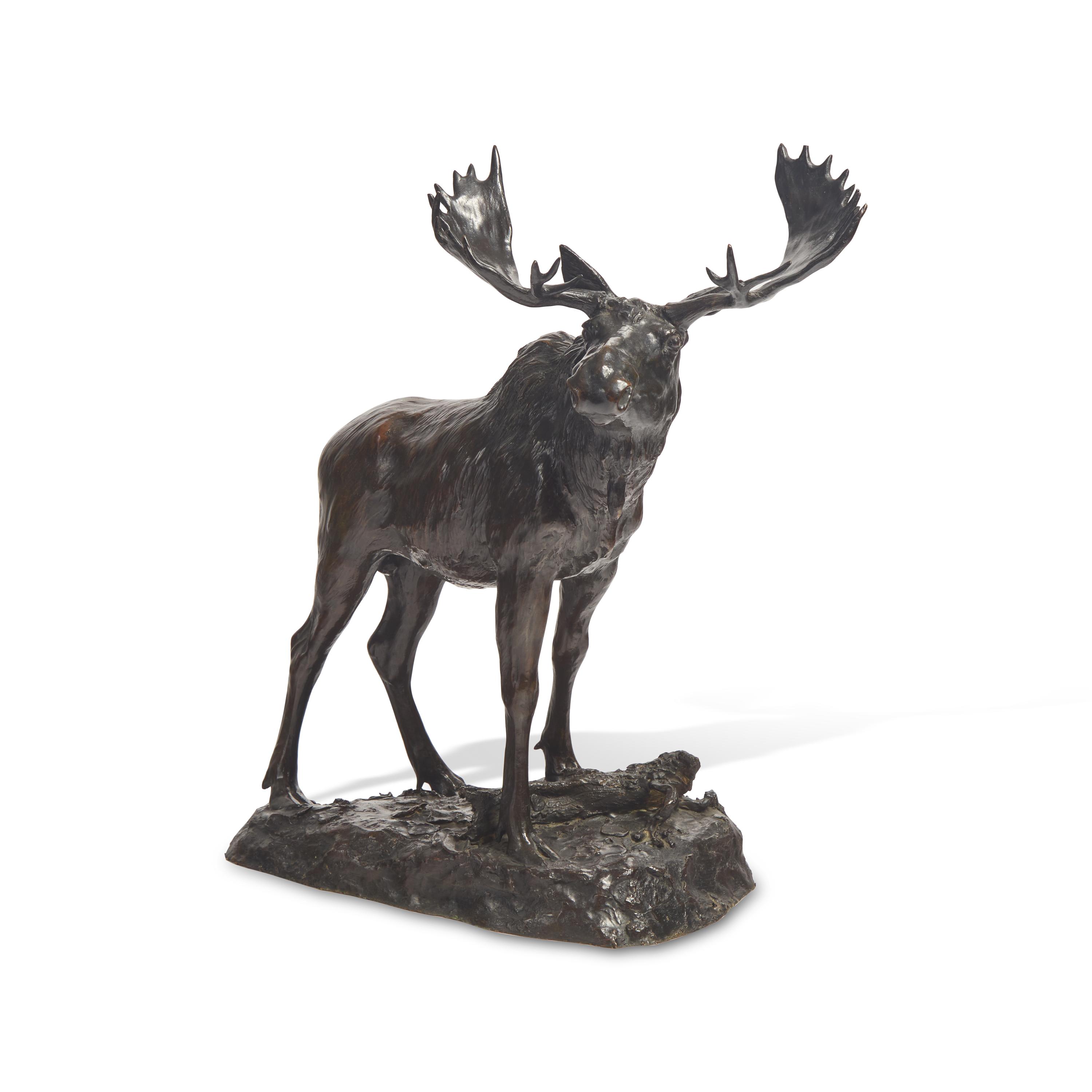
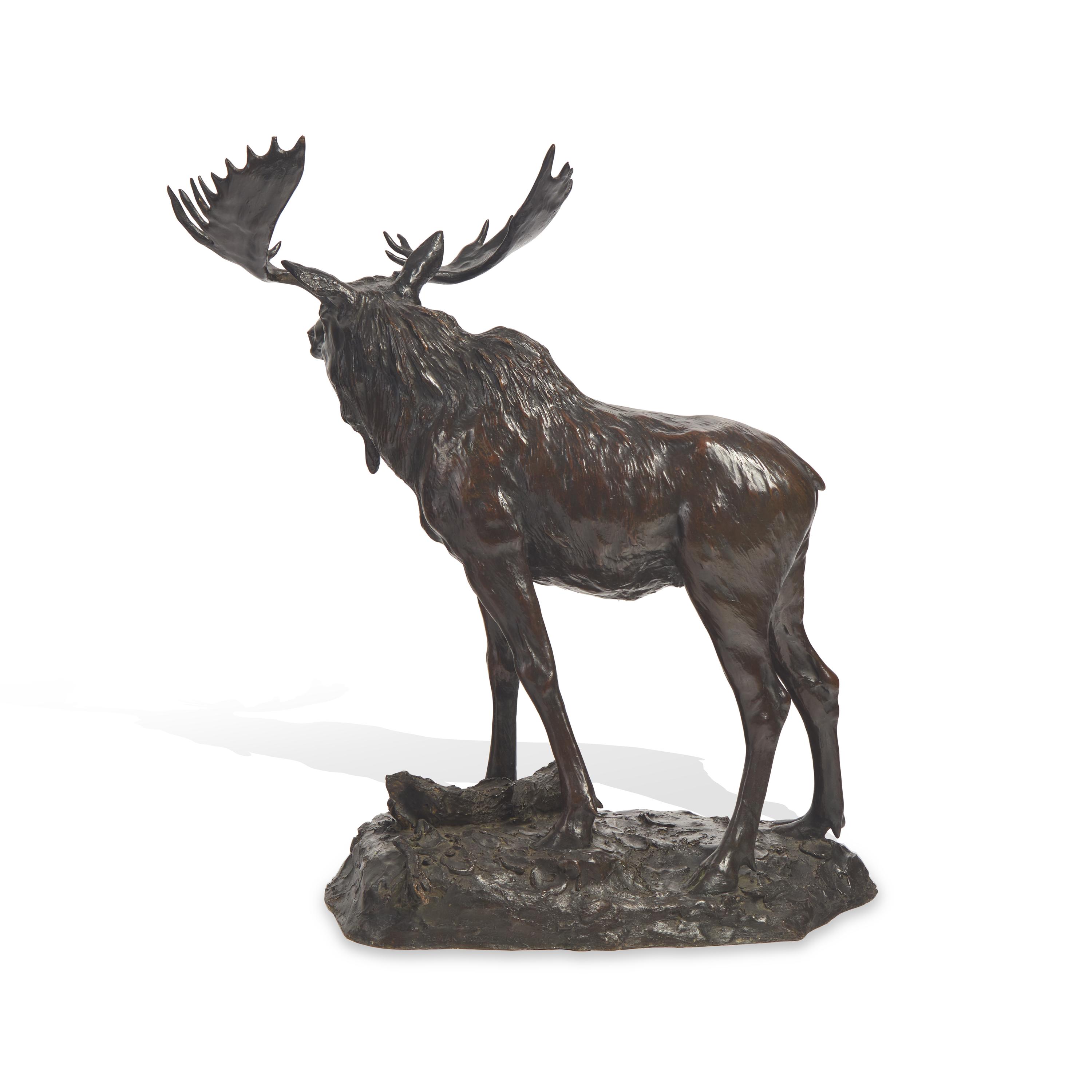
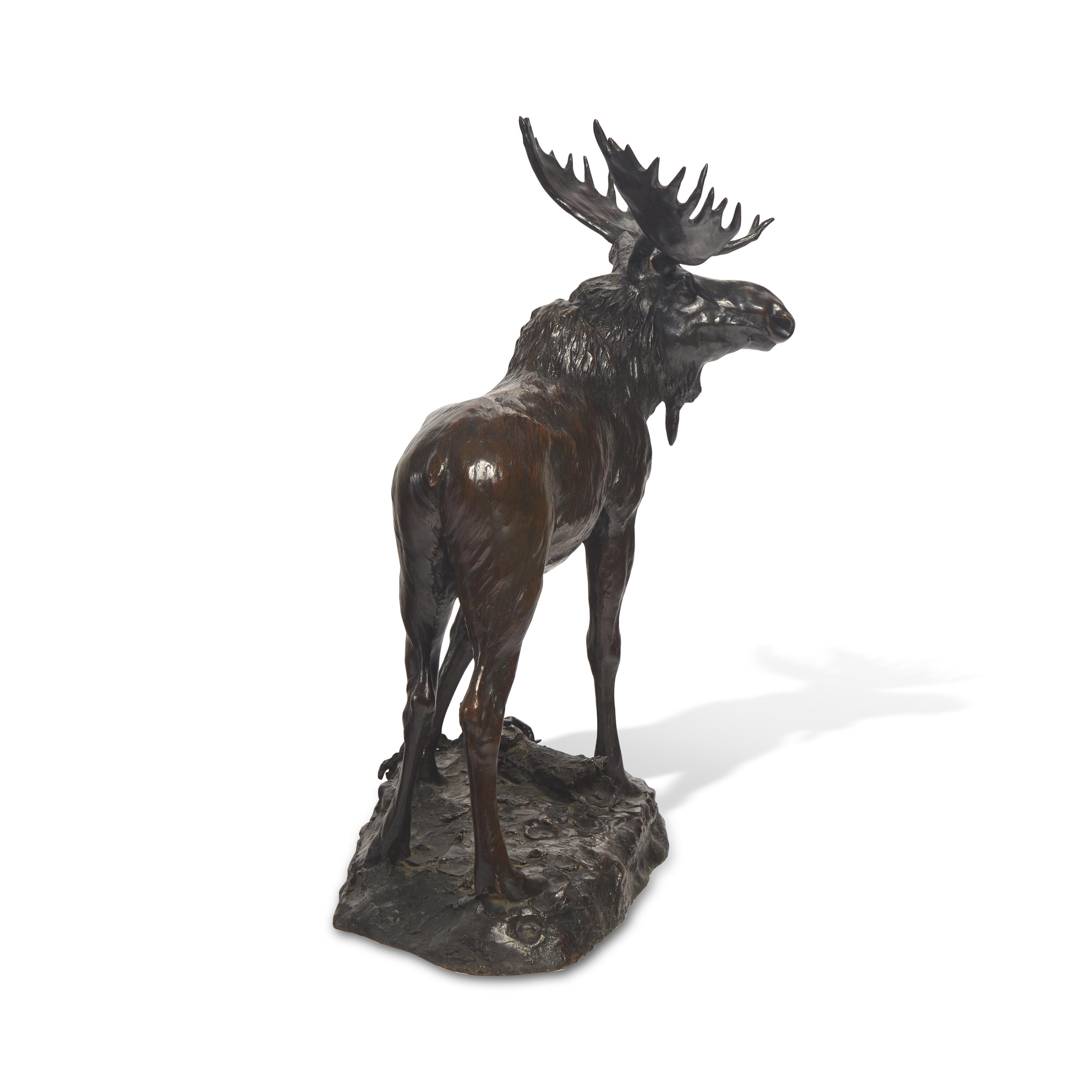
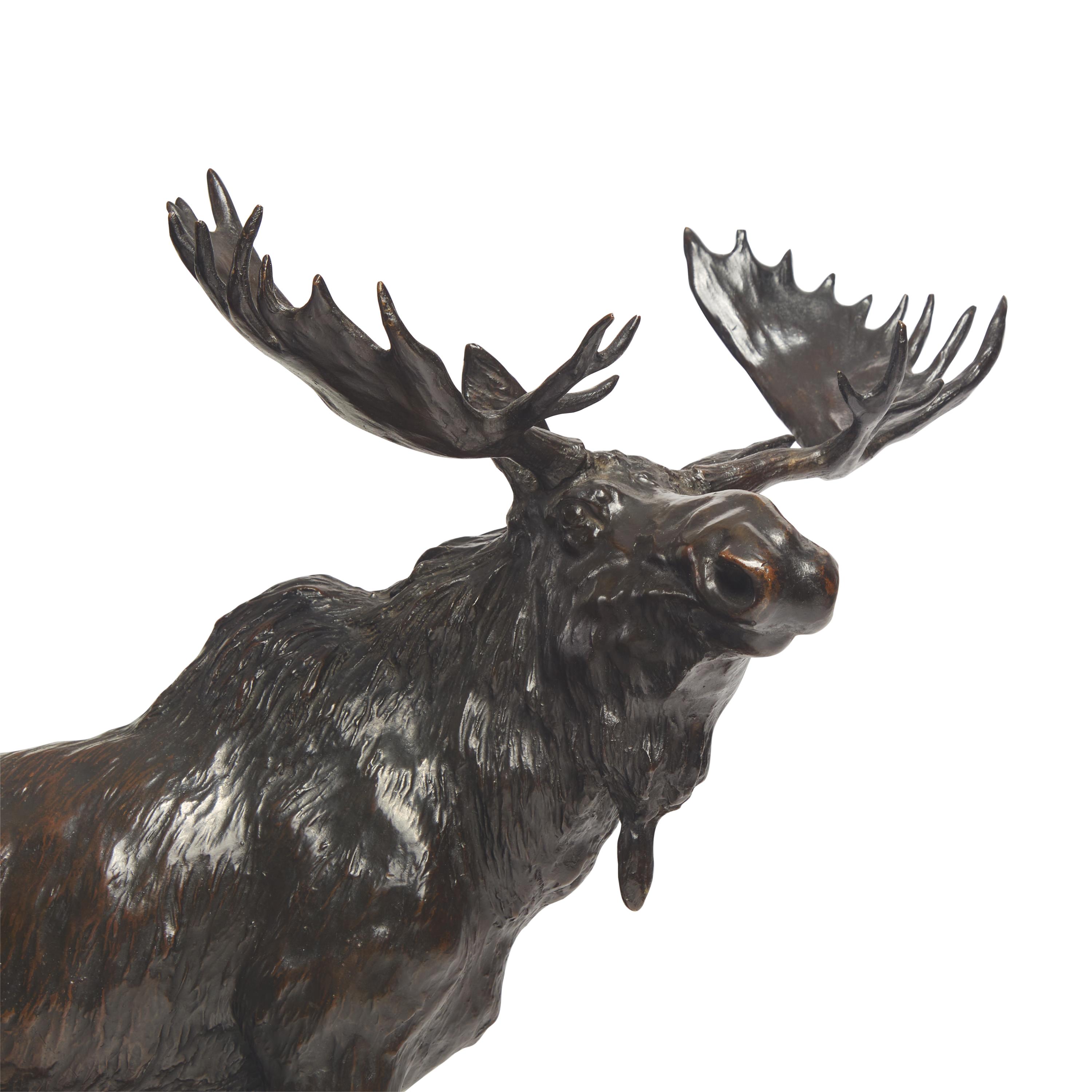
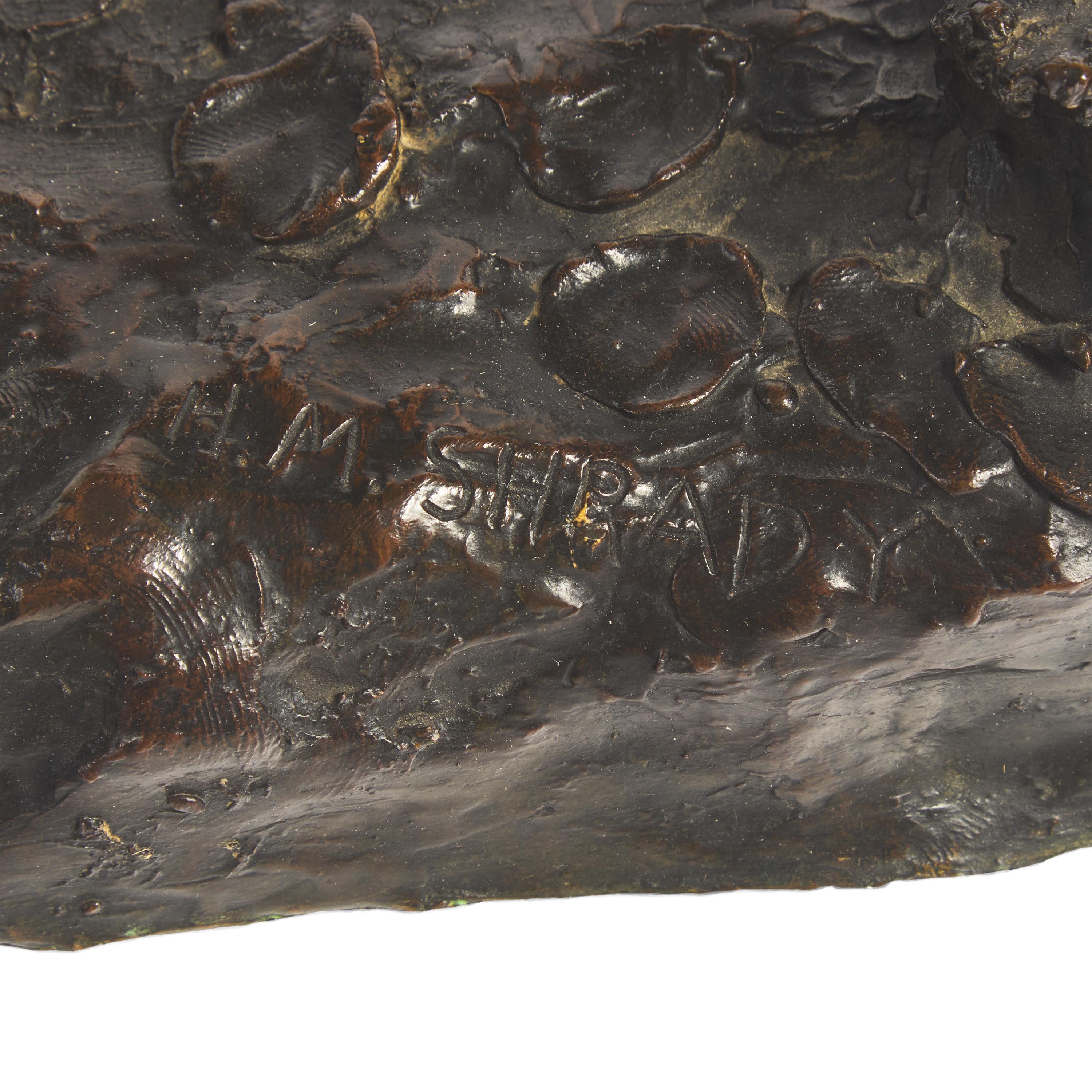
Largely self-taught as a sculptor, Henry Mervin Schrady relied on his studies of animal anatomy during his undergraduate education and sketching the animals at the Bronx Zoo to create his highly realistic models. Created in 1900, Bull Moose was one of Schrady's first sculptures and its anatomical accuracy is a testament to his observational skills. From the hoofs to the horns, Schrady has achieved the correct texture, musculature, and proportions of an adult male Bull Moose in this sculpture.
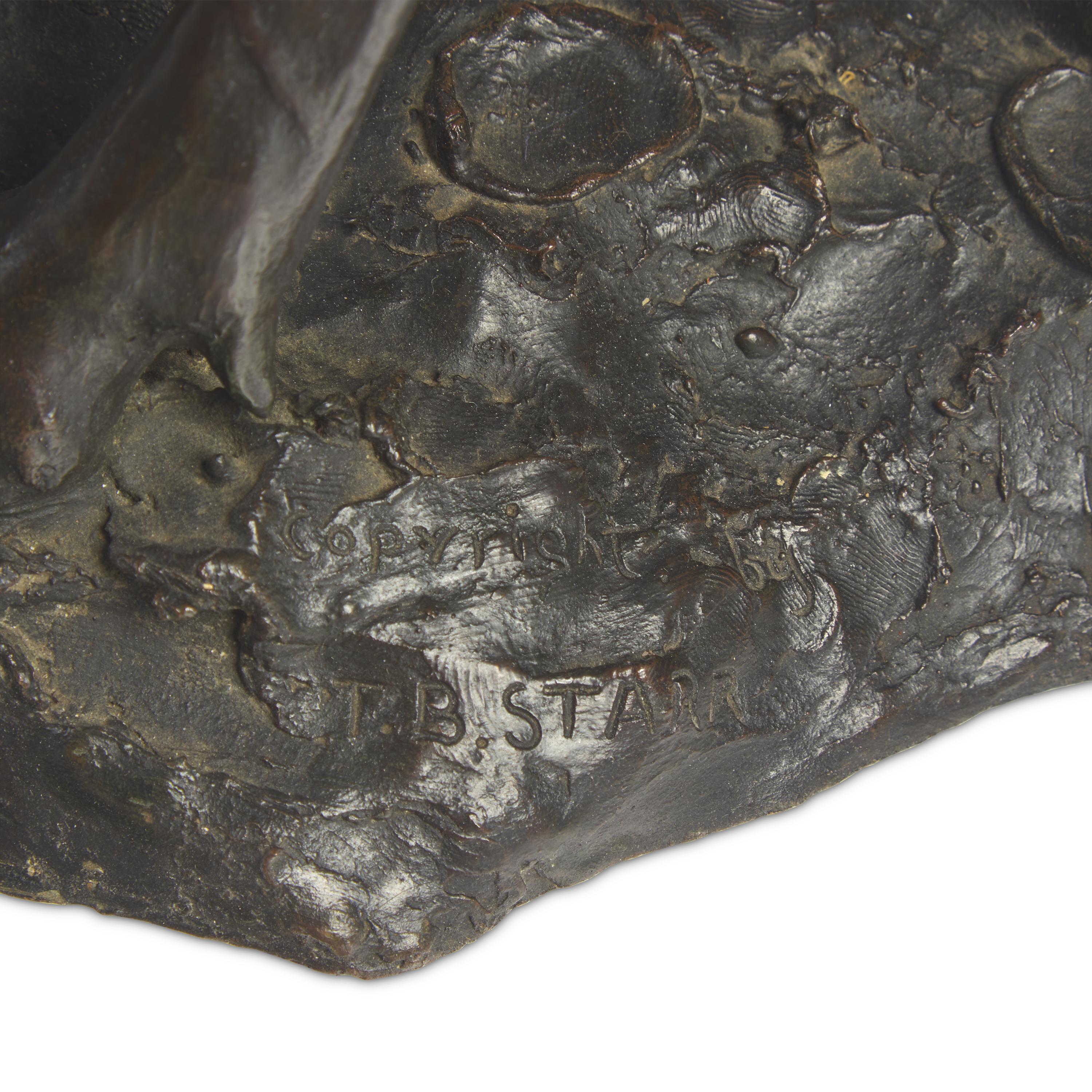
Greatly impressed by his prowess, Art Dealer Theodore B. Starr bought the copyright of the model and began selling casts at his saleroom. This drew the attention of Karl Bitter, the director of sculpture for the 1901 Pan-American Exposition in Buffalo, New York, leading Bitter to ask Schrady to create a life-size versions of Bull Moose and Monarch of the Plains to decorate the grounds. With the Exposition rapidly approaching, Schrady was able to create a nine-foot tall version of Bull Moose in just six weeks.
Overall dimensions: 20 1/4 x 19 x 9 in.
The physical condition of lots in our auctions can vary due to age, normal wear and tear, previous damage, and restoration/repair. All lots are sold "AS IS," in the condition they are in at the time of the auction, and we and the seller make no representation or warranty and assume no liability of any kind as to a lot's condition. Any reference to condition in a catalogue description or a condition report shall not amount to a full accounting of condition. Condition reports prepared by Freeman's staff are provided as a convenience and may be requested from the Department prior to bidding.
The absence of a posted condition report on the Freeman's website or in our catalogues should not be interpreted as commentary on an item's condition. Prospective buyers are responsible for inspecting a lot or sending their agent or conservator to inspect the lot on their behalf, and for ensuring that they have requested, received and understood any condition report provided by Freeman's.
Please email morganmartin@freemansauction.com for any additional information or questions you may have regarding this lot.