To request further details about this lot, please email morganmartin@freemansauction.com
Please email morganmartin@freemansauction.com for any additional information or questions you may have
Sale 6495
| Philadelphia
| Philadelphia
To request further details about this lot, please email morganmartin@freemansauction.com
Please email morganmartin@freemansauction.com for any additional information or questions you may have
Estimate$50,000 – $80,000
Provenance:
Private Collection, Idaho.
Literature:
J. W. McSpadden, Famous Sculptors of America, New York, 1924, p. 315.
W. Craven, Sculpture in America, New York, 1968, pp. 519, 548, fig. 14.2, another example illustrated.
T. Tolles, American Sculpture in The Metropolitan Museum of Art: A Catalogue of Works by Artists Born between 1865 and 1885, vol. II, New York, 1999, no. 212, pp. 480-81, another example illustrated.
Lot Essay:
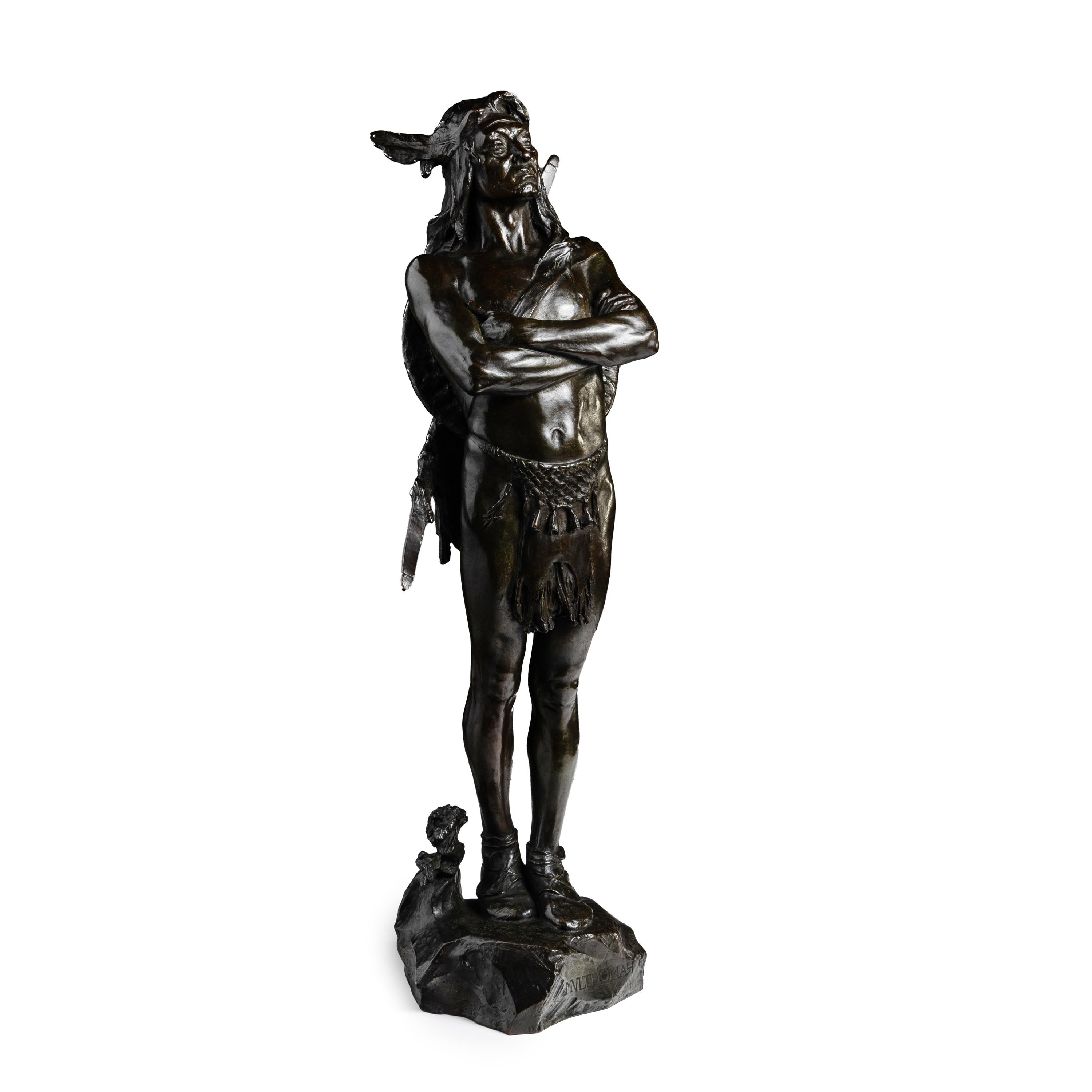
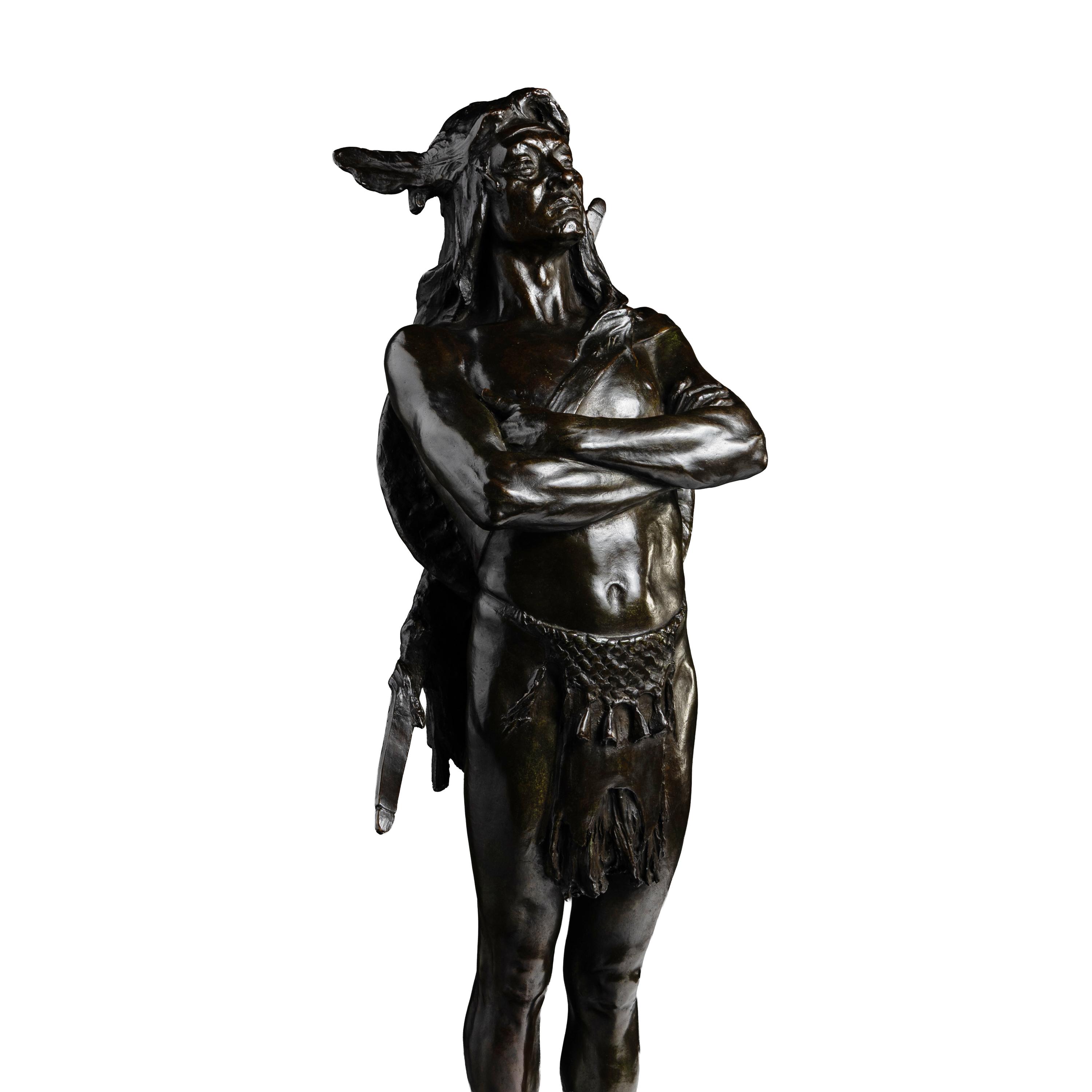
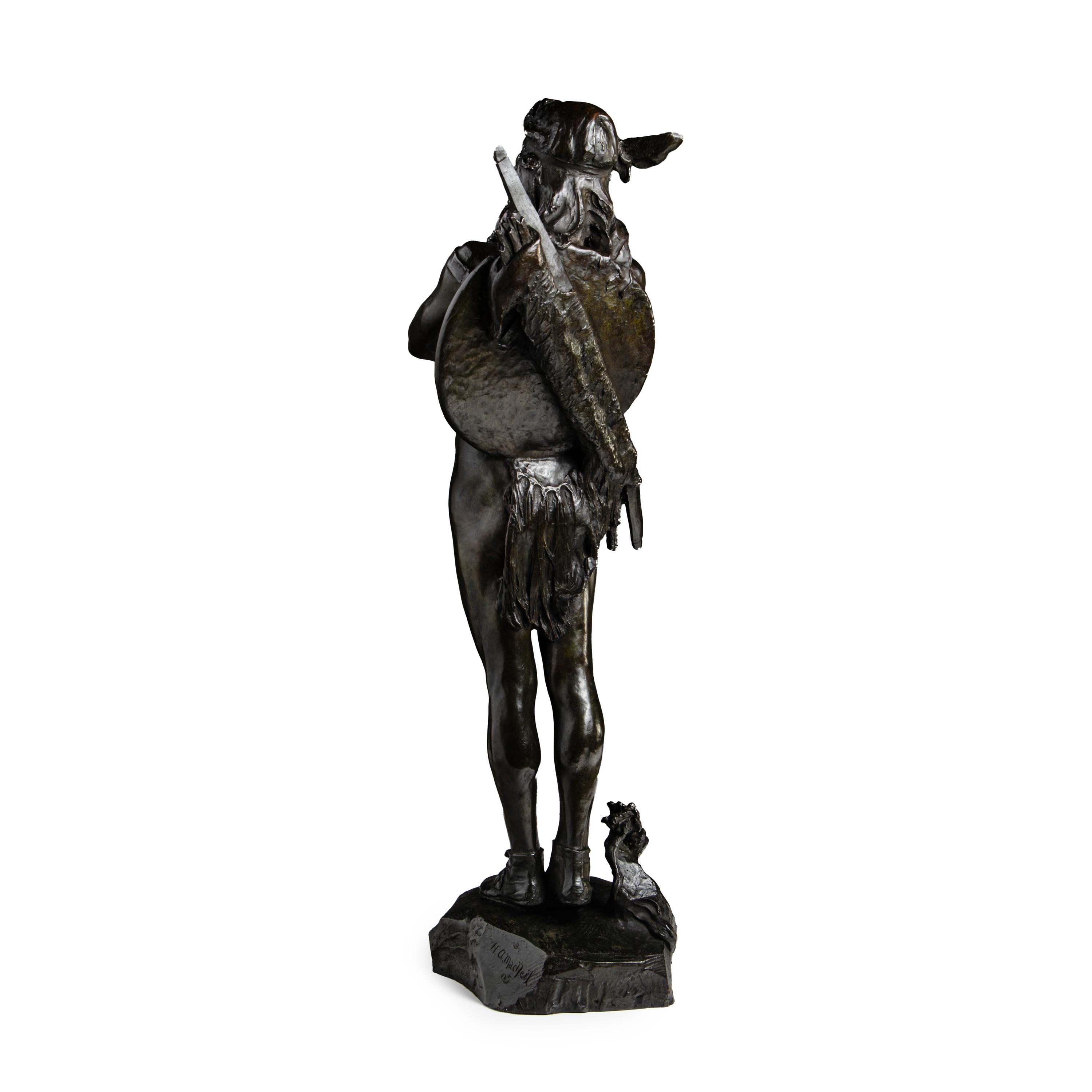
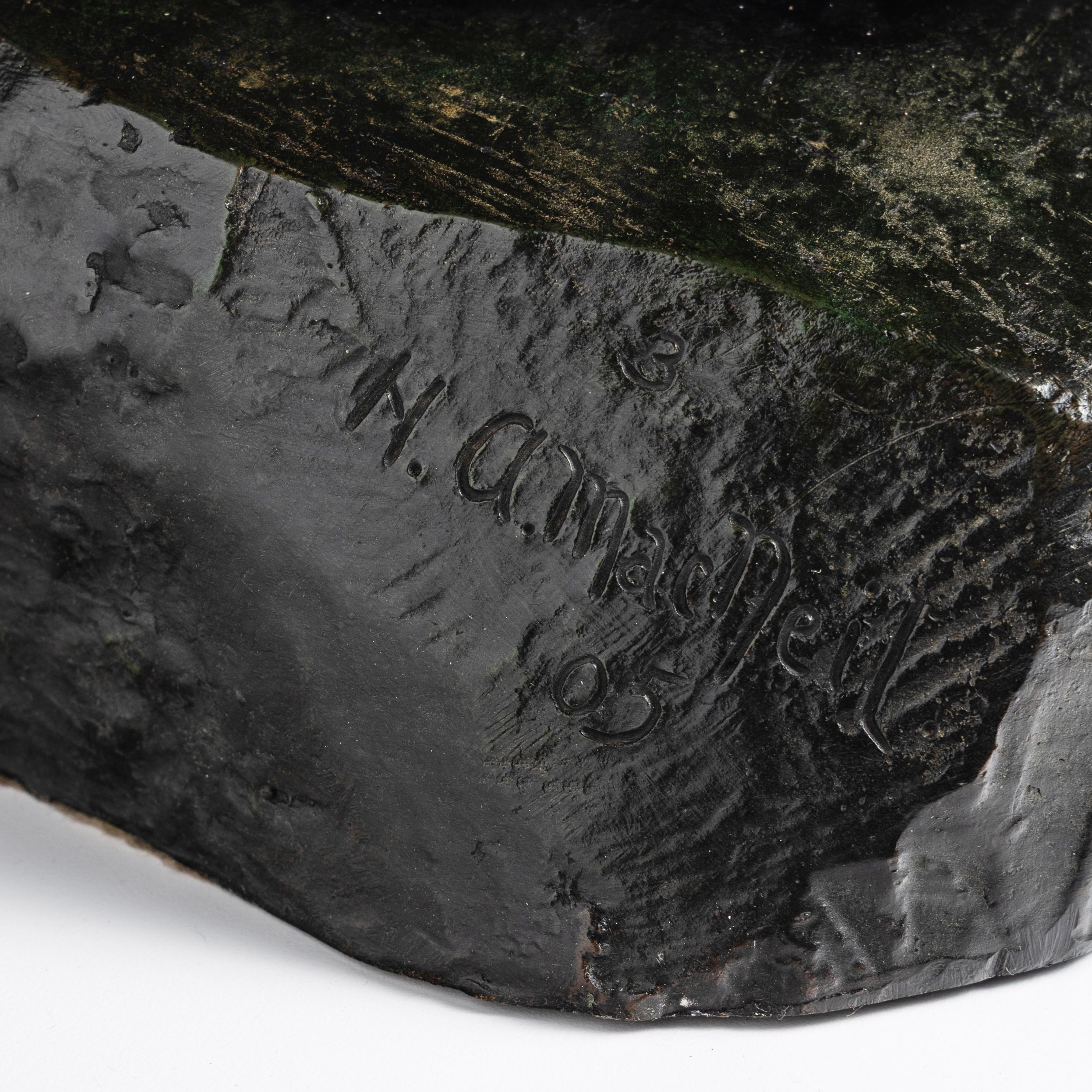
In 1902, MacNeil was commissioned by David P. Thompson, a prominent businessman and public official in Portland, Oregon, to create a commemorative memorial, which would be a gift to the city in Thompson's name. The resulting work, The Coming of the White Man, depicts the chief of the Multnomah tribe and his medicine man standing on a large, boulderlike pedestal. The Multnomah are a tribe of Chinookan people native to the Portland Basin residing near the mouth of the Willamette River. In his planning of this iconic image of one of the vanishing tribes of the Pacific Northwest, MacNeil took immense care to ensure ethnographic accuracy. Unveiled in 1907 in Portland's Washington Park, the monument is situated on a hill overlooking the Columbia River gorge, the same river by which Lewis and Clark had come through the Rockies to reach the Pacific ocean. Because the figure of the chief was particularly admired, MacNeil modeled it on a smaller scale and had it cast as a statuette titled Chief of the Multnomah Tribe. In this work, MacNeil has represented the subject in a standing pose of great dignity, with his arms crossed strongly across his puffed-up chest, and his chin and head held high. In this model, the artist has rendered the figure with a feathered headdress and added a bow and quiver of arrows in addition to the shield on his back, neither of which were included in the monumental figural group.
Overall: 35 x 10 1/2 x 10 1/2 in.
The physical condition of lots in our auctions can vary due to age, normal wear and tear, previous damage, and restoration/repair. All lots are sold "AS IS," in the condition they are in at the time of the auction, and we and the seller make no representation or warranty and assume no liability of any kind as to a lot's condition. Any reference to condition in a catalogue description or a condition report shall not amount to a full accounting of condition. Condition reports prepared by Freeman's staff are provided as a convenience and may be requested from the Department prior to bidding.
The absence of a posted condition report on the Freeman's website or in our catalogues should not be interpreted as commentary on an item's condition. Prospective buyers are responsible for inspecting a lot or sending their agent or conservator to inspect the lot on their behalf, and for ensuring that they have requested, received and understood any condition report provided by Freeman's.
Please email morganmartin@freemansauction.com for any additional information or questions you may have regarding this lot.