To request further details about this lot, please email adriannewolkenberg@freemansauction.com
Please email adriannewolkenberg@freemansauction.com for any additional information or questions you may have
Sale 6494
| New York
| New York
To request further details about this lot, please email adriannewolkenberg@freemansauction.com
Please email adriannewolkenberg@freemansauction.com for any additional information or questions you may have
Estimate$40,000 – $60,000
Provenance:
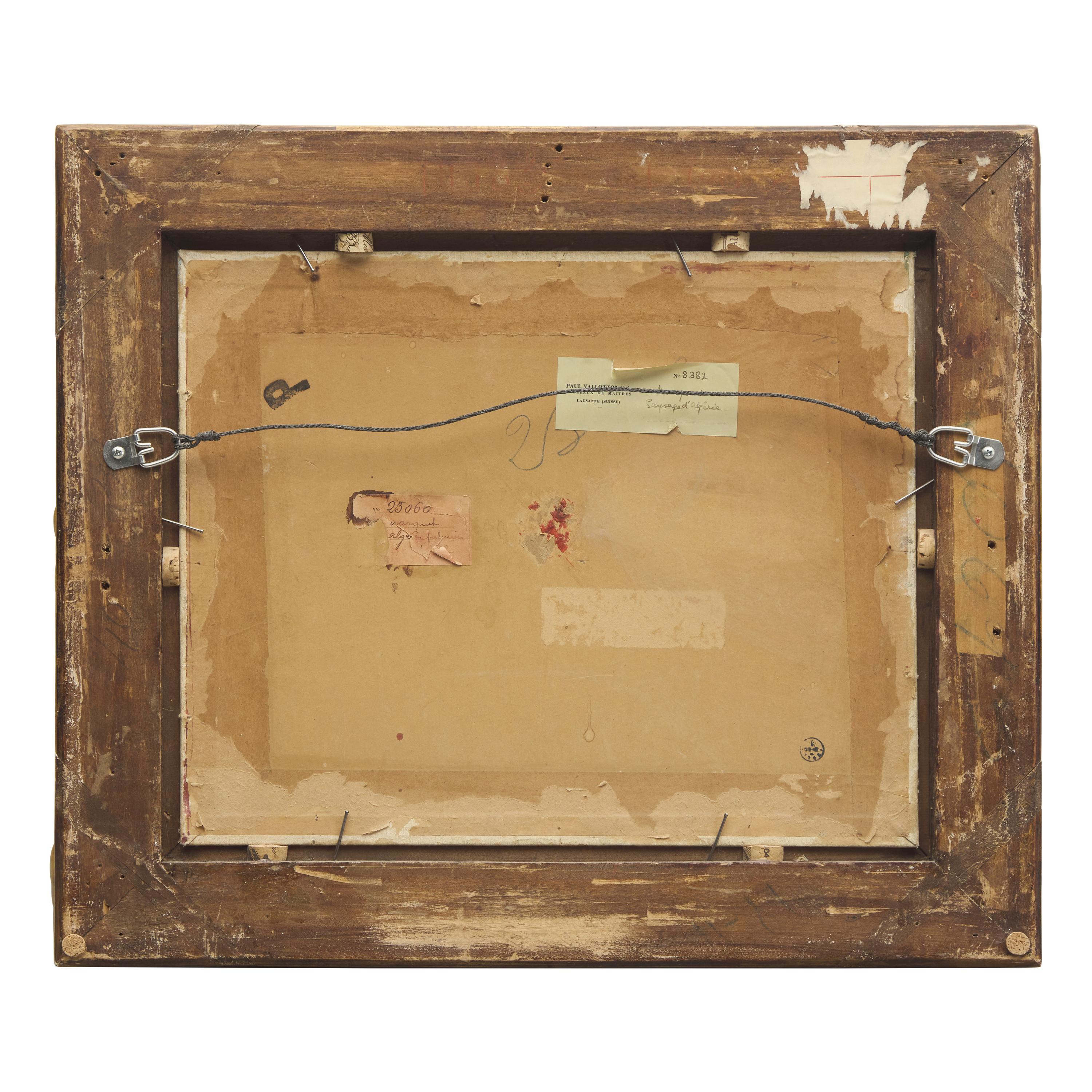
Bernheim-Jeune, Paris, acquired from the Artist, June 22, 1922 (stock no. 23066)
Paul Vallotton S.A., Lausanne, Switzerland c. 1985.
Christie's, London, sale of February 8, 2005, lot 338.
Acquired directly from the above sale.
Opera Gallery, Paris.
Acquired directly from the above in July, 2005 by the present owner.
Exhibited:
Lausanne, Fondation de l'Hermitage, De Cèzanne à Picasso dans les collections romandes, June 15 - October 20, 1985, no. 77
Literature:
Jean-Claude Martinet and Guy Wildenstein, Marquet, L'Afrique du Nord, Catalogue de l'oeuvre peint, Milan & Paris, 2001, no. I-535, p. 390, illus.
Lot Note:
From the 1910s onward, Albert Marquet looked for places that offered calm, simplicity, and, above all, clear light; qualities the artist deemed increasingly absent from the industrial modernity of metropolitan France.
Algeria, then part of the French colonial world, soon became one of his preferred destinations. It was a familiar destination because of its Mediterranean culture, yet strikingly different in its flora, atmosphere and sense of space. By the 1920s, and even more during the Second World War, Marquet formed a strong attachment to Algiers, where he eventually kept a residence.
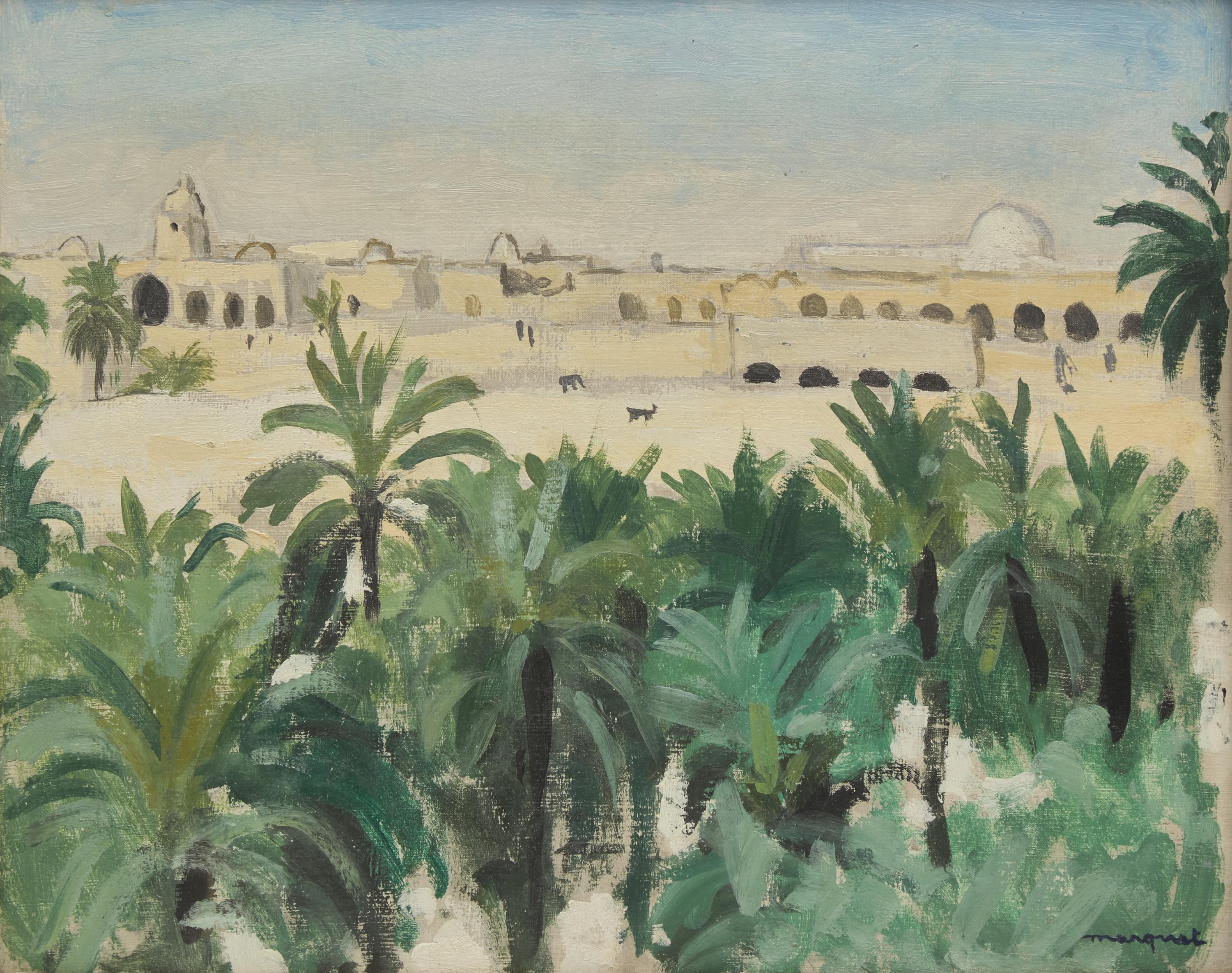
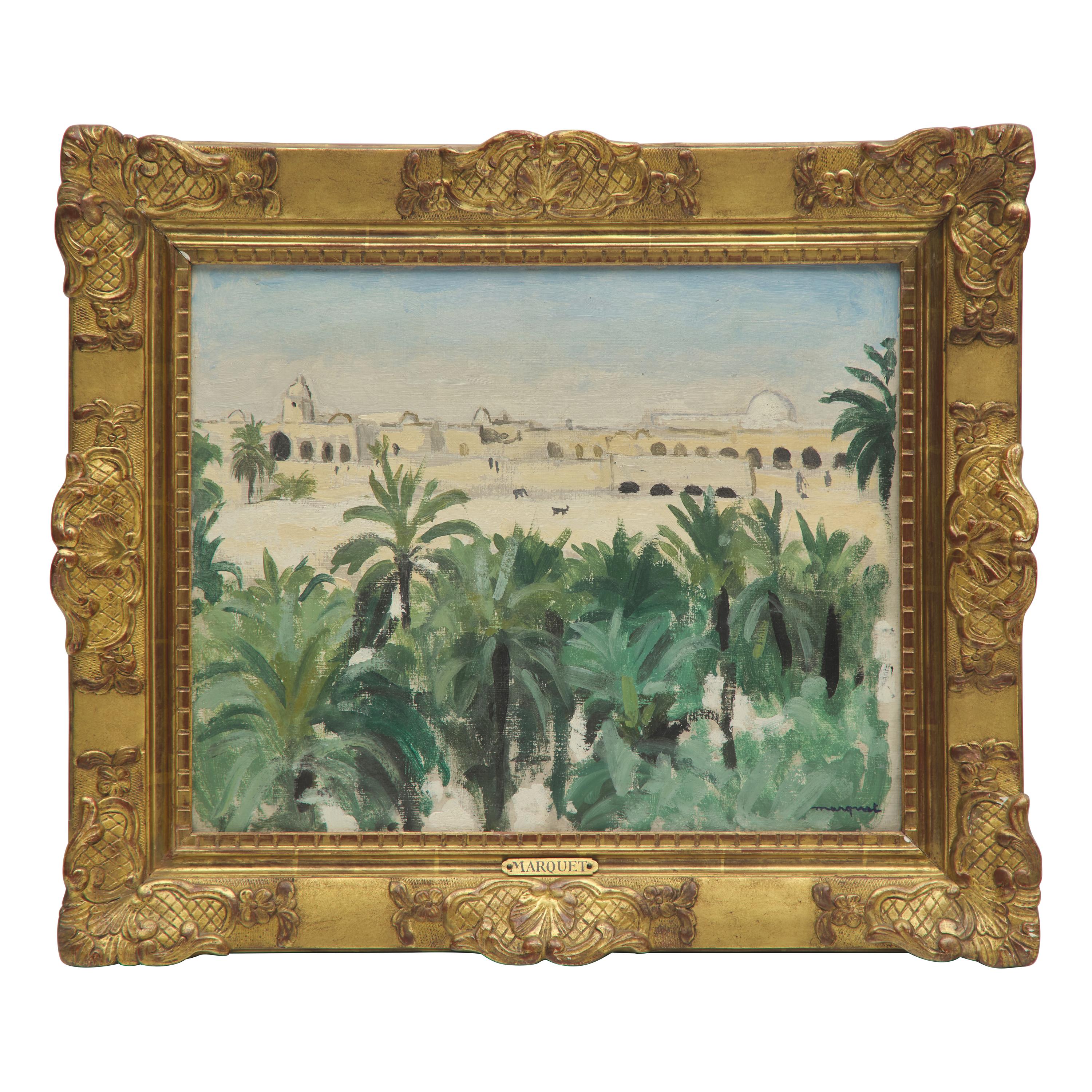
The present painting shows Laghouat, a more remote town south of Algiers. Located at the northern edge of the Sahara, Laghouat marks a transition between the cultivated north and the open desert. As an oasis town, it is defined by palm groves, low buildings, and a bright, dry light that tends to simplify forms. For Marquet, this setting offered ideal conditions: as light softened details, it reduced contrasts, and brought a quiet order to the scene, as exemplified here.
In contrast to the bustling dynamism of Marquet’s port scenes, the composition here is markedly paired down, and invites to mediation and contemplation. A dense foreground of palm trees, rendered in a loose brushwork, forms a dark, rhythmic vegetal curtain beyond which the town emerges as a pale, sun-bleached silhouette against a hazy, sunny sky. Human presence is reduced to a few diminutive figures and animals, all barely articulated, reinforcing a sense of scale and stillness.
The focus is not on action but on atmosphere. The colors are restrained: muted greens, warm off-whites, and a faint blue sky. Instead, light becomes the main subject. In this way, Marquet achieves what Marcel Sembat so perceptively described: a “pure and intense light” that does not dramatize but instead suffuses the entire scene with a quiet, continuous luminosity.
In overall very good condition. The paint layer has been applied very thinly on the board, which is only slightly warped (it bows out slightly at center). Examination under UV light does not reveal any inpainting or restoration, but it does pick up the yellowed varnish in the sky at upper center left and upper center (visible with the trained naked eye, as well). As such, in our opinion, the work might benefit from a light cleaning, especially in its top tier. Additional images available upon request.
The physical condition of lots in our auctions can vary due to age, normal wear and tear, previous damage, and restoration/repair. All lots are sold "AS IS," in the condition they are in at the time of the auction, and we and the seller make no representation or warranty and assume no liability of any kind as to a lot's condition. Any reference to condition in a catalogue description or a condition report shall not amount to a full accounting of condition. Condition reports prepared by Freeman's staff are provided as a convenience and may be requested from the Department prior to bidding.
The absence of a posted condition report on the Freeman's website or in our catalogues should not be interpreted as commentary on an item's condition. Prospective buyers are responsible for inspecting a lot or sending their agent or conservator to inspect the lot on their behalf, and for ensuring that they have requested, received and understood any condition report provided by Freeman's.
Please email adriannewolkenberg@freemansauction.com for any additional information or questions you may have regarding this lot.