To request further details about this lot, please email adriannewolkenberg@freemansauction.com
Please email adriannewolkenberg@freemansauction.com for any additional information or questions you may have
Sale 6494
| New York
| New York
To request further details about this lot, please email adriannewolkenberg@freemansauction.com
Please email adriannewolkenberg@freemansauction.com for any additional information or questions you may have
Estimate$20,000 – $30,000
We wish to thank the Comité Degas at Brame & Lorenceau, Paris for kindly confirming the authenticity of the present Lot, which will be accompanied by a Certificate of Authenticity.
The present lot will be reproduced in the digital catalogue raisonné of Edgar Degas by Michel Schulman under number MS-4559.
Provenance:
Atelier Degas.
Collection of Felix Fénéon, Paris.
Sotheby's Arcade, New York, sale of February 24, 1995, Lot 9.
Acquired directly from the above sale by the present owner.
Literature:
Michael Schulman, Catalogue Raisonné Digital des Peintures, Pastels et Dessins d'Edgar Degas (1834-1917), no. MS-4559.
Lot Note:
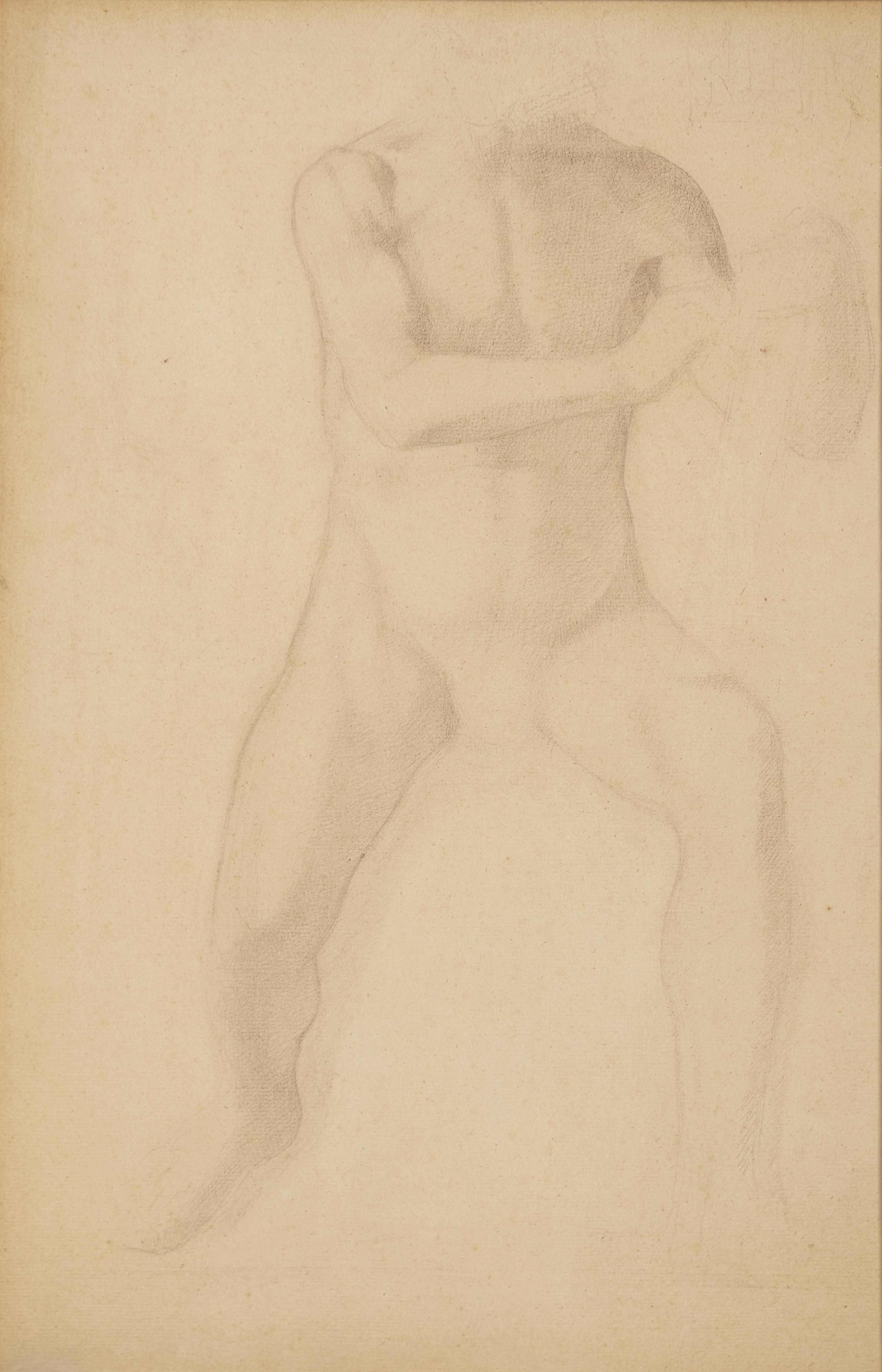
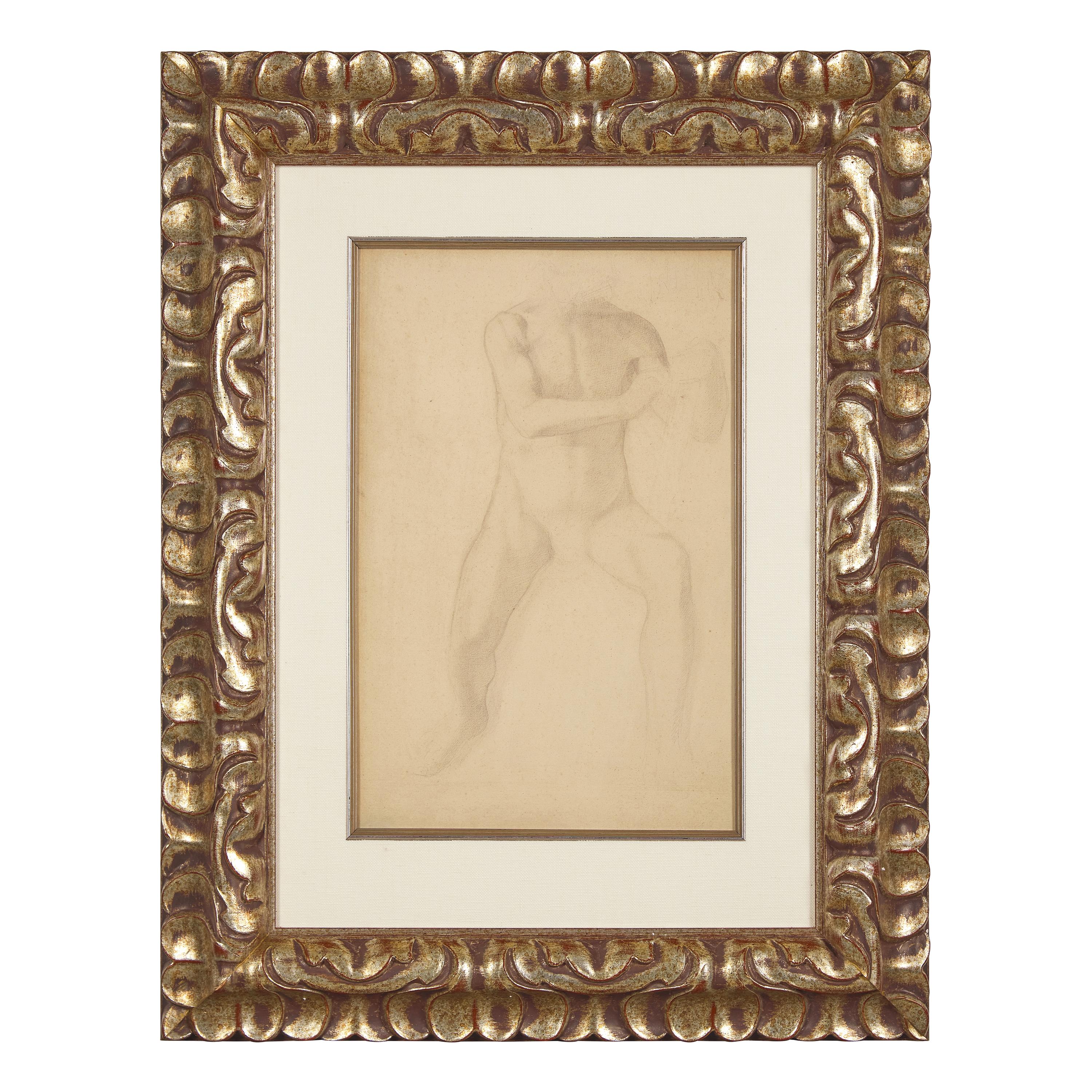
Edgar Degas’s early graphite studies of the male nude offer a revealing window into his rigorous academic. Trained within the highly structured environment of the École des Beaux-Arts in Paris, where he was formally admitted in 1855, Degas followed the traditional progression expected of any aspiring history painter. After extensively copying the Old Masters of the Italian Renaissance at the Louvre during the early 1850s, he turned to drawing from the live model, a foundational exercise in mastering anatomy, proportion, and form.
Following his training in the private studios of Félix-Joseph Barrias and Louis Lamothe, Degas developed a disciplined and analytical approach to draftsmanship rooted in the teachings of Jean-Auguste-Dominique Ingres. His extended stay in Italy from 1856 to 1859, principally in Rome, Florence, and Naples, further reinforced this classical grounding. Around 1858, while working at the Académie de France in Rome, he attended evening life-drawing sessions alongside his friend Gustave Moreau, producing studies that demonstrate a close adherence to academic conventions.
These works, including the present drawing, emphasize careful observation, controlled line, and a sculptural modeling of the human body, bridging antique precision and idealism with an emerging naturalistic sensibility. The present sheet underscores Degas’s deep respect for tradition and precision at this early stage of his career, while also revealing his sustained engagement with the human figure; an interest that would later evolve into the more dynamic and unconventional treatments for which Edgar Degas is best known today.
The physical condition of lots in our auctions can vary due to age, normal wear and tear, previous damage, and restoration/repair. All lots are sold "AS IS," in the condition they are in at the time of the auction, and we and the seller make no representation or warranty and assume no liability of any kind as to a lot's condition. Any reference to condition in a catalogue description or a condition report shall not amount to a full accounting of condition. Condition reports prepared by Freeman's staff are provided as a convenience and may be requested from the Department prior to bidding.
The absence of a posted condition report on the Freeman's website or in our catalogues should not be interpreted as commentary on an item's condition. Prospective buyers are responsible for inspecting a lot or sending their agent or conservator to inspect the lot on their behalf, and for ensuring that they have requested, received and understood any condition report provided by Freeman's.
Please email adriannewolkenberg@freemansauction.com for any additional information or questions you may have regarding this lot.