To request further details about this lot, please email antiquities@hindmanauctions.com

Jacob Coley
Senior Vice President, Head of Department, Antiquities and Ancient Art
Sale 6428
| Chicago
| Chicago
To request further details about this lot, please email antiquities@hindmanauctions.com
Jacob Coley
Senior Vice President, Head of Department, Antiquities and Ancient Art
Estimate$30,000 – $50,000
Provenance:
Private Collection, London, 1980s.
Private Collection, acquired in London in 1999.
Christie's, London, Antiquities, 29 April 2010, Lot 63.
Phoenix Ancient Art, Geneva, 2014 (Point Art Monaco, no. 22); where acquired by the present owner.
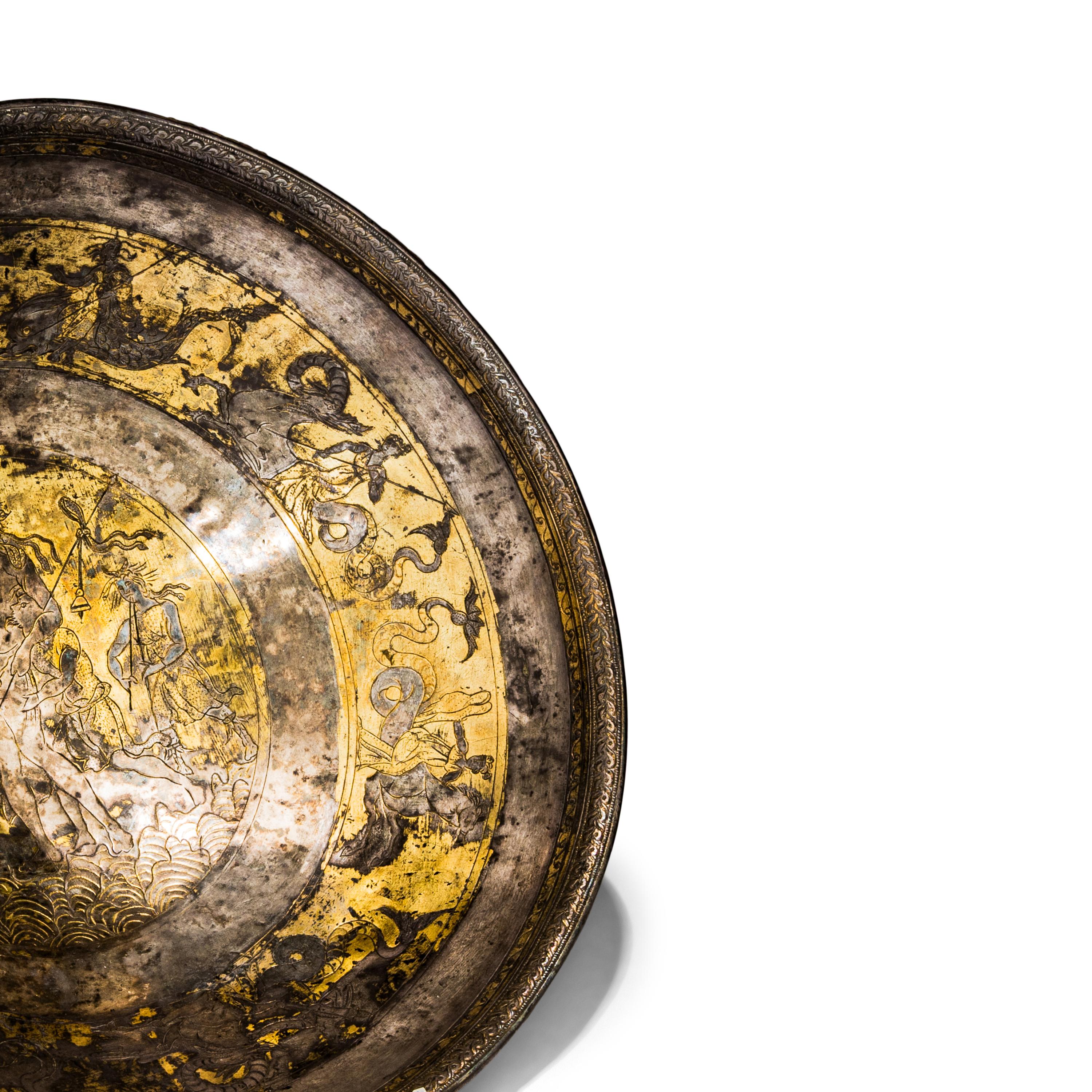
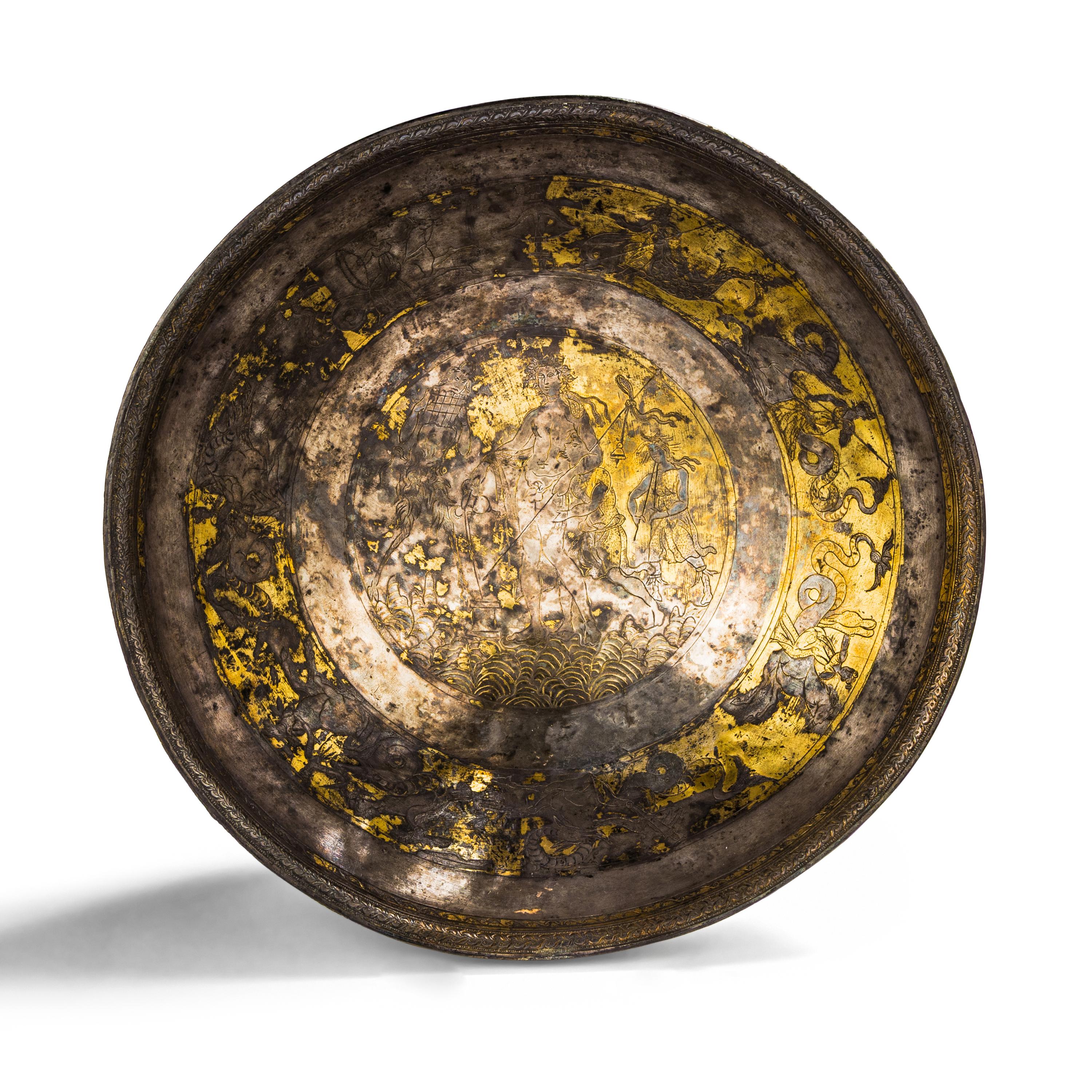
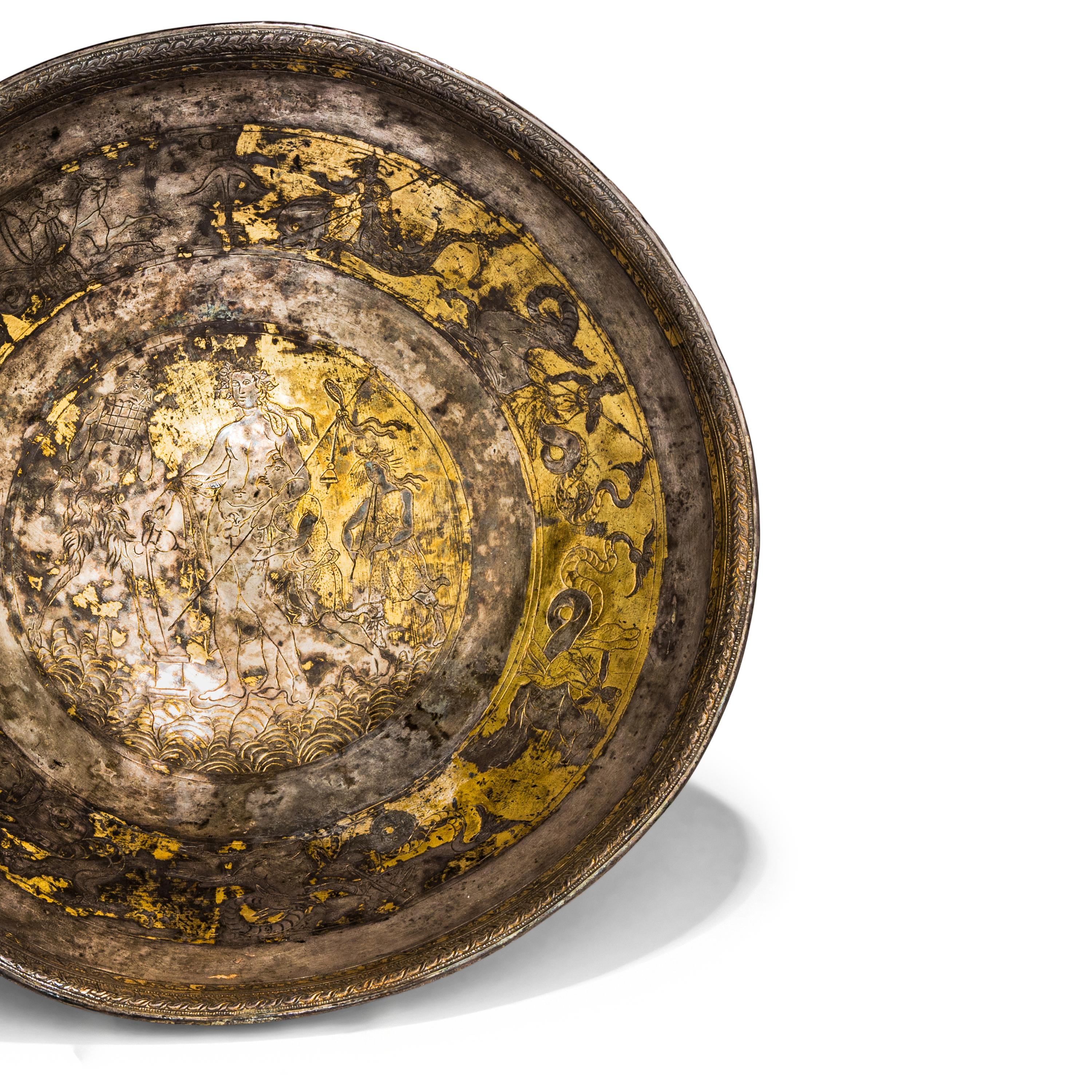
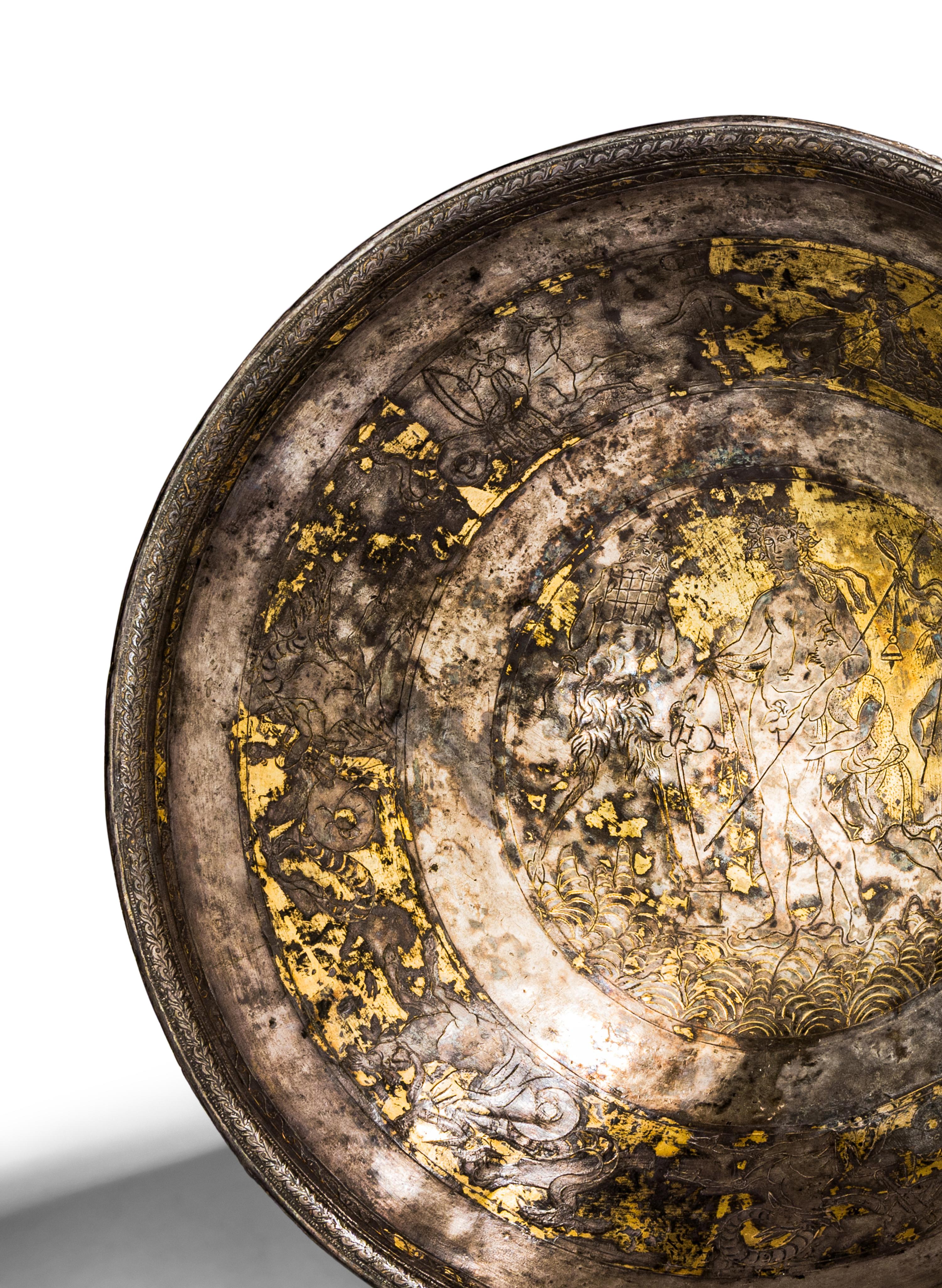
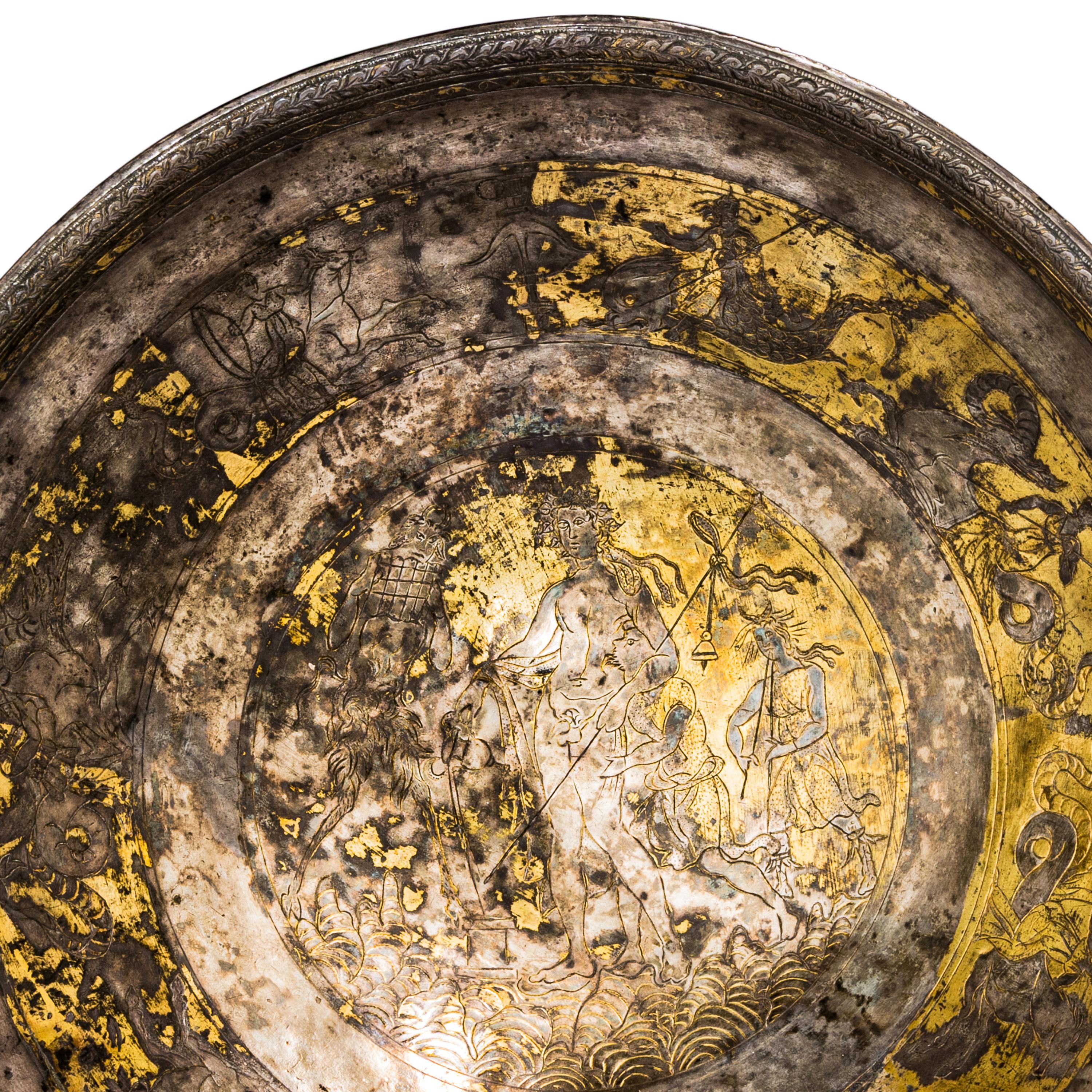
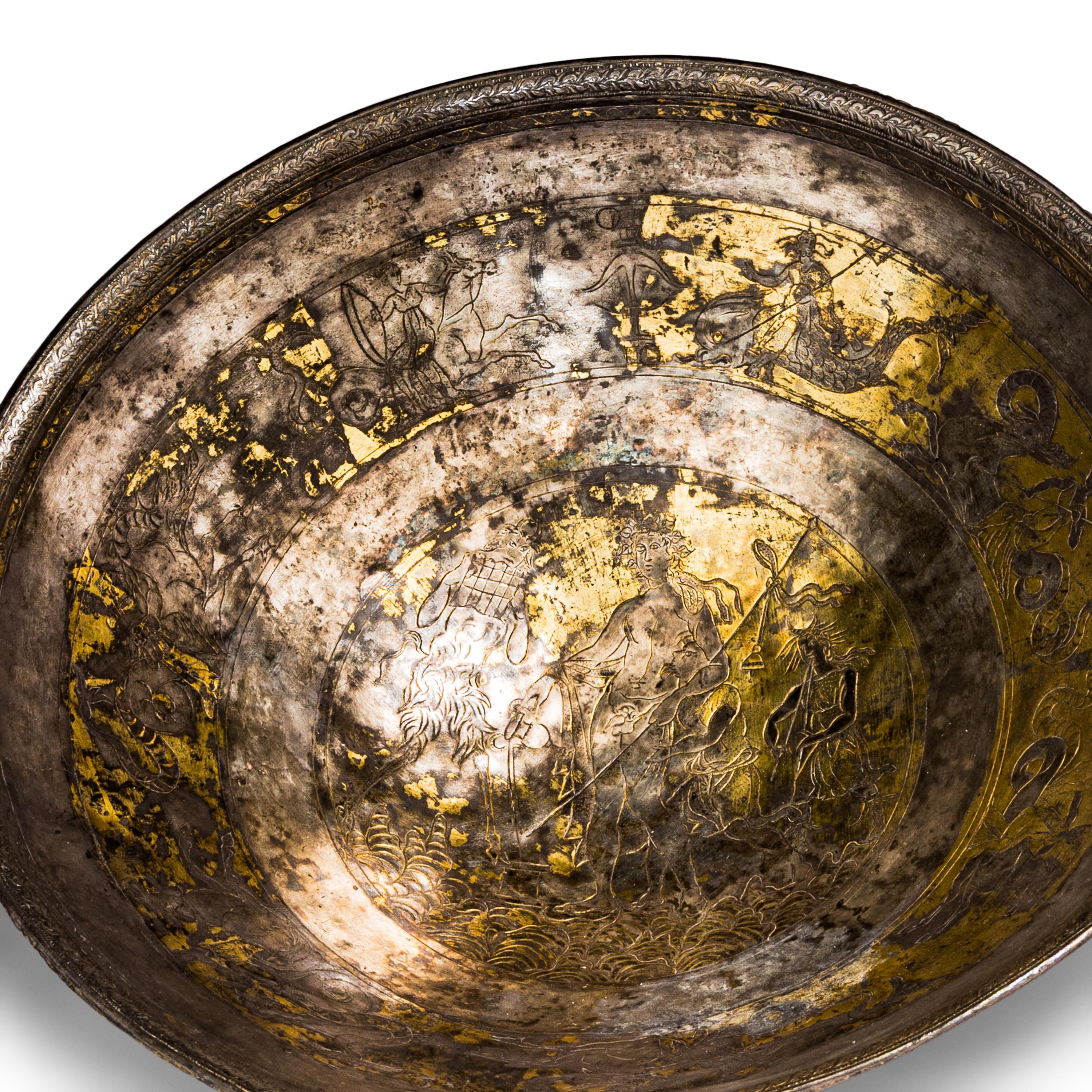
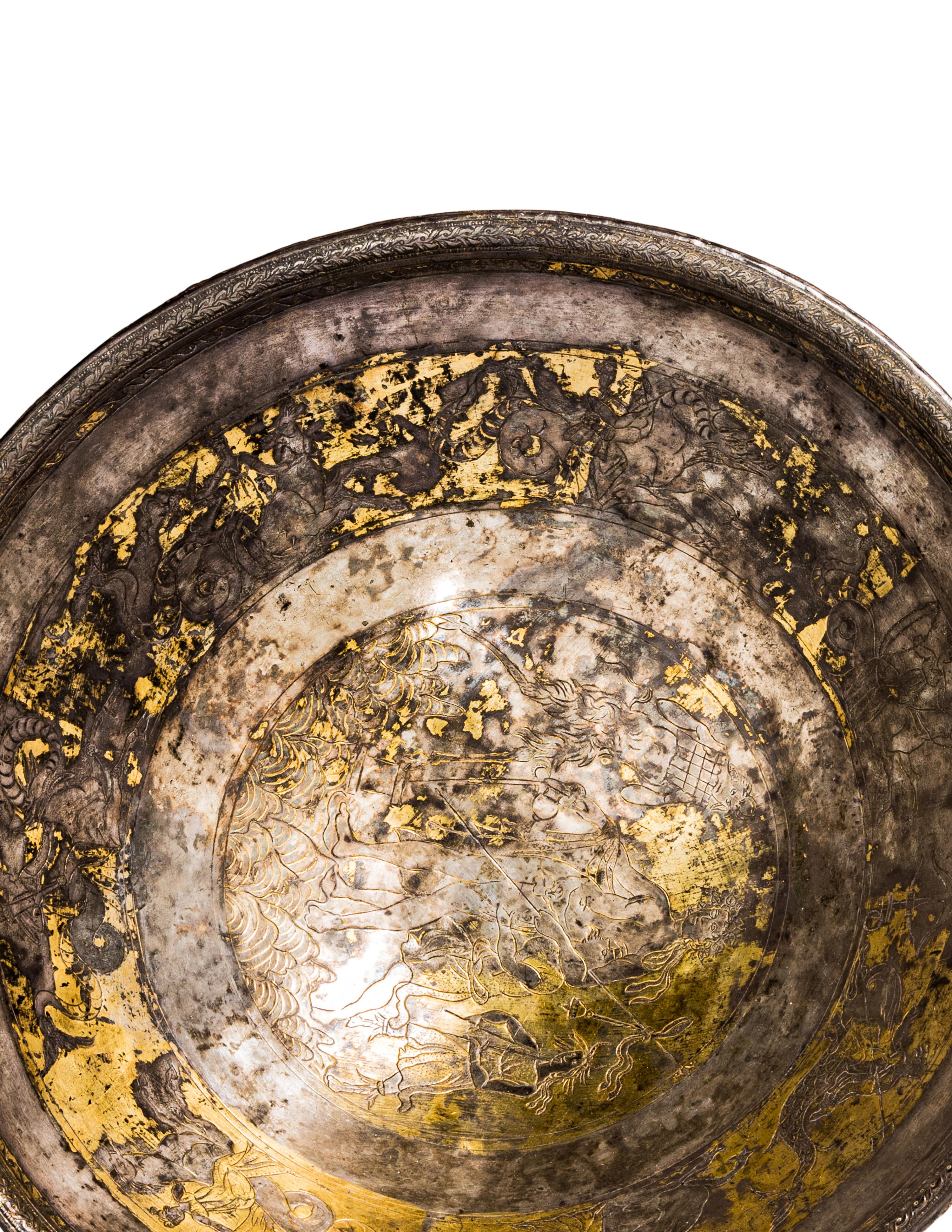
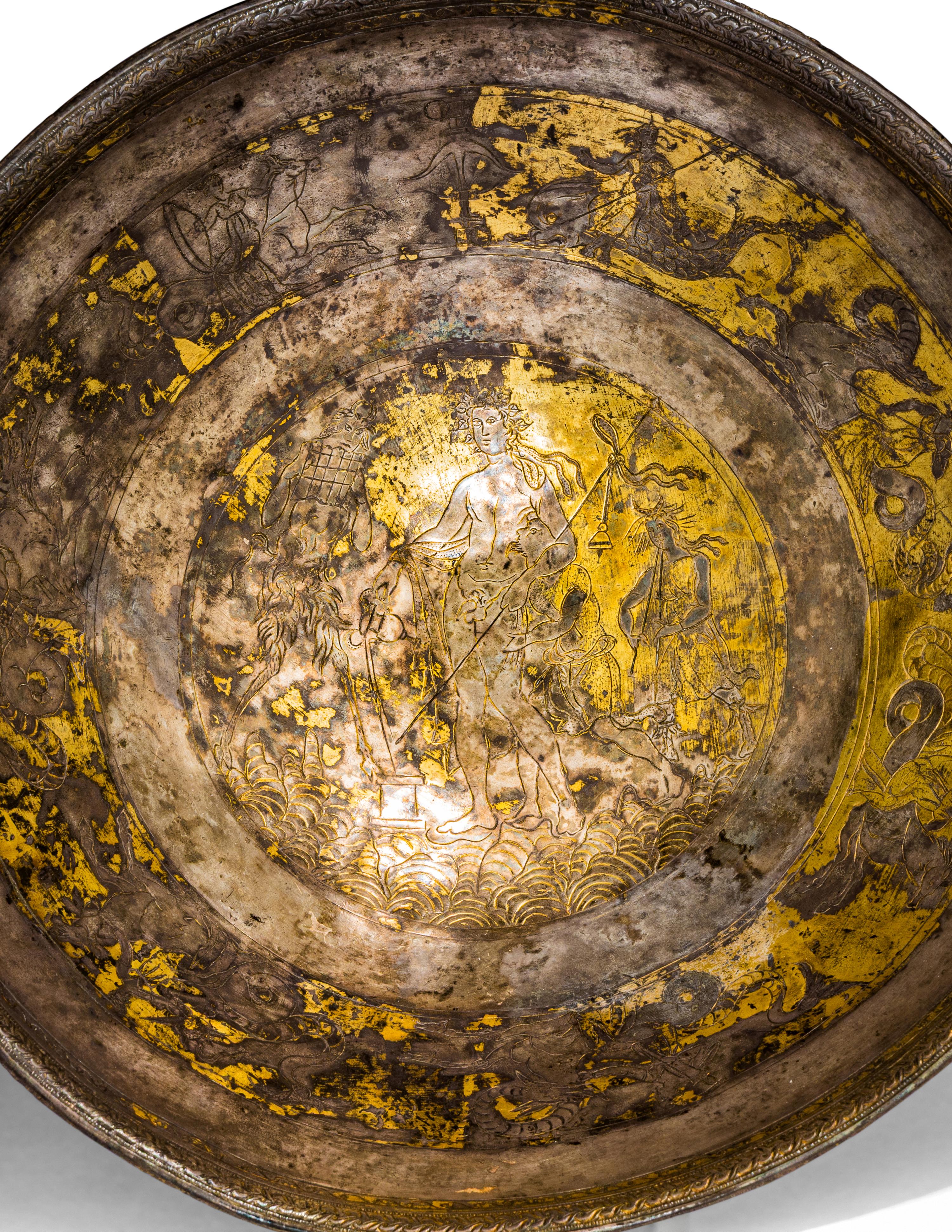
The interior of this large wine cup is decorated in two registers, making for a somewhat idiosyncratic and intriguing mythological combination. The center is eminently appropriate for a drinking vessel, showing nearly nude (apart from his festive wreath) Dionysos after an evening of carousing, somewhat worse for wear and being propped up by a stalwart attendant while tilting his kantharos to pour the dregs onto a small altar in an impromptu libation. In front of this pair, hairy Pan plays his syrinx (panpipes), standing with one hoof perched upon the edge of the altar and the other precariously balanced on the rocky landscape. Behind, another horned and booted figure blows enthusiastically upon the aulos (double-flute) in an exhortative musical accompaniment.
The outer register of decoration shows an aquatic procession of sea-nymphs led by Poseidon. This is not a typical marine thiasos, with its lively tritons and scant drapery; instead, its restrained tone reflects the seriousness of the scene - the delivery of Achilles’ armor by Thetis and her nereid attendants. Riding an assortment of fantastical sea-creatures (ketoi, hippocampoi, and pugnacious porpoises) each bears a component of the hero’s armor: shield, spear, greaves, sword, corslet, and helmet. The forging and delivery of Achilles’ armor was a poignant maternal (and divine) attempt at subverting his tragic fate, and eventually a futile one.
Dionysos always had a connection with the sea (transforming blasphemous pirates into dolphins, etc.) and had an obscure link with the nereid Thetis, as it was she who nurtured and protected him for a time, sheltered by seaweed in the Erethraean Sea, during his fraught childhood. It is possible the ancient audience would have immediately grasped a link between the two mythological vignettes, although the combination remains rather inscrutable to the modern eye. When used at banquets, the relatively opaque red wine – perhaps here intended to evoke the poetics of Homer’s oinops pontos (‘wine-dark sea’) – first exposing the thickened rim and its ornate band of guilloche and wave meander, before slowly revealing each register as the night went on, perhaps inviting discussion of Homeric epic before devolving into sheer enjoyment of the tipsy god of wine in action at the bottom of the deep conical cup.
Decorating the interior of drinking vessels with a profusion of imagery (running the gamut from mythological to downright profane) was an invention most associated with the extraordinary creative output of Athenian potters and painters during the Archaic and Classical periods. The interplay between these terracotta creations (black- and red-figured) and vessels in precious materials was complex, and the inspiration surely ran both ways: the use of incision for the figures here, as well as gilding for the background, might well have drawn inspiration from the earlier terracotta tradition. By the Hellenistic period, when this cup was produced and the riches of Persia had flooded into the Mediterranean along with Alexander’s battle-weary troops, the luxury arts were ascendant and arguably creatively overtook more humdrum pottery production. This cup, with its mythologically complex and intricately incised details, falls into the type of luxurious tableware that came to embody the decadence and tryphe (the almost god-like luxury) that so typified the Hellenistic East.
The interaction between terracotta black- and red- vessels and those silver and gold is discussed extensively and in M.J. Vickers and D.W. Gill, Artful Crafts: Ancient Greek Silverware and Pottery (1994) with short analysis of the situation in the Hellenistic period. On touretics and tableware after Alexander’s conquests, see M. Pfrommer, Metalwork from the Hellenized East: Catalogue of the Collections. J. Paul Getty Museum. (1993).
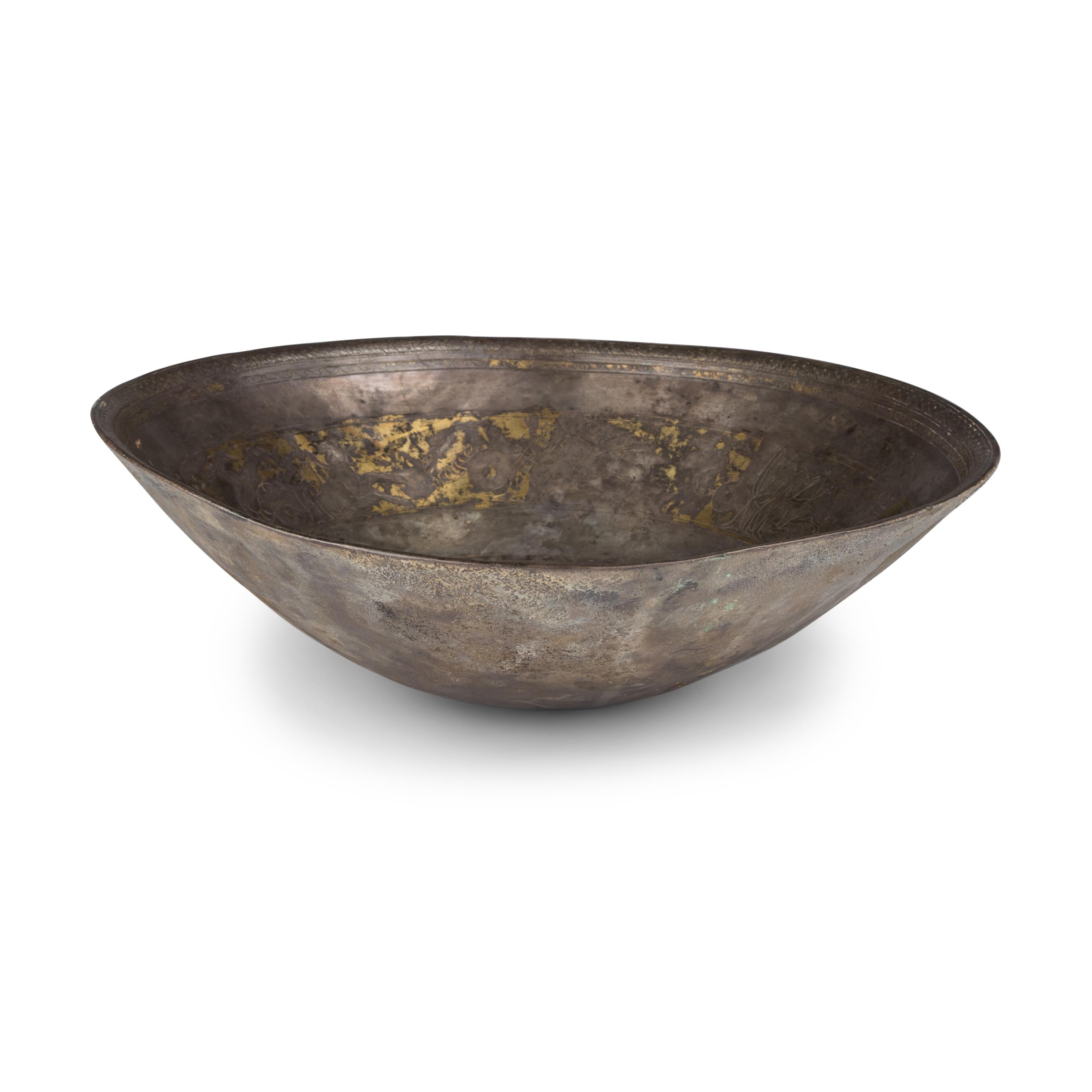
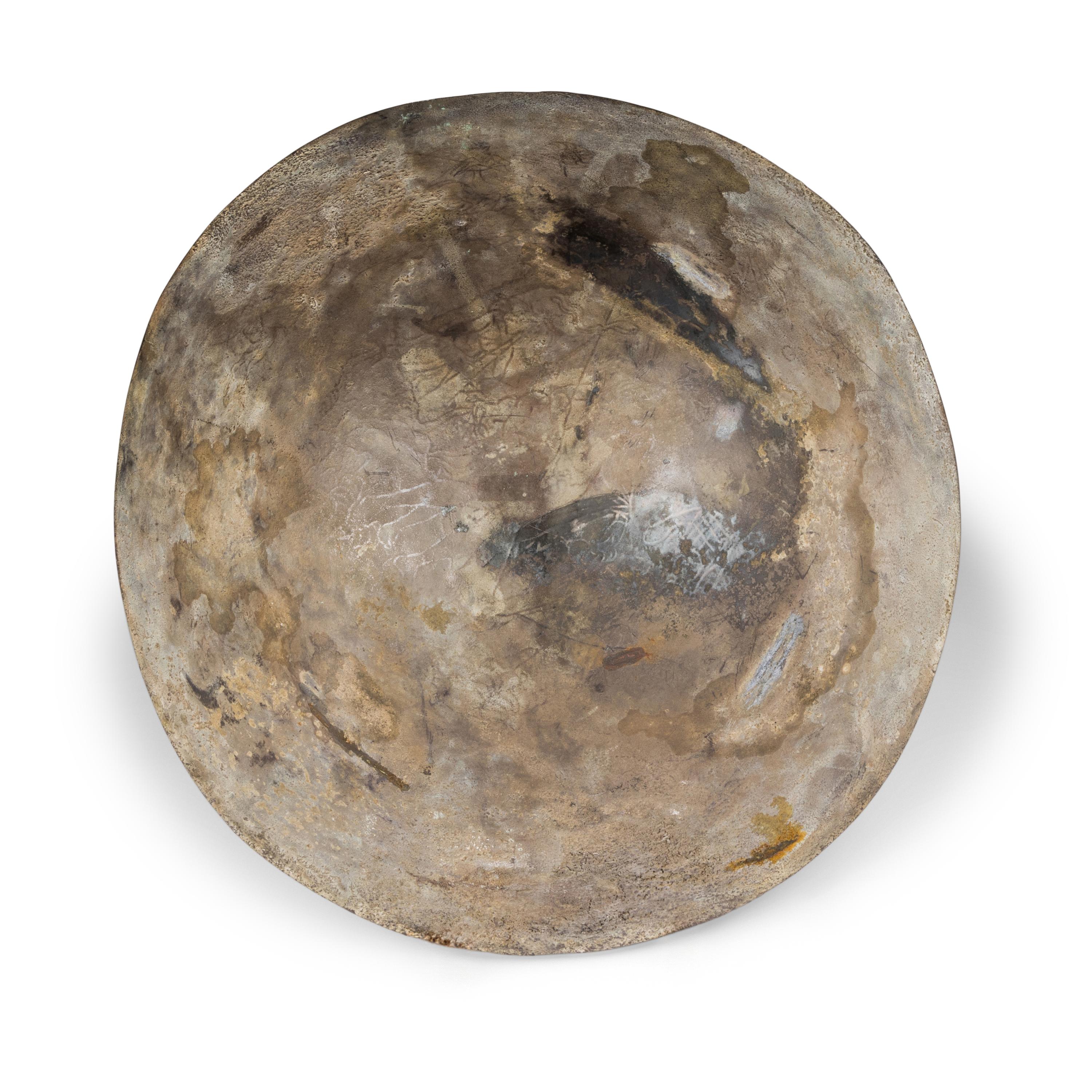
Inspected under UV light and 10x loupe. Scratches, dents, and wear throughout commensurate with age. Moderate encrustation, tarnish and discoloration throughout. Loss to some gilding. Generally in very fine condition with nice preservation of incised registers. See additional images.
The physical condition of lots in our auctions can vary due to age, normal wear and tear, previous damage, and restoration/repair. All lots are sold "AS IS," in the condition they are in at the time of the auction, and we and the seller make no representation or warranty and assume no liability of any kind as to a lot's condition. Any reference to condition in a catalogue description or a condition report shall not amount to a full accounting of condition. Condition reports prepared by Freeman's staff are provided as a convenience and may be requested from the Department prior to bidding.
The absence of a posted condition report on the Freeman's website or in our catalogues should not be interpreted as commentary on an item's condition. Prospective buyers are responsible for inspecting a lot or sending their agent or conservator to inspect the lot on their behalf, and for ensuring that they have requested, received and understood any condition report provided by Freeman's.
Please email antiquities@hindmanauctions.com for any additional information or questions you may have regarding this lot.