To request further details about this lot, please email ataggart@freemansauction.com
Please email ataggart@freemansauction.com for any additional information or questions you may have
Sale 6427
| Philadelphia
| Philadelphia
To request further details about this lot, please email ataggart@freemansauction.com
Please email ataggart@freemansauction.com for any additional information or questions you may have
Estimate$4,000 – $6,000
Provenance:
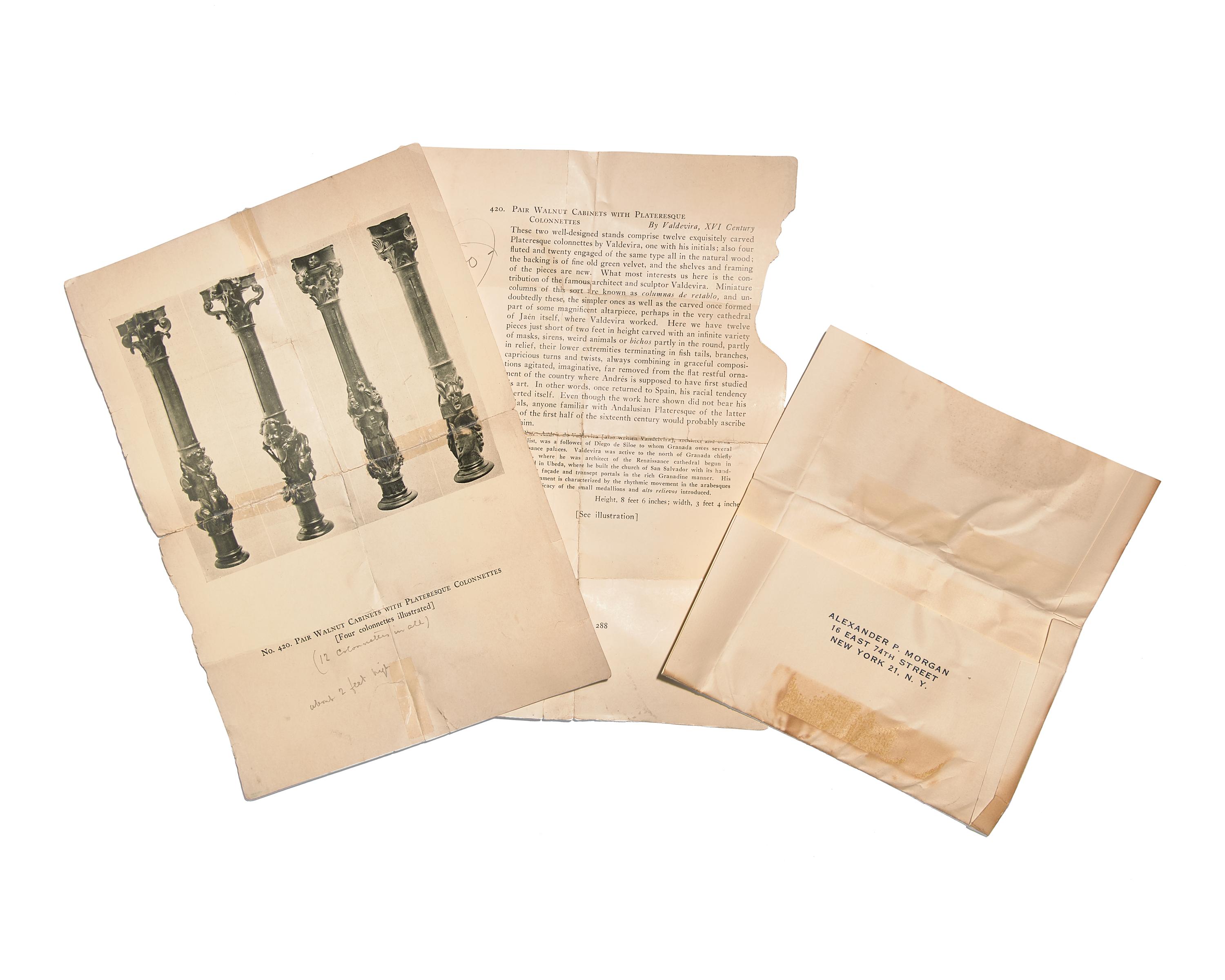
Spanish Art: Collection of the Conde de Las Almenas, Madrid, American Art Association, Inc., New York, New York, January 13-15, 1927, lot 420,
Acquired from above by Junius Spencer Morgan II (1867-1932),
Thence by descent to Alexander Perry Morgan, Sr. (1900-1968) and Janet (Croll) Morgan (1901-1985),
Thence by descent to Margaret Croll Morgan (1926-2025).
Junius Spencer Morgan II was the son of George Hale Morgan (1840-1932) and Sarah Spencer Morgan (1839-1896), and nephew of American financier and banking magnate John Pierpont Morgan, Sr. (1837-1913). Following in his uncle's footsteps, Junius was a banker by trade, working for Cuyler, Morgan & Co. However, his passion for art and book collecting superseded his business, and by 1906 he became a full time collector. A graduate of Princeton University and a Princeton resident, he bequeathed a large portion of his art to the Princeton Art Museum. Other works, including books and Old Master prints, were given to the New York Public Library and the Metropolitan Museum of Art. Perhaps his greatest achievement was serving as an art advisor and librarian for J.P. Morgan, guiding his purchases and even influencing the development and construction of the Morgan Library.
Junius' son Alexander Perry Morgan, also a Princeton graduate, left Princeton at the age of 24 to study architecture at the École des Beaux Arts in Paris. Aside from designing private residences, he is known for his other commercial and institutional works including the Johnson & Johnson research laboratory in New Brunswick, New Jersey, the top of the Empire State Building, and alterations to the Morgan Library.
Note:
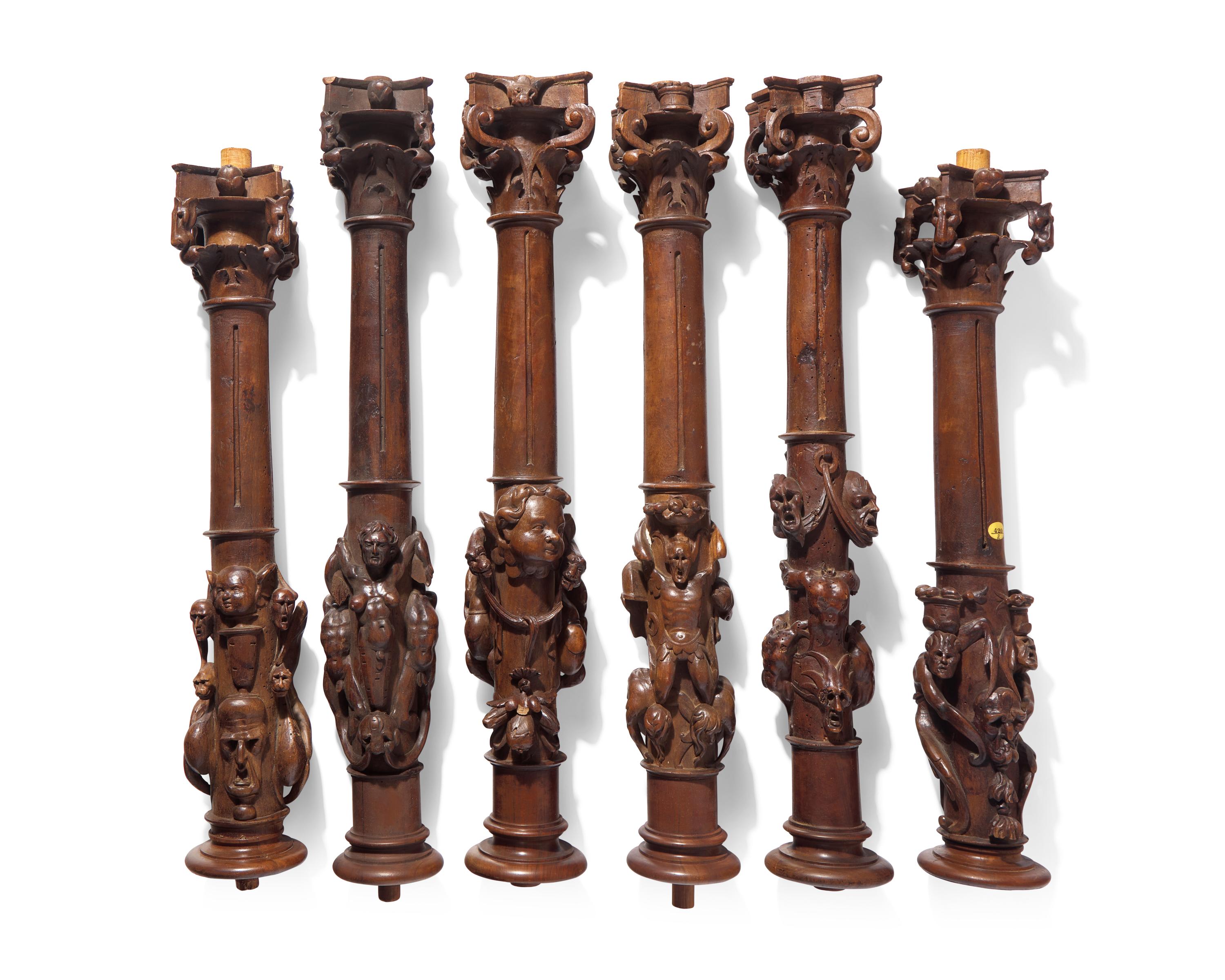
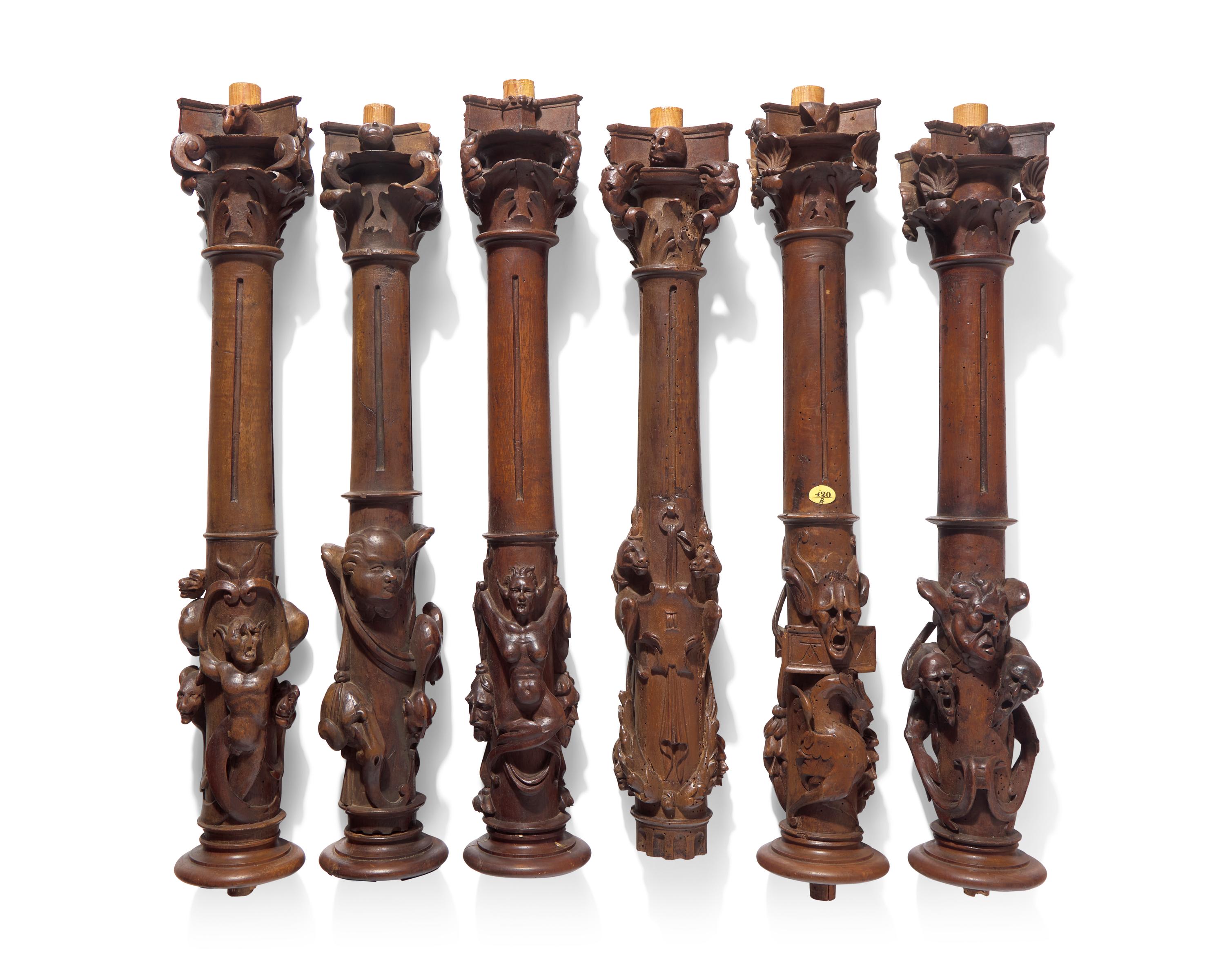
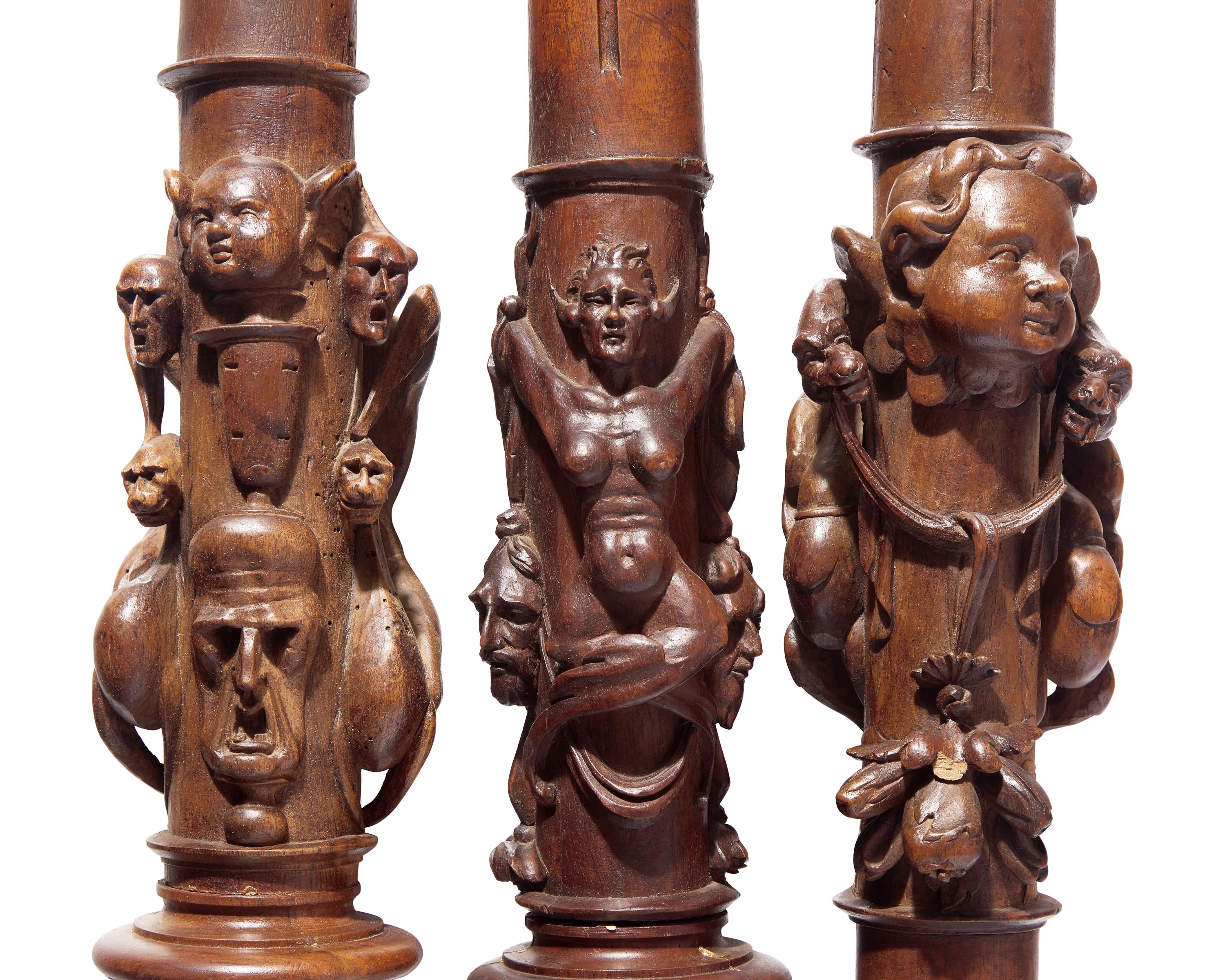
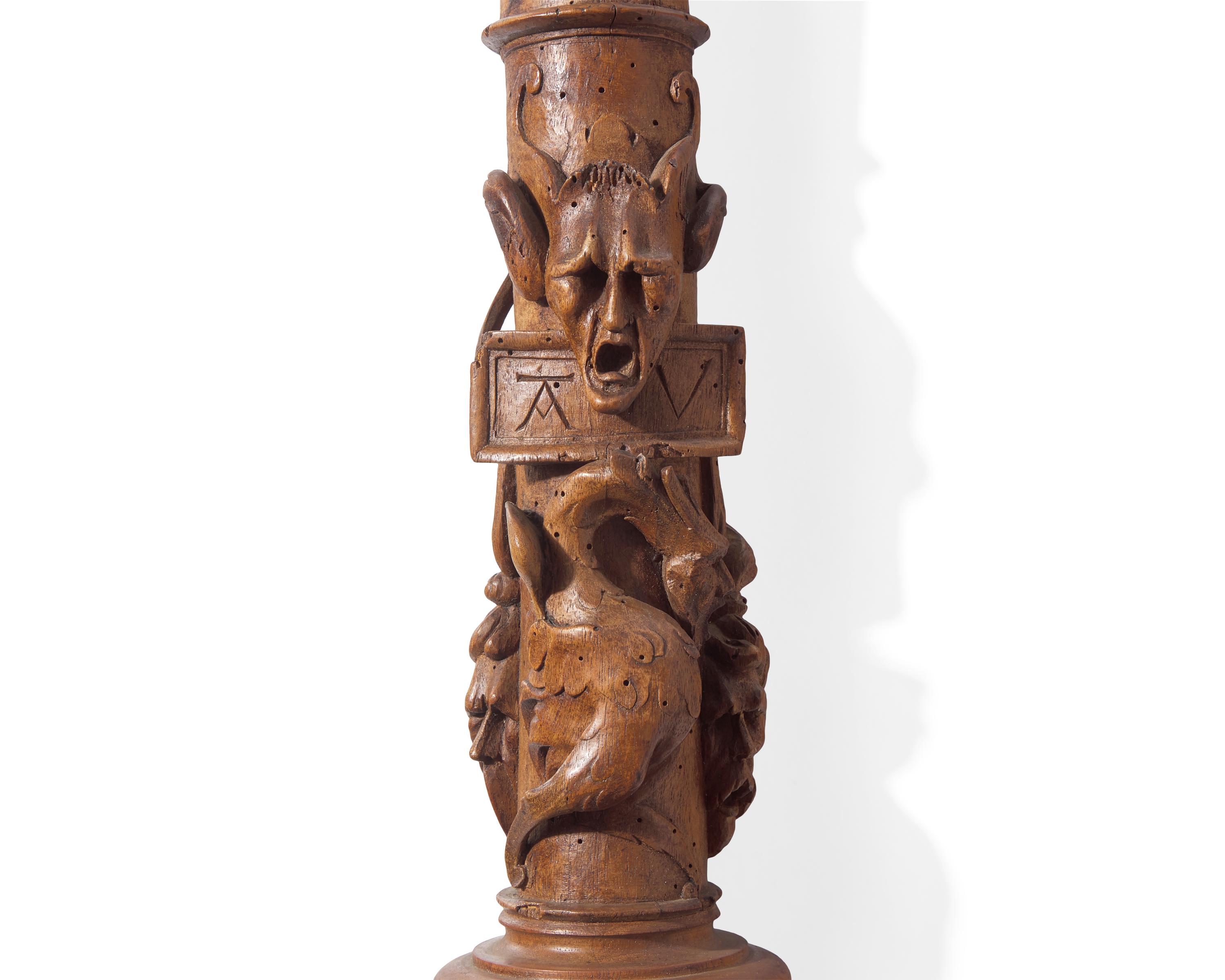
Andrés de Vandelvira was a Spanish Renaissance architect best known for his work in the province of Jaén. The Jaén Cathedral, considered to be his masterpiece, was begun during Vandelvira's lifetime and completed in the 18th century. These colonnettes, also referred to as columnas de retablo, likely served as elements for an altarpiece within the cathedral. They are stylistically consistent with the Plateresque, an architectural and artistic style coinciding with the Renaissance period in Europe. Popularized in the 15th and 16th centuries in Spain, this regional expression was an interpretation of Italian styles, and aptly named after the craftsmanship of the "platero" or silversmith because it reflected ornate and varied surface decoration, often with Moorish influence.
José María de Palacio y Abárzuza (1866-1940) was the first Marqués del Llano de San Javier and the third Conde de las Almenas. He was an avid art collector and filled his palatial home, known as the Canto del Pico in Madrid, with Spanish Renaissance and Baroque furniture, objects, and works of art. A large part of his collection, including this set of colonnettes, was sold in New York at the American Art Association in 1927 with the assistance of art historians Arthur Byne and Mildred Stapley Byne, who wrote several volumes on Spanish art and architecture, including Spanish Architecture of the 16th-Century (New York: G. P. Putnam and Sons, 1917) and Spanish Interiors and Furniture: Photographs and Drawings, Vol. 1 (New York: Architectural Book Publishing Co., 1921-1922) and Vol. 2 (New York: William Helburn, Inc., 1922). As described in an article in The New York Times, dated January 14, 1927, "The collection is one of the most important of medieval and early Renaissance works of art from Spain ever brought to this country."
This lot is accompanied by two clipped pages from the original American Art Association auction catalogue, with a lot description and photograph for lot 420, showing four of the twelve colonnettes, and an envelope bearing the embossed return address for Alexander P. Morgan/ 16 East 74th Street, New York, New York.
great presentation overall, each displaying typical signs of wear commensurate with age and use, including some chips, losses to raised details, some occasional minor shrinkage cracks, and some old insect damage (not active); some with repaired breaks to elements; as the 1927 auction catalogue page suggests, these columns were once incorporated into a cabinet, and each retains a later turned, pieced, and doweled ring that attach to the bottom of the colonnettes; a few of these wood rings are presently detached
The physical condition of lots in our auctions can vary due to age, normal wear and tear, previous damage, and restoration/repair. All lots are sold "AS IS," in the condition they are in at the time of the auction, and we and the seller make no representation or warranty and assume no liability of any kind as to a lot's condition. Any reference to condition in a catalogue description or a condition report shall not amount to a full accounting of condition. Condition reports prepared by Freeman's staff are provided as a convenience and may be requested from the Department prior to bidding.
The absence of a posted condition report on the Freeman's website or in our catalogues should not be interpreted as commentary on an item's condition. Prospective buyers are responsible for inspecting a lot or sending their agent or conservator to inspect the lot on their behalf, and for ensuring that they have requested, received and understood any condition report provided by Freeman's.
Please email ataggart@freemansauction.com for any additional information or questions you may have regarding this lot.