To request further details about this lot, please email westernart@hindmanauctions.com
Adam Veil
VP, Head of Department, American Art and Pennsylvania Impressionists
Sale 6381
| Denver
| Denver
To request further details about this lot, please email westernart@hindmanauctions.com
Adam Veil
VP, Head of Department, American Art and Pennsylvania Impressionists
Estimate$40,000 – $60,000
Exhibited:
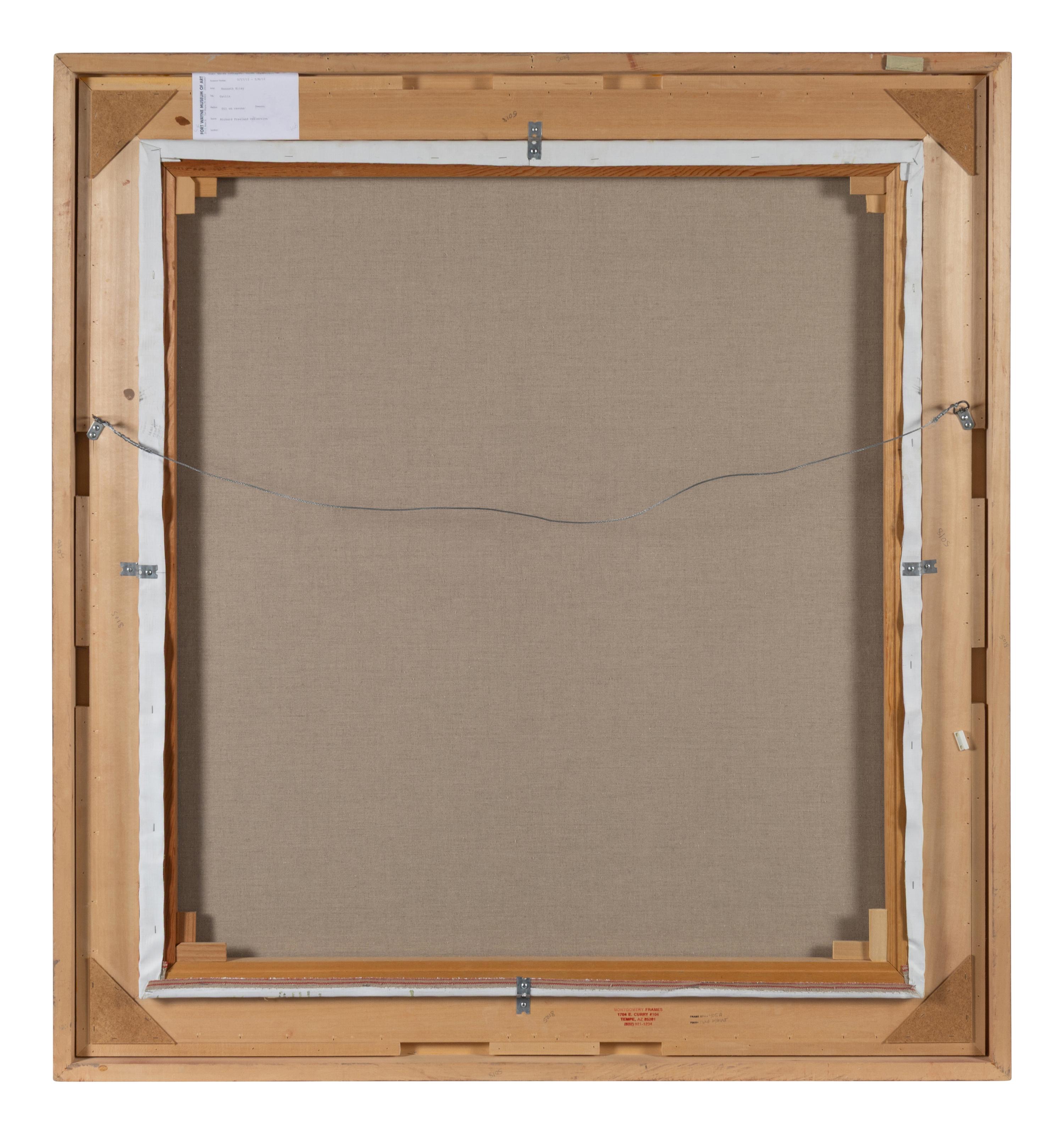
Fort Wayne, Fort Wayne Museum of Art, "Fort Wayne Collects: Three Viewpoints," March 17 - May 6, 2012.
Lot Note:
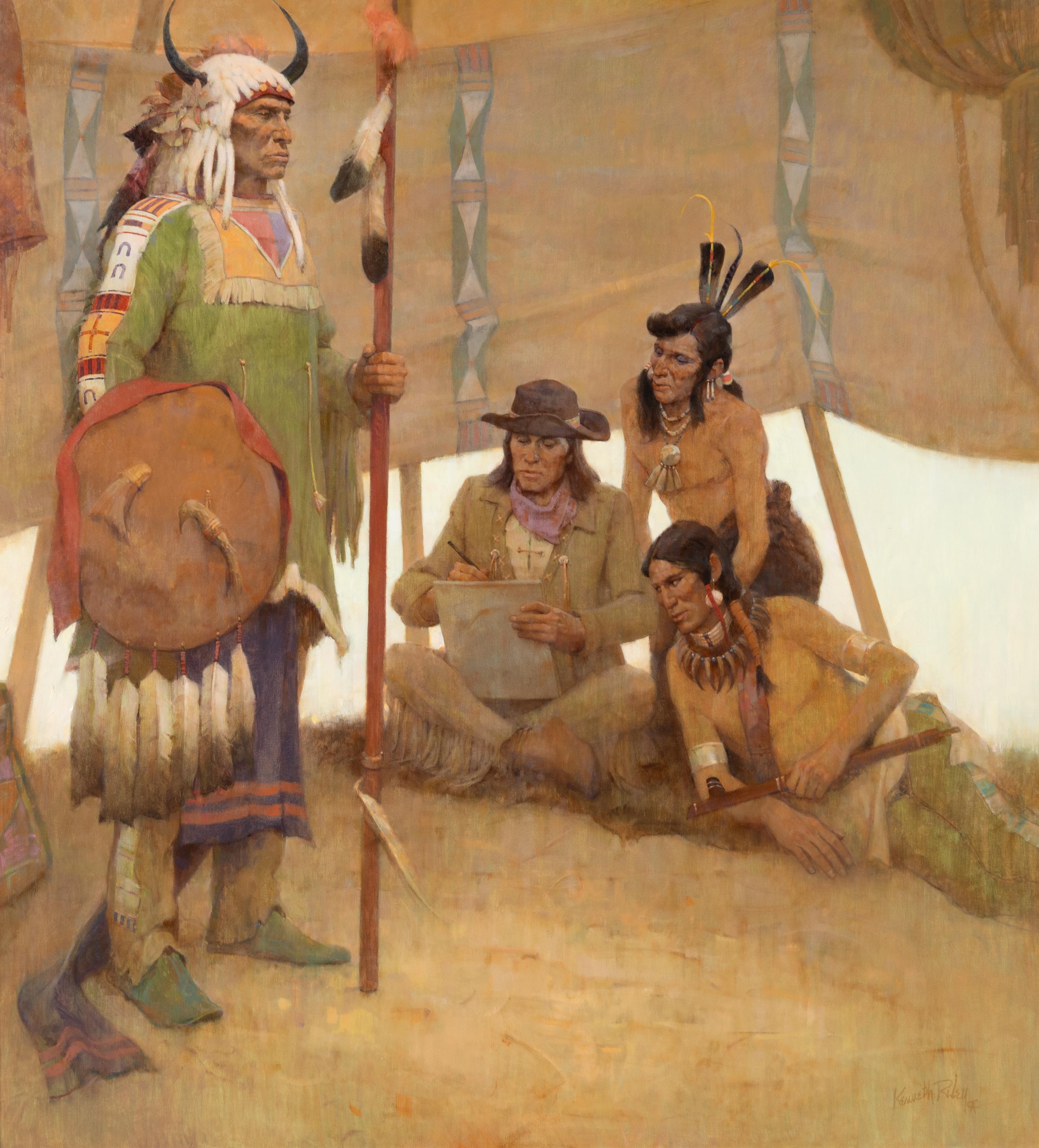
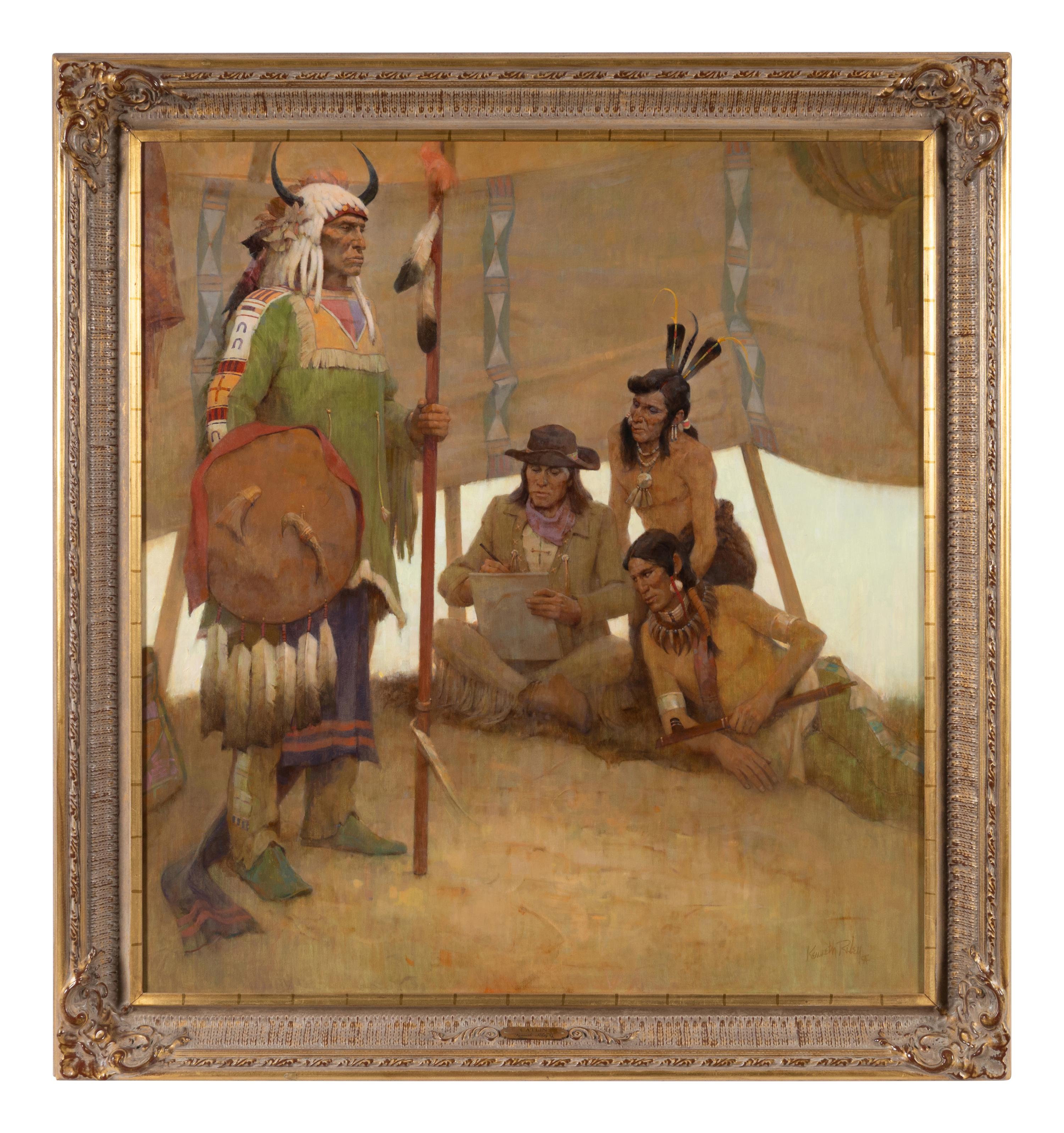
Kenneth Riley’s Catlin highlights the importance of George Catlin as one of the most revered and prolific painters of Indians. Though not the first artist to portray Native Americans, Catlin was among the first to depict them in their own territories, in relative accordance with their customs and, importantly, with sincere compassion. Catlin was born in Pennsylvania in 1796 and traveled to the American frontier throughout the 1830s, specifically in the Plains along the Missouri River. From an aesthetic and anthropological standpoint, he was a true trailblazer. The painting functions as a homage to Catlin and his determination to document Native cultures before they were irrevocably altered or eliminated. As he once famously professed, “nothing short of the loss of my life shall prevent me from becoming their historian.”
But Catlin also hints at the fraught and difficult task of documenting Indians, because it was, by necessity, a one-sided and therefore biased endeavor. There is great tension between the avowed goal to record people, tradition, and history with accuracy, and the inevitable pitfall of staging such subjects, as seen in Riley’s painting. The lack of spontaneity that comes with staging necessarily evacuates some element of truth from a portrait. Here, Riley illustrates the ambiguity inherent in the historical record. The erect and stern figure of the Indian, in traditional warfare garb, undeniably conveys strength, power and respect. It also betrays the sort of representational stiffness that staged portraiture involves when it seeks to fix customs and ways of life that, far from immutable, were vibrant, dynamic and resilient, even prior to European contact.
It is quite noteworthy that Catlin, the painter, is in fact not portrayed in this scene, instead an unseen but overarching presence. The painting is a cropped view of his makeshift studio, showing only the standing model and a few other Indians. The focus of the painting, then, is Catlin’s overall contribution to the historical, anthropological and cultural record. There is no doubt that Riley’s intention is to celebrate Catlin’s legacy, especially his laudable championing of Native cultures, a particularly rare and brave approach at the time that he was visiting the frontier. Nonetheless, in the same pictorial gesture, Riley also cleverly interrogates the charged process by which Western artists have, over time, sought to both champion and portray Native Americans, and the potential perils to accuracy associated with such endeavors.
Framed: 58 x 54 inches.
The physical condition of lots in our auctions can vary due to age, normal wear and tear, previous damage, and restoration/repair. All lots are sold "AS IS," in the condition they are in at the time of the auction, and we and the seller make no representation or warranty and assume no liability of any kind as to a lot's condition. Any reference to condition in a catalogue description or a condition report shall not amount to a full accounting of condition. Condition reports prepared by Freeman's staff are provided as a convenience and may be requested from the Department prior to bidding.
The absence of a posted condition report on the Freeman's website or in our catalogues should not be interpreted as commentary on an item's condition. Prospective buyers are responsible for inspecting a lot or sending their agent or conservator to inspect the lot on their behalf, and for ensuring that they have requested, received and understood any condition report provided by Freeman's.
Please email westernart@hindmanauctions.com for any additional information or questions you may have regarding this lot.