To request further details about this lot, please email mflack@freemansauction.com
Please email mflack@freemansauction.com for any additional information or questions you may have
Sale 6343
| Philadelphia
| Philadelphia
To request further details about this lot, please email mflack@freemansauction.com
Please email mflack@freemansauction.com for any additional information or questions you may have
Estimate$20,000 – $30,000
Provenance:
Sold: Christie's, London, July 5, 2011, Lot 92
Lot Essay:
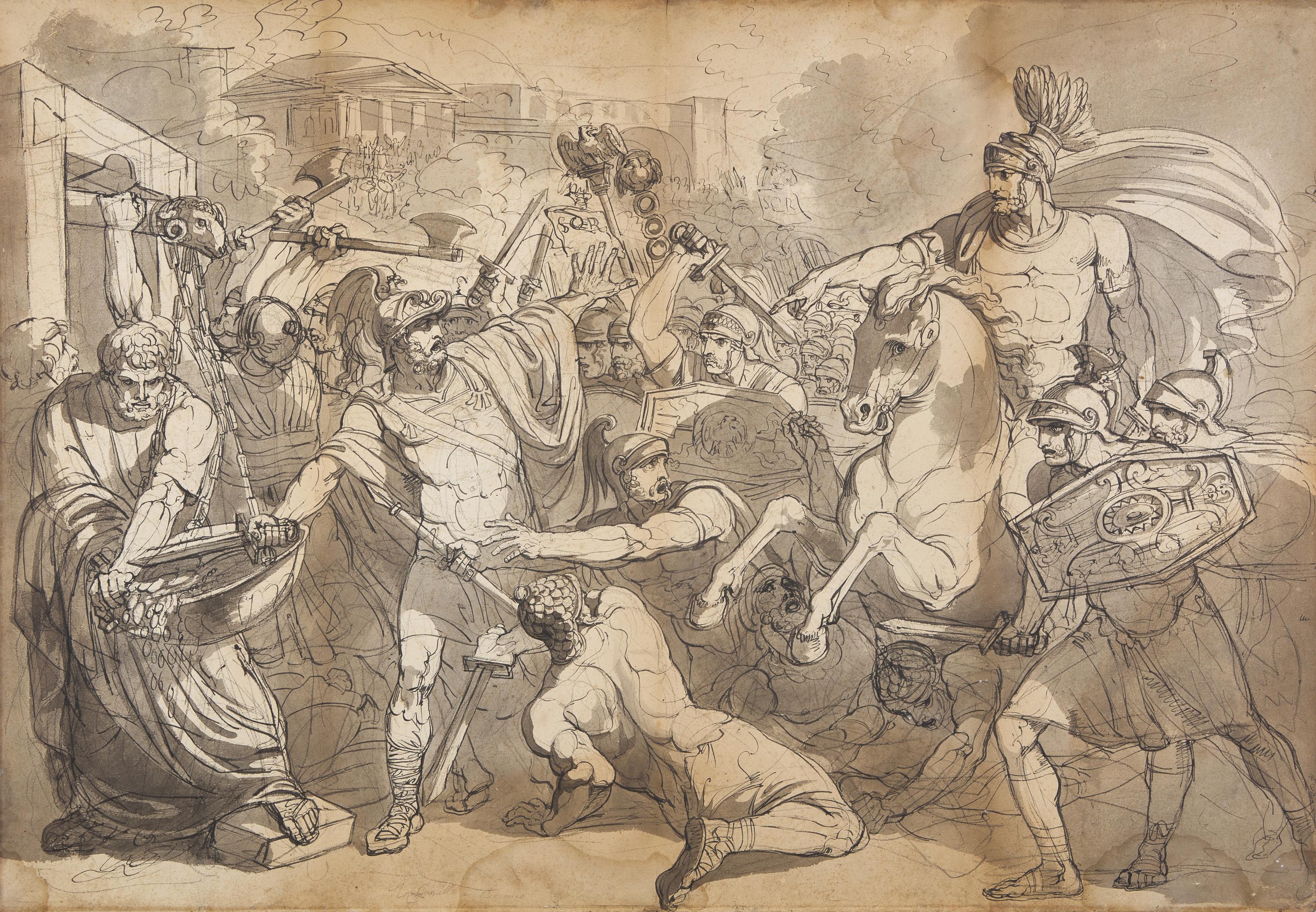
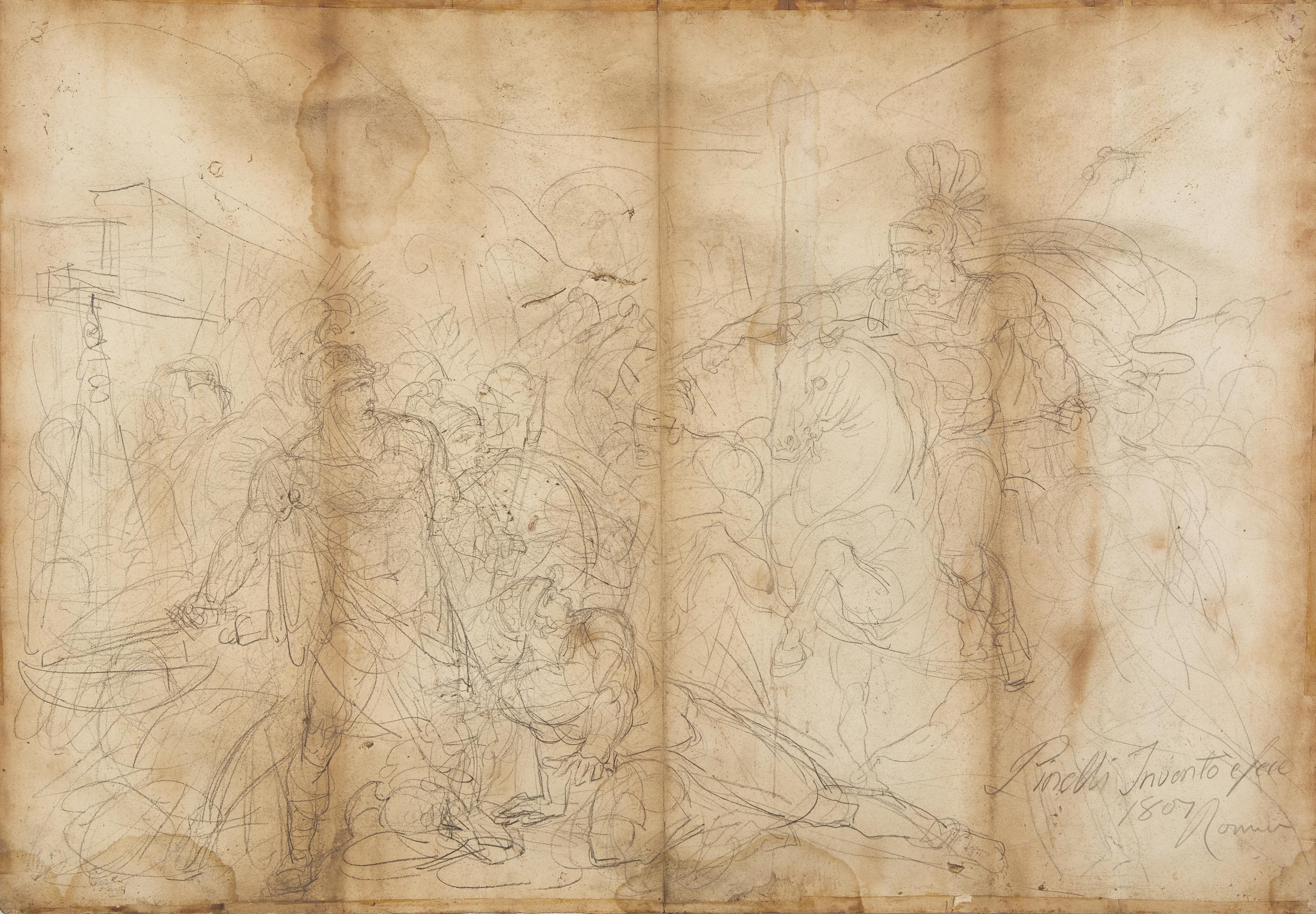
In 1807, Bartolomeo Pinelli was 26 years old and, after training in the studio of Felice Giani, had set up a studio of his own. At this date, the artist was involved in a number of different projects. He worked closely with Franz Kaisermann, painting staffage in some of his landscapes, and he was beginning to work on his famous prints of Roman costume, the first collection of which (Costumi romani) was published in 1809, with another (La nuova raccolta di cinquanta motivi pittoreschi e costumi di Roma) published the following year. The present drawing and the following lot clearly demonstrate that he was also absorbed with scenes from Classical literature and history, which would later come to fruition in illustrations for the Aeneid (1811) and on the subject of Greek history (1812).
The present work depicts the triumph of Marcus Furius Camillus over the Gauls in 387 BC. A Roman patrician, statesman, and Dictator of the Republic five times over, Furius Camillus was living in quiet retirement in Ardea when the Gauls marched south as far as Rome that year. Having conquered most of the city, except a stronghold on the Capitol, they let down their guard as they celebrated their spoils. Furius Camillus and a company of soldiers caught them unawares and won a dramatic victory, recovering Rome and destroying the Gauls' army. Later styled the Second Founder of the Republic, Furius Camillus was one of the greatest heroes of Classical Rome.
The scale and impact of this drawing and its companion, with their forceful execution, may suggest that Pinelli originally envisaged them as designs for paintings or frescoes in their own right. No finished picture is known, however; and when Pinelli did return to these subjects, between 1816 and 1821, it was to draw inspiration for another engraving project: his famous series of illustrations of Roman history. The engraving of Furius Camillus in that series, though slightly simplified, is clearly based upon the present work (B. Pinelli, Istoria romana, inventata ed incisa da Barolomeo Pinelli romano, Rome, 1821).