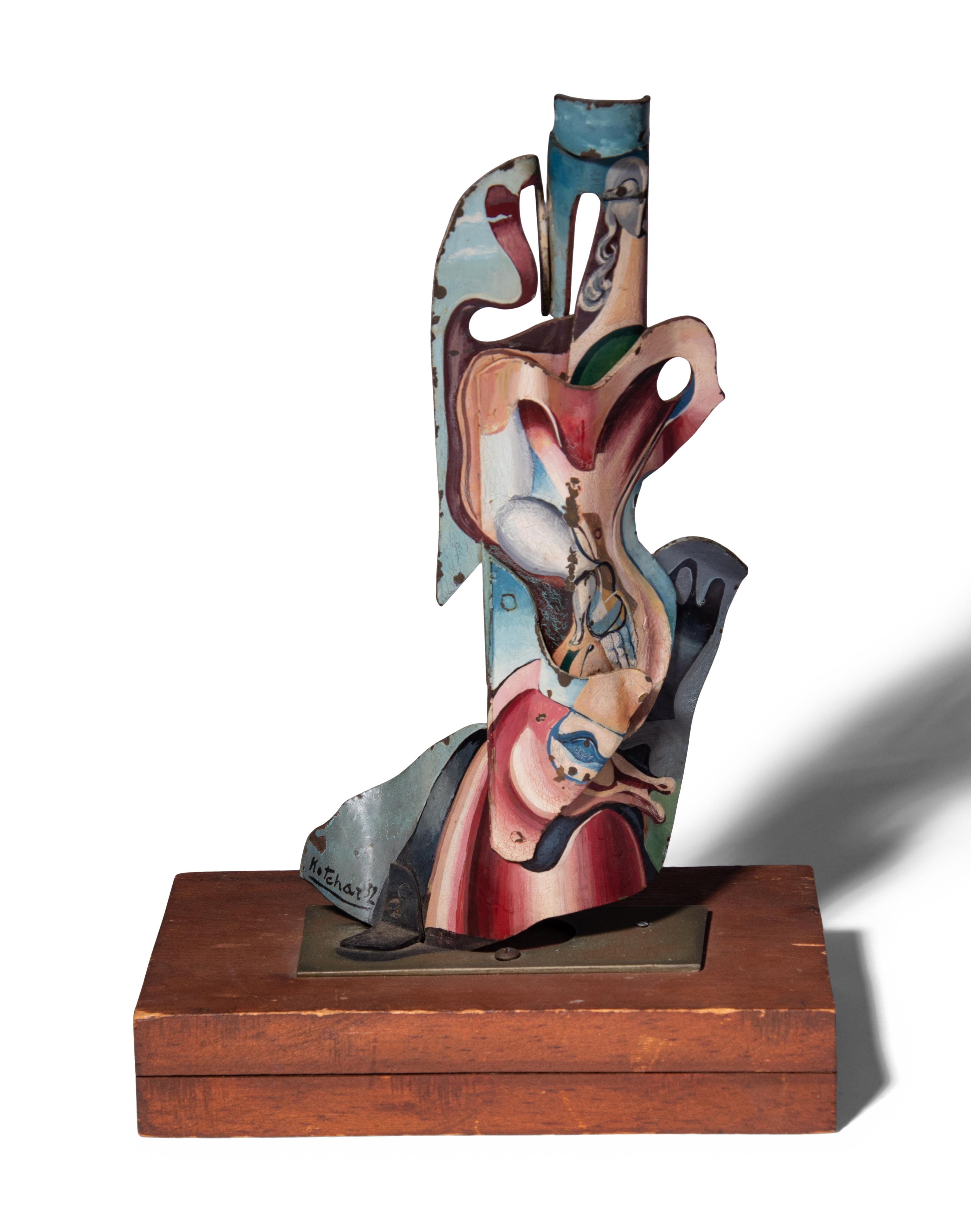
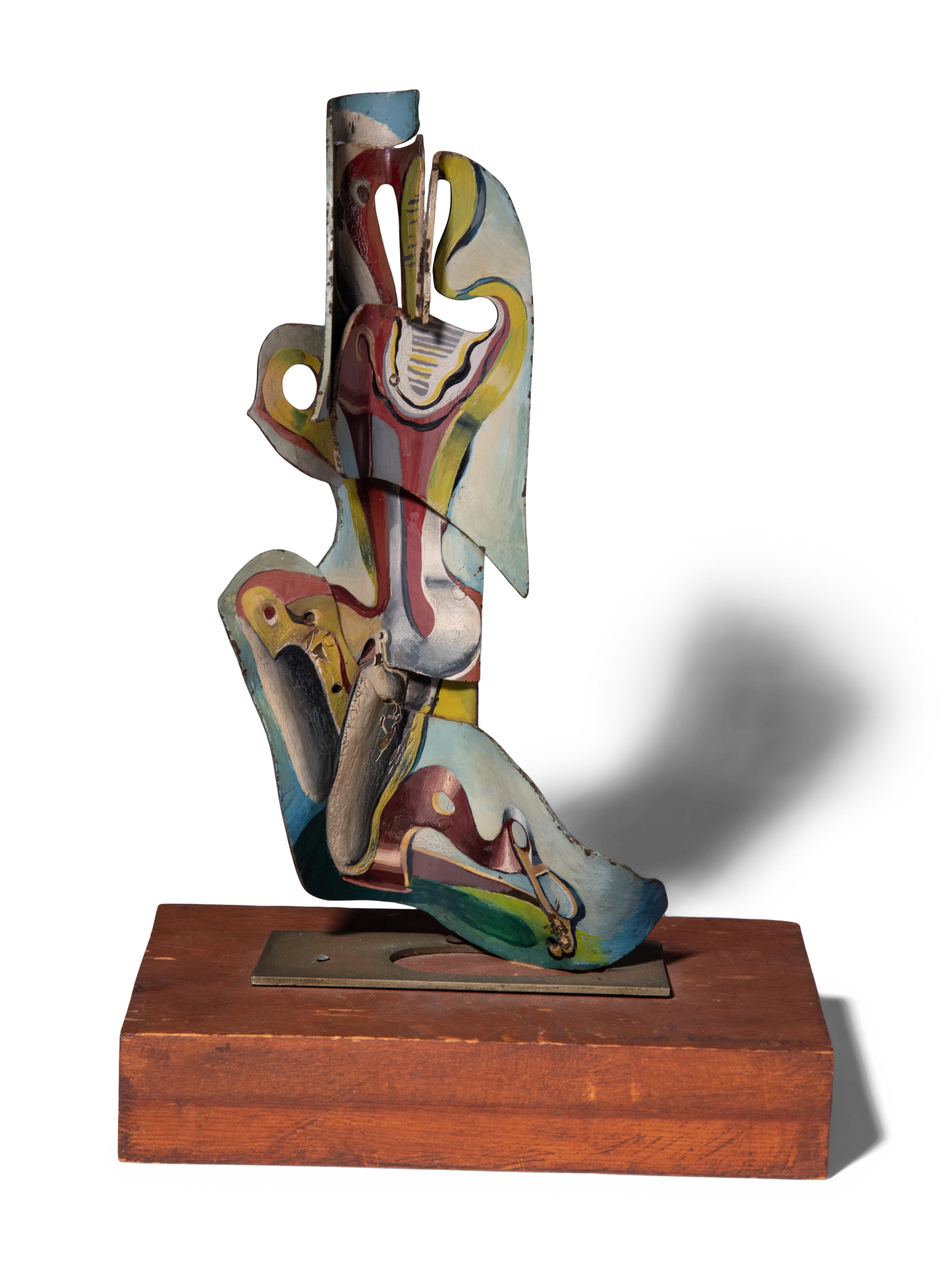
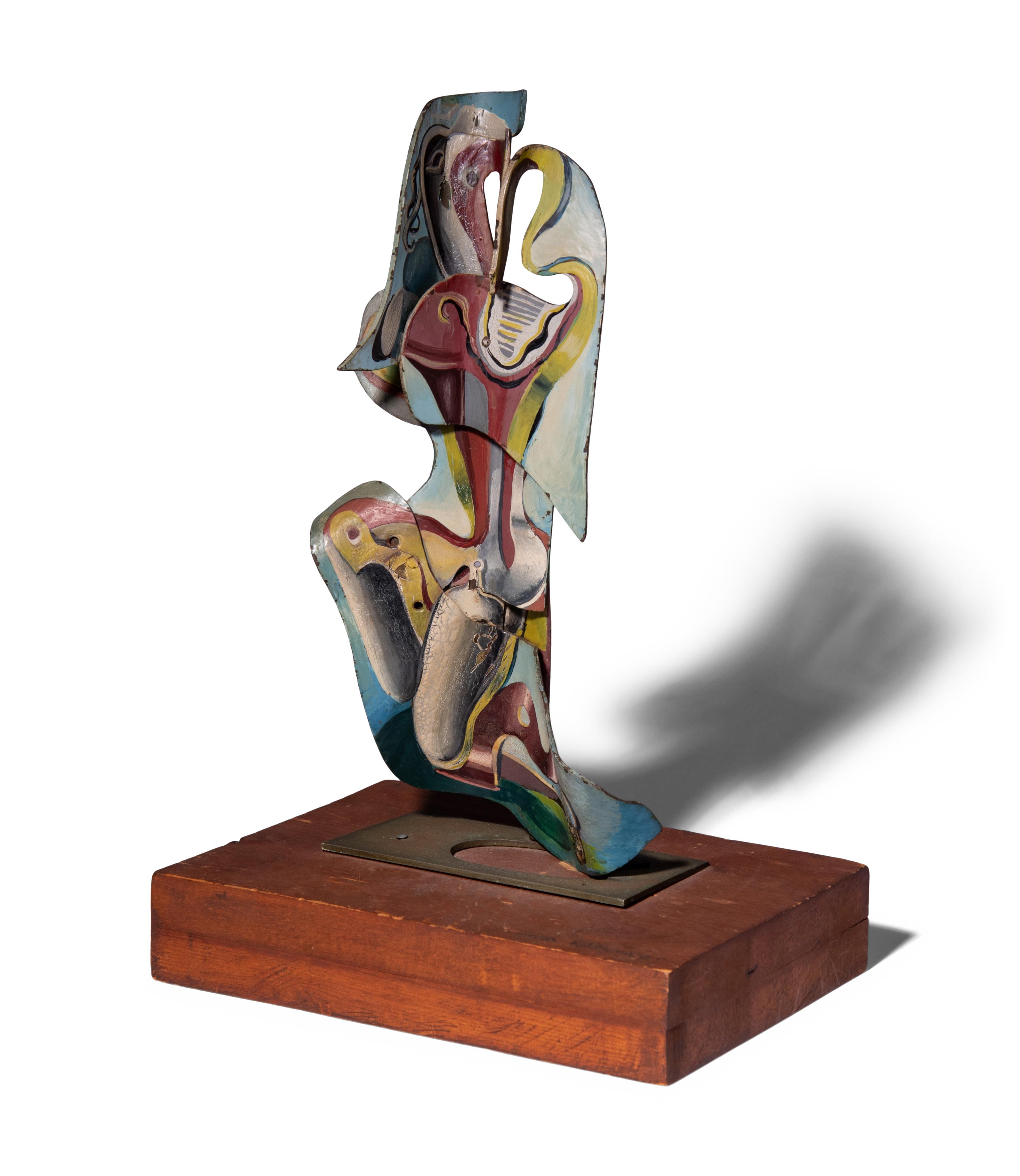
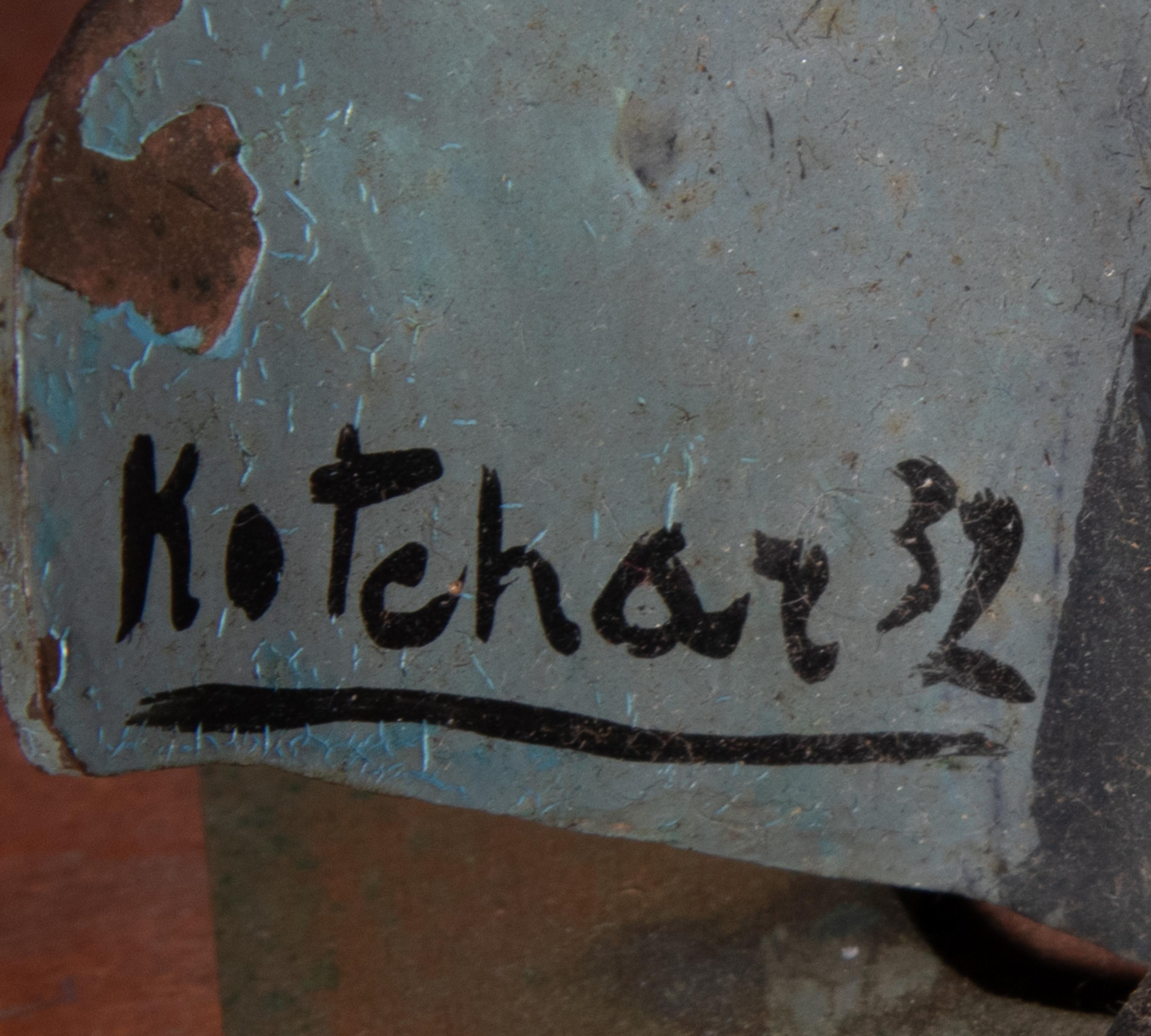
Ervand Kotchar
(Armenian, 1899–1979)
Figure, 1932
polychrome on iron
signed Kotchar and dated
10 1/2 x 5 1/2 x 3 inches.
This lot is located in Chicago.
Lydia Winston Malbin (1897-1989)
The present work comes from the highly esteemed collection of Lydia Winston Malbin (1897-1989), a visionary collector best known for her engagement with the Italian Futurists. Her holdings, however, extended far beyond a single movement, encompassing artists whose practices reshaped modernism across the Atlantic. Born in 1897 to the famed industrial architect Albert Kahn and Ernestine Kahn, Winston Malbin inherited a natural sensibility for the arts. Based for much of her life near Detroit, Michigan, she built one of the most significant private collections of European modern art in the mid-twentieth century and was a driving force behind introducing these movements to the upper Midwest.
What distinguished Lydia Winston Malbin was not only her discerning eye, but her commitment to the artists themselves. She cultivated lasting relationships with many of them and worked tirelessly to bring their work to broader public attention. At a time when abstraction remained contentious, she co-organized—with Hilla Rebay, director of the Museum of Non-Objective Painting (now the Guggenheim Museum)—Detroit’s first exhibition of abstract art in the early 1940s. Through decades of travel, study, and meticulous correspondence, she and her husband Harry Winston traced the currents of modernism across Europe, forging ties with artists and their surviving family members. Her friendships extended beyond the studio as well, encompassing art world luminaries like Alfred Barr, Rose Fried, Peggy Guggenheim, and Alfred Stieglitz—establishing her as a key figure in the global modernist network.
After the death of her husband in 1965, Lydia married Dr. Barnett Malbin in 1966. The Malbins decided to move to an apartment in Manhattan. LWM loved New York City, the center of art activity, and had always wanted to live there. (The Lydia Winston Malbin Papers, Yale University, Beinecke Rare Book and Manuscript Library)
Lydia Winston Malbin died in New York City in 1989 at the age of 91, leaving an indelible mark on the art world and setting a lasting standard for what it means to collect with purpose and conviction.
Lot Note:
Ervand Kotchar’s Figure (1932) employs a fascinating mix of painting and sculpture that showcases the artist’s Modernist sensibilities, including through his commitment to new ways of seeing and his emphasis on movement.
Born in Georgia, Kotchar began his artistic career early, attending the Academy of Fine Arts in Moscow and exhibiting by age 20. He would travel around Constantinople, Italy, and set up to work in Paris. By 1928 he was beginning to work on his “paintings in space”, an art movement that sought to reenvision how paintings were perceived, synthesizing painting, sculpture, graphic arts, and even the use of time as an additional artistic element in order to create a holistic experience.
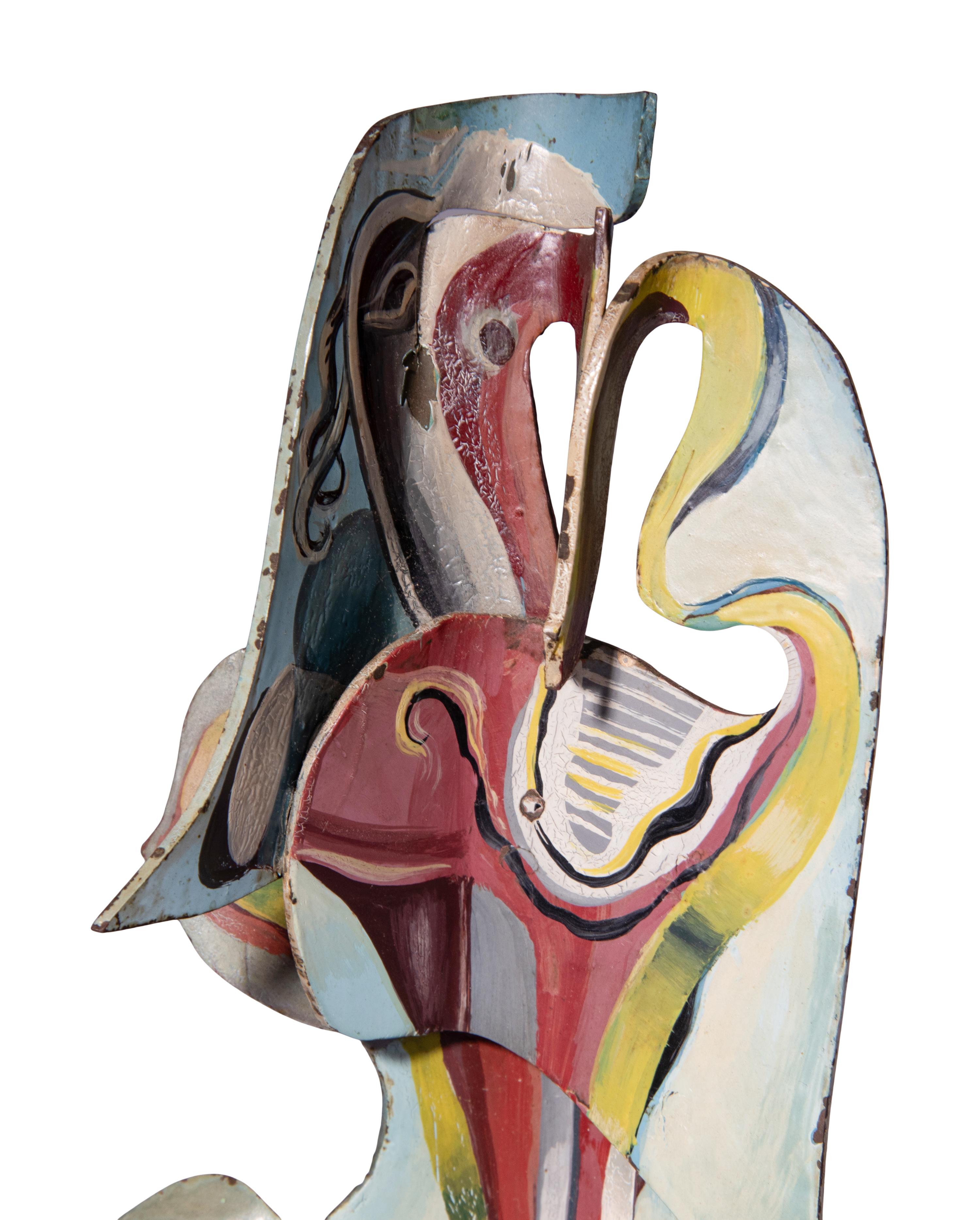
Figure reflects this strategic application of both sculpture and painting to achieve its striking effects of undulating movement. Through its ebb and flux, Kotchar was also notably influenced by music, even later taking part in an exhibition "Les Artistes Musicalistes" ("Music-oriented Artists") in Budapest in 1935. The fragmented faces and forms of Figure, drawn in part from Cubist influences, have a Janus-like quality. Janus—the two-faced Roman god of transitions, beginnings, endings, and doorways and gates—likewise emphasizes the change and movement inherent in this dynamic sculpture. These themes of movement were appropriate for Kotchar, as he too did not stay in one place for long.
In 1936, the artist left Paris for Yerevan, Armenia. Imprisoned for politically motivated charges from 1941-1943, he was freed due to intervention of his friends and continued his work in Yerevan, while also remaining a part of the international art scene.
Figure remains a testament to Kotchar’s working practice at the height of his artistic breakthrough of his “paintings in space” movement, a lively mix of kaleidoscopic forms balancing the line of painting and sculpture that challenges the viewer’s perceptions.
Provenance:
Galerie Rive Gauche, Paris
The Lydia Winston Malbin Collection, 1956
Gifted by the above within the family
Thence by descent to the present owner
Exhibited:
Detroit, Michigan, The Detroit Institute of Arts, Cobra and Contrasts: the Lydia and Harry Lewis Winston Collection, September 25-November 17, 1974
Stamford, Connecticut, Stamford Museum and Nature Center, Greetings From a the World of Art: From the Lydia and Harry Lewis Winston Collection, December 13-March 1, 1982
Literature:
The Detroit Institute of Arts, Cobra + Contrasts. Sept 25 - Nov 17, 1974, Illus. pg. 160, #125
Illustrated in the New York Daily News, Dec 24, 1981, article: "Art History on Exhibit at Stamford."