To request further details about this lot, please email aveil@freemansauction.com

Adam Veil
VP, Head of Department, American Art and Pennsylvania Impressionists
Sale 2105
| Philadelphia
| Philadelphia
To request further details about this lot, please email aveil@freemansauction.com
Adam Veil
VP, Head of Department, American Art and Pennsylvania Impressionists
Estimate$50,000 – $80,000
Provenance:
J. N. Bartfield Galleries, New York, New York.
Acquired directly from the above, 1987.
Private Collection, New York, New York.
Literature:
Harper's Weekly, March 7, 1896, p. 217 and illustrated on the cover.
Peter H. Hassrick, Frederic Remington: a catalogue raisonné of paintings, watercolors, and drawings, Cody, Wyoming, 1996, p. 580, no. 2063, illus.
Lot Essay:
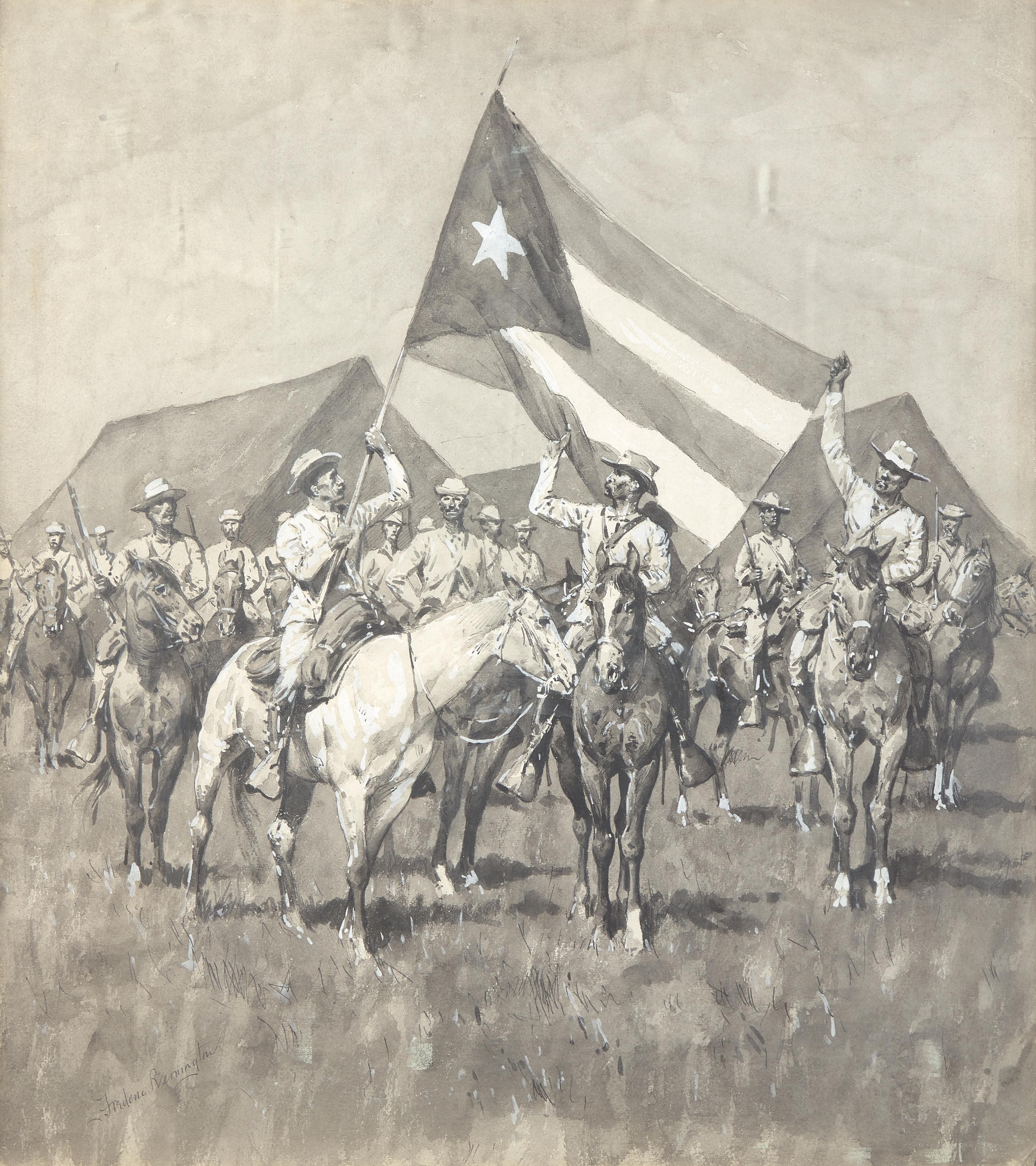
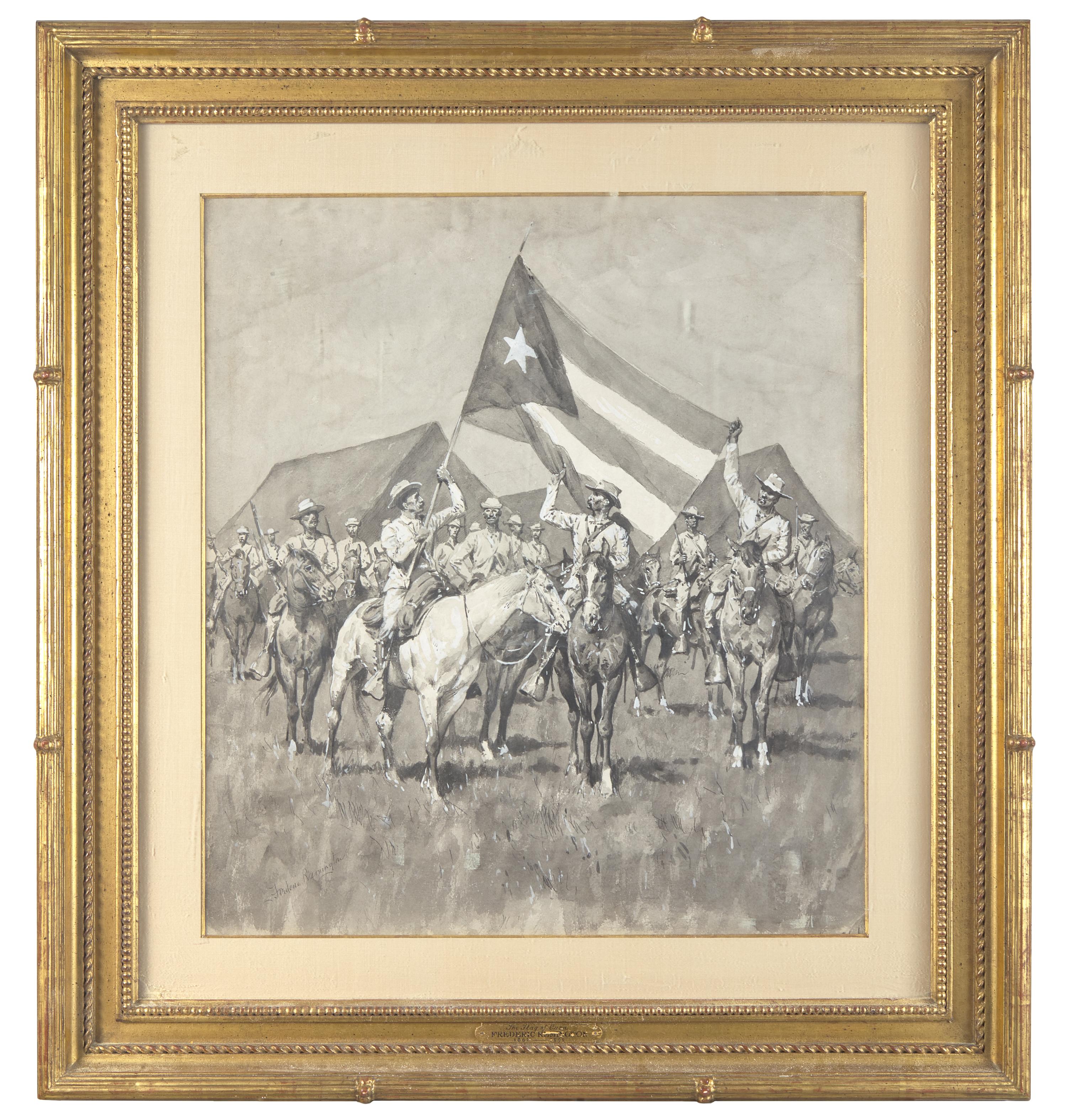
By the time The Flag of Cuba, alternatively titled The Flag of Cuba-Insurgent Cavalry Drawn up for a Charge was painted in 1896, Frederic Remington had firmly established himself as one of the country’s leading illustrators, having had his first full-page cover for Harper’s Weekly published a full ten years earlier at the age of 25. Though short lived, Remington’s association with the magazine was an important and financially lucrative one for the artist.
Of arguably equal importance was Remington’s somewhat unique association with then-Assistant Secretary of the Navy, Theodore Roosevelt and famed newspaper mogul, William Randolph Hearst, publisher of New York Journal. Remington had illustrated Roosevelt’s writings, and Roosevelt was a great admirer of Remington’s work. Said the future U.S. President of Frederic Remington: “He is, of course, one of the most typical American artists we have ever had, and he has portrayed a most characteristic and yet vanishing type of American life.”
During the Spanish-American War Remington worked under Hearst for the New York Journal and it was in this capacity that Hearst sent artists to Cuba, including Remington (accompanied by celebrity journalist Richard Harding Davis) with the intent of having the artists depict atrocities and thus gin up support for war. While Remington is known to have been adversely affected emotionally from his time in Cuba much has been written about claims–whether anecdotal or otherwise–of telegrams exchanged between Remington and Hearst in which the former is said to have informed the latter that “there is no war. Request to be recalled,” to which Hearst is said to have responded to Remington, “Please remain. You furnish the pictures. I’ll furnish the war.”
Whether such communication between the two was factual or merely purported to have taken place it has been suggested that through his art Remington helped to bring about great concern amongst Americans for Cuba’s plight at the hands of Spain, or more broadly that the Spanish-American War was the first conflict in which media involvement–possibly spurred on by depictions of wartime–helped to incite a call for military action. There is little disagreement that Remington’s magazine illustrations executed en grisaille are an important part of his oeuvre though one that he would later abandon as his interest turned to painting nocturne scenes as well as sculpture.
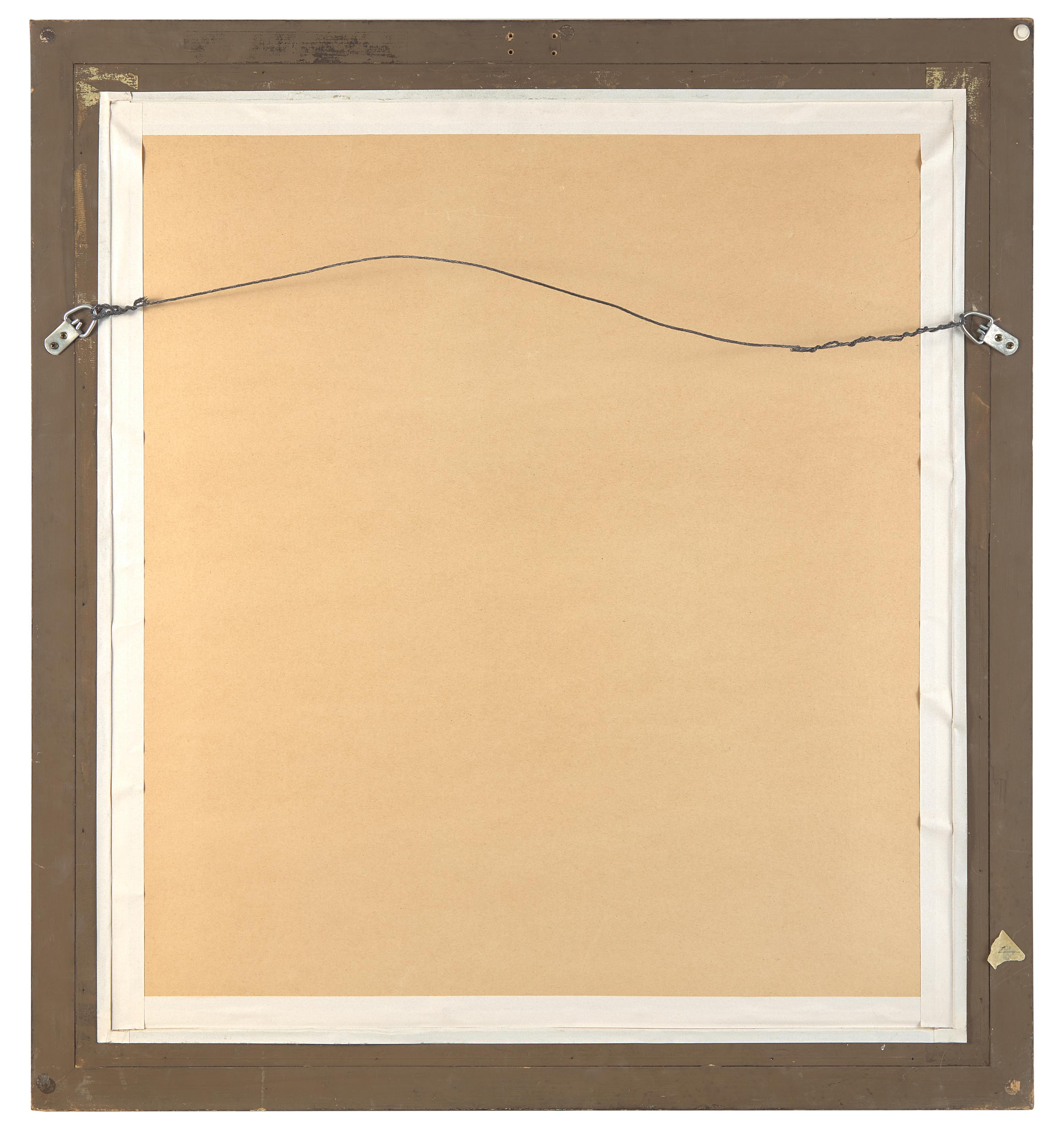
In generally good overall condition, the sheet as viewed out of its frame measures 24 1/2 x 21 11/16 inches. The work is matted and framed; when examined out of frame the top edge of the sheet has one tape piece at upper right and one piece at upper left at top edge verso affixed to undermat. The sheet can be lifted up and is, therefore, not laid down. There is some generally minor pale toning seen near part of top edge of sheet and within upper half of outer right edge of sheet and within part of top half of outer left edge of sheet. There is some pale toning at bottom edge of sheet. There is a (professional) repair at lower right corner of sheet as seen from the verso. On the verso there is some pale brownish discoloration that appears to be the likely result of once having had some tape pieces. Also on verso there are some (apparent) mulberry paper tape remnants, including at part of lower left edge at bottom/lower left corner and along part of left and right outer edges. Additional images available upon request.
Framed: 34 1/2 x 31 3/4 x 2 1/2 in.
The physical condition of lots in our auctions can vary due to age, normal wear and tear, previous damage, and restoration/repair. All lots are sold "AS IS," in the condition they are in at the time of the auction, and we and the seller make no representation or warranty and assume no liability of any kind as to a lot's condition. Any reference to condition in a catalogue description or a condition report shall not amount to a full accounting of condition. Condition reports prepared by Freeman's staff are provided as a convenience and may be requested from the Department prior to bidding.
The absence of a posted condition report on the Freeman's website or in our catalogues should not be interpreted as commentary on an item's condition. Prospective buyers are responsible for inspecting a lot or sending their agent or conservator to inspect the lot on their behalf, and for ensuring that they have requested, received and understood any condition report provided by Freeman's.
Please email aveil@freemansauction.com for any additional information or questions you may have regarding this lot.