To request further details about this lot, please email aveil@freemansauction.com

Adam Veil
VP, Head of Department, American Art and Pennsylvania Impressionists
Sale 2105
| Philadelphia
| Philadelphia
To request further details about this lot, please email aveil@freemansauction.com
Adam Veil
VP, Head of Department, American Art and Pennsylvania Impressionists
Estimate$20,000 – $30,000
Please note that a portion of the proceeds from the sale of the present lot will go to the Julian and Sheila Katz Scholarship Fund at the University of Chicago's Pritzker School of Medicine. To learn more about Dr. Julian Katz and Dr. Sheila Moriber Katz, please visit our website. For other works from the Katz Collection, see Lots 10, 22, 40, 48, 50 and 51.
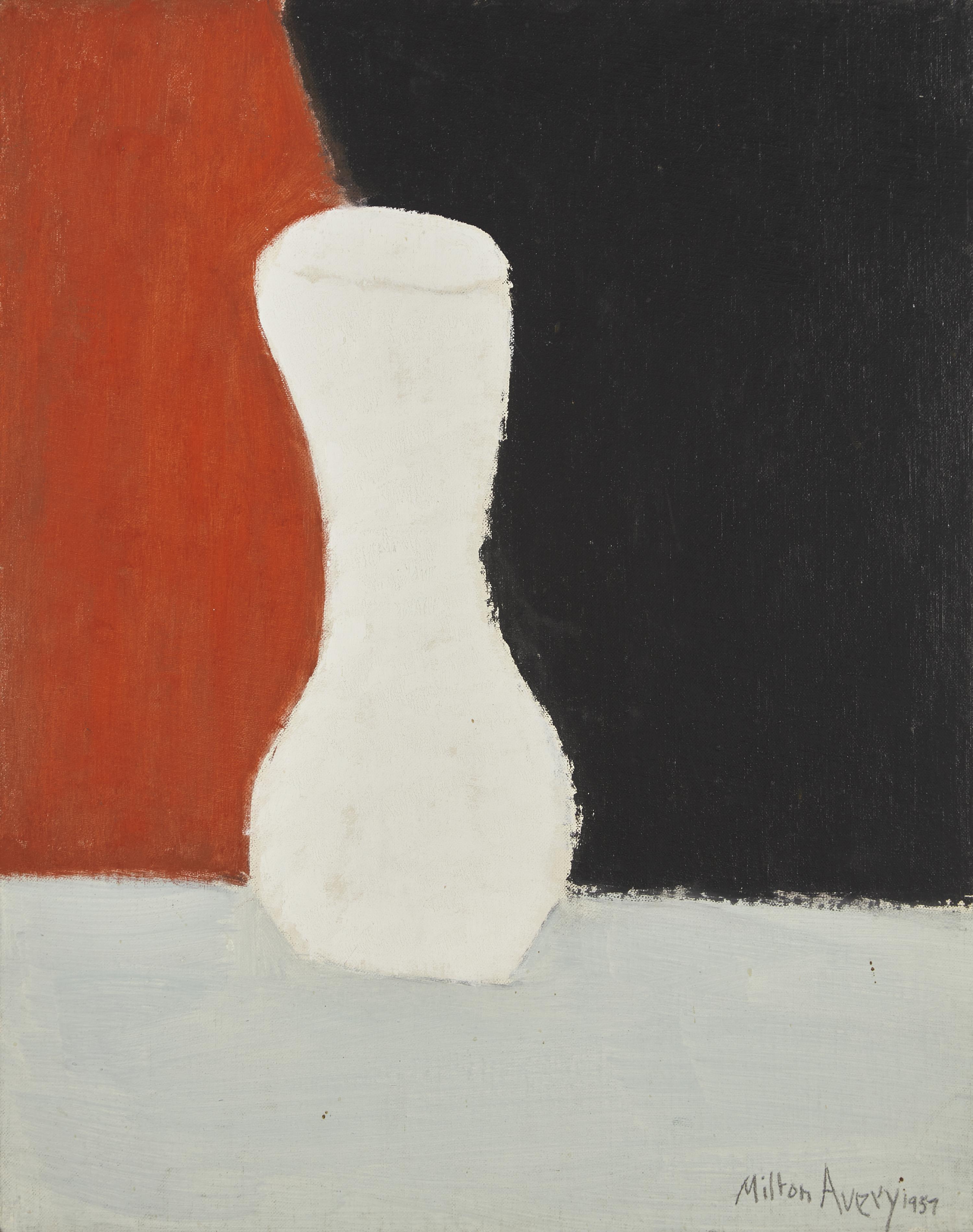
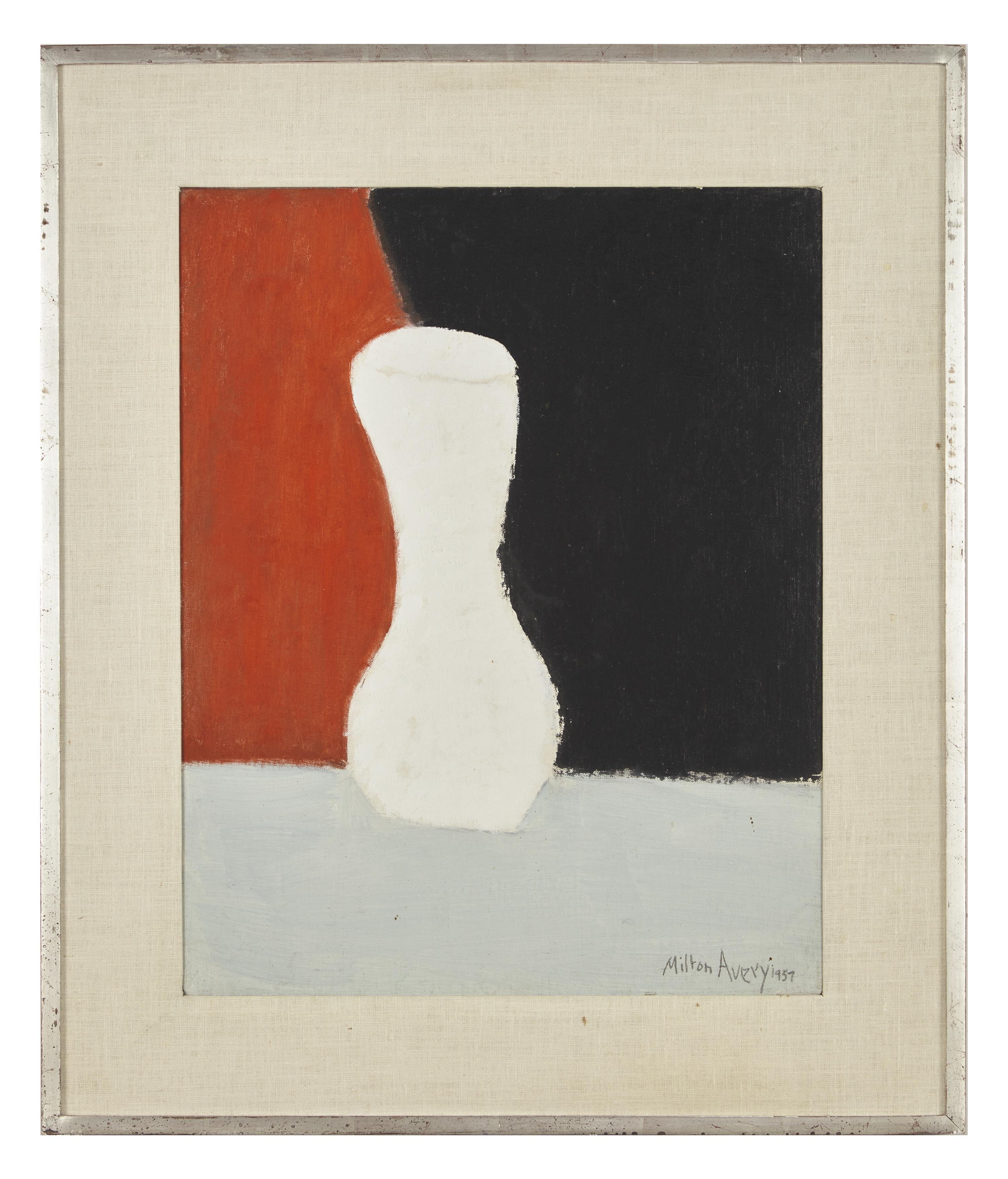
Milton Avery's still life paintings of the 1950s mark something of a turning point in his output. While he had always championed vibrant colors and simplified forms, a renewed focus emerged after a major heart attack in 1949. For Avery, according to his wife, Sally, “life became much more important because he had almost lost it. He began to look for different things. I think the very simple things he did were the result of having experienced such a dramatic event in his life. It scared him. It quickened the direction of his work–his colors became more sparse, his forms were more simplified.” Paintings like White Vase exemplify this shift, with even greater emphasis accorded to flat planes and a refined palette. Avery's utilization of color became even more central; here, broad juxtapositions of white, black, and red are prioritized over intricate details, heralding, arguably, the Color Field movement that would take root in the following decade.
Please note that a portion of the proceeds from the sale of the present lot will go to the Julian and Sheila Katz Scholarship Fund at the University of Chicago's Pritzker School of Medicine.
Provenance:
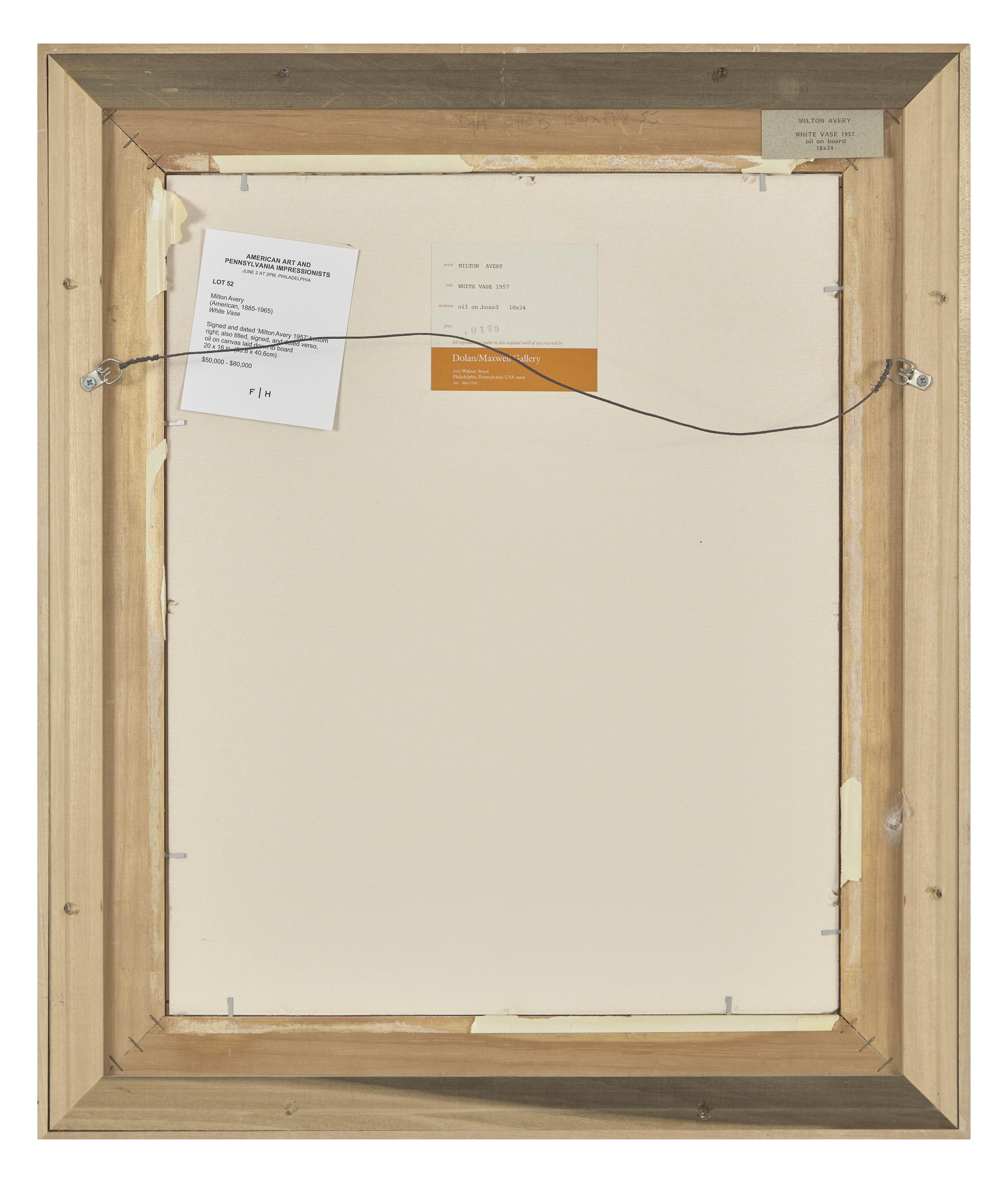
Dolan/Maxwell, Philadelphia, Pennsylvania.
Lot Essay:
Milton Avery's still life paintings of the 1950s mark something of a turning point in his output. While he had always championed vibrant colors and simplified forms, a renewed focus emerged after a major heart attack in 1949. For Avery, according to his wife Sally, “life became much more important because he had almost lost it. He began to look for different things. I think the very simple things he did were the result of having experienced such a dramatic event in his life. It scared him. It quickened the direction of his work–his colors became more sparse, his forms were more simplified.” Paintings like White Vase exemplify this shift, with even greater emphasis accorded to flat planes and a refined palette. Avery's utilization of color became even more central; here, broad juxtapositions of white, black, and red are prioritized over intricate details, heralding, arguably, the Color Field movement that would take root in the following decade.
The unlined canvas in excellent original condition. Examination under UV light reveals splashes of varnish throughout. Additional images available upon request.
The physical condition of lots in our auctions can vary due to age, normal wear and tear, previous damage, and restoration/repair. All lots are sold "AS IS," in the condition they are in at the time of the auction, and we and the seller make no representation or warranty and assume no liability of any kind as to a lot's condition. Any reference to condition in a catalogue description or a condition report shall not amount to a full accounting of condition. Condition reports prepared by Freeman's staff are provided as a convenience and may be requested from the Department prior to bidding.
The absence of a posted condition report on the Freeman's website or in our catalogues should not be interpreted as commentary on an item's condition. Prospective buyers are responsible for inspecting a lot or sending their agent or conservator to inspect the lot on their behalf, and for ensuring that they have requested, received and understood any condition report provided by Freeman's.
Please email aveil@freemansauction.com for any additional information or questions you may have regarding this lot.