To request further details about this lot, please email conditionreports@freemansauction.com

Tim Carey
Associate Vice President, Head of Department, Arms, Armor and Militaria
Sale 1987
| Cincinnati
| Cincinnati
To request further details about this lot, please email conditionreports@freemansauction.com
Tim Carey
Associate Vice President, Head of Department, Arms, Armor and Militaria
Estimate$6,000 – $10,000
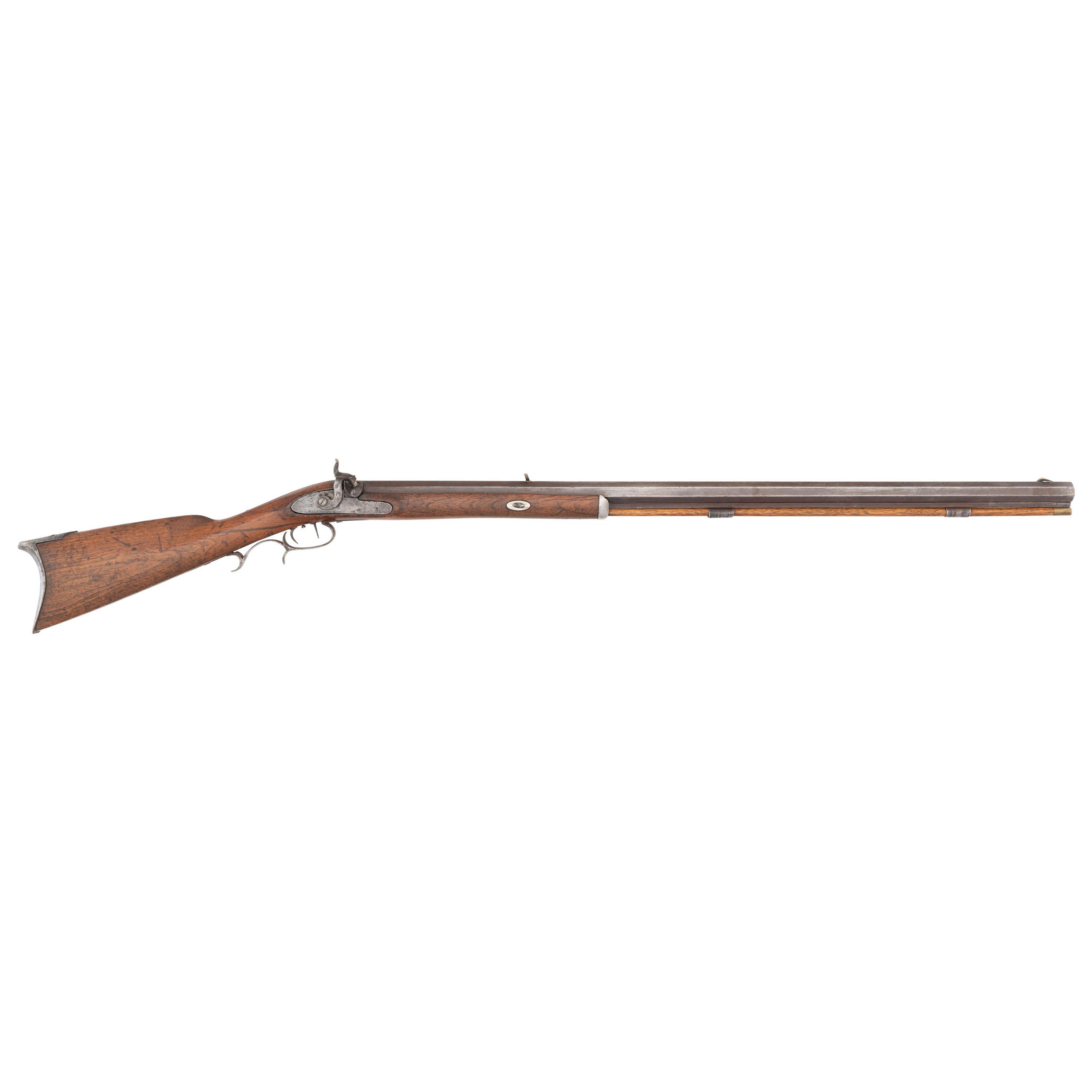
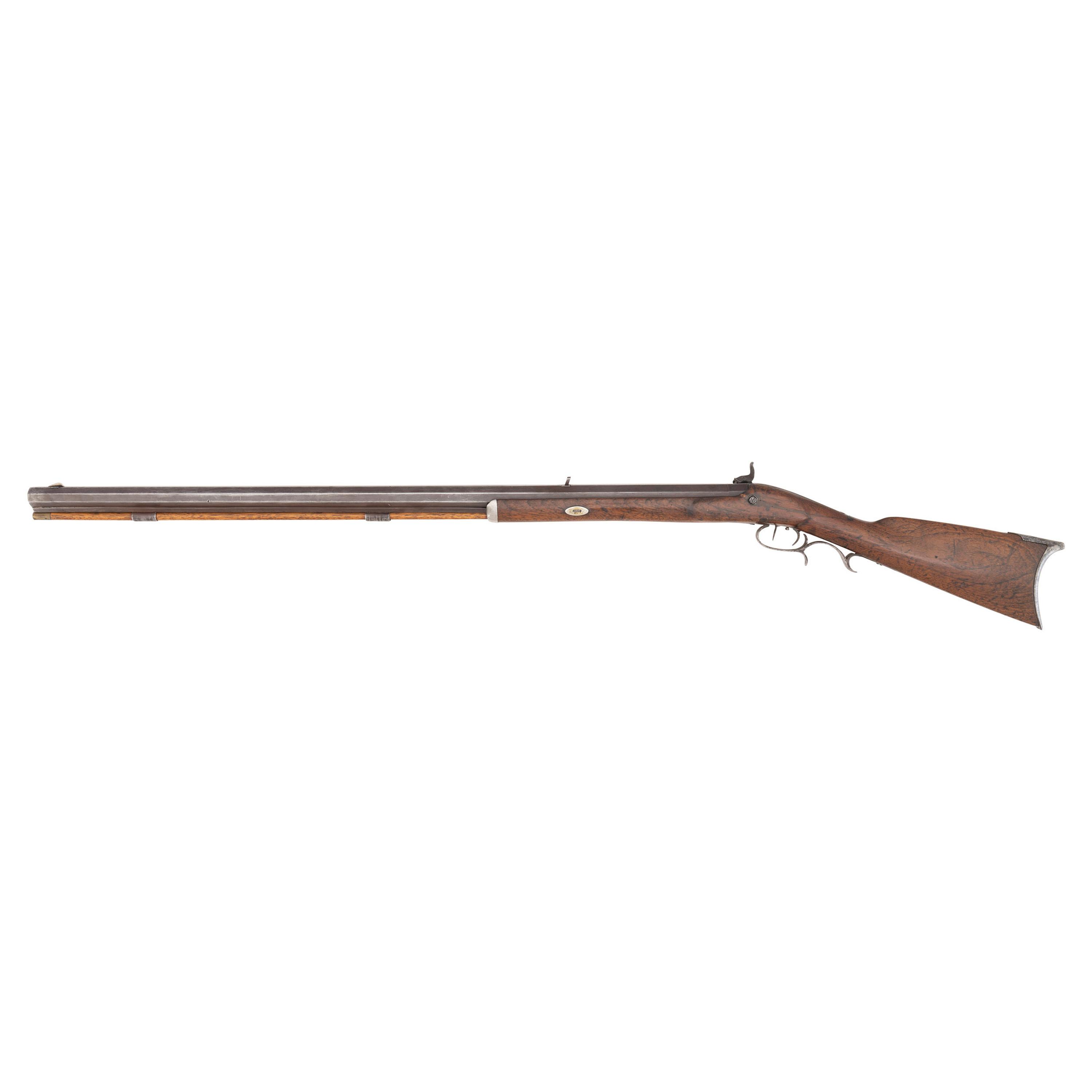
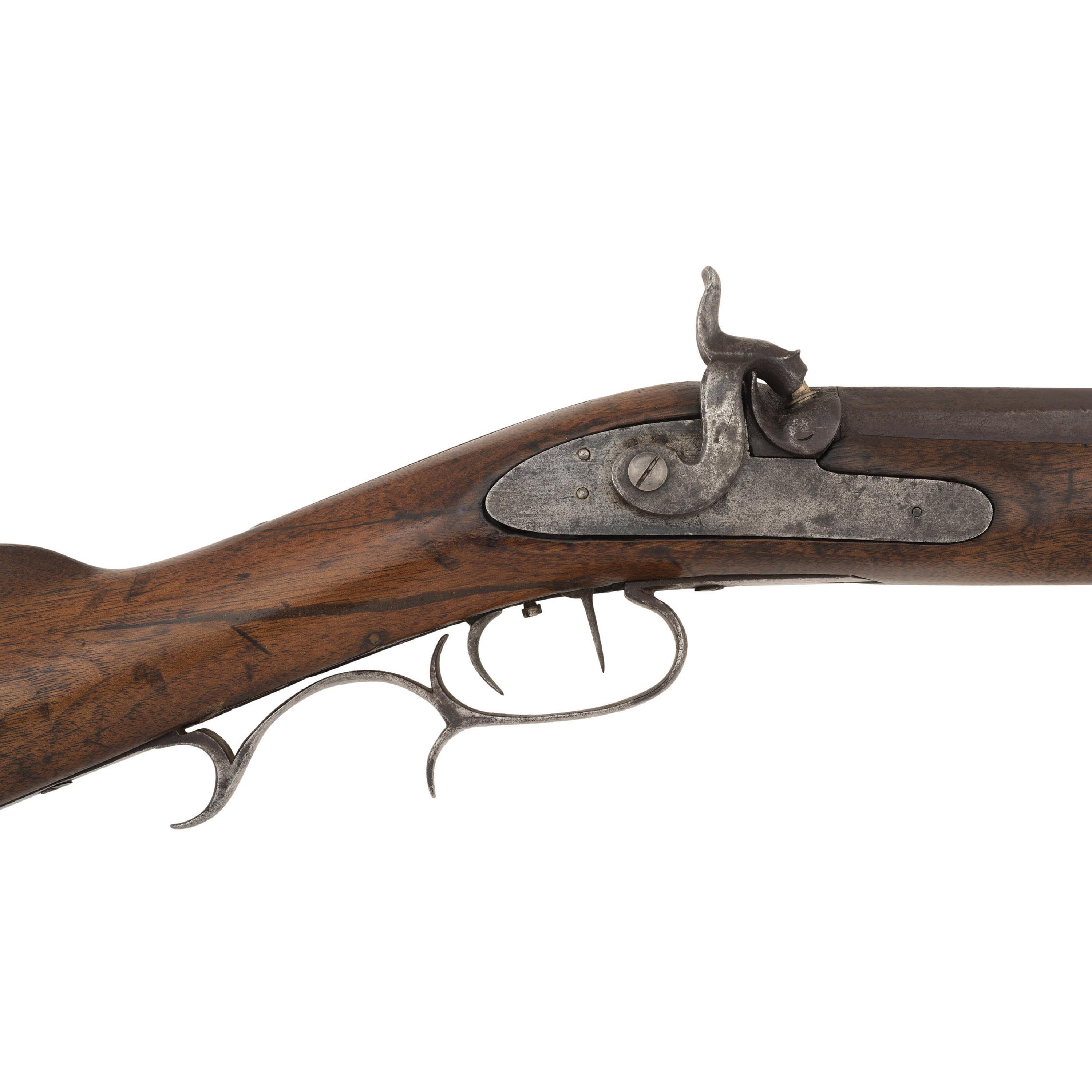
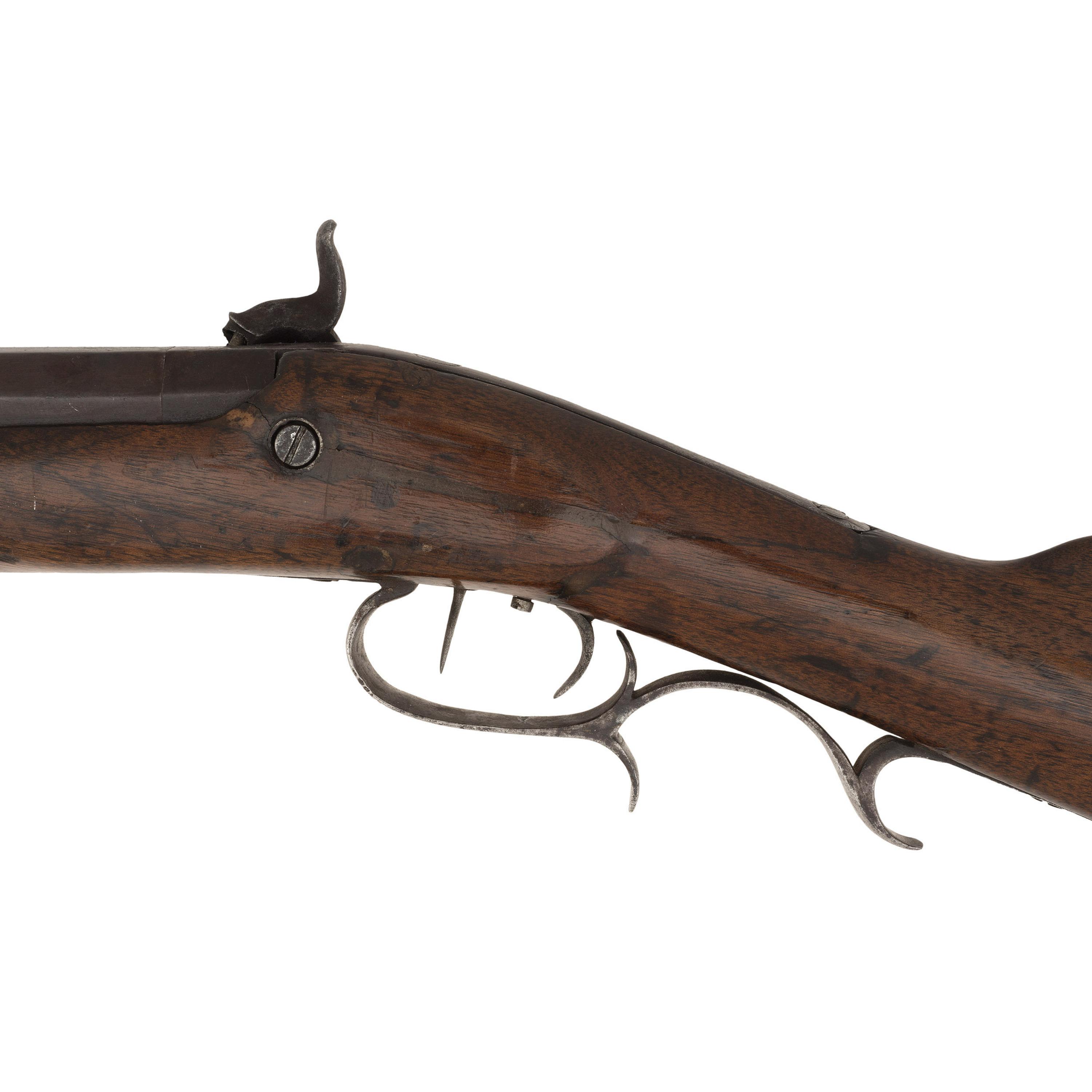
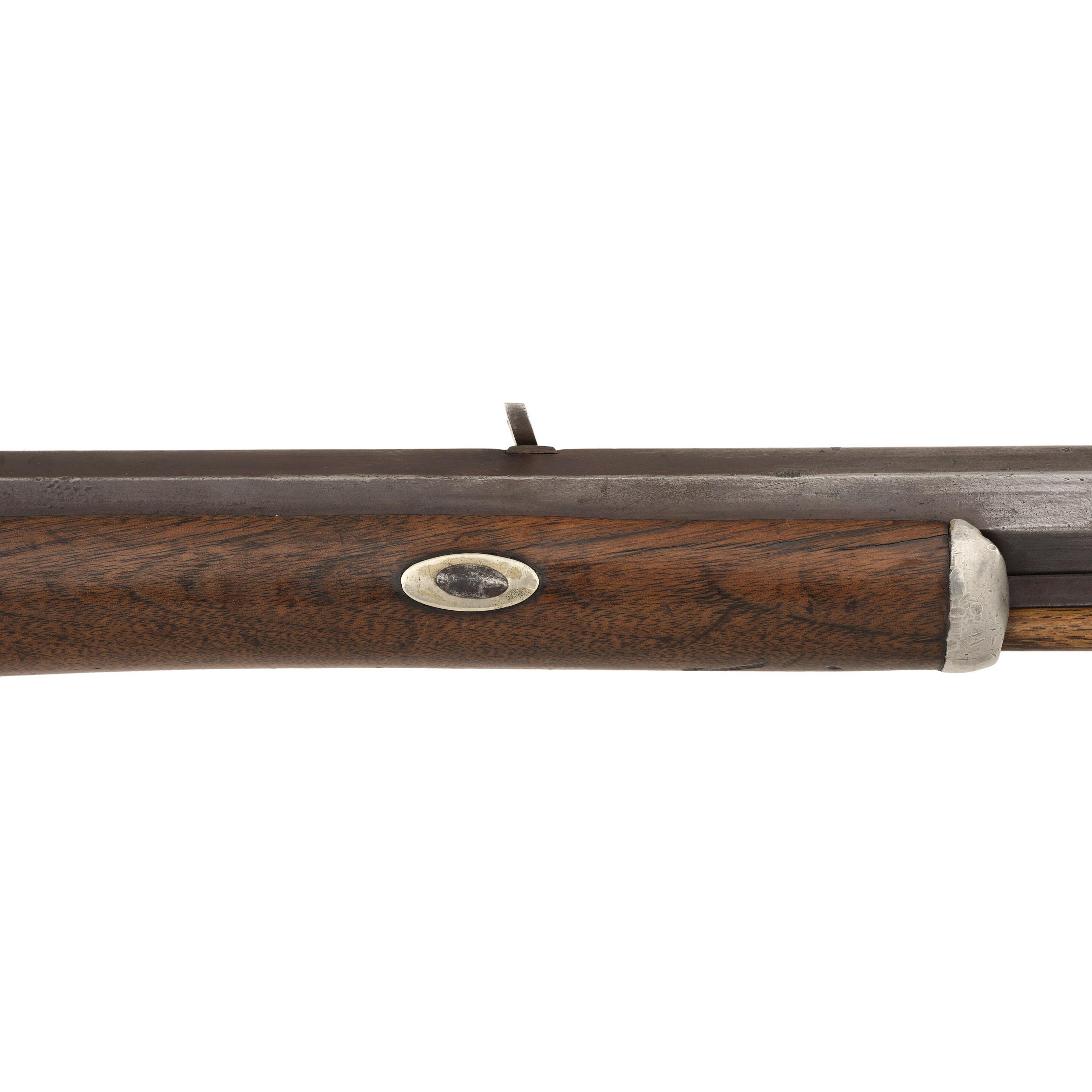
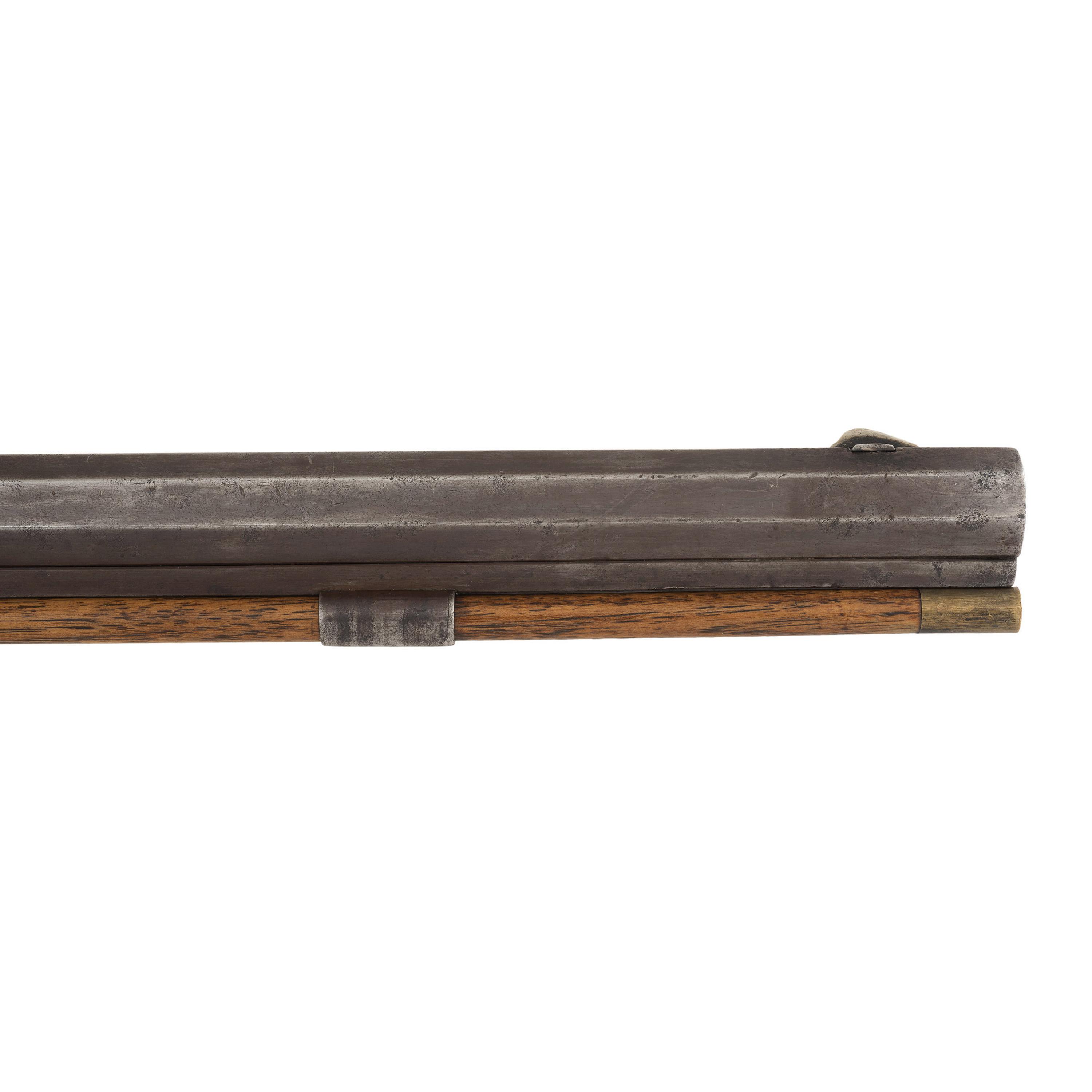
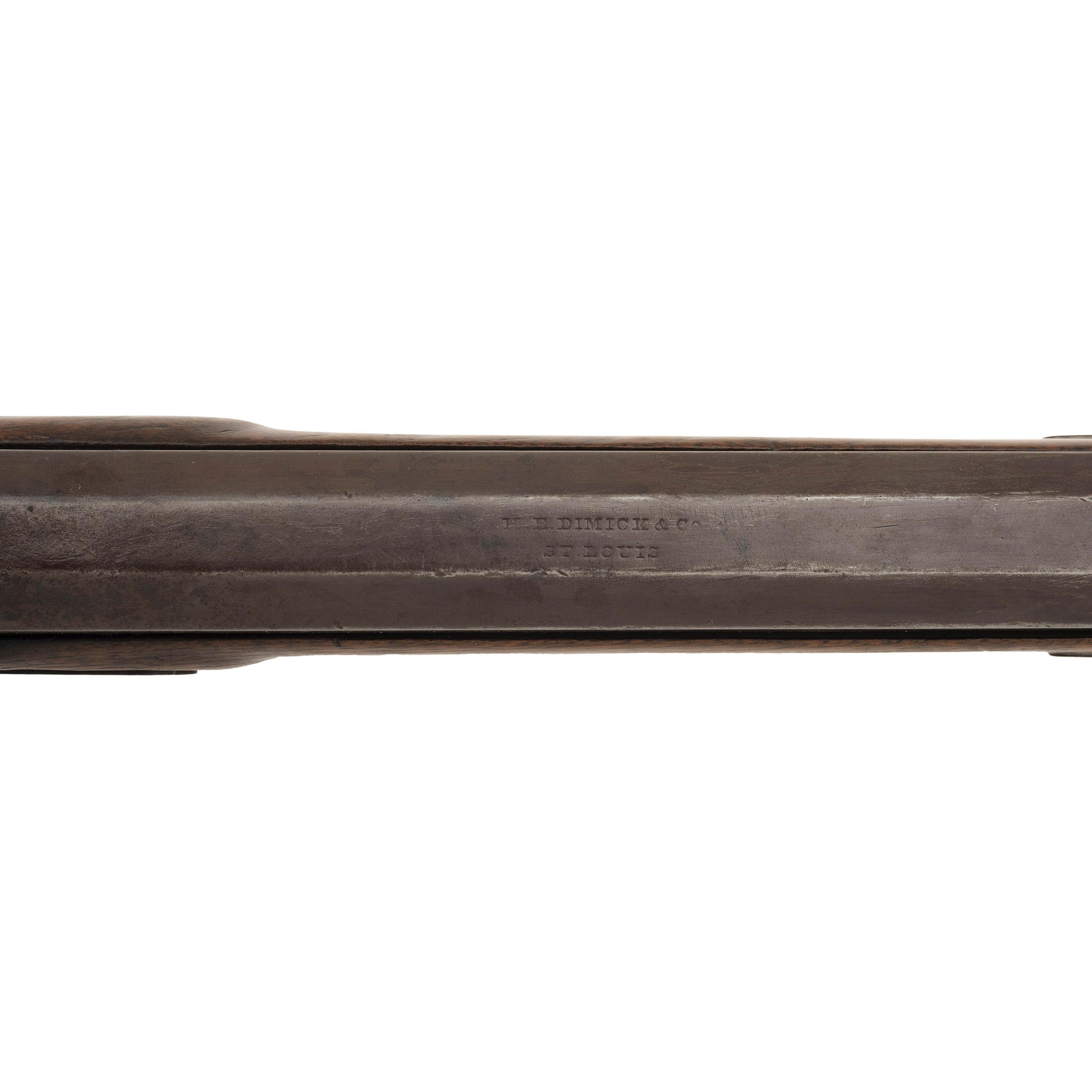
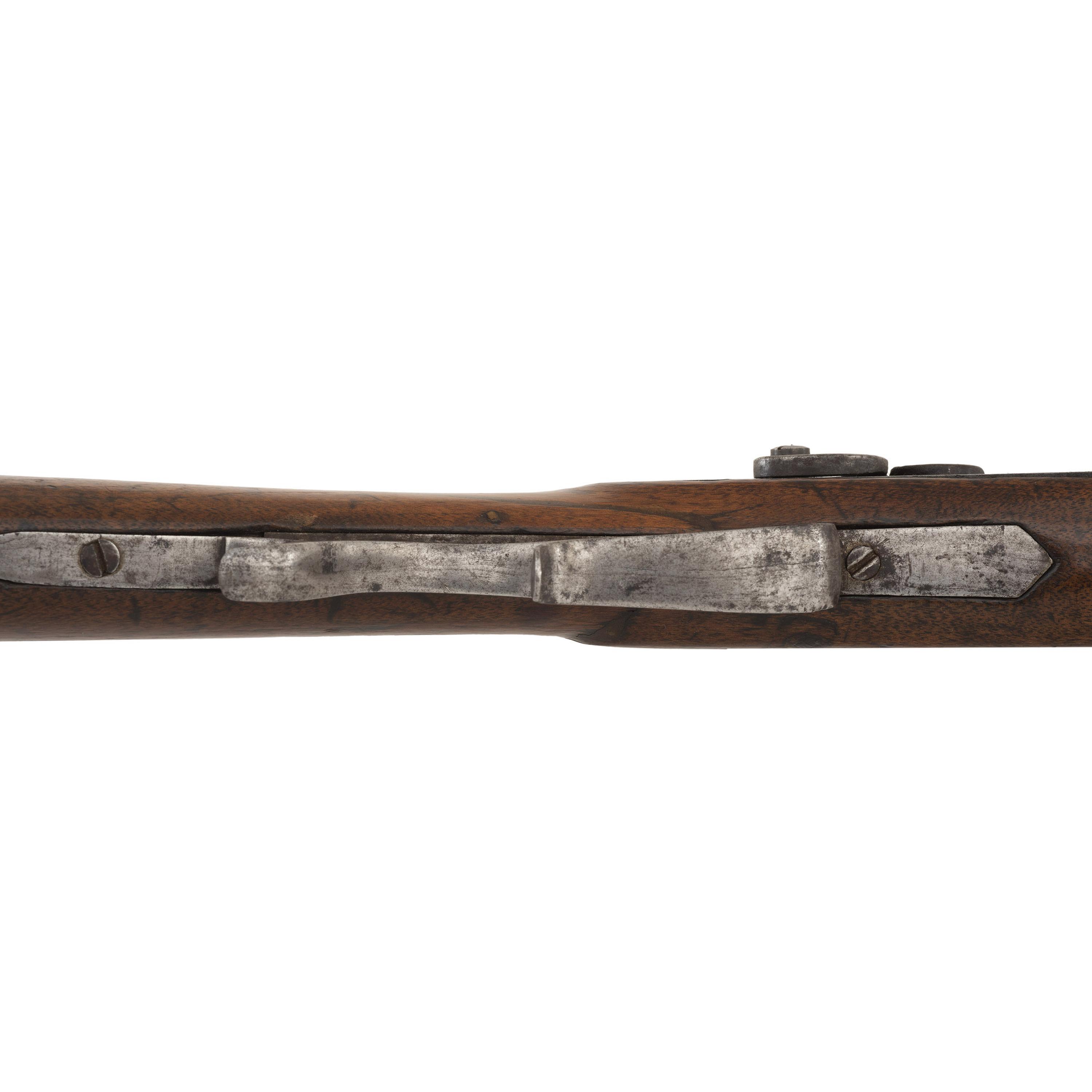
.50 caliber. 36.5" single-key octagonal barrel with under rib. SN: NSN. Browned finish, iron, German silver and pewter mountings, walnut half-stock. Plain, single screw, externally unmarked commercial percussion lock is maker marked "T GIBBONS" on the interior. Top flat of barrel marked "H.E. DIMICK & CO/ST. LOUIS". Heavy barrel measures 1.1" across the flats at the muzzle with extended double screw iron tang. Double set triggers, dovetailed buckhorn rear sight, dovetailed German silver Rocky Mountain front sight blade with steel base. Extended double finger spur triggerguard, steel buttplate, oval German silver escutcheon at barrel key, pewter forend cap. Brass tipped wooden ramrod secured by two plain steel pipes.
Horace E. Dimick (1809-1874) was probably the most prolific of the fames St. Louis makers of Plains Rifles. A direct competitor with the famous Hawken shop, Dimick produced his variation of their famous plains rifle, as well as smaller caliber sporting and hunting rifles, target rifles and even delivered a lot of roughly 1,000 rifles that were used to arm Birge's Western Sharpshooters (14th Missouri Volunteer Infantry) which was later redesignated as the 66th Illinois Volunteer Infantry. Those Dimick rifles did yeoman's service during the first 12-18 months of the Civil War in the Western Theater, in particular at battles like Fort Donelson and Shiloh. Dimick also imported large numbers of guns from England and Belgium and offered these guns with his retailer mark on them along with American produced guns like Metropolitan Navy percussion revolvers. Next to the Hawkens, Dimick is probably the most famous of the St. Louis Gun makers.
The Collection of Larry Ness
Good. Barrel with an oxidized plum patina showing scattered light surface roughness and some pitting, particularly around the breech and bolster area. Lock with a streaky gray patina. Lock functional, bore very good, partly bright with fine rifling and scattered oxidation and light pitting. Stock with wear, sanded, rounding the edges and with added finish. Some wood loss around the lock mortise, making the lock a little loose in the stock. Wrist cracked from the mortise back to the comb with an old repair. Toe chipped. Wood with scattered bumps and dings. Wedge loose and held in place with tape.
The physical condition of lots in our auctions can vary due to age, normal wear and tear, previous damage, and restoration/repair. All lots are sold "AS IS," in the condition they are in at the time of the auction, and we and the seller make no representation or warranty and assume no liability of any kind as to a lot's condition. Any reference to condition in a catalogue description or a condition report shall not amount to a full accounting of condition. Condition reports prepared by Freeman's staff are provided as a convenience and may be requested from the Department prior to bidding.
The absence of a posted condition report on the Freeman's website or in our catalogues should not be interpreted as commentary on an item's condition. Prospective buyers are responsible for inspecting a lot or sending their agent or conservator to inspect the lot on their behalf, and for ensuring that they have requested, received and understood any condition report provided by Freeman's.
Please email for any additional information or questions you may have regarding this lot.