To request further details about this lot, please email conditionreports@freemansauction.com
Please email conditionreports@freemansauction.com for any additional information or questions you may have
Sale 5411
| Philadelphia
| Philadelphia
To request further details about this lot, please email conditionreports@freemansauction.com
Please email conditionreports@freemansauction.com for any additional information or questions you may have
Estimate$10,000 – $15,000
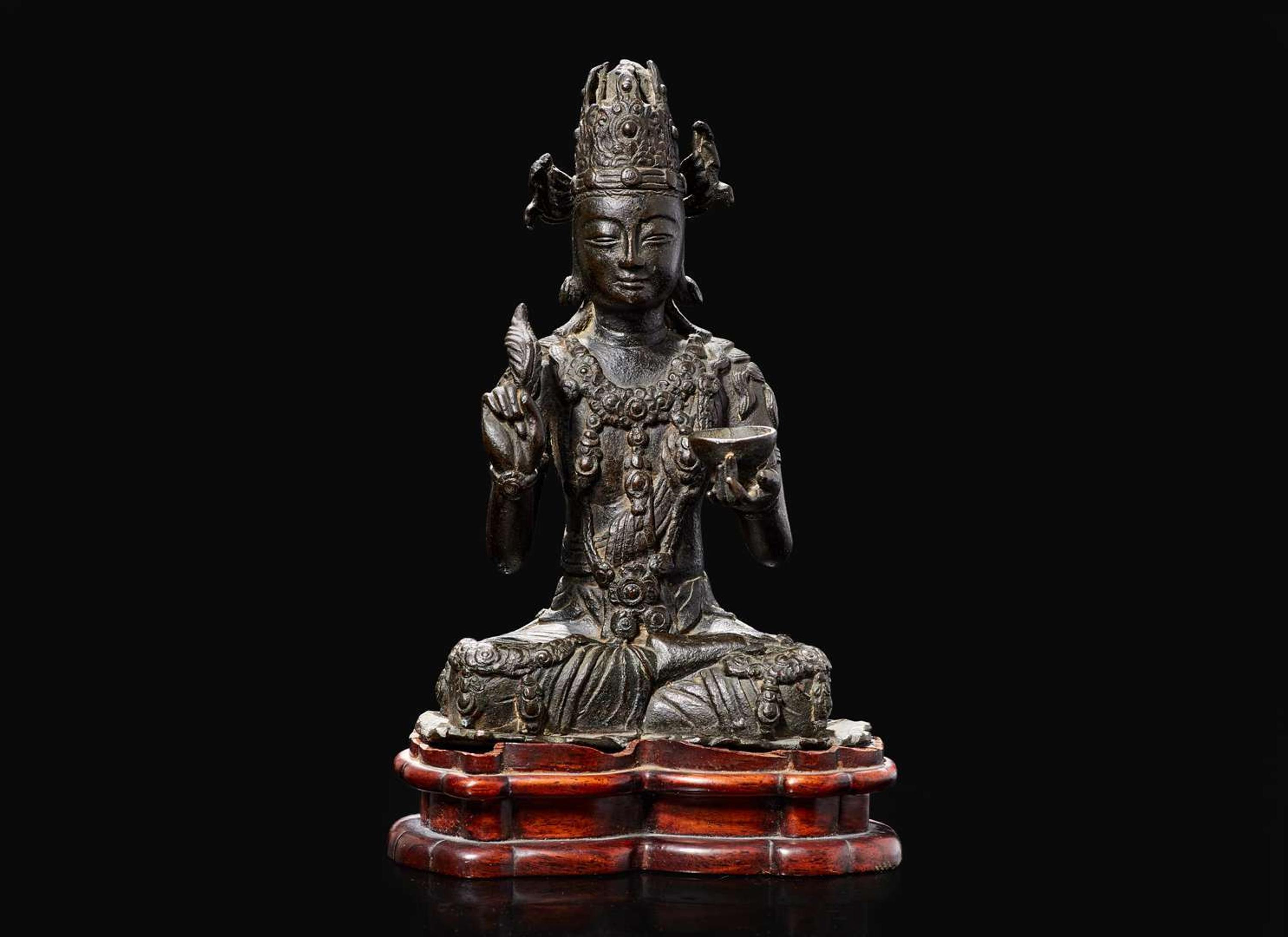
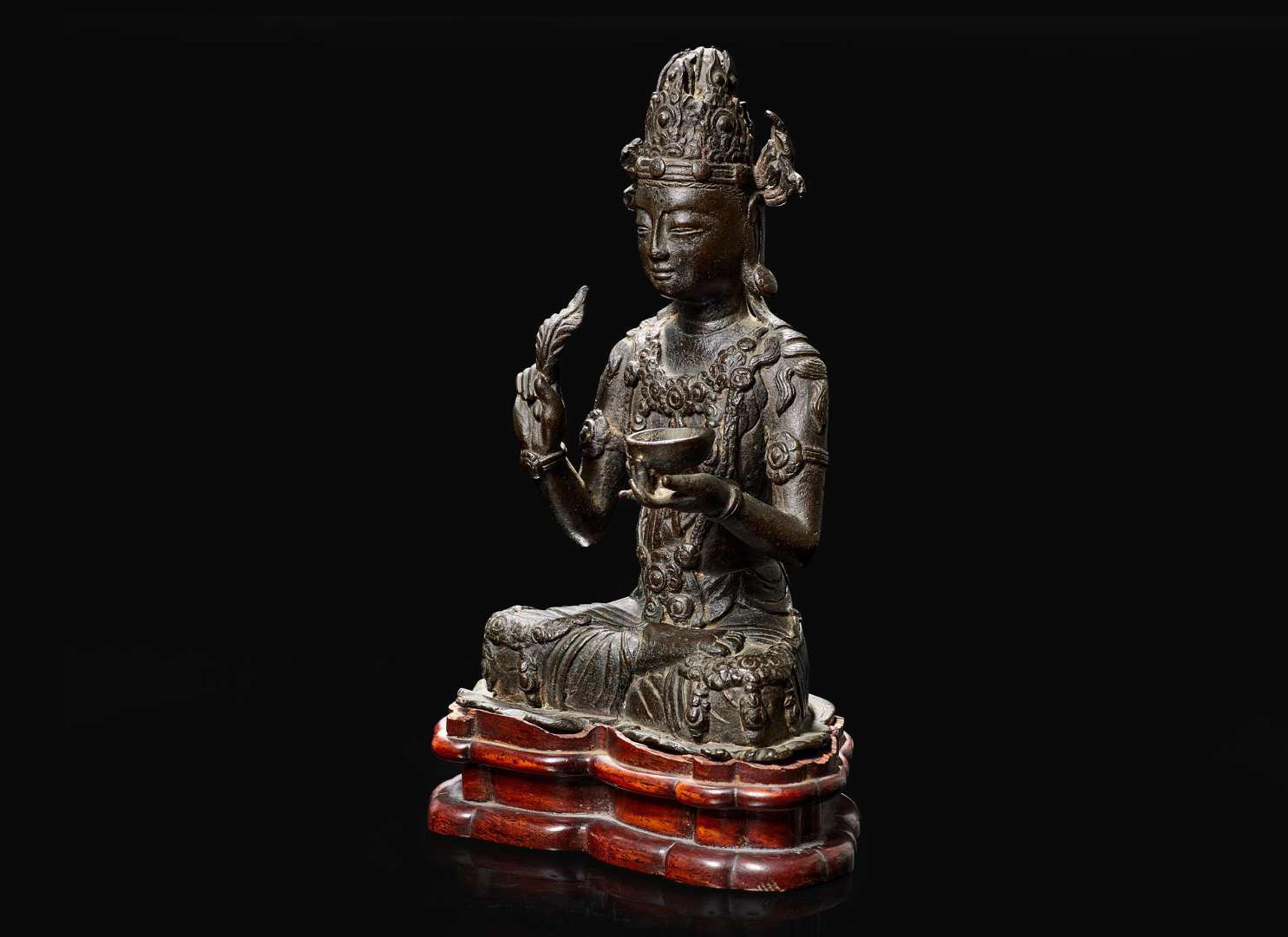
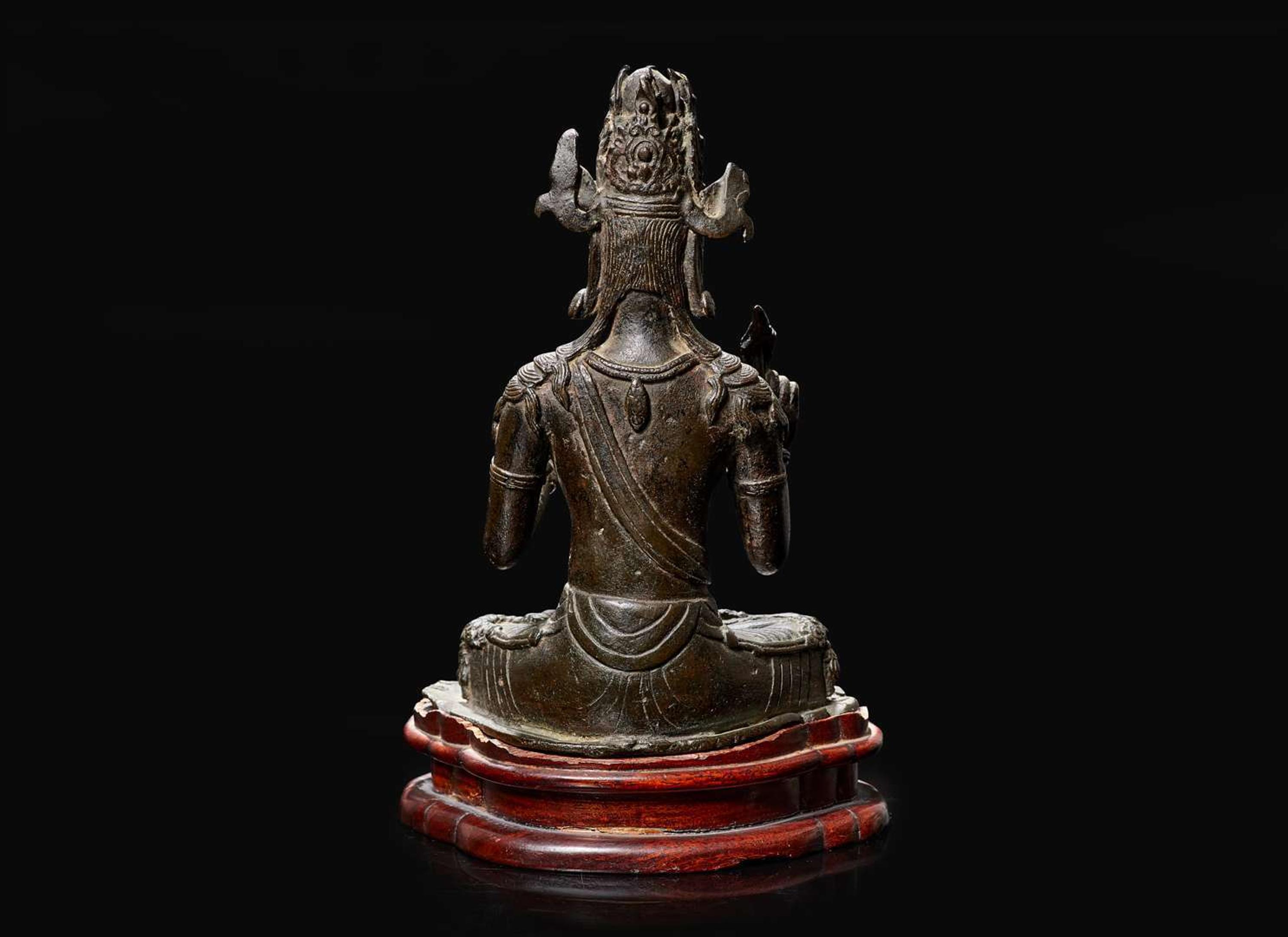
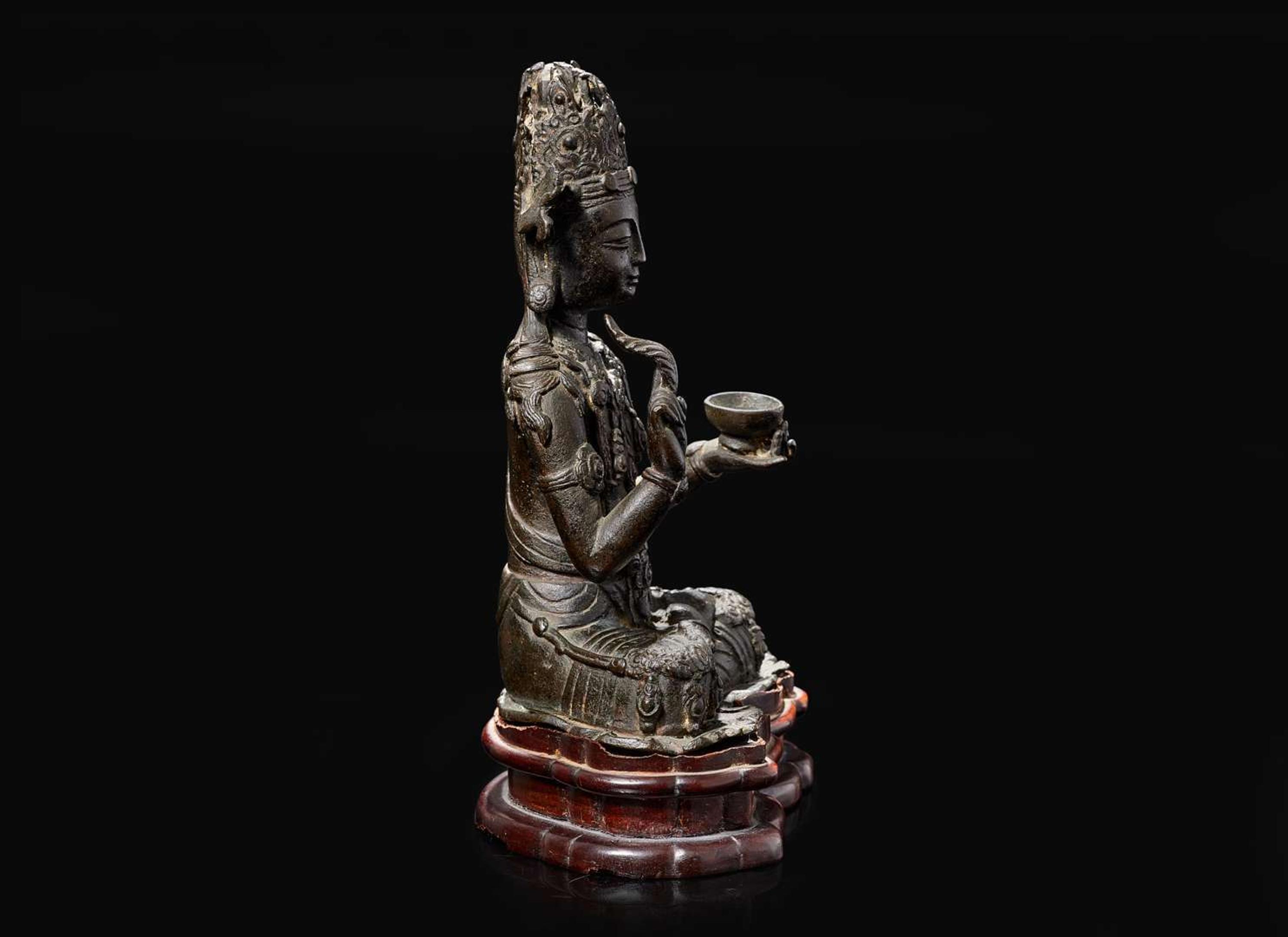
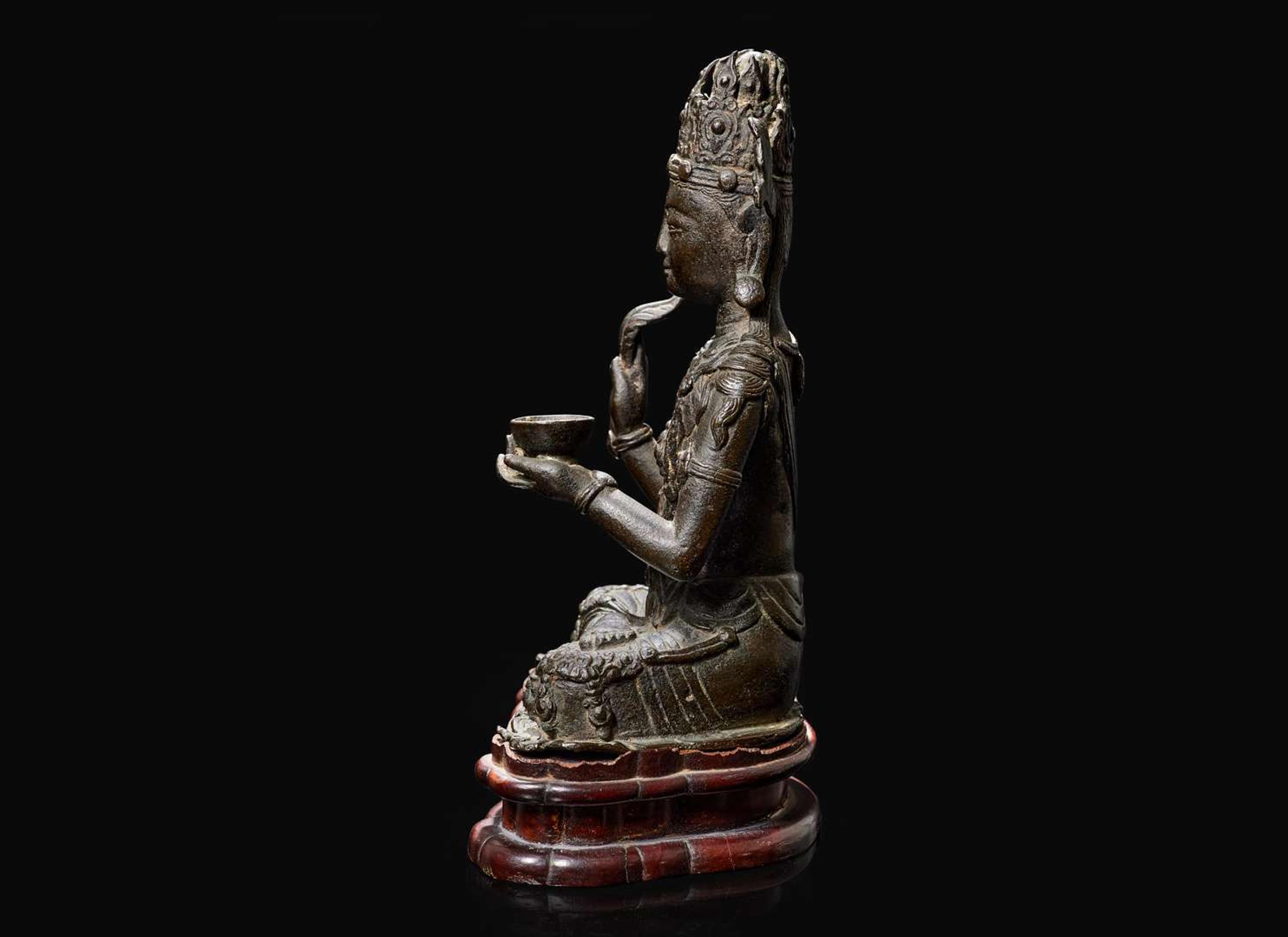
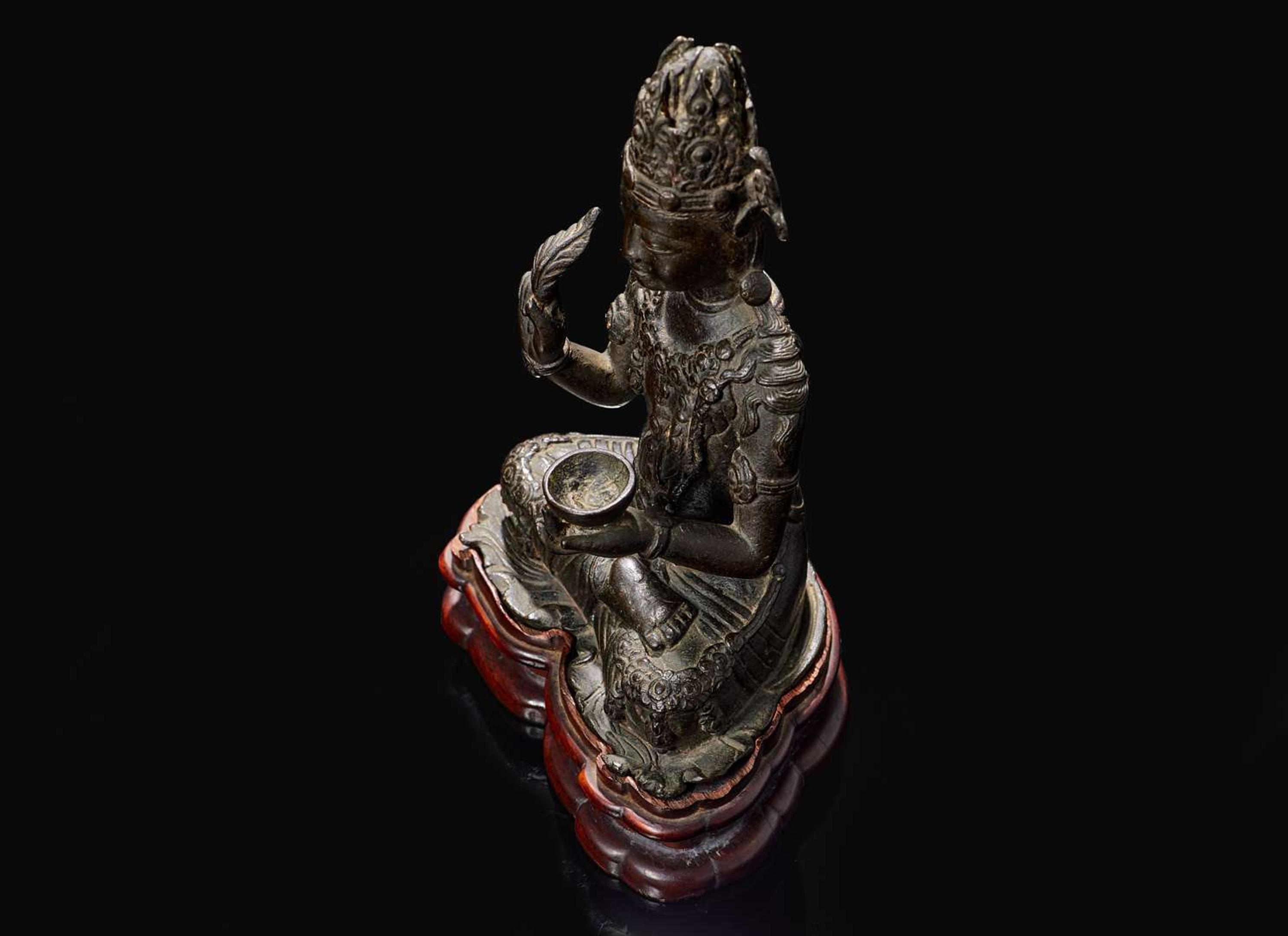
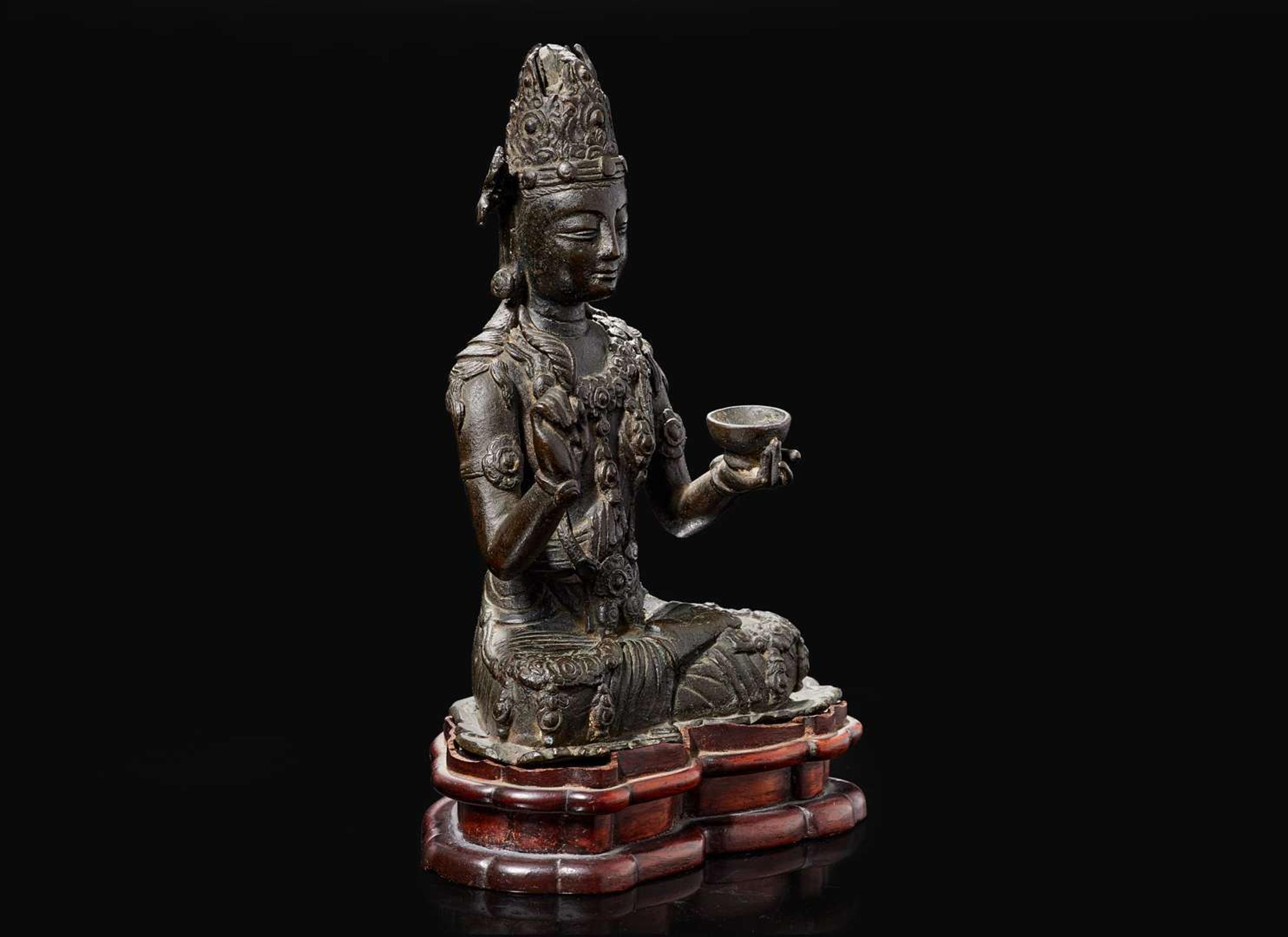
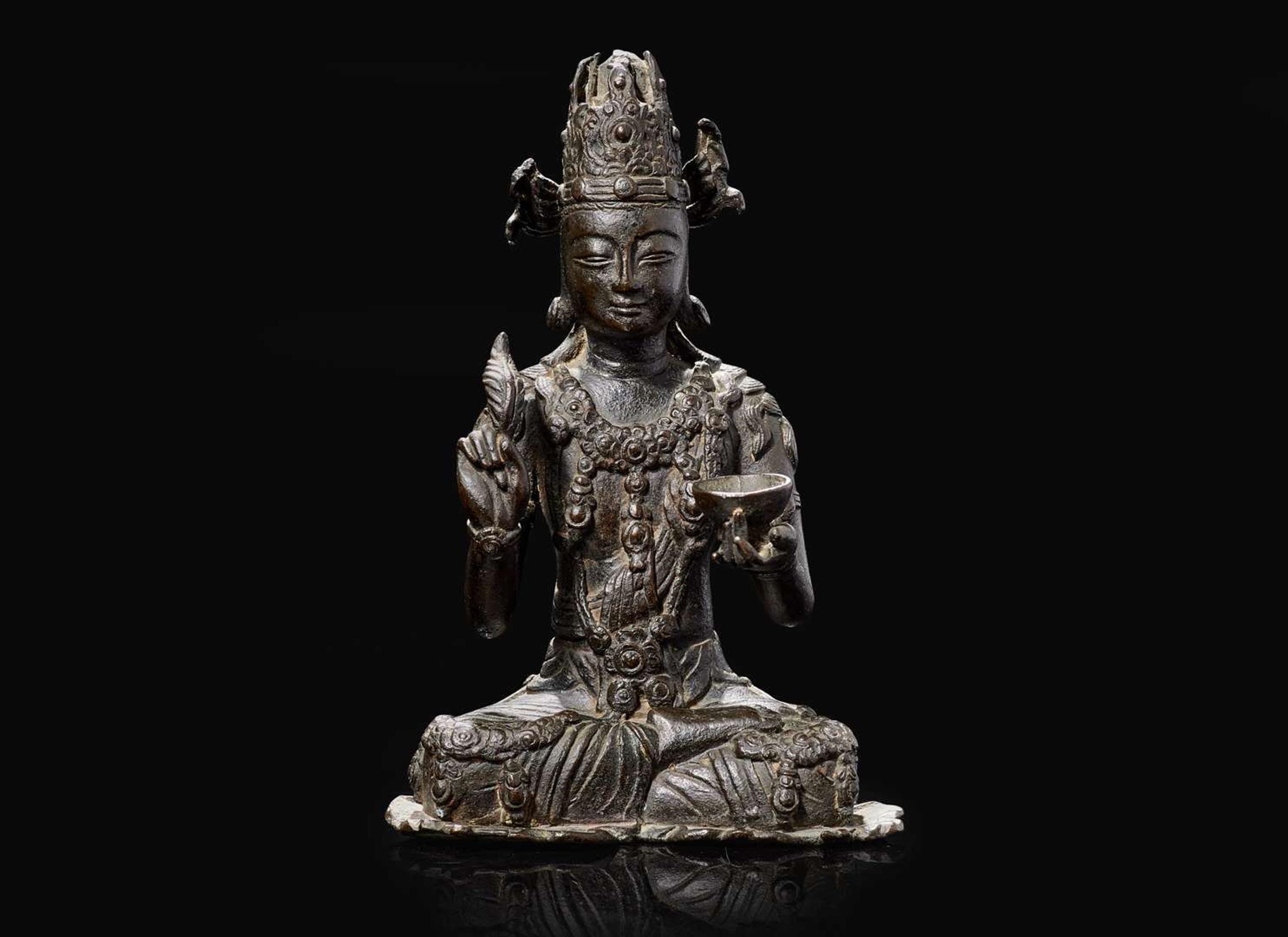
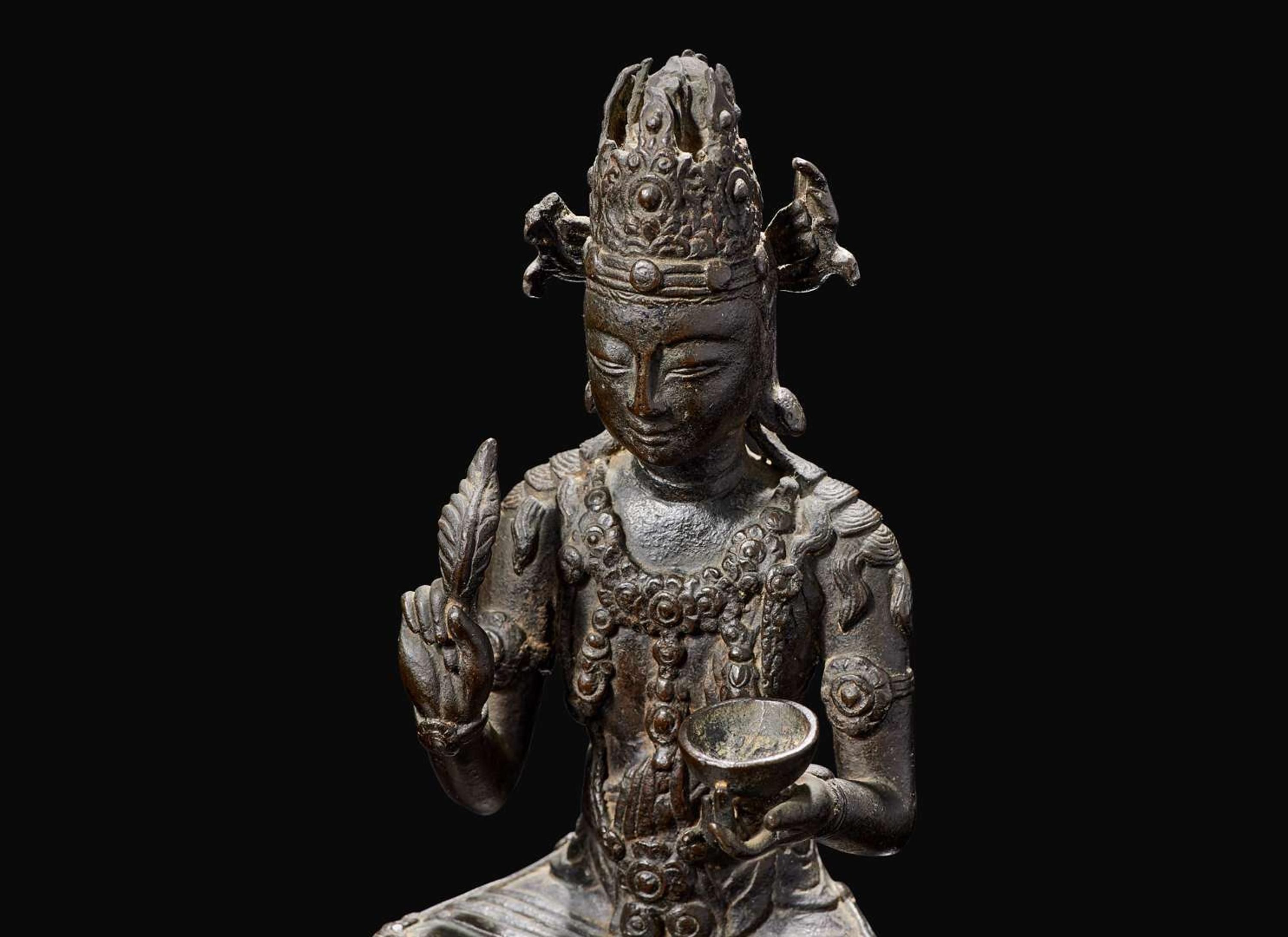
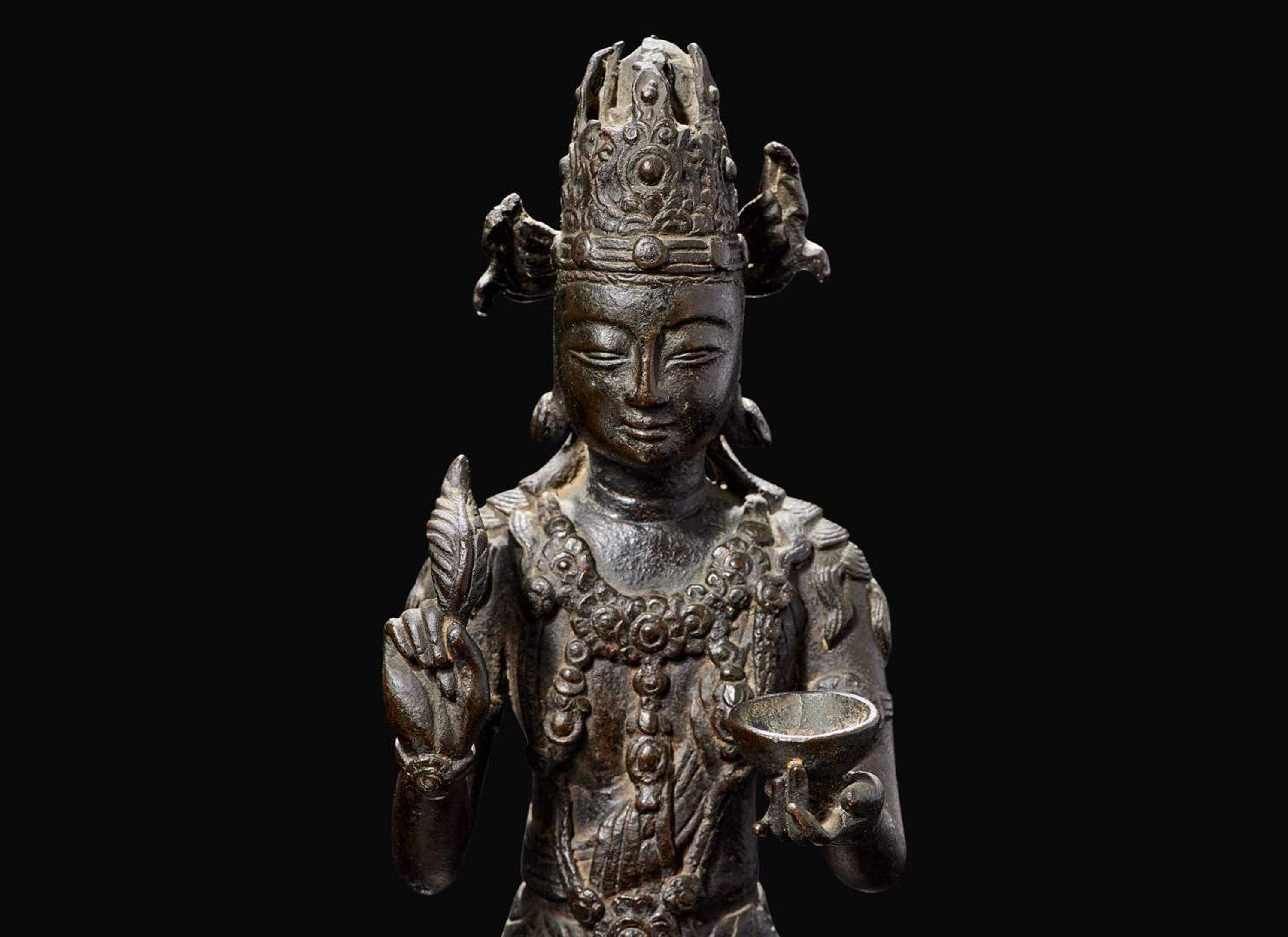
Cast in seated posture, the figure with a serene facial expression, wearing an elaborate tall crown and heavy floral garland ornaments, holding a willow branch in his right hand, and a bowl in the left, with later wood stand.
H: 7 ½ in. (figure)
12th century Buddhist bronzes from the Dali Kingdom in Yunnan have always held a special fascination for connoisseurs. Not as well-known in western circles as 15th-18th century Tibeto-Chinese gilt-bronze sculpture, or Ming and early Qing Buddhist bronzes originating from the Jiangnan regions, the elegance and sophistication of bronzes from Yunnan call for a greater appreciation. Furthermore, the diversity of manifestations of deities, particularly with regards to the Bodhisattva Avalokiteshvara, are worthy of in-depth study.
In the West, the most discussed of the sculptural forms of Avalokiteshvara from the Dali kingdom is the “Acoyue Guanyin”, considered a palladium of the kingdom, showing clear influences of Indian sculpture. Lesser-studied Yunnanese types, such as the present bronze, tend to be more elaborate, with various aspects also drawn from Indian iconography, particularly from Pali sculpture, such as tall multi-leaf diadems and elaborate bodhisattva jewelry, but also incorporating distinctly Chinese traits. This group of bronzes is often typified by a sweetness of expression, with forward-facing almond-shaped eyes, elegant flowing draperies, and jewelry incorporating floret links and heavy pendant drops. Many of these bronzes are mercury-gilt, adding to their magnificence, however other examples, such as the present work, were originally gilt-lacquered.
The form of Avalokiteshvara/Guanyin with a willow branch is a distinctly Chinese manifestation, likely originating in the sixth century, and generally not appearing after the 13th century. For a 12th century standing figure of Guanyin in the Yunnan Provincial Museum, Kunming, holding a lobed bowl in one hand and an upright, feather-like willow branch in the other, similar to the present lot, see Albert Lutz et al, “Der Goldschatz der Drei Pagoden, Buddistische Kunst des Nanzhao- und Dali-Konigreichs in Yunnan, China, Zurich”, 1991, p. 177, no. 51. Compare also the 12th century seated figure of Avalokiteshvara with willow branch and bowl, ibid, p.181, no. 55. For a seated figure with tall crown, floret-garland chains draped across the knees, flowing robes, holding a willow branch and bowl, similar to the present work, see the Guanyin in the collection of The Art Institute of Chicago, dated to the 14th century, but likely earlier, accession no. 1926.267. See also the magnificent multi-armed seated Avalokiteshvara, dated to the 11th-12th century, in the collection of the Metropolitan Museum of Art, New York, with similar tall crown, elegant robes, floret necklace with heavy pendants, and floret-garland chains draped across the knees, accession no. 56.223. Compare also the eleven-headed Guanyin, dated from the 12th-14th century, with similar robes, necklace and chains across the knees, sold at Christie’s, New York, March 22, 2013, lot 1261.
長久以來,收藏界對十二世紀的雲南大理王朝銅佛造像趨之若鶩。不同於早已聞名西方的十五至十八世紀藏傳鎏金佛造像或明末清初江南佛造像,雲南系銅造像之優雅別緻,似乎對於觀者審美要求非同尋常。更有甚者,諸神之法相,尤以觀世音為鑒,則不可不察也。
於西方而言,“阿嵯耶觀音”无疑是大理王朝造像最为彰然之质,王朝守護者的形象,昭示印度造像之影響。其作為王朝守護者,印度造像之影響頗有可觀。而若此尊精美如斯者,至若層疊高冠,寶珠錦衣,雖于藏界讨论中隐隐,無傷於其並畜古印度巴利之風與中原佛法。是類造像常以秀骨清相玉面杏眼為徵,又以華服珠玉環佩加身。其類多鍍以水銀,以彰其重,然是尊造像非其凡品,以金漆身。
觀世音持楊柳為中原佛造像之典範,濫觴於公元六世紀,而於十三世紀之後不復見。昆明雲南省博物館藏有一尊十二世紀觀音立像,一手持蓮瓣瓶,另一手持羽毛狀柳葉,與是次拍品極為相類,見書Albert Lutz et al, “Der Goldschatz der Drei Pagoden, Buddistische Kunst des Nanzhao- und Dali-Konigreichs in Yunnan, China, Zurich”, 1991, p. 177, no. 51 另見一例十二世紀持楊柳與缽之觀音坐像,見書ibid, p.181, no. 55 另一持相似柳葉高冠長袍坐像並有花環垂膝,現藏於芝加哥藝術館,編號1926.267,官方斷代為十四世紀,但年代疑似更早。另見一例銅鎏金千手千眼觀音,有相似高冠,華服加身,頸帶花環寶珠,有甚者垂掛至膝,現藏於紐約大都會博物館,編號56.223。另見一例十一面觀音,斷代12至十四世紀,長袍,項鏈均相類,釋出於紐約佳士得2013年3月22日,拍品編號1261.
Property from an Allegheny County, Pennsylvania collector
來源:
Allegheny郡,賓夕法尼亞州私藏
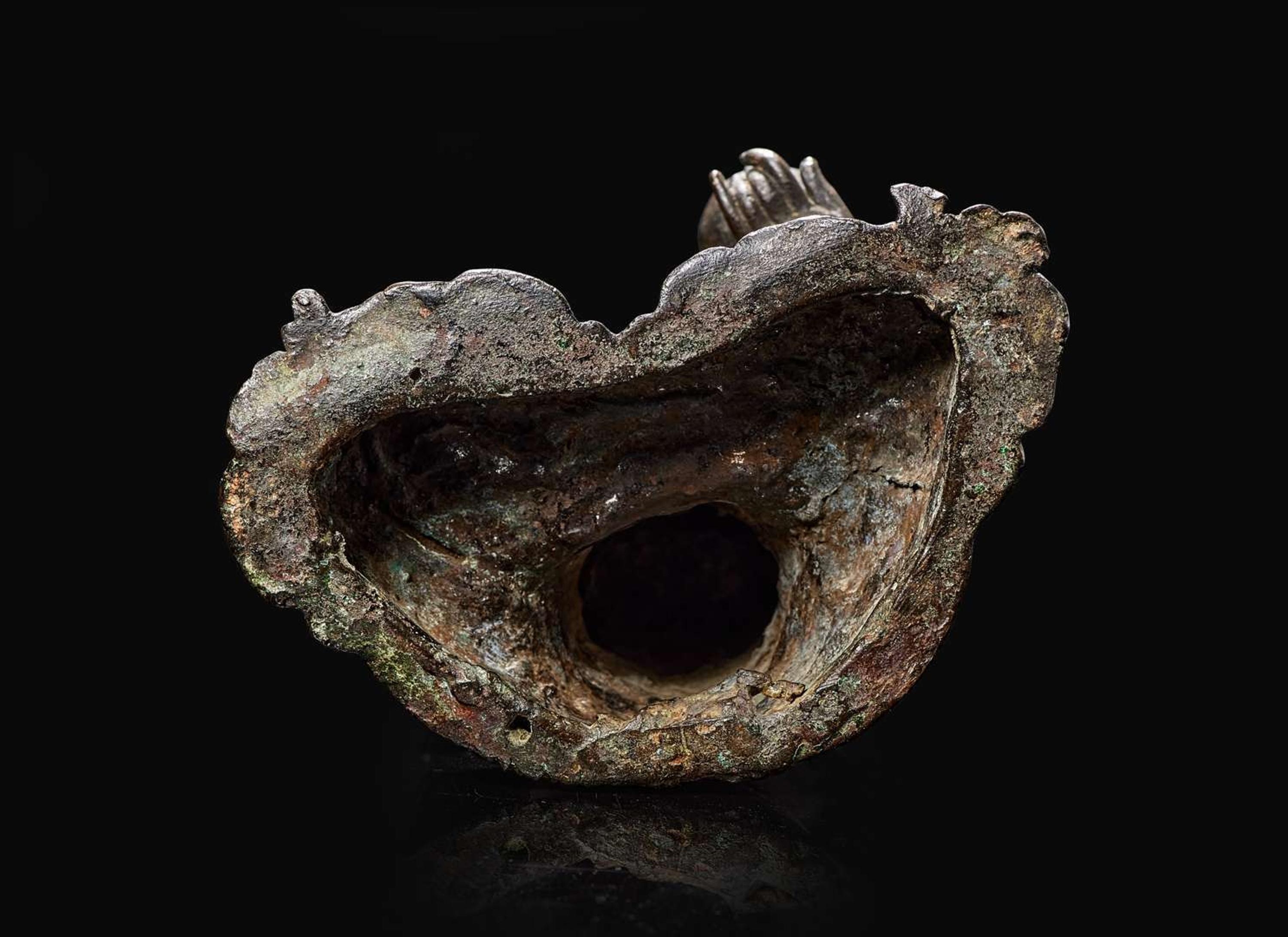
Surface encrusted and dark, scattered casting pits to metal, scattered minute traces of gilding to crevices; wear to extremities, some losses to leaves in crown, tip of one headdress scarf lost, other tip bent; possible minor losses to edges of draperies at base front, edges of draperies at base slightly bent, particularly to the front; fingertips of left hand slightly bent, a few small scattered traces of verdigris, moderate surface soiling. Chipping and wear to later wood stand, along edges and edges of base.
Images may also be found via the link below (added as completed):
https://asian.smugmug.com/Freemans-Asian-Art-1803
NOTE TO POTENTIAL BIDDERS: Descriptions provided in both printed and on-line catalogue formats do not include condition reports. The absence of a condition statement does not imply that the lot is in perfect condition or completely free from wear and tear, imperfections or the effects of aging. Interested bidders are strongly encouraged to request a condition report on any lots upon which they intend to bid, prior to placing a bid. All transactions are governed by Freeman's/Hindman Conditions of Sale.
The lot is sold in the condition it is in at the time of sale. The condition report is provided to assist you with assessing the condition of the lot and is for guidance only. Any reference to condition in the condition report for the lot does not amount to a full description of condition. The images of the lot form part of the condition report for the lot provided by Freeman's/Hindman. Certain images of the lot provided online may not accurately reflect the actual condition of the lot. In particular, the online images may represent colors and shades which are different to the lot's actual color and shades. The condition report for the lot may make reference to particular imperfections of the lot but you should note that the lot may have other faults not expressly referred to in the condition report for the lot or shown in the online images of the lot. The condition report may not refer to all faults, restoration, alteration or adaptation because Freeman's/Hindman is not a professional conservator or restorer but rather the condition report is a statement of opinion genuinely held by Freeman's/Hindman. For that reason, Freeman's/Hindman condition report is not an alternative to taking your own professional advice regarding the condition of the lot.
The physical condition of lots in our auctions can vary due to age, normal wear and tear, previous damage, and restoration/repair. All lots are sold "AS IS," in the condition they are in at the time of the auction, and we and the seller make no representation or warranty and assume no liability of any kind as to a lot's condition. Any reference to condition in a catalogue description or a condition report shall not amount to a full accounting of condition. Condition reports prepared by Freeman's staff are provided as a convenience and may be requested from the Department prior to bidding.
The absence of a posted condition report on the Freeman's website or in our catalogues should not be interpreted as commentary on an item's condition. Prospective buyers are responsible for inspecting a lot or sending their agent or conservator to inspect the lot on their behalf, and for ensuring that they have requested, received and understood any condition report provided by Freeman's.
Please email for any additional information or questions you may have regarding this lot.