To request further details about this lot, please email conditionreports@freemansauction.com
Please email conditionreports@freemansauction.com for any additional information or questions you may have
Sale 2720
| Philadelphia
| Philadelphia
To request further details about this lot, please email conditionreports@freemansauction.com
Please email conditionreports@freemansauction.com for any additional information or questions you may have
Estimate$15,000 – $25,000
Signed ‘E W Dickinson’ upper left; also dated ‘1937’ upper right, oil on canvas
26 x 30 in. (66 x 76.2cm)
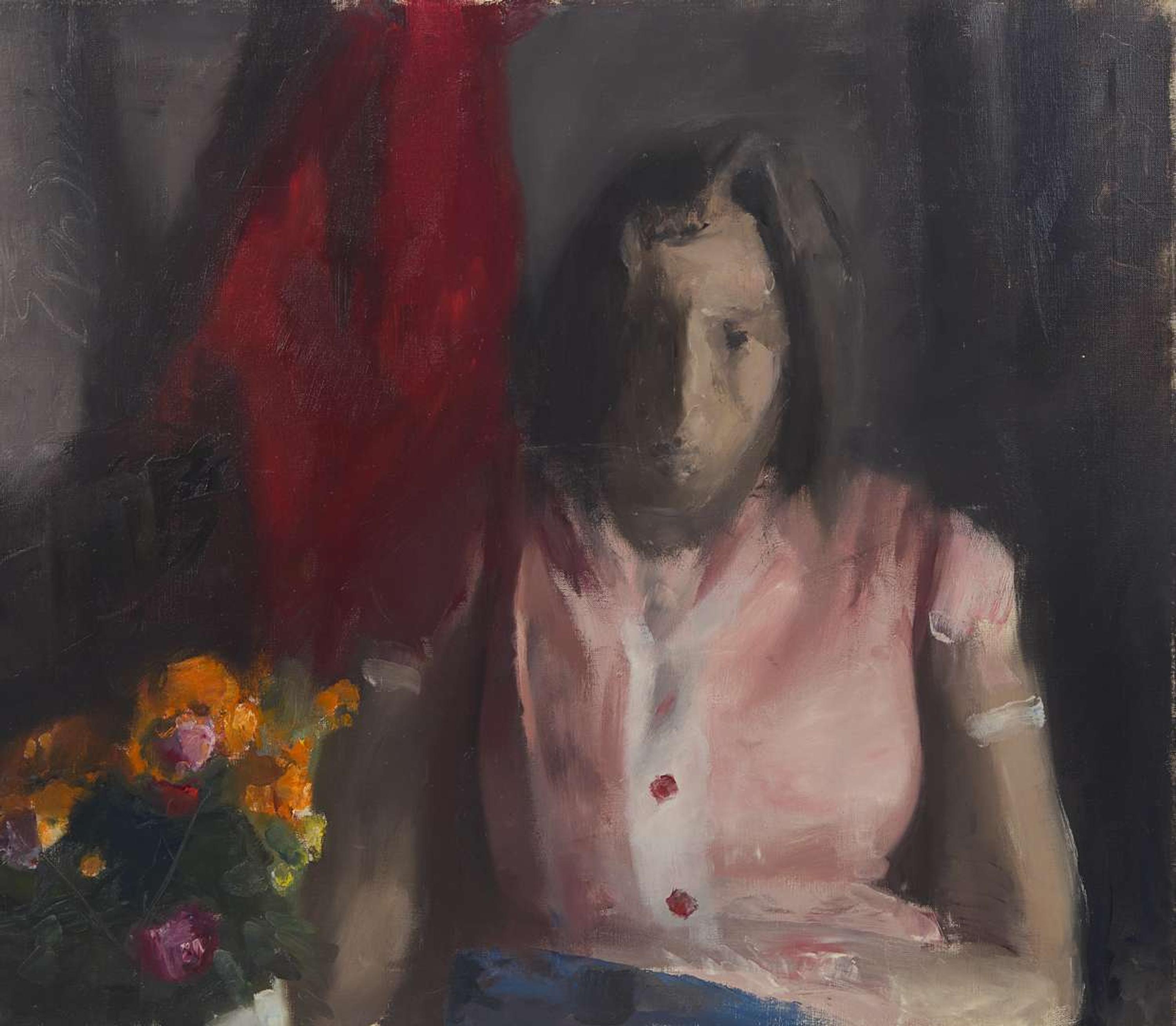
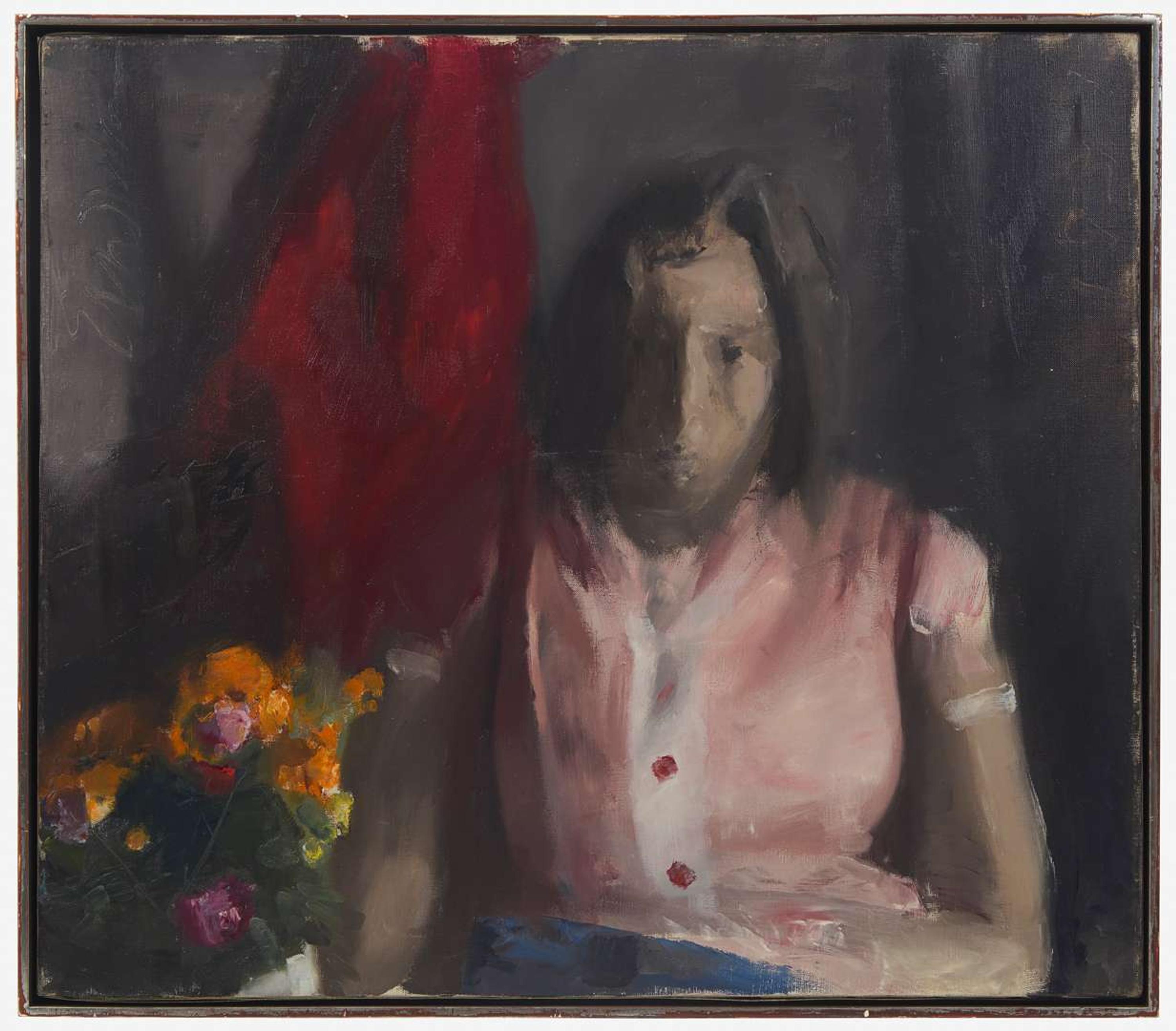
In addition to his large body of premier coup landscapes (landscape paintings executed on-site, in “one strike”), the enigmatic American artist Edwin Dickinson was also an accomplished figurative painter. Judith was painted in mid- September, 1937, in Provincetown, where the artist maintained a long-term residence from 1913-1940.
In this engaging work, which has a venerable exhibition history, the subject is seated in an interior and gazes blankly at the viewer; it is largely her open left eye of which we are aware, as her right eye, and her other facial features, are alluded to, but essentially blurred, and thus not specifically depicted, all to great emotive and expressive effect. Indeed, Mary Ellen Abell speaks of a ‘detachment’ from his subject which Dickinson experienced. Said the artist, “I very well recall...as early as 1915 I had come to the point where I could so lose track of what was the object I was doing that...after an hour straight of concentration, I was surprised to look up and see that there was a person beyond the canvas.” Dickinson sought out the elimination of detail to most accurately capture his subjects.
The American artist Elaine de Kooning noted that Dickinson would literally squint when painting, and in so doing, renders his subjects “in terms of mobile, dissolving planes.” De Kooning further cited Dickinson’s influence on a later generation of Abstract Expressionists, since Dickinson was a “painter’s painter” who looked inward, rather than outward, and emphasized “method not theory” as a guidepost for his work. The result, such as with Judith, are paintings that leave the viewer with more of a sense of mystery than of clarity. Indeed, while Dickinson studied with Charles Hawthorne and William Merritt Chase, it is noteworthy that his landscapes have been said to show influences of artists Paul Cézanne, John Constable, and Albert Pinkham Ryder.
Perhaps it is not surprising that as a longtime teacher–including in New York City, Boston, Buffalo, and Provincetown– Dickinson stressed the importance of individual critiques over rigorous doctrines in an effort to help students determine if they had achieved a “rightness” in their painting. Approaching painting without rigid doctrines may shed light on why Judith appears to us almost more as an apparition than a fully formed figure. “All of his devices–unusual poses, “unnameable color,” “interstices,” “angular” perspective, unusual angles–were about setting aside one’s preconceptions and learning to look meticulously at something as if one were encountering it "for the first time....” The goal was to complete a more honest likeness or more authentic kind of work that was fresh and original.
Collection of Mr. & Mrs. Ansley W. Sawyer.
Collection of Ansley W. Sawyer, Jr.
ACA Galleries, New York, New York.
Sotheby's Arcade, New York, sale of March 31, 1993, lot 301.
Acquired directly from the above sale.
The Collection of Sidney Rothberg, Philadelphia, Pennsylvania.