To request further details about this lot, please email conditionreports@freemansauction.com
Please email conditionreports@freemansauction.com for any additional information or questions you may have
Sale 3147
| Philadelphia
| Philadelphia
To request further details about this lot, please email conditionreports@freemansauction.com
Please email conditionreports@freemansauction.com for any additional information or questions you may have
Estimate$8,000 – $12,000
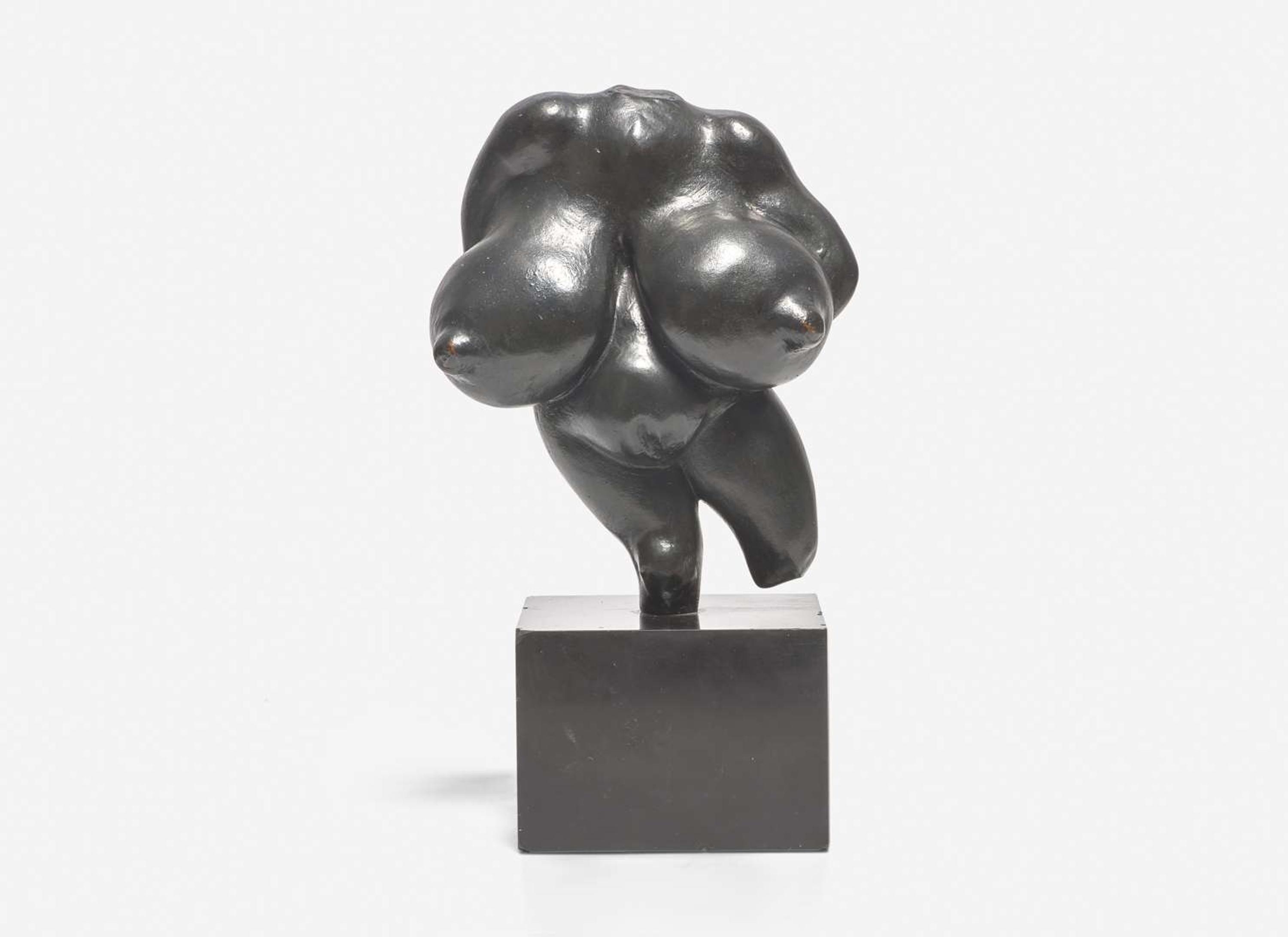
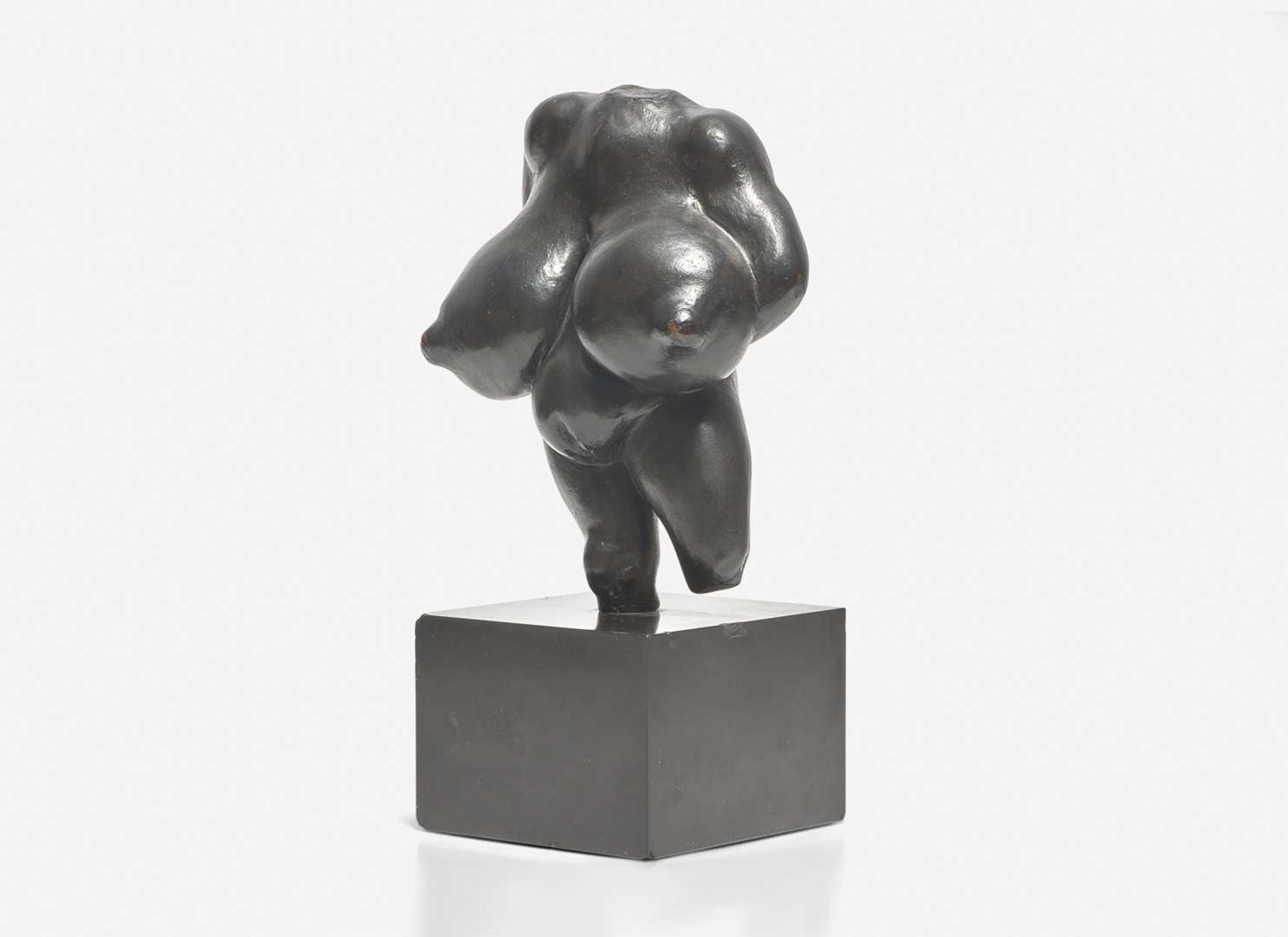
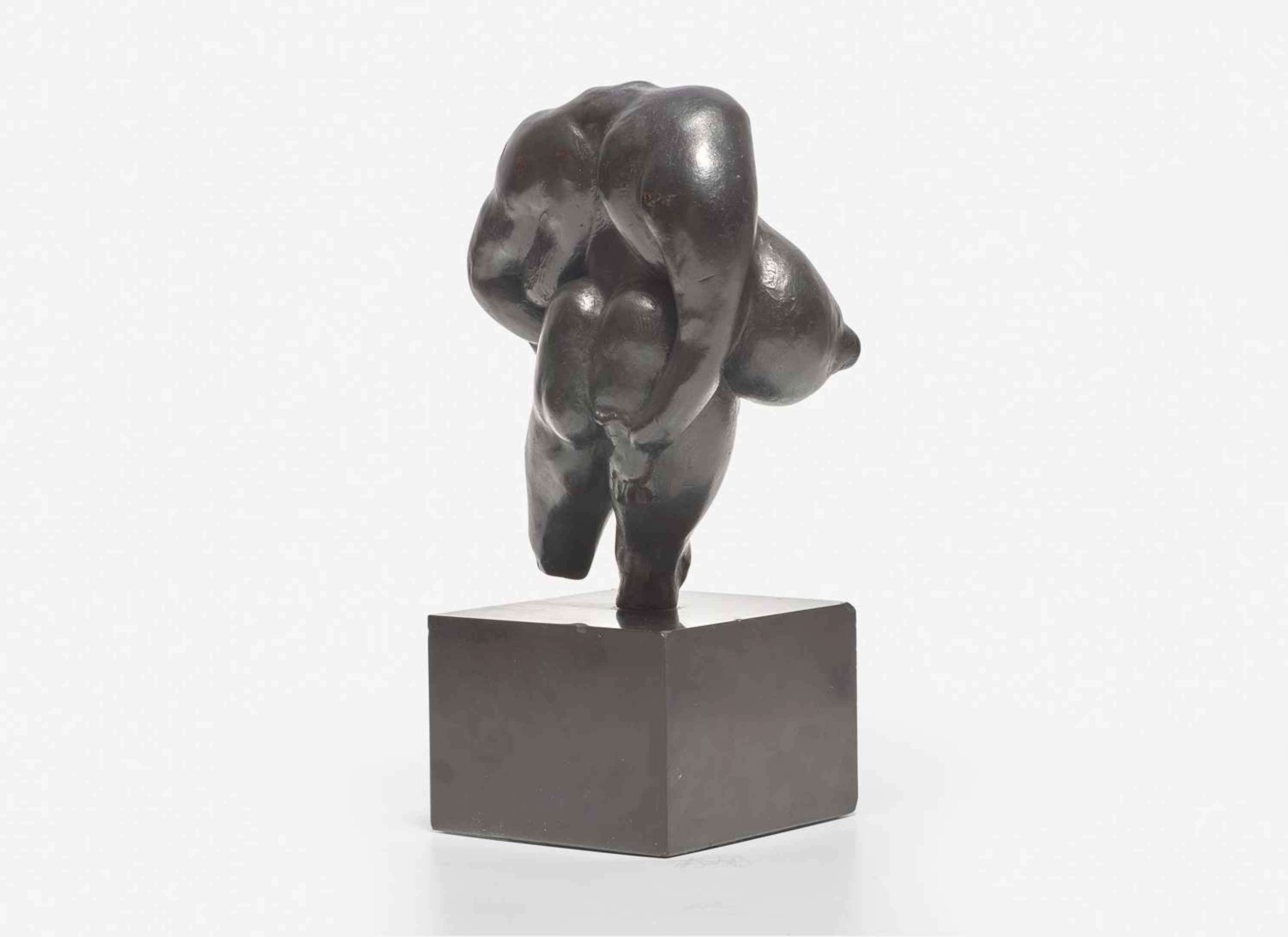
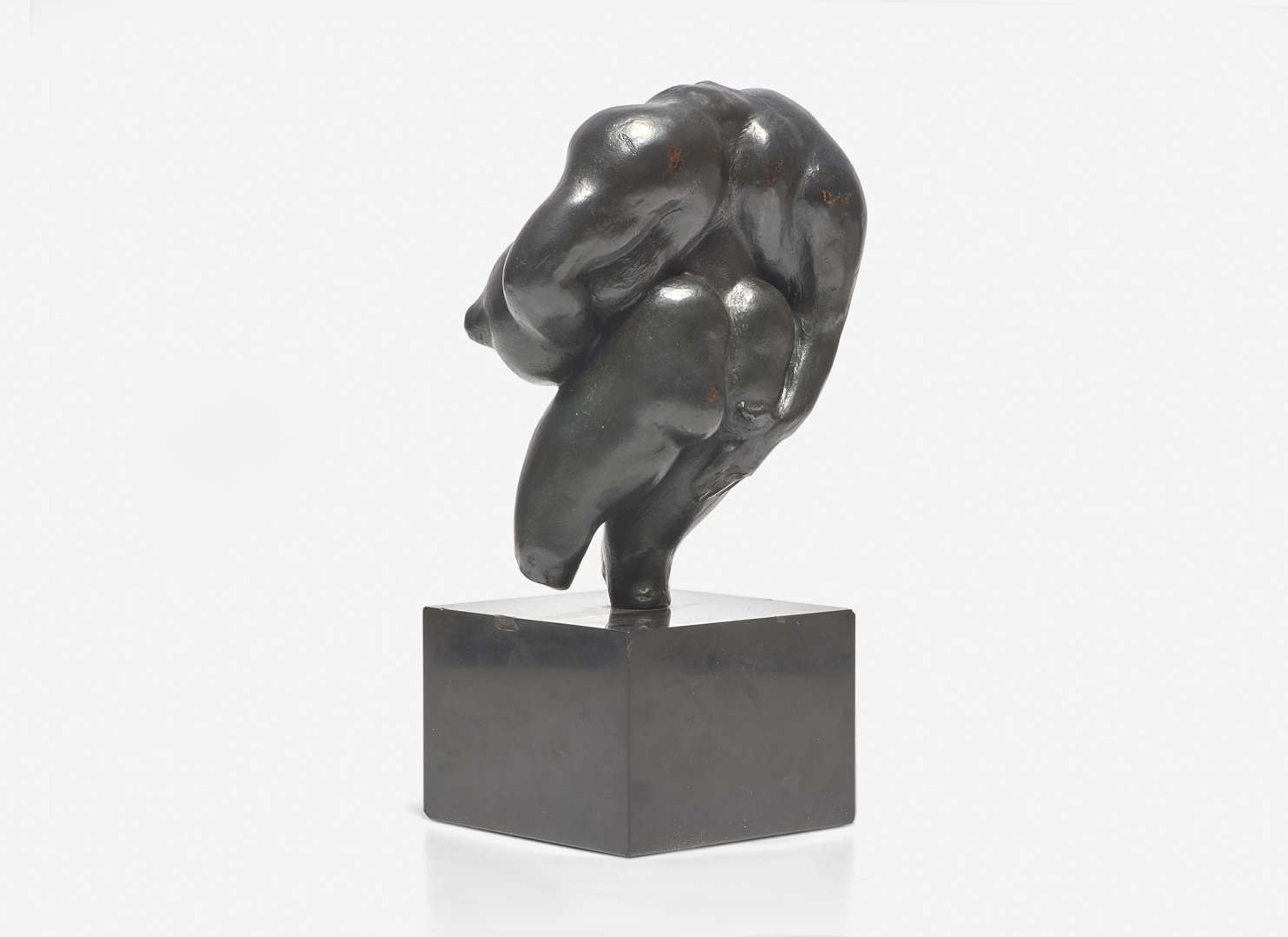
Gaston Lachaise’s extraordinary Torso [LF 79], which represents a partial figure of an opulent female nude, has often been compared to prehistoric statuettes of corpulent women generally viewed as “fertility figures.” Although Lachaise himself flatly denied any dependence on these images, he did seek to convey in his own art the sense of a powerful, elemental force that he perceived in them. He justifiably considering this force to be essential to the survival of the human race, and thus an eminently suitable subject for his art. Lachaise’s Torso [LF 79] was never exhibited during his lifetime, as its overt sexuality was thought to be too shocking for the general public. When it was first exhibited at M. Knoedler and Company, New York, in January-February 1947--as one of the most challenging pieces in the show--an example was immediately sold. Eventually this work, as well as others that emerged after his death, helped secure his reputation as one of the most innovative and daring American sculptors of the early 20th Century.
Lachaise’s typical practice in creating a sculpture like Torso was to begin with comparatively naturalistic forms and then amplify them. In the case of this particular work, he began with the plaster model of a stylized statuette of an elegant, “dancing” nude woman that he had created in 1919, then both eliminated parts of the model and added a pliable material to the resulting fragment (see Virginia Budny, “Provocative Extremes: Gaston Lachaise’s Women,” Sculpture Review, vol. 14, no. 2 (Summer 2014), pp. p. 12, 19, 19n.9). By enlarging and reshaping select parts of the anatomy in this way, he made the swaying woman’s body seem to be impelled by a supercharged, activated impulse and to take on a heightened, iconic significance. The new work is now generally dated 1928, and, although there is no evidence for that precise date, it was demonstrably not begun before June 1928. According to Lachaise’s widow (who is not always accurate), it was created in 1928-1931- during a period when his style was becoming increasingly bold.
Although the present cast is reported to have previously been owned by Farouk I (king of Egypt from 1936 to 1952), and hence the occasional designation “Farouk Torso” for the sculpture, that account is likely apocryphal. It doubtless is the bronze made by the Gargani Foundry, New York, that was sold by Knoedler in April 1948 to the pioneering film director Rex Ingram, who is perhaps best known for The Four Horsemen of the Apocalypse (1921). Ingram purchased his bronze upon his return from a trip to Cairo, Egypt, on his way to his home in North Hollywood, California. He died, aged 58, in 1950, leaving his entire estate to his widow, the silent screen actress Alice Terry (1899-1987). His bronze must be the one put up for sale by a Los Angeles dealer in 1962, when it was linked to Egypt’s sybaritic ex-ruler- presumably on the basis of Ingram’s adventuresome travels. When the so-called Farouk cast was exhibited at the Los Angeles County Museum of Art in 1963, it was dated 1947 (although not verified, that date is likely correct). That the present cast is the one included in the show, is evidenced by the fragmentary exhibition label formerly attached to its marble base.
In addition to Ingram’s bronze, three casts of Torso were sold by Knoedler between 1947 and 1951, the first in January 1947 to William Ward (c. 1908-1977), a prominent New York fashion photographer. Ward’s cast, which is untraced, appears to have been produced during Lachaise’s lifetime. Another cast, produced by Roman Bronze Works, New York, in 1950, was made for a sale to Wright Ludington (1900-1992); it was later bequeathed by Ludington to the Santa Barbara Museum of Art (which he co-founded). The last of these, also made by Roman Bronze Works, went in 1951 to the stylish heiress Millicent Rogers (1902-1953); hers was sold at auction in 1955. It appears to be the one acquired by Lois Orswell (1904-1998) by 1956, and eventually donated by her to the Harvard Art Museums/Fogg Museum. (Orswell’s cast was said in 1956 to have been produced in 1947; that casting date has not been verified.) Like the present cast, the Harvard and Santa Barbara casts have a black patina, hence the occasional name “Black Torso,” and all lack an inscribed signature, date, and foundry mark. A “Black Torso” said to have been cast in 1957 for the artist’s widow, and sold in Philadelphia in the following year, lacks further documentation. From approximately 1965 to 1989, an edition of eight numbered Estate casts was issued by the Lachaise Foundation. One of those casts (4/8) belongs to the Sidney and Lois Eskenazi Museum of Art, Indiana University, Bloomington. The Lachaise Foundation owns the plaster model, assigned the identifying number LF 79 to the work, and intends to make an artist’s proof. - Virginia Budny, author of the forthcoming catalogue raisonné sponsored by the Lachaise Foundation
M. Knoedler & Co, New York, New York.
Rex Ingram, North Hollywood, California (acquired directly from the above April 1948).
Oscar Meyer Antiques, Los Angeles, California.
Parke-Bernet Galleries, Inc., New York, March 21, 1962, lot 40.
Robert Q. Lewis, New York, New York and Los Angeles, California.
Parke-Bernet Galleries, Inc., New York, November 19, 1964, lot 40.
Allan Stone Collection, New York.
Private Collection, New York (acquired directly from the above).