To request further details about this lot, please email conditionreports@freemansauction.com
Please email conditionreports@freemansauction.com for any additional information or questions you may have
Sale 2646
| Philadelphia
| Philadelphia
To request further details about this lot, please email conditionreports@freemansauction.com
Please email conditionreports@freemansauction.com for any additional information or questions you may have
Estimate$10,000 – $15,000
Exhibited
New Jersey State Museum, Trenton, New Jersey, n.d.
Note
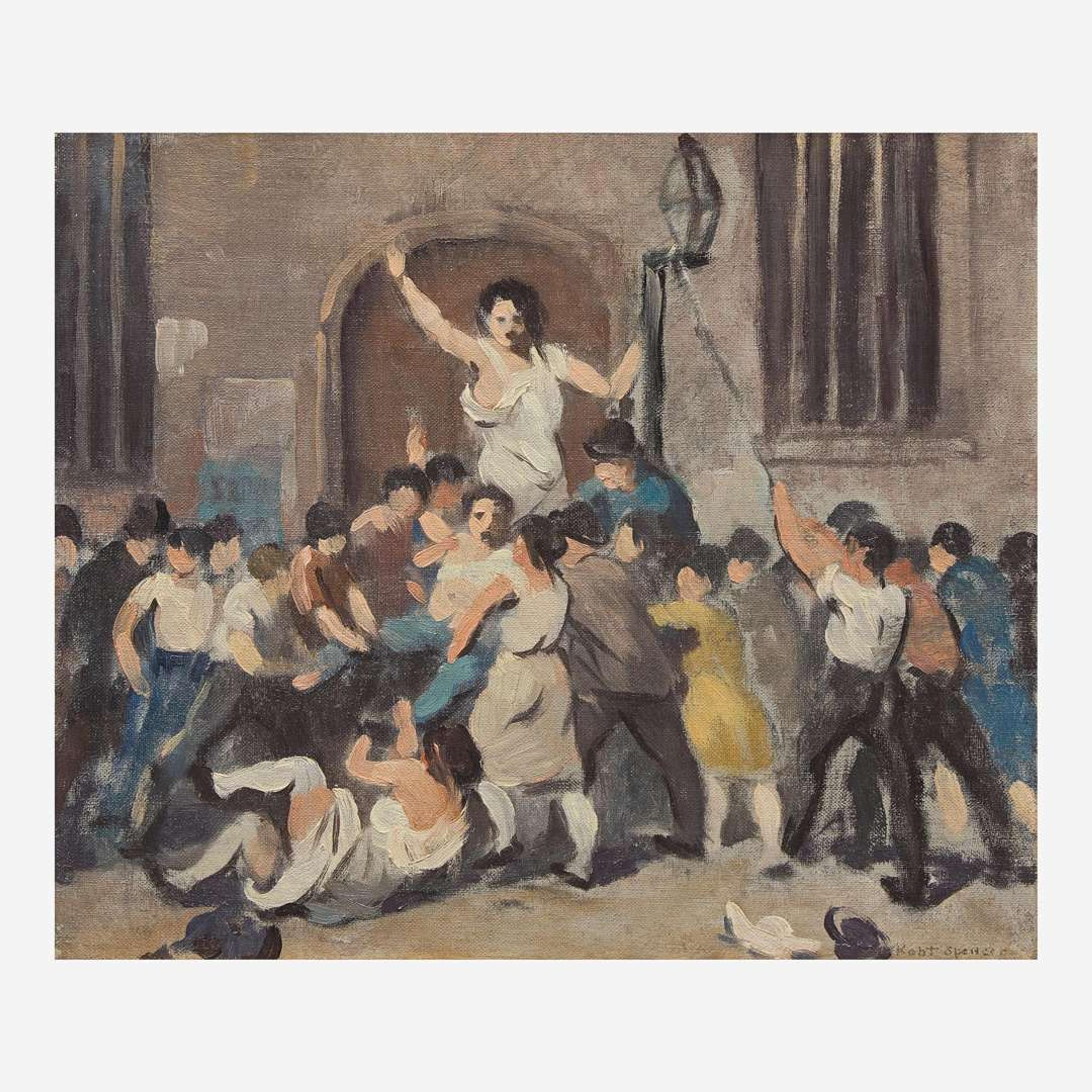
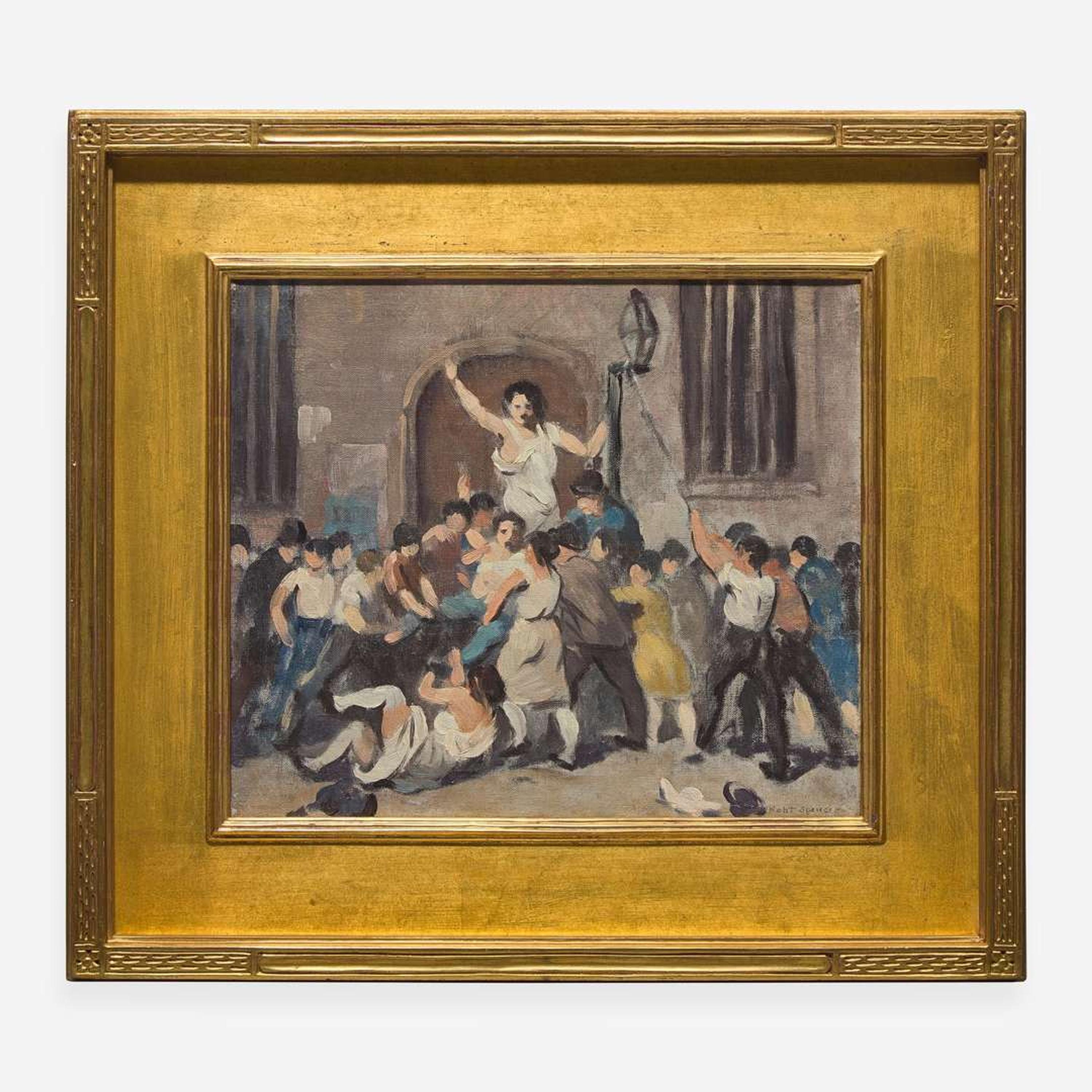
Robert Spencer is often credited for being the more social of the Pennsylvania Impressionists, not only conscious of the working class' daily activities and struggles, but also willing to show it on canvas. While his earlier works touched on the reality of their laborious life through depictions of working mills and realistic activities such as huckster's visits in carts, or workers walking home at the end of their shifts, we note that Spencer gradually started to paint imaginary events towards the end of his career. In a letter to Duncan Phillips in 1926, he described a tormented creative process by explaining the need to create a vision before painting it as if it were real, the painting thus becoming "imagination solidified." This shift in his career is not surprising since Spencer was already familiar with depicting real-looking places filled with inhabitants during his time in Europe, without necessarily having been there, or looking like a specific town. According to scholar Brian H. Peterson, applied to his figure paintings, such a philosophy meant that Spencer started to imagine events that never really occurred, yet seemed realistic, and to an extent imply an allegorical approach, and "gave him an outlet for a bit of a sly commentary on his less-than-perfect marriage" to Margaret Fulton Spencer. It is in this light that, according to Peterson, Mob Vengeance and the present study for the final work, should be analyzed, thus comparing it to Happy Family and Alarm Clock.
Seeking an exact resemblance between the Spencers and the figures depicted in the oil might be hazardous. However, one can argue that the tempestuous relationship between the artist and his wife, as well the overall depressive personality of Spencer (who would commit suicide less than a year after executing the present study) can perhaps explain the genesis of such a body of works. At any rate, they betray Spencer's sardonic humor and self-deprecation. In the end, the artist -who never really identified with his models and considered himself a "patrician"- surely wanted to keep the meaning of such social allegories enigmatic, the real truth being known to him only.
Provenance
Private Collection, Florida.