To request further details about this lot, please email conditionreports@freemansauction.com
Please email conditionreports@freemansauction.com for any additional information or questions you may have
Sale 2646
| Philadelphia
| Philadelphia
To request further details about this lot, please email conditionreports@freemansauction.com
Please email conditionreports@freemansauction.com for any additional information or questions you may have
Estimate$50,000 – $80,000
Exhibited
"Ninety-Eighth Annual Exhibition," National Academy of Design, New York, New York, March 17–April 15, 1923, no. 44.
"Third Exhibition of Contemporary American Painting," Cleveland Museum of Art, Cleveland, Ohio, June 7–July 8, 1923.
"Thirty-Fourth Annual Exhibition of American Paintings," Art Institute of Chicago, Chicago, Illinois, November 1–December 9, 1923, no. 72.
Grand Central Galleries, New York, New York, Fall 1924.
"One Hundred Nineteenth Annual Exhibition," Pennsylvania Academy of the Fine Arts, Philadelphia, Pennsylvania, February 3–March 23, 1924, no. 9.
"Twenty Third International Exhibition of Paintings," The Carnegie Institute, Pittsburgh, Pennsylvania, April 24–June 15, 1924.
Canadian National Academy of Design, Toronto, Ontario, Canada, August 23–September 6, 1924.
"Eleventh Annual Exhibition of Paintings by American Artists," Detroit Institute of Arts, Detroit, Michigan, April 21–May 31, 1925, no. 35.
"Exhibition of Fine Arts," Los Angeles Exposition, Los Angeles, California, November 3, 1925–January 1, 1926.
"Exhibition of Fine Arts," Phillips Mill Community Association, New Hope, Pennsylvania, October 5–27, 1929.
Dayton Museum of Art, Dayton, Ohio, September 1933.
"John Folinsbee and American Modernism," Woodmere Art Museum, Philadelphia, Pennsylvania, November 6, 2010–March 6, 2011.
Literature
98th Annual Exhibition, an exhibition catalogue, National Academy of Design, Washington, D.C., 1923 p. 53 (illustrated).
"The World of Art: Landscapes and Prints at the National Academy" in New York Times, April 1, 1923 (illustrated).
Kirsten M. Jensen, Folinsbee Considered, Hudson Hills Press, Manchester, 2013, no. 946, pp. 18, 58-59, 166, 240, 243-244; 282, 293-295, 298-299, 310 color plate 17 (illustrated several times); also accessible on the Artist's online Catalogue Raisonné at https://www.johnfolinsbee.org/ under no. JFF.946.
Note
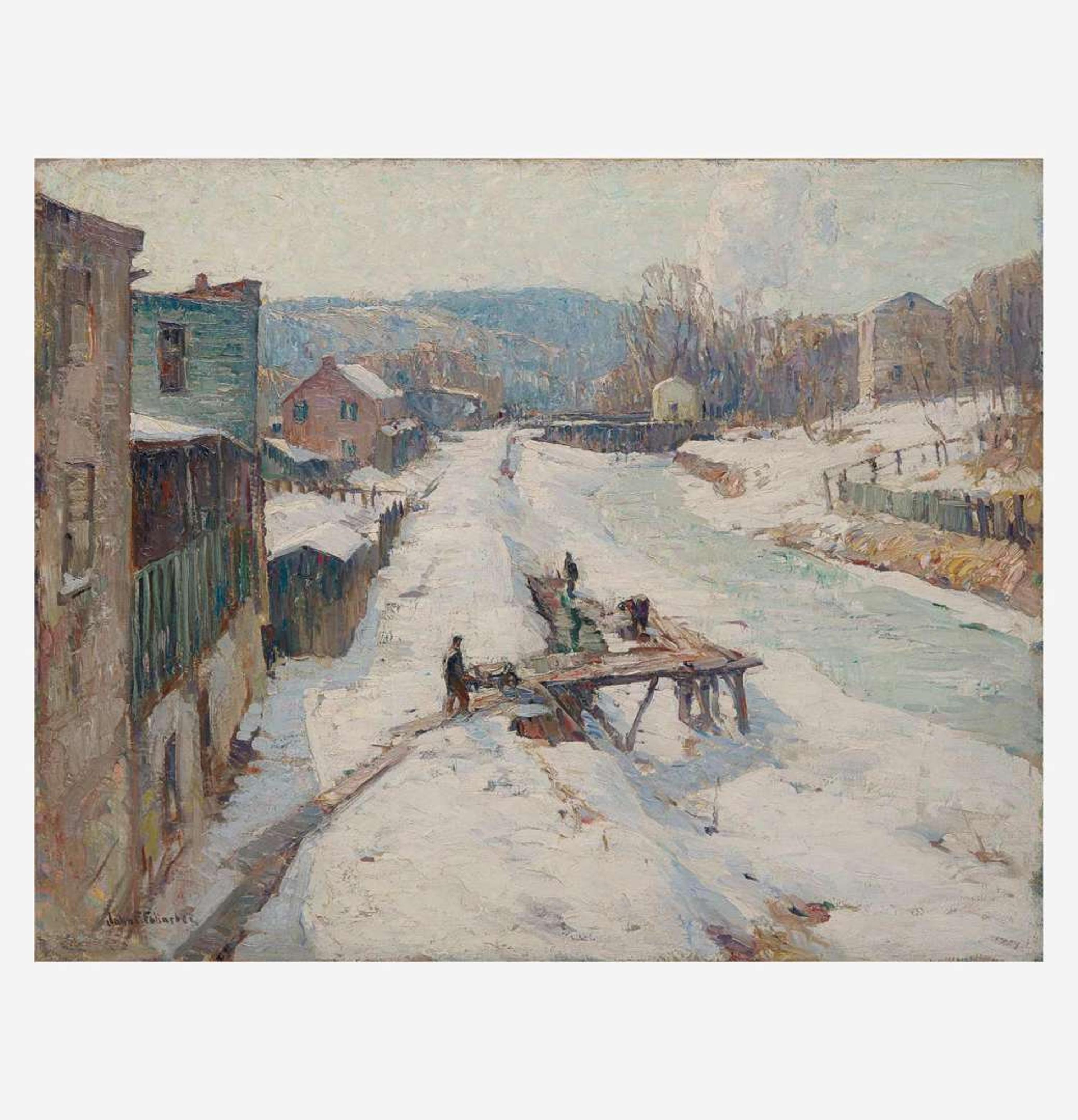
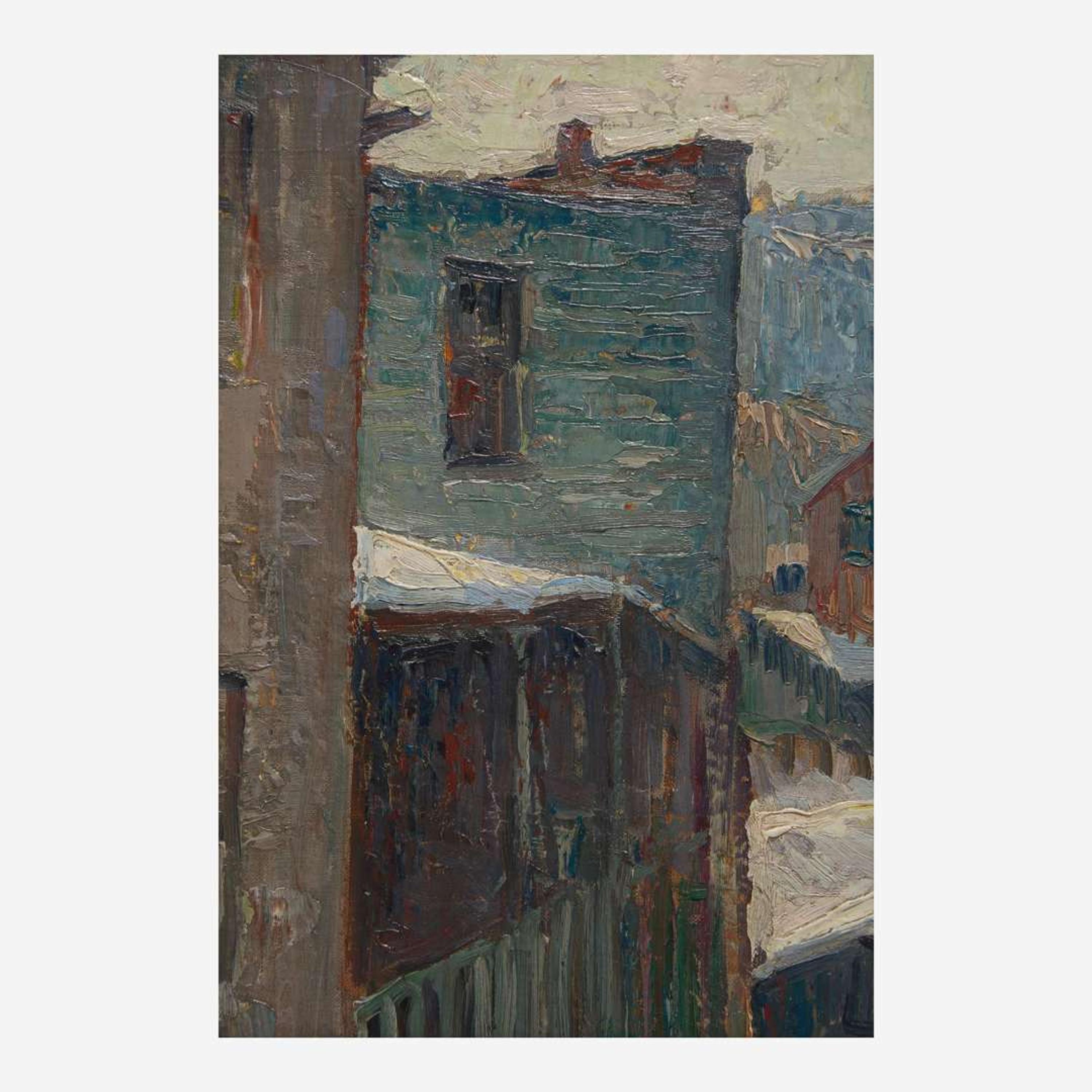
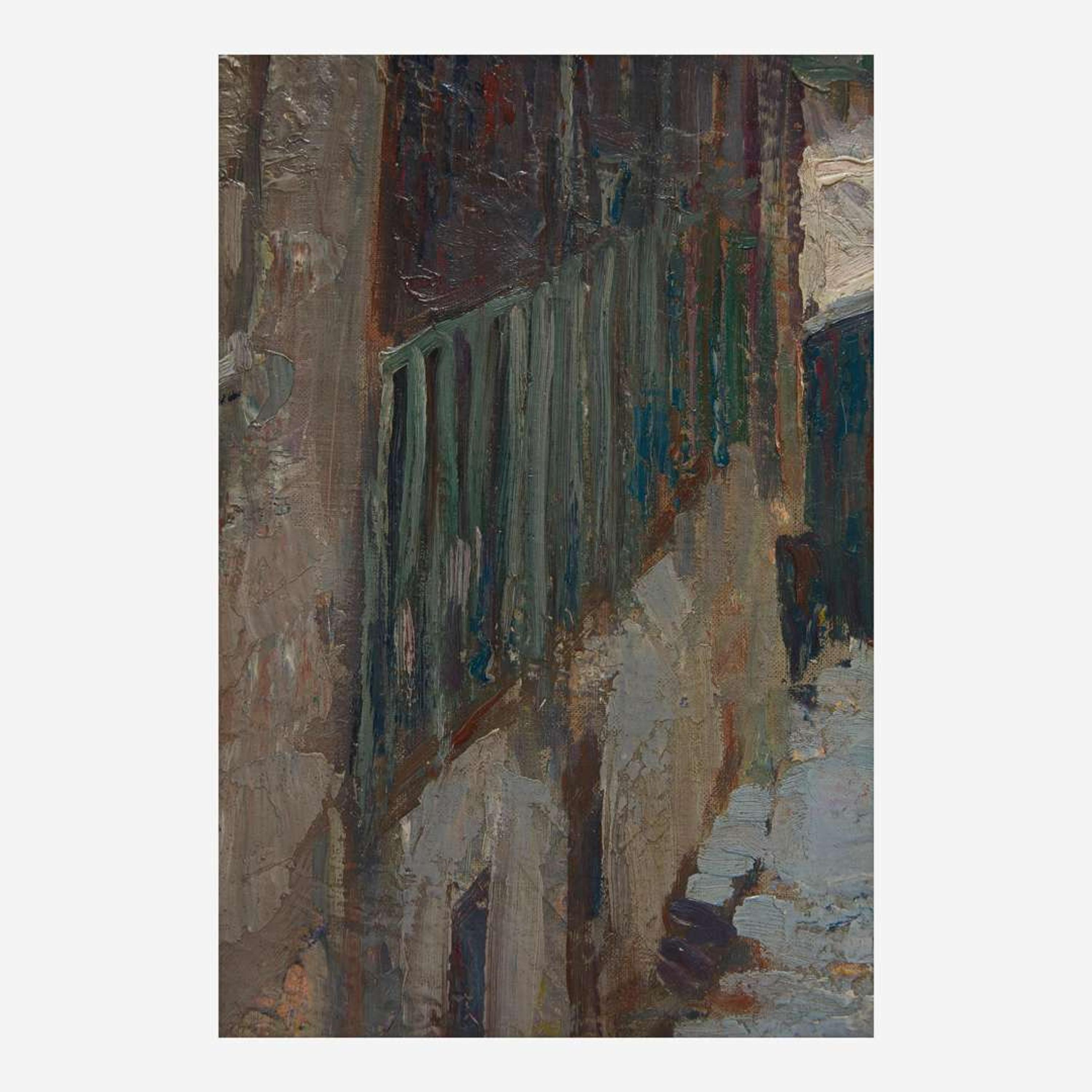
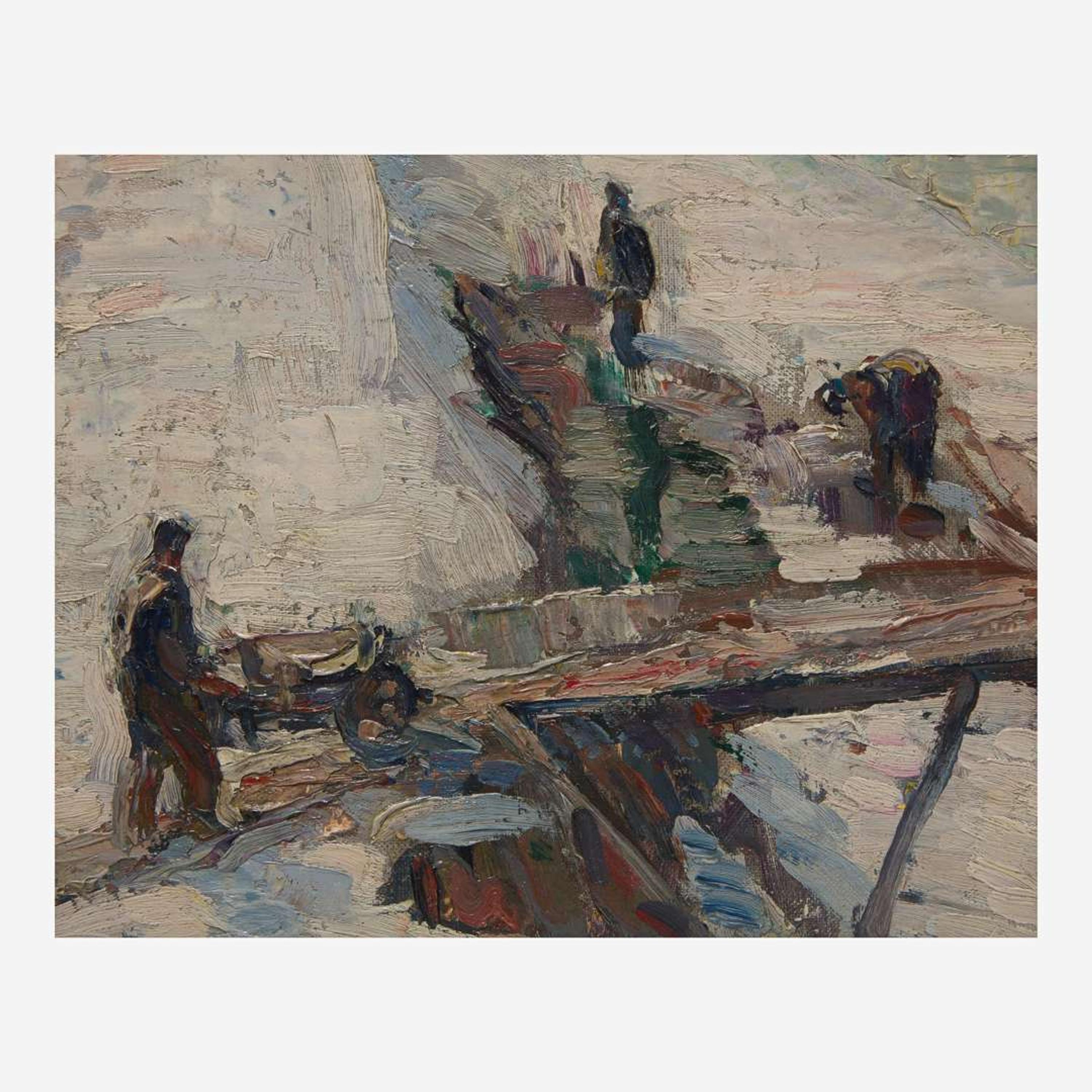
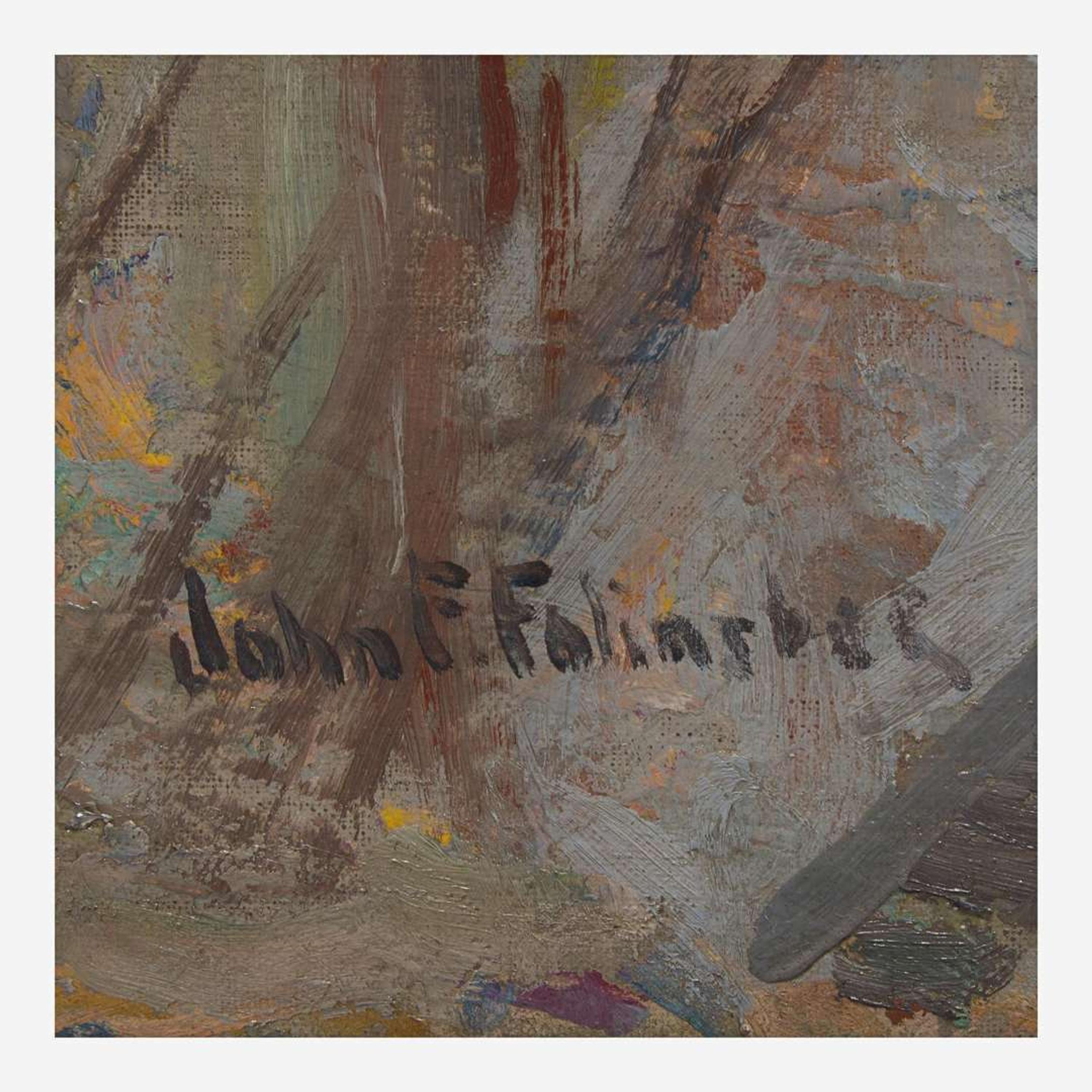
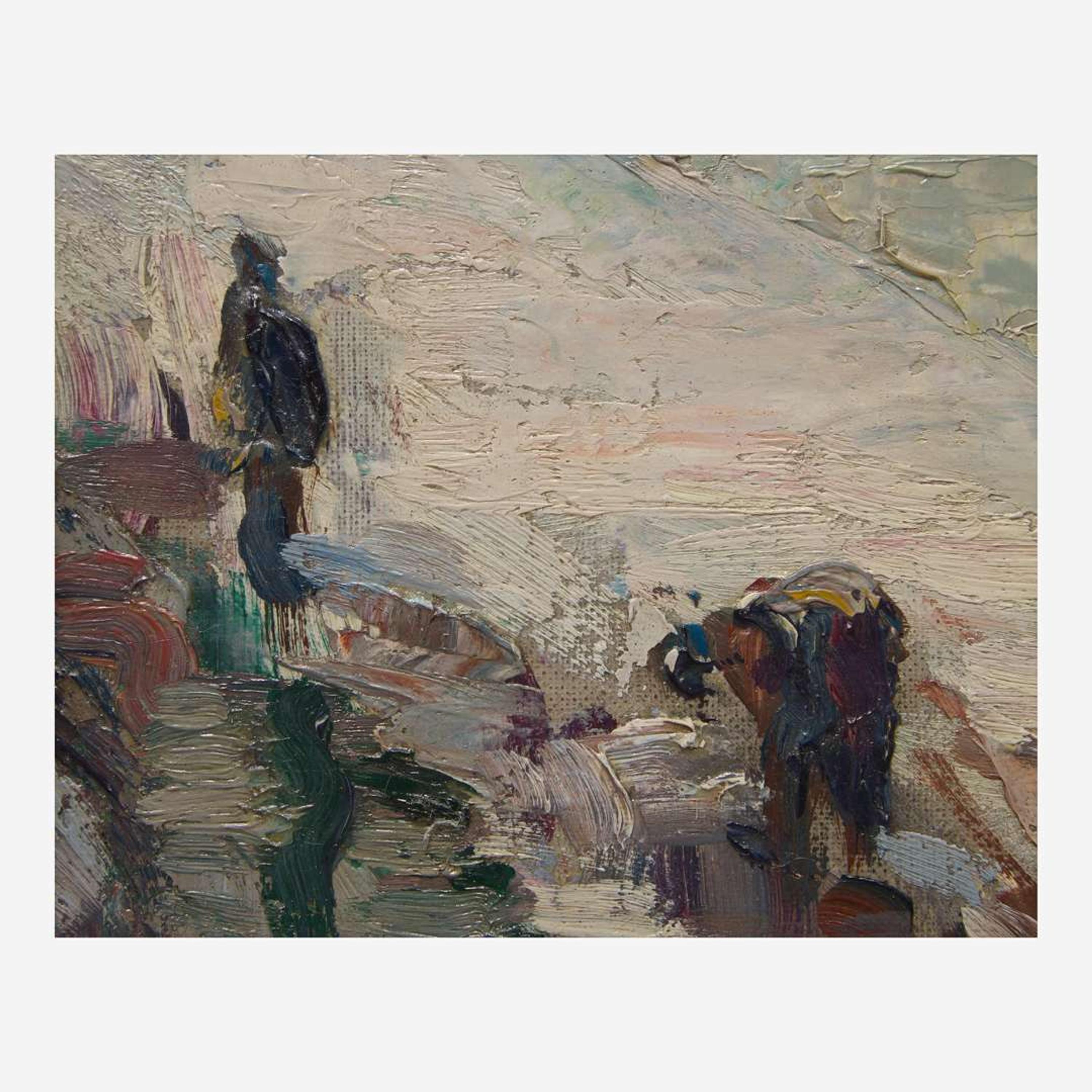
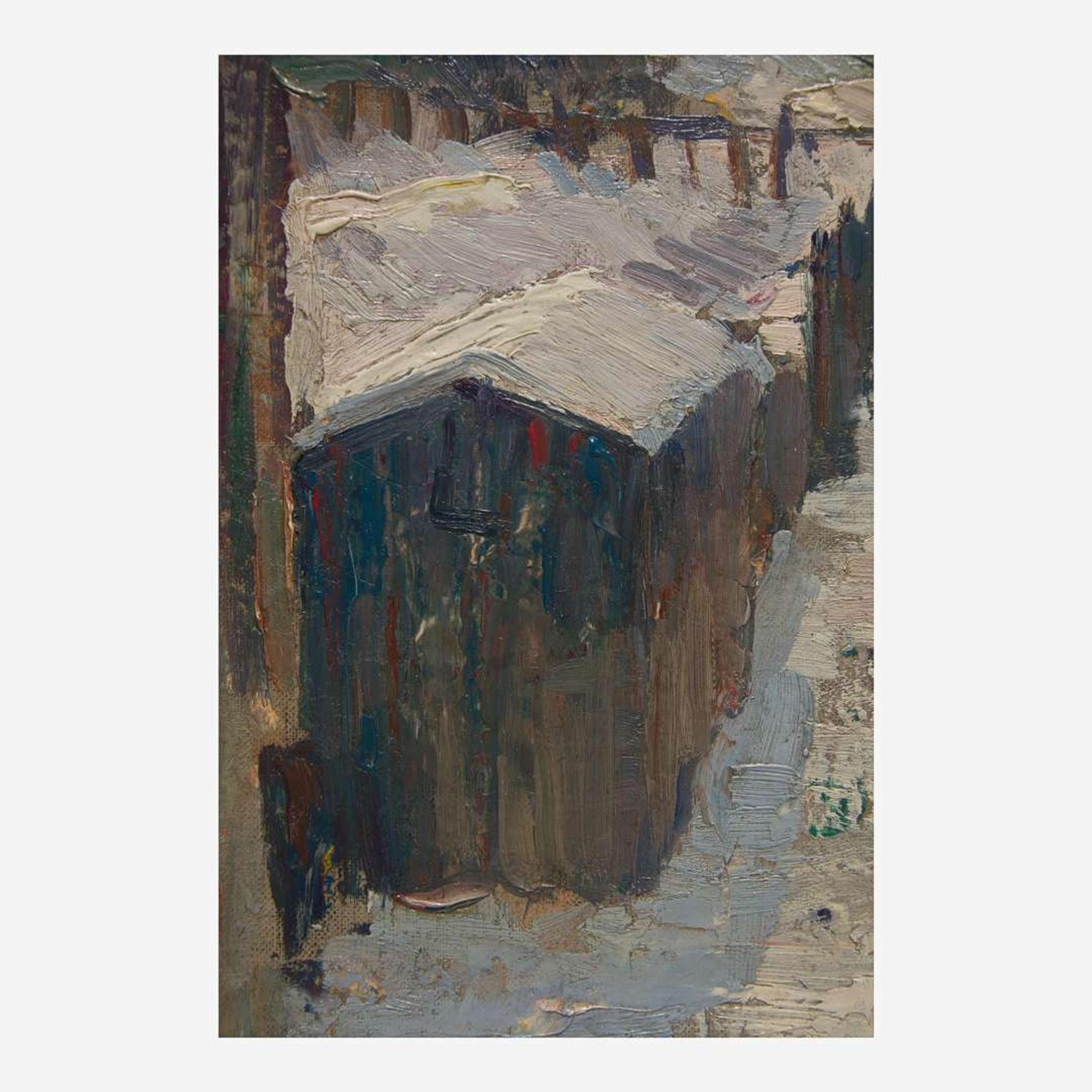
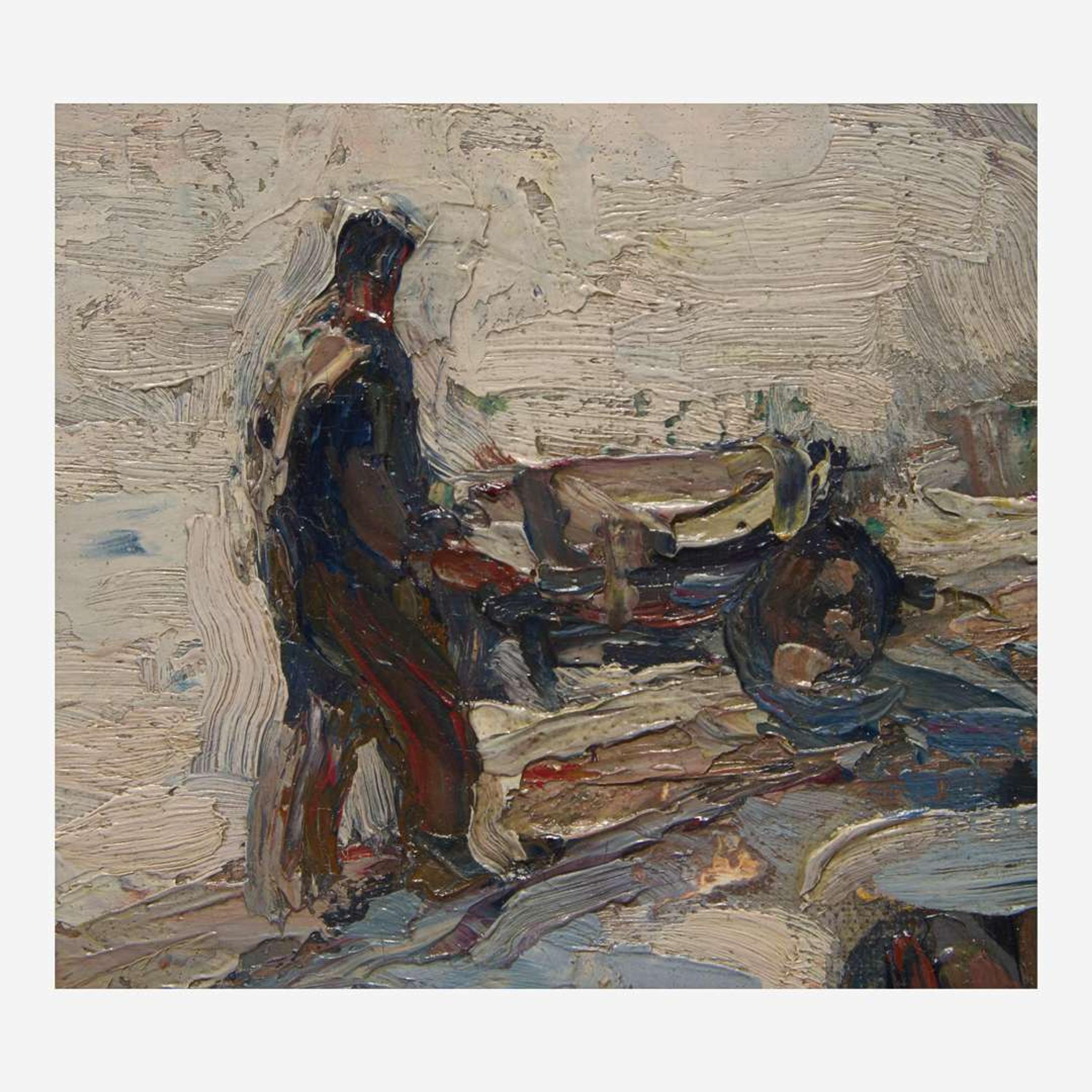
In the early 1920s, Folinsbee travelled to New England and visited the art colonies of Gloucester and Ipswich, Massachusetts, as well as the nearby towns of Rockport and Annisquam, where he joined his friends Jonas Lie and Harry Leith-Ross. Upon his return to New Hope, Folinsbee had found a new inspiration and adopted a different style, bolder in execution and color, with sparkling jewel-tones and less muted, atmospheric qualities. Slowly, the artist began to incorporate such novelties into his winter scenes, as proven by Mending the Canal Bank, which radiates with bright swaths of greens, blues as well as subtle touches of pinks, yellows and reds. As Kristen Jensen notes, while "Folinsbee's earlier winter landscapes are more poetic, with soft snow and quiet misty atmospheres (...), those from the early 1920s are highly emotive, with a deep, mysterious quality that stems directly from his altered palette and changing interest in light." At the same time, Folinsbee began to experiment with a new way to compose his paintings, usually using a nearby canal or river to guide the viewer's eye into the deep-end of the pictorial space, as exemplified here through the use, not only of the sinuous canal that stretches into the horizon, but also of the presence of several tall buildings rising to the left of the canal bank, thus imposing a graduated tunnel vision that allows our eye to venture everywhere in the canvas, and to capture the energetic palette knife, and rich impasto. Jensen notes that the solidity of the buildings on the left also nicely contrasts with the rest of the canvas, which relies on more subtle and curving shapes, "which shimmer and shift with longer and more fluid brushstrokes." Critics did notice the difference, and when Mending the Canal Bank was exhibited in 1923, The New York Times noted an "absence of claptrap, the same clear understanding of the physical side of [its] subject." A review of Folinsbee's solo show at Ferargil the following year applauded the artist's use of higher-keyed color as well as his newfound "growth on the technical side." Interestingly, such technique is what makes Mending the Canal Bank a resolutely contemporary canvas, although figurative. It is indebted to the Ashcan School, and especially to Robert Henri, who employed the same compositional tactics to emphasize "the cavernous valleys created by the skyscrapers of the modern metropolis," thus proving that Folinsbee's choice to depict the rural world in which he lived still allowed him to reach modernity and share the aesthetic sensibility adopted by New York art circles at the time.
Provenance
The Artist.
Collection of Ruth Baldwin Folinsbee, the Artist's wife.
Private Collection, Florida.