
To request further details about this lot, please email conditionreports@freemansauction.com
Please email conditionreports@freemansauction.com for any additional information or questions you may have
Sale 6113
| Philadelphia
| Philadelphia
To request further details about this lot, please email conditionreports@freemansauction.com
Please email conditionreports@freemansauction.com for any additional information or questions you may have
Estimate$10,000 – $15,000
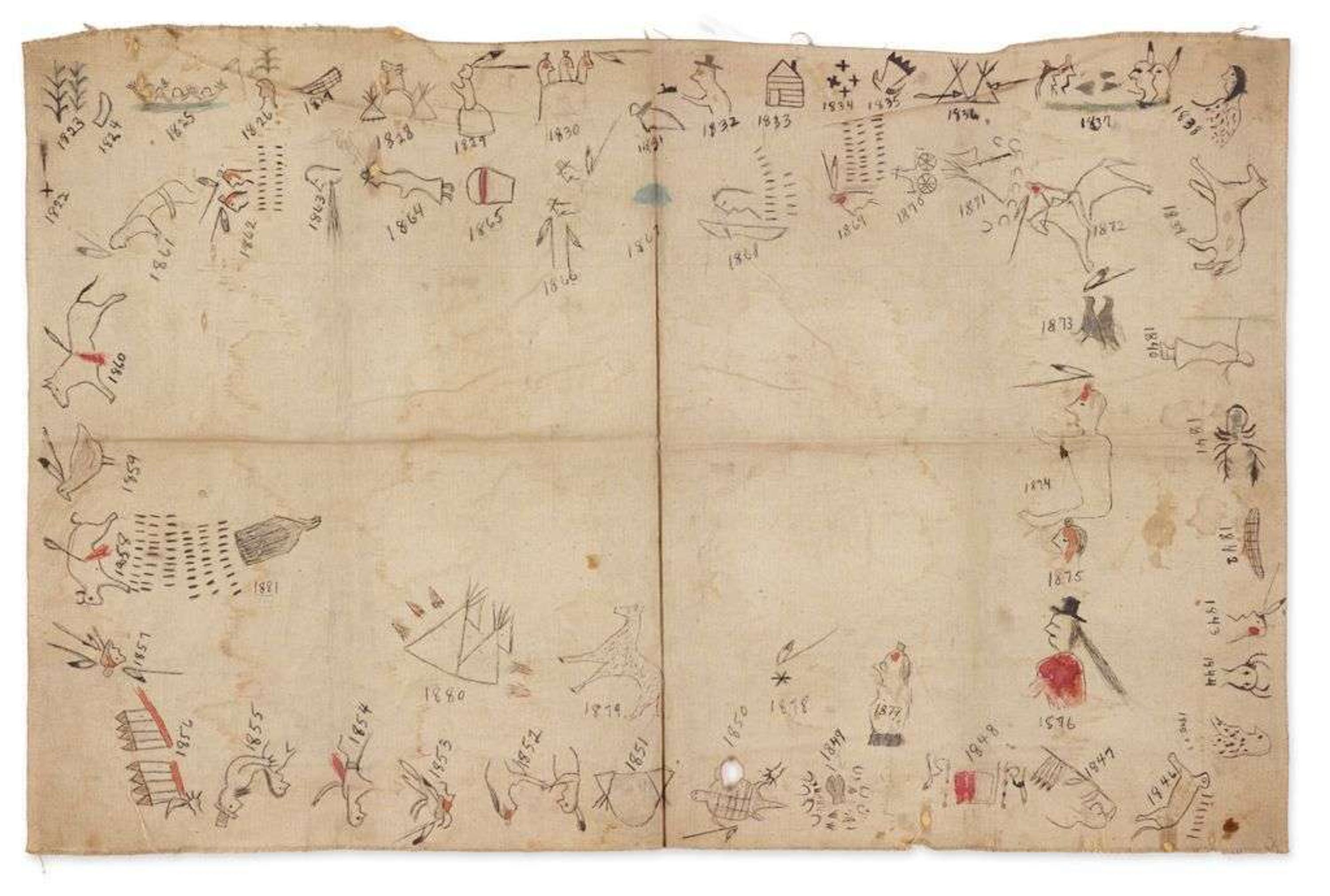
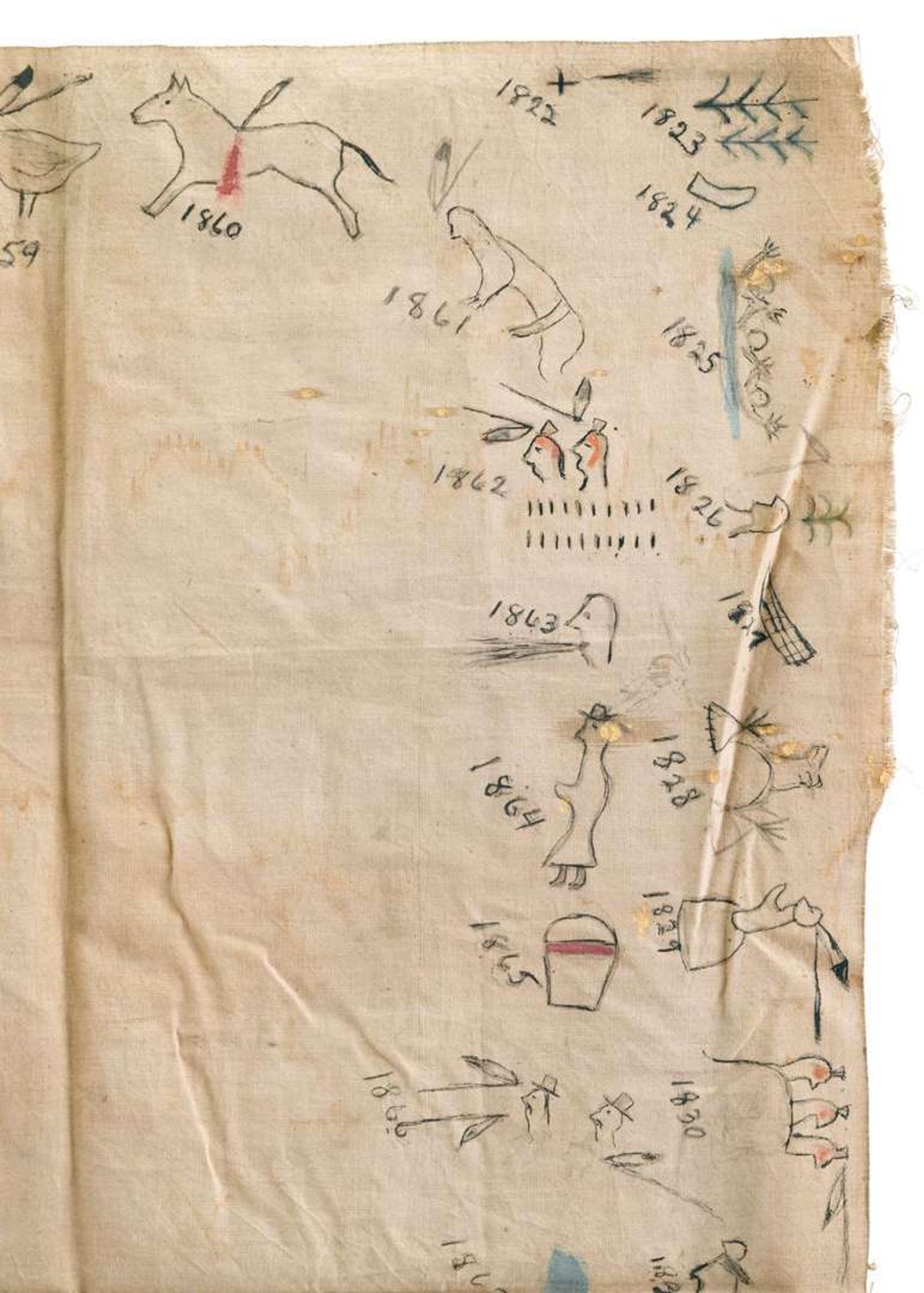
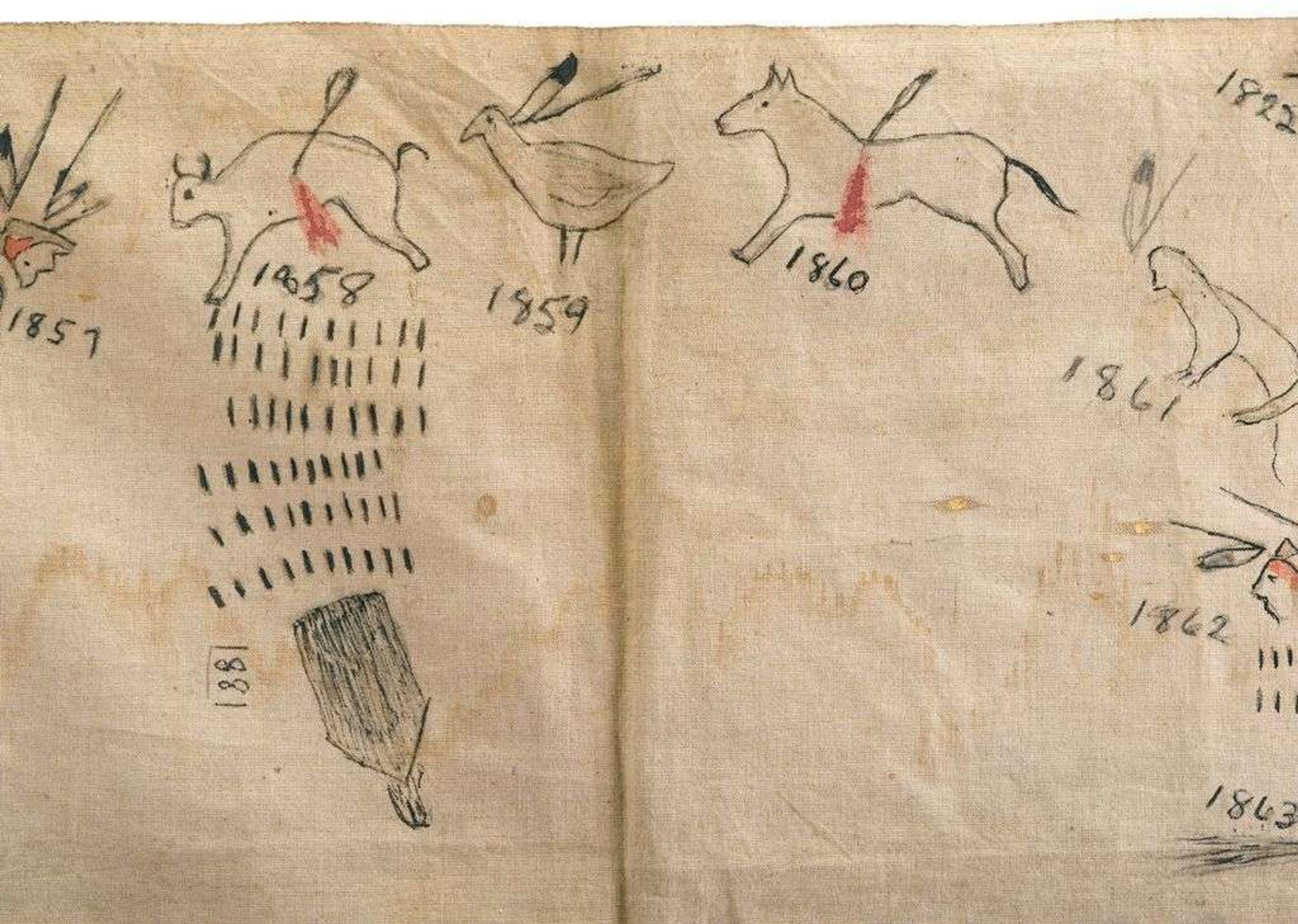
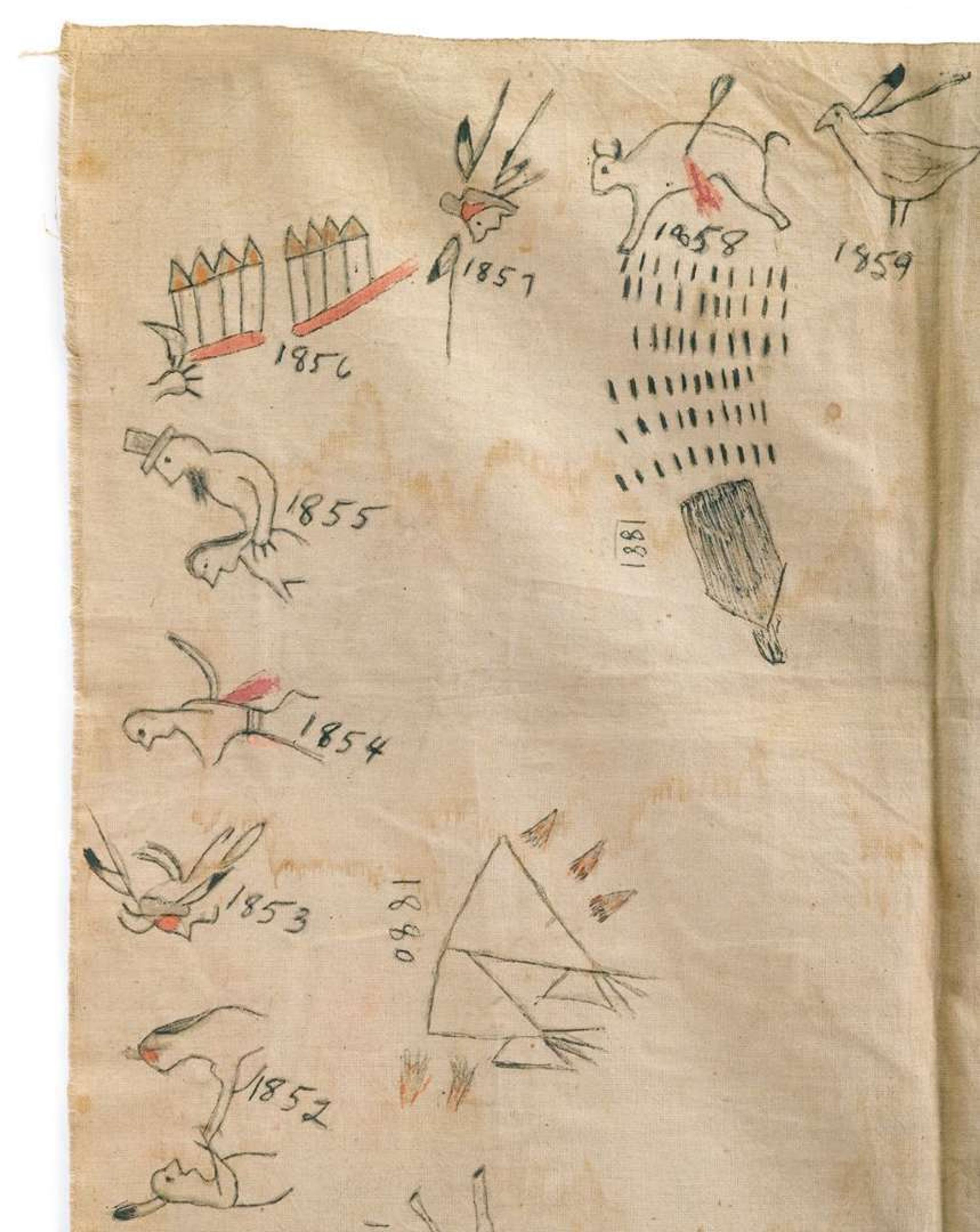
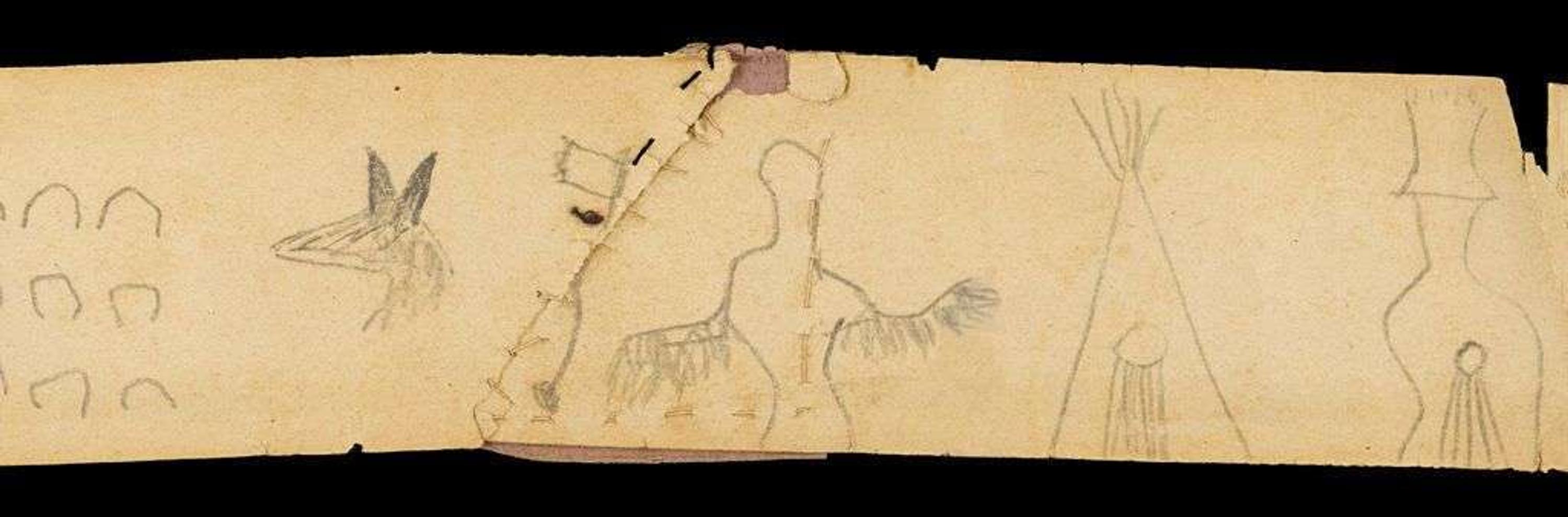
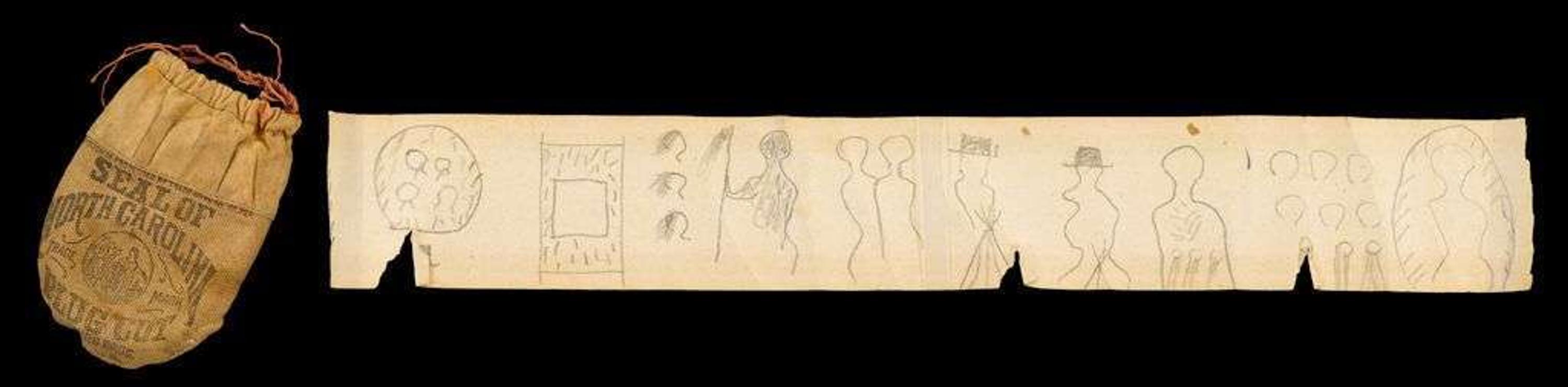
Ink and watercolor on muslin, hand-drawn pictographs and dates from 1822 to 1881; together with a paper roll with pencil-drawn pictographs, roll stored in small tobacco pouch, now in four sections.
35 1/4 in. x 22 1/4 in.Winter Counts are pictographic calendars hand-drawn on animal skins or muslin fabric used to record the histories of a Lakota community. These calendars illustrate unique events-often wars, natural phenomena or illnesses-used as mneumonic devices to recall a particular year. Each community has a Winter Count keeper who is responsible for choosing, with the tribe council, the unique event to represent each Lakota year, recording such events, and presenting the count to the community during special ceremonies. After a Winter Count keeper dies, a new keeper is appointed who copies the old Winter Count and creates his own count to continue recording the tribal history. The Smithsonian Institution's well known Long Soldier Winter Count shares a number of pictographs with the Zehner Winter Count and the provenance of Fort Yates and Standing Rock Reservation.
Provenance: The Luther R. and Frances T. Zehner Collection.
Dr. Zehner's diary records that at John Tiger's he bought, "an Indian calender. it is not complete,. Many of the figures remain to be copied upon the piece of cloth that is the calendar. John says the calendar comes from his paternal grandfather, Loud Thunder who died in 1906. Where Loud Thunder got it, John doesn't know. Loud Thunder gave it to his son (John's father) Edward Bob Tail tiger, who died in 1934. Loud thunder was a Yanktonia Sioux and he died in Wakpala."