To request further details about this lot, please email antiquities@hindmanauctions.com

Jacob Coley
Senior Vice President, Head of Department, Antiquities and Ancient Art
Sale 1343
| Chicago
| Chicago
To request further details about this lot, please email antiquities@hindmanauctions.com
Jacob Coley
Senior Vice President, Head of Department, Antiquities and Ancient Art
Estimate$50,000 – $60,000
Provenance:
Julius J. Ivanitsky, New York, acquired prior to 1969.
Sotheby's, New York, Antiquities and Islamic Art, 29 November 1989, Lot 110.
Exhibited:
New York, Brooklyn, The Brooklyn Museum of Art, 1969-1989. [Acc. no. L69.20.5]
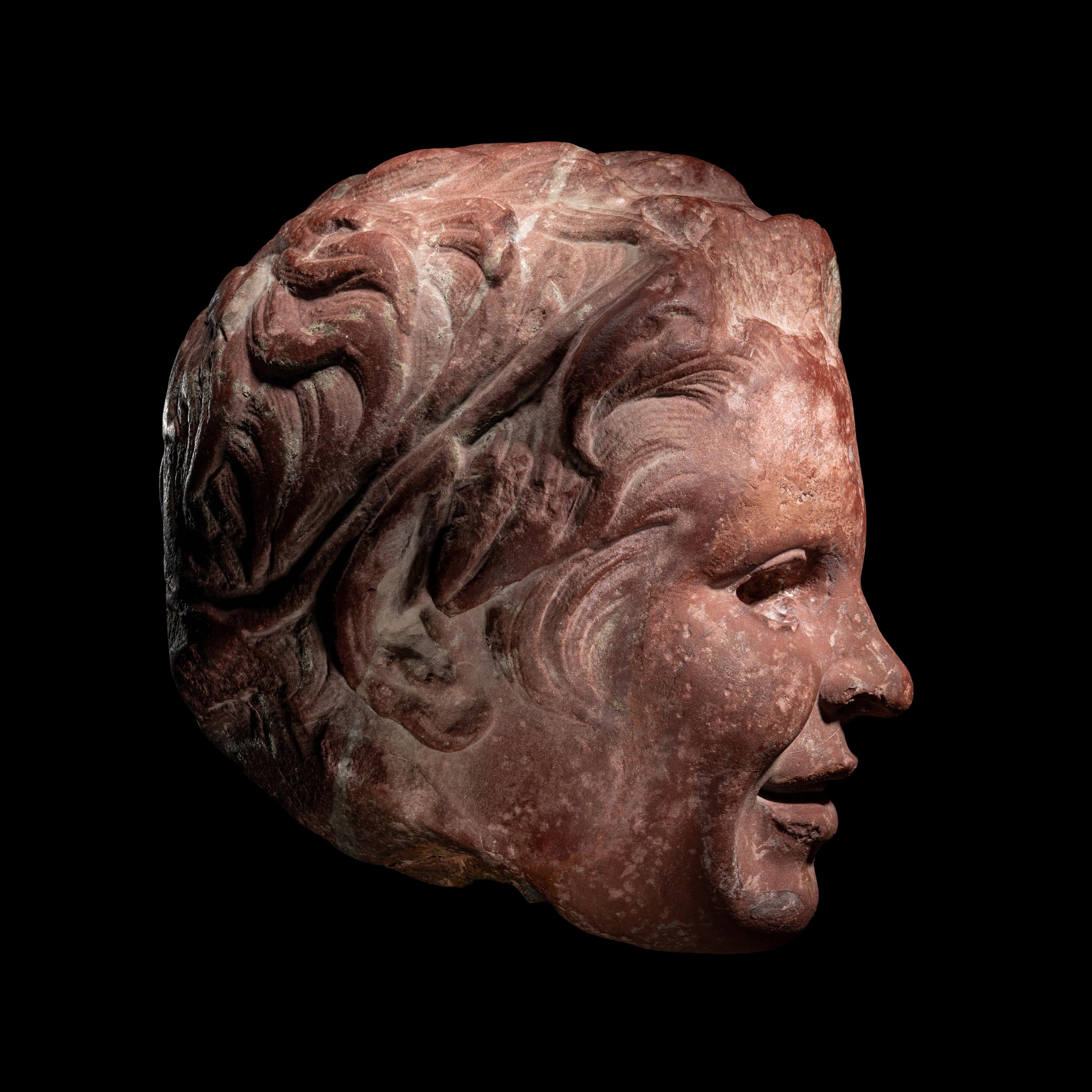
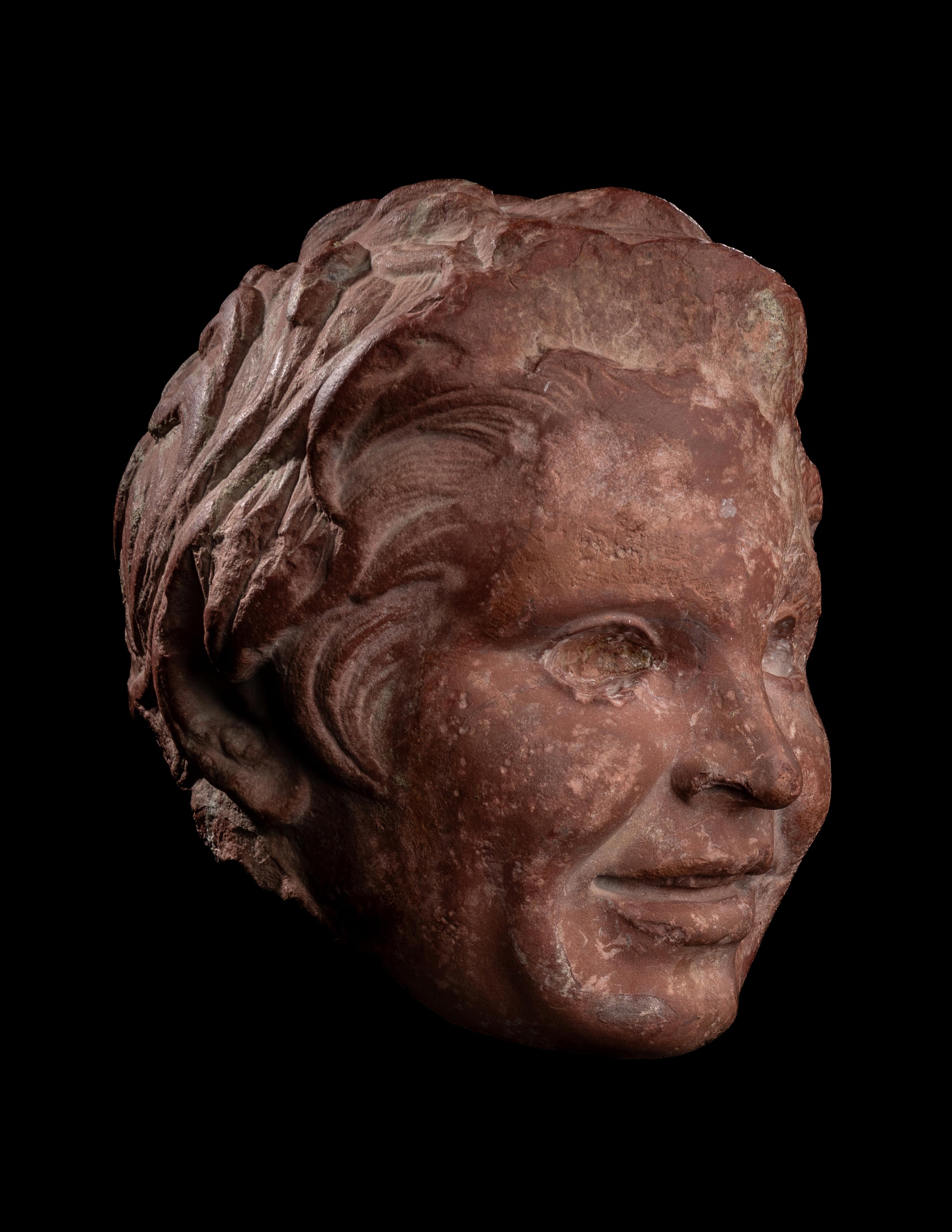
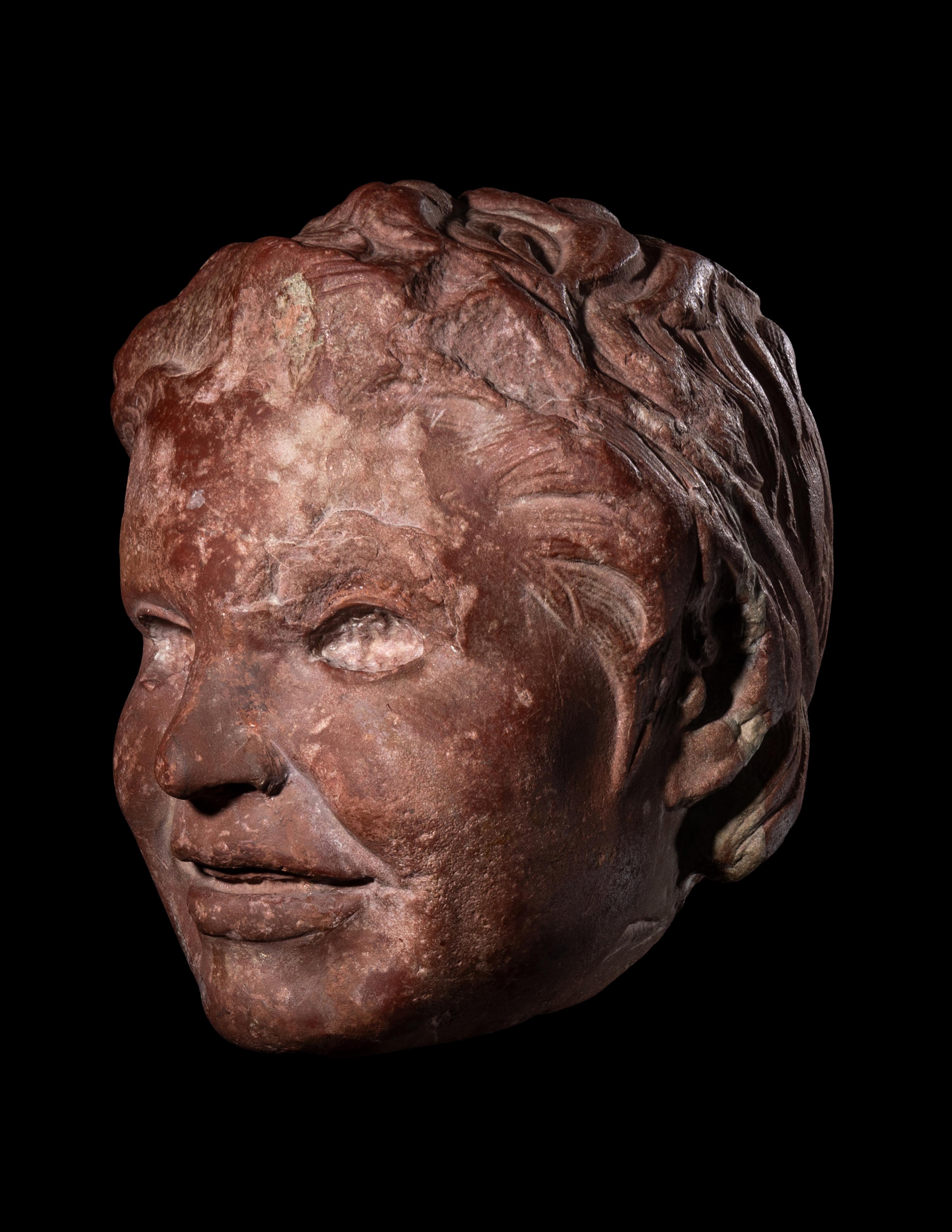
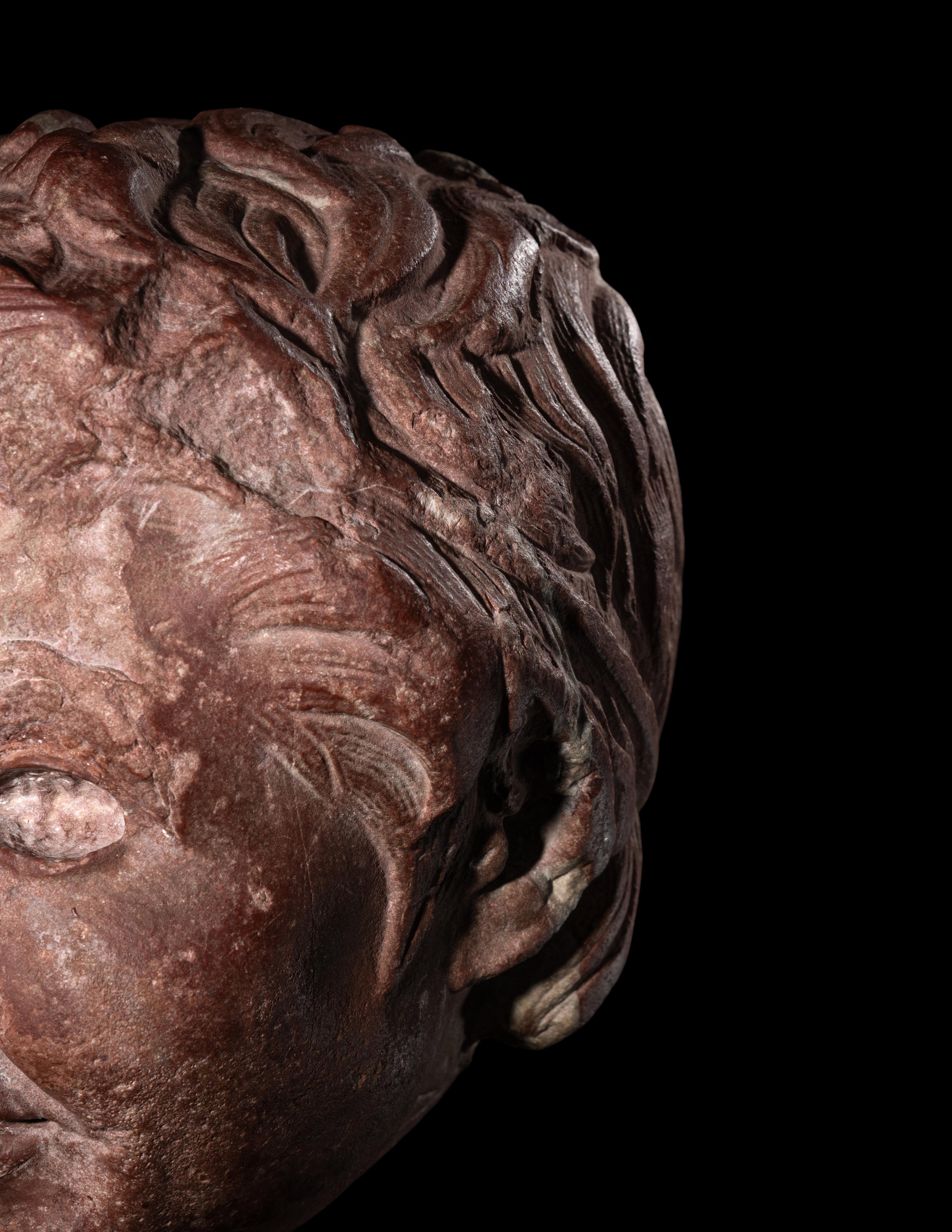
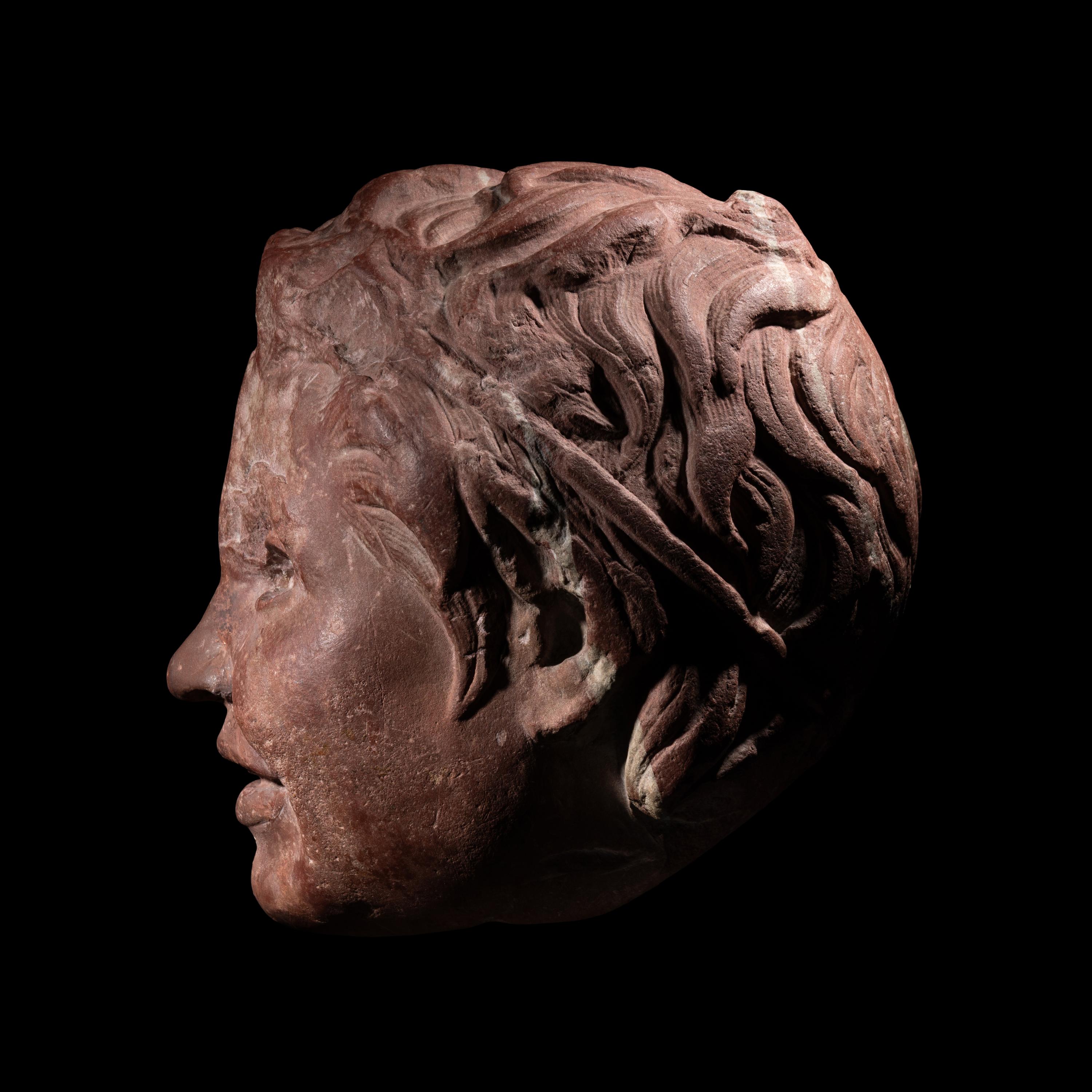
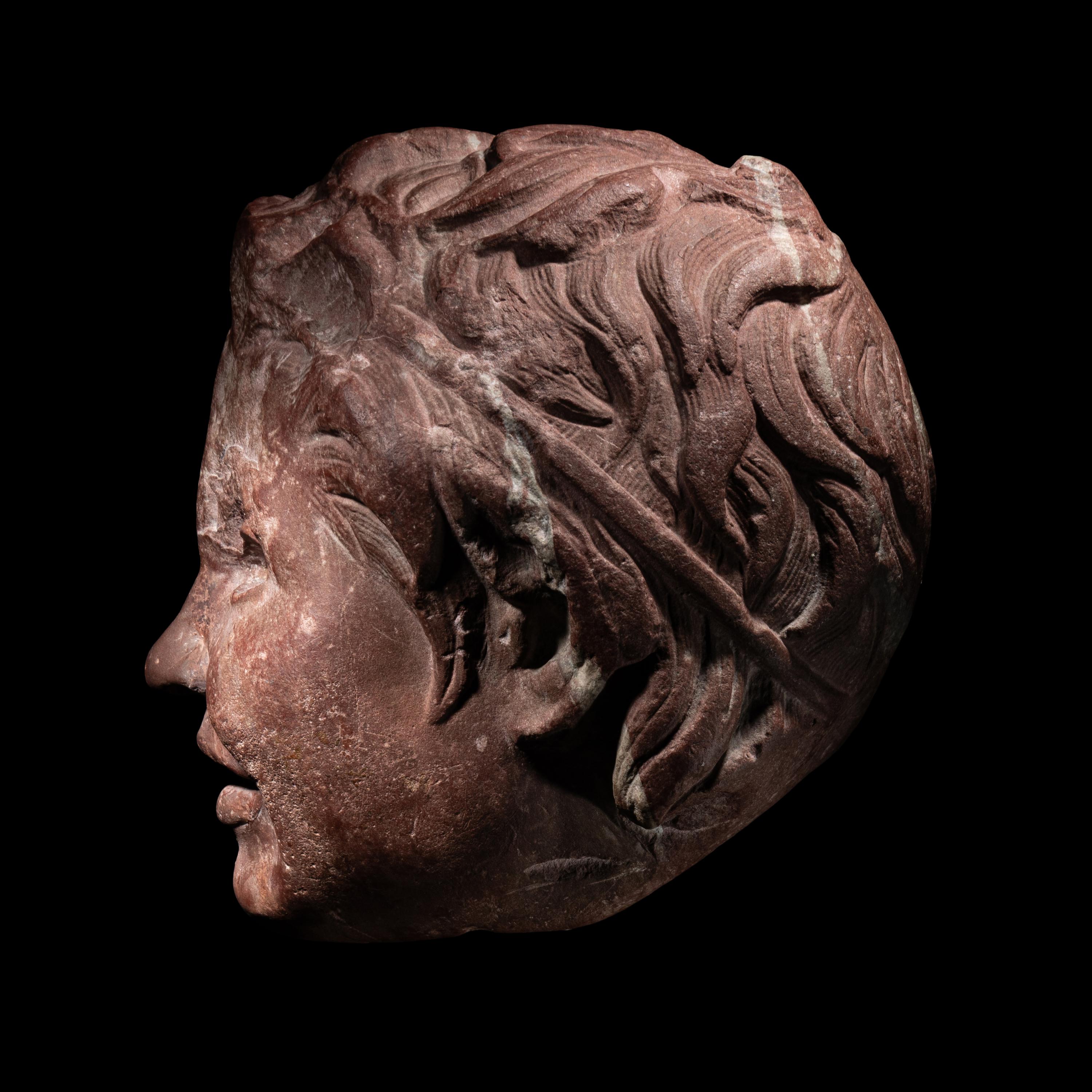
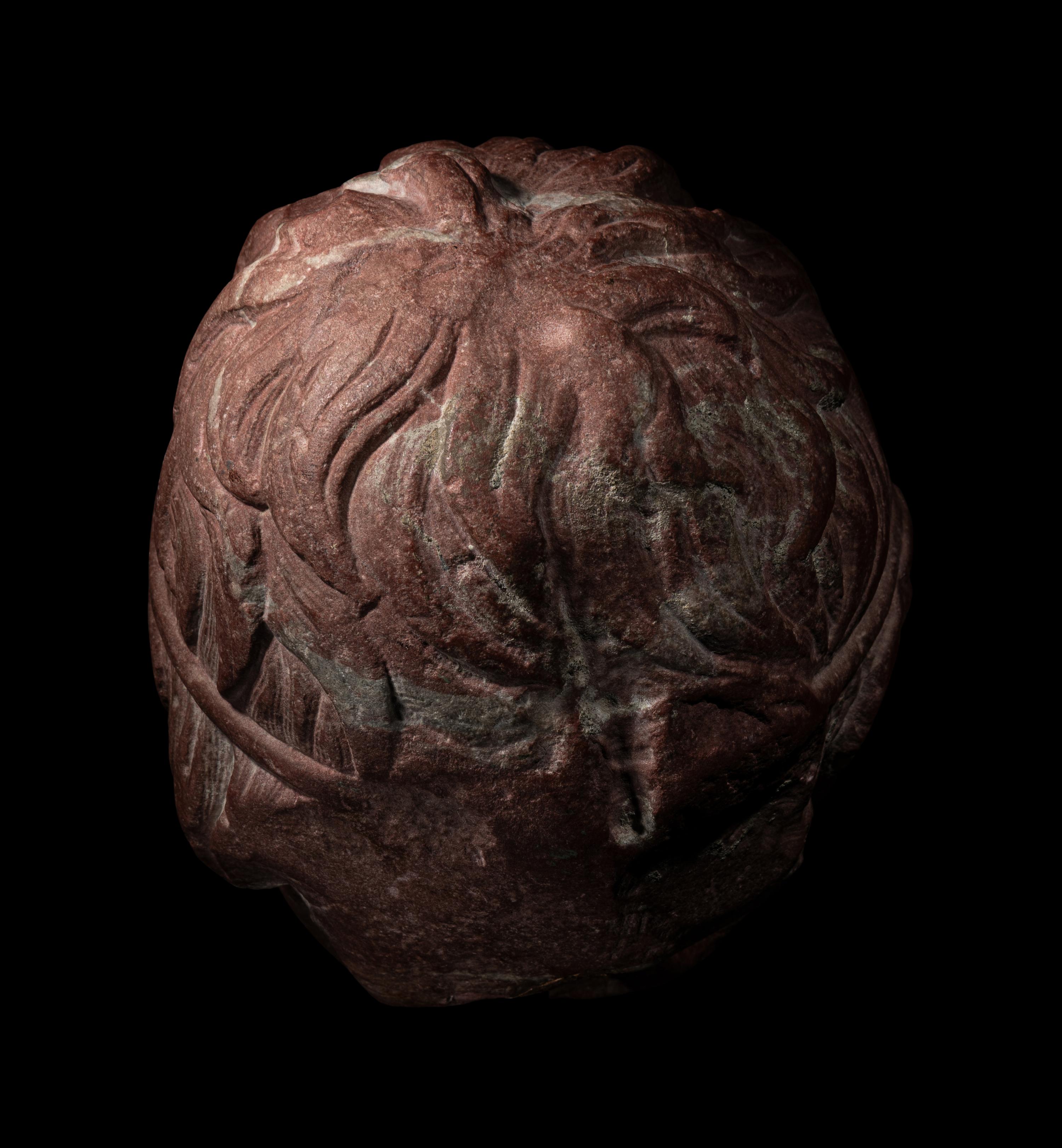
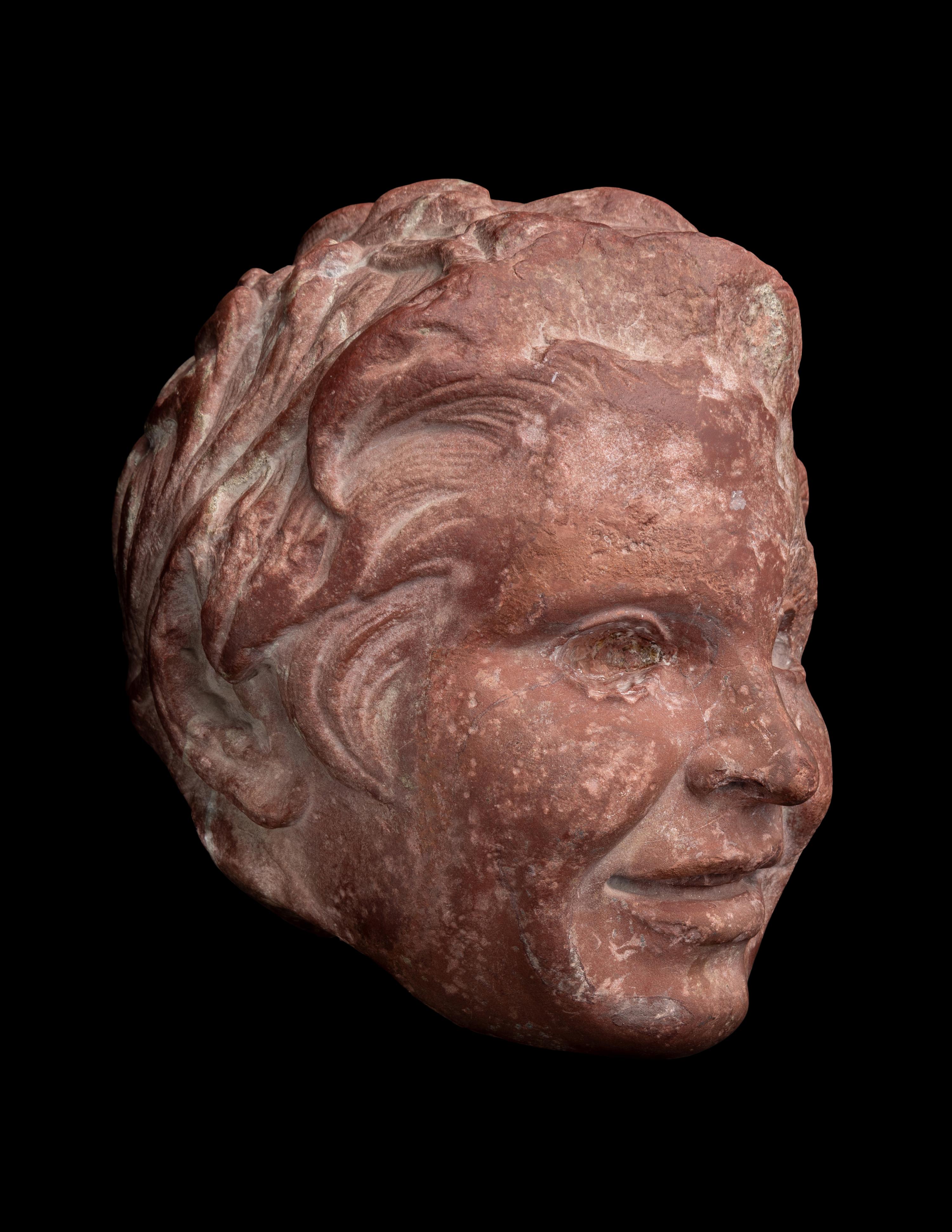
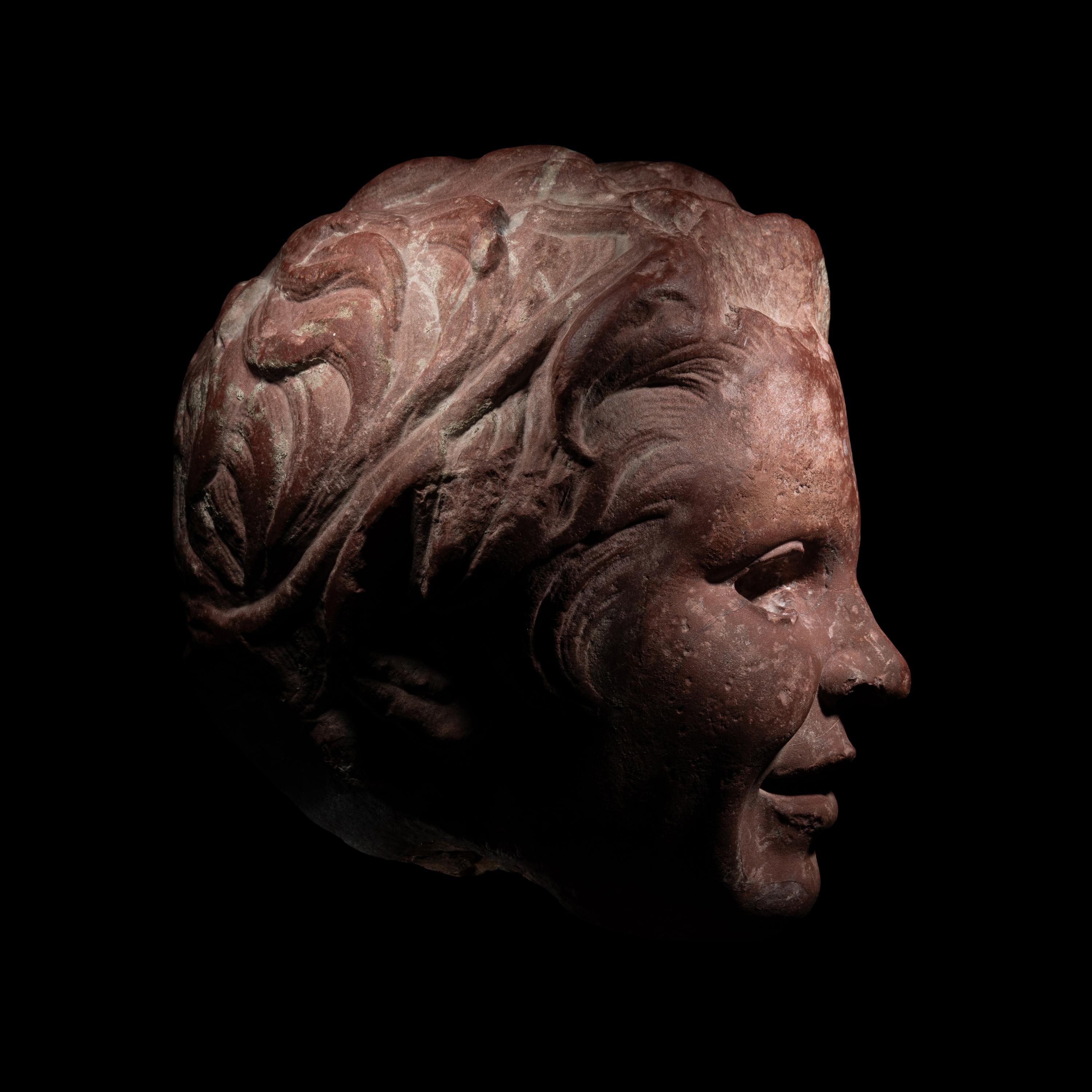
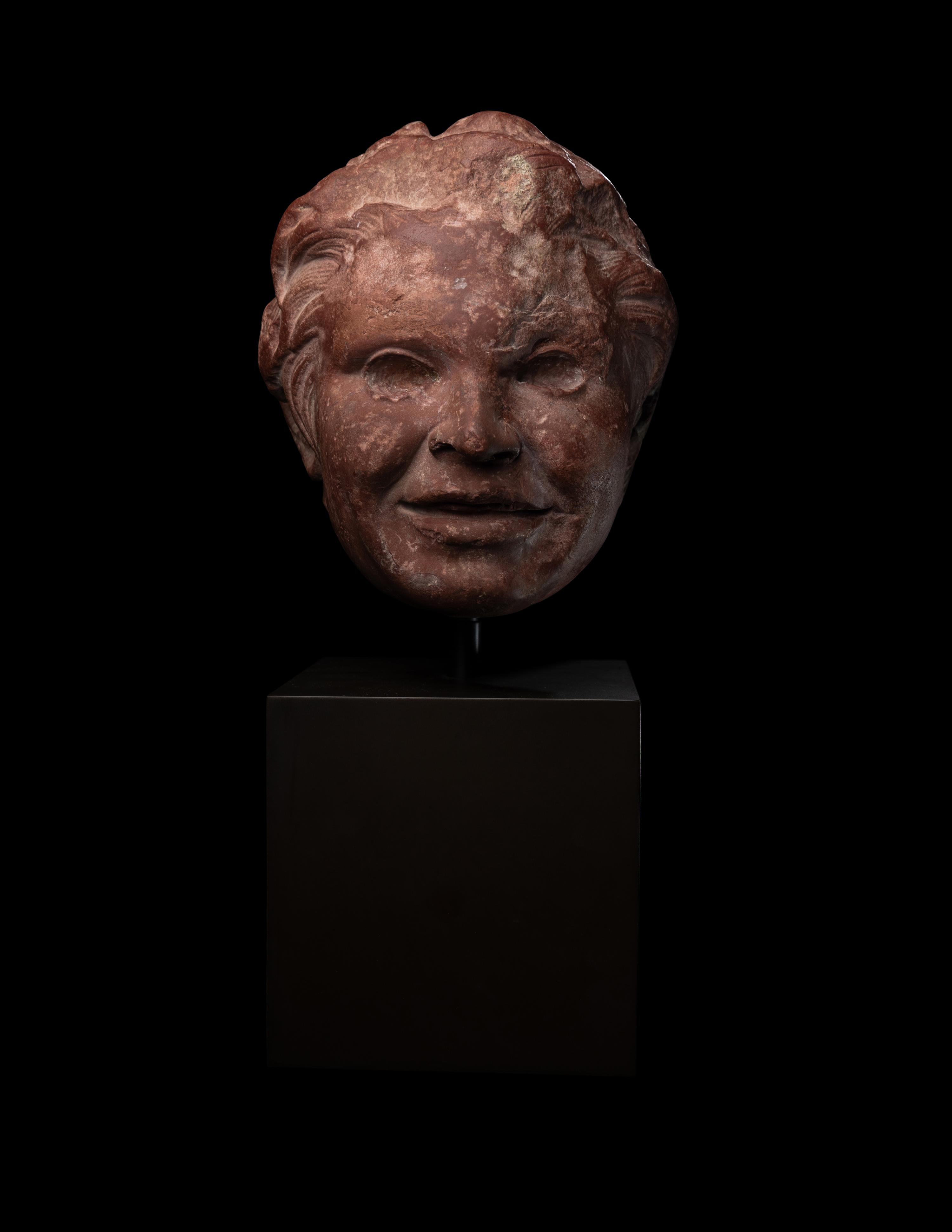
As carefree foils to respectable citizens in the Greco-Roman world, satyrs were hugely popular mythological characters famously free to indulge in hedonistic excesses and frolic in the woodlands. Youthful, beardless satyrs were introduced as a sculptural type in the 4th century B.C. Greece, with the format taken up enthusiastically in the Roman period. This head is a masterful life-sized imagining of the subject, once belonging to a full-length statue, with a wonderfully expressive countenance. An impish grin creates apple cheeks and is bracketed by deep folds, with the rubbery lips slightly parted to expose a row of teeth, an anatomical flourish reserved for mythological subjects. The eyes were originally inlaid with contrasting material, with the intensity of the gaze still imparted by crisply defined eyelids. Chunky hair emerges starlike from a whorl at the crown of the head, sprouting in thick tufts over the brow, and brushed into crescent-shaped locks upon the cheeks; the ensemble is encircled by a thin band with berry clusters.
Most remarkably the head is sculpted from matte, red marble. ‘Rosso antico’ was quarried from sites on the Peloponnese and Asia Minor and imported to Imperial Rome where an erudite clientele was finely attuned to its rarity and considerable expense. Colored marble was especially prized by aristocratic Romans to decorate their opulent villas, with the prohibitively expensive material typically reserved for mythological subjects. The famous pair of centaurs in grey marble (The ‘Centauri Furietti’, Inv. nos. MC0656 and MC0658) and the red satyr (the ‘fauno rosso’, Inv. no. MC0657) from Hadrian’s Villa and now at the Musei Capitolini in Rome are the best-surviving parallels for this head both in terms of material and style. Conspicuously cavorting in a luxuriously appointed garden, the present young satyr would have delighted the elite Romans who would have commissioned, displayed, and been invited to admire it.
For more on sculptures and colored stones, see Raniero Gnoli, Marmora Romana (Rome 1971); Maxwell L. Anderson and Leila Nista (Eds.), Radiance in Stone. Sculptures in Colored Marble from the Museo Nazionale Romano (Atlanta, Emory University Museum Exh. Cat. 1989); Gabriele Borghini (Ed.), Marmi antichi (Rome 1989); Dario del Bufalo, Marmi antichi e picture dure (Lecce 2000); Marilda De Nuccio and Lucrezia Ungaro (Eds.), I Marmi Colorati della Roma Imperiale (Rome, Mercati di Traiano Exh. Cat. 2002); Dario del Bufalo, Marmi colorati: le pietre e l’archittetura dell’ antico al Barocco (Milan 2003); I Colori dell’ antico. Marmi Santarelli ai Musei Capitolini (Rome, Capitoline Museums Exh. Cat. 2022).
Height with stand 15 1/2 inches (39.37 cm). Inspected under UV light and 10x loupe. Heavy pitting, notably at the cheeks and several weathered, scratched, and gouged areas. Large horizontal gouge to proper left neck. Areas of encrustation. Other surface cracks. Drilled hole at the center of the neck for steel dowl stand. Not permanently affixed to stand. Overall in fine and attractive condition with excellent banded character to stone.
The physical condition of lots in our auctions can vary due to age, normal wear and tear, previous damage, and restoration/repair. All lots are sold "AS IS," in the condition they are in at the time of the auction, and we and the seller make no representation or warranty and assume no liability of any kind as to a lot's condition. Any reference to condition in a catalogue description or a condition report shall not amount to a full accounting of condition. Condition reports prepared by Freeman's staff are provided as a convenience and may be requested from the Department prior to bidding.
The absence of a posted condition report on the Freeman's website or in our catalogues should not be interpreted as commentary on an item's condition. Prospective buyers are responsible for inspecting a lot or sending their agent or conservator to inspect the lot on their behalf, and for ensuring that they have requested, received and understood any condition report provided by Freeman's.
Please email antiquities@hindmanauctions.com for any additional information or questions you may have regarding this lot.