To request further details about this lot, please email fineart@hindmanauctions.com

Madalina Lazen
VP Head of Department, Old Masters & 19th Century European Art
Sale 1232
| Chicago
| Chicago
To request further details about this lot, please email fineart@hindmanauctions.com
Madalina Lazen
VP Head of Department, Old Masters & 19th Century European Art
Estimate$50,000 – $70,000
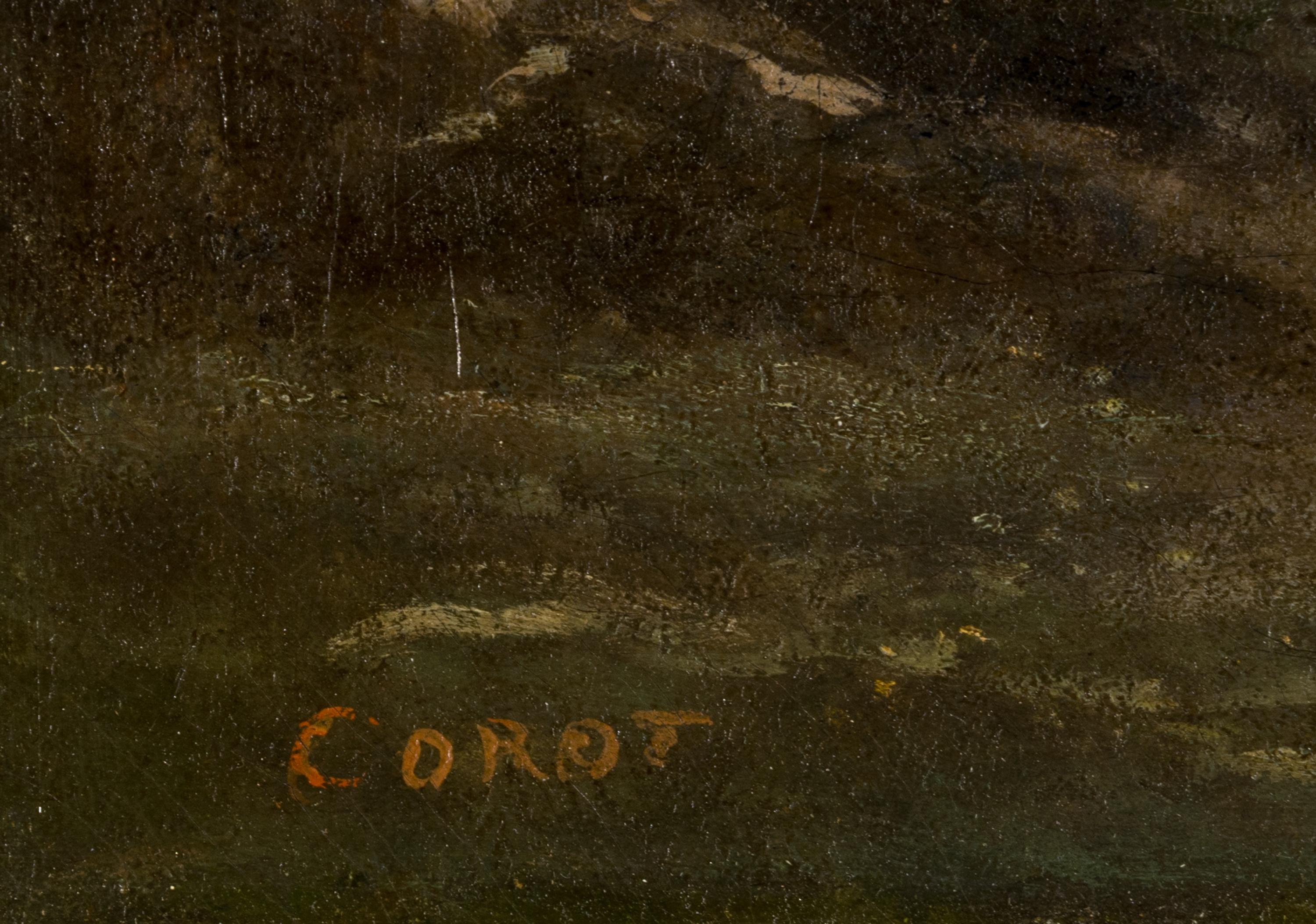
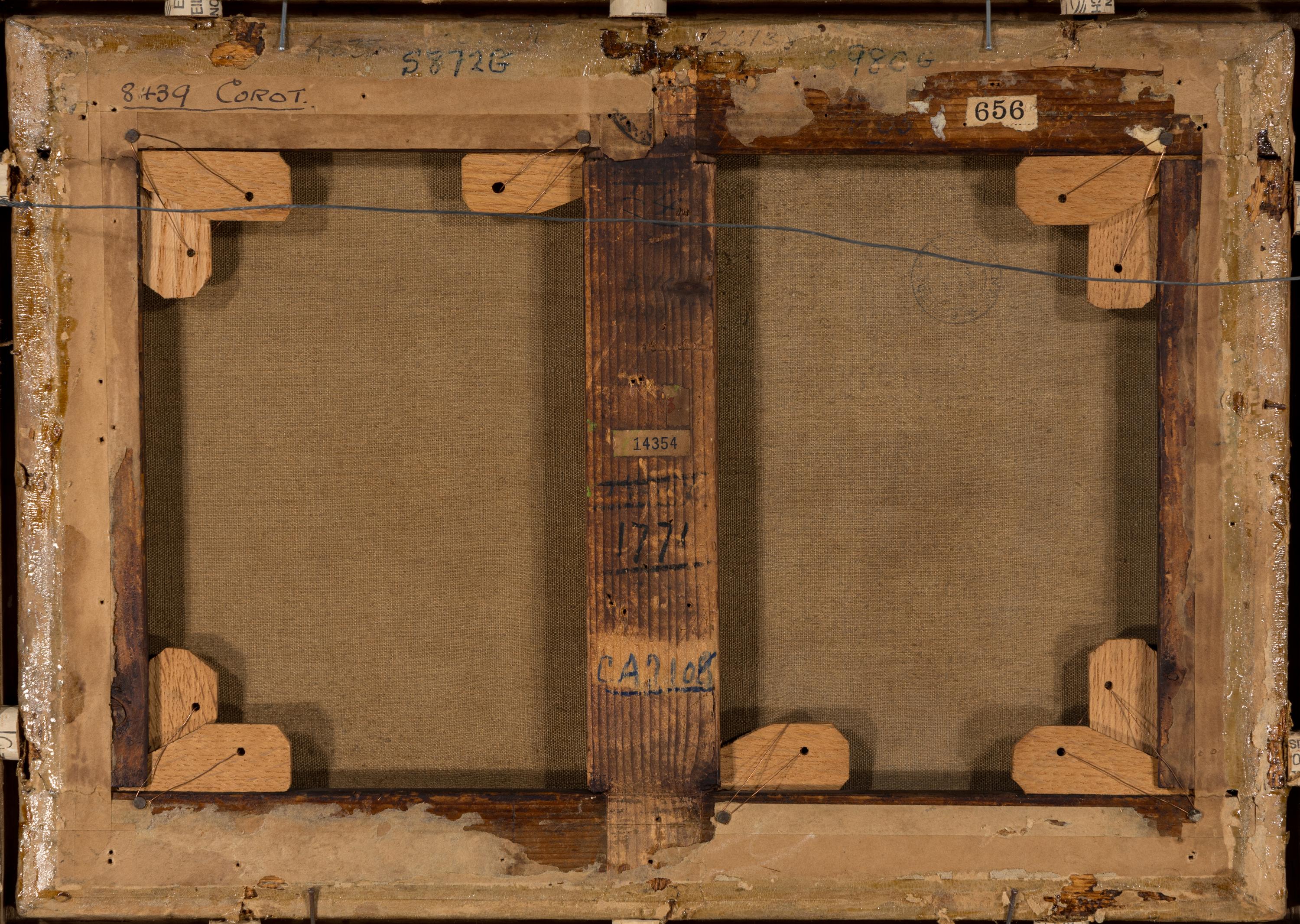
The authenticity of this lot has been confirmed by Claire Lebeau-Dieterle based on first-hand inspection. It will be included in the sixth supplement of Corot's work as an addendum in its digital version. A letter of authentication from Mme. Lebeau-Dieterle accompanies the painting.
Provenance:
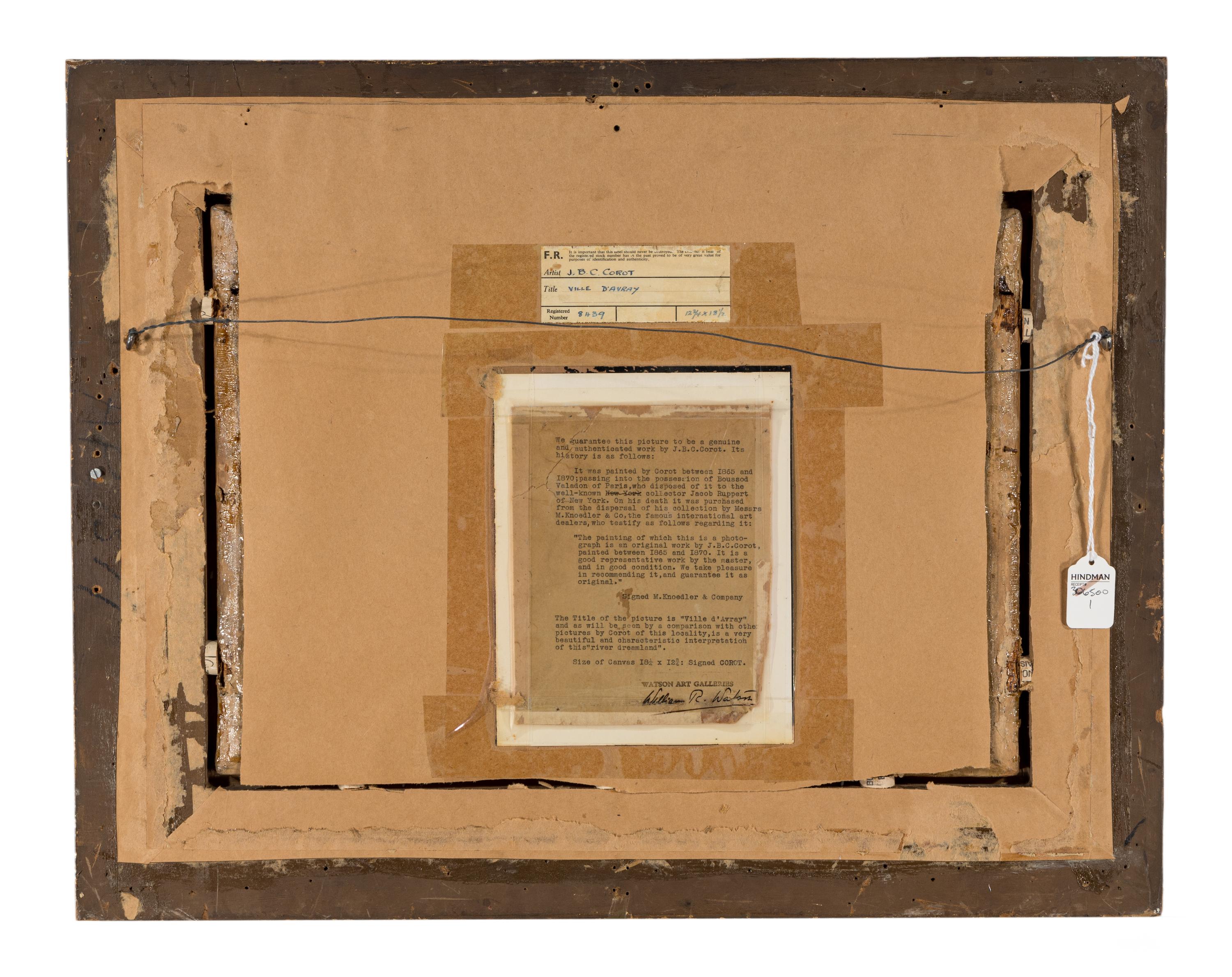
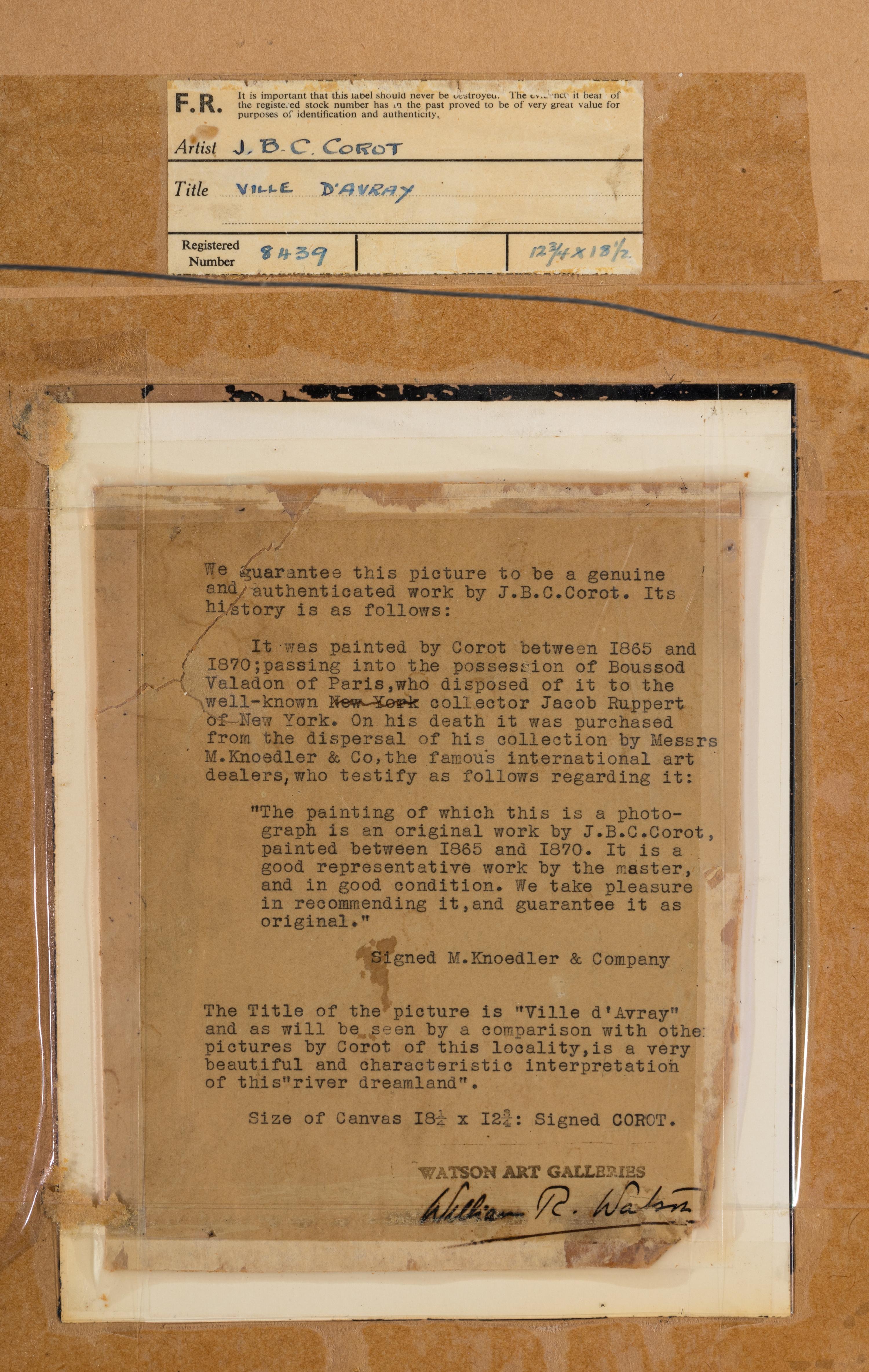
Boussod, Valadon, & Co., Paris, no. 30083
Jacob Ruppert, New York, acquired from the above
M. Knoedler & Co., New York
Frost & Reed, London (as Ville d'Avray)
Watson Art Galleries, Montreal
Lot note:
This is not a landscape painter, this is the very poet of the landscape, who breathes the sadnsses and joys of nature. The bond, the great bond that makes us the brothers of rooks and trees, he sees it; his figures, as poetic as his forests, are not strangers to the woodland that surrounds them. He knows more than anyone, he has discovered all the customs of boughs and leaves; and now that he is sure he will not distort their inner life, he can dispense with all servile imitation. (Théodore de Banville, 'Le Salon de 1861', Revue fantaisiste 2, 1 July 1861, pp. 235-6.)
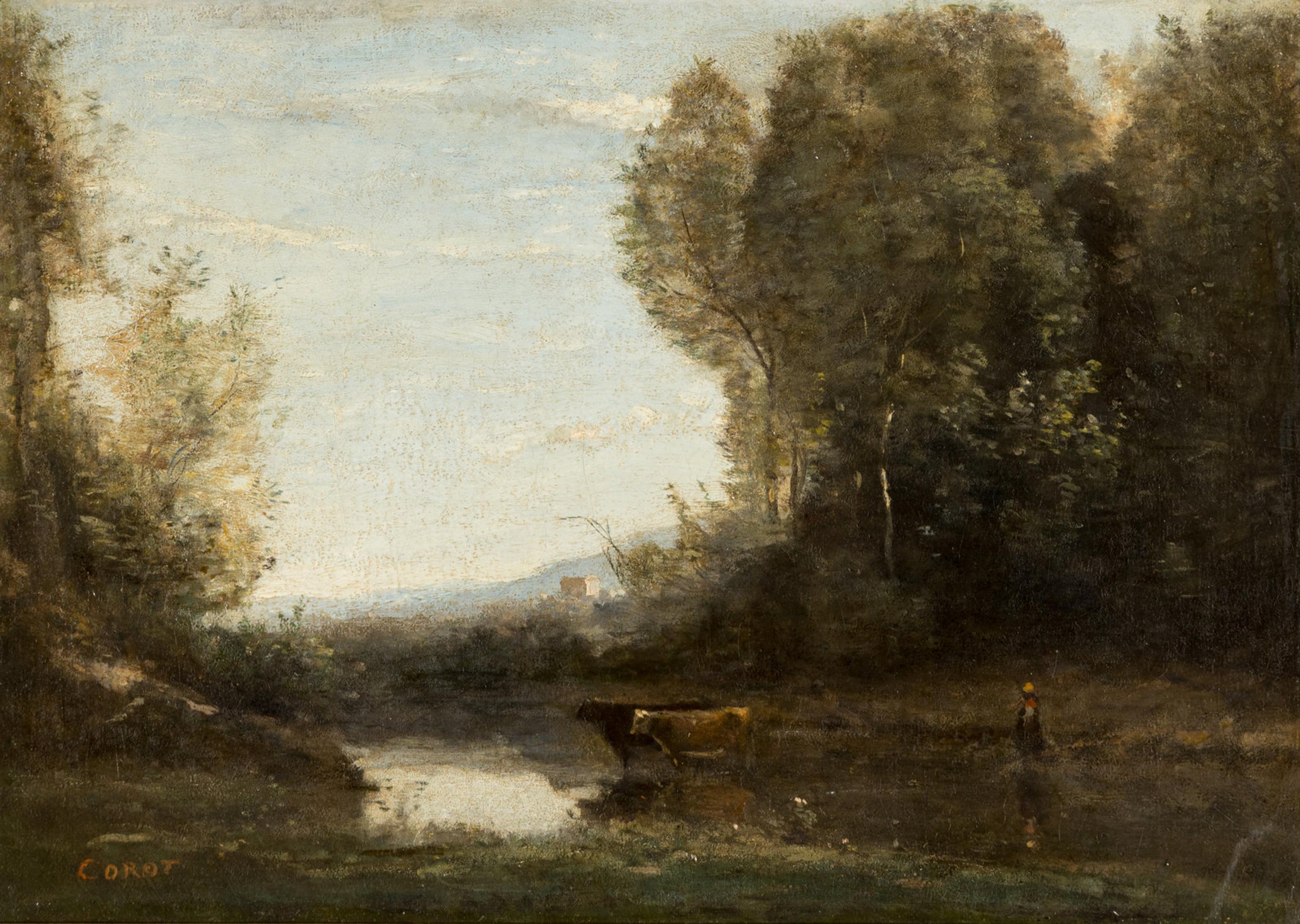
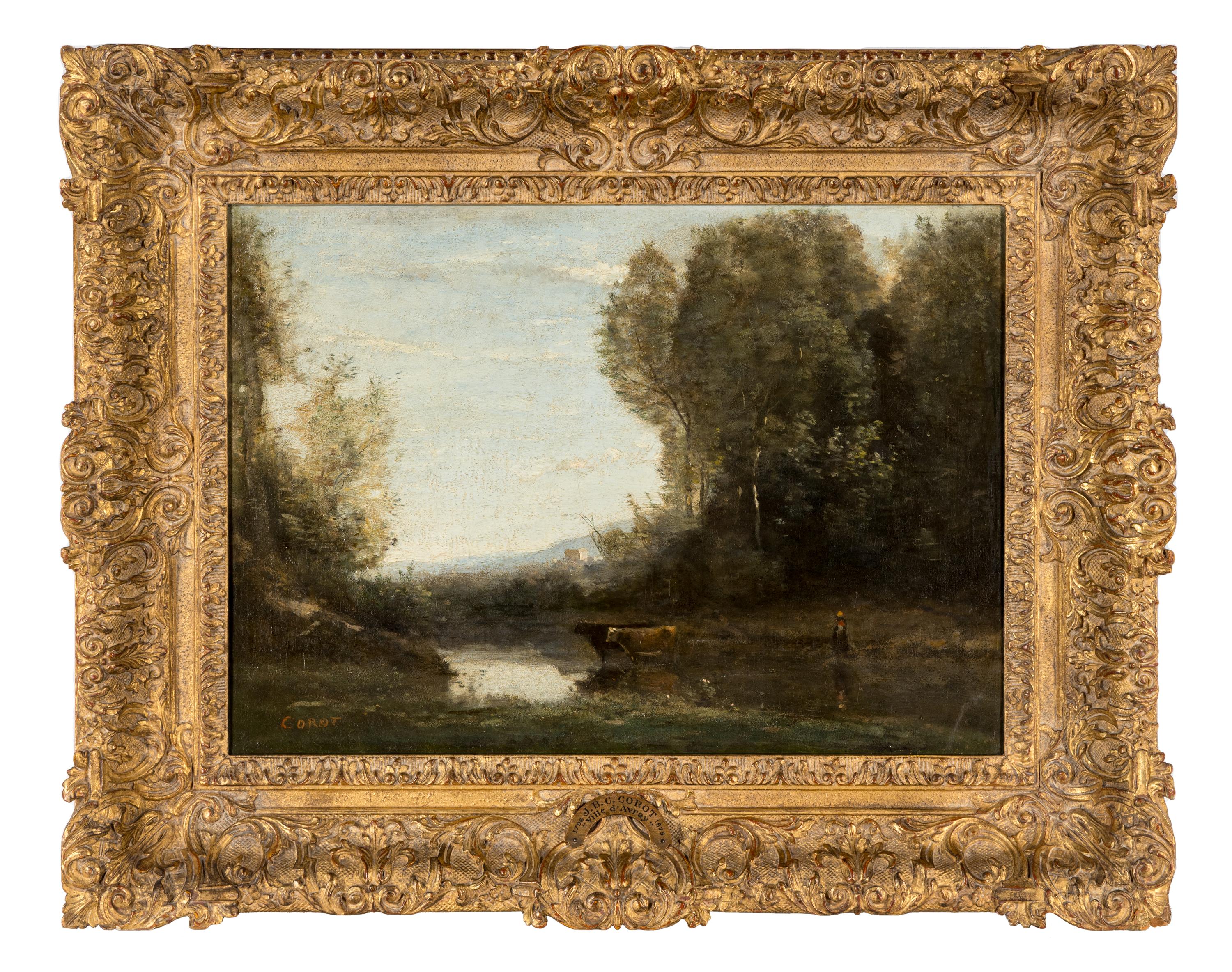
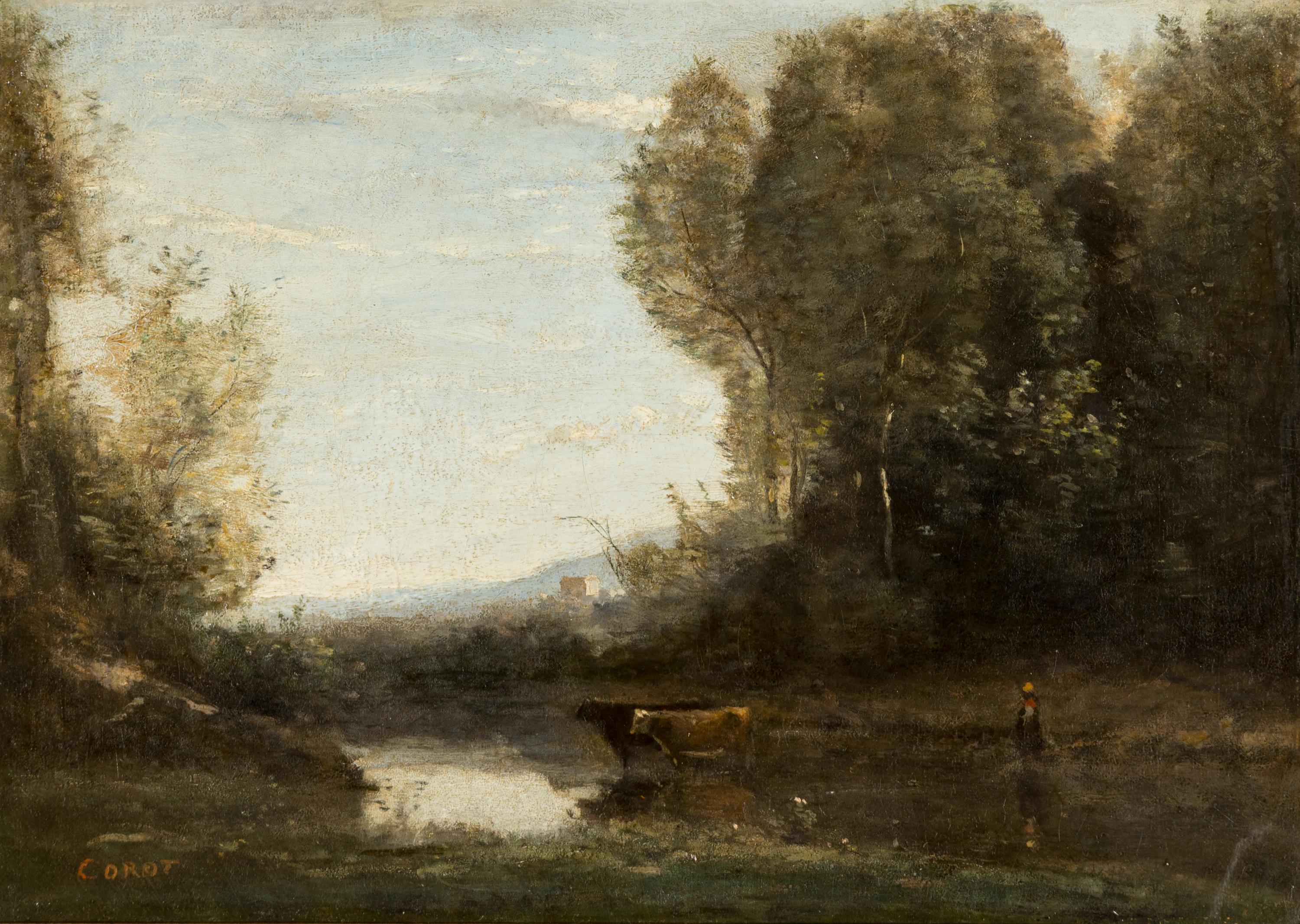
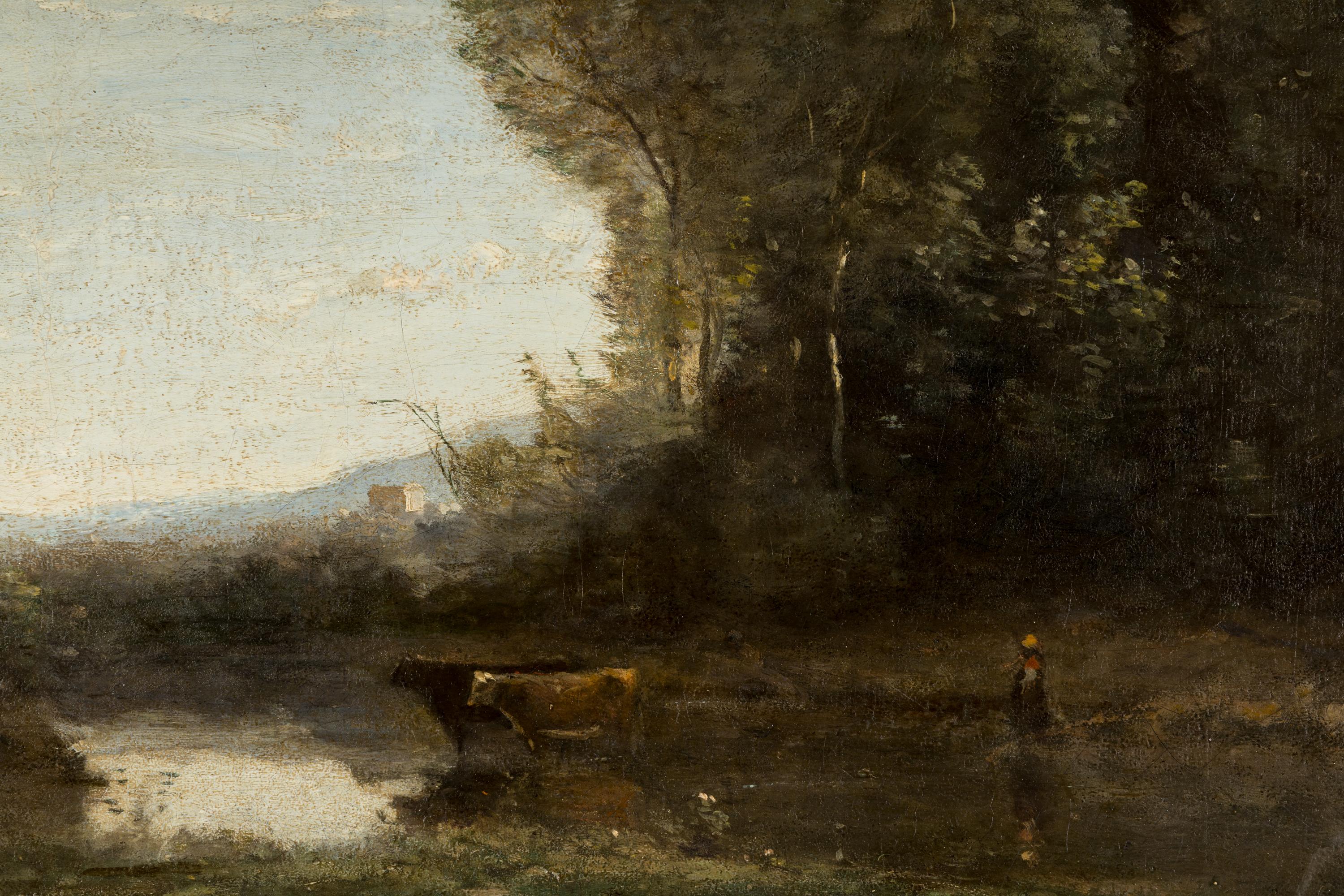
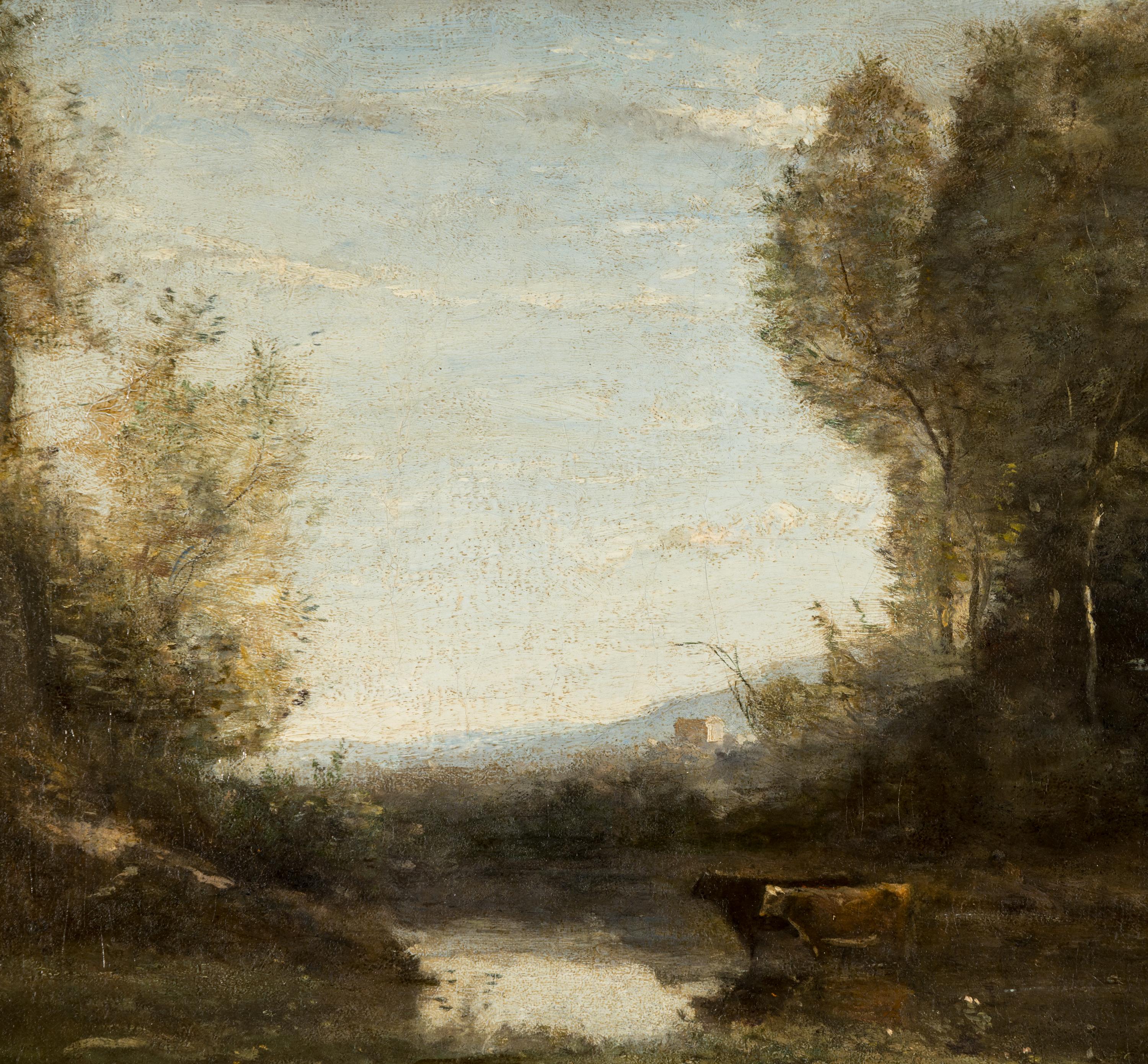
The present painting, Gardienne et ses deux vaches au marais, c. 1860-65, resembles many of the artist’s works depicting Ville d’Avray, the artwork’s previous title given by Frost & Reed, London, which it passed through sometime in the 20th century. Located approximately 7.5 miles west from the center of Paris, the area was an inspiration throughout Jean-Baptiste-Camille Corot’s career. The painter and collector Moreau-Nelaton noted that ‘Providence created Ville-d’Avray for Corot, and Corot for Ville-d’Avray’. Corot first visited the area after his parents purchased an eighteenth century villa there; his room was located on the third floor and had a view of the large pond, l’Etang neuf. He was later to inherit the home after his father’s death in 1847.
The same year his parents purchased their country villa, Corot began painting classes at the Académie Suisse in Paris. In 1822, he became a pupil of Achille-Etna Michallon, but his teacher died prematurely, and so Corot joined the studio of Jean-Victor Bertin. After his studies, the young artist would travel throughout his career across Europe, including to Italy, Switzerland, the Netherlands, and London. Initially, Corot’s early work was in the Classical historical genre, but after meeting the Barbizon painters Théodore Rousseau and Charles-François Daubigny, his work gradually evolved to focus on plein-air landscapes executed in a hazy, diffused light. Fame was to come to the artist in the mid-1860s when his annual contributions to the Salon met with wide acclaim from the critics and the public. Corot was also to have a profound influence on the younger artists who eventually became members of the Impressionist movement, including Berthe Morisot and Camille Pissarro.
Despite his peripatetic ways, Corot continued to visit and paint Ville d’Avray throughout his life. The present painting, circa 1860-1865, was executed late in his career. It may depict the banks of l’Etang neuf, on whose northeast side the home of Corot's family was situated. Another of the lakeside buildings is visible to the right, possibly one of the Cabassud houses which appear in other examples of Corot's open views across the water. The influence of seventeenth century Dutch art can be seen in this painting, particularly the work of Jacob van Ruisdael, which influenced the artist earlier in the 1830s. Ruisdael combined realism with emotional expressiveness in his evocations of nature and he frequently endeavored to create in his works the sense of being inside the woods, a theme explored by Corot here. The foreground is in shadow, with a mass of dark green trees dominating the middle ground. Touches of ochre and gold shimmer through the shadowy canopy, suggesting the gleam of sunlight. The radiant swathe of sky between the trees and a bright patch reflected in the water below offer a bright contrapuntal to the dusky woods. Along the far bank, a woman watches two cows wade in the stream, her yellow cap and red shawl punctuating the dark environs. The woman and the cows provide a harmonious presence to the otherwise secluded landscape. Gardienne et ses deux vaches au marais, reveals Corot’s innate ability to capture his local environs while also translating the atmospheric effects of sunlight and shadow, to create a serene and alluring composition.
Framed: 19 1/2 x 24 3/4 inches.
Condition reports are available upon request. All lots are sold “as is,” in the condition they are in at the time of the auction. The physical condition of lots can vary due to age, normal wear and tear, previous damage, and restoration. Prospective buyers are strongly advised to inspect a lot personally or through a knowledgeable representative prior to bidding. The absence of any reference to the condition of a lot does not imply that the lot is in perfect condition or completely free from wear and tear, imperfections, or the effects of aging. Prospective buyers must review and agree to the Conditions of Sale before participating in an auction, and it is the responsibility of the buyer to ensure that they have requested, received and considered any condition report.
The physical condition of lots in our auctions can vary due to age, normal wear and tear, previous damage, and restoration/repair. All lots are sold "AS IS," in the condition they are in at the time of the auction, and we and the seller make no representation or warranty and assume no liability of any kind as to a lot's condition. Any reference to condition in a catalogue description or a condition report shall not amount to a full accounting of condition. Condition reports prepared by Freeman's staff are provided as a convenience and may be requested from the Department prior to bidding.
The absence of a posted condition report on the Freeman's website or in our catalogues should not be interpreted as commentary on an item's condition. Prospective buyers are responsible for inspecting a lot or sending their agent or conservator to inspect the lot on their behalf, and for ensuring that they have requested, received and understood any condition report provided by Freeman's.
Please email fineart@hindmanauctions.com for any additional information or questions you may have regarding this lot.