To request further details about this lot, please email antiquities@hindmanauctions.com

Jacob Coley
Senior Vice President, Head of Department, Antiquities and Ancient Art
Sale 1188
| Chicago
| Chicago
To request further details about this lot, please email antiquities@hindmanauctions.com
Jacob Coley
Senior Vice President, Head of Department, Antiquities and Ancient Art
Estimate$80,000 – $120,000
Provenance:
Galerie Heidi Vollmoeller, Zurich, prior to 1988. [Inv. no. 5848]
Acquired by the present owner from the above, 13 March 1996.
Exhibited:
Texas, San Antonio, San Antonio Museum of Art, Dynasties: The Royal Image in the New Kingdom, 6 Janurary-9 April 1995.
Published:
A.J. Morvay, "Das Siegel des Pharaos Thuthmosis III," Neue Buercher Zeitung 21/22. March 1987.
G.D. Scott, Dynasties: The Royal Image in the New Kingdom (Exhibition Catalogue), San Antonio Museum of Art, 1995, Varia Aegyptiaca 10 (1), p. 24, no. 12.
R. Bianchi and E. Meltzer, "A ring bezel inscribed for Pharaohs Tuthmosis III and Amenhotep II," Cheiron: The International Journal of Equine and Equestrian History 3.1, 2023.
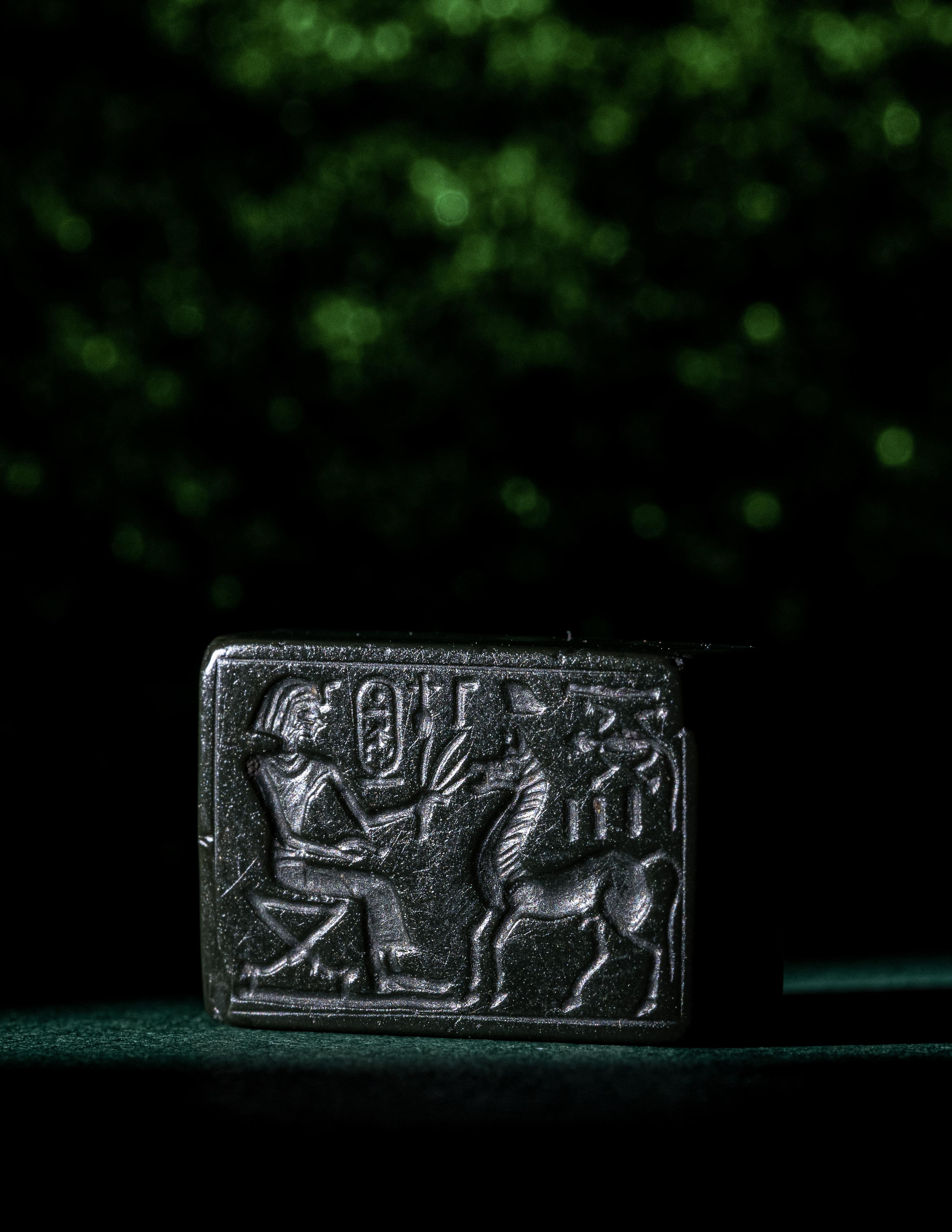
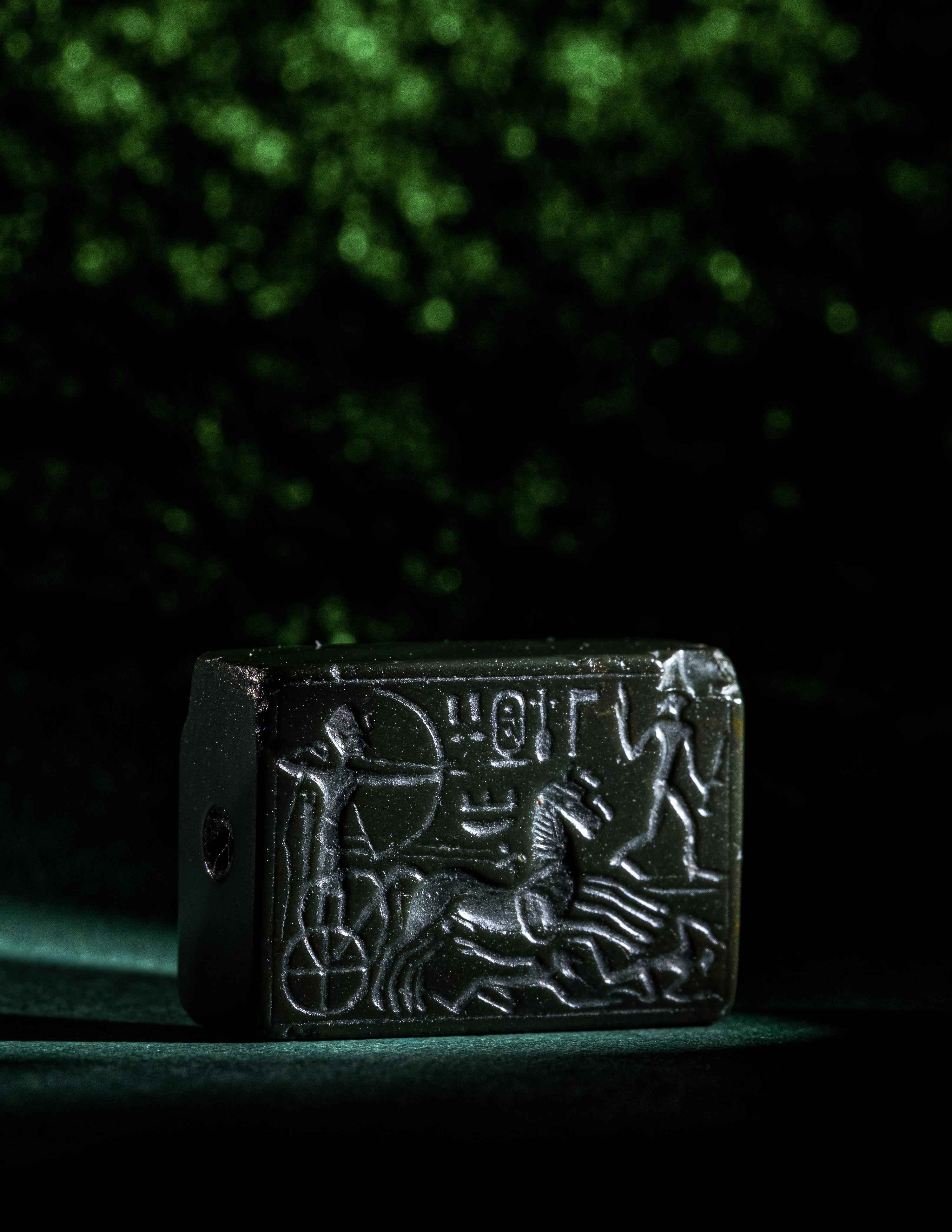
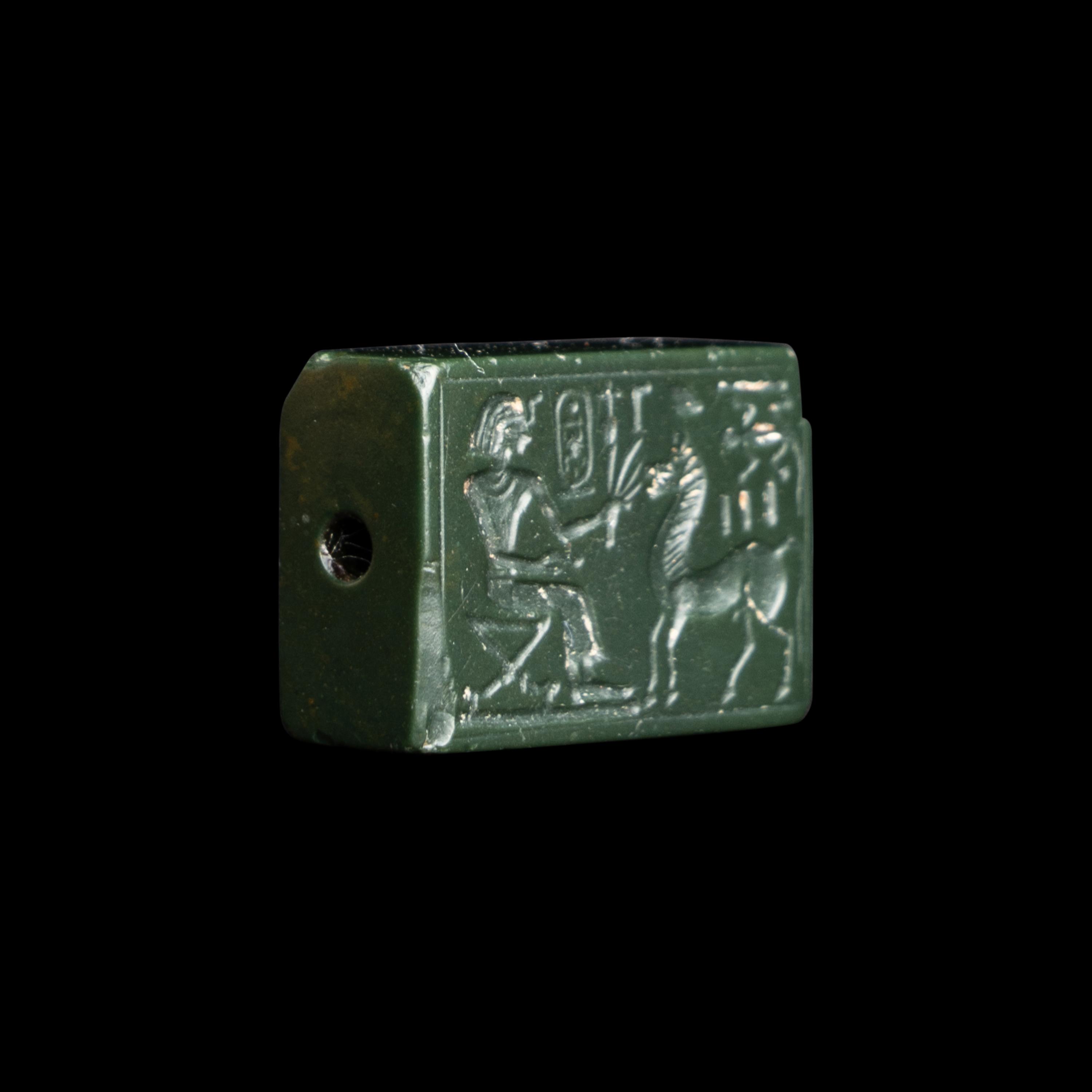
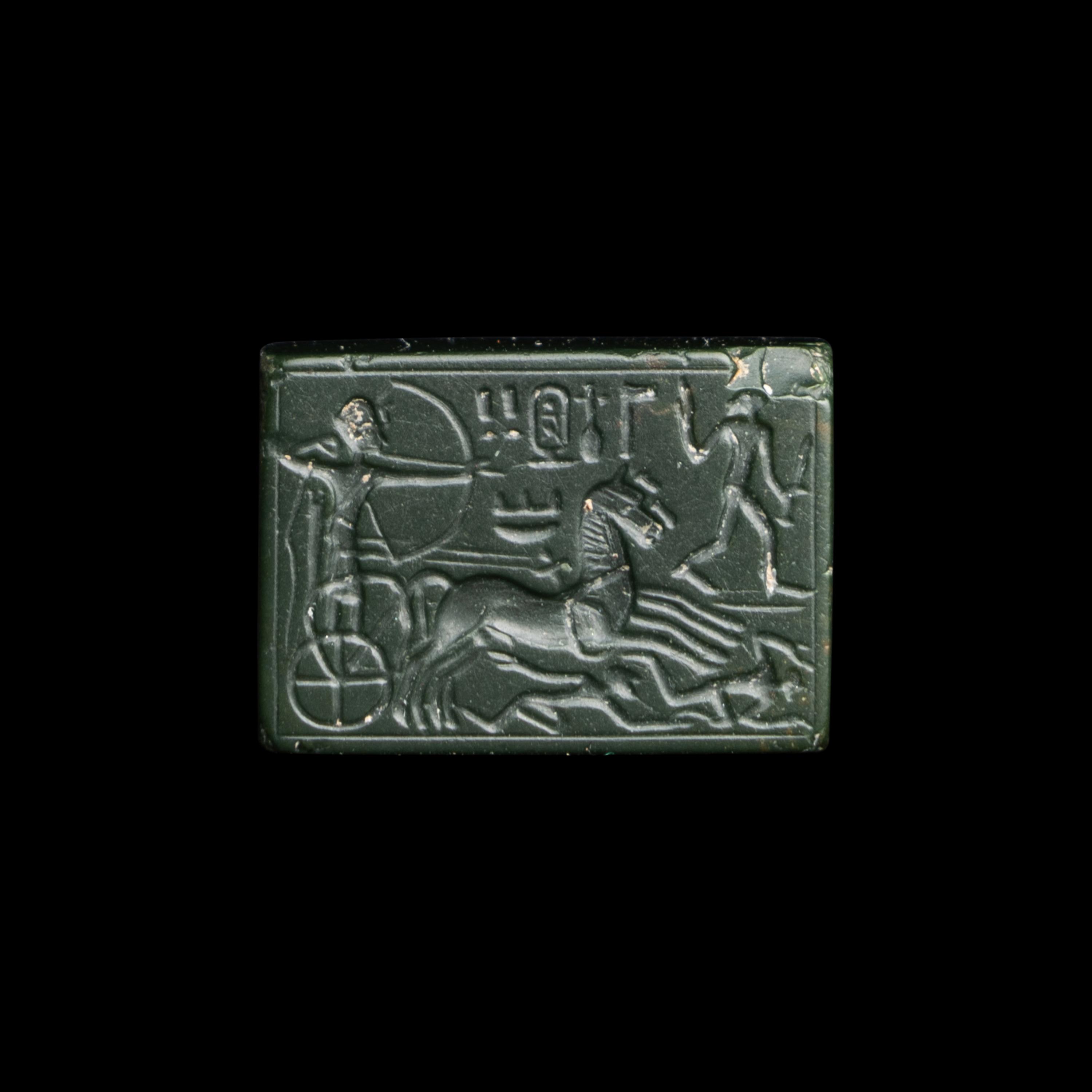
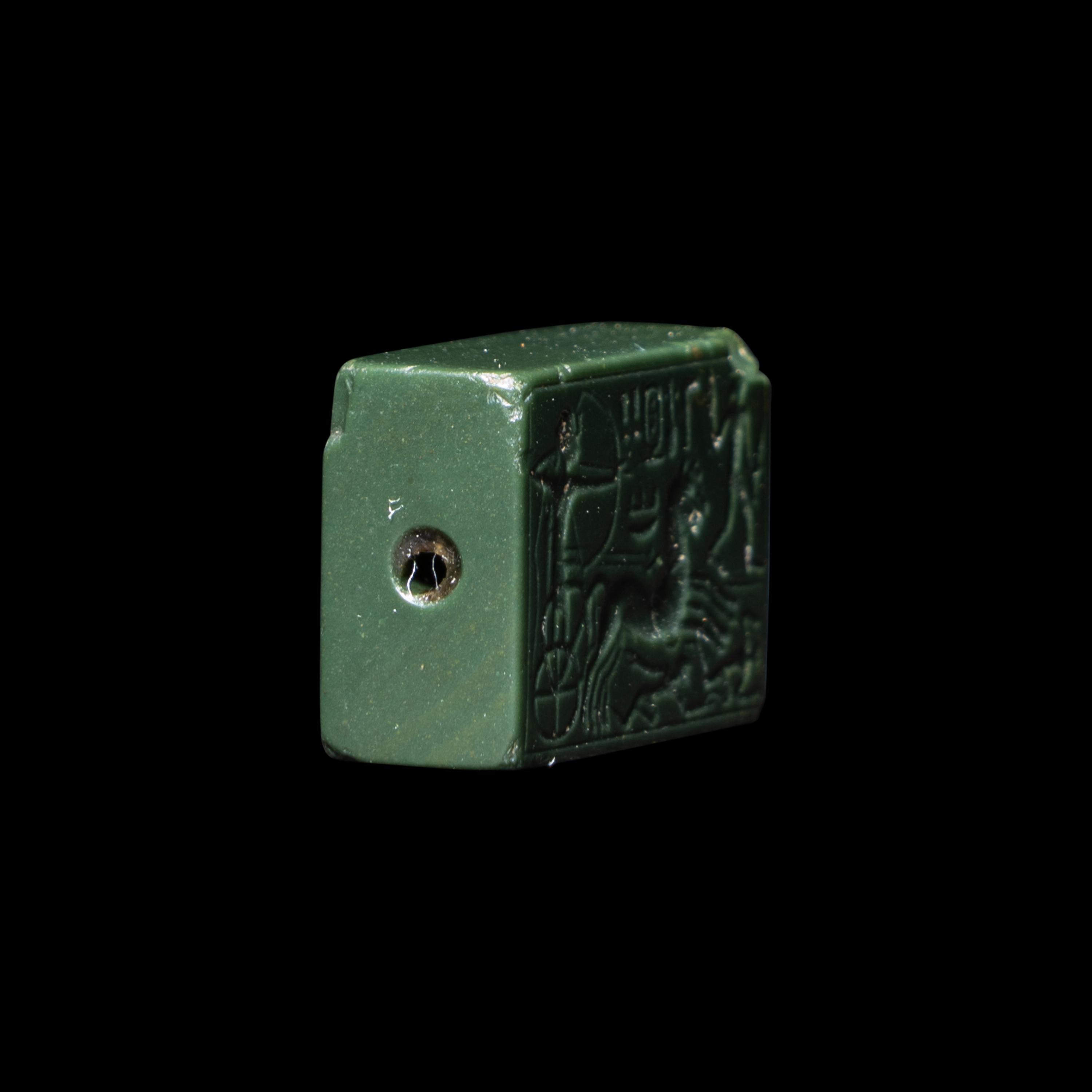
This green jasper plaque initially served as a swivel bezel for a finger ring. It is sculpted on both of its faces in high relief and is pierced to enable its wearer to display on either side. One side is inscribed in hieroglyphs, The good god, Men-kheper-re, the one who tramples every foreign land. Men-kheper-re, "the manifestations of the sun god Re are enduring," is the praenomen of pharaoh Tuthmosis III, known as the warrior pharaoh because of his many successful military campaigns. He is represented by riding in his biga, or chariot drawn by two horses, which he steers by wrapping its reins around his waist. This frees both of his hands to take aim with his bow and loose his arrows against his enemies, two of whom have fallen to the ground and lie beneath the hooves of his horses, reinforcing his role as "the one who tramples his enemies."
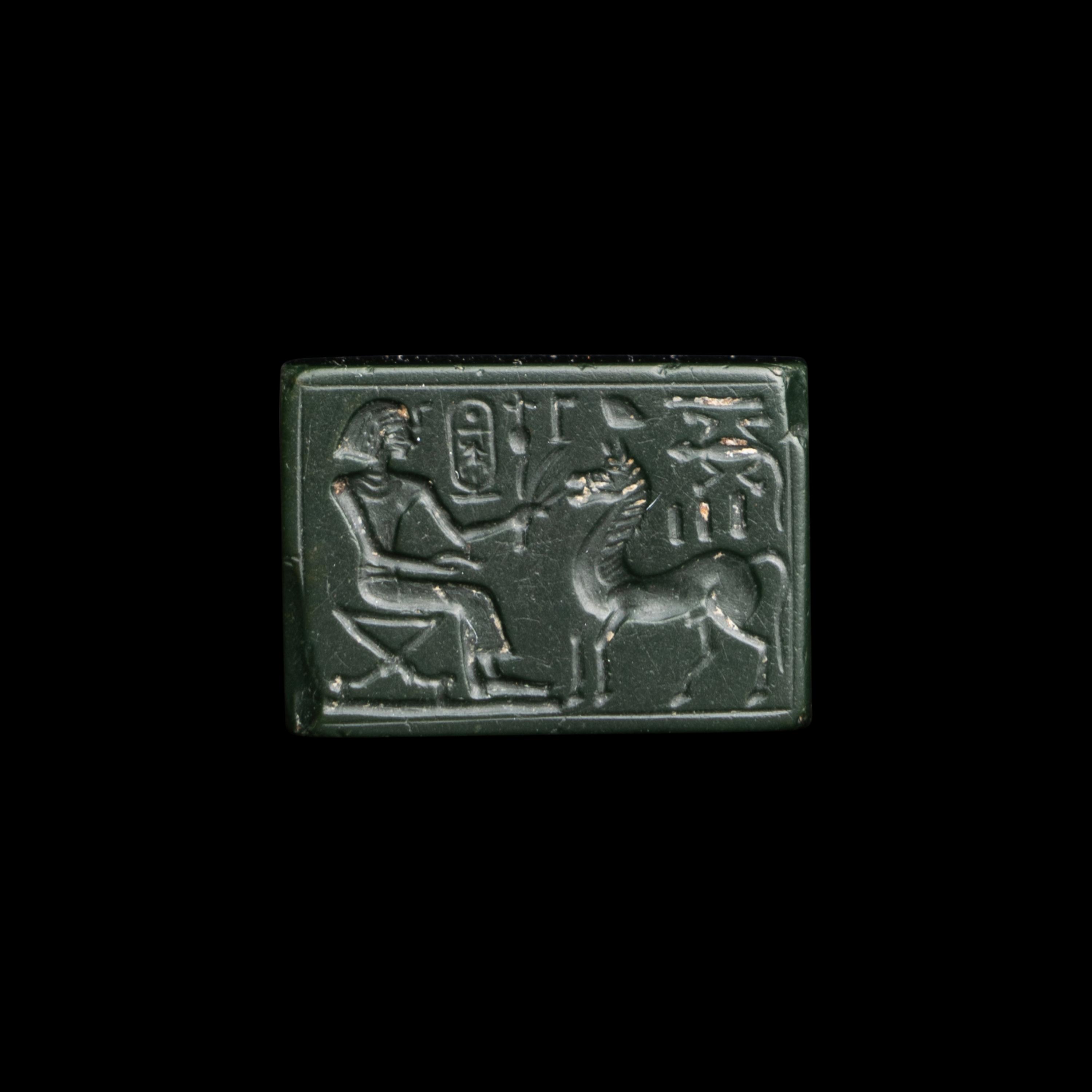
The second side is inscribed with two separate captions in hieroglyphs, the first of which is translated, The good god, Aa-kheperu-ra, "Great are the forms of the sun god Re." This is the prenomen of pharaoh Amenhotep II, the son and successor of Tuthmosis III who is shown seated on a folding stool before a horse which is captioned, "The strongest of many," which is suggested to describe this horse's exceptional quality or may in fact be its name.
Taken together both sides represent an ancient Egyptian royal celebration of the horse. Deployed in battle as battalions of charioteers, the horse facilitated the conquests of Asia and Nubia by Tuthmosis III. Those victories prepared the way for Amenhotep II, his son, and successor, to enjoy the sporting life which included cultivating his love of horses, with whom he was intricately associated. He took pride in depicting himself riding in his horse-drawn chariot at a rapid clip repeatedly piercing a target in the form of a metal ingot with his arrows.
That love is remarkably celebrated here because Amenhotep II is represented hand-feeding his favorite steed. He is the only figure known to ever be depicted in such an intimate, autobiographical representation in the entire history of ancient Egyptian art. Green jasper was intentionally chosen for this plaque because the color green was associated with youth and vigor, physical characteristics that emphasize the strength not only of Pharaoh Amenhotep II but also that of his favorite horse.
Inspected under UV light and 10x loupe. Minor corner chips and some loss to edges. Some surface scratches throughout. Slight assymetry to the drill hole. Overall in fine and attractive condition. Lot comes with clay impression of both sides.
The physical condition of lots in our auctions can vary due to age, normal wear and tear, previous damage, and restoration/repair. All lots are sold "AS IS," in the condition they are in at the time of the auction, and we and the seller make no representation or warranty and assume no liability of any kind as to a lot's condition. Any reference to condition in a catalogue description or a condition report shall not amount to a full accounting of condition. Condition reports prepared by Freeman's staff are provided as a convenience and may be requested from the Department prior to bidding.
The absence of a posted condition report on the Freeman's website or in our catalogues should not be interpreted as commentary on an item's condition. Prospective buyers are responsible for inspecting a lot or sending their agent or conservator to inspect the lot on their behalf, and for ensuring that they have requested, received and understood any condition report provided by Freeman's.
Please email antiquities@hindmanauctions.com for any additional information or questions you may have regarding this lot.