To request further details about this lot, please email antiquities@hindmanauctions.com

Jacob Coley
Senior Vice President, Head of Department, Antiquities and Ancient Art
Sale 1188
| Chicago
| Chicago
To request further details about this lot, please email antiquities@hindmanauctions.com
Jacob Coley
Senior Vice President, Head of Department, Antiquities and Ancient Art
Estimate$25,000 – $35,000
Provenance:
Private Collection, New York, prior to 1983.
Property of a Midwestern institution (Acc. no. 1983.4.60a)
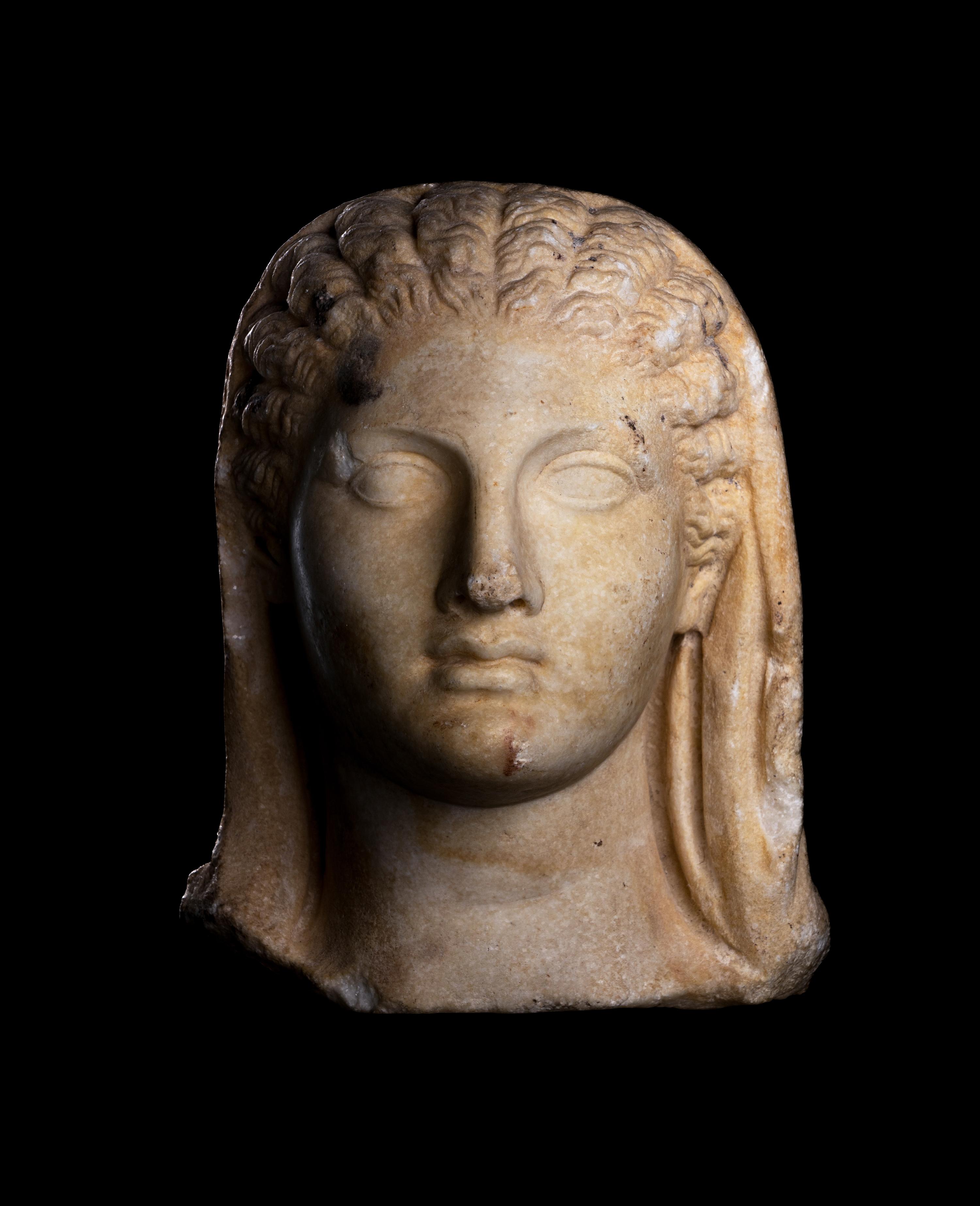
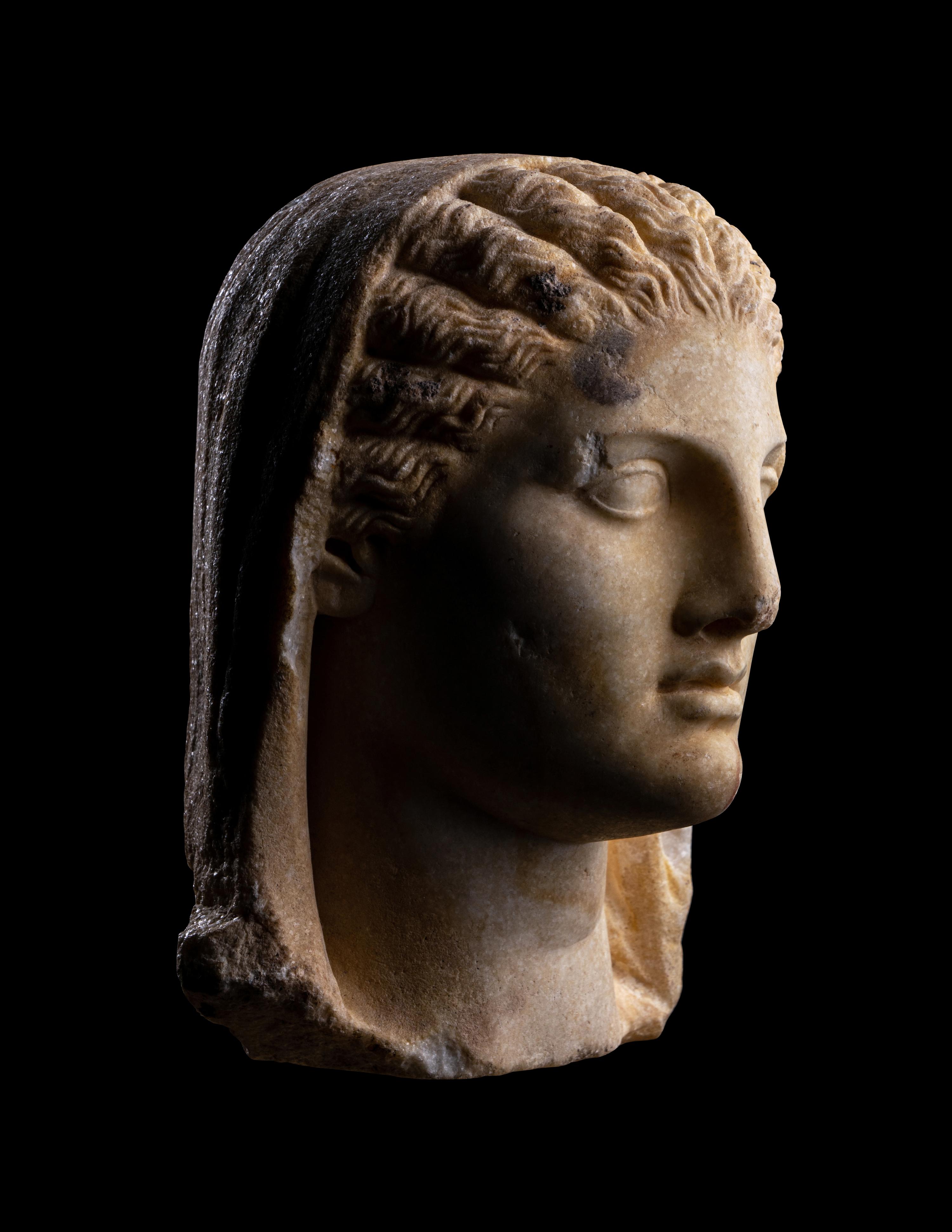
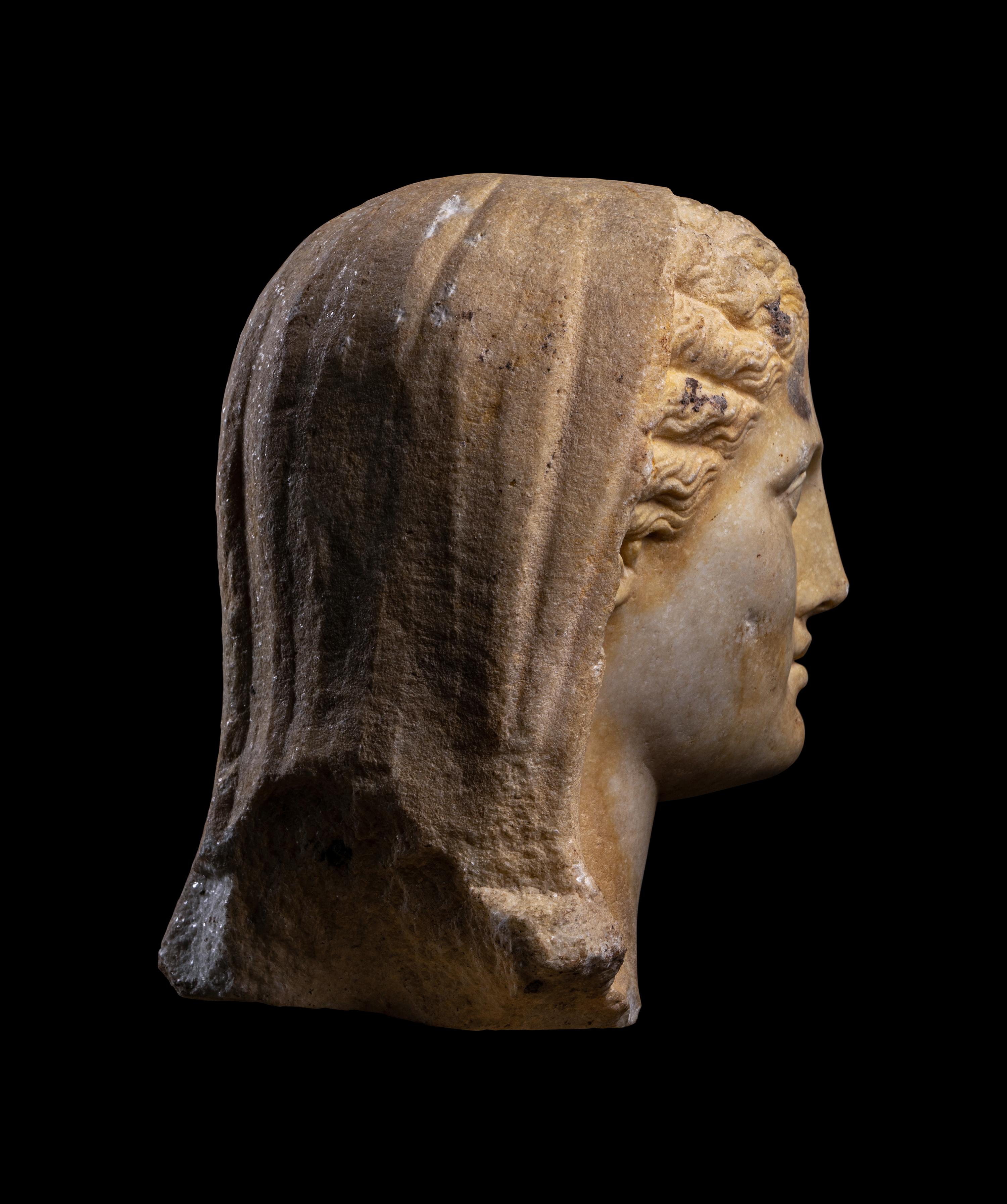
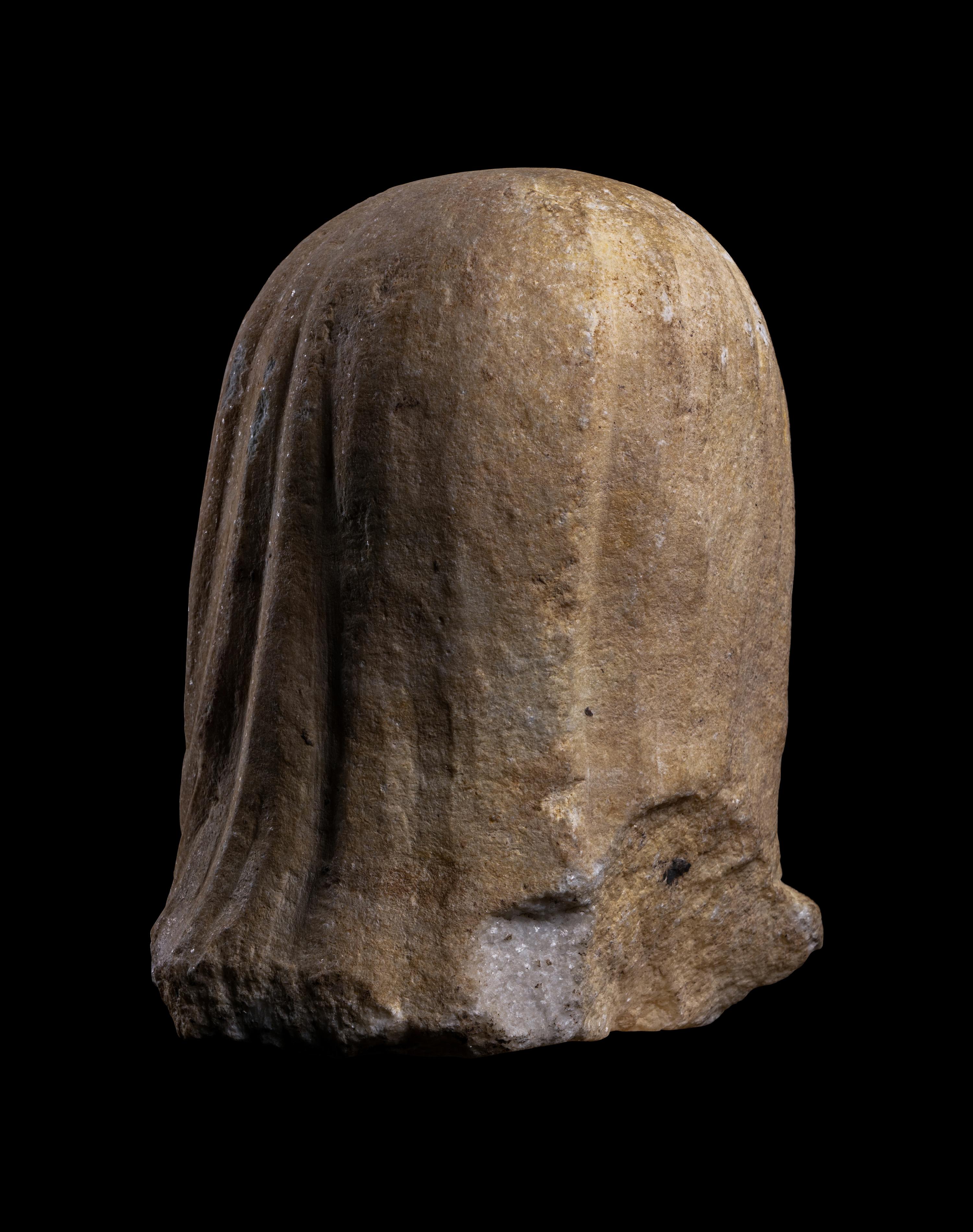
Showing the smooth countenance of a woman, this sculpted head is timeless by design. Once part of a life-sized statue, the voluminous folds of the woman’s mantle would have draped around her body and shoulders before being drawn up at the rear to partially cover her hair in a gesture signaling piety and modesty. The coiffure itself is an ornate configuration of curly strands rolled into rows, pulled back from the brow, and gathered behind in a chignon, creating a ribbed effect termed by scholars as the melonfrisur (‘melon-hairdo’). This distinctive hairstyle originated in Late Classical Greece, where it was deployed to great effect by the master sculptor Praxiteles. Elements of the facial structure, too, reflect this epoch: a somewhat low, triangular forehead, the sharply defined line of the brows descending to a straight nose, and the heavily lidded almond-shaped eyes.
These elements were deployed throughout the Hellenistic and Roman periods for depictions of goddesses and queens. Here, the stark frontality suggests a Roman date as does the manner with which the running drill fully separates the lips. The surface is covered by a yellowed, oxidized patina which obscures a white marble with sugary crystals, characteristic of the Greek islands. Although Roman in manufacture, the spirit of the head - if not the material it was carved from - harkens back to the Hellenic past.
Inspected under UV light and 10x loupe. Surface wear and erosion present throughout. Some encrustations particularly in hair tendrils. Uneven surface patination with areas of orange discoloration. Several chips, gashes, and abrasians throughout, particularly along the edges of the veil and neck. Modern steel dowel drilled into bottom of the neck. Accession number painted "1983.4.60" on bottom surface. Overall in fine and stable condition. See additonal images.
The physical condition of lots in our auctions can vary due to age, normal wear and tear, previous damage, and restoration/repair. All lots are sold "AS IS," in the condition they are in at the time of the auction, and we and the seller make no representation or warranty and assume no liability of any kind as to a lot's condition. Any reference to condition in a catalogue description or a condition report shall not amount to a full accounting of condition. Condition reports prepared by Freeman's staff are provided as a convenience and may be requested from the Department prior to bidding.
The absence of a posted condition report on the Freeman's website or in our catalogues should not be interpreted as commentary on an item's condition. Prospective buyers are responsible for inspecting a lot or sending their agent or conservator to inspect the lot on their behalf, and for ensuring that they have requested, received and understood any condition report provided by Freeman's.
Please email antiquities@hindmanauctions.com for any additional information or questions you may have regarding this lot.