
To request further details about this lot, please email europeanfurniture@hindmanauctions.com
European Furniture & Decorative Arts Department
Please contact our team of specialists with any questions about the auction
Sale 1157
| Chicago
| Chicago
To request further details about this lot, please email europeanfurniture@hindmanauctions.com
European Furniture & Decorative Arts Department
Please contact our team of specialists with any questions about the auction
Estimate$30,000 – $50,000
Provenance:
Mallett Ltd., London (with memorandum)
Note:
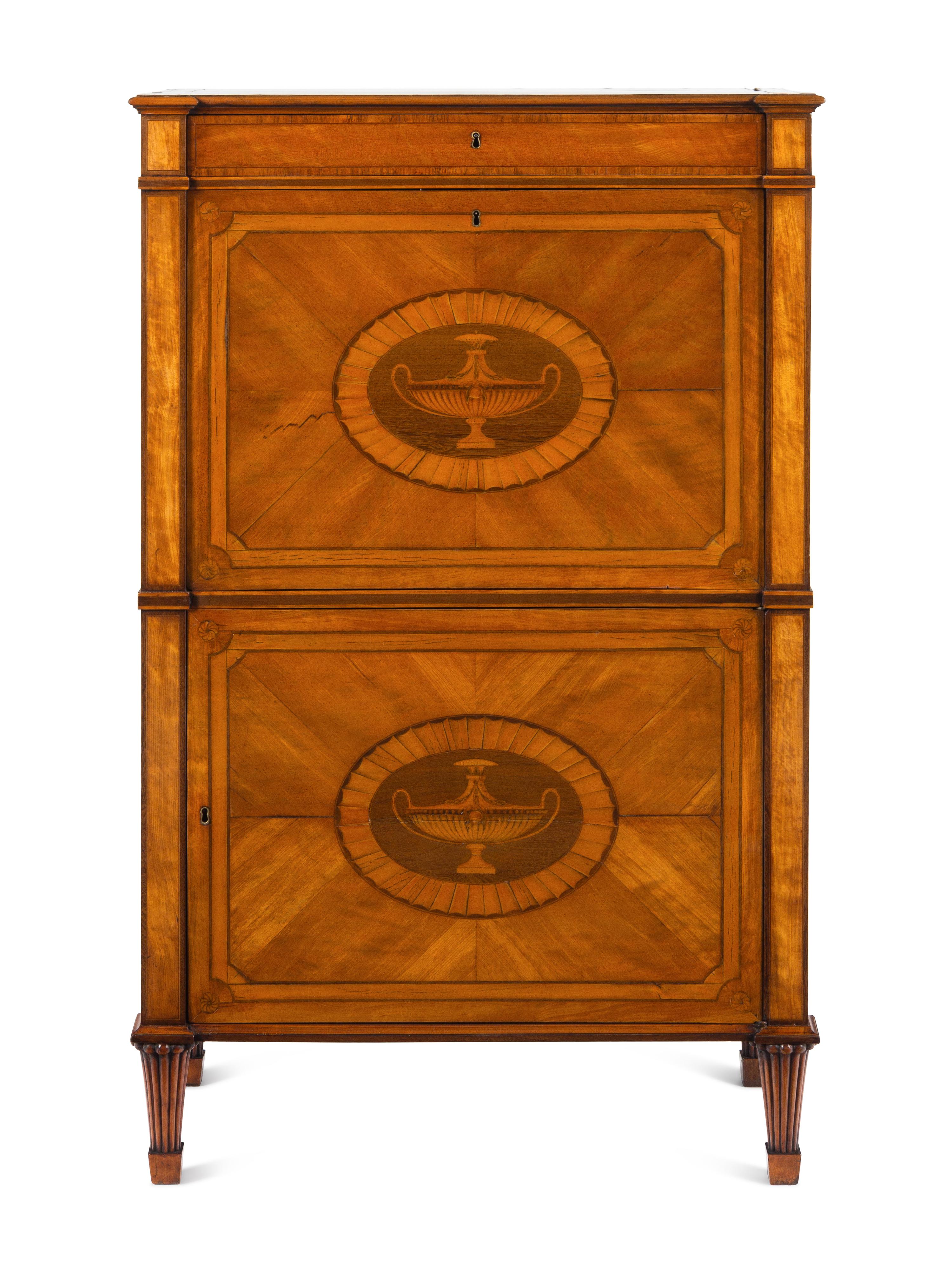
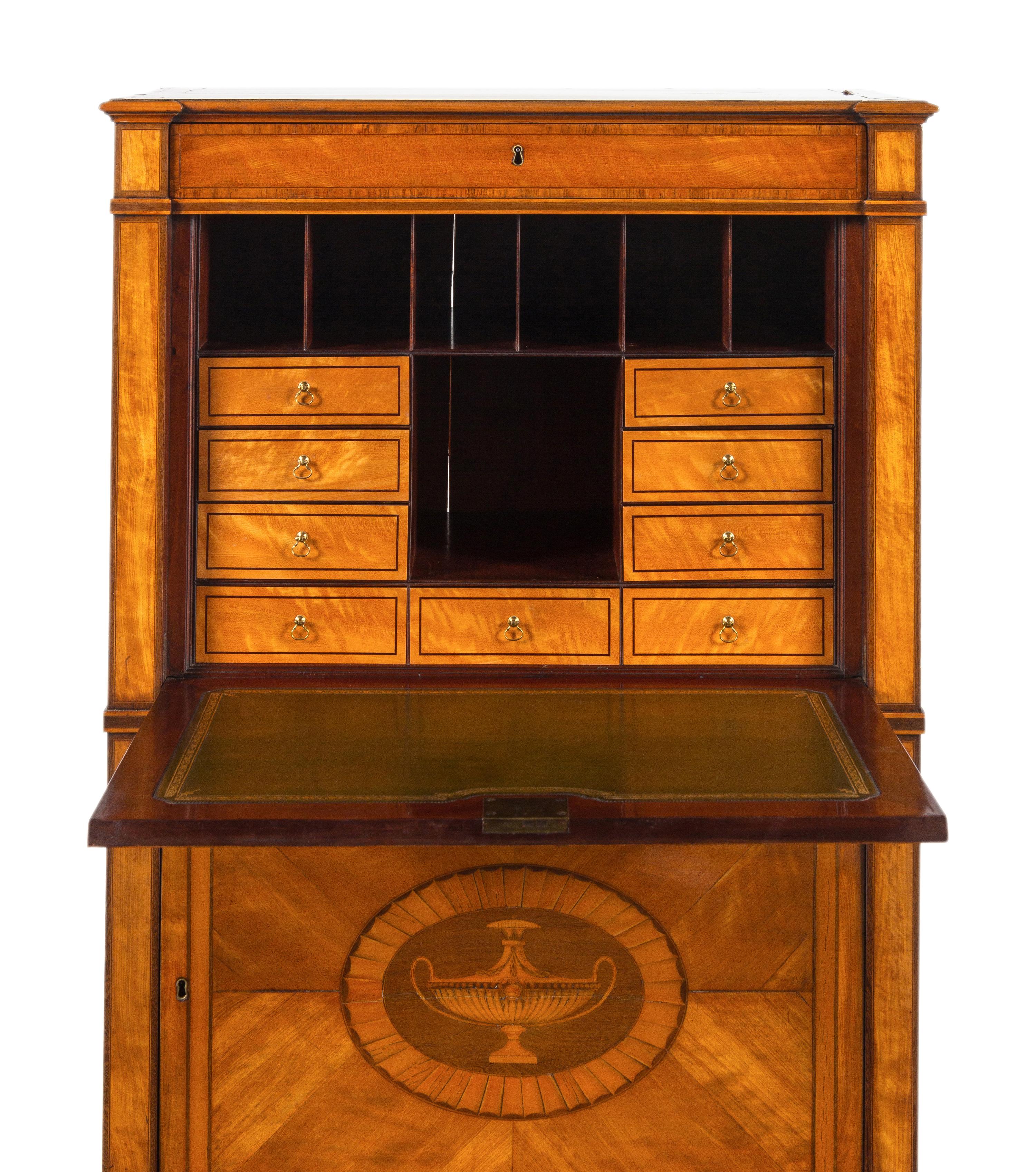
This secrétaire, with its elegant, restrained Neoclassical marquetry occupies a rare, if not unique position in Chippendale’s oeuvre. Not only is it directly based on a French secrétaire à abattant, a form seldom seen in English furniture, it is one of a pair which were presumably supplied to an unknown patron. Although French furniture designs had been an enduring source of inspiration for English cabinet-makers, so much so their drawings became known as the 'French Taste’, few were copied directly and were almost always the work of French trained émigirés such as Pierre Langlois (1718-1767) or Christopher Furlohg (1740-1787).
This secrétaire and its pair are part of a distinct group of closely related secrétaires attributed to Thomas Chippendale. Unlike most of his ‘French’ furniture, they are the rare occasion where a distinctly French form is kept intact and used as a backdrop for Chippendale’s creativity and ingenuity. Their prototype were the two secrétaires supplied to Edwin Lascelles for two rooms in the State Apartments at Harewood House, Yorkshire from 1772-1773 and are the richest examples of this form. One, now in the collection of Temple Newsam, Leeds, was part of a suite of black lacquer and japanned furniture for the State Bedroom. It appears on Chippendale’s 12 November 1773 invoice as ‘a Lady’s Secretary veneer’d with your own Japann with additions of Carved Ornaments…the front of the secretary to rise with balance weights.’ The second, inlaid with marquetry against a satinwood ground, was supplied to the State Dressing Room and remains at Harewood (J. Sellers, ed., The Art of Thomas Chippendale, Master Furniture Maker, Leeds, 2000, p. 30).
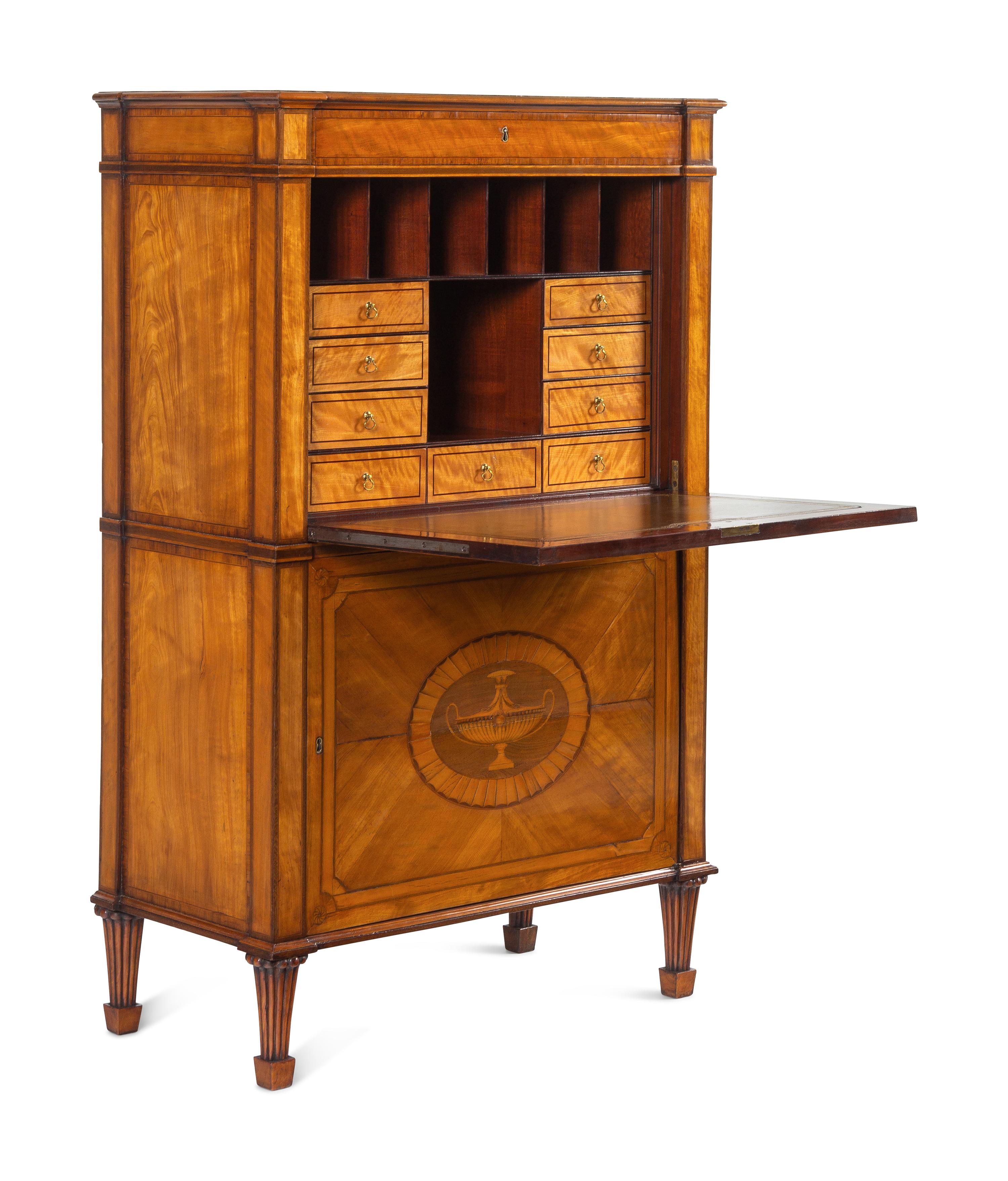
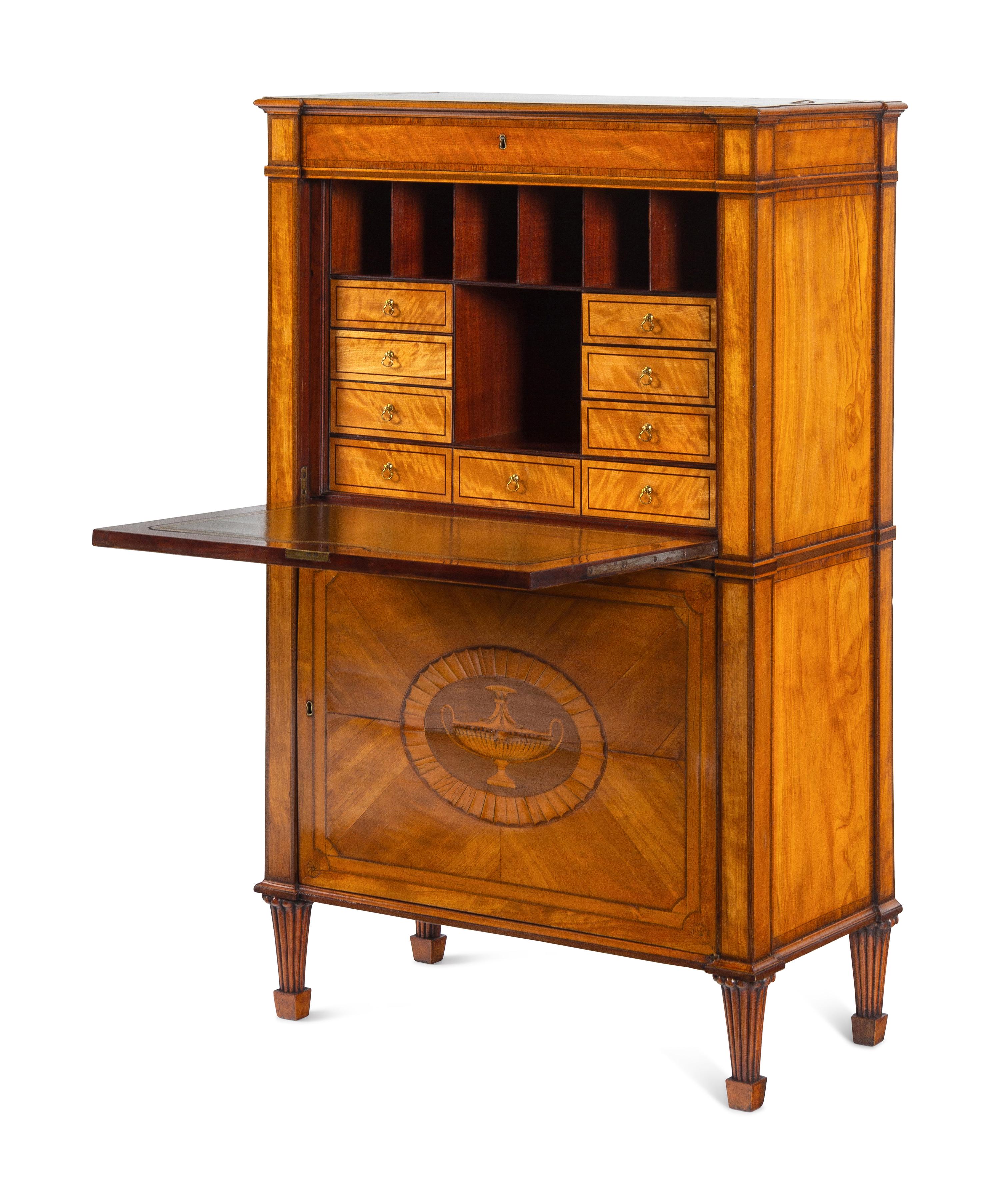
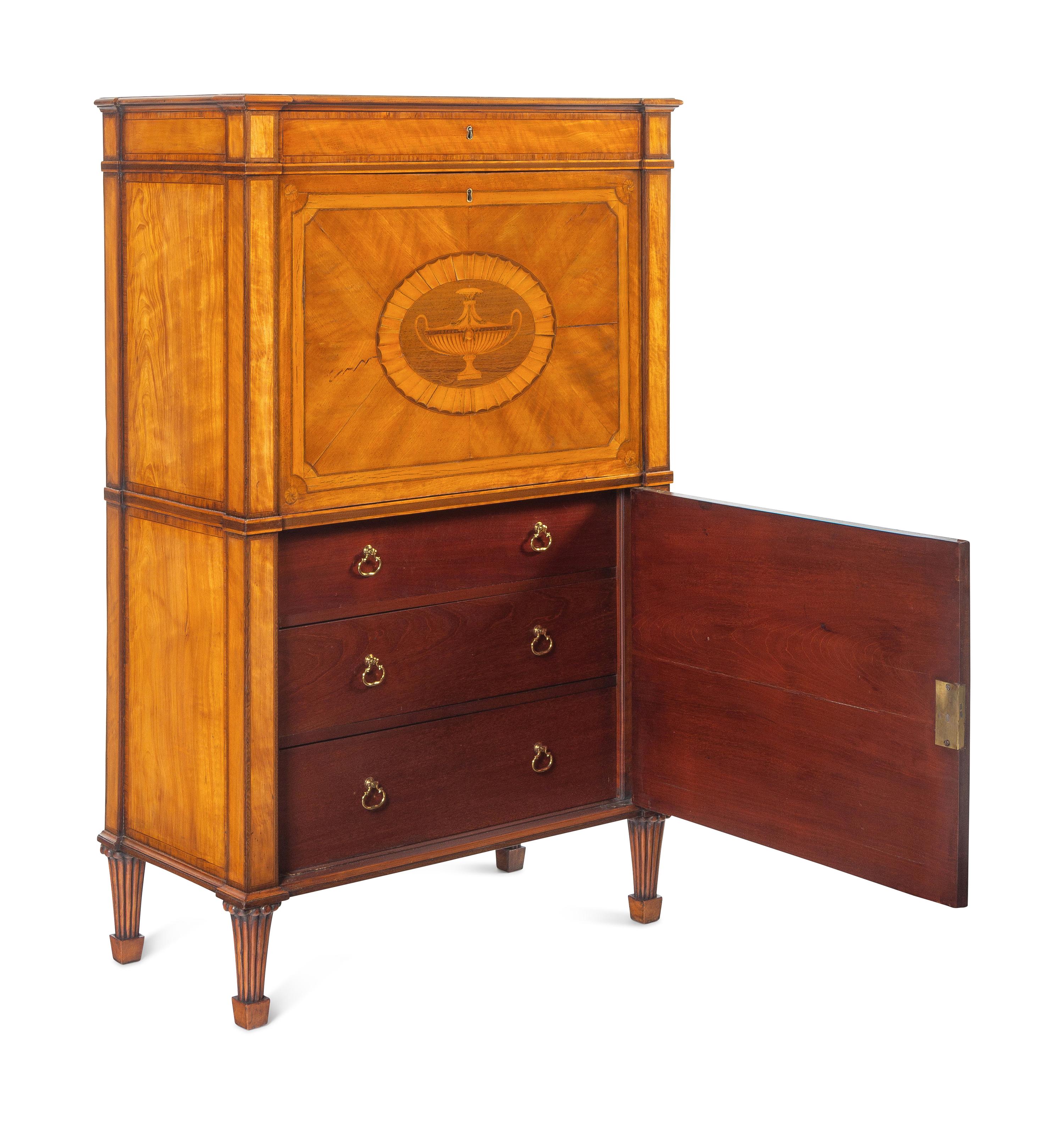
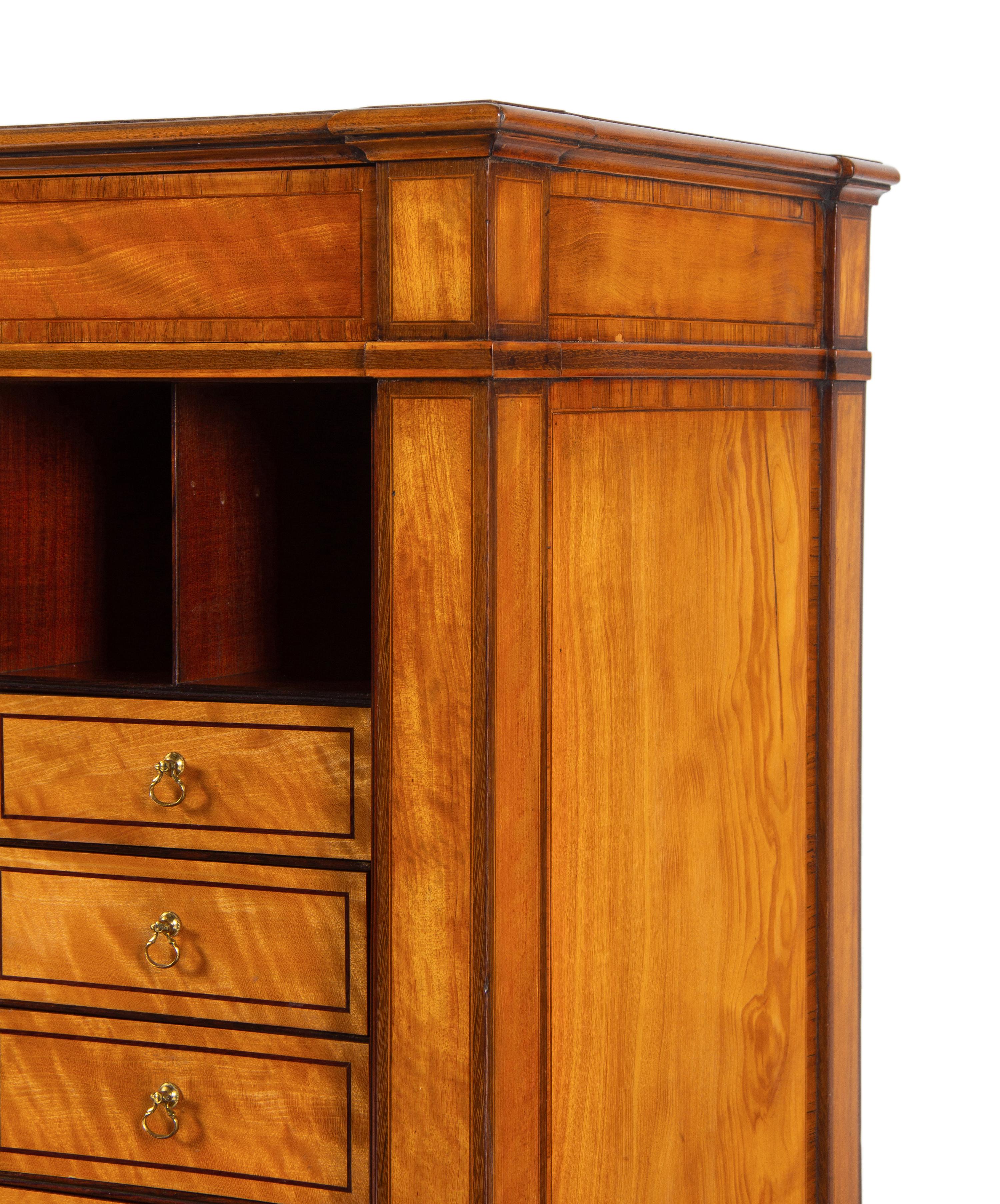
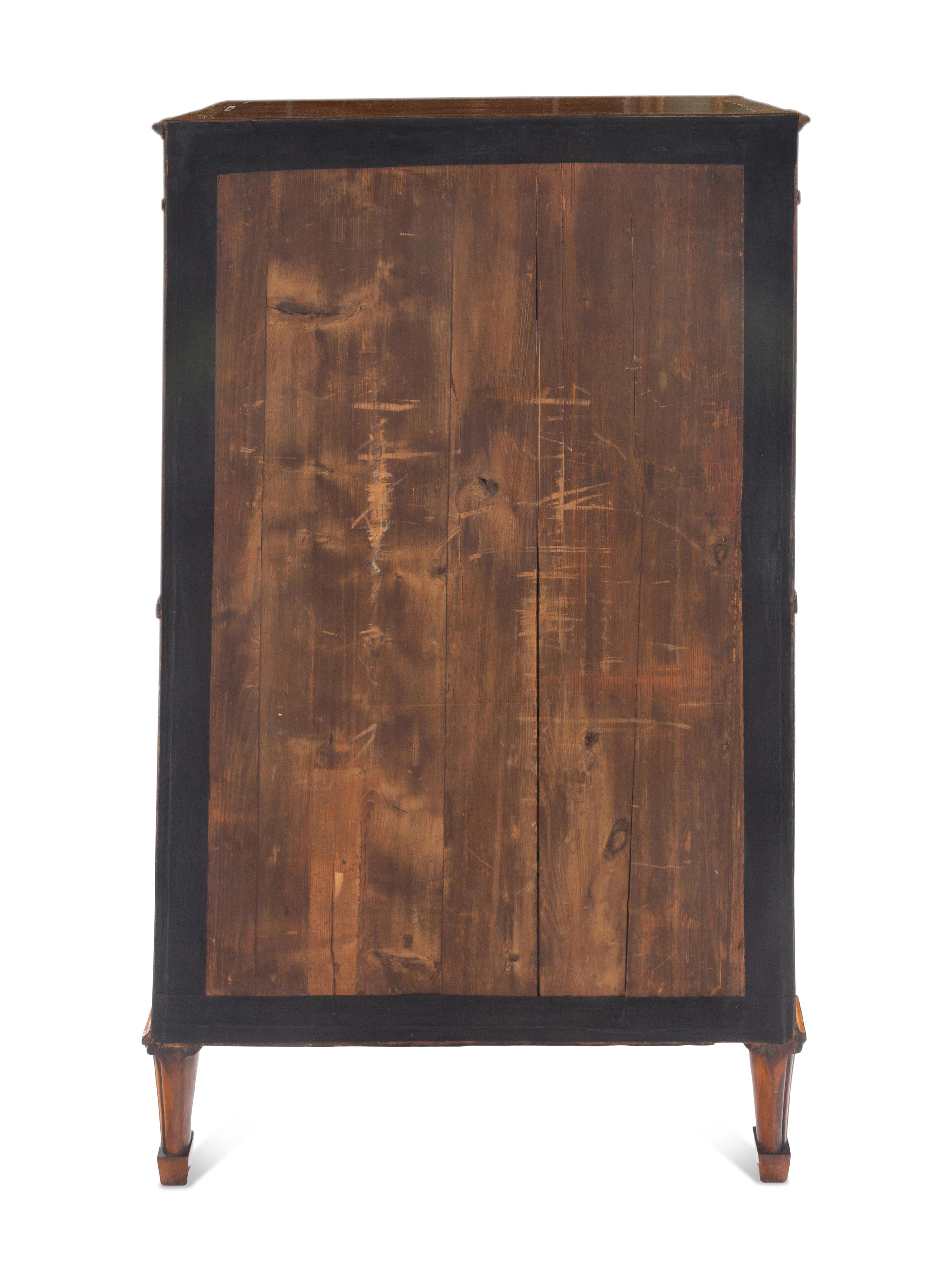
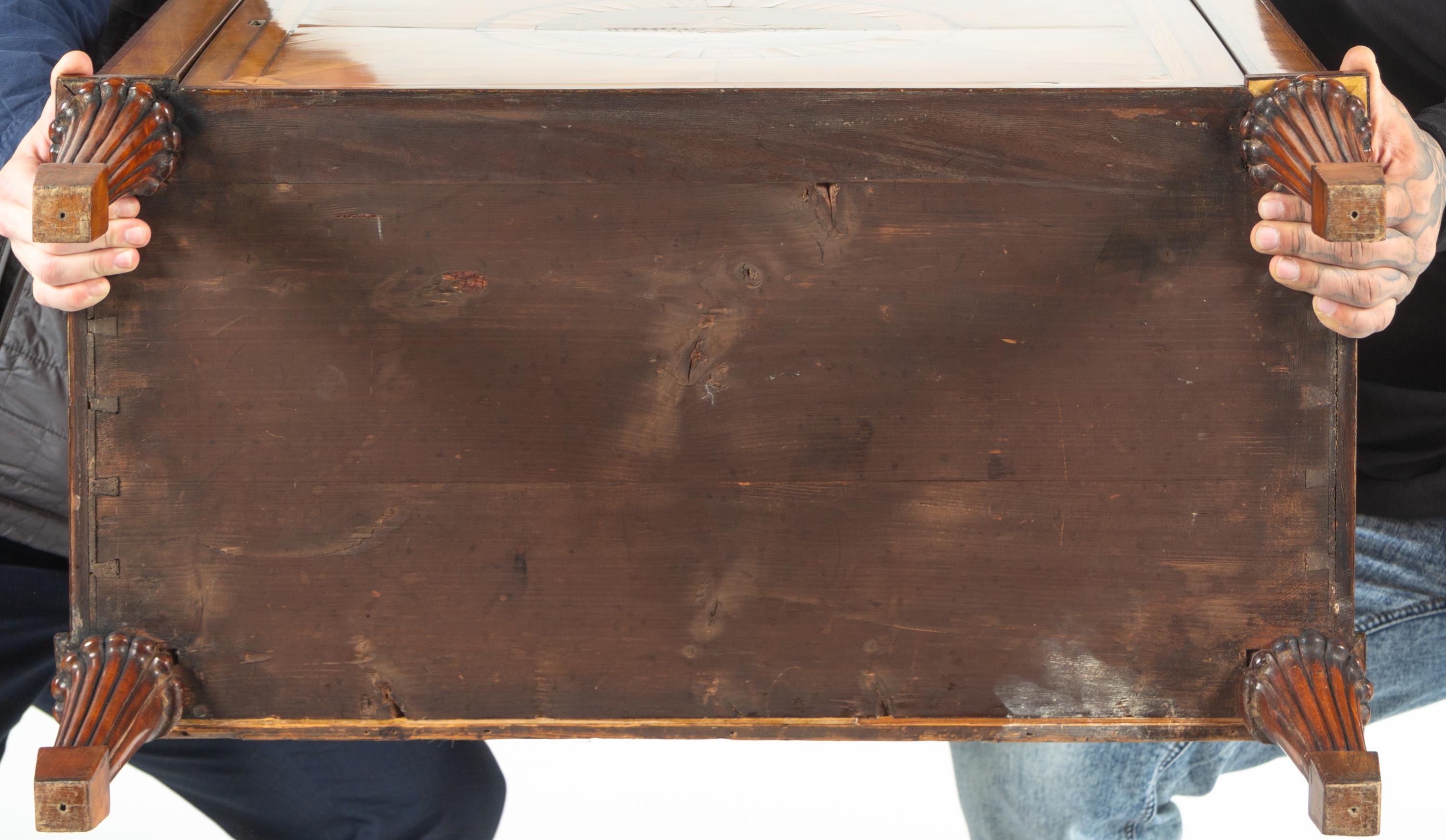
Chippendale’s mention of the secretary’s balance weight mechanism is particularly relevant as it was his own invention and allowed for the seamless rising and falling of the fall front. Hidden within the construction of the case, it allowed the writing surface to appear as if it was suspended in the air with no distracting brackets. This secrétaire as well as the others in the group have this unique feature. Other constructional hallmarks of Chippendale’s workshop are the hardware used on the drawers whose construction bears the typical finely executed details such as the mitered corners to the undersides, the triangular stoppers to the interior of the carcass for the drawers and the distinctive red wash visible in areas on the case.
In addition to the present lot’s pair, which was sold anonymously at Sotheby’s, London, 16 December 1990, lot 345 (£35,200 including premium), the other secrétaires of this group display only minor variations. They have the same richly figured satinwood ground, Neoclassical marquetry central medallions punctuated by rosettes in the incurved corners, a single lower door and apparently identical interiors. They comprise:
(1) A virtually identical example with square tapering legs from Lady Frye, Oare House, Wiltshire sold Christie’s, London, 21 April 1966, lot 68 and most recently sold from the collection of Zeinab and Pierre Marcie Riviere, Christie’s, Paris, 8 June 2016, lot 185 ($50,065 including premium).
(2) Another with ebonized pilasters and square tapering legs supplied to William Windham (1708-1789) for Earsham Hall, Norfolk (Ronald Phillips, The Legacy of Thomas Chippendale, Exhibition Catalogue, 2018, no. 19, pp. 89-93).
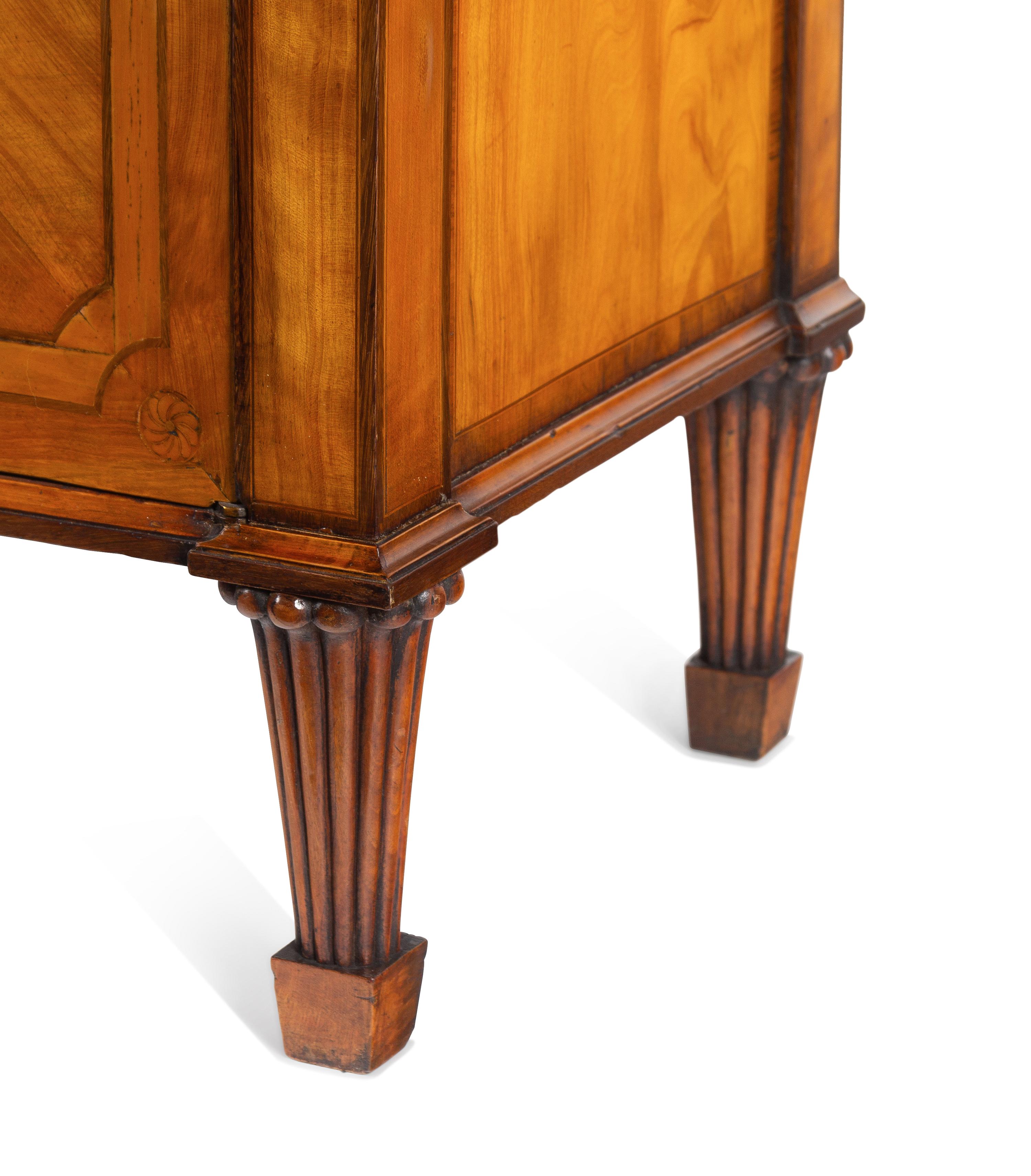
(3) One with marquetry fan medallions and identical legs to the present lot sold anonymously (Property of a Lady) at Christie’s, New York, 20 January 1996, lot 335 ($34,500 including premium).
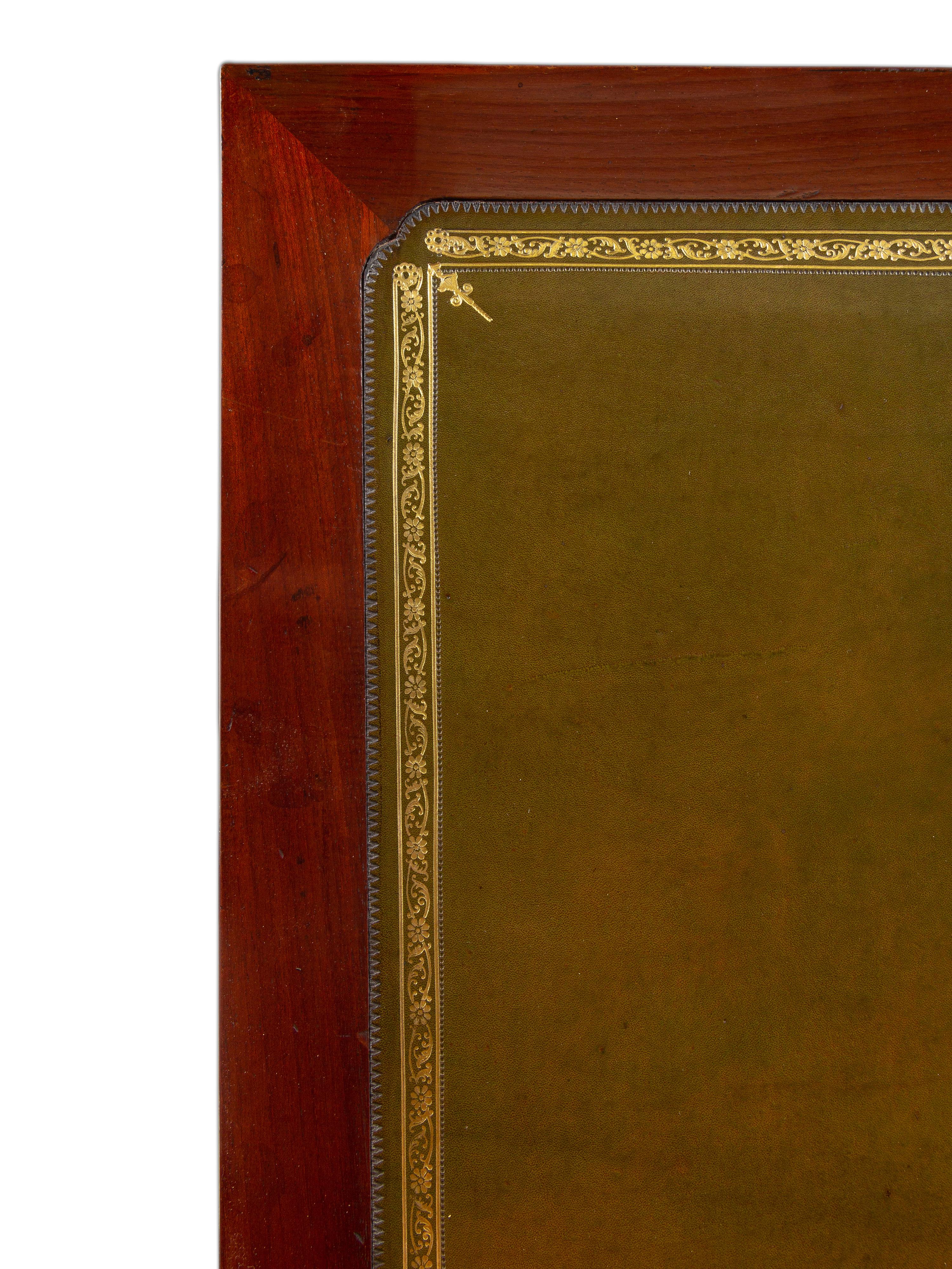
Overall well-conserved, original condition, with noticeable sun-fading and an orangey color. Typical cracking and infill to the veneers; some minor areas of lifting veneer / repaired fraying veneer. The top with a narrow shrinkage crack. The front of the fall-front with some darkened overpainting from repair to lifting veneers. A veneer repair in the bottom right corner of the fall-front. Faint traces of the original green heightening to the urns, a bit more visible on the lower urn. A shrinkage crack emerging now in the lower cabinet door running right below the medallion. The rosettes have lost much of their penwork and color heightening. Repairs to some of the stringing on the outside of the writing surface. The interior with a later tooled leather writing surface, and one or two of the small drawer liners with replaced parts of their lining. The proper left front foot probably re-stuck, with replaced molding around its top. The proper right front top corner molding has been re-glued. The lock has probably been taken out and put back but is original. The pulls are original. Pine backboards. Pointed drawer stops on the inside. With one key.
Condition reports are available upon request. All lots are sold “as is,” in the condition they are in at the time of the auction. The physical condition of lots can vary due to age, normal wear and tear, previous damage, and restoration. Prospective buyers are strongly advised to inspect a lot personally or through a knowledgeable representative prior to bidding. The absence of any reference to the condition of a lot does not imply that the lot is in perfect condition or completely free from wear and tear, imperfections, or the effects of aging. Prospective buyers must review and agree to the Conditions of Sale before participating in an auction, and it is the responsibility of the buyer to ensure that they have requested, received and considered any condition report.
The physical condition of lots in our auctions can vary due to age, normal wear and tear, previous damage, and restoration/repair. All lots are sold "AS IS," in the condition they are in at the time of the auction, and we and the seller make no representation or warranty and assume no liability of any kind as to a lot's condition. Any reference to condition in a catalogue description or a condition report shall not amount to a full accounting of condition. Condition reports prepared by Freeman's staff are provided as a convenience and may be requested from the Department prior to bidding.
The absence of a posted condition report on the Freeman's website or in our catalogues should not be interpreted as commentary on an item's condition. Prospective buyers are responsible for inspecting a lot or sending their agent or conservator to inspect the lot on their behalf, and for ensuring that they have requested, received and understood any condition report provided by Freeman's.
Please email europeanfurniture@hindmanauctions.com for any additional information or questions you may have regarding this lot.