To request further details about this lot, please email americanfurniture@hindmanauctions.com


Jennifer Howe
Senior Specialist, Furniture and Decorative Arts

Leah Vogelpohl
AVP, Specialist, American Furniture, Folk, and Decorative Arts
Sale 1130
| Cincinnati
| Cincinnati
To request further details about this lot, please email americanfurniture@hindmanauctions.com
Jennifer Howe
Senior Specialist, Furniture and Decorative Arts
Leah Vogelpohl
AVP, Specialist, American Furniture, Folk, and Decorative Arts
Estimate$1,000 – $1,500
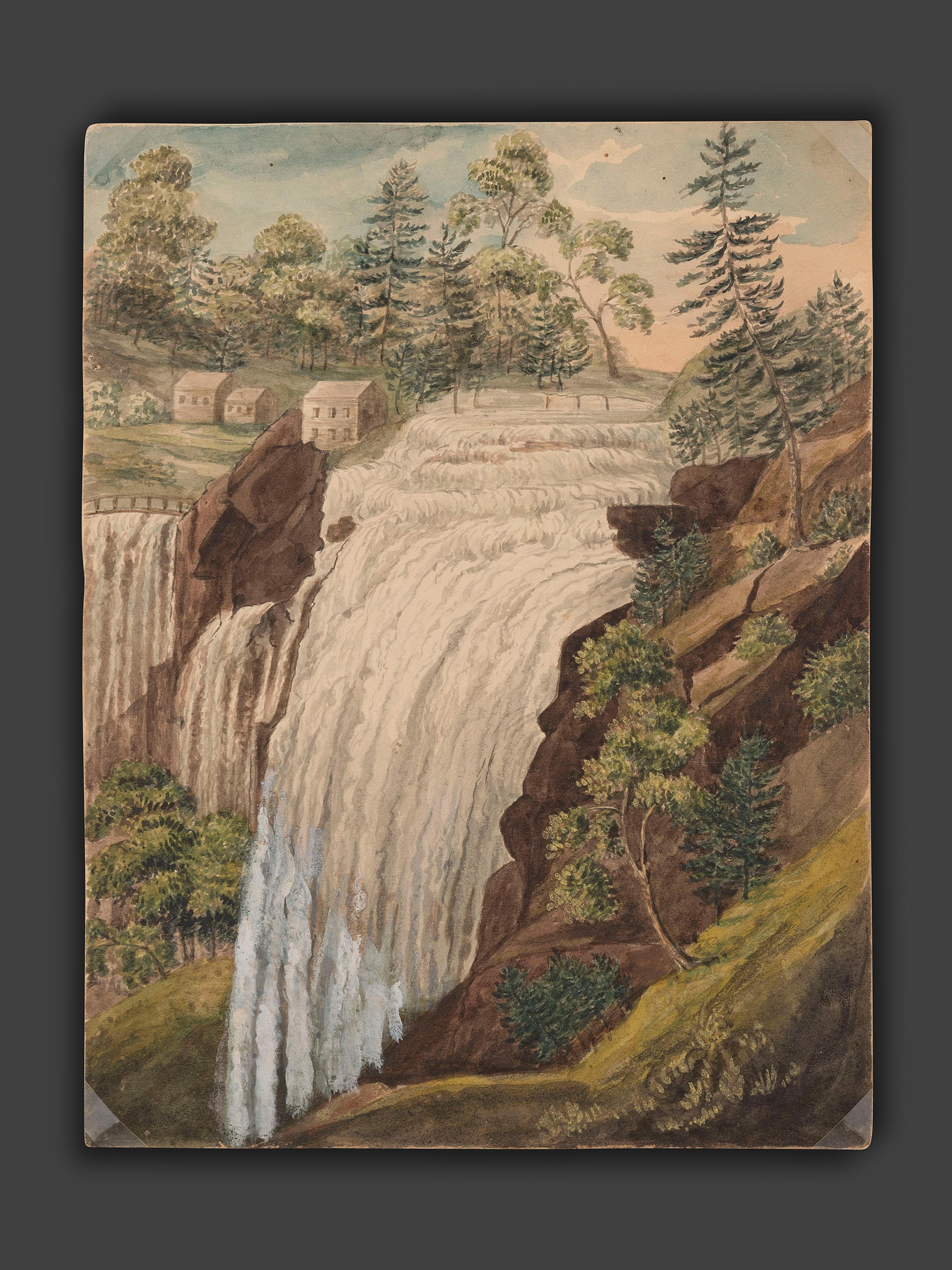
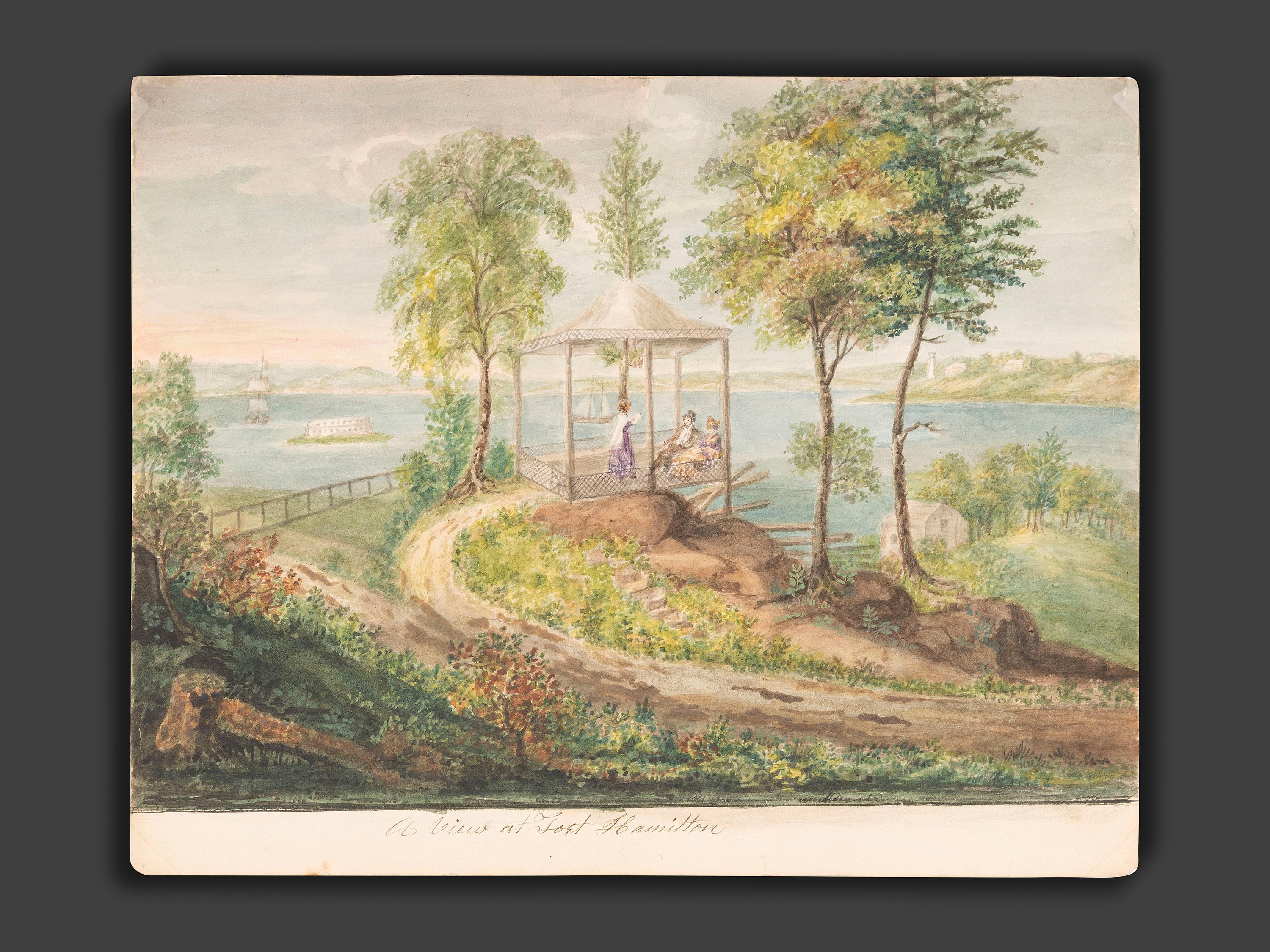
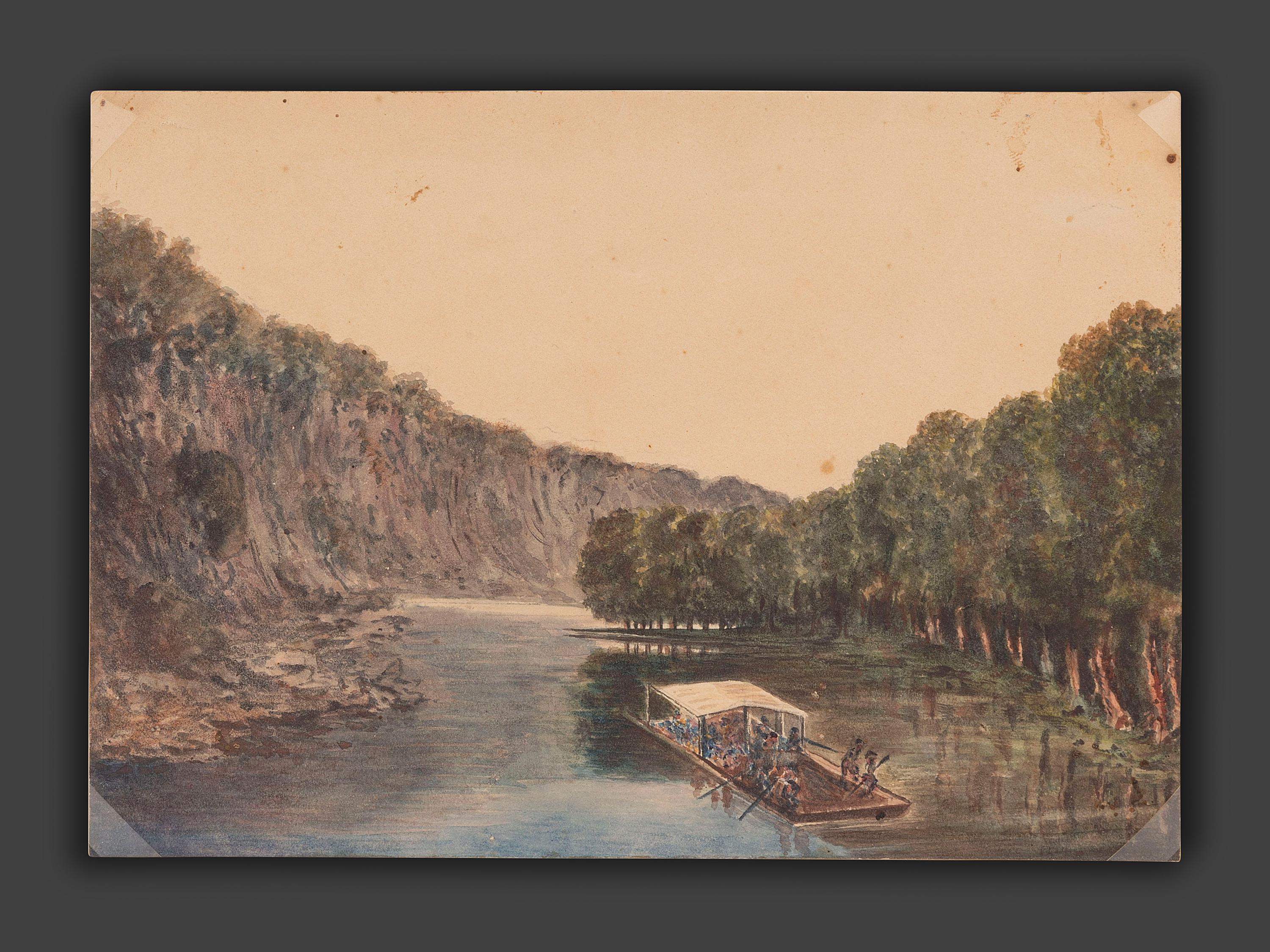
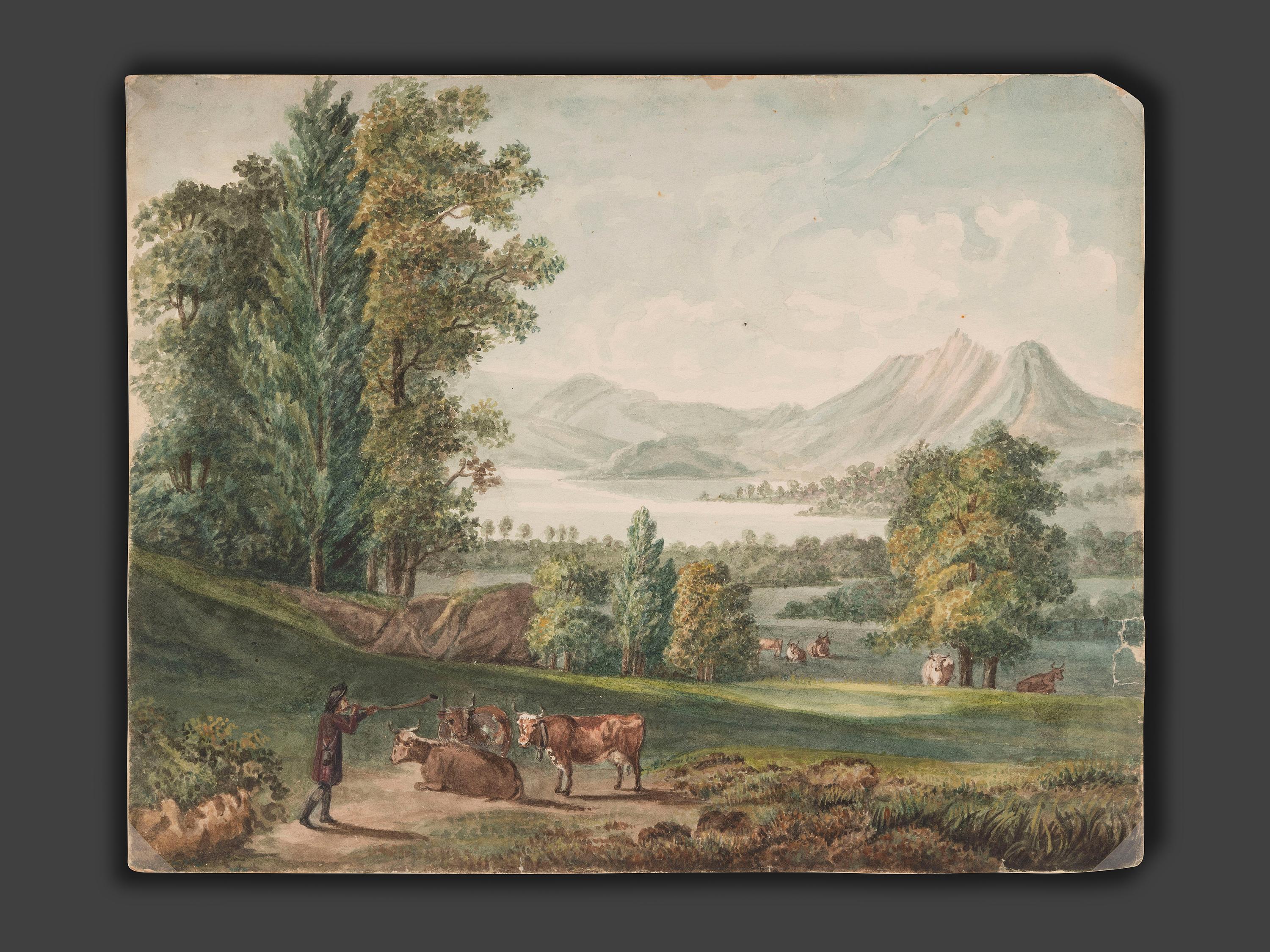
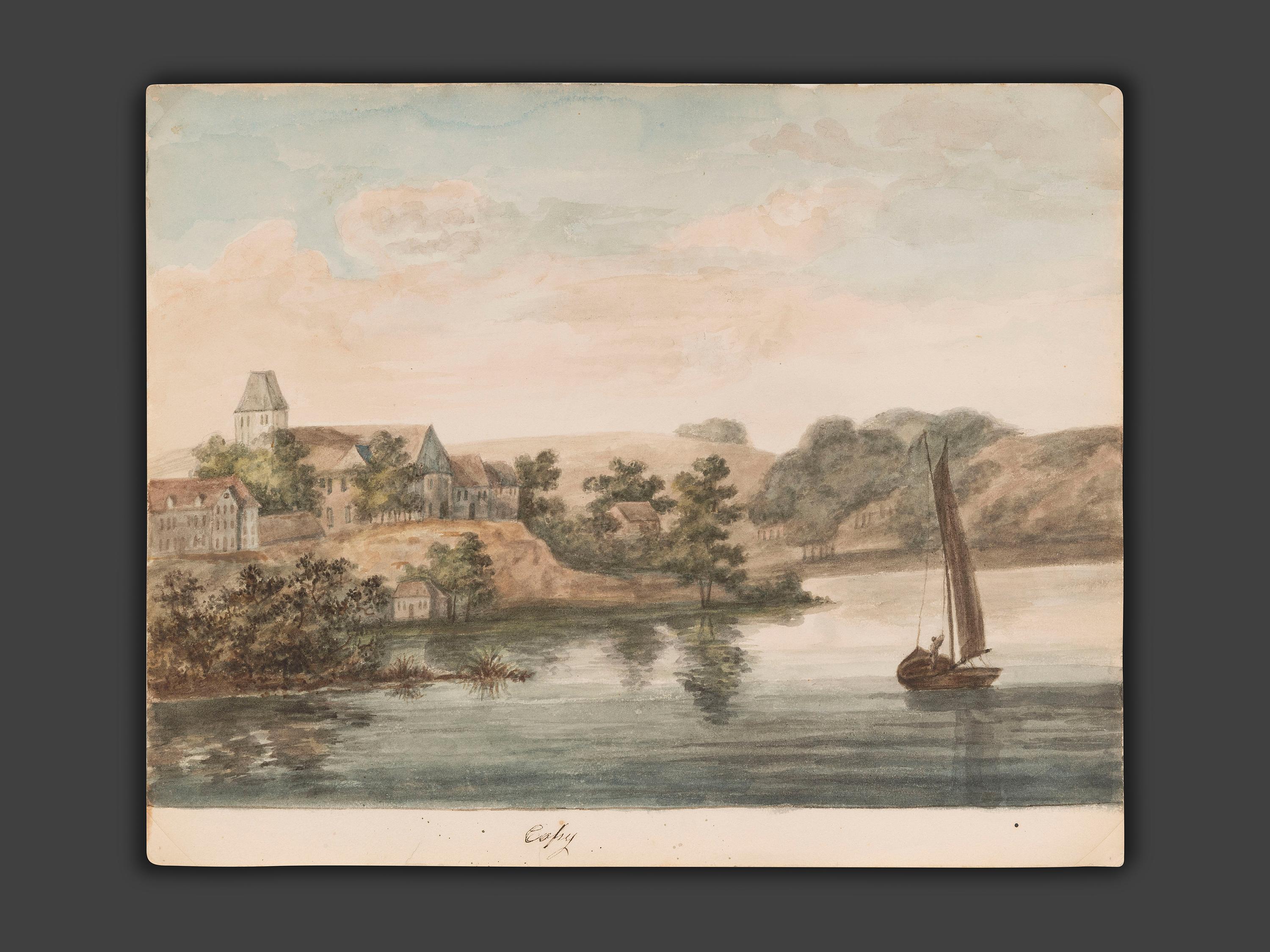
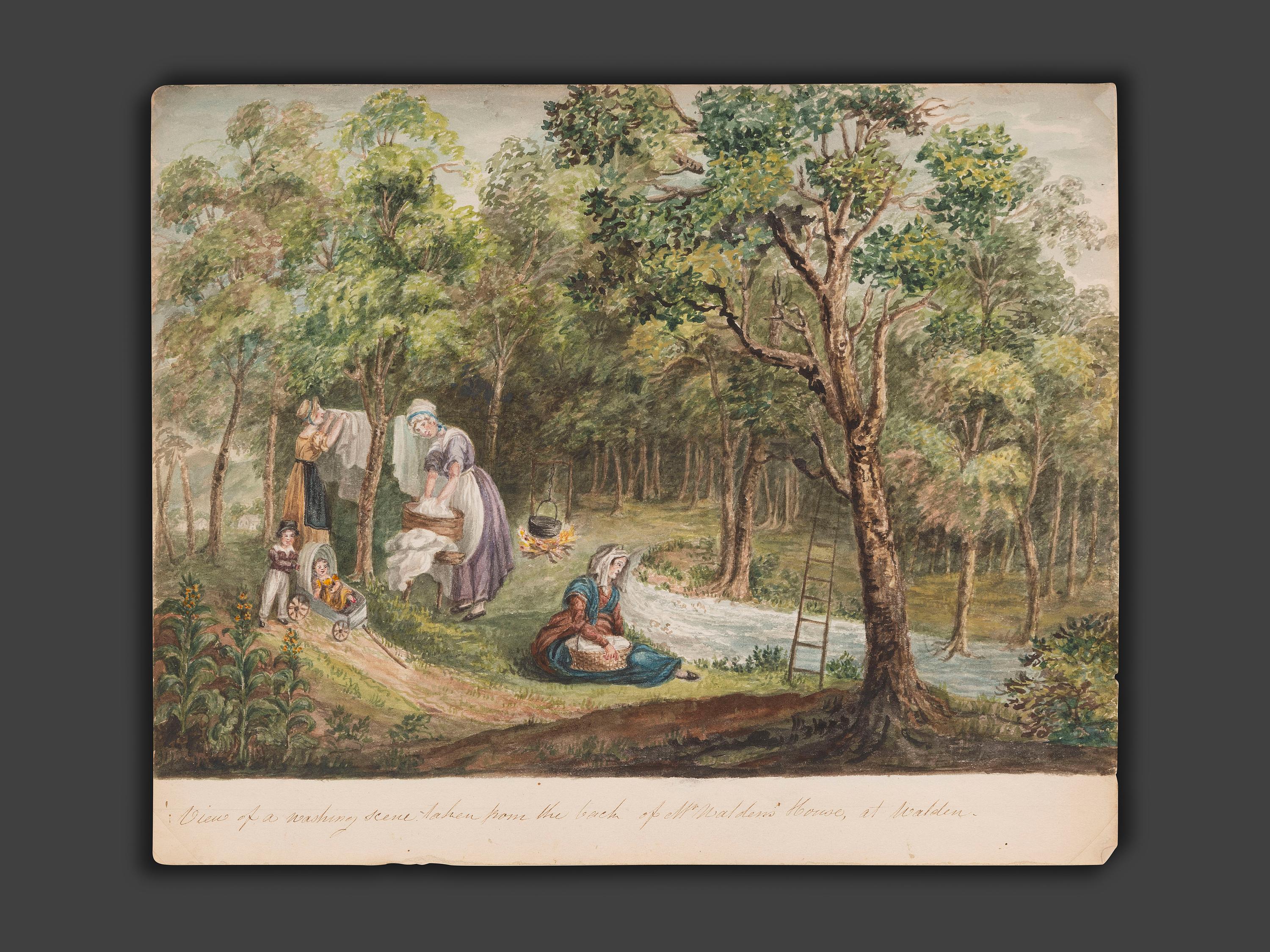
Noteworthy in this lot is the number of images showing various bodies of water, including rivers, harbors, and falls, many with tourists and associated forms of transportation. This iconography was popular with landscape artists active in the second quarter of the nineteenth century, as innovations in the construction and navigation of American waterways developed. Identifiable locales include scenic views of Fort Hamilton, Montmorency Falls, and Walden, New York, some of which became increasingly popular nineteenth-century tourist destinations. The artist seemed to enjoy easy mobility within New York state and beyond, traveling from the southern coast of Brooklyn to just north of Quebec City across the Canadian border.
The construction of Fort Hamilton began in 1825 and concluded in 1831. The trapezoidal seacoast fort was designed primarily as a landward defense for Fort Lafayette, built on the natural island of Hendricks Reef in New York Harbor in 1822. The village that sprang up around Fort Hamilton was largely popular with young men and women seeking respite from the “thralls of city restraint.” [1] It was known as a destination for boating, fishing, and revelry until the mid-1850s when several pernicious yellow fever outbreaks diminished its appeal. After the Civil War, Fort Hamilton enjoyed a tourism renaissance, however, and came to rival Coney Island as a preeminent resort destination. In the Fort Hamilton watercolor, Fort Lafayette is visible as the small island structure at center left, suggesting that this painting was executed prior to the destruction and subsequent rebuilding of the Fort in 1868.
Similarly, Montmorency Falls provided year-round leisure opportunities for nineteenth-century tourists. The primary fall, Chute Montmorency, is the highest waterfall in Quebec and among the ten highest waterfalls in Canada overall. The Falls offered numerous observation points in picnic areas in warmer months, as well as the wintertime opportunity to toboggan down the Chute Montmorency’s frozen “Sugarloaf,” a natural ice cone formed from frozen sprays of water at the foot of the falls.
Finally, Walden, Orange County, New York, described as a “pleasant little village at the high falls of the Wallkill [River],” was informally established by Jacob Treadwell Walden (1775-1855) in the 1820s. [2] Walden encouraged several of his business partners from the shipping industry to finance the construction of wool mills in Orange County, damming the Wallkill River above its falls to maximize its potential for hydropower. Walden lived in a cut-stone Dutch Colonial house bordering the river with his family, including second wife Beulah Hoffman Willet (circa 1800-1857), whom he married in 1825. The town was named Walden in his honor after his death in 1855. Interestingly, Willet was the granddaughter of New York shipping magnate Robert Murray (1721-1786), and consequently a distant cousin of John Rogers Murray, Jr. (1811-1881), owner of the Genesee River farm estate in Mount Morris from Lot 58.
Please see Lots 57 and 58 for contemporaneous depictions of Niagara Falls and the Genesee River by the same artist.
[1] “Bay Ridge Waking Up. Its Permanent Residents and Its Summer Visitors,” The Brooklyn Daily Eagle, June 29, 1890.
[2] Samuel W. Eager, An Outline History of Orange County, Newburgh, NY: S.T. Callahan, 1847.
Ms. Howe joined the firm in 2012 working as a specialist in the American and European Furniture and Decorative Arts department as well as the Modern and Contemporary Art and Design department.
Previously, Ms. Howe served as Associate Curator of Decorative Arts at the Cincinnati Art Museum, where she curated exhibitions focusing on American and European furniture, silver, glass and ceramics. Additionally, she was an instructor of Art History at the Art Academy of Cincinnati, an independent consultant to museums and a lecturer on decorative arts. Ms. Howe’s research and publications have focused on late 19th- and early 20th-century decorative arts and design, in particular, on Cincinnati Arts and Crafts metalwork and furniture. Ms. Howe served as editor and contributing author of the book Cincinnati Art-Carved Furniture and Interiors. She received a BA from the University of Cincinnati and an MA in Art History from the University of Minnesota.
Ms. Vogelpohl joined the firm in 2013 as a cataloger in the American and European Furniture and Decorative Arts department. She became a department specialist in 2017, focusing on American decorative arts and silver. She received a BA from the College of Charleston and an MLITT in Art History from the University of Glasgow.