To request further details about this lot, please email americanfurniture@hindmanauctions.com


Jennifer Howe
Senior Specialist, Furniture and Decorative Arts

Leah Vogelpohl
AVP, Specialist, American Furniture, Folk, and Decorative Arts
Sale 1130
| Cincinnati
| Cincinnati
To request further details about this lot, please email americanfurniture@hindmanauctions.com
Jennifer Howe
Senior Specialist, Furniture and Decorative Arts
Leah Vogelpohl
AVP, Specialist, American Furniture, Folk, and Decorative Arts
Estimate$1,500 – $2,500
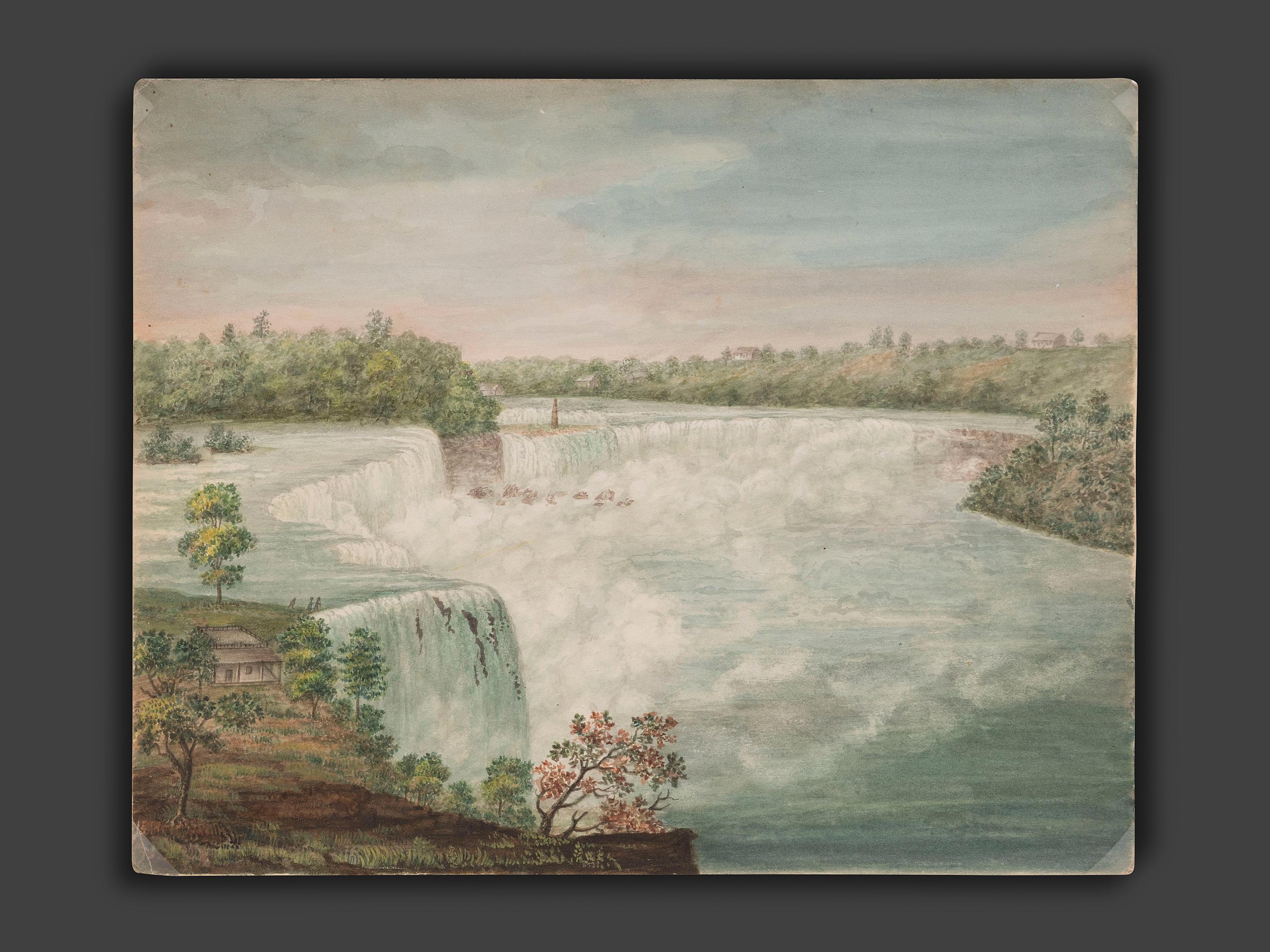
On the occasion of a four-day trip to Niagara Falls in June of 1831, English social commentator Frances Milton “Fanny” Trollope (1799-1863) wrote: “We drenched ourselves in spray; we cut our feet on the rocks; we blistered our faces in the sun; we looked up the cataract and down the cataract; we perched ourselves on every pinnacle we could find; we dipped our fingers in the flood at a few yards distance from its thundering fall; in short, we strove to fill as many niches of memory with Niagara as possible."
Trollope and her two daughters were but three among the panoply of American and European tourists who visited the Falls numbers during the nineteenth century. Access to Niagara Falls expanded upon the completion of the Erie Canal in 1825, and interest in the region’s late involvement in the War of 1812 drove tourists to its famous battlefields. In addition, famous newlywed visitors including Theodosia Burr, daughter of then-Vice President Aaron Burr, and husband Joseph Alston, as well as Napoleon’s brother Jerome Bonaparte and his American bride Elizabeth Patterson, helped establish Niagara Falls as a fashionable destination for “bridal tours” early in the nineteenth century. From fishing and picnicking to scenic views and thrilling stunts like tightrope walking and high jumping, Niagara Falls appealed to a wide range of eager nineteenth-century tourists.
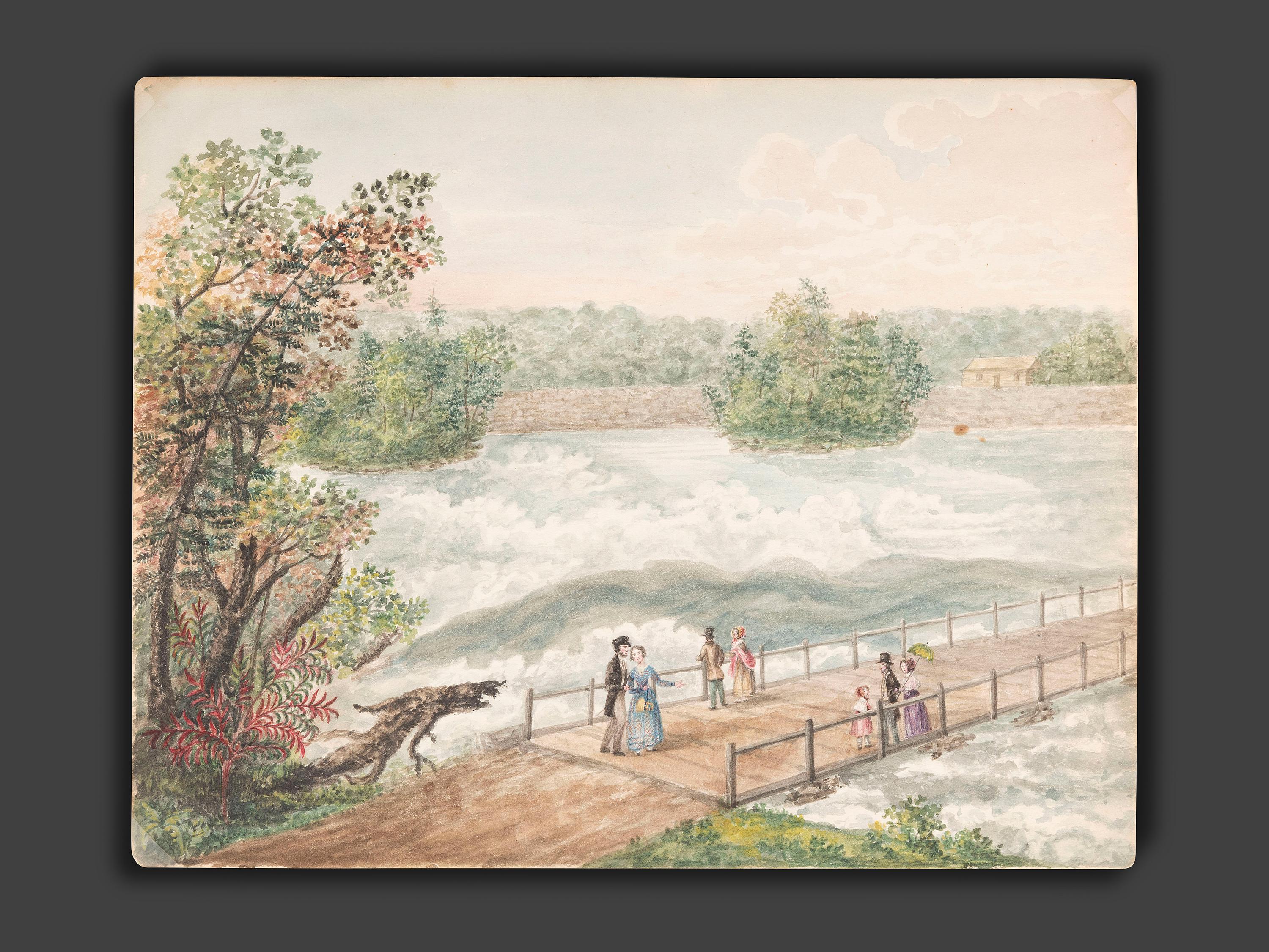
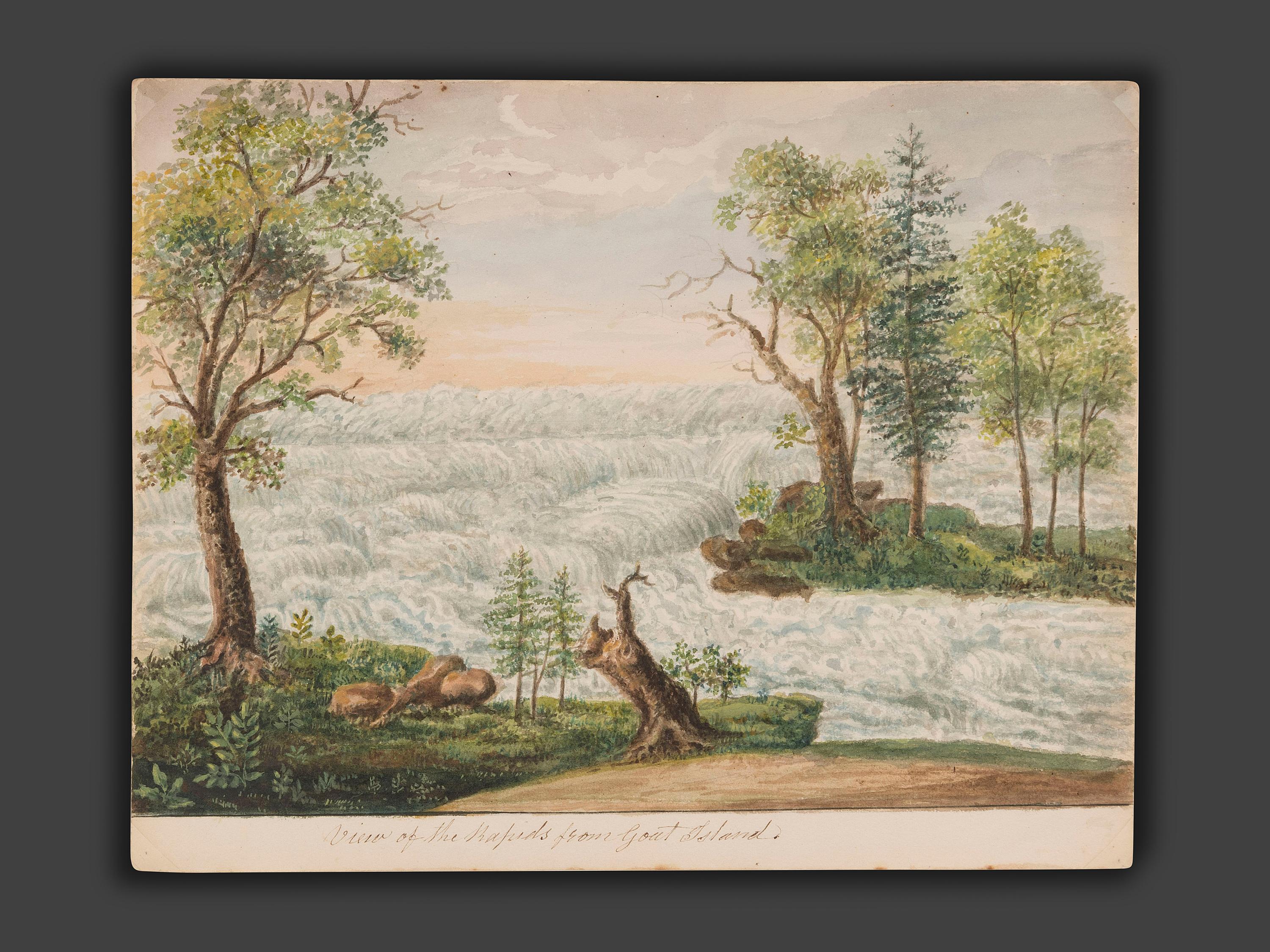
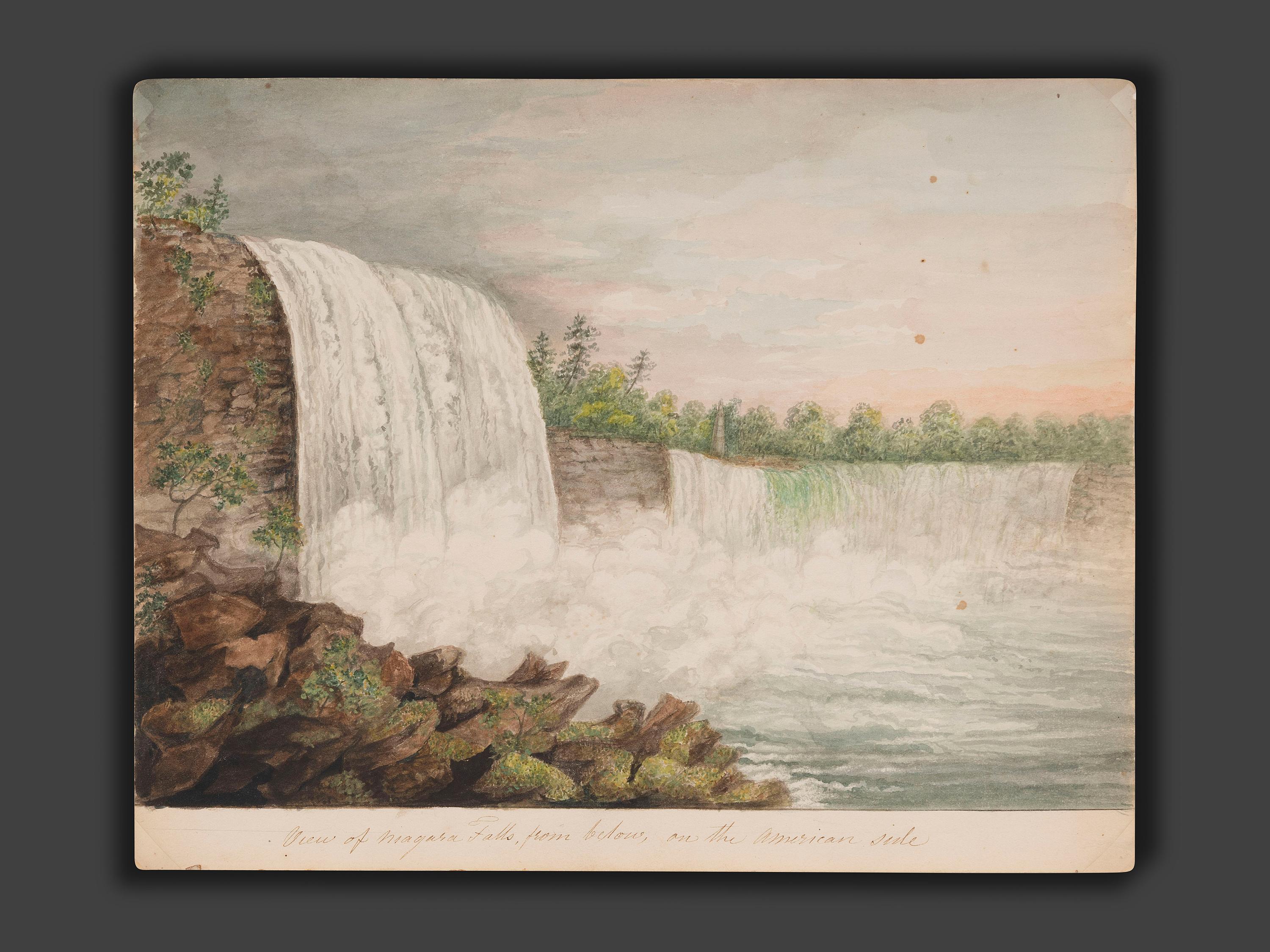
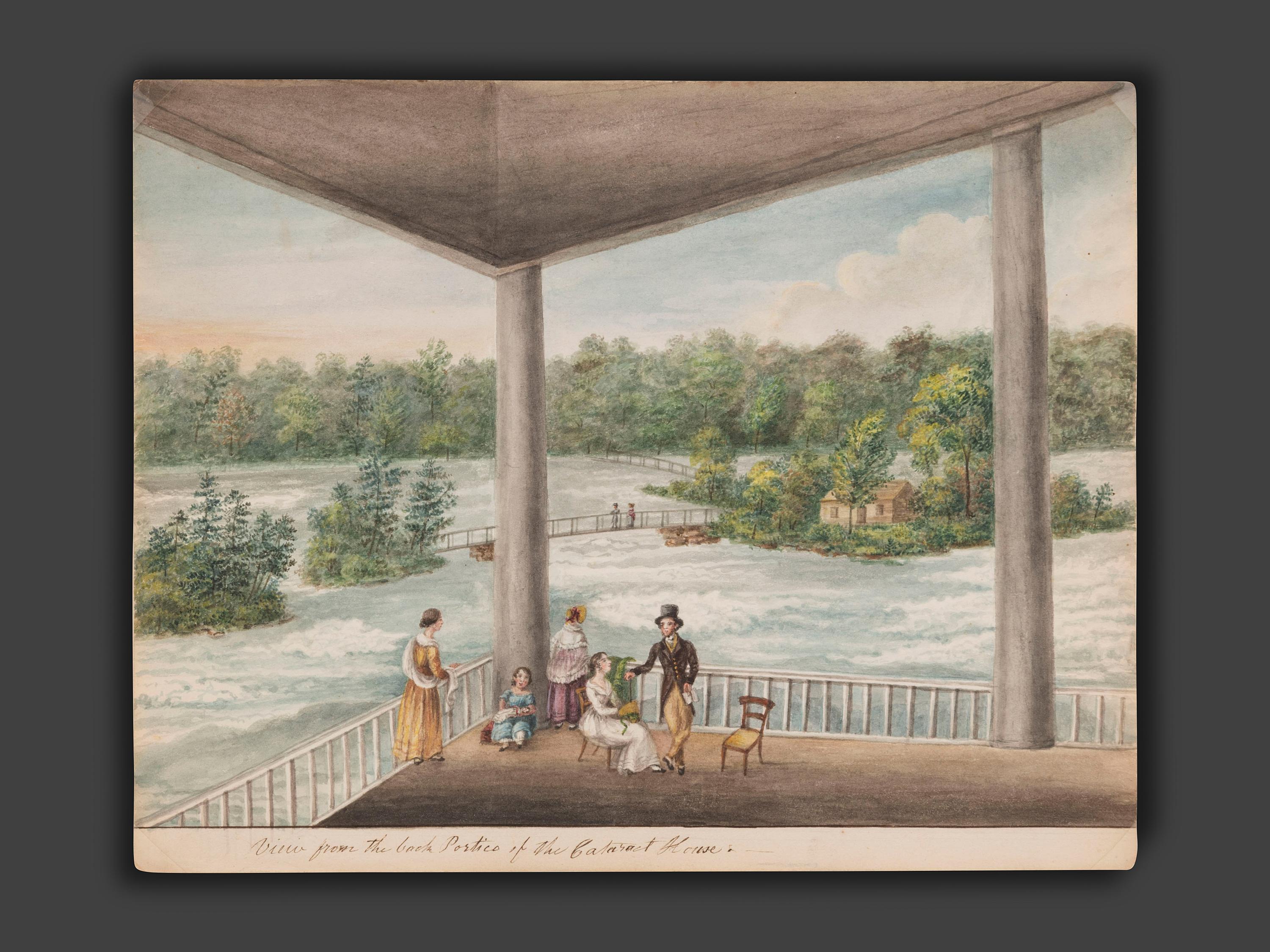
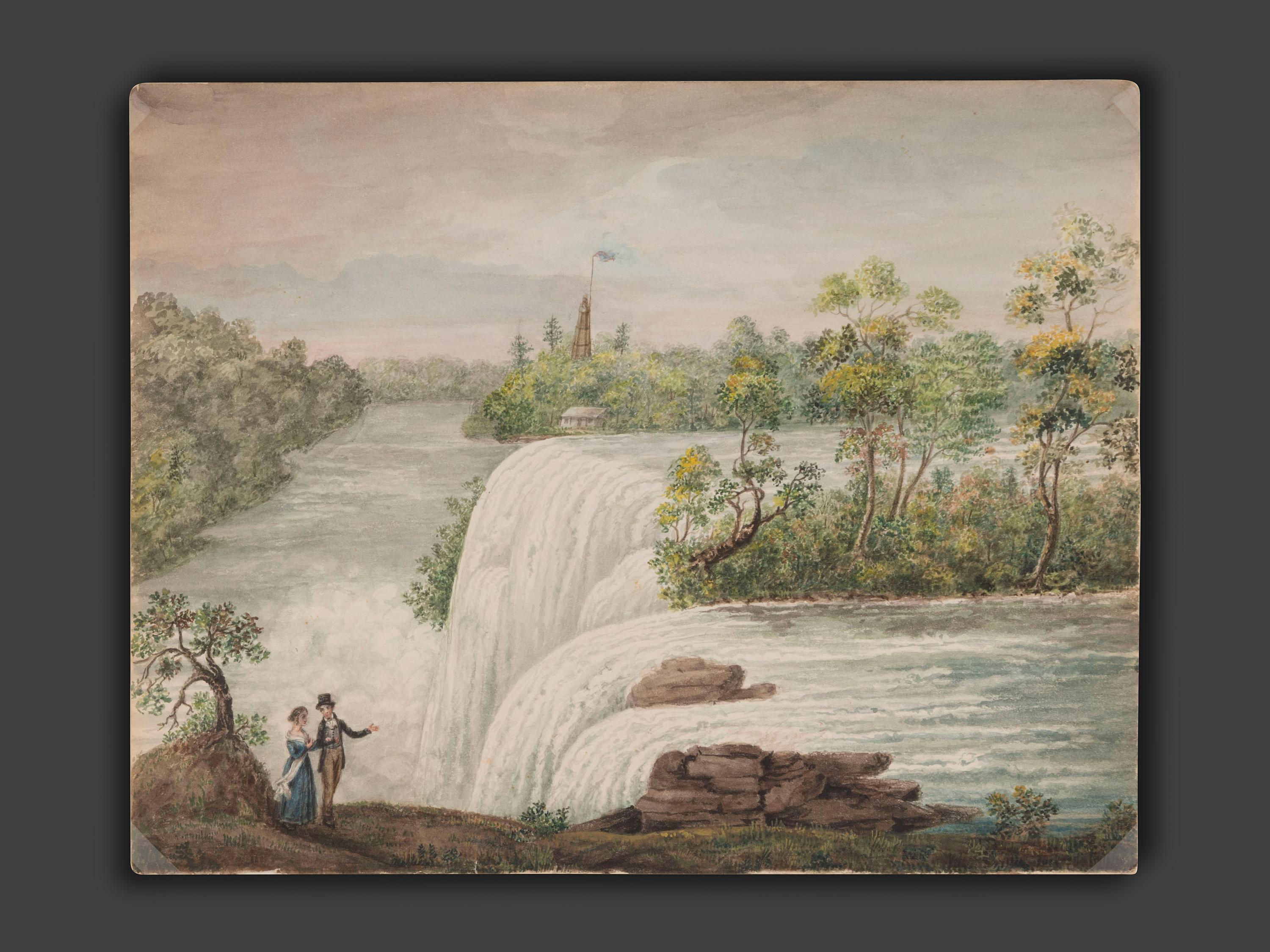
Infrastructure on both the American and Canadian sides of the Falls responded readily to this unprecedented influx of visitors, and many of the region’s improvements and amenities are rendered in watercolor by the artist of this group. In 1817, Augustus Porter (1769-1849), owner of the land and water rights on the American side of the Falls, built a toll bridge to Goat Island, a small island in the Niagara River. Prior to Porter’s bridge, the only means of accessing the island was a precarious boat ride through the rapids. Spanning nearly seven hundred feet long, it soon became the region's best-traveled walkway. In 1825, the Cataract House Hotel was erected along the bank of the Niagara River by David Chapman, who sold the property a decade later to Pankhurst Whitney (1784-1862), an American soldier and businessman under whose stewardship the Cataract House became known as the most elegant and popular hotel on the American side. Later in the Falls’ burgeoning popularity, a man named Charles Robinson built a pagoda-style observation tower with three viewing platforms in 1845 at a site commonly known as Hennepin’s Point. Three years later, Robinson built a second observation tower, this time on the Canadian side of Niagara Falls. Both pagodas stood until their demolition in 1860. Finally, Hog’s Back Falls, officially known as the Prince of Wales Falls, is a series of artificial waterfalls on the Rideau River in Ottawa, Ontario, Canada, created concurrently with the construction of the Rideau Canal (1826-1832).
Given the timeline above, the artist likely traveled to Niagara Falls during the mid-to-late 1840s or early 1850s. By this time, the Falls were firmly established as a desirable locale, replete with beautiful vistas, engaging year-round activities, and undoubtedly fascinating people-watching. It is possible that the artist traveled to Niagara Falls during a visit to a rustic estate in the Genesee Valley, possibly upon the invitation of a friend or patron, as depicted in Lot 58.
Please see Lots 58 and 59 for contemporaneous depictions of the Genesee River and other landscape views from related New York locales.
Ms. Howe joined the firm in 2012 working as a specialist in the American and European Furniture and Decorative Arts department as well as the Modern and Contemporary Art and Design department.
Previously, Ms. Howe served as Associate Curator of Decorative Arts at the Cincinnati Art Museum, where she curated exhibitions focusing on American and European furniture, silver, glass and ceramics. Additionally, she was an instructor of Art History at the Art Academy of Cincinnati, an independent consultant to museums and a lecturer on decorative arts. Ms. Howe’s research and publications have focused on late 19th- and early 20th-century decorative arts and design, in particular, on Cincinnati Arts and Crafts metalwork and furniture. Ms. Howe served as editor and contributing author of the book Cincinnati Art-Carved Furniture and Interiors. She received a BA from the University of Cincinnati and an MA in Art History from the University of Minnesota.
Ms. Vogelpohl joined the firm in 2013 as a cataloger in the American and European Furniture and Decorative Arts department. She became a department specialist in 2017, focusing on American decorative arts and silver. She received a BA from the College of Charleston and an MLITT in Art History from the University of Glasgow.