To request further details about this lot, please email americanfurniture@hindmanauctions.com


Jennifer Howe
Senior Specialist, Furniture and Decorative Arts

Leah Vogelpohl
AVP, Specialist, American Furniture, Folk, and Decorative Arts
Sale 1130
| Cincinnati
| Cincinnati
To request further details about this lot, please email americanfurniture@hindmanauctions.com
Jennifer Howe
Senior Specialist, Furniture and Decorative Arts
Leah Vogelpohl
AVP, Specialist, American Furniture, Folk, and Decorative Arts
Estimate$20,000 – $40,000
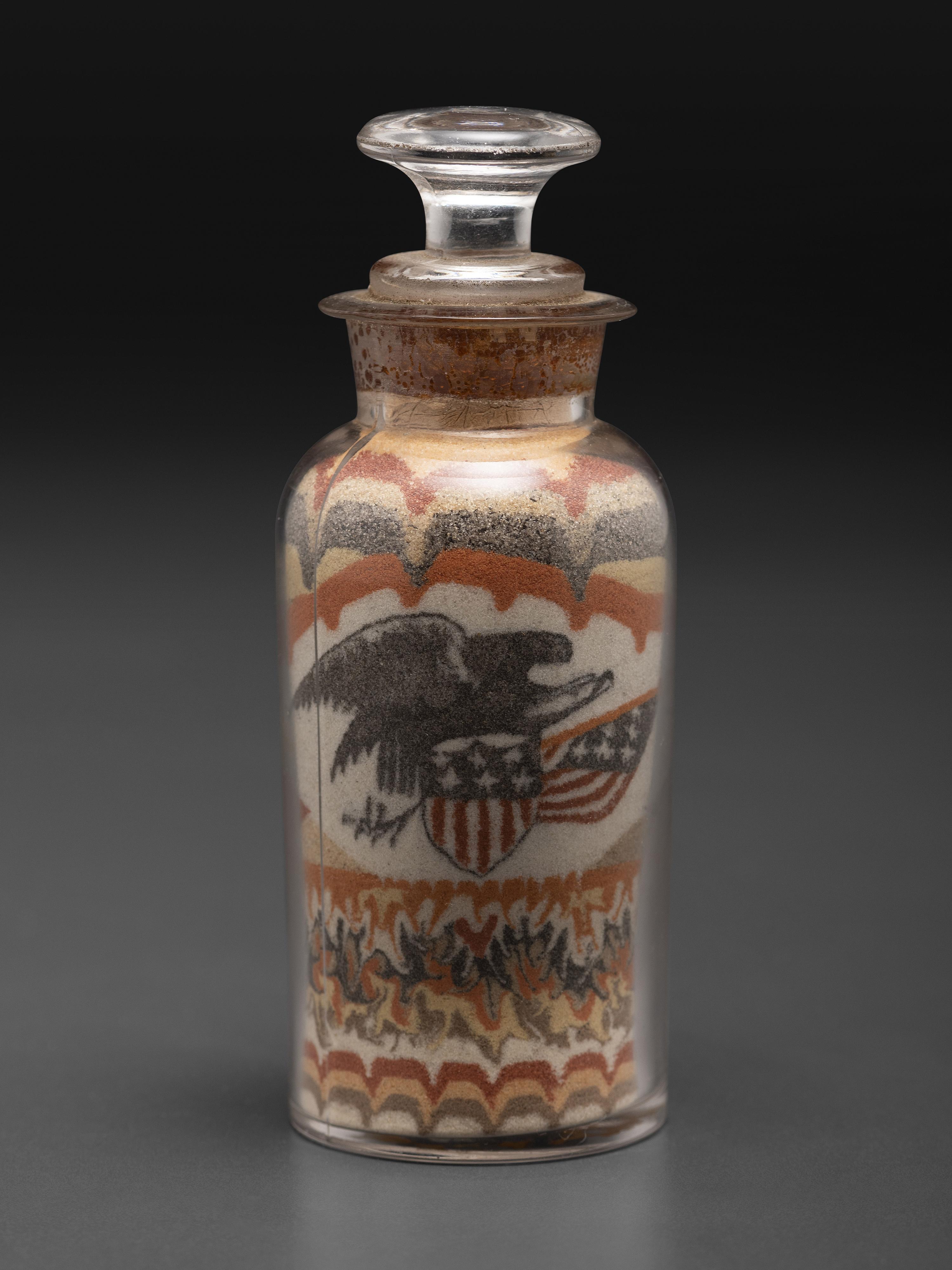
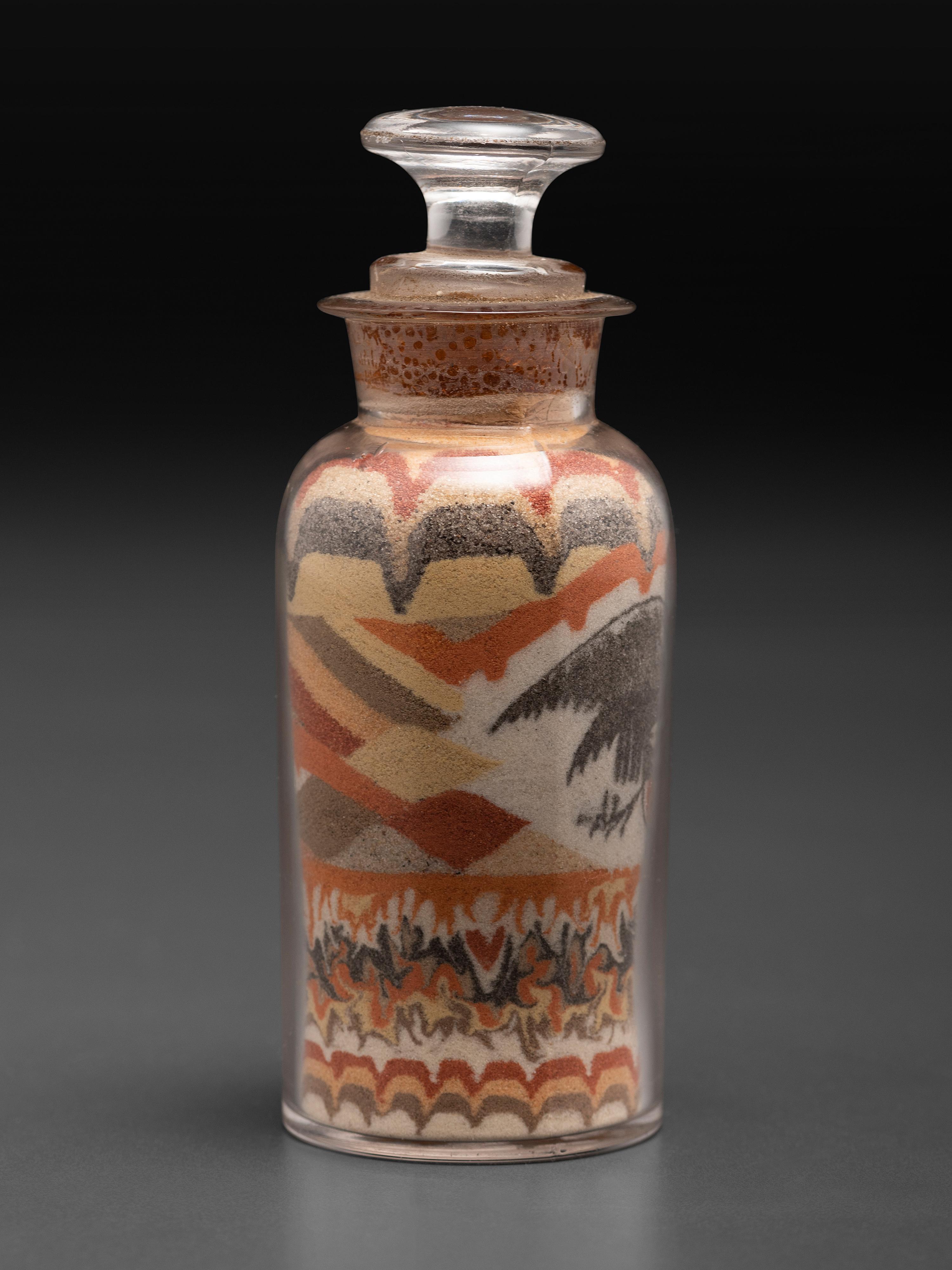
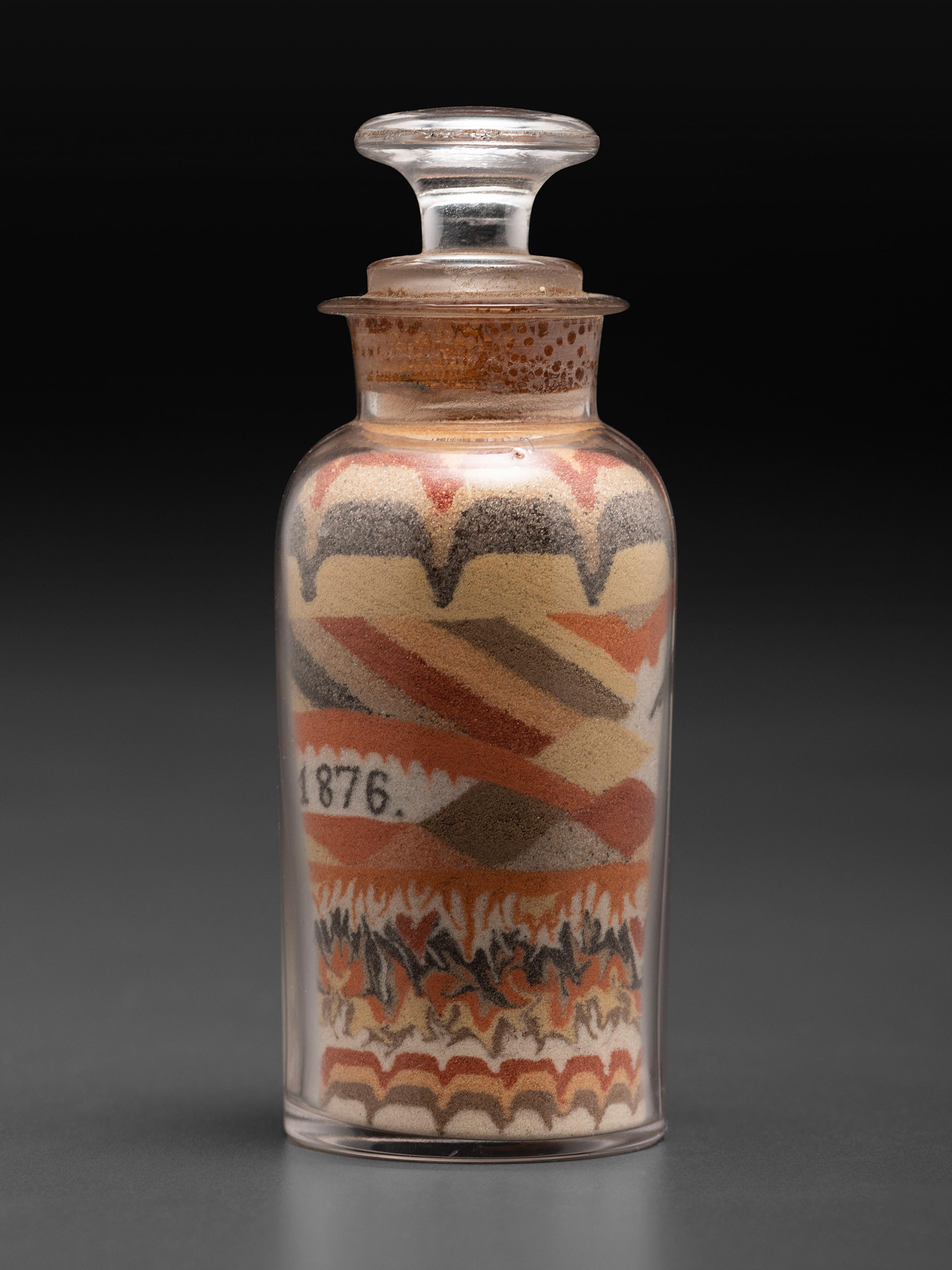
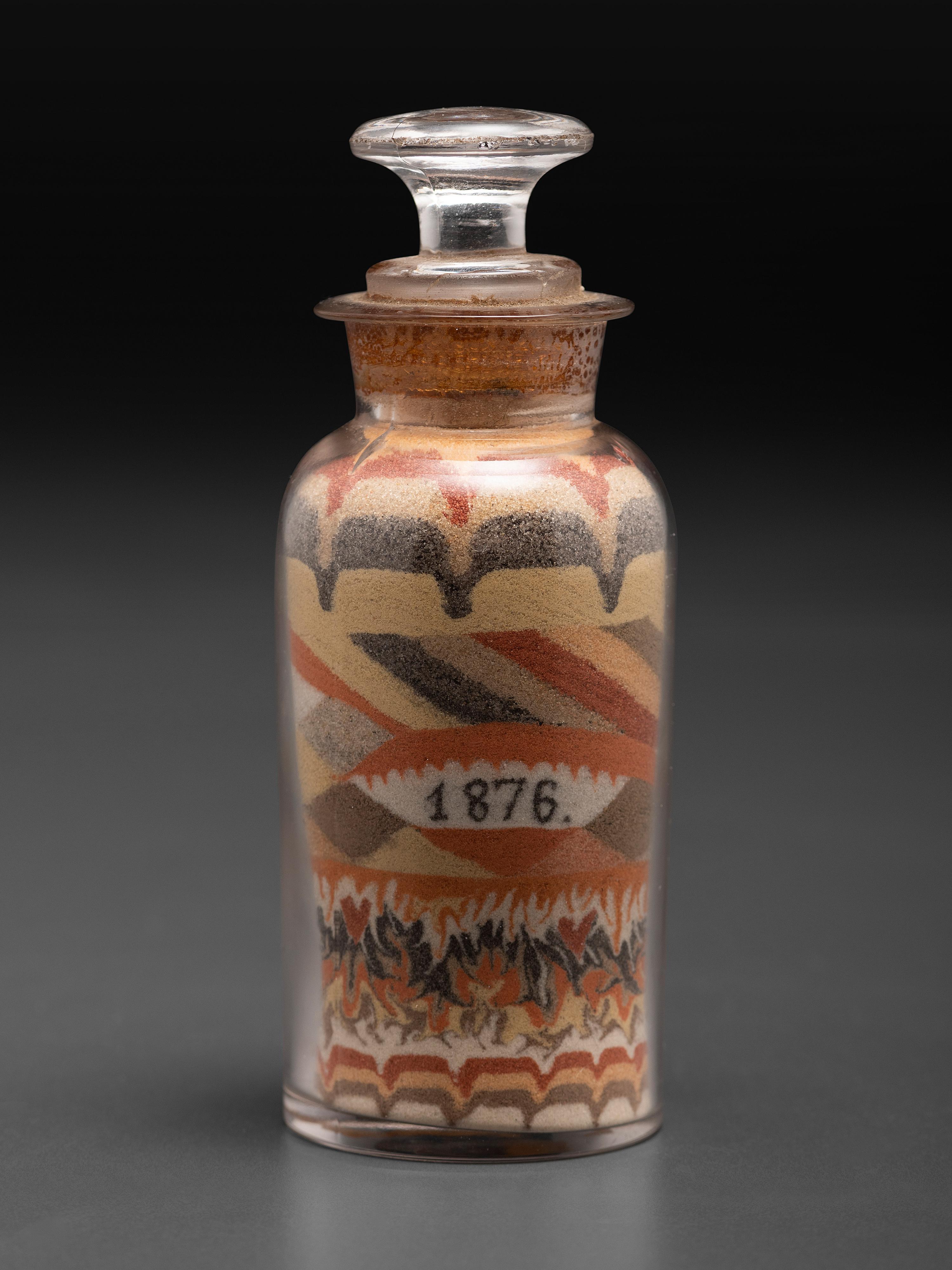
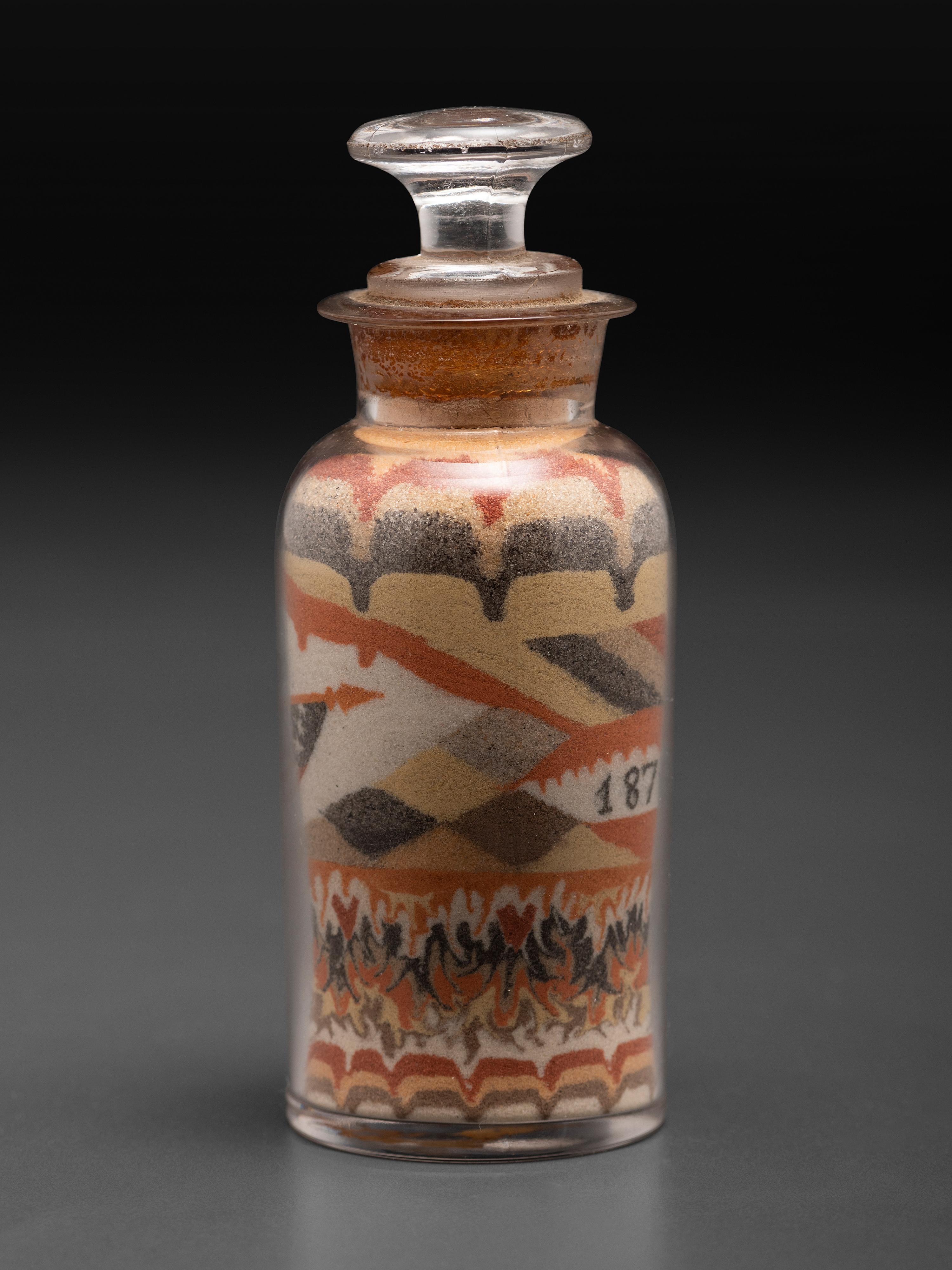
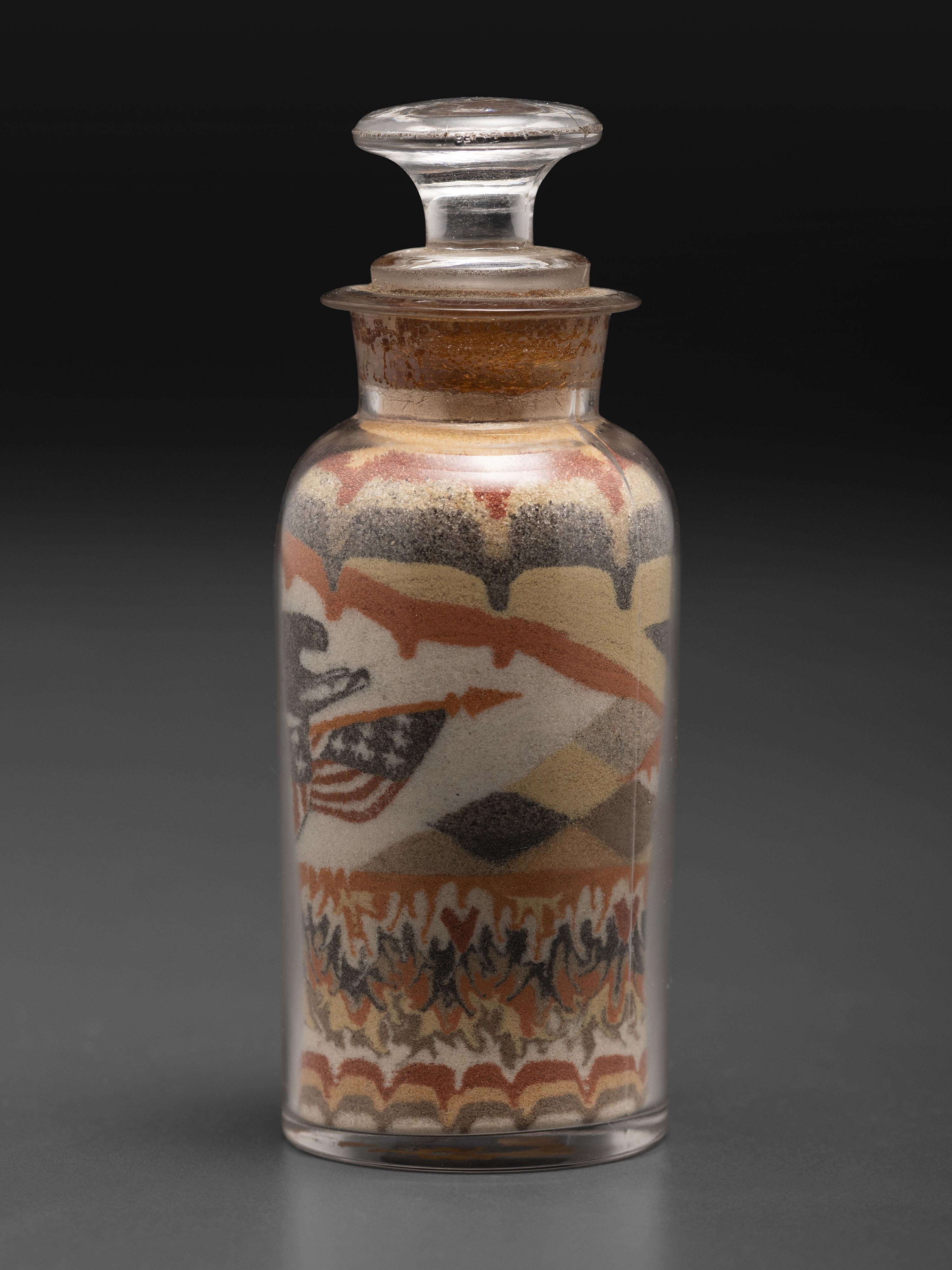
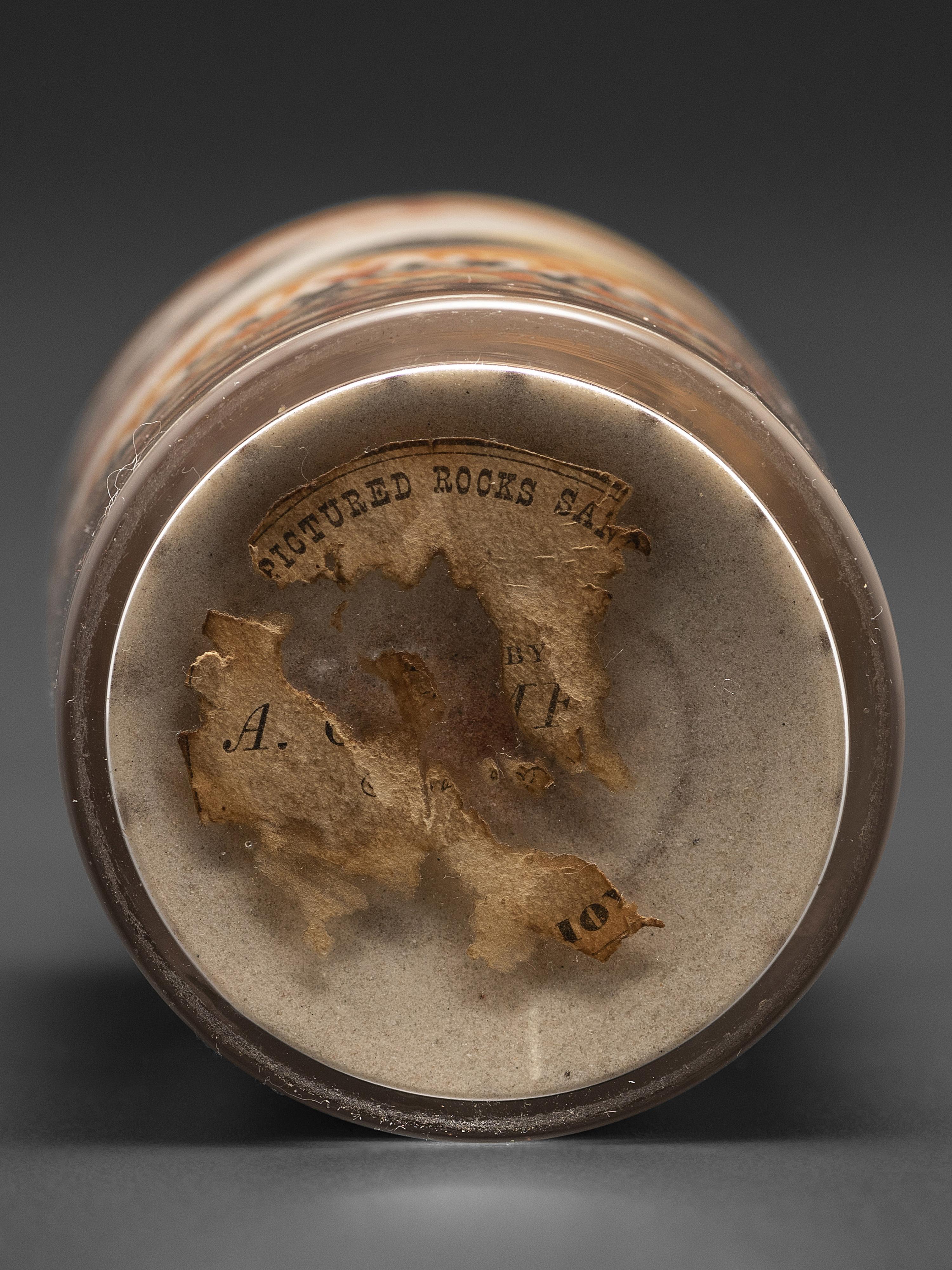
This diminutive bottle features an eagle, shield and flag motif, variations of which would become mainstays of Andrew Clemens’s designs, surrounded by bands of undulating lines and geometric patterns that he would also continue to perfect. Anecdotally, Clemens began making sand bottles as a child, and there are several known bottles that date to the early 1870s. However, the earliest mention of his sand art business comes in the North Iowa Times in 1874, when Clemens was 17 years old. In addition to "bottoming cane chairs," the article states that he is “putting sand from Pictured Rocks in bottles of various sizes, arranging the different colors in a handsome manner...”[1] Clemens famously collected sand from exposed sandstone in the Pikes Peak area near McGregor, Iowa. He was inspired by not only the vivid natural color of the sand but also the strata and swirls of color in the rock faces. The ‘Deaf Mute of McGregor, Iowa’ bottle [2] and the Louisa Fessman bottle [3], both made in the early 1870s, show Clemens’s focus on these decorative patterns, not yet incorporating figural motifs. At this point, he was using the coarse sand directly as it was collected, resulting in cruder designs and less distinct lines. Later, he would begin crushing the sand into finer grains that would allow him to create more detailed imagery.
In 1875, articles about Clemens begin describing bottles with figural imagery and around this same time, he began incorporating the eagle and flag motif. At this point, he had developed a decent tourist trade, and, in advance of the Centennial, patriotic designs were especially sought after. Multiple bottles from the mid-late 1870s show the eagle with either a flag or shield, while the bottle offered here depicts both.
While the quality of Clemens’s craftsmanship progressed greatly in the first half of the 1870s, the skill demonstrated in this bottle only hints at what he would eventually achieve. This is evident in direct comparison with the similar, but later, bottle offered in Lot 172.
[1] North Iowa Times, June 25, 1874, in Roy Sucholeiki’s The Sand Art Bottles of Andrew Clemens. Jefferson, NC: McFarland & Company, Inc., 2015.
[2] See Roy Sucholeiki’s The Sand Art Bottles of Andrew Clemens. Jefferson, NC: McFarland & Company, Inc., 2015, pg. 26, fig. 3.7.
[3] See Roy Sucholeiki’s The Sand Art Bottles of Andrew Clemens. Jefferson, NC: McFarland & Company, Inc., 2015, pg. 26, fig. 3.8.
Ms. Howe joined the firm in 2012 working as a specialist in the American and European Furniture and Decorative Arts department as well as the Modern and Contemporary Art and Design department.
Previously, Ms. Howe served as Associate Curator of Decorative Arts at the Cincinnati Art Museum, where she curated exhibitions focusing on American and European furniture, silver, glass and ceramics. Additionally, she was an instructor of Art History at the Art Academy of Cincinnati, an independent consultant to museums and a lecturer on decorative arts. Ms. Howe’s research and publications have focused on late 19th- and early 20th-century decorative arts and design, in particular, on Cincinnati Arts and Crafts metalwork and furniture. Ms. Howe served as editor and contributing author of the book Cincinnati Art-Carved Furniture and Interiors. She received a BA from the University of Cincinnati and an MA in Art History from the University of Minnesota.
Ms. Vogelpohl joined the firm in 2013 as a cataloger in the American and European Furniture and Decorative Arts department. She became a department specialist in 2017, focusing on American decorative arts and silver. She received a BA from the College of Charleston and an MLITT in Art History from the University of Glasgow.